Hea avalik ruum. Great Public Space
Basic information
Project Title
Full project title
Category
Project Description
“Great Public Space” was initiated in 2014 for the centenary celebrations of the Republic of Estonia, to renew the centres of Estonian towns and boroughs. It is a unique program focusing on the revitalisation of public space in (peri-)urban settlements across the country. The program is carried out in collaboration with the ministries, local municipalities and the professional community of architects, urban planners and urbanists, among others.
Project Region
EU Programme or fund
Which funds
Other Funds
The first seven towns received in 2016 funding from the European Regional Development Fund’s support scheme for investments for raising regional competitiveness. These towns were Põlva, Valga, Tõrva, Võru, Rapla, Kuressaare, and Elva. In total, EUR 11.58 million was allocated to the projects under the umbrella of "Great Public Space" programme in 2016.
Description of the project
Summary
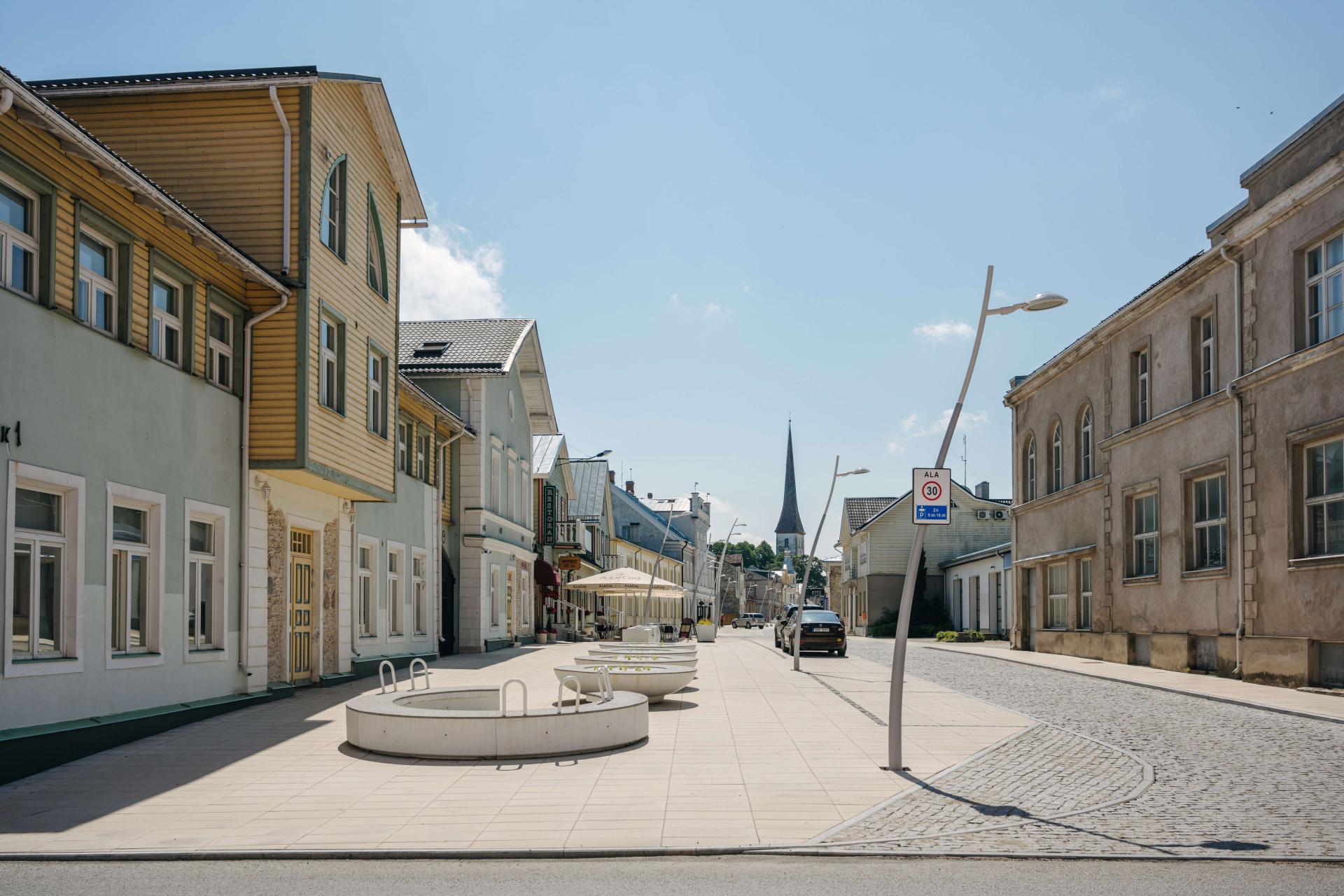
In order to promote high-quality public space, the Estonian Association of Architects (EAA) launched the “Great Public Space” program in 2014 as part of the EV 100 anniversary events to enliven the historic city centers and make them more human-friendly across Estonia. Since 2014, local public urban design competitions have been held, after which the municipalities have applied for support from the Enterprise Estonia Regional Competitiveness Support Measure (ERDF funding). Based on winning entries, project construction began in 2017-2018. In 2019, Võru Square, Kuressaare Square (+ part of the main street) and Rakvere Pikk Street were opened. In 2020, the solutions of Kärdla, Jõhvi (pedestrian area) and Viljandi were opened. The opening of the first stage in Narva project is ahead. By spring 2021, new competitions have been held in Tapa, Võsu, Lihula, Paide, Jõgeva and Sindi. The following are also planned, as Kiviõli, Sõmeru, Türi, Kadrina, Loksa, Kose are waiting in line.
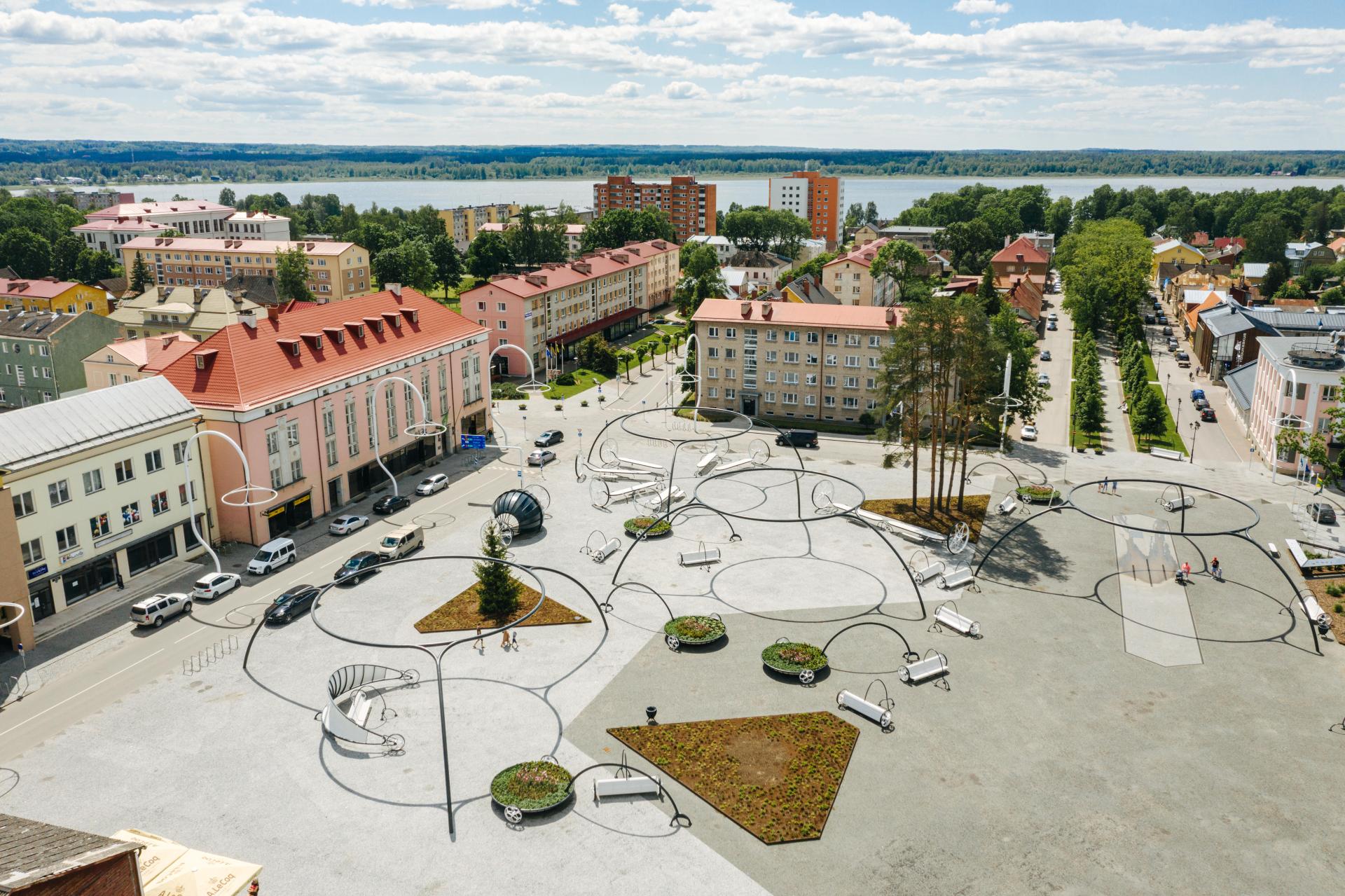
Altogether, the aim is simple—to improve the public space by renovating the town centres. The well-maintained and renewed town centre becomes more attractive as a whole which, in turn, will motivate property owners and developers to invest in their buildings. The town centres that are already completed and those yet to be completed within the programme are encouraging examples of how to increase the local community’s self-awareness and sense of security regarding the future of their hometown. The real cultural, economic and social impact of the reconstructed town centres will be revealed only in the next years or decades. However, we already see its positive effect on entrepreneurship as well as the property prices. For a total cost of appr 26MEUR, all the revitalized squares and main streets have significant impact on people’s well-being, boosting the liveability of the towns, and also promoting economic development and social cohesion.
Key objectives for sustainability
In 2017-2018, EAA negotiated further with another 39 municipality centers, where the desire to implement the “Great Public Space” project has emerged. Further sign of evident sustainability of the program is that approximately twenty municipalities are on a waiting list to conduct the urban revitalisation design competitions. The implementation of projects is possible only if the local governments themselves are interested and take the initiative. EAA coordinates this part of the work concerning the location of project areas in local governments, the conduct of competitions, the supervision of the process and the communication of project solutions to the public. All competition areas have been selected by the local governments based on the needs of the community, while also the expert opinions of the architects preparing the competitions have been considered. The precondition for the implementation of the projects has been that they reach the county development plans and then financing them through the regional development funds of Enterprise Estonia (coordinating counties). Half of the funding for design competitions has come from the state and the other half from the local governments.
On the other hand, urban sustainability aspects are at the very heart of all undertaken revitalisation plans throughout the process. The aim is to establish resilient and sustainable, attractive, experiential, unique, innovative—altogether high-quality public space on human scale in the hearts of Estonian small towns. The goal of the new urban space has been to reconceptualise the common living environment and boost the local business in order to take the planning of Estonian towns on a new level and increase the local people’s self-esteem. It has all been based on the agenda of bringing life back to small towns and improving the living conditions of the residents.
Key objectives for aesthetics and quality
"Great Public Space" program considers the challenge of shrinking as an opportunity to reverse the trend through skilful and aesthetical spatial interventions. For this puprose, all built solutions have been carefully selected through value-based urban design contests where the juries are composed of both the locals (municipality and community representatives) and professionals in the field. The designs have specifically been considered for their positive aesthetic, spatial and atmospheric impact on the beholder who experiences the place emotionally. Beauty has been an explicitly declared objective of any place-making, of any planning or building activity throughout the program. Aesthetical dimension is relevant to everyone and has been conceived not as an exclusively expert issue and additional cost factor, but as an essential cultural value and shared perception. Altogether, the "Great Public Space" program is proving that high-quality architecture and public spaces can relieve the desolation felt by the communities in the shrinking areas. It is not about growth but quality, especially the quality of experience of the perceived living environment. Public space is often undervalued in urban development, although it has a huge impact on how people feel like between the buildings and on the streets. The initiators of the project see the renewing of city centres as a good opportunity to make the living environment of small towns more attractive which, in turn, helps to bring people together and increase their sense of community. Renewed centres are turned into places for cultural events and leisure activities, giving an advantage to a pedestrian traffic. By making the hearts of the cities more human-friendly, experiencially pleasing living environment can boost entrepreneurship and promote quality compactness, eventually thus also prevent urban sprawl.
Key objectives for inclusion
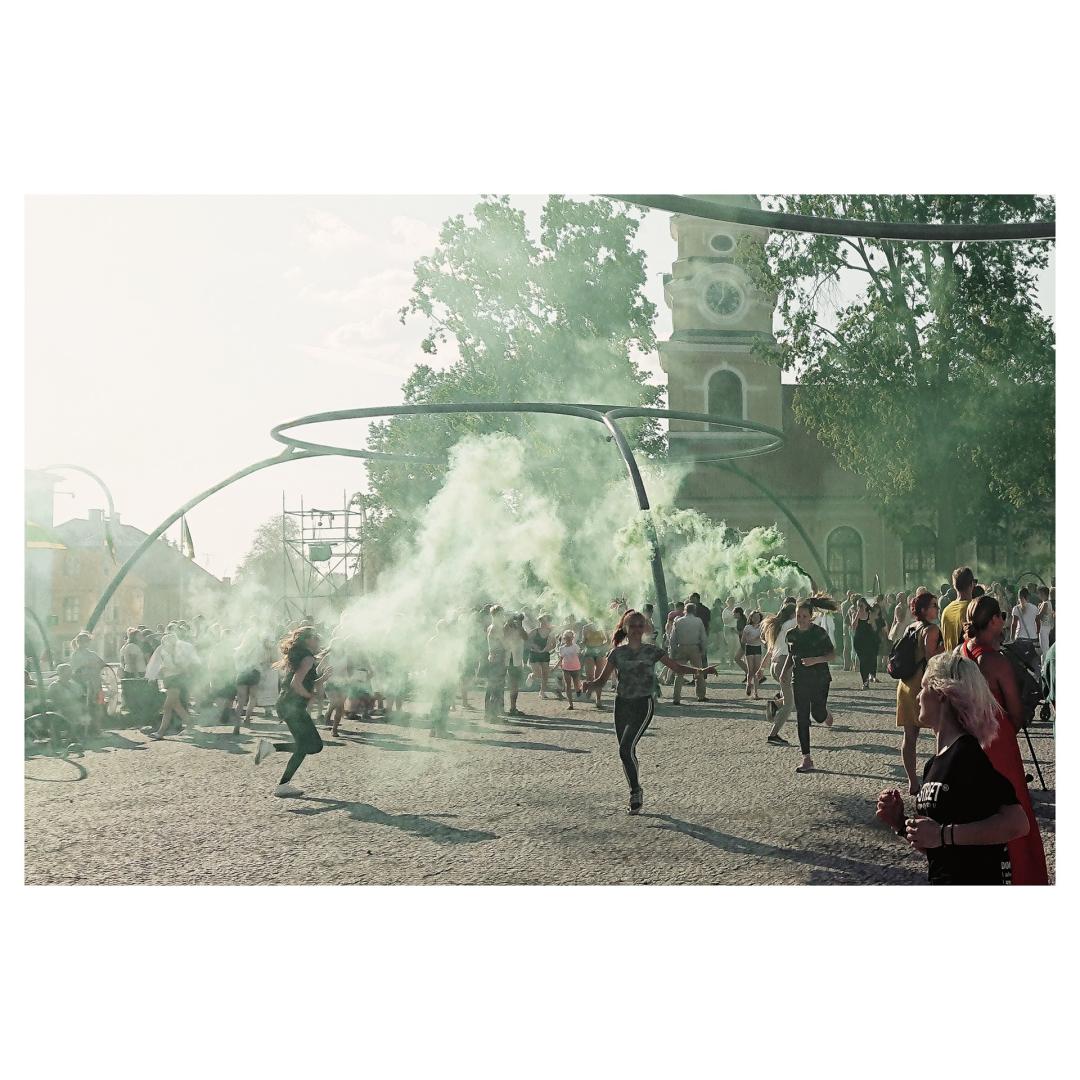
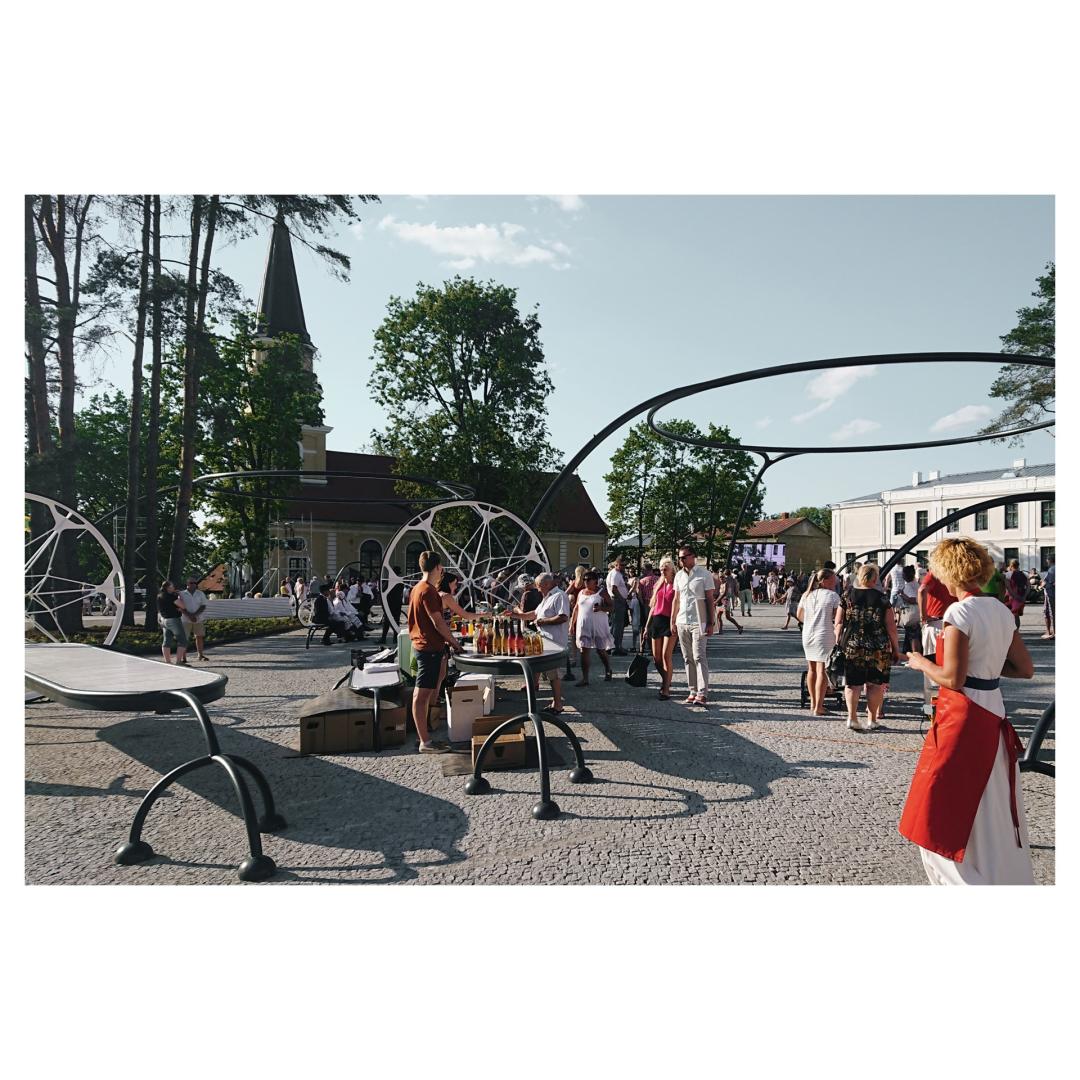
All competition areas have been selected by the local governments based on the needs of the community. In that sense the action presents a true bottom-up process, assisted by the spatial design professionals. As an outcome, historic central squares, main streets or their surroundings of a dozen of small towns have already been rebuilt in just a few years’ time. Reviving of city centres has proved an excellent opportunity to engage locals, increase their sense of community and increase attractiveness of the living environment in small towns. Renewed centres have thus been turned into places for cultural events and leisure activities, while giving an advantage to pedestrian traffic. The city centre and the town square are the symbol and meeting place of every town—the foundation of place identity. A place to spend time with family, friends, guests or business partners, take a walk in an attractive centre, sit in a café or visit a gallery—this is what matters to residents. People can be proud of this, and it gives them faith in the positive future of the place. And this is visible to guests and tourists as well. The implementation of the "Great Public Space" program as a participatory co-creation process is a success story evidencing that it is possible to boost entrepreneurship and prevent emptying out of remote towns as well as urban sprawl by converting the hearts of the cities into more human-friendly and pleasing living environment. Many Estonian small towns have had plans to reconstruct their central areas for decades already, however, they have not had the resources to take action. Thus, as the representatives of small towns had dreamt about their central squares for a long time, they quickly drew up the briefs defining the desired functions and size of the public spaces as well as the mandatory features. They provided architects with various concepts to achieve a well-functioning comprehensive whole.
Results in relation to category
The "Great Public Space" program has received significant national awards in recent years. E.g., the key supporter of Estonian culture, Estonian Cultural Endowment has offered the new town centre of Elva an Award for Landscape Architecture 2020. Rejuvenated heart of Elva also won the Estonian Landscape Architects´Union Annual Award in the category of Town Centres.
Võru Town Council received the Estonian Landscape Architects´Union 2020 Special Award for consistent long-term work in creating a human-friendly and green living environment, and their desire to develop and the successful ability to integrate public space into a whole. No visitor to the city can miss the high quality of Võru streets—the street landscaping is remarkably good and stands out in comparison with other small Estonian cities. The jury highlighted their ability to grasp the big picture, the courage to have a vision and their ability to implement it.
Central Square in Valga received the Annual Award of Estonian Landscape Architects´Union 2019.
"Great Public Space" team leaders Ms Ingrid Mald and Mr Kalle Vellevoog received the Annual Award of Estonian Landscape Architects´Union 2015 in the Category of Deed of the Year.
Quoting the jury: "Since the world is currently chasing technological development and the climate crisis, sparse settlement, energy independence and self-sufficiency have become magic words; community, working from home, home- schooling and home-made food are being rediscovered. We need collective solutions that increase the quality of life for everyone equally, and architecture has an important role to play here. The new central squares affect the quality of our communal life. They create spaces for spending time together, make people feel proud of their city, connect us with our historical heritage, bring us closer to nature, so that we can notice the changing of the seasons and feel satisfied with our surroundings."
How Citizens benefit
The phenomenon of shrinking cities is widespread throughout Europe and as a consequence of fundamental changes during the transition in 1989/1991, post-socialist Eastern Europe is strongly affected. The influence of (sub-)urbanisation processes on local communities often has a greater impact than out-migration or low birth-rates at national level. As a result, 45 in 47 Estonian towns have lost a significant percentage of their population since 2000. Ever since Estonia regained its independence in 1991, the local development has been regionally highly imbalanced. The main population trends in the past decades include population decline and concentration in larger urban areas. In this context, the most visible symptoms of shrinkage in urban space are building vacancies and brownfields, the predominantly low quality of residential premises, unsightly dilapidated buildings and an underinvested environment, which negatively impact residents and amplifies the vicious circle of decline. While questioning the social, economic and environmental implications of de-urbanisation, “Great Public Space" showcases solutions to shape the renewed identity of shrinking cities via urban space revitalisation. As the COVID-19 pandemic has completely changed our lives, the debate becomes even more urgent—the real value of something becomes apparent when we lose it. Today’s circumstances have vividly demonstrated the human need for face-to-face interaction, and also the quality of space where this interaction could happen. In the small-town context, the central location is vital—not in terms of the geometric centre of the town but the concentration of people, as people are used to the proximity of daily services. Thus it is not so surprising that the local governments seized the opportunity quickly drew up briefs for the urban design contests describing the project site, the local cultural and physical background while also providing their vision of the functionality of the new square.
Innovative character
Ever since the collapse of the Soviet Union in 1991, the Estonian population has decreased by 15.6% due to low birth rate and emigration. In addition, our urbanisation process has been among the fastest in Europe. People move to the two largest urban regions of Tallinn and Tartu, while rural areas and small towns lose their population. Thus, Estonia largely consists of small shrinking towns. Population has shrunk in smaller urban areas as well as in rural areas which, in turn, has brought about the marginalisation of entire regions. The large number of local governments (there were 213 local governments in Estonia in 2014, with 79 left after the administrative reform in 2017), their small size and poor financial capacity have long been the primary obstacle to the development of rural areas. This has led to financial, age and educational segregation all over Estonia with no relief brought by various national regional development strategies and action plans either. It is all reflected also in the public space of small towns with virtually no investments made in it in the past decades. As there was and still is a lack of good skills in urban design and public spaces (with no local specialists with qualification in architecture and urban design), for years already nothing much had been done with regard to spatial issues.
The "Great Public Space" is thus innovative in considering shrinking as an opportunity: with skilful spatial intervention, very good architecture and quality public space it is possible to relieve the desolation felt by the communities in the shrinking areas. It contributes to the small-town public spaces so that their reconstruction could function as one of the tools to fight against marginalisation and boost the self-esteem of the local community. Not to mention, the urban solutions of rejuvenated centres are innovative by their design, original contributions to the professional fields of architecture and design.