Restored and Adapted Liubavas Watermill
Basic information
Project Title
Full project title
Category
Project Description
Liubavas Manor Watermill-Museum today is an inspiring example for many. The word “Liubavas” comes from the word “love”, and it accurately reflects what is the very basis of life here, – it`s love for the country, for nature, for the past, present and the future, it`s love, lasting ages. Implemented with exceptional quality and innovative approach project have led to many changes. It is a remarkable contribution to the well being of citizens, attractiveness of the area, and sustainable future.
Project Region
EU Programme or fund
Description of the project
Summary
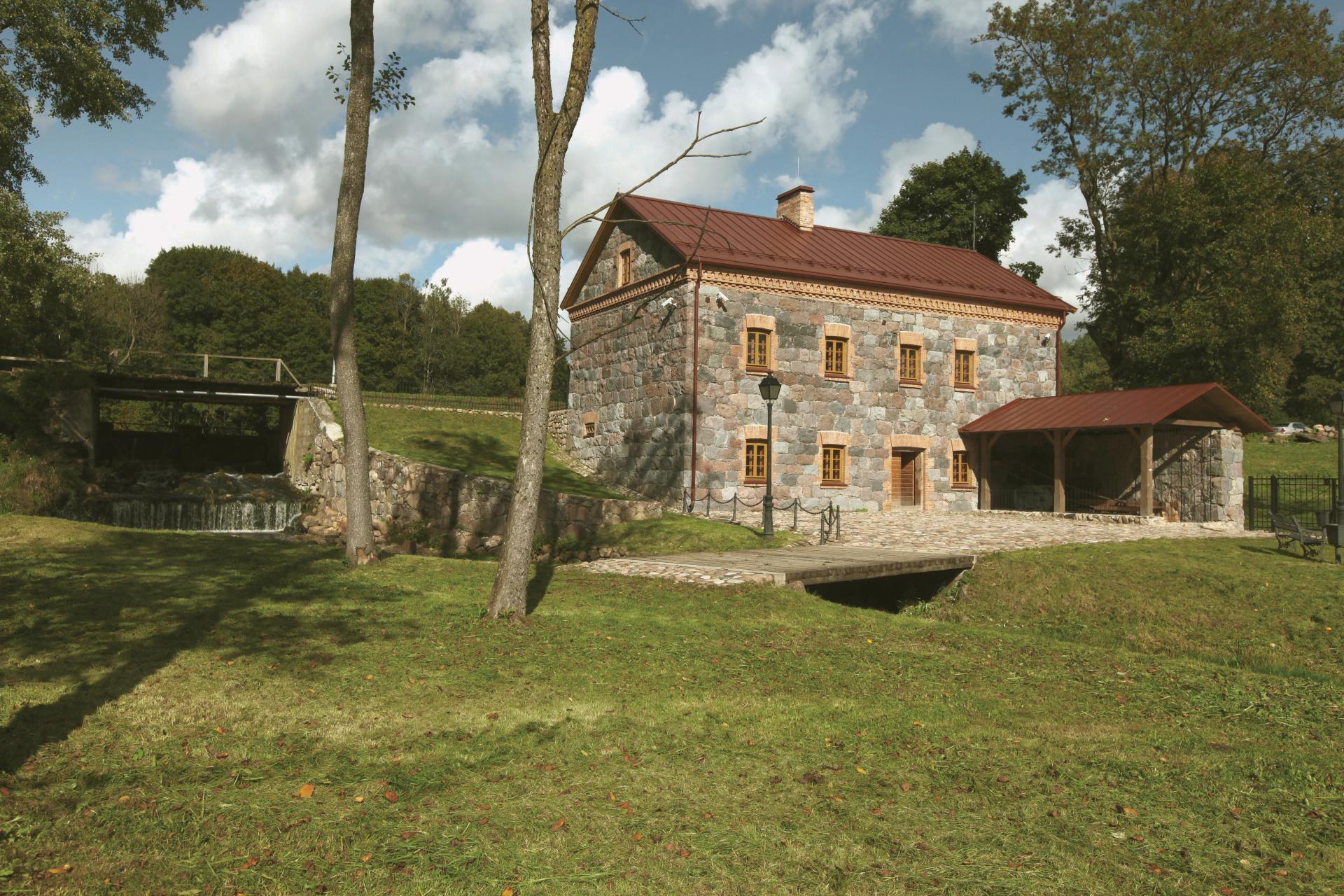
Liubavas watermill is one of the buildings that remain from the former Liubavas Manor, located just 10 km outside Vilnius. The construction of cleaved stone was built in 1902; it stands out by its architectural, engineering and aesthetic value. In the years 2009–2011 the project “Restoration of Liubavas Watermill and its Adaptation to Museum” was implemented with the aim to preserve the watermill and to make it accessible to the public through adaptation to museum.
Liubavas manor watermill belongs to the unique heritage complex, with a rich history going back to the XV c. It has it`s unique aesthetics which has been formed through centuries and was influenced by the most famous noble families of the country.
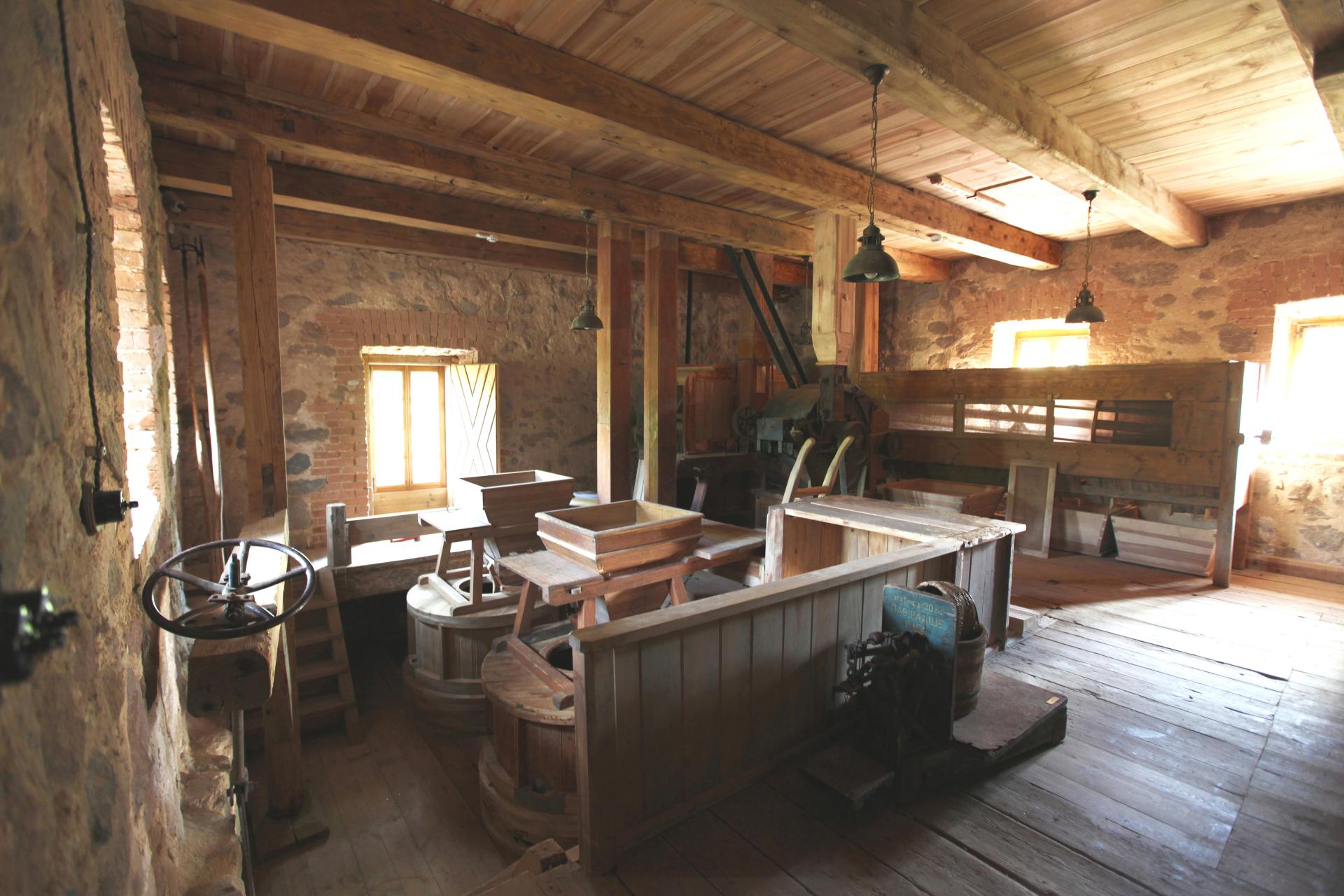
The building itself as well as entire technological equipment and specific landscape characteristics has been restored with exceptional quality to retain authentic values of the watermill. Sustainable development, use of natural (water) resources is being promoted in the old watermill, which continues to produce “green” energy till today. It is a facility which presents and interprets watermills as important aspects of European architectural, technical and agricultural heritage. Traditional techniques, skills and building materials, typical to the period of construction of the building, have been used. Efforts have been made to preserve and to reveal valuable properties of the object to the maximum extent.
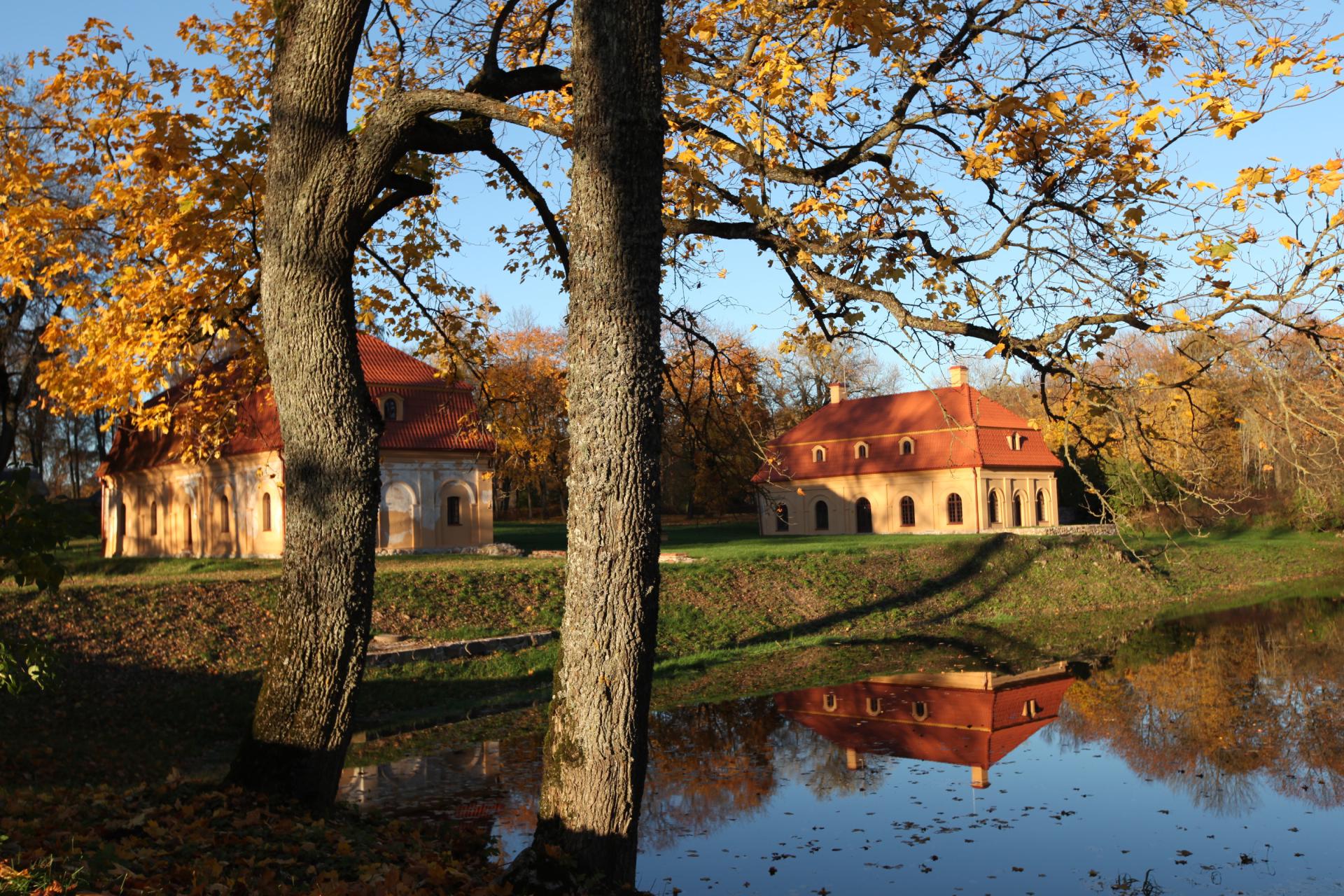
The restored and evaluated Liubavas watermill was a beginning which led to the revival of Liubavas manor officine and orangery and became an incentive to follow the idea to preserve heritage objects of Liubavas manor – as much as possible.
The preserved cultural heritage site fostered the social inclusion of local communities. It is a source of creativity and innovation in this rural area near the capital, previously unknown and forgotten, which now has become known, attracts visitors and spreads valuable historical and environmental knowledge.
Key objectives for sustainability
Among the objectives of the project were the conservation and restoration of the watermill and its machinery, the arrangement of the landscape of the watermill. Complex historical, archeological, ethnographic and technological research has been carried out in a way to achieve the best possible quality of the restoration and a maximum level of authenticity.
The watermill and its technical equipment have been conserved and restored, a territory has been arranged, and a unique museum has been established. The project stands out by its complexity and maximal use of traditional materials, techniques, crafts and skills.
The project has been deeply rooted in the environment as the basis for sustainable development. It promoted sustainable use of natural resources, namely water. The project's positive impact on environmental aspect of sustainable development has been achieved through three main elements: (1) restoration and preservation of a cultural heritage object, which is an important landscape element and a part of a hydrosystem; (2) preservation of the original function of the watermill, which serves now as an example of responsible use of natural and heritage assets for future development of the society, and (3) active environmental and heritage education programmes, which are now carried out in the museum.
Liubavas watermill is a unique object, it integrates natural and heritage resources. It is an exceptional case of human-sized architecture solutions enabling the harmonic relation between human beings and nature. Exposition of the watermill-museum creatively interprets the value of utilization of renewable energy sources.
With time the relevance of this project is continuing to grow. The implemented project led to the further development, creation of cultural, educational services, growing the society's awareness and dissemination, restoration (the only one in Lithuania such an old baroque ensemble of Officine and Orangery was restored and adapted to the museum).
Key objectives for aesthetics and quality
The objectives of a restoration seeking the maximal quality and unique experience of the public were achieved. Museum exhibition was designed and installed after complex thorough research, skillfully blending the authenticity, old traditions and digital technologies of nowadays to create the best experience for the visitors.
Liubavas watermill can be considered exceptional in many aspects and the quality is the best word to describe it. The romantic, historic style architecture of the building is distinguishable for the quality of stone and brick masonry. Walls are made from cleaved or carved stone; the binding grout is invisible on the exterior of the facade as the seams are filled with pebble inlay. The building is rimmed by spruce crenellated cornice of red bricks and the windows have trims of red bricks. Original watermill equipment is of exceptional quality of craftsmanship. Some transmissions are made of cast iron, while others are wooden. Liubavas watermill turbine is a Francis type Swedish-manufactured low-speed reaction turbine, made in the end of 19th c. – beginning of 20th c. and distinguished itself as very productive. Remarkable are engineering solutions (the capacity of the turbine was three times higher than of the other watermill on the same river).
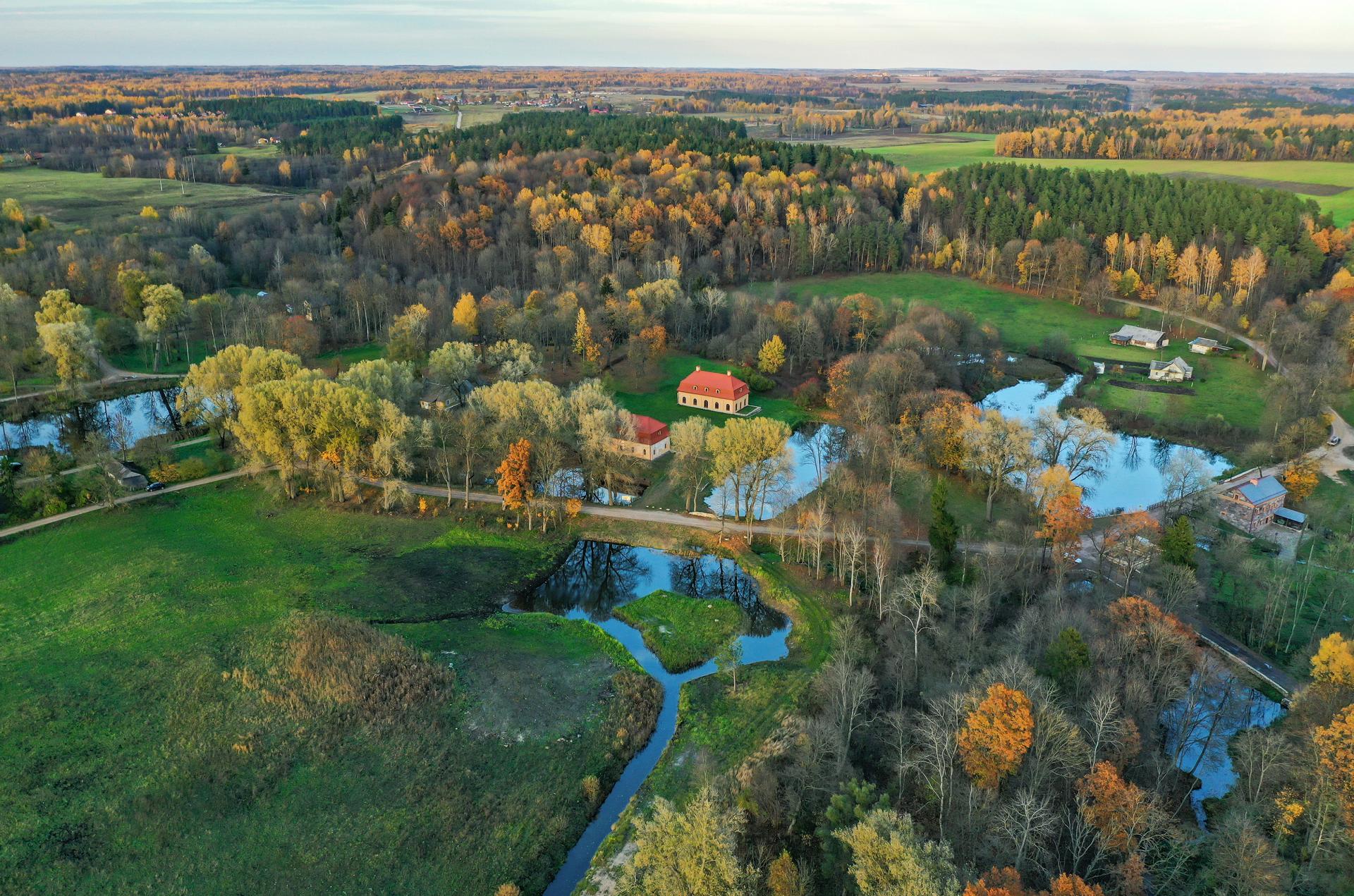
The waters from three streams are alimenting Liubavas ponds, one stream stays flowing all the year through, creating possibilities for the animals, birds to stay here through the winter.
All these natural and cultural assets were already disappearing. After doing what's hardly possible, the authentic old aesthetics of the object, hidden under the deep cultural layer of many years, was restored. Today visitors are able to walk the old restored stone paving and observe its for centuries formed surroundings that haven't been destroyed as it had happened in so many other sites.
Before unknown, the forgotten historical place is becoming one of the most inspiring and attracting cultural heritage.
Key objectives for inclusion
Among the priorities of the project was to create benefits for the society, to achieve the maximal inclusion of citizens.
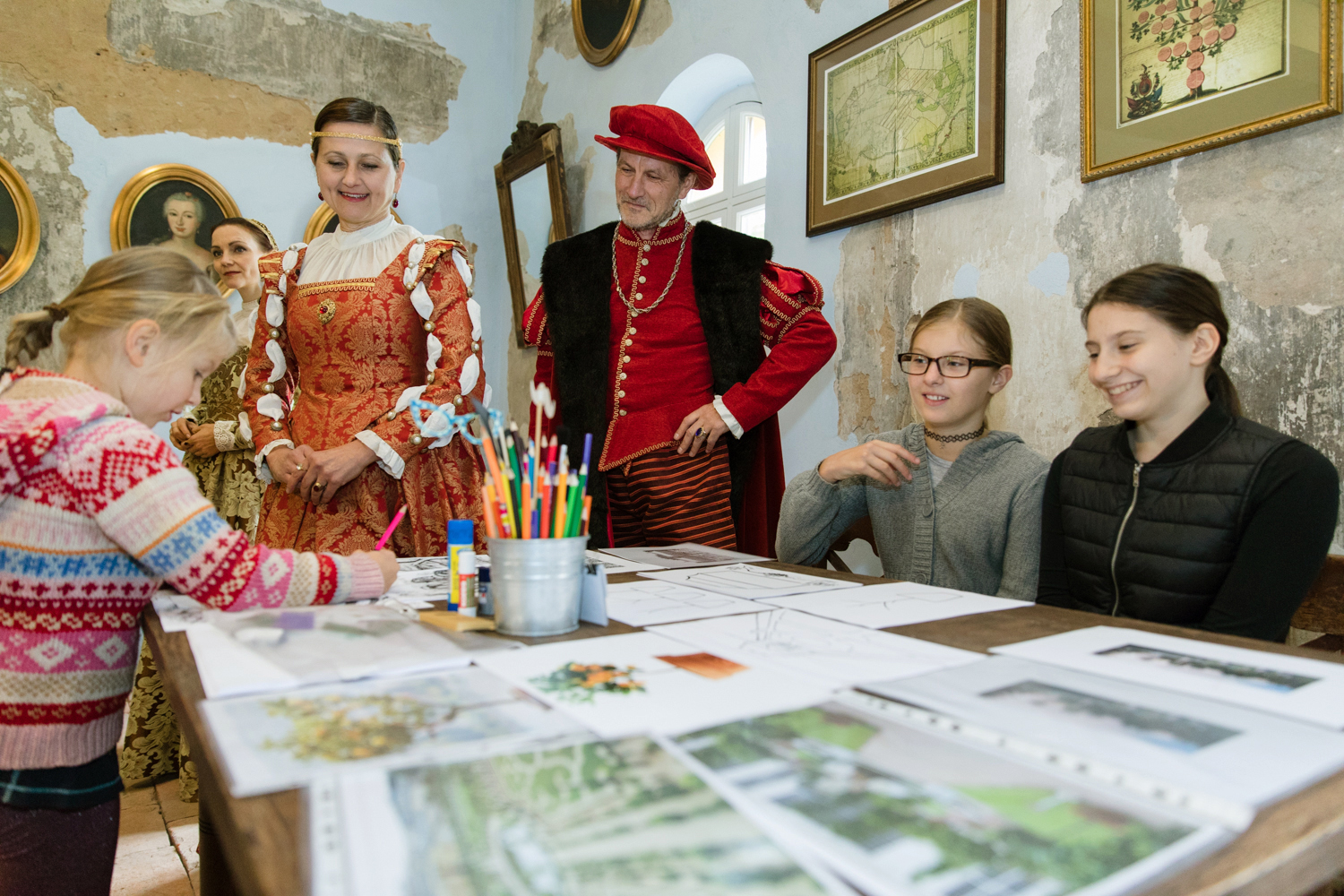
Attractive and informative educational programs have been created for different age groups. Participants of educational programs get to know “the way of bread”, the fundamental, existential basis of life for ages, the use of old technologies, the work and life of the miller etc. The mill is a unique source to explore old traditions. Old watermill is still working as a source of green energy, revealing the processes, it's the possibility to transfer the knowledge about creating clean energy, using renewing natural resources and contributing to the sustainable future.
The local citizens have been involved in many ways. New job places were created for the locals. People are participating in the activities, volunteering, contributing and helping to preserve the place. The project unlocked creativity and entrepreneurship of the local people (e.g. a farmer has launched production of cheese, others started to provide new horse riding services etc.). It is a huge stimulus for the development of strong united communities, proud of their historical assets. It stimulates understanding, curiosity, strong local identity.
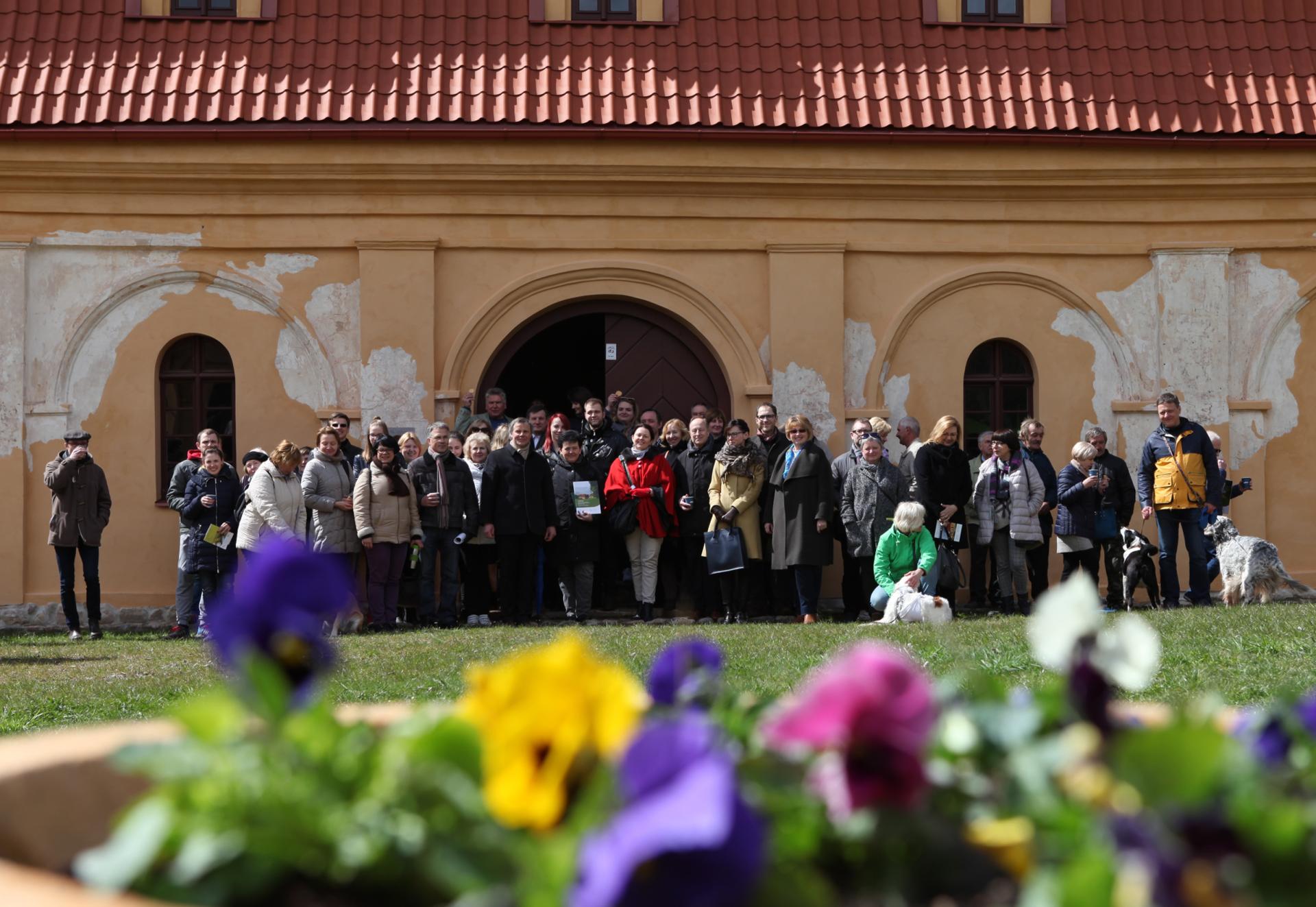
The seminars and international conferences took place, with heritage preservation experts, owners of heritage objects, historians, restorers and representatives of other related fields among attendees. Local communities and all interested had the possibility to participate.
Through the experience of cultural heritage the connection of different generations is being created. Young people at the Liubavas watermill get to know the history, traditions, old technologies through digital technologies of nowadays (https://liubavas.lt/mill-technology/). At the same time dialogue with the old generation is being developed – with people who actually know these technologies and processes, who still remember it being an actual part of past life.
Results in relation to category
The project purpose and the planned results have been achieved in full amount and required quality – to restore and adapt to museum Liubavas watermill, to educate the public, to provide visitors with opportunities to get acquainted with technical heritage, to enhance heritage preservation and increase interest in molinology and local history.
The building and the technical equipment of the watermill have been conserved and thoroughly restored, a territory has been arranged, a museum has been established, exhibitions introducing a half a thousand year long history of Liubavas, both physical and virtual, have been designed, a book on the Liubavas Manor and its watermill has been published and the website www.liubavas.lt has been developed and launched.
The project stands out by its complexity and maximal use of traditional materials, techniques, crafts and skills. It became a winner of 2012 European Union Prize for Cultural Heritage and Europa Nostra Award that was great incentive and inspiration to strive for new challenges. Later the unique 18th century ensemble of manor Officine and Orangery has been restored, as well as the technological heritage and old unique heating system of it.
The Liubavas watermill is now the only such object of technical heritage in Lithuania, which has entirely restored machinery and interprets various aspects of mills‘ heritage. The site www.liubavas.lt serves as a unique virtual mill-museum, arguably the only of such kind in Europe.
The project has made an impact on Lithuanian conservation policy and practice, it did increase interest in the field of applicability of traditional materials, techniques and skills for conservation of built heritage, raised awareness on conservation standards, authenticity and restoration issues of manors and technical heritage, and provided a synthesized historical, archaeological, ethnographic and engineering knowledge about the Liubavas Manor and its watermill.
How Citizens benefit
The project and its activities had a beneficial, inclusive effect for civic society, it helped to bridge the revival of old traditions and digital solutions, to transfer knowledge and inspire people. Contemporary technologies, e.g. computer graphics and videos, make the exhibition attractive for a diverse audience, for the younger generation. The resources of this cultural heritage are affordable to everyone.
The project helped encourage economic development in the remote rural area by establishing new jobs, attracting tourists and better maintenance of roads and public spaces. People have started to create their businesses. The overall attractiveness of the region is growing.
The society has been involved in the project since its implementation and continuously afterwards. Local community members are active participants of cultural life at Liubavas manor, of numerous events, educational programs, and voluntary activities.
The project had the impact on the growth of ethnic tolerance, promoting intercultural dialogue and cultural diversity. An exposition on artist Rapolas Slizienis, who lived in Liubavas, binds different nations of the region: Lithuanians, Poles, Belarusians. International conferences took place with the attendees from Poland, Belarus and Lithuania, it provided the opportunity to get extensive knowledge and deepen the understanding, to get the feedback, to share the knowledge.
The society is being strongly loyal, has a sense of pride, of belonging, local identity of the citizens is growing. The availability of cultural services improves the spiritual, social and physical well being of visitors and local citizens.
The project is important in European context, it contributes to the preservation and study of European architectural and technical heritage.
Being open and affordable, constantly involving and providing unique space and surroundings, the heritage of Liubavas is a symbol of togetherness today while preserving the past and creating the future.
Innovative character
The museum in the restored Liubavas watermill has blended traditions with innovations.
The Liubavas manor is a complex of unique objects. In Lithuania not so much of this heritage left, except for a few huge museums in the capital. Such objects are either being extinguished, or being adapted to such services as accommodation, food services. It's a pitiful situation, when often the valuable qualities of the objects are being destroyed. The old mills are becoming the symbols of pubs, their technological part are being thrown away, the interiors replanned and changed, the original function is being completely lost.
The idea of this project was to choose a responsible and deep approach, to analyze, to discover best possible architectural and technological solutions with the involvement of experts, best specialists and without compromising with cultural historical memory. Even the original water turbine at the watermill is spinning again, to produce also the green electricity.
Liubavas manor is located in the rural site, empty enough, where before nothing similar had been known. After the implementation of the idea, aesthetics of waterponds brought back as well and everything was done on the basis of deep exploration.
It's a new point of view, an innovative, new level of object restoration, adapting and turning into functioning cultural heritage sites. It has a huge positive effect on local communities, citizens, evokes new understanding, and becomes a source of interest.
It has a big impact in the field of education. Not only local communities and local schools are getting involved in the educational activities. For the cultural education services here people come from all over Lithuania, children, students from all over the country, other age groups, and visitors from other countries.
It was the beginning of breaking through the ice of stereotypes. Now there are more and more initiatives of deeper and quality level of heritage adaptation.