Wellness
Basic information
Project Title
Full project title
Category
Project Description
What if you could be naked without being cold in your bathroom, while saving 30% of electricity and up to 8 times the usual water consumption ?
Wellness combines an emission of heat comparable to the warmth of sunlight with new hygienic habits inspired by traditional ablutions. Made of three elements : a long wavelength infrared heater, a basin and a water scoop, Welleness offers a different bathroom experience that marries technology, well-being and sustainability for young and old alike.
Project Region
EU Programme or fund
Description of the project
Summary
What if you could be naked without being cold in your bathroom, while saving 30% of electricity and up to 8 times the usual water consumption ?
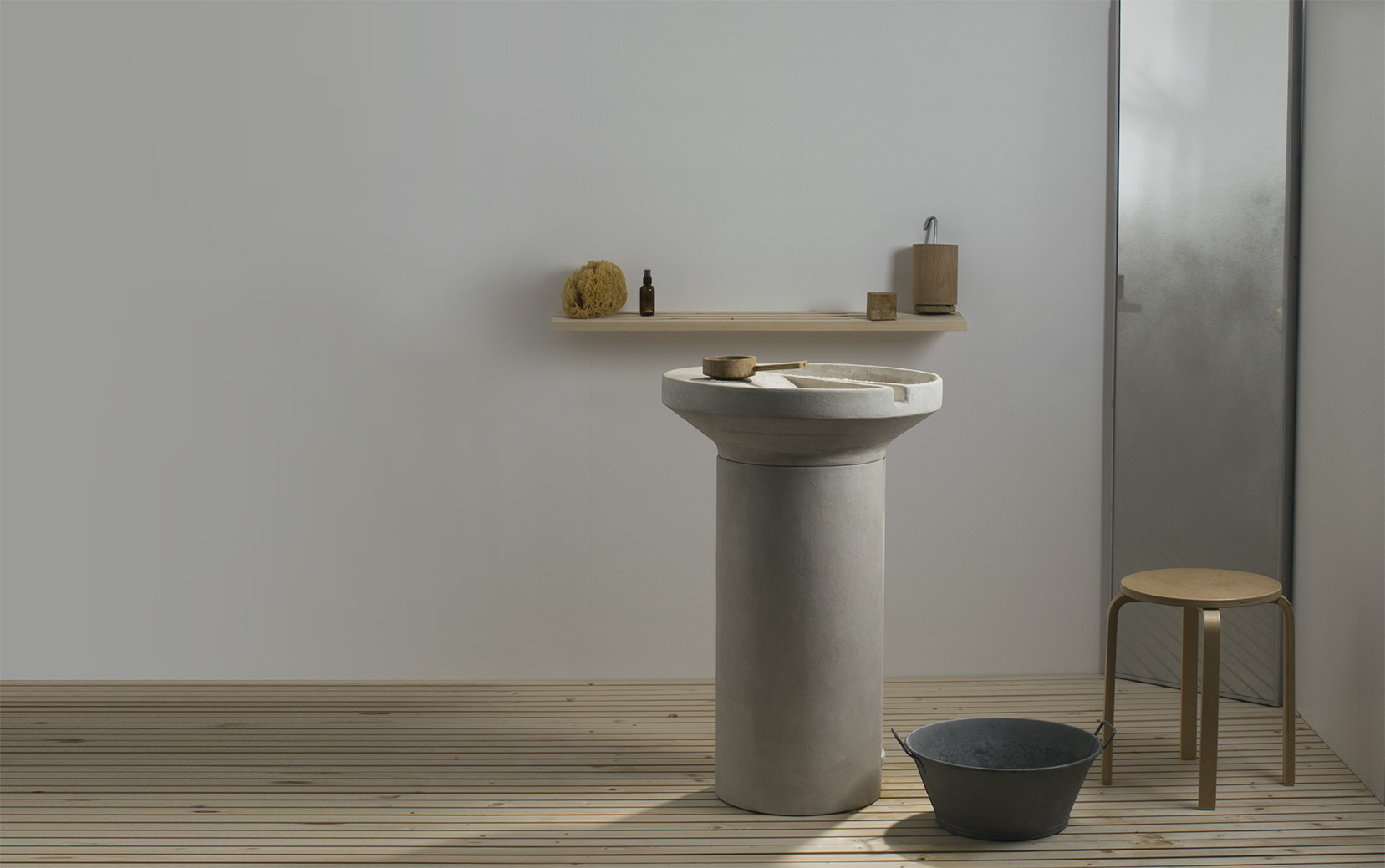
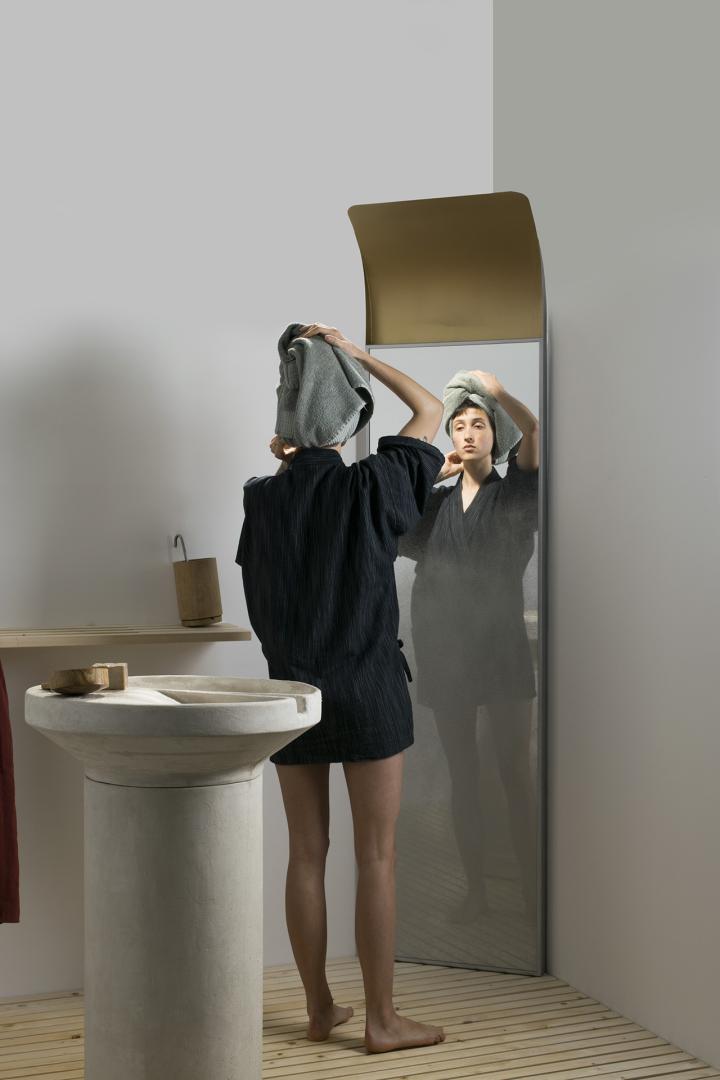
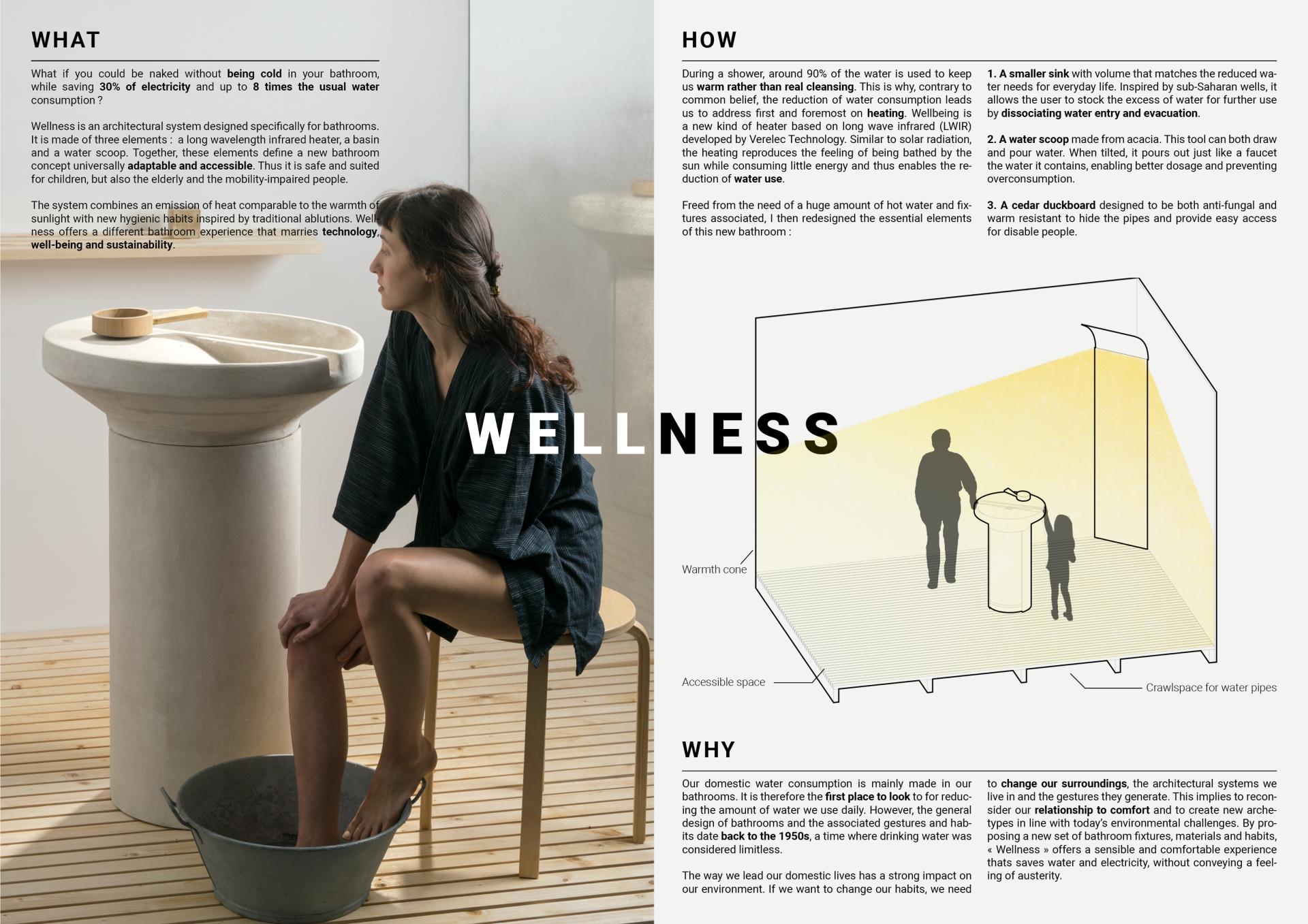
Wellness is an architectural system designed specifically for bathrooms. It is made of three elements : a long wavelength infrared heater, a basin and a water scoop. Together, these elements define a new bathroom concept universally adaptable and accessible. Thus it is safe and suited for children, but also the elderly and the mobility-impaired people.
The system combines an emission of heat comparable to the warmth of sunlight with new hygienic habits inspired by traditional ablutions. Wellness offers a different bathroom experience that marries technology, well-being and sustainability.
During a shower, around 90% of the water is used to keep us warm rather than real cleansing. This is why, contrary to common belief, the reduction of water consumption leads us to address first and foremost on heating. Wellbeing is a new kind of heater based on long wave infrared (LWIR) developed by Verelec Technology. Similar to solar radiation, the heating reproduces the feeling of being bathed by the sun while consuming little energy and thus enables the reduction of water use.
Freed from the need of a huge amount of hot water and fixtures associated, I then redesigned the essential elements of this new bathroom :
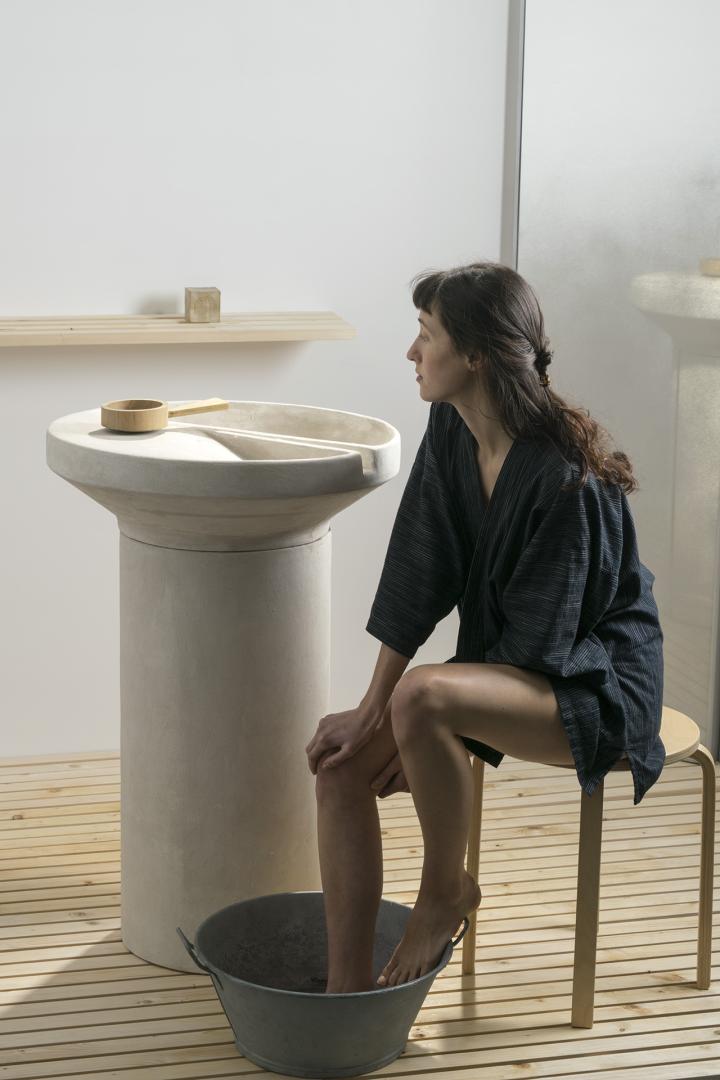
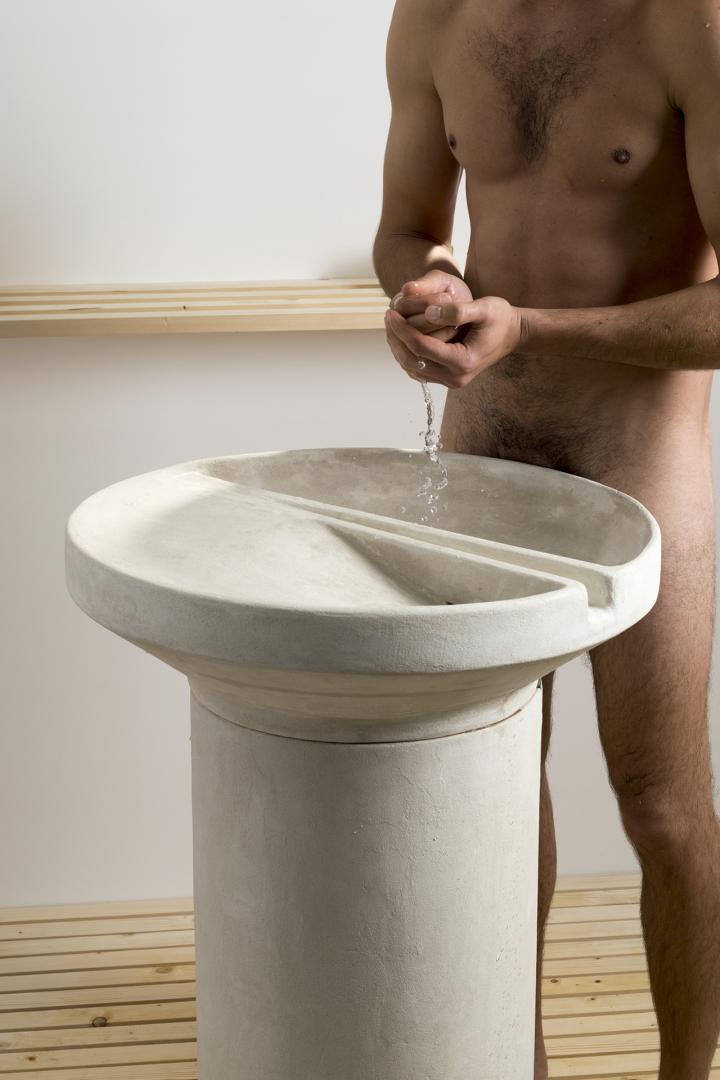
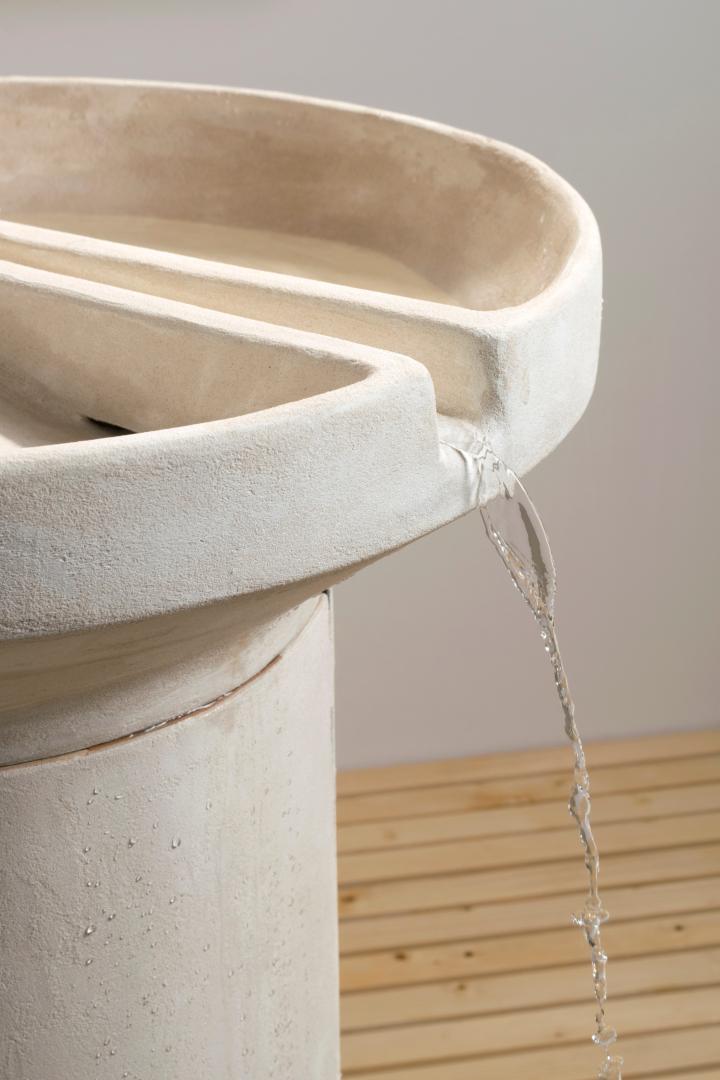
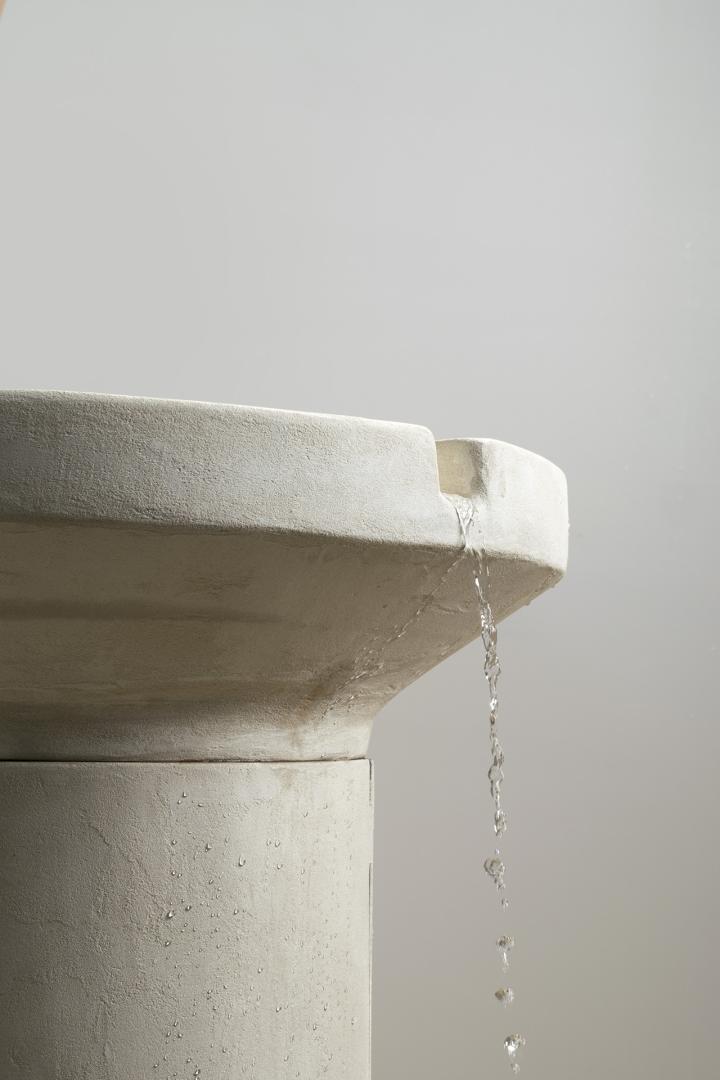
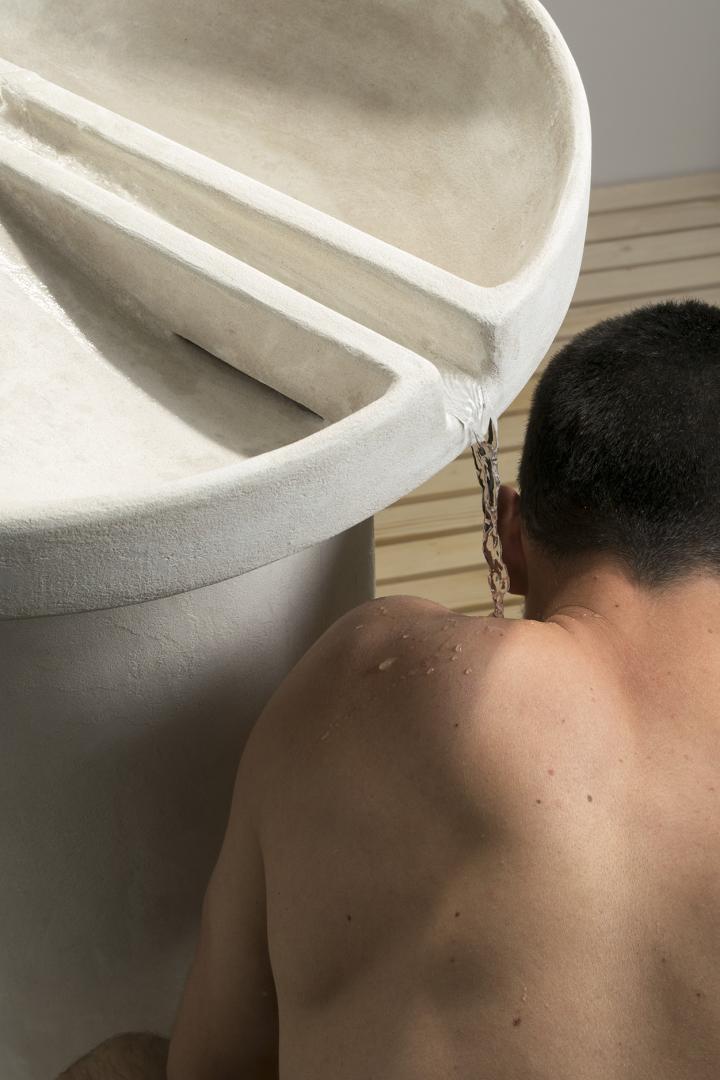
1. A smaller sink with volume that matches the reduced water needs for everyday life. Inspired by sub-Saharan wells, it allows the user to stock the excess of water for further use by dissociating water entry and evacuation.
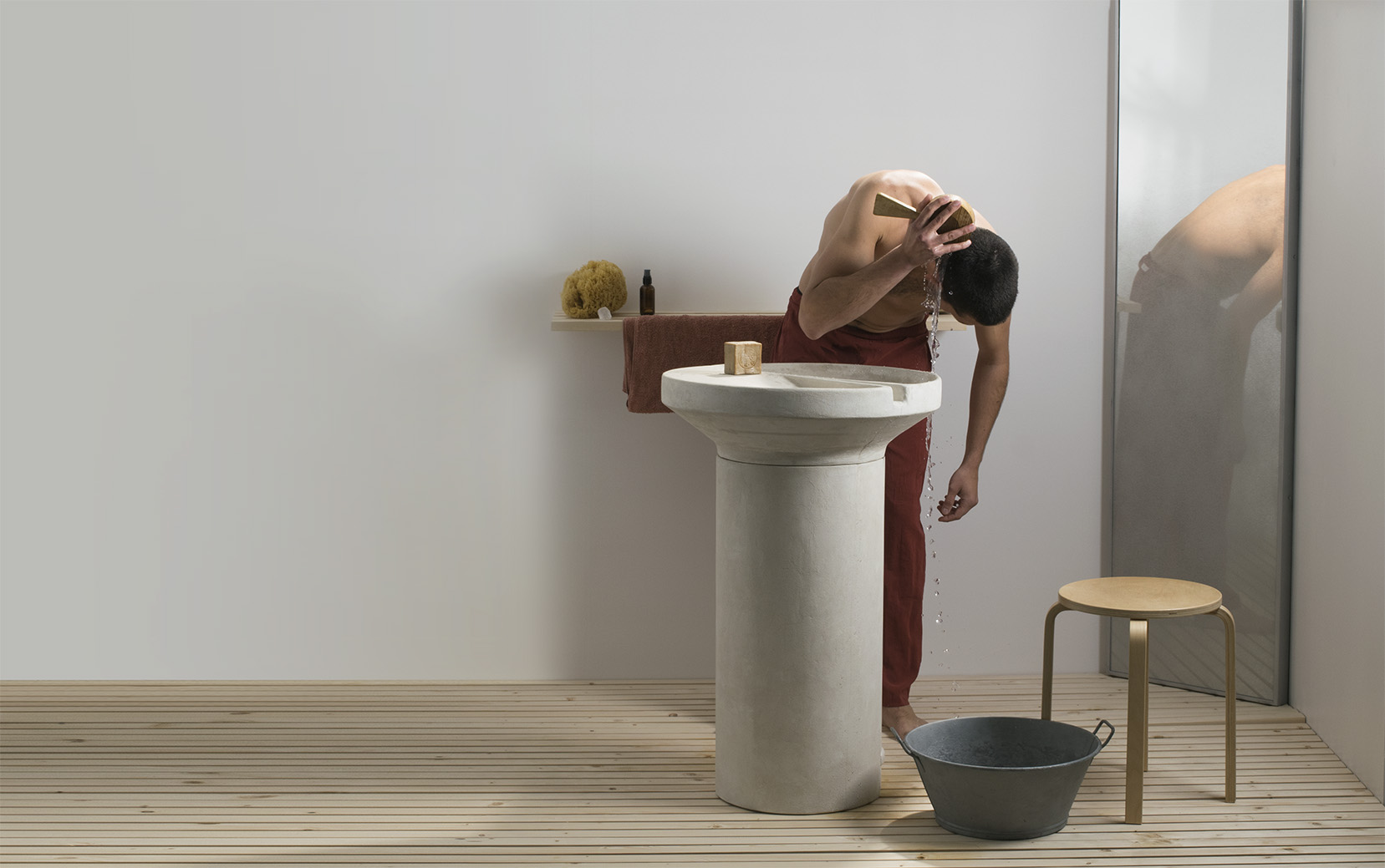
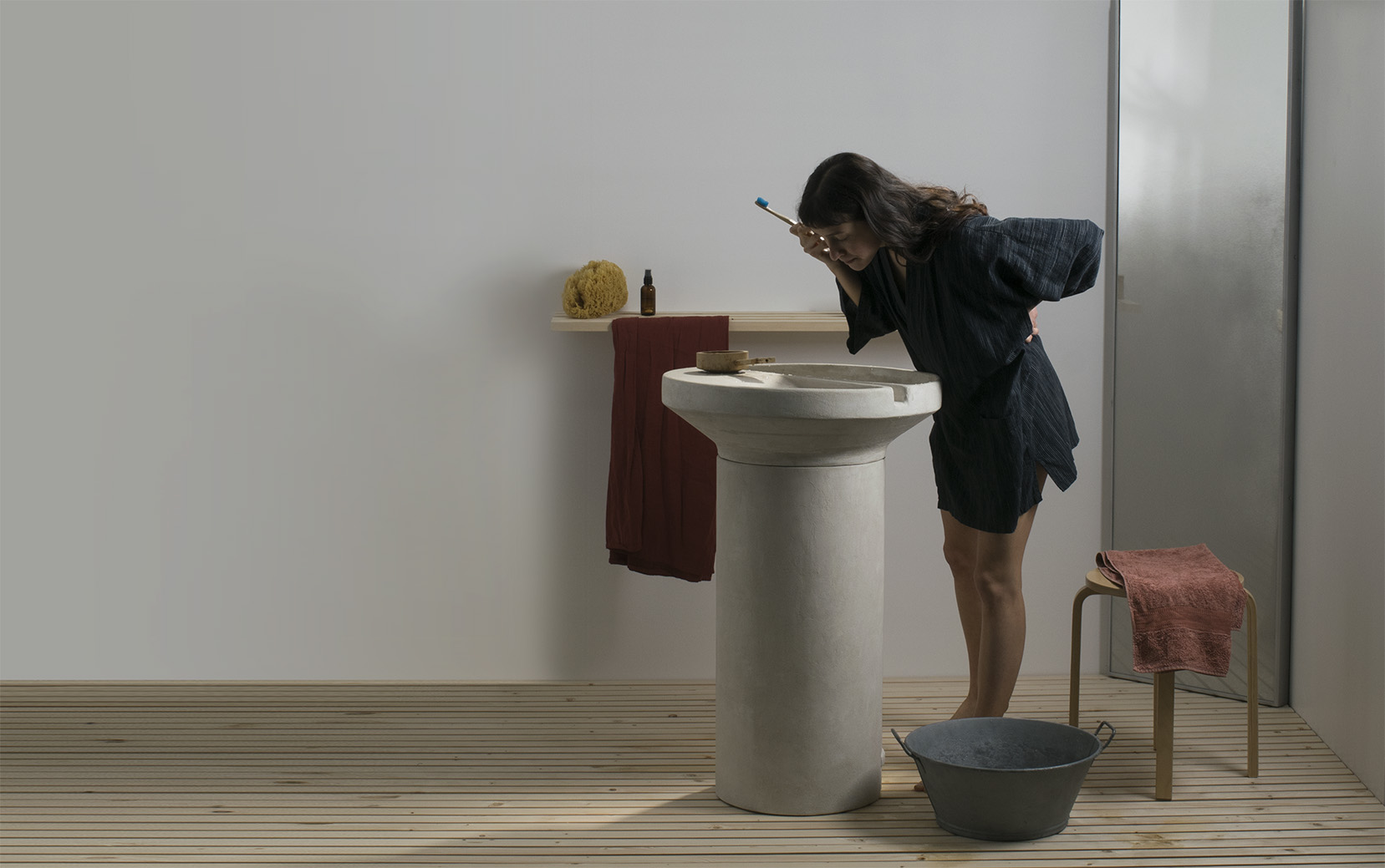
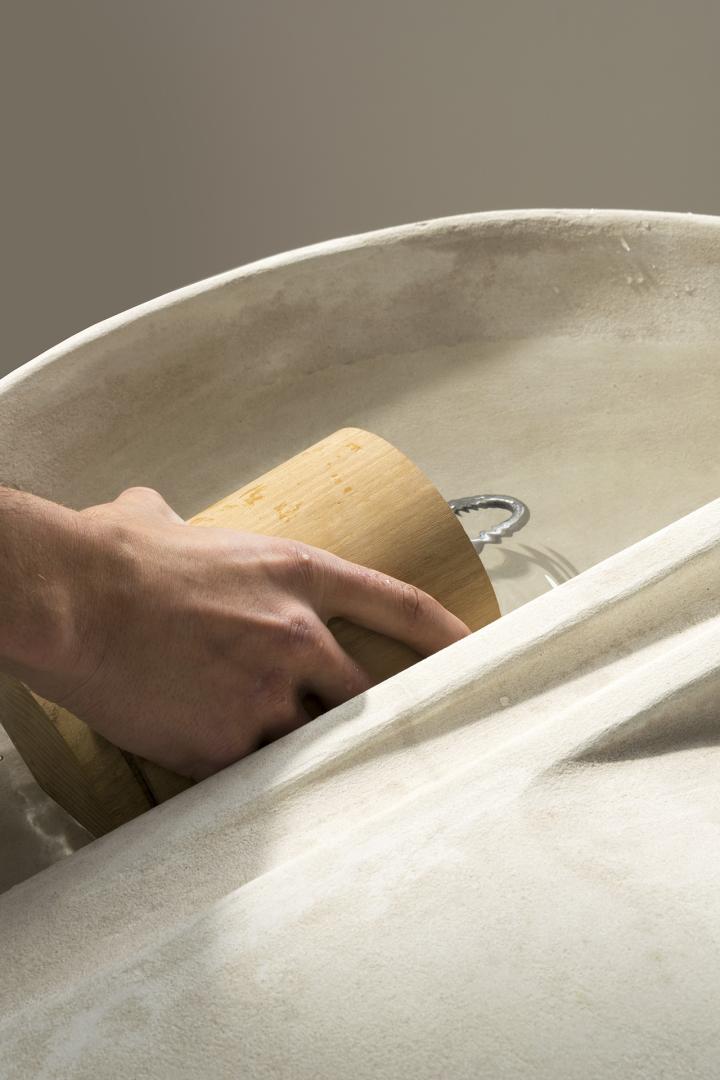
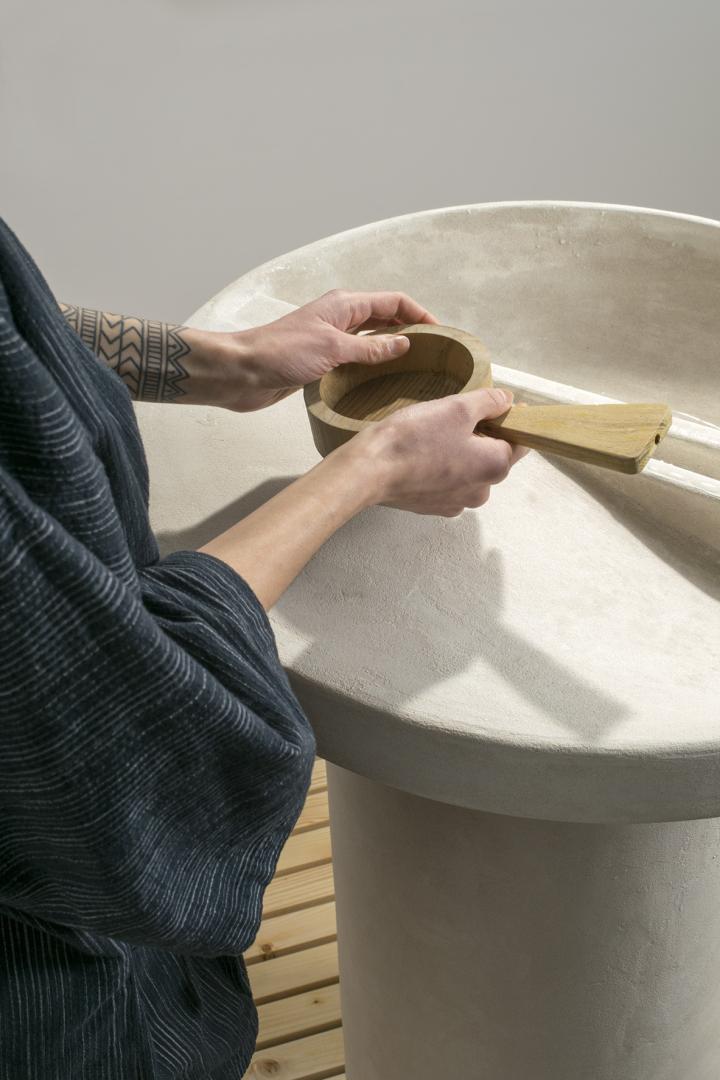
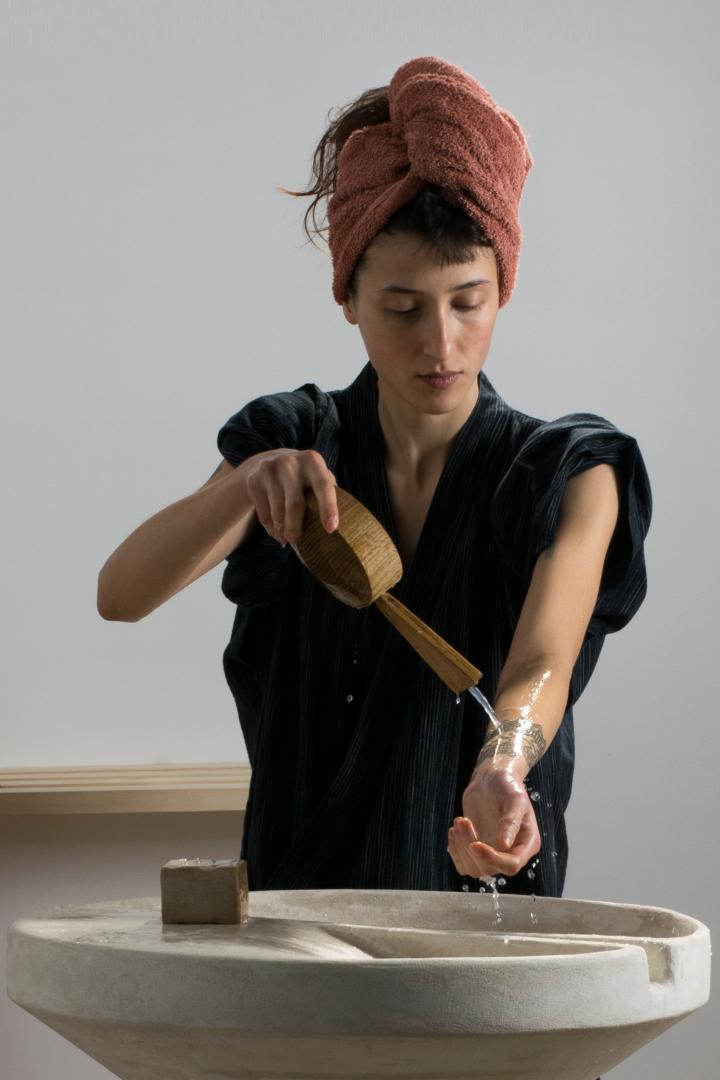
2. A water scoop made from acacia. This tool can both draw and pour water. When tilted, it pours out just like a faucet the water it contains, enabling better dosage and preventing overconsumption.
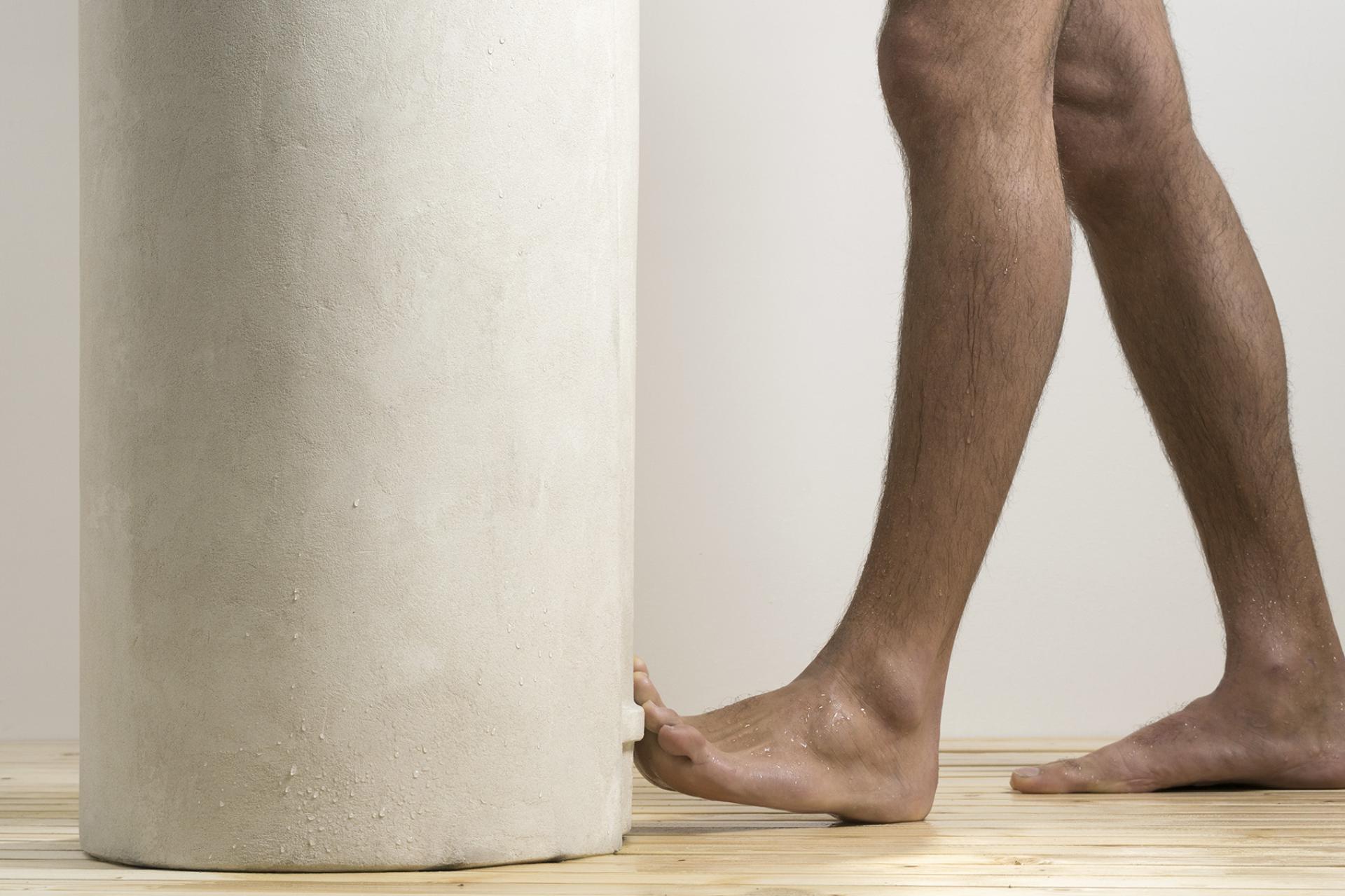
3. A cedar duckboard designed to be both anti-fungal and warm resistant to hide the pipes and provide easy access for disable people.
Key objectives for sustainability
Our domestic water consumption is mainly made in our bathrooms. It is therefore the first place to look to for reducing the amount of water we use daily. However, the general design of bathrooms and the associated gestures and habits date back to the 1950s, a time where drinking water was considered limitless.
The way we lead our domestic lives has a strong impact on our environment. If we want to change our habits, we need to change our surroundings, the architectural systems we live in and the gestures they generate. This implies to reconsider our relationship to comfort and to create new archetypes in line with today’s environmental challenges. By proposing a new set of bathroom fixtures, materials and habits, « Wellness » offers a sensible and comfortable experience thats saves water and electricity, without conveying a feeling of austerity.
The tests made during the design of the system showed that we can save up to 8 times our water consumption and 30% of electicity.
Key objectives for aesthetics and quality
The general design of bathrooms dates back to the 1950s, lead by a hygienist approach originated from western world. The occidental architects chose materials who could easily be washed without regarding with the comfort they could or couldn't provide.
In eastern and southern cultures other choices of materials and habits were made and still endure today because they were the most suited way to save water and get clean at the same time. Far from any orientalism, those materials and architecture are design choices that may become interesting to face water shortage. Furthermore our way of taking care of our body changes the last 20 years and we progressively pay more attention to our skins and the way we treat it. Very hot water, long baths, strong soaps prove themselves harmful and we look to eastern rituals to rediscover a way of taking care.
Hammam, onsen or Turkish bath are at the same time functionnal and convey a strong identity that can be used to change habits by providing a new aesthetic experience for the western bathroom. In this architecture, the limited water use allow to employ warm material like acacia and cedar wood (both antibacterial and waterproof), textured ceramic and soft wall plaster to replace the traditional floor tile and white bathtub.
Key objectives for inclusion
By replacing slippery floor tile and unpractical fixtures (like bathtub and shower tray) by a ground-level floor made of wood I removed the main dangers for disabled people, the elderly and kids alike. This architecture can be adapted for every bathroom from a cabin in nature to a parisian appartment because it only needs simple elements : glass heater, the basin (sink) and the floor to hide pipes.
Innovative character
The innovation rely on the experience provided rather than on a single object. It's the only way to really change habits and avoid the "rebound effect" induced by efficiency amelioration. Thus the main idea was to address heating by replacing the energically unefficient water flow by a pure warmth flow given by the infrared. From that point I could design anew the bathroom space and reorganize the water circulation. In that perspective I developped three complementary and essentials elements :
1. Glass heater
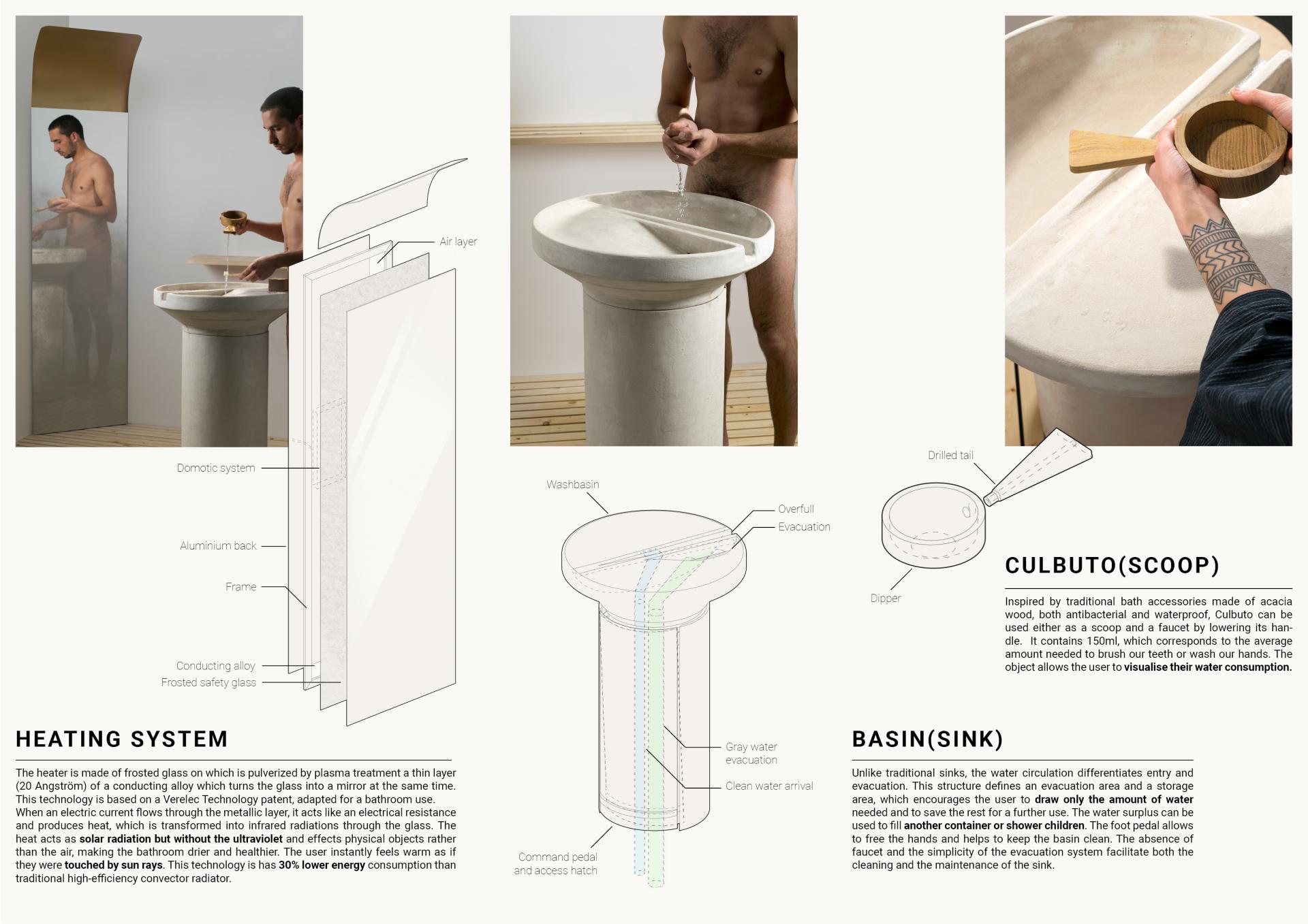
The heater is made of frosted glass on which is pulverized by plasma treatment a thin layer (20 Angström) of a conducting alloy which turns the glass into a mirror at the same time. This technology is based on a Verelec Technology patent, adapted for a bathroom use.
When an electric current flows through the metallic layer, it acts like an electrical resistance and produces heat, which is transformed into infrared radiations through the glass. The heat acts as solar radiation but without the ultraviolet and effects physical objects rather than the air, making the bathroom drier and healthier. The user instantly feels warm as if they were touched by sun rays. This technology is has 30% lower energy consumption than traditional high-efficiency convector radiator.
2. Basin (sink)
Unlike traditional sinks, the water circulation differentiates entry and evacuation. This structure defines an evacuation area and a storage area, which encourages the user to draw only the amount of water needed and to save the rest for a further use. The water surplus can be used to fill another container or shower children.
3. Culbuto (scoop)
Inspired by traditional bath accessories made of acacia wood, both antibacterial and waterproof, Culbuto can be used either as a scoop and a faucet by lowering its handle. It contains 150ml, which corresponds to the average amount needed to brush our teeth or wash our hands. The object allows the user to visual their consumption.