Recycling of airport waste
Basic information
Project Title
Full project title
Category
Project Description
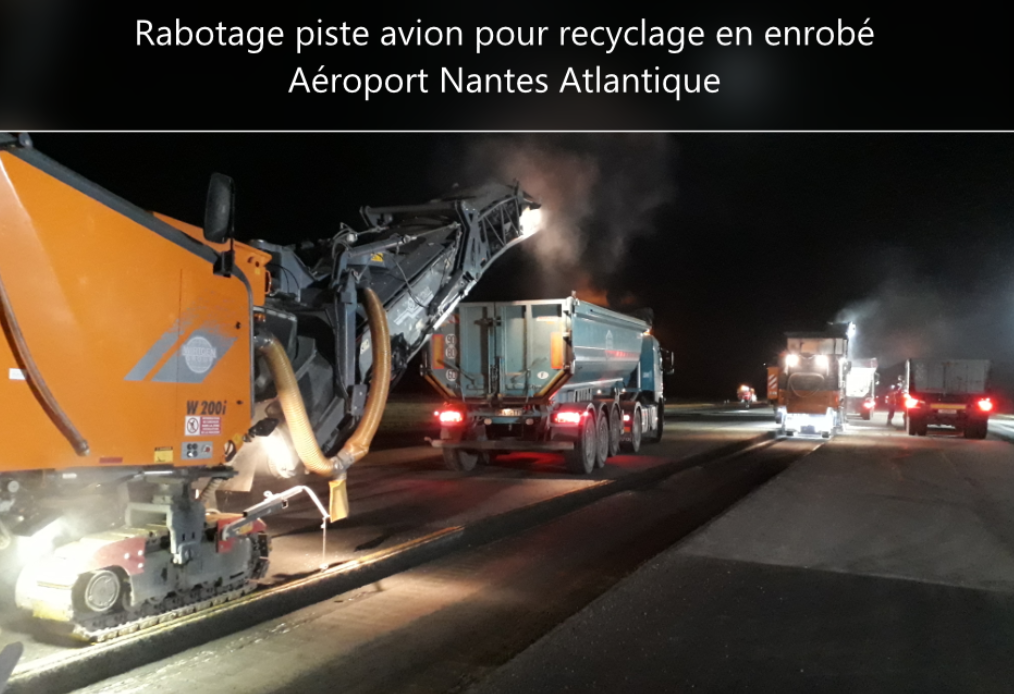
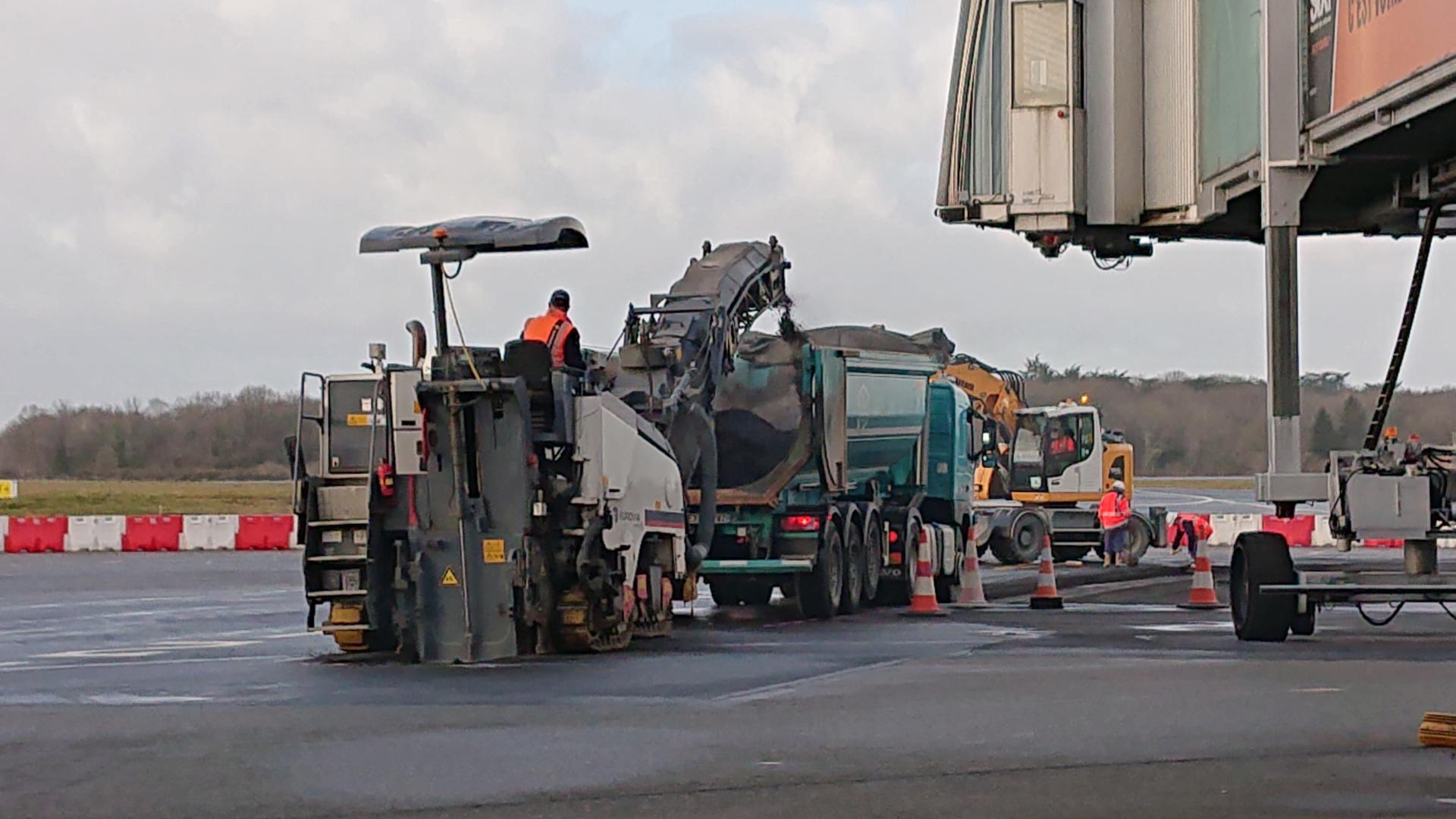
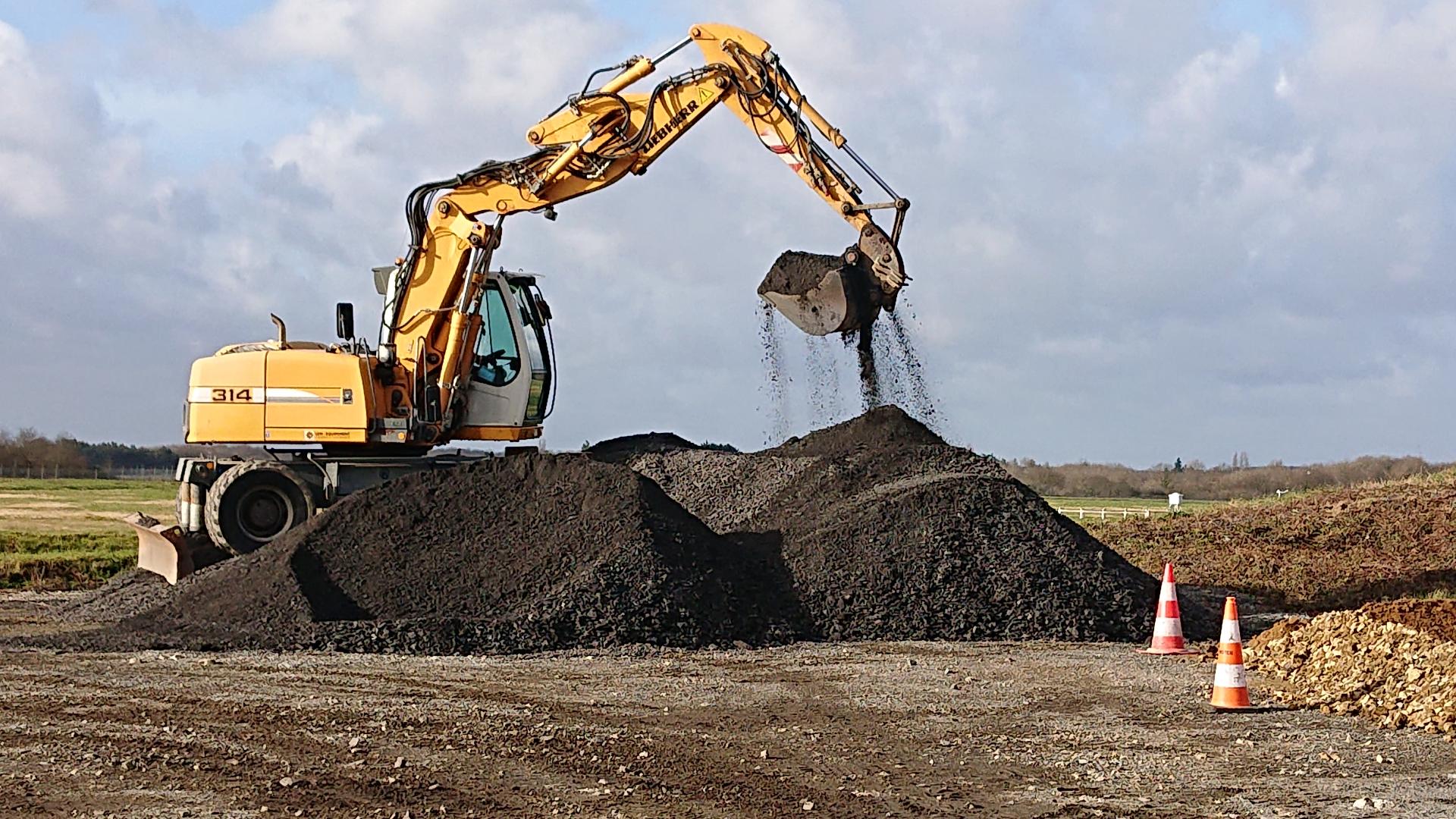
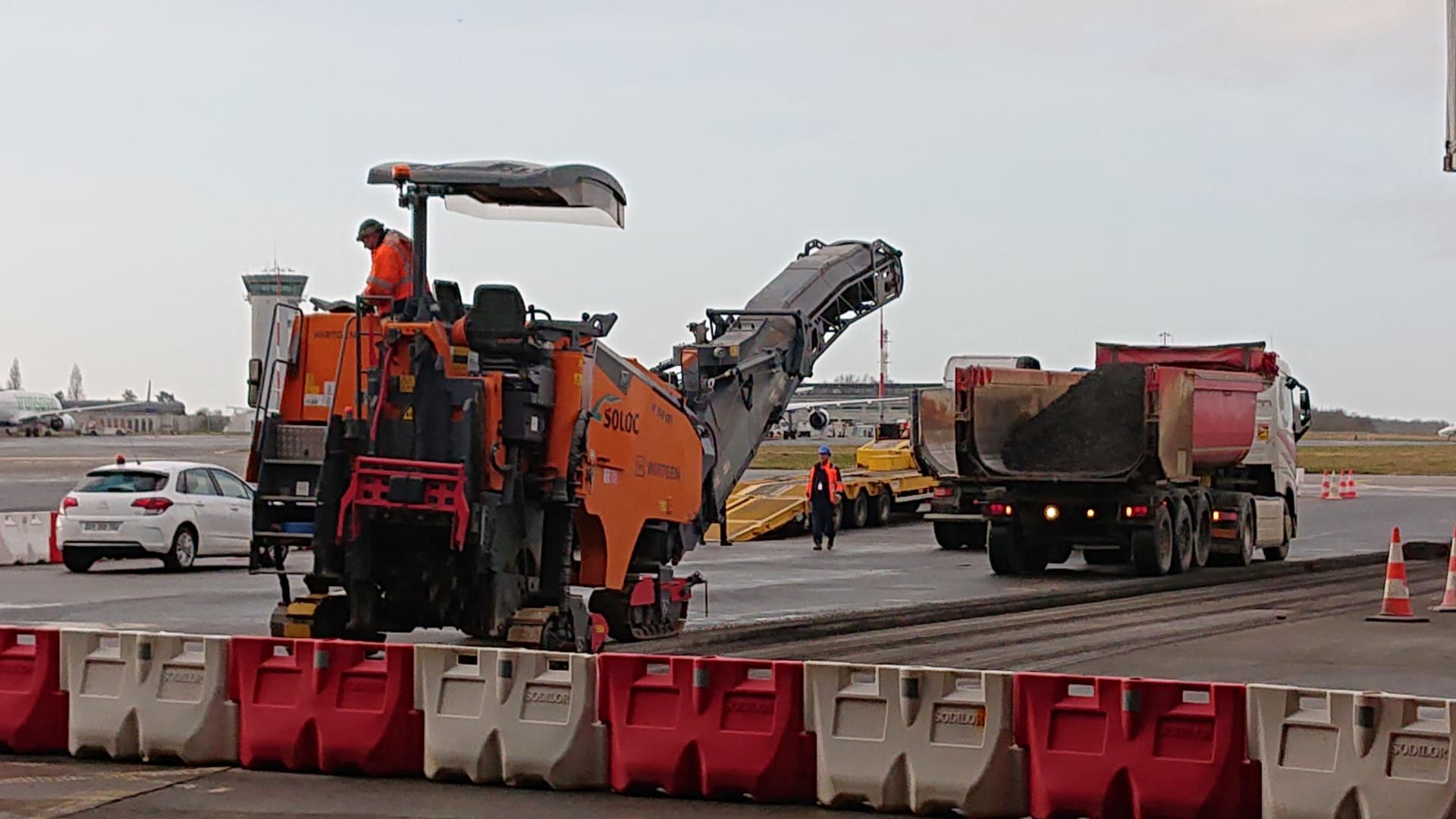
Repair work on the airport runways and aircraft stands generates a large volume of waste, which must be managed: store, treat, and recycle. As part of Nantes Atlantique airport's commitment to ISO 14001, we had to find a sustainable solution to recycle or reuse those wastes.
Project Region
EU Programme or fund
Description of the project
Summary
Repair work on the airport runways and aircraft stands generates a large volume of waste, which must be managed: store, treat, and recycle. As part of Nantes Atlantique airport's commitment to ISO 14001, we had to find a sustainable solution to recycle or reuse those wastes.
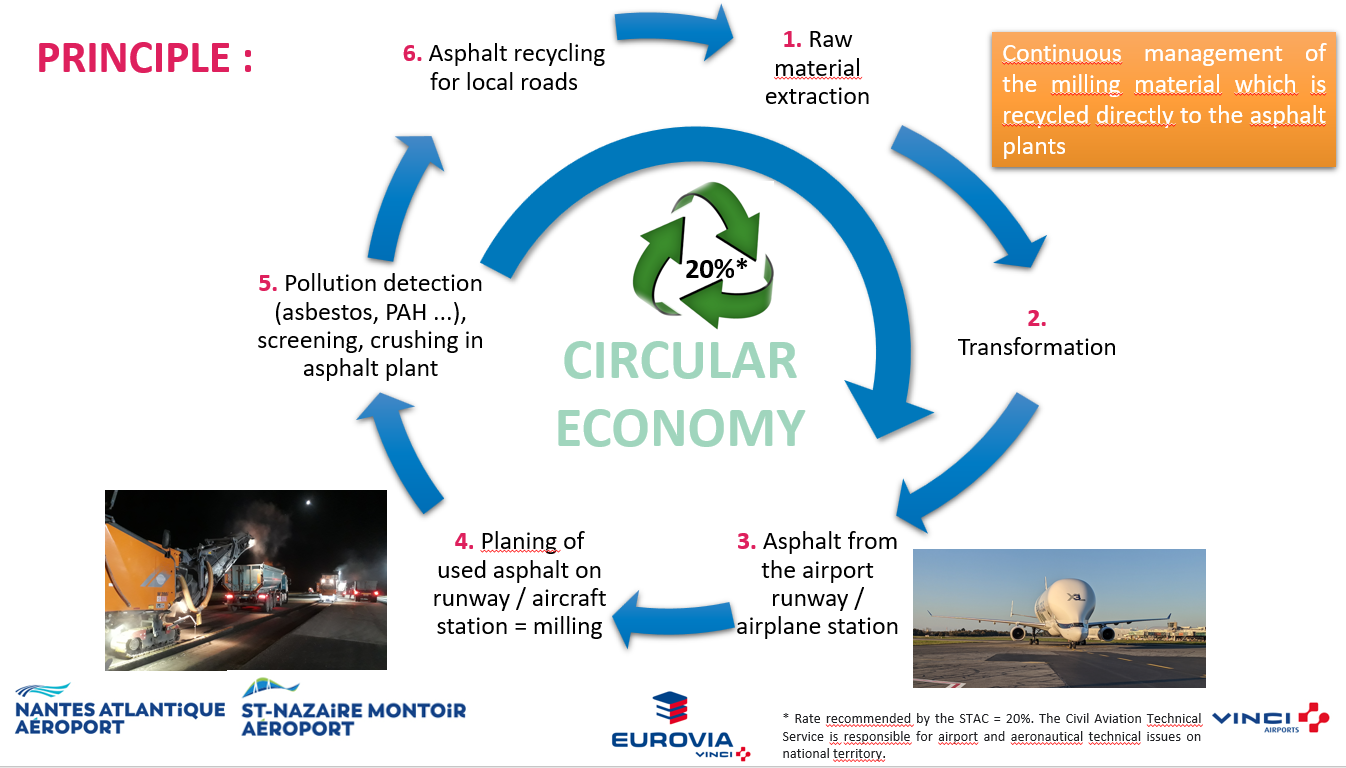
Reuse of airport runway milled material in asphalt mix formulations for the rehabilitation of the runway/airplane stand and the department's roads and highways, which reduces both the use of raw materials for asphalt mix and the amount of waste to be treated. Since the Grenelle de l'Environnement, road manufacturers have committed to reintroducing a percentage of the freshly made asphalt from the construction sites into their formulations.
Mr ECHELARD, head of Eurovia's asphalt division, and the airport team: Jean-Marc Duloc, Technical Management and Maintenance Manager, and Jean-Marc Morice, Lighting and Infrastructure Coordinator
Key objectives for sustainability
Over the period 2011-2020, we planed 75,000 tons of asphalt on the runways of Nantes Atlantique airport and Saint-Nazaire-Montoir airport. 20% of this material is recycled (according to the recommendations of the French Civil Aviation Technical Service) in asphalt formulas directly for the renovation of our runways and the rest for the roads of the department (about 300 km).
The benefits of this operation for the sustainability are :
- At the environmental level :
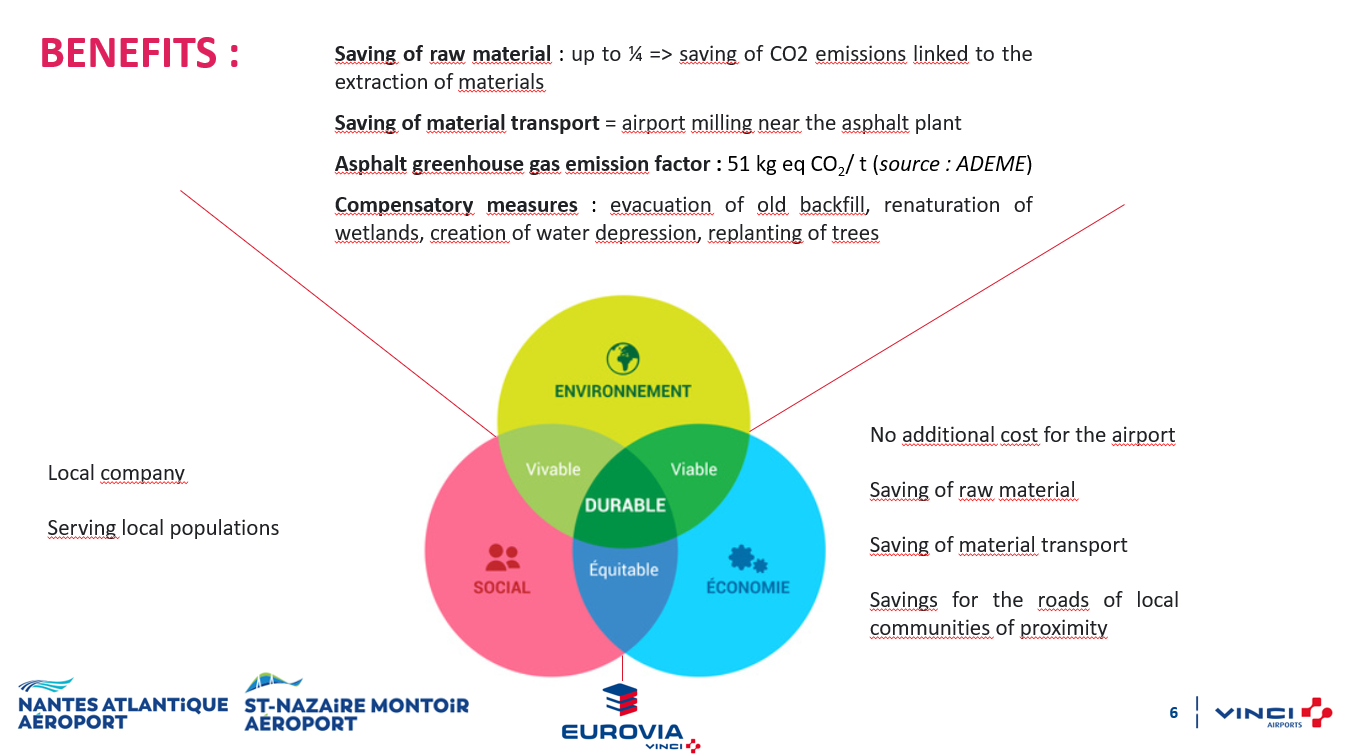
- Saving of raw material extraction (up to ¼) associated with the saving of CO2 emissions related to the extraction of materials
- Saving of material transportation: airport near the asphalt plant.
- Reduction of waste
- At the economic level :
- Material savings
- transport savings
- At the societal level :
- local company (Eurovia)
- renovation of the department 's roads for the benefit of citizen
However, the transformation of materials and the laying of asphalt emit atmospheric pollutants. We have taken this environmental impact into account by deploying compensatory measures such as the renaturation of wetlands and the creation of water depressions on airport platforms.
Key objectives for aesthetics and quality
It is about a project of renovation, of securing the track and the ASTs.
The benefits of this operation for the environment are threefold:
- Saving of raw material extraction (up to ¼) associated with the saving of CO2 emissions related to the extraction of materials
- Saving of material transportation: airport near the asphalt plant.
- Reduction of waste
However, the transformation of materials and the laying of asphalt emit atmospheric pollutants. We have taken this environmental impact into account by deploying compensatory measures such as the renaturation of wetlands and the creation of water depressions on airport platforms.
Key objectives for inclusion
We have not integrated personnel with disabilities or in integration into this project.
Results in relation to category
The benefits of this operation for the environment are threefold:
- Saving of raw material extraction (up to ¼) associated with the saving of CO2 emissions related to the extraction of materials
- Saving of material transportation: airport near the asphalt plant.
- Reduction of waste
How Citizens benefit
We called on our partner Eurovia for this project which is a local company. And this project makes it possible to serve the citizens of the department thanks to the renovation of the roads of the department.
Innovative character
Incorporation of materials or waste resulting from airport runway rehabilitation, into asphalt mixes used near the airport platform.