SCINTILLANT
Basic information
Project Title
Full project title
Category
Project Description
Starting with parameters close to different contemporary languages of expression (from
Land Art or Art in landscape, kinetic art or biomimetics) and action (cross collaboration professionals/students/citizens), artistic installation of activation of the urban "green space".
Project Region
EU Programme or fund
Description of the project
Summary
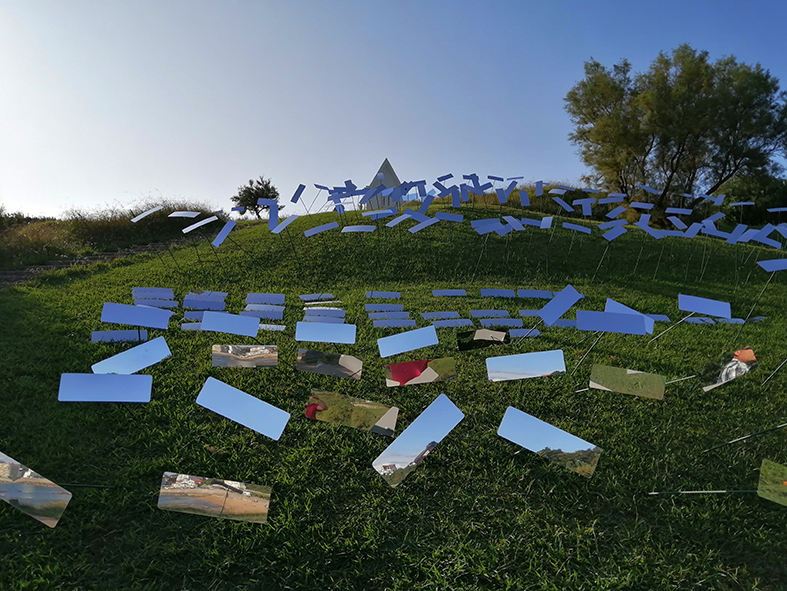
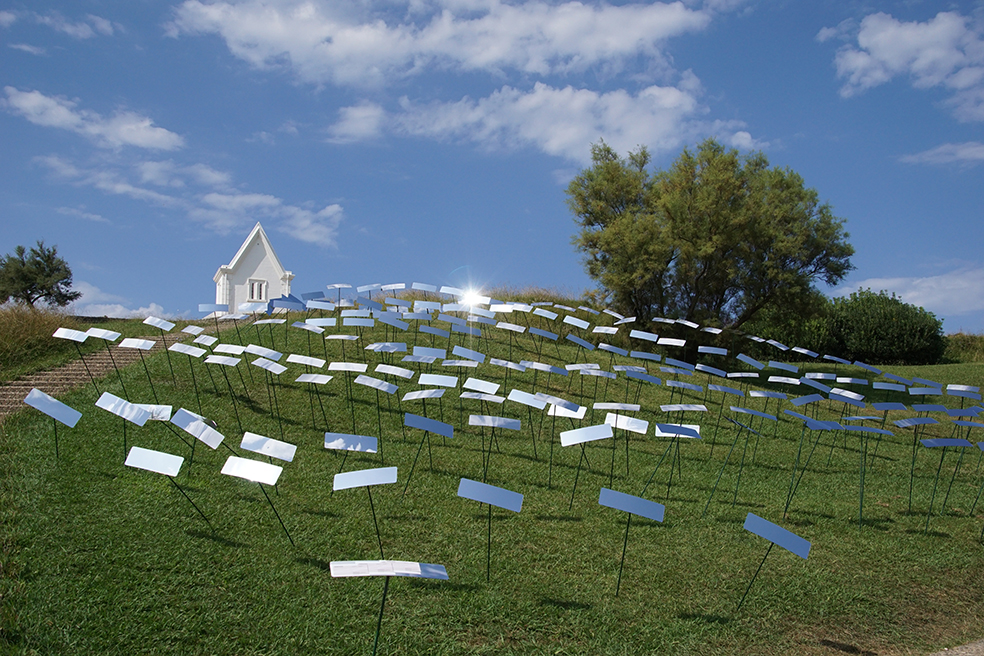
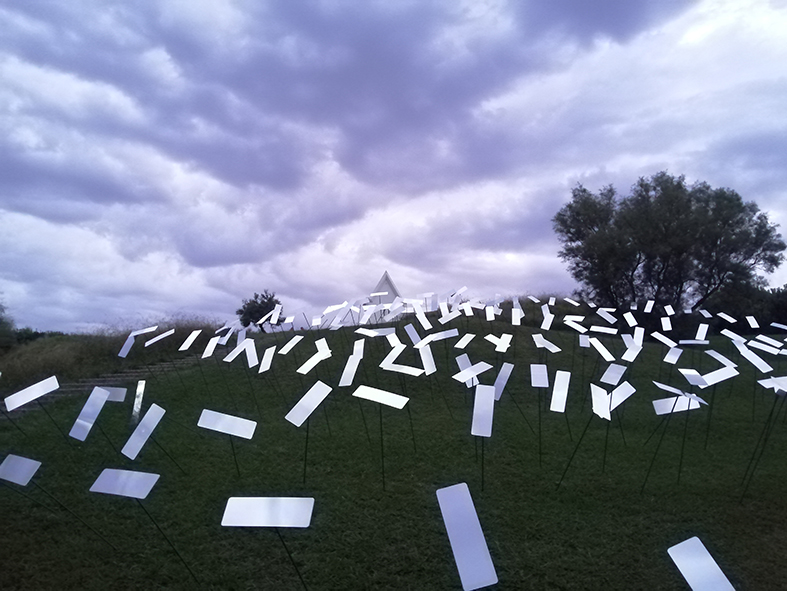
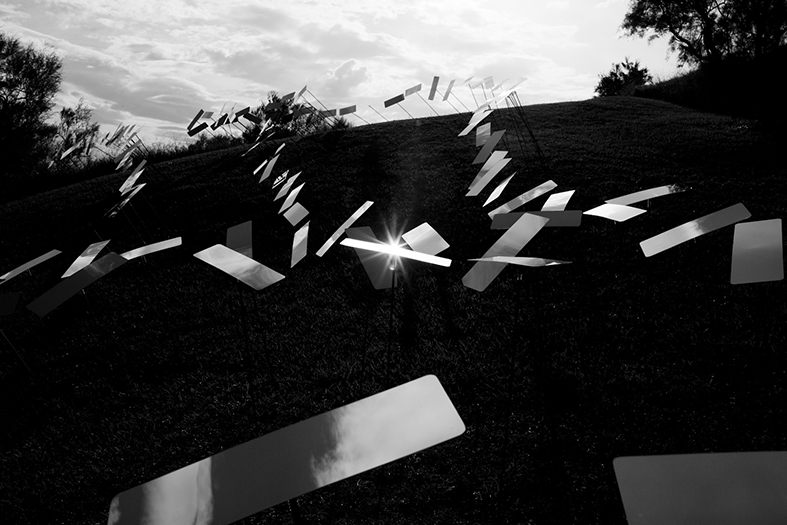
SCINTILLANT is a moving sculpture upon which light takes shape. The mathematics of
nature and its emerging behavior, which we can observe in groups of birds, fish and in so many other systems, is the biomimetic inspiration of this work, which also combines the interest in the cybernetics of its artists.
The installation consists of an activated system, composed of mirrors, that ondulate to the pace of the wind beginning with a natural order, in this case the movement, and dynamics that are found in nature, a work based on biomimetics but of a higher order, with emerging properties; unexpected behaviours in a higher metanivel arising from the
interaction of each individual.
SCINTILLANT is a work that manages to generate a link with the viewer through
contemplation, where the viewer himself creates his own scene in his mind. Through
contemplation, the work takes on different levels, both visually and conceptually depending on the distance at which it is observed. On a first level seen from close proximity, one observes one's own reflection or mirage generated by the mirror itself (the individual). On a second level, observed from a greater distance, mirrors begin to act as a collective, a set of elements that evoke or simulate the surface of the sea. And finally, on a third level, in which the movement made by the mirrors seen from a distance, containing the light, the idea, one notices the emergence of a collective system where everyone has the same dynamics of action.
Key objectives for sustainability
The sustainability of the work is generated by its own reuse, since the elements used for the development of the installation, are completely autonomous of any type of energy or technology added, so there is no wear, maintenance or need for spare parts, a priori, assuming a possibility of itinerancy, repositioning anywhere else without implying economic or deterioration destabilization. The installation is based precisely on the sustainability of an ecological design, completely harmless environmentally speaking and that is generated with a minimum prior investment, with hardly any subsequent wear of the materials used.
Key objectives for aesthetics and quality
Aesthetics understood as the philosophy of forms, is a fundamental part of SCINTILLANT, causing an allegorical composition that aims to introduce elements of thought and reflection into the end result: the parallel experience.
- Shoals or schools of fish, a collective intelligence that generates changing volumes is the conceptual and aesthetic resource that provides an added value of an experience connected to the person's analytical being.
-At first glance you could stay somewhere closeby to where these volumes are formed, but what is the reason for this behavior? This is where the choice, that each individual has, comes in; to follow the movement made by the rest or perform another movement that will then be replicated, thus giving rise to new forms; the chance of choice that the individual himself has, free will. There seems to be no decision or an end to the forms, but through these forms they end up resulting in the group being diverted and drift towards a fundamental issue, survival. These forms that are decided by chances of individual destiny, but are not democratically decided by the group are the ones that determine the survival of the species.
Key objectives for inclusion
- Objective 1. Activate green spaces through a collective action. It has been introduced into urban spaces.
- Objective 2. A project of excellence for the art/design student, which will direct him to a
multi-vision professionalism. The value of a communication project and social projection has been introduced into the physical project worked on by the Graphic Project.
- Objective 3. An Eco-design of environmental respect. Design with the eraser, not
including superfluous elements that do not help achieve aesthetic and reflective expectations.
Results in relation to category
- The project was part of the integration of different disciplines of Art and Design, as well as of the participatory citizen, who feels the need to belong to an urban environment
proposing creative platforms:
- Personal impacts of an experiential character with the environment.
- Social impact, as an intervention that transforms places. The trans prefix, as a current social metaphor for change, dynamism and tolerance. Social impact as a modeling of creative community: SCINTILLANT is able to offer the opportunity to project the citizen as an active social agent (from the artistic point of view).
How Citizens benefit
-The citizen becomes a mentally active spectator, from a critical/reflective position
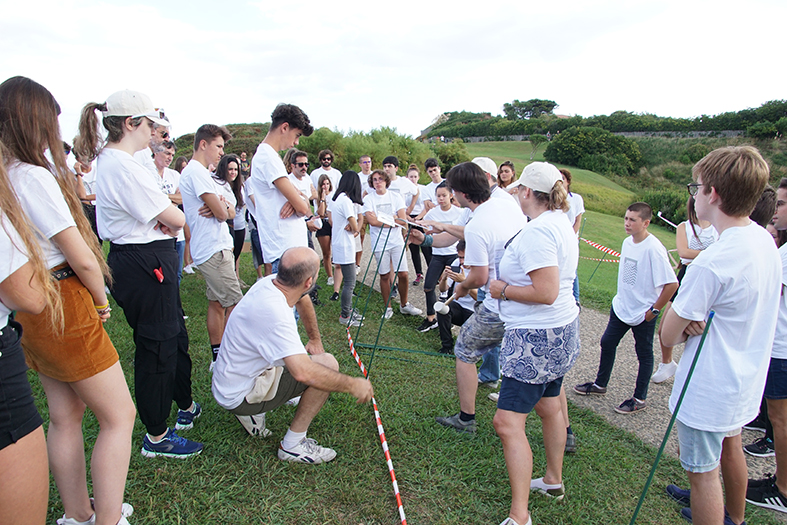
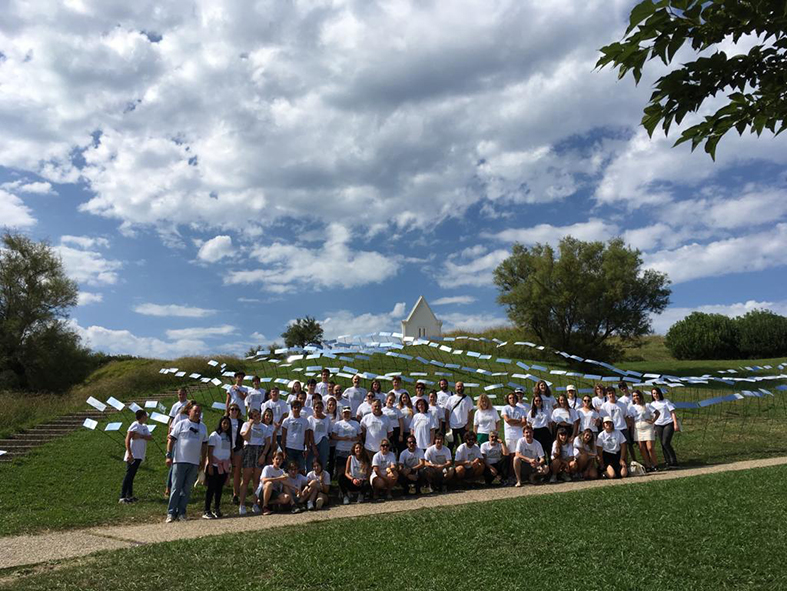
in front of the project, or from the introduction itself into the construction process, since the pieces that make up the installation are developed from a collaborative volunteering that together with the artists who are designers of the assembly and the students who are involved in the work, make up the final assembly.
-The project, from the point of view of the art and design students involved, goes beyond
collaboration in use, as it focuses on learning excellence, towards the real and holistic professional experience: material processing and handling, budget management,
project communication, work group control, etc.
Innovative character
SCINTILLANT starts its innovation from simplicity, enhancing the ecological value of designing movement, kinetic effect, generation of sensations, without a special technology applied or use of electricity or unrenewable energies: wind, air, rain and sun are the drivers of an environmentally harm-free installation.
-In the methodological part, three key factors of the contemporary social fabric are effectively coordinated : the artist, as a creative avant-garde that generates proposals for change; the citizen, aware of a participatory role and creator of its context, as a "living" environment, and the student, a professional future of creative areas, who participates in a unique and much more intense interaction, than a learning apprenticeship could be.