Reincarnation
Basic information
Project Title
Full project title
Category
Project Description
Construction and demolition waste represents one-third of the total waste generated in the EU, most of it ending up in a landfill as its final destination. Respect and care for materials and an appreciation of their inherent values can lead us to create new ways of building. Reincarnation is a project based on the upcycling of bricks and ceramic tiles from the city of Barcelona, to create new construction materials for a circular economy, that represent local identity and material stories.
Project Region
EU Programme or fund
Description of the project
Summary
Reincarnation aims to celebrate what already exists by designing a method for upcycling Construction and Demolition Waste (CDW) for circularity applications in built environments. The project followed a three-part process: mining (observational research, participatory action research, and desktop research), landscaping (insights and material selection), and building (designing and prototyping).
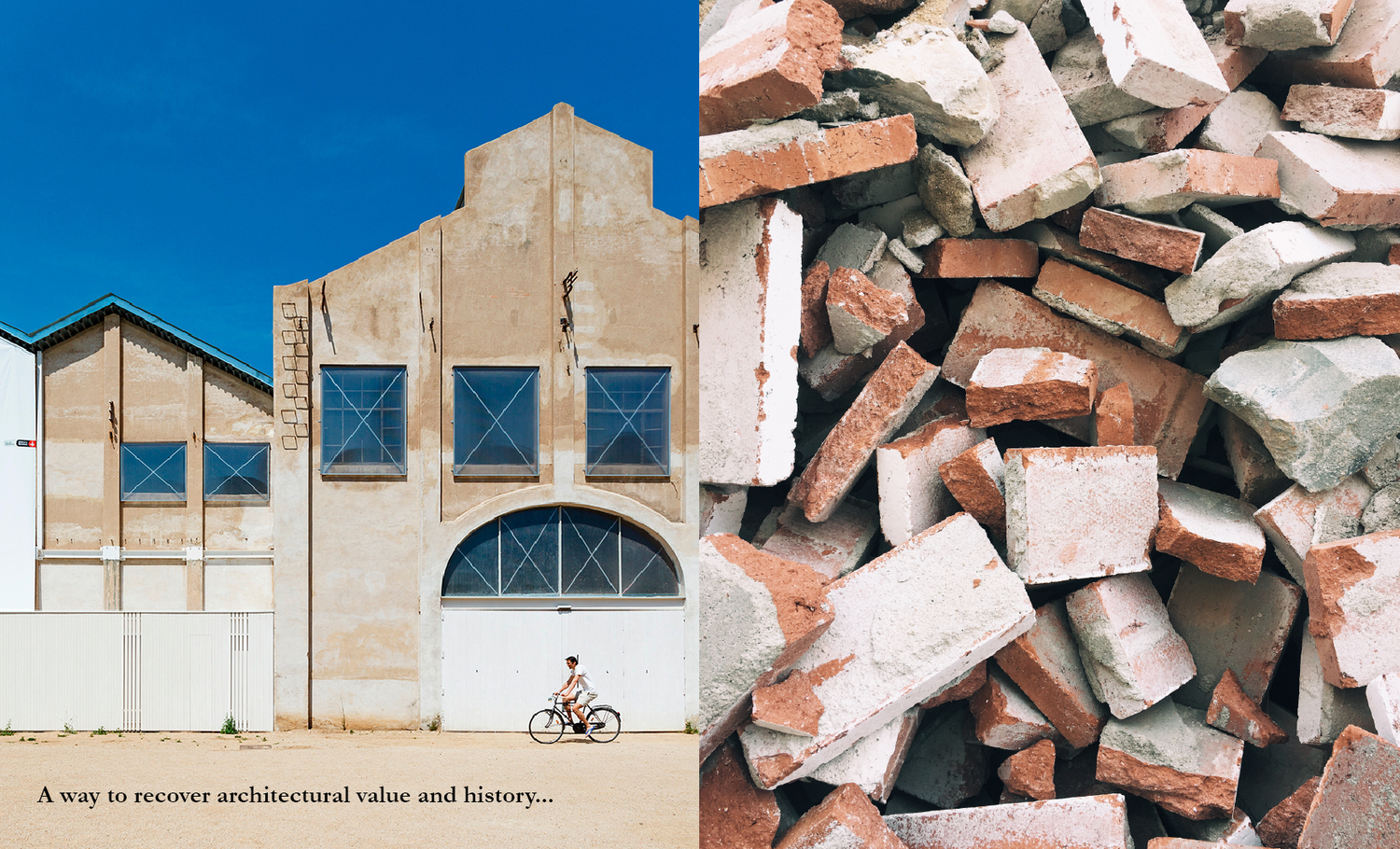
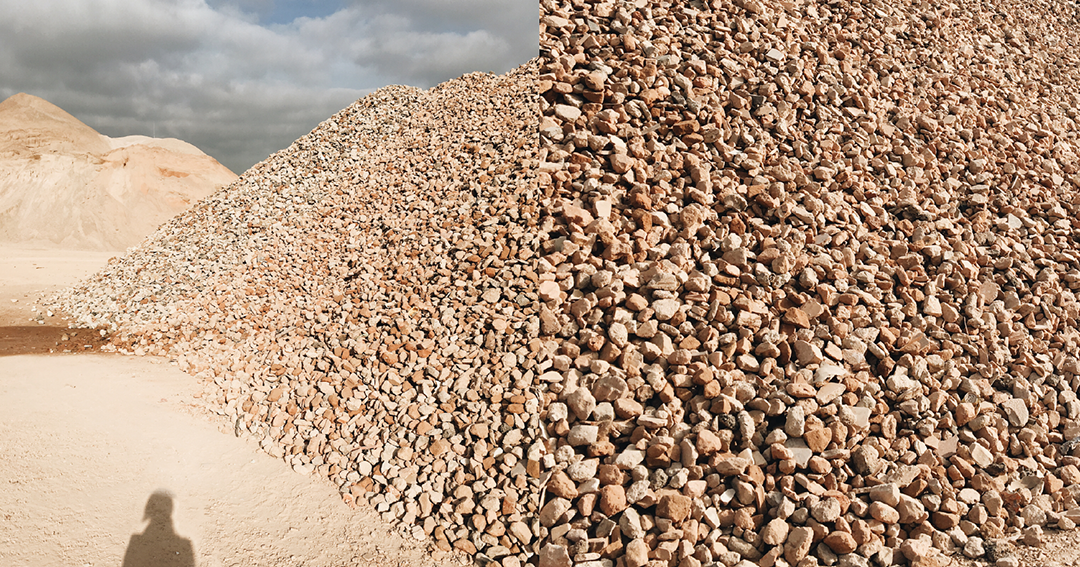
The development was focused on the local CDW waste stream of Barcelona, Spain, a city with a rich architectural tradition and an expanding urban development, where bricks and tile waste were selected as the starting point of the process, for their wide availability, their high durability, and their aesthetic qualities.
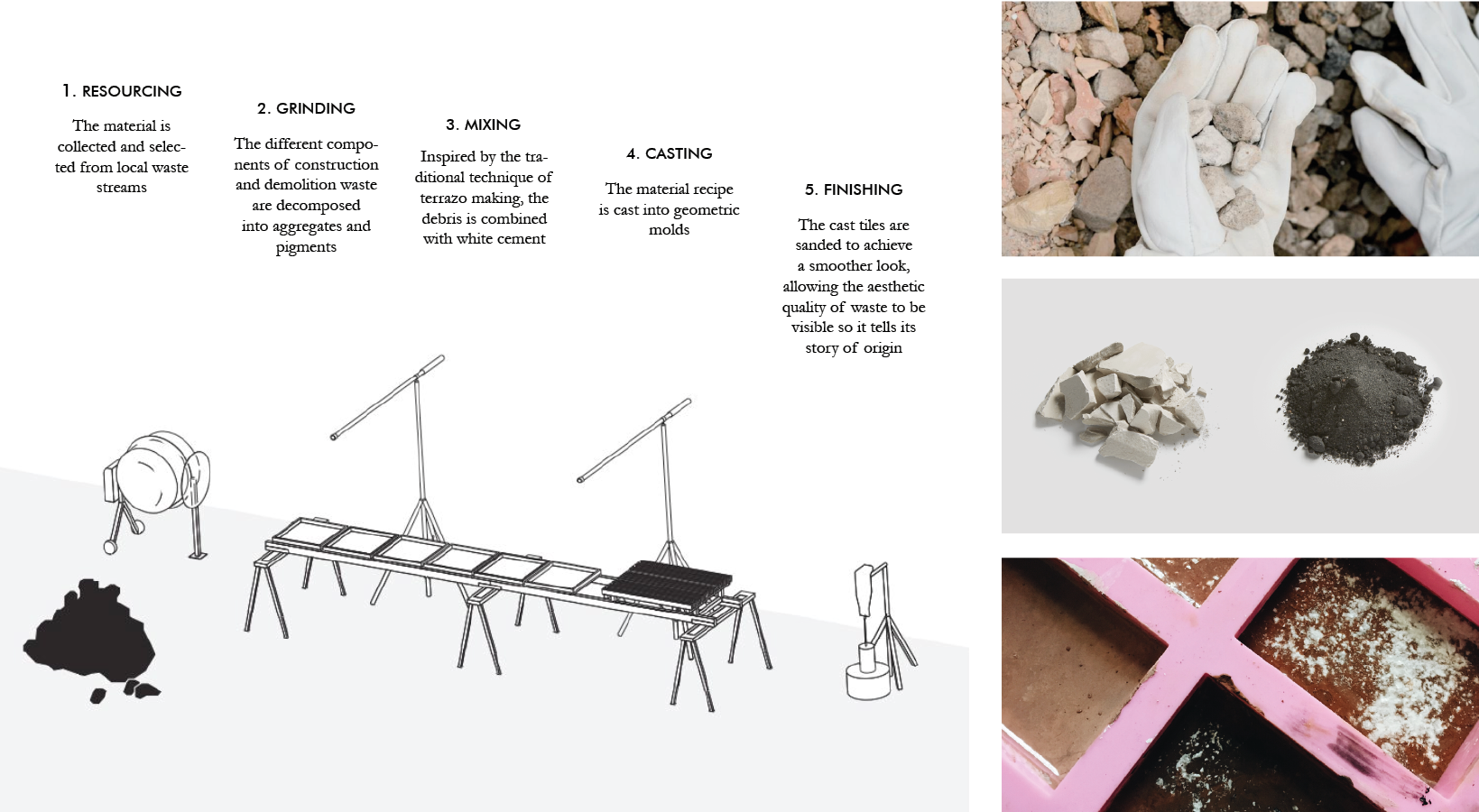
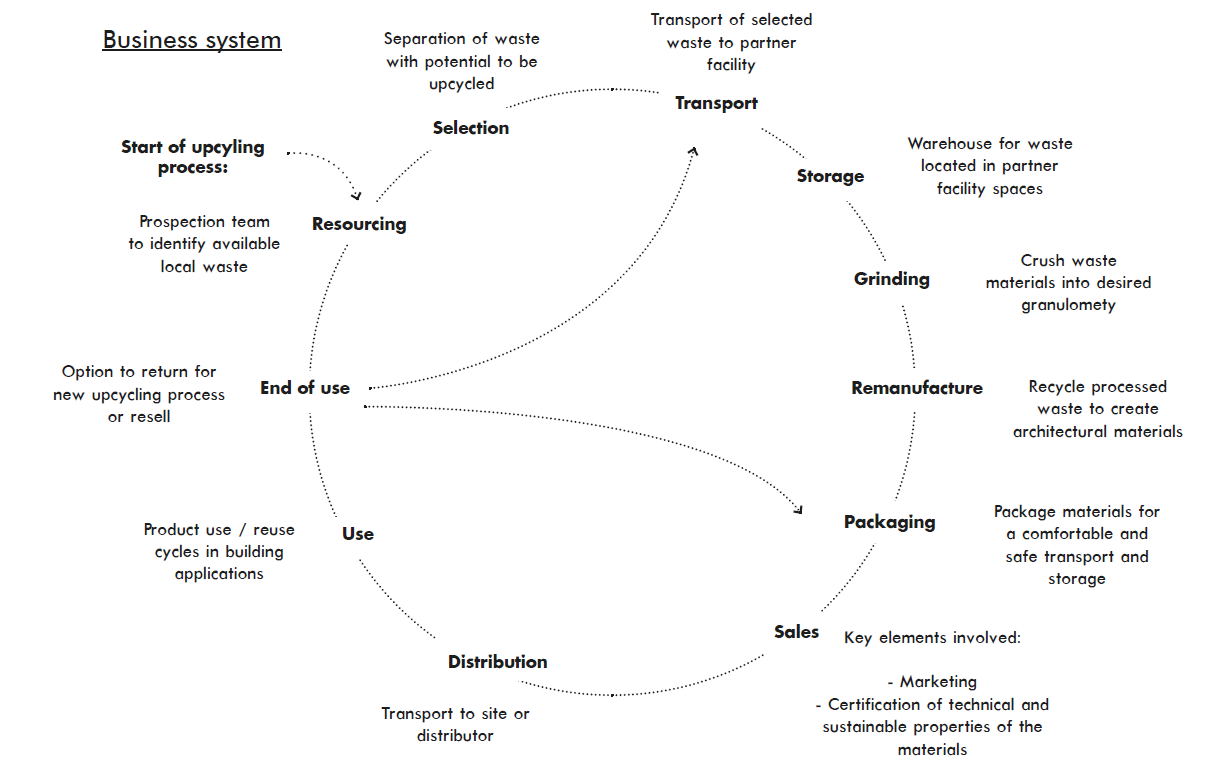
Materials were collected from local sources such as debris bags in streets, local manufacturers, or building sites. The upcycling process consisted of processing the secondary materials through different steps: grinding them in different granulometries, mixing them with a binder, casting them into molds, and finishing them through sanding and the application of non-toxic coatings.
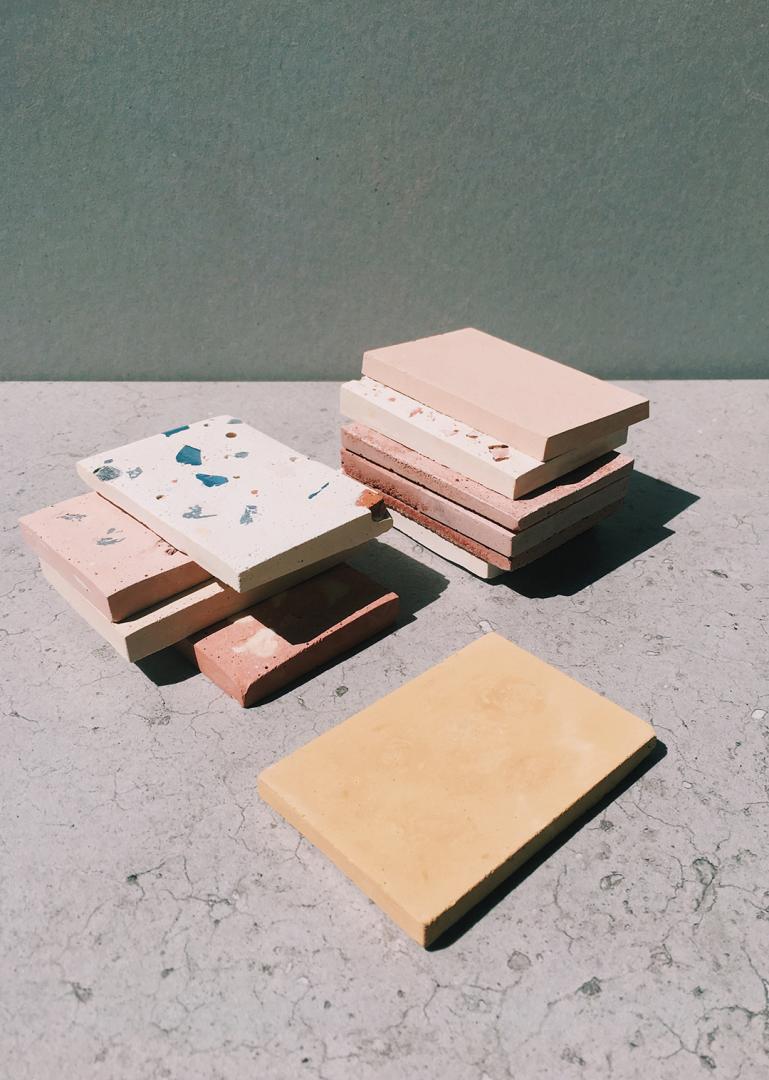
Through this process, sample tiles were created, resulting in materials with a composition of > 85% recycled material, free of volatile organic compounds, and a lower embedded energy and CO2 emissions associated with the material.
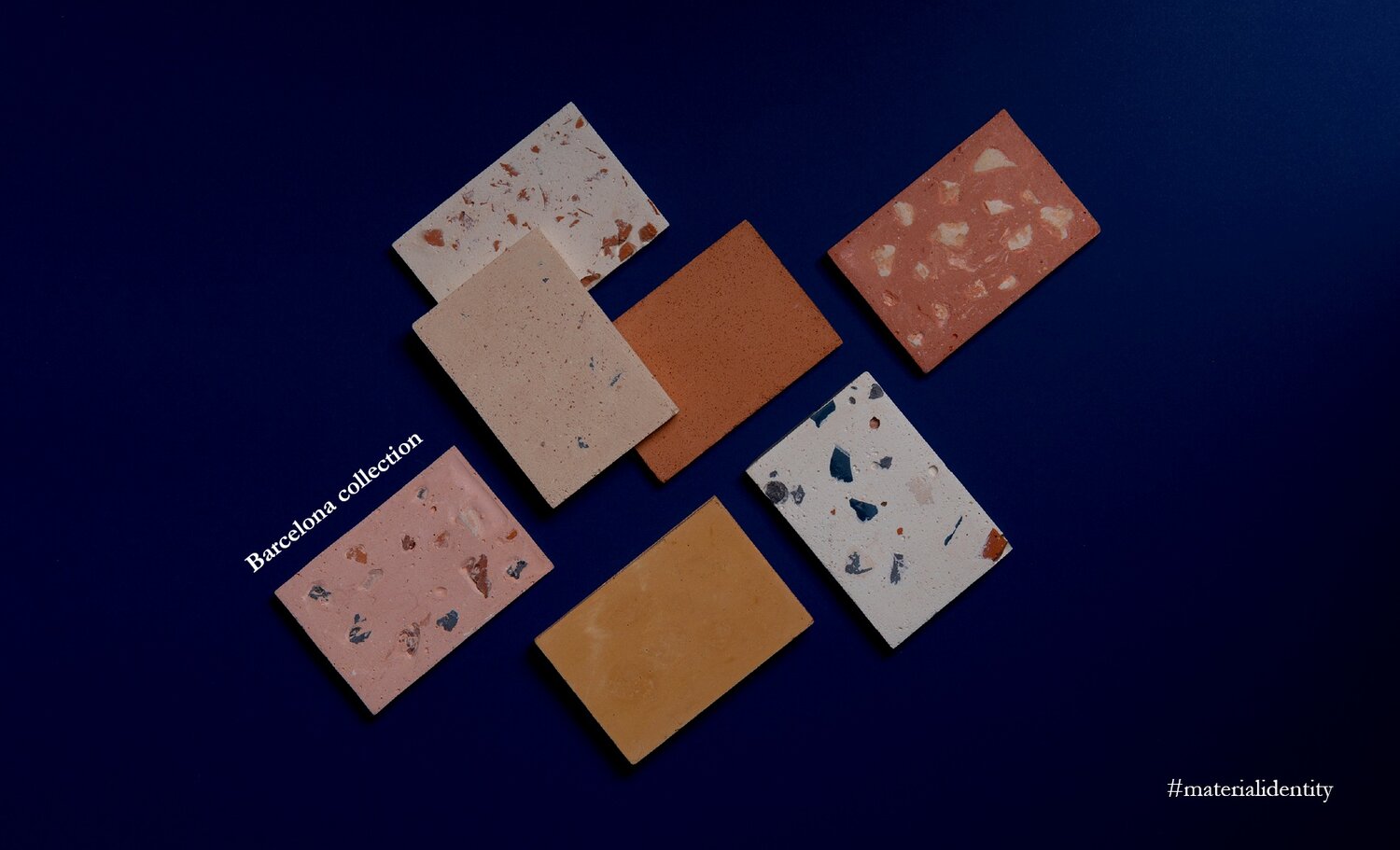
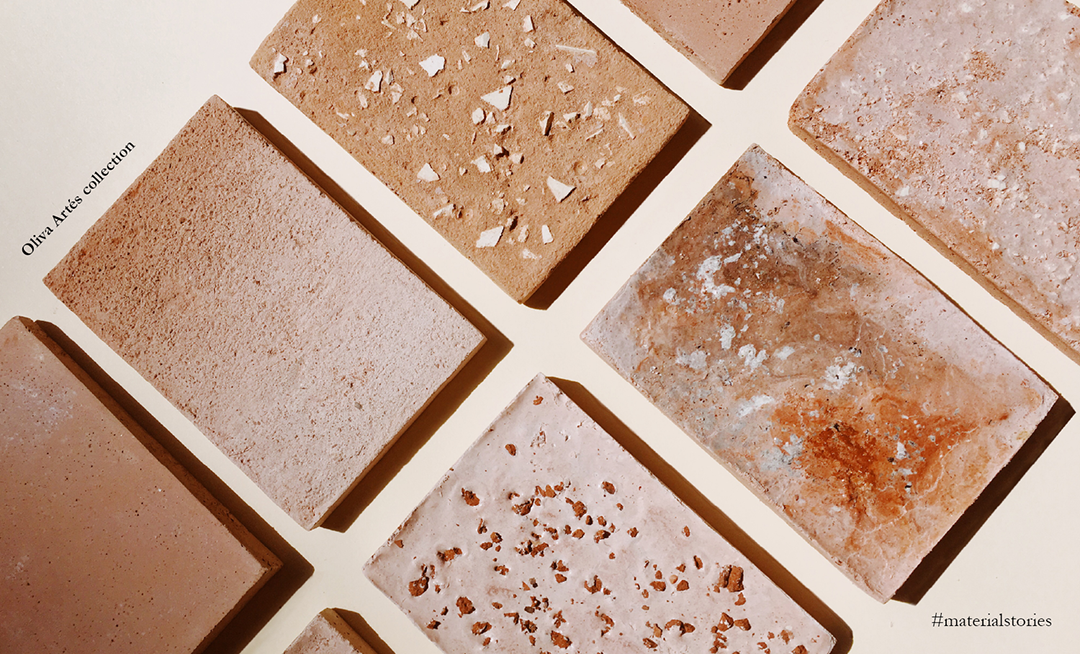
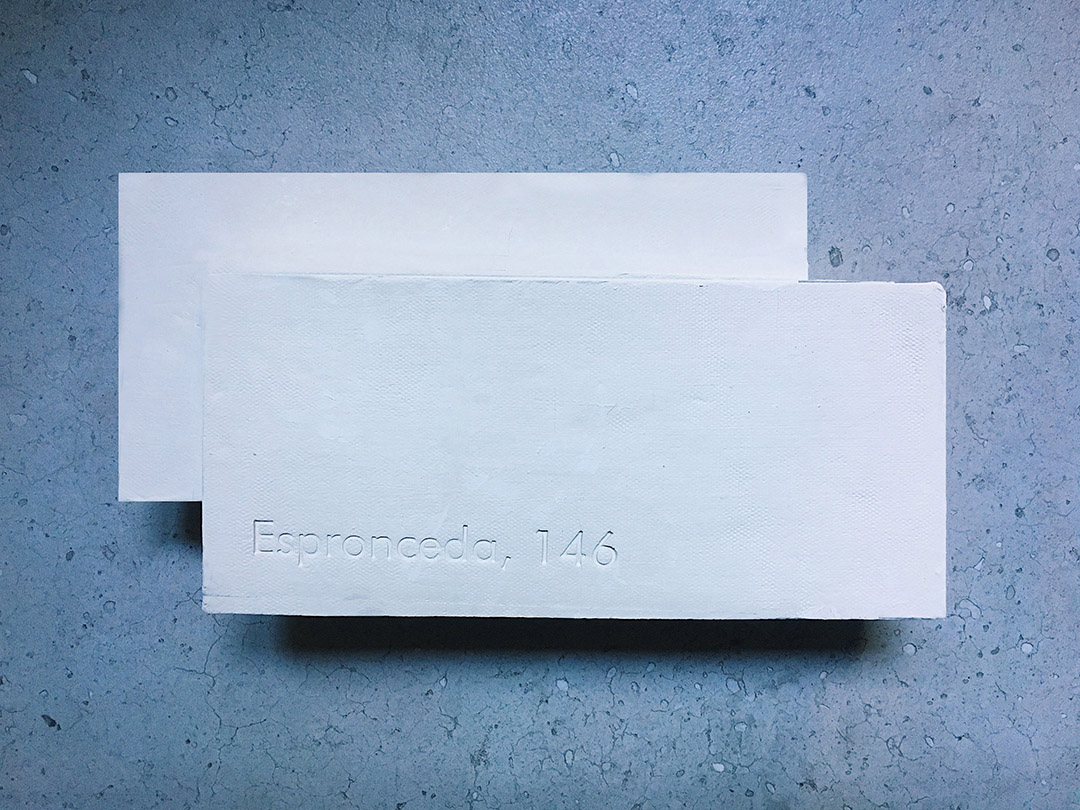
The project resulted in two collections of samples: the Barcelona collection and the Oliva Artés collection (a special edition manufactured from the construction waste of a former factory of the 19th century, located in the district of Poblenou).
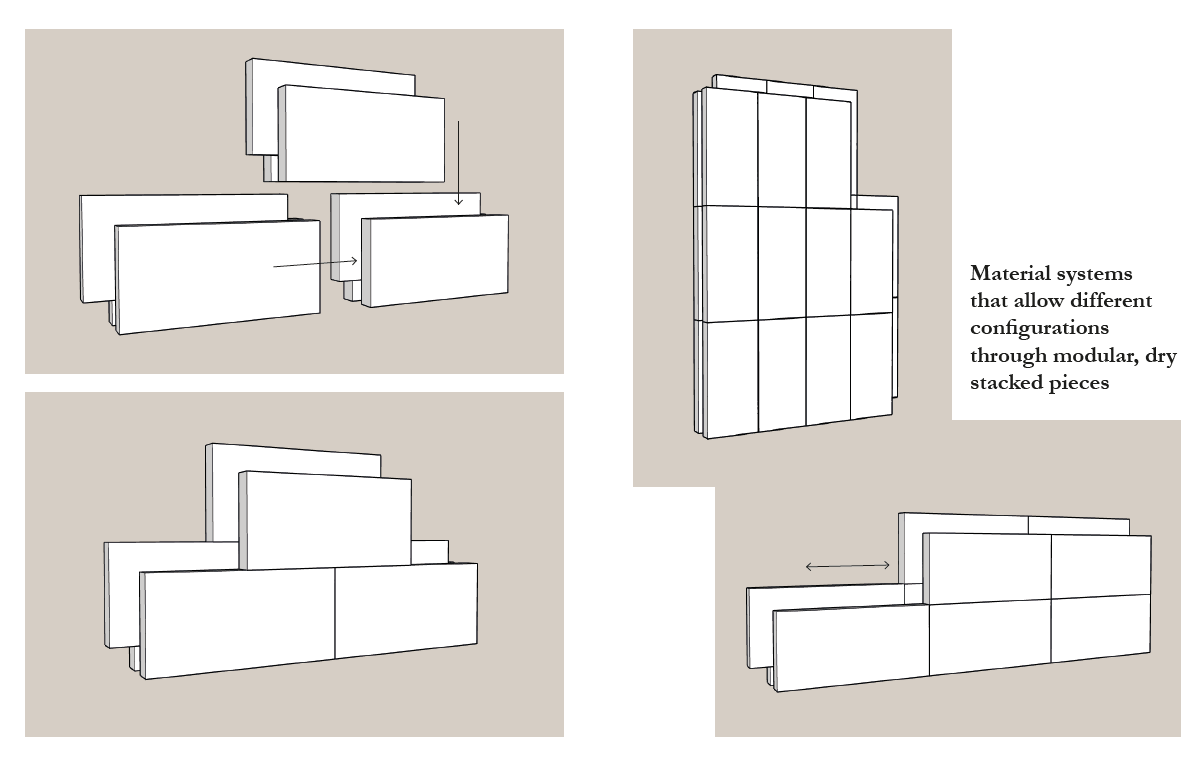
Besides the creation of new materials from waste, the project also explored the possibilities of creating material systems based on modularity and the concept of Design for Dissasembly, to promote the reuse of the materials at the end of their use cycle, to maximize material efficiency and to facilitate building deconstruction processes.
Key objectives for sustainability
The project's key objectives were to (1) design an upcycling process to create new construction materials from CDW with a lower carbon footprint, exploring waste aesthetics and human health impacts, and (3) to enable the circularity of the new materials to mitigate the industry's impact on climate.
To achieve this, from the beginning, the selection of waste material was based on the following main criteria: high quantity of available resource, accessible pricing, high potential for recyclability, high durability (+100 years), high aesthetic opportunities, and a low risk for human and environmental health, since bricks and tiles are inert, non-hazardous, ceramic materials, that do not absorb, leach or emit toxicants.
For upcycling, the manufacturing process was simplified to few basic steps, to avoid an unnecessary demand for energy and water, therefore reducing its environmental impact, reinforced by the fact of recovering materials from the cities own waste flow at a short distance. The calculated carbon saving potentials at product level suggest that secondary-based products emit carbon equivalent to 30–50% of the new, primary production alternatives. The waste produced in the process during stages of grinding, mixing, and sanding can also be reused to make new materials of the same kind, so the byproducts can be fully utilized.
Regarding its circularity, the resulting materials are 100% recyclable, through the same process. Additionally, the project concluded the need to go beyond the material and to think of new ways of connecting materials together, envisioning a brick concept that can be joined by simple means of geometry and dry stacking, without the use of cement mortar (which difficults the separation of bricks) allowing it to be reused at its end of life, instead of having to demolish the full structure and losing the value of the materials, as in conventional construction systems.
Key objectives for aesthetics and quality
Reincarnation is designed based on the premise that beauty is central to sustainability. The experience and aesthetic design of objects and materials are powerful triggers for emotional connection, and in the end, for the product's actual conservation. We conserve what we appreciate and value: the look, the feel, the story.
Therefore, the project explores different aspects of aesthetic qualities that give meaning to the materials.
1. Material identity: design to embrace place and enhance local identity.
The color palette of the project is based on its origin: the colorful streets of Barcelona. Beyond an International Style that supplants formal diversity with a universal box of concrete, steel, and glass, the architecture of Catalonia is varied in color and texture. Building materials should also reflect our local architectural identity. Instead of a boring gray palette, common of recycled materials, the project aims to reflect its context through the exploration of different aesthetics for waste materials.
Therefore, the material collection is inspired by local constructions, with a combination of pastels and rich ceramic colors. It shows traces of its past history, with a contemporary look and a warm color palette defined by the natural pigments of the construction waste. It is a material intended for facing, exposing its surface to communicate its message—a creation of beauty made out of waste. It wants to make waste desirable by celebrating the Mediterranean identity and embracing imperfections, through the aesthetic and tactile experience of materials.
2. Material stories: the possibility of creating new narratives that celebrate the material's previous life.
Creating limited material collections from buildings to be renovated or demolished, and recovering and communicating its architectural history, building beauty and new life from its remains.
Key objectives for inclusion
One of the key aspects for inclusion was that although the project is focused on Barcelona through its research and development it could be replicated in other parts of the world, following a similar method.
It is based on clay brick and tile materials which have an accessible pricing and have been widely applied through history in many countries, thus an abundance of this type of waste stream across the globe.
Externalities of waste generation and resource extraction are also insufficiently internalised in prices, but this is hopefully set to change in coming years. If systems are developed and built in place to facilitate recovery of secondary materials, this could allow a lower economic cost compared to raw materials. Therefore, upcycled materials could have an affordable pricing, being fit for a wide range of applications in different types of projects, from commercial buildings to social housing.
Waste minimization financial benefits are related to the direct costs of both waste disposal and raw material purchase. The true cost of waste is estimated to be around 20 times the cost of disposal (Waste: A Handbook for Management, 2011), which makes the efficient utilization of resources not only an environmental but also an economic and social need.
Decomposition of some building materials in a landfill also produce harmful gases, and due to systemic injustice it is mainly vulnerable, low-income populations which are far more likely to be affected and live nearby these poor quality environments. Since the construction industry is one of the most resource intensive and polluting industries, diverting construction waste from landfill massively, reusing it to create new useful materials and building in more conscious ways would improve access to clean air and land.
A healthier, more sustainable material would benefit everyone.
Innovative character
The project is inspired by traditional terrazzo and local building tradition techniques like the iconic "trencadis" ceramic pattern by Antoni Gaudi (where, in a way, he upcycles existing material through his architectural masterpieces), but in this case, the production process aims to use a maximum of waste materials as the main ingredients for producing the new materials, largely reducing its environmental impact.
Optimizing for health is also a fundamental aspect of the process, putting care into the selection of raw materials so the materials that re-enter the cycle are clean and free from hazardous chemicals. The aim of the project would be to do a deeper analysis of the chemical components of waste materials to ensure that circular materials are always safe and healthy materials.
As a framework, the development of the project is based on the Disruptive Design (DD) Method, aiming to apply a systems thinking approach, to explore and identify the things that make up the complex problem arena of local construction and demolition waste. This approach led the project to expand beyond the focus of creating new materials from construction waste, to think about and propose ideas in relation to designing out the causes of waste, through strategies like designing for deconstruction, which increase the feasibility of disassembly and the recovery of materials in a high quality and economic value state.
The project also comprised visits and collaborations with industrial facilities, like local recycling plants and ceramic manufacturing companies, to try to connect different agents of the system with a common goal.
Innovation through circular materials also create development opportunities, where the need for capabilities for the recovery and transformation of secondary materials could generate innovative business models for the reverse logistics and manufacturing, resulting in positive social and economic benefits to communities.