MADE IN PLATFORM
Basic information
Project Title
Full project title
Category
Project Description
MADE IN is a EU platform for research, design and heritage. It brings together craftspeople, designers, researchers, curators and theorists in search of relevant issues on contemporary production, with the aim of researching and archiving local crafts, conducting participatory programs with craftspeople and designers, and promoting their joint results. MADE IN arose from an awareness of the key role that crafts play in maintaining local identities and the sustainability of local communities.
Project Region
EU Programme or fund
Which funds
Other Funds
Creative Europe Cooperation projects call EACEA-32-2017
MADE IN – Craft and Design Narratives - EACEA - 2018-2116/001-001)
Lead Partner Muzej za umjetnost i obrt / Museum of Arts and Crafts (MUO), Trg maršala Tita 10, 10000 Zagreb, Croatia, represented by Miroslav Gašparović
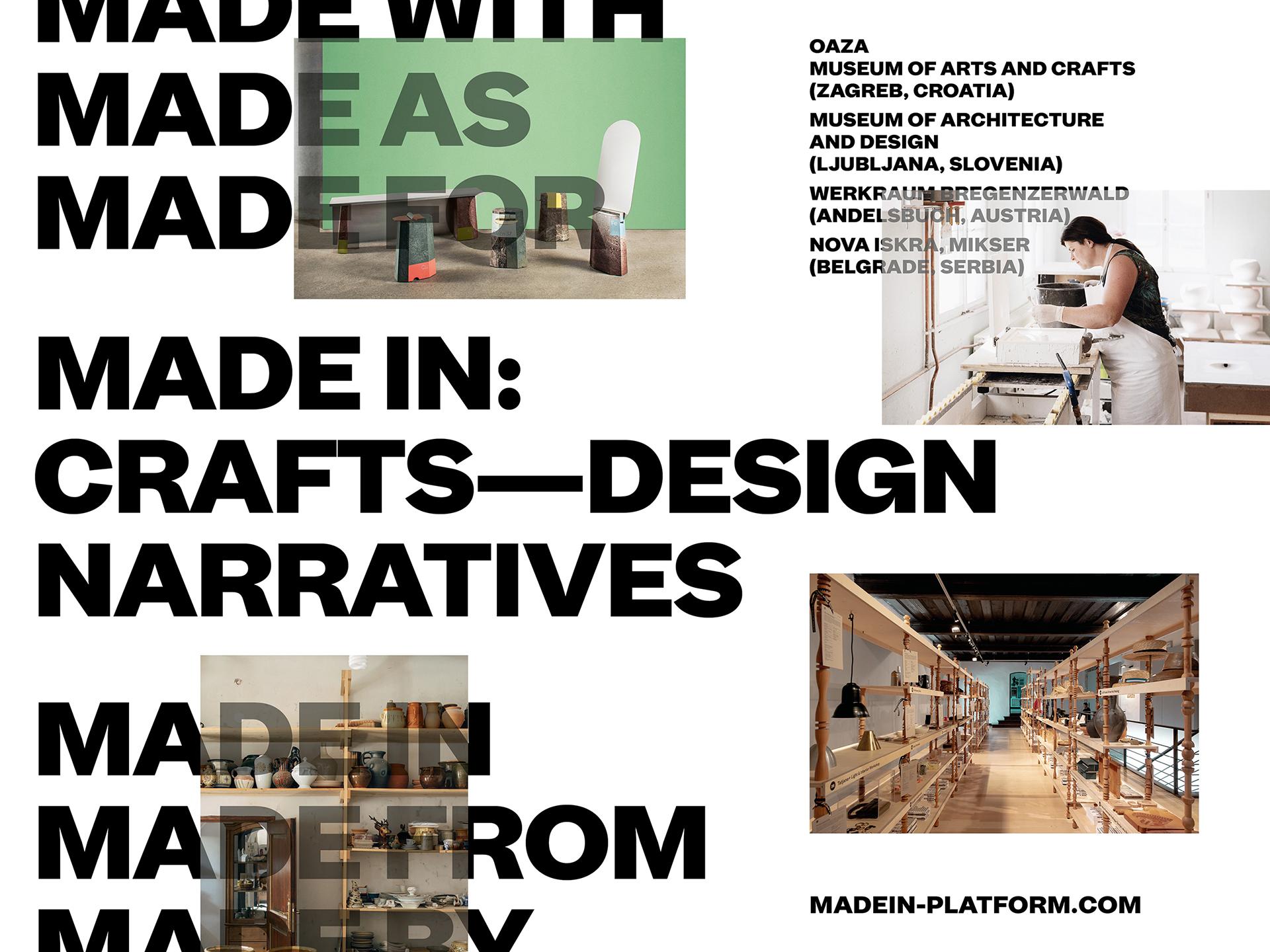
Project Partner 2 OAZA, Vladimira Nazora 20, 10000 Zagreb, Croatia, represented by Maja Kolar
Project Partner 3 Muzej za arhitekturo in oblikovanje / Museum of Architecture and Design (MAO), Pot na Fužine 2, 1000 Ljubljana, Slovenia, represented by Matevž Čelik
Project Partner 4 Werkraum Bregenzerwald (Werkraum), Hof 800, 6866 Andelsbuch, Austria, represented by Thomas Geisler
Project Partner 5 Nova Iskra – Kreativni Hab (Nova Iskra), Mirijevski Venac 4/37, 11000 Beograd, Serbia, represented by Marko Radenković
Project Partner 6 Mikser Udruženje (Mikser), Kosančićev venac 8, 11000 Beograd, Serbia, represented by Maja Lalić
Description of the project
Summary
Traditional crafts and manufactories today represent a valuable segment of local and wider cultural identity. The need to preserve all their inherent specificities stems from the state of global hyperproduction and distribution of questionable ethics, as well as from the desire to establish a constructive dialogue on alternatives to current production models. Yet craft practices are disappearing from urban areas, squeezed out by huge quantities of cheap products, and not finding their place among new generations.
The project idea is to preserve the cultural potential of crafts by acting on various levels: by providing in-depth documentation of chosen local craftspeople and manufacturers through mapping and archiving; by organizing on-sight actions – i.e. ensuring constructive dialogue, co-creational and participatory residencies and workshops and developing projects connecting craftspeople and designers; by encouraging interaction and networking of diverse cultural actors (designers, craftspeople, artists, curators, theoreticians) with audiences of different generations and social groups; and finally by promoting the results of the shared processes through travelling exhibitions, seminars and conferences.
The project is a joint effort of 6 organizations from 4 European countries: Museum of Arts and Crafts and OAZA (HR), Museum of Architecture and Design (SLO), Werkraum Bregenzerwald (AT) and Nova Iskra and Mikser (RS).
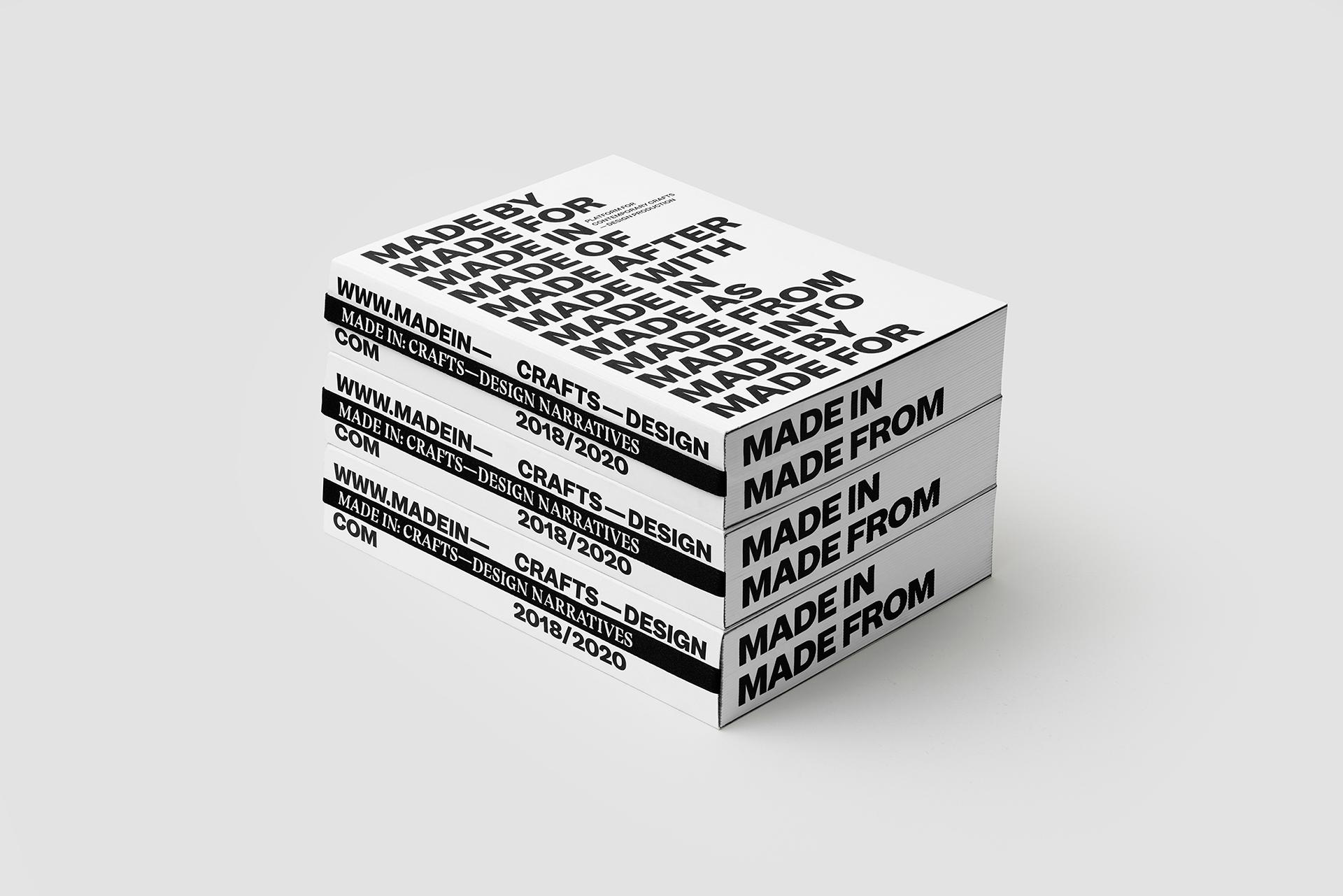
A two year process resulted in creating a Crafts Archive containing 40 craftspeople profiles; Collaborative Crafts-Design Workshops (4) and Residencies (5) with over 200 participants (craftspeople, designers); Conferences and Seminars were held in Belgrade, Zagreb and Ljubljana, followed by a travelling Exhibition held in MUO, MAO and Werkraum. A book containing discursive texts, archive and the results of collaborative processes has been published, and a digital networking platform has been launched (www.madein-platform.com).
Key objectives for sustainability
MADE IN addresses the matters of hyperproduction and distribution of goods of questionable ethics in contemporary society, and with it connected the disappearance of local craft knowledge, communities and cultural identities. It also addresses the topics of resources, origin, purpose and sustainability of our artificial environment and its relationship to design. Its objectives are to raise local awareness and promote European craft heritage to a broad range of audiences and with it the values that slow consumption entails, but also to support the revitalization of crafts through the creation of new sustainable business models and collaborative practices of craftspeople and designers. In order to meet the set of objectives established at the beginning of the process, the project acted on two levels.
Firstly, projects conducted during the collaborative processes between craftspeople and designers deal with the topics of sustainability on a small scale. The projects are addressing the topics in connection to: a) the current environmental crisis - questioning, sourcing, processing and exploitation of materials; b) sustaining the local communities - such as building communities and social networks within the city; 3) equipping younger generations with learning practical skills from craftspeople, building stronger relationships with heritage and reinterpreting and implementing tradition in contemporary design practice.
Secondly, the project methodology is established in such a way that it can be easily transferred and tested in different contexts. The intention of the project is to expand so that every new joining organization uses already established processes for mapping crafts and conducting crafts-design collaborations, which ultimately makes the platform itself sustainable.
Key objectives for aesthetics and quality
MADE IN project goes beyond the common meaning of aesthetics. Overall, it is structured around the idea of socially meaningful design - what is good is beautiful as well. Functionality is also not primarily evident in final results since the majority of works produced pose questions and raise awareness on the current condition of crafts rather than offer new products per se.
Outputs, therefore, vary from tangible goods and material analysis to cultural critique and storytelling, covering a range of themes that deal with stimulation of local production, use of new technologies in preservation of bodily knowledge, sourcing and exploitation of raw materials as well as reinterpretation of other important natural and cultural resources found on site.
All projects produced within the platform were conducted by skilled professionals and specialised experts selected based on their high level of understanding of the matter and previous recognition within this particular cultural domain. Research-based design studios such as mischer.traxler from Austria, Unfold from Belgium, Jenny Nordberg from Sweden, Lukas Wegwerth from Germany or Sanja Rotter from Croatia, to name a few, all contributed with their distinct creative imprint on ecological and political responsibilities of the (expanded) design discipline, each in close contact with members of the local crafts scene.
Additional value in terms of visual communication was brought to the project by way of all-level art direction, upheld by Art and Design organization OAZA. The importance of clarity and systematization of previously unedited content is clearly shown in the both digital and printed Crafts Archive, while visual sensibility and attention to verbal messaging is attainable throughout the rest of the project's results.
Key objectives for inclusion
Key objectives in terms of inclusion were met with the way the project was implemented - with focus on participatory and co-creational methods in conducting workshops and residencies with craftspeople and designers based on knowledge sharing. The transdisciplinary processes were facilitated by the mediators (coordinators and organisers). During the process, designers acquire new craft knowledge and skills, and craftspeople become acquainted with new trends in contemporary design. The process contributes to intergenerational and interprofessional dialogue and the strengthening of the craft and design community, and activities (craft tours, presentation of skills, etc.) open the process to the wider community.
The established network operates on several levels, each utilizing a different set of expertise provided by either directly appointed members or external contributing participants. In terms of education, the platform offers resources, webinars and in-depth research presented in a form of an online depository followed by physical events.
Aside from education, the platform acts as a space for promoting under-represented craftspeople and crafts-related initiatives offering not only “a seat at the table” but also a viable, constructive learning experience in joint collaborative processes with selected design studios across Europe. Mutual exchange of knowledge, skills and strategies for producing new items, concepts and/or experiences is enabled by Crafts-Design Collaborations during long term residencies and workshops, each tailored to their needs and detected potential.
Further actions such as travelling exhibition and discourse programs, serve as meeting points for knowledge sharing.
Results in relation to category
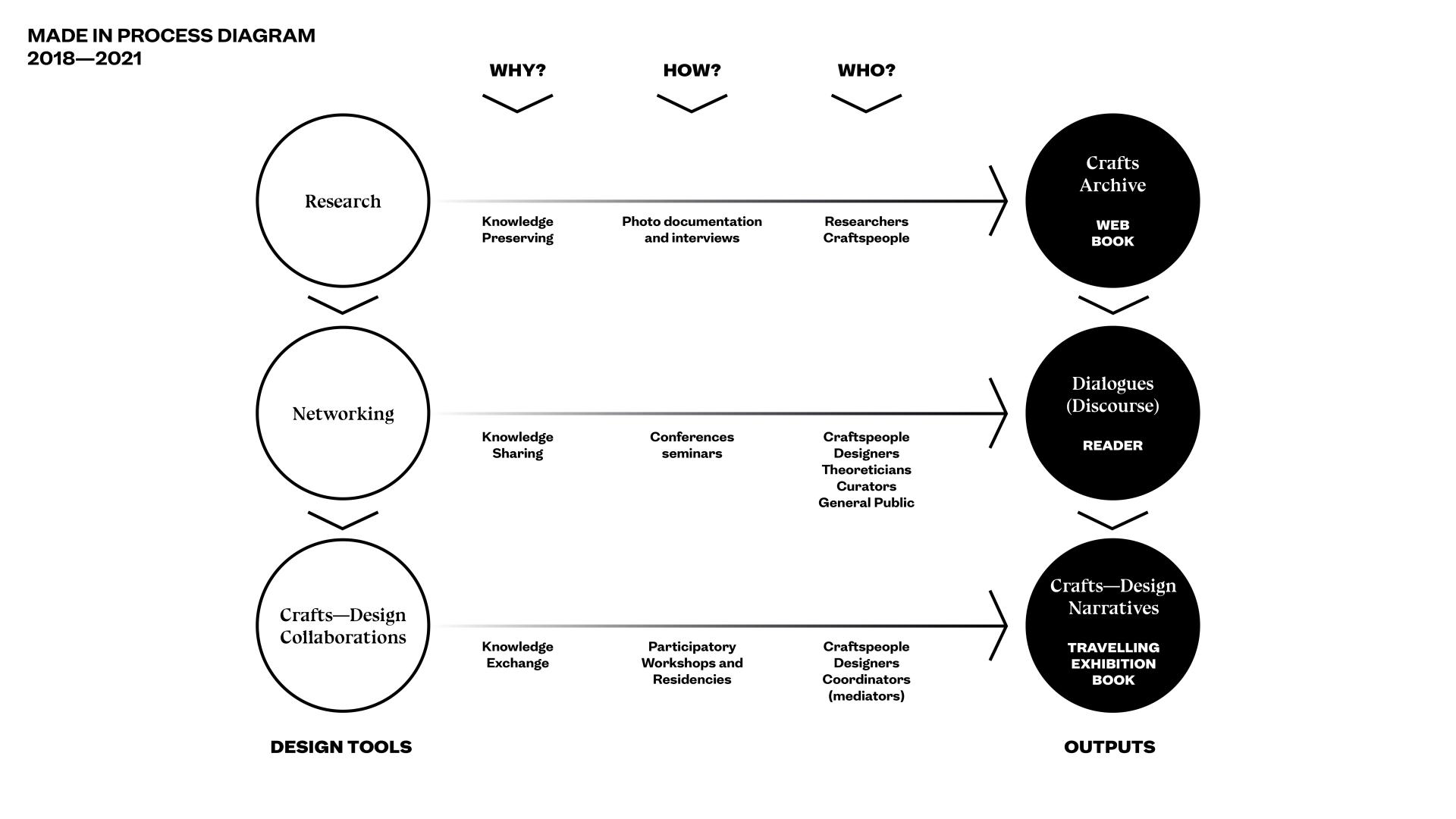
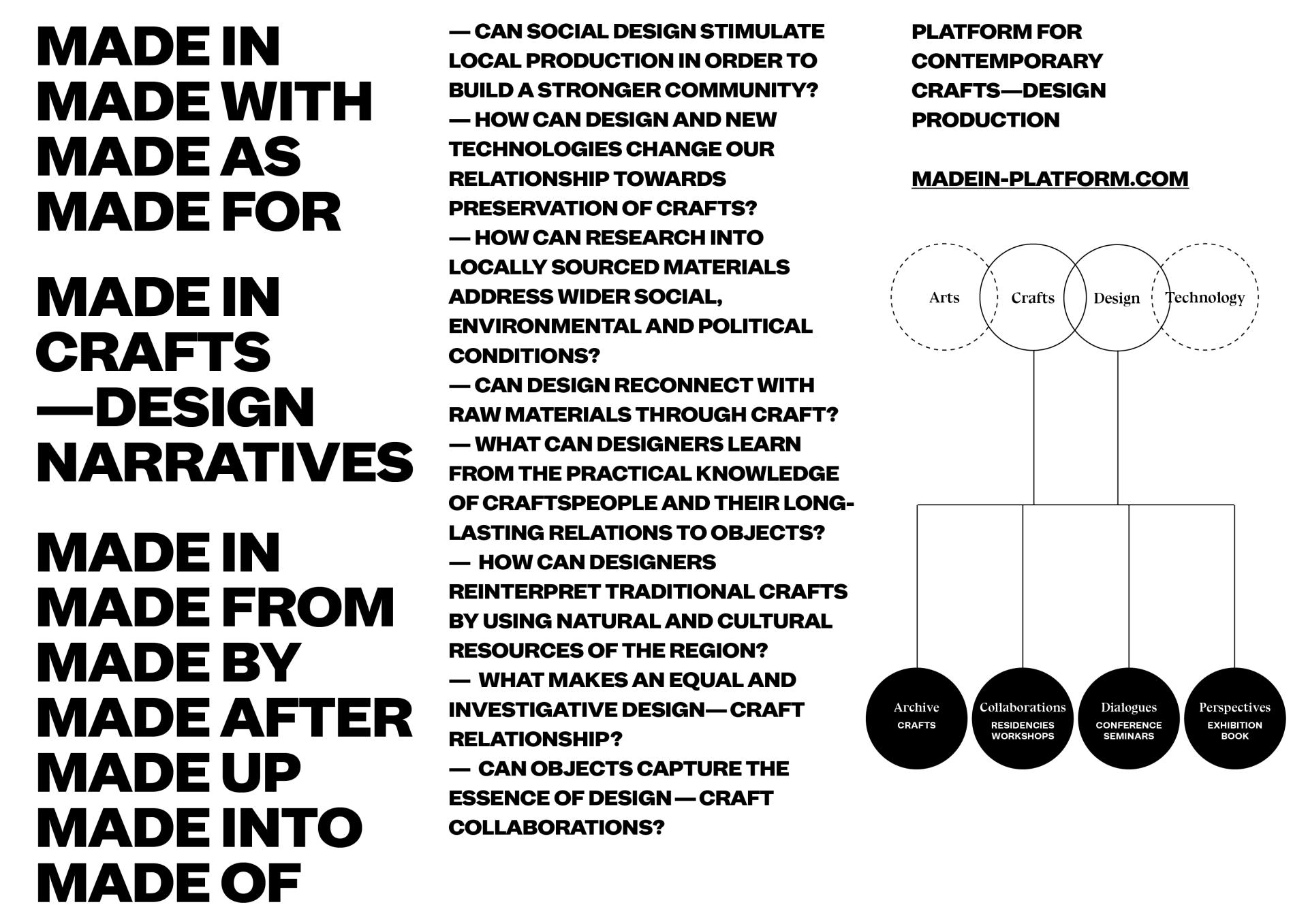
The project unfolded within 3 main chapters:
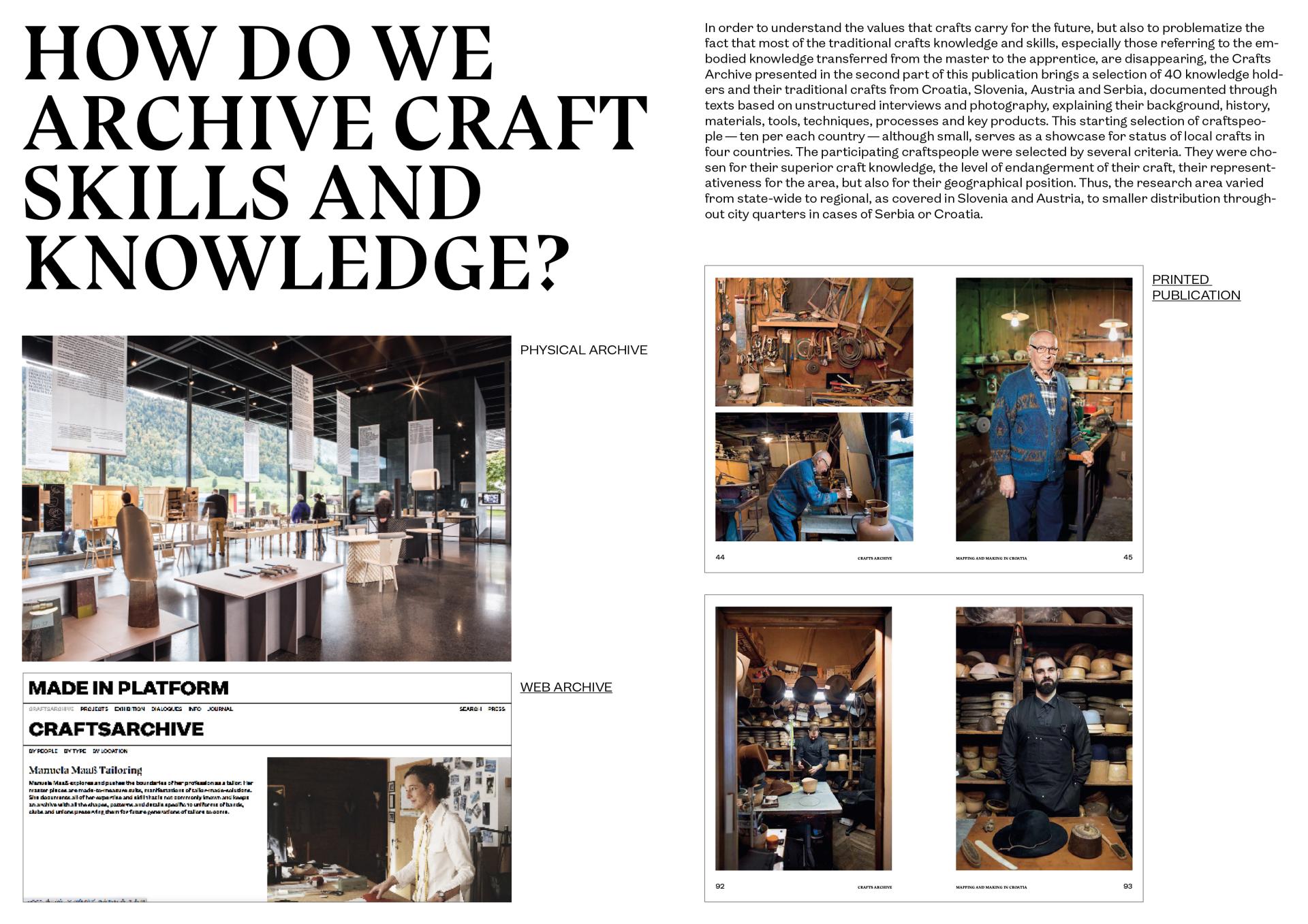
a) Crafts Archive (Knowledge preservation) brings a selection of 40 knowledge holders and their crafts from Croatia, Slovenia, Austria and Serbia, documented through texts based on interviews and photography, explaining their background, history, materials, tools, techniques, processes and key products. Envisioned as a place for connecting craftspeople and designers, it also serves as a research tool for those interested in pursuing collaborations. This specific digital environment is additionally translated in a book format as well as shown in physical form as part of the travelling public exhibition.
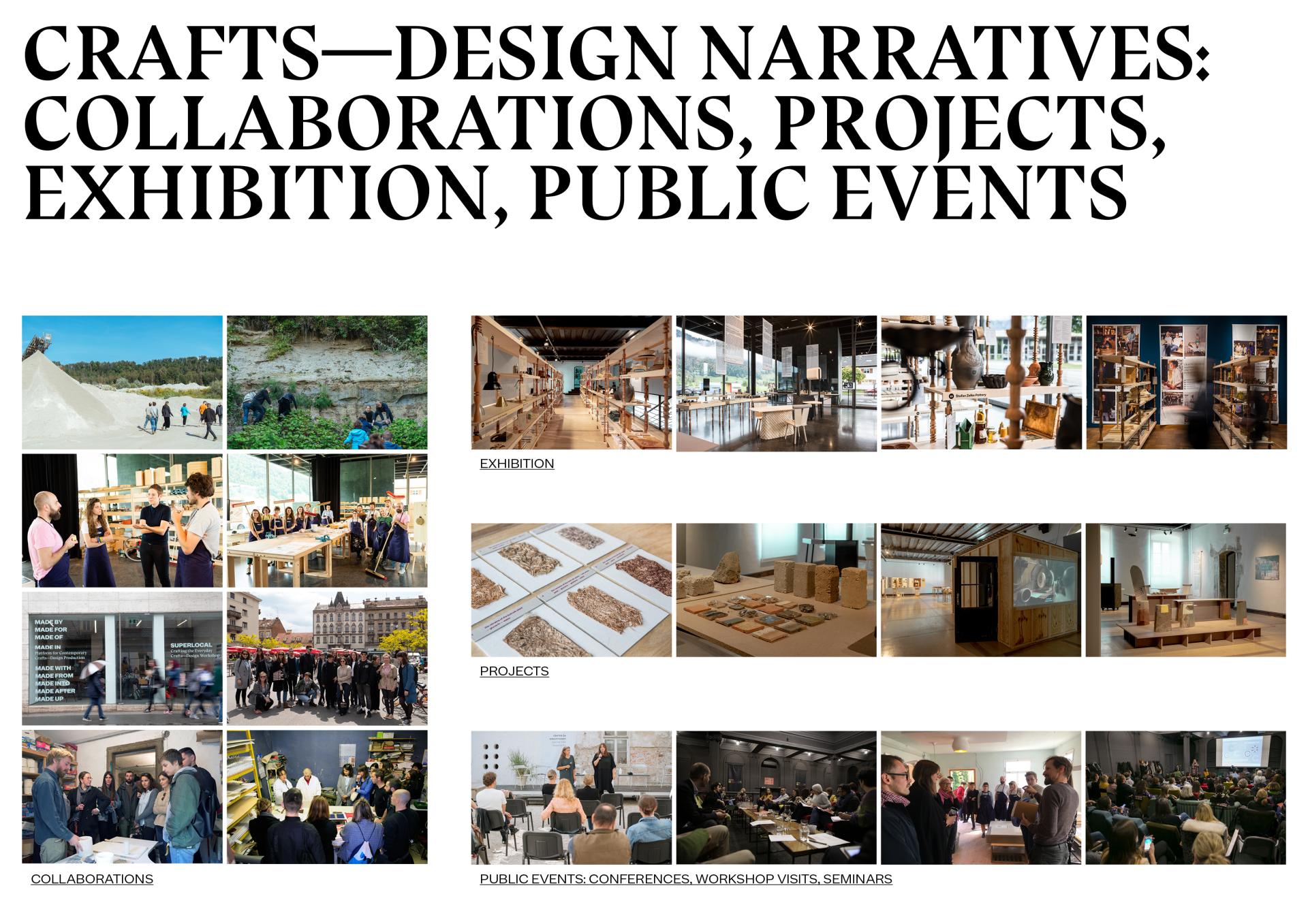
b) Networking (Knowledge Sharing) in the format of conferences, seminars, published readers are all activities and outputs linked to education and discourse that provide professional development opportunities for craftspeople, designers as well as design and craft curators and heritage agents. All activities are documented either in the form of videos or texts, and are open access.
c) Crafts-Design (Knowledge Exchange) collaborative practices in the formats of residencies and workshops reconnect the two groups (craftspeople and designers). Results of collaborations are projects conducted by highly engaged participants using (almost exclusively) local materials and locally available production processes. By questioning and creating alternatives to existing economic and market-driven consumer models, realized projects paved the way for the development of collaborative organizational structures that create space for further cooperation.
The exhibition encompasses all project results in an interactive format and is linked to guided tours, workshop visits and skills demonstrations. Public presentations include lectures and talks, as well as book promotion.
How Citizens benefit
MADE IN was initially positioned with a strong public presence in mind. The power of the project lies in collaborations of different profiles of partnering organisations, those of state and city museums, craft association, civil society cultural organisations and art organisations. Therefore it can act on several levels. The museum institutions have the strength to promote the results publicly on a larger scale, whereas civil society organisations working on the ground, have the power to implement it and bring it closer to the target groups.
What started as self-initiated design research in Zagreb, and was published in 2014 through “A Case Study on the Establishment of a Model for Self-Sustainable Development of a Local Community by Means of Social Design”, naturally grew into an international platform gathering partners with similar visions whose activities addressed the challenges local makers and craftspeople face, each business with a different set of social circumstances. Crafts shops and specialised stores disappearing from the urban environment, as witnessed in the case of Zagreb, raised a question of how to continually uphold local (cultural) identity and create new value. Local residents and designers were crucial in making these issues public in a number of live actions: open days, events, social gatherings, etc. By participating in co-creative workshops they learned about the making processes and origin of production in general. Such activities highlighted the potential of locally sourced goods and helped the study of the social and economic history of crafts.
At the current level, the whole project, now implemented in 4 European countries, can serve as an example of good practices of strategic design and a showcase that calls for a more systematic change on a city, region, state level.
Innovative character
MADE IN is a unique regional network that in an innovative way: 1) archives craft knowledge in a digital environment 2) encourages the exchange of knowledge between craftspeople and designers through various forms of workshops and residences 3) offers a database and business opportunities for craftsmen and designers 4) promotes craftsmanship as inspiration for designers and encourages craftspeople to apply new technologies 5) encourages the development of innovative products and scenarios 6) enhances networks between various profiles of actors 7) promotes new forms of sustainable production and consumption 8) contributes to the development of the field of design and crafts 9) promotes the European heritage to a wider audience 10) contributes to the preservation of local cultural identities.
Most importantly the innovativeness of the project lies in the cooperation of the main target groups - craftspeople and designers, based on knowledge sharing and co-creation. So far, workshops and residency formats have been tested, in which designers and craftspeople, with the help of mediators (coordinators, curators and project managers), developed joint projects, questioning common client-contractor models. The strength of the project also lies in MADE IN in gathering the organizations of various profiles. The implementation of the project is not conditioned or based on profit, but on the trust of individual stakeholders, and the project implementation processes themselves, although communicatively demanding, are based on the principles of trust, knowledge and resource sharing and empathy.
The project raises questions, opens a dialogue and points to new perspectives on how the two can coexist in the context of new technologies, materials, processes and techniques, i.e. within the production dynamics of modern society. It serves as an example of good practice for establishing new projects for other cultural