Pädagogische Hochschule Tirol (PHT)
Basic information
Project Title
Full project title
Category
Project Description
The existing PHT building was constructed in the 1960s. In the course of the renovation and expansion, a campus was created on which all the dislocated locations could be brought together. By incorporating the existing building mass, a modern and sustainable campus has been created, which ties in with the tradition of the University of Teacher Education both structurally and in terms of content, and at the same time allows for contemporary and future-oriented learning and teaching methods.
Project Region
EU Programme or fund
Description of the project
Summary
The existing building of the University of Teacher Education Tyrol (PHT) was constructed in the 1960s. In the course of the functional renovation and expansion, a campus was created on which all the dislocated locations of the university could be brought together and which corresponds to the current trends in the modern school and university landscape.
For the renovation and expansion of the University of Teacher Education Tyrol, an EU-wide open competition was held in 2012, from which the project in question emerged as the winning project.
The spatial programme for the entire campus includes a university and administrative area, directly attached special teaching rooms, as well as two practical schools (primary school and new secondary school). In addition, the existing sports halls and the school swimming pool were renovated.
The entire planning process took place in close consultation with the future user of the building. Functional relationships were optimised and further developed on the basis of the competition design - always taking into account the wishes and ideas of the University of Teacher Education and the teaching staff of the two affiliated practical schools. In the end, a building was created that is very well received by staff, teachers and lecturers as well as students and pupils.
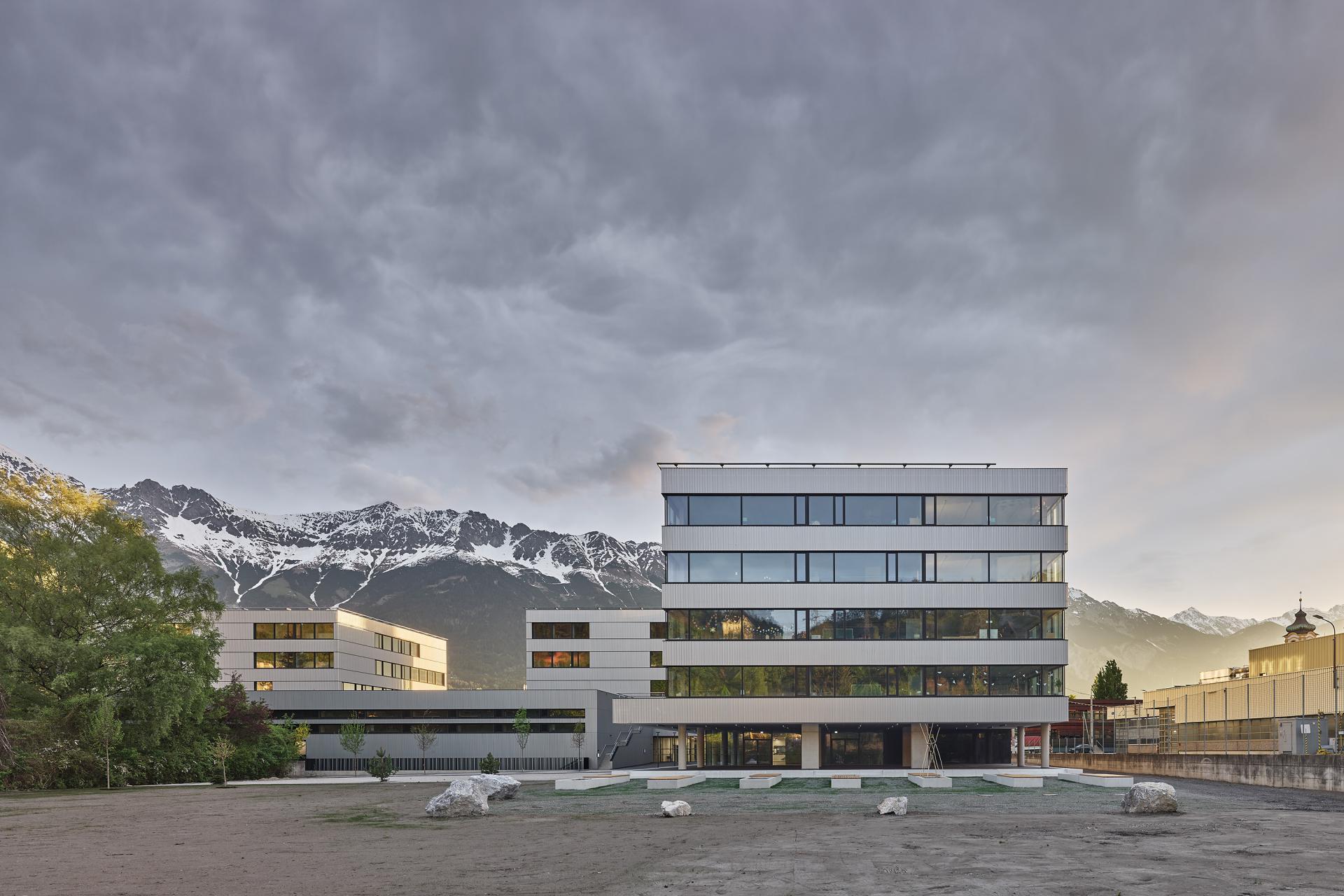
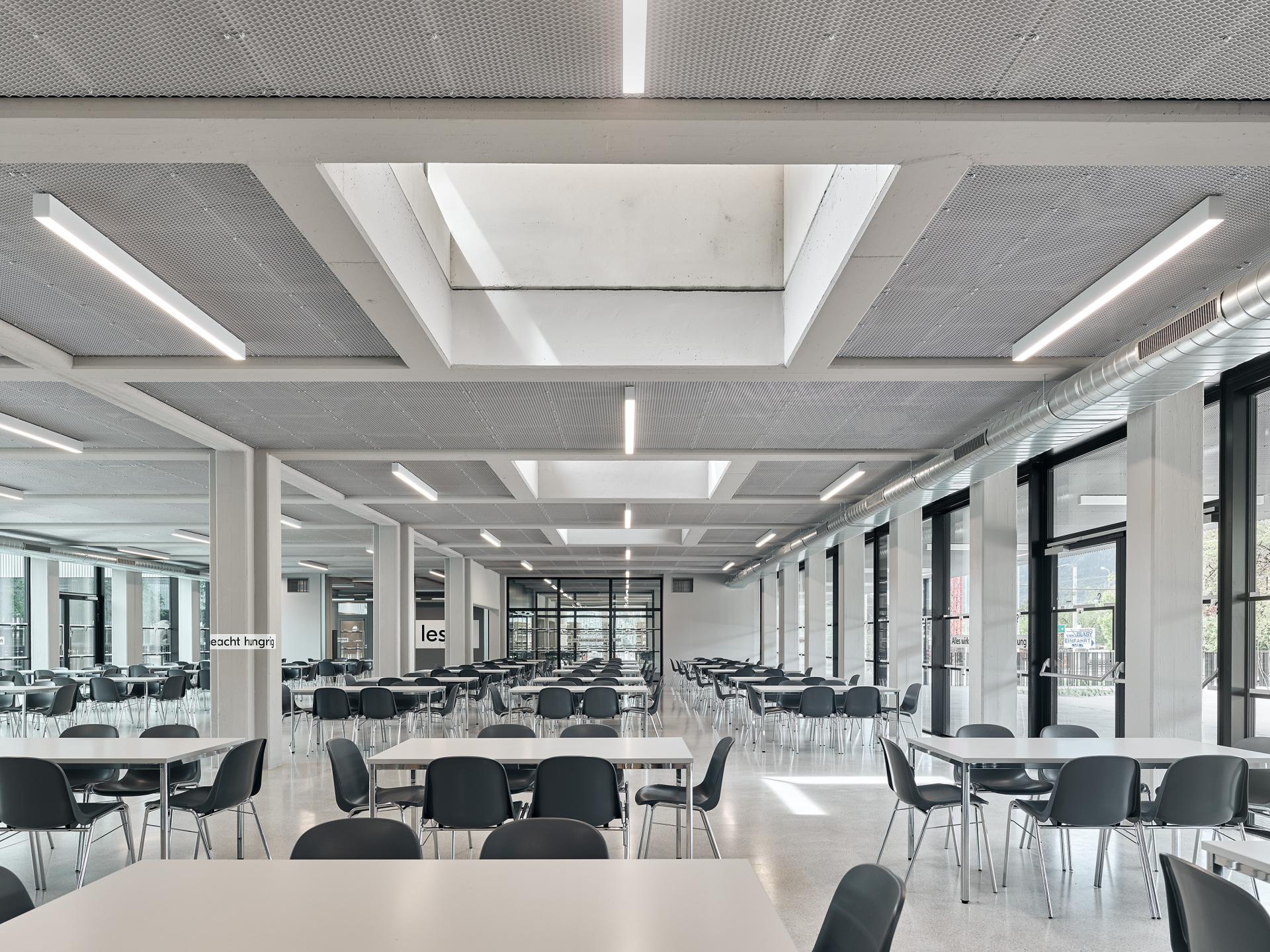
After the renovation, the building complex is functionally divided into a continuous base floor with common areas such as the assembly hall, refectory, library and lecture halls, as well as four superimposed structures, each of which is assigned a specific usage unit (administration, practical schools, special classes, seminar rooms).
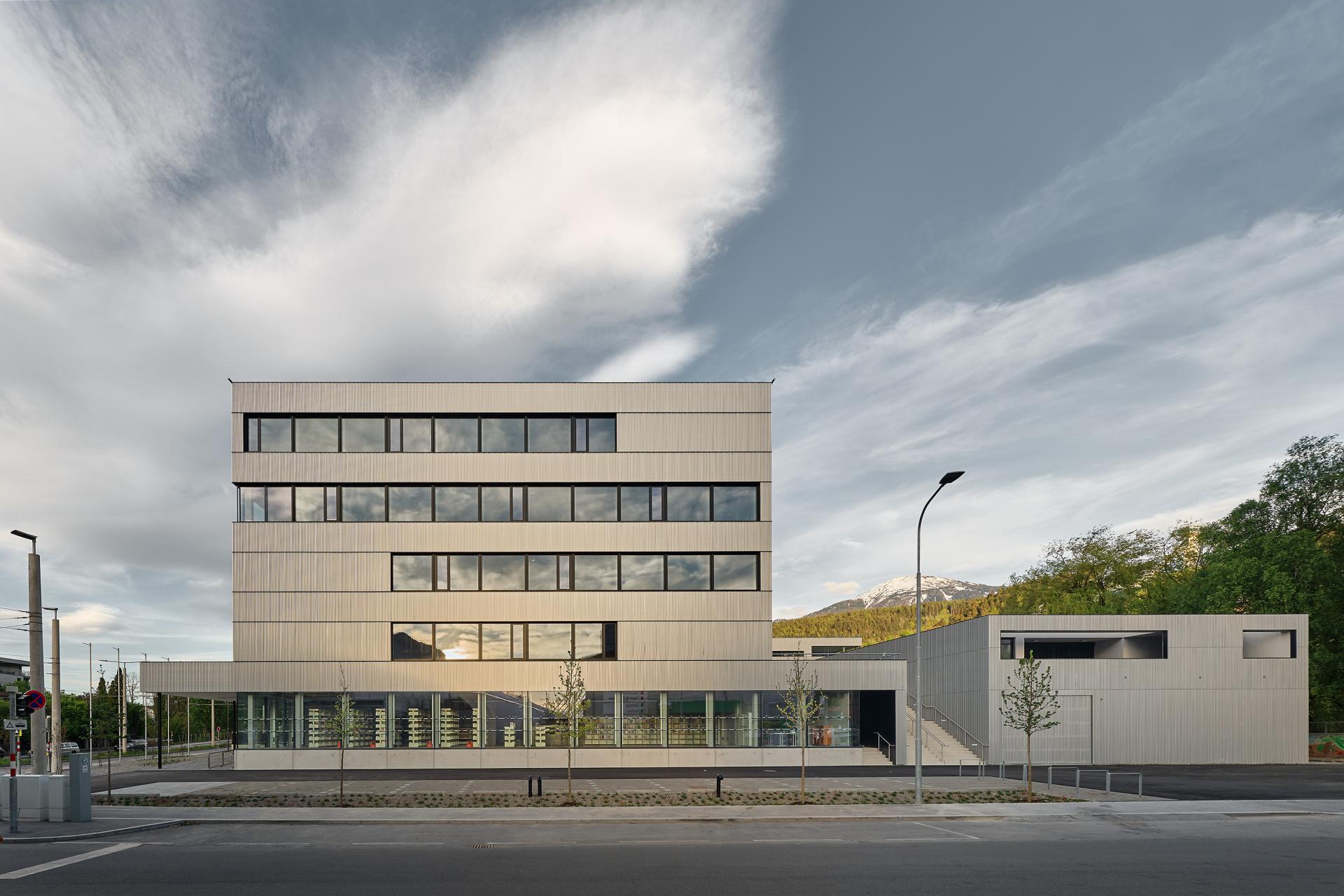
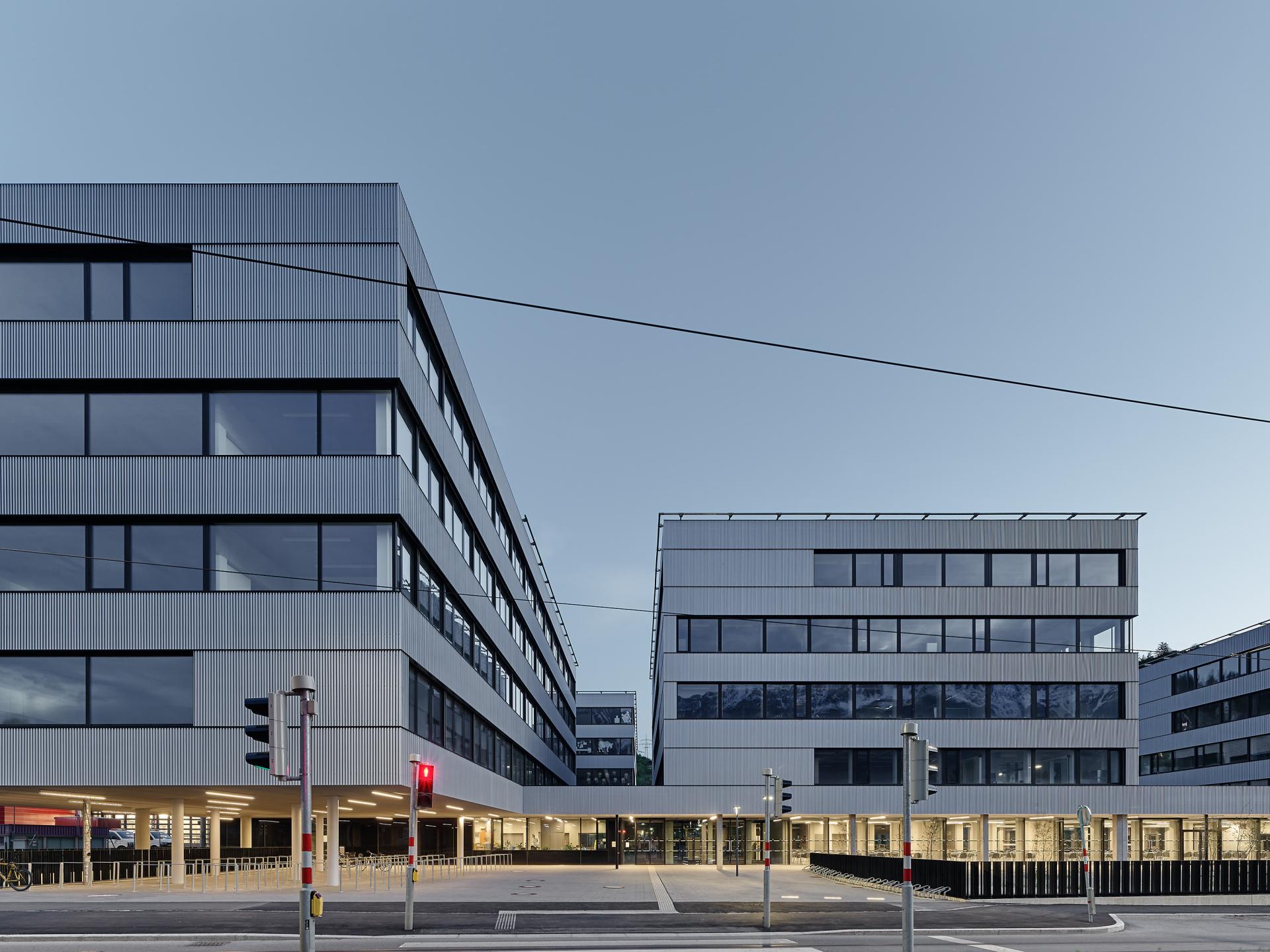
The base floor is a transparent level that mediates between the street space and the urban forecourt on the one hand and the park to the south on the other. The cubature of the four-storey buildings varies depending on their use and is easily recognisable both internally and externally.
Key objectives for sustainability
In the PHT project, several interrelated objectives and approaches were pursued with regard to sustainability:
Large parts of the existing building mass of the PHT were preserved and adapted in the course of the renovation and expansion so that a campus was created that meets the requirements of a contemporary university. The use and revitalisation of the existing building alone represents a resource-saving approach to the project.
With the energetic renovation of the building envelope (insulation, external sun protection), future energy consumption can be drastically reduced. During the renovation and extension, the building volume was kept as compact as possible in favour of maximising the open spaces and green areas. Green roofs (both extensive and partly intensive) reinforce the approach of maximising open spaces.
In an educational institution like the PHT, the aspect of "Education for Sustainable Development" (ESD) plays an overriding role: ESD is education that enables people to think and act in a sustainable way (in the sense of sustainable development) - to help shape the world in a sustainable way. ESD is to be understood as a social learning and search process, opens up transformative approaches for self-reflection and reflection on the world, aims at developing the ability to orient oneself, to judge and to act, and accordingly contributes to sustainable development in general and the Sustainable Development Goals in particular.ESD is a comprehensive educational concept that concerns the entire educational institution in the sense of a holistic approach ("whole institution approach") and manifests itself at the PHT in the areas of teaching, research, social engagement, operations, organisational culture and digitalisation.
Through the training of future teachers and instructors, the high value placed on ESD in the PHT's mission statement has a significant distribution function in society.
Key objectives for aesthetics and quality
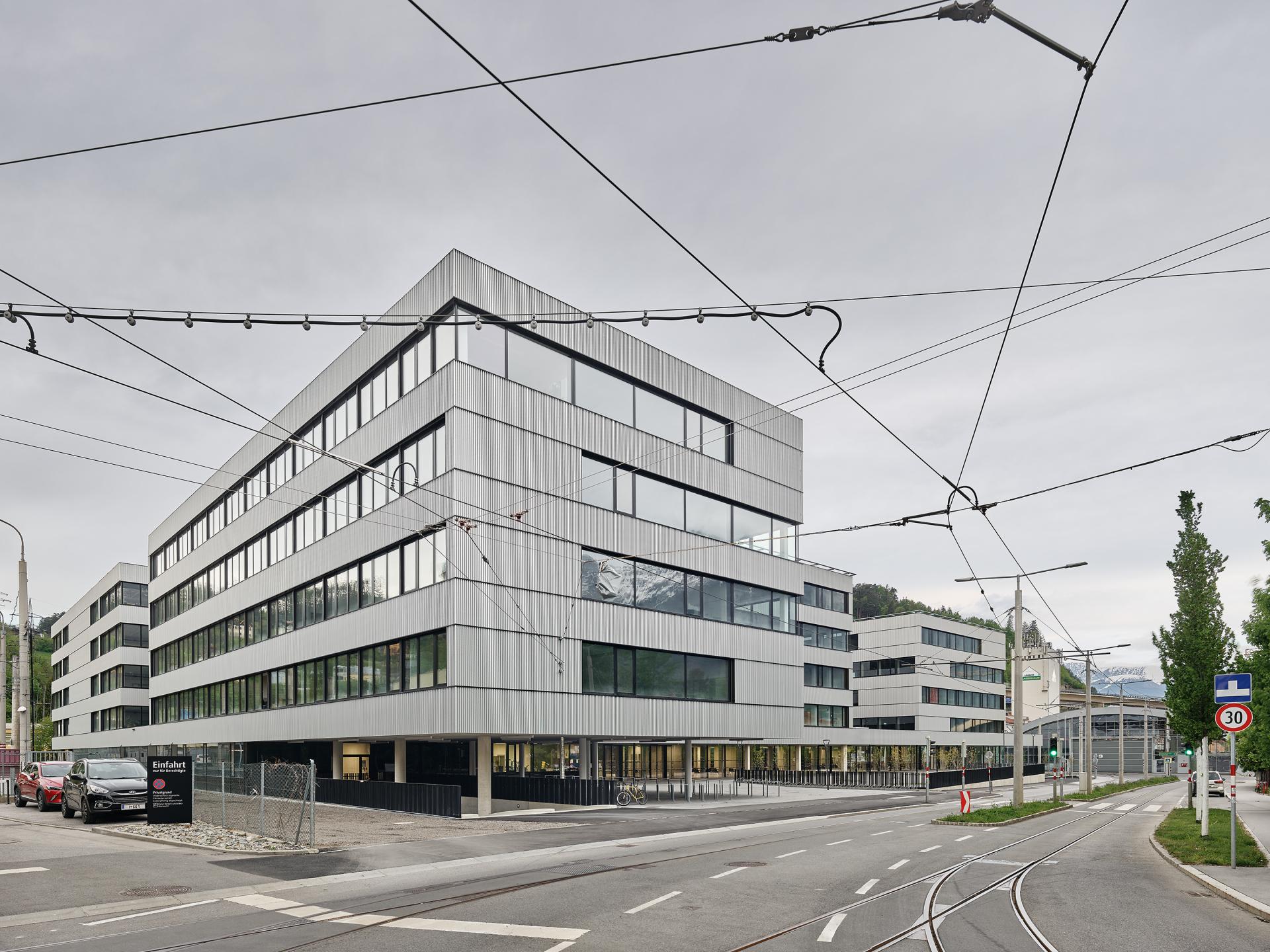
The PHT building is located in an urbanistically rather inhospitable outskirts of Innsbruck surrounded by industrial buildings. The aim of the project was for the university building to assert itself in this environment with a clear and modern architectural language as a public urban element and to enhance the neighbourhood with its long-distance effect.
The existing building from the 1960s is characterised by a concise reinforced concrete skeleton construction, which is based on a strict grid and, with architectural elements such as cross-shaped supports and striking beams, is clearly a child of its time. The aim of the project was to uncover this building structure again from additions and fixtures and to show it with its qualities.
Towards the street, the existing building with its almost completely enclosed ground floor zone and its inconsistent building structure appeared very forbidding and not very urban. With the renovation and extension, the buildings were partially raised and supplemented with new buildings of the same storey. The ground floor was designed as a transparent level that communicates with the urban space via an urban forecourt.
A uniform aluminium façade made of folded meandering perforated sheet metal and elegant window strips connect the new and existing buildings into a single design unit. The façade reacts vividly to the different lighting conditions and reflects the surrounding mountain panorama, so that the campus building stands out from the urban context with a certain radiance.
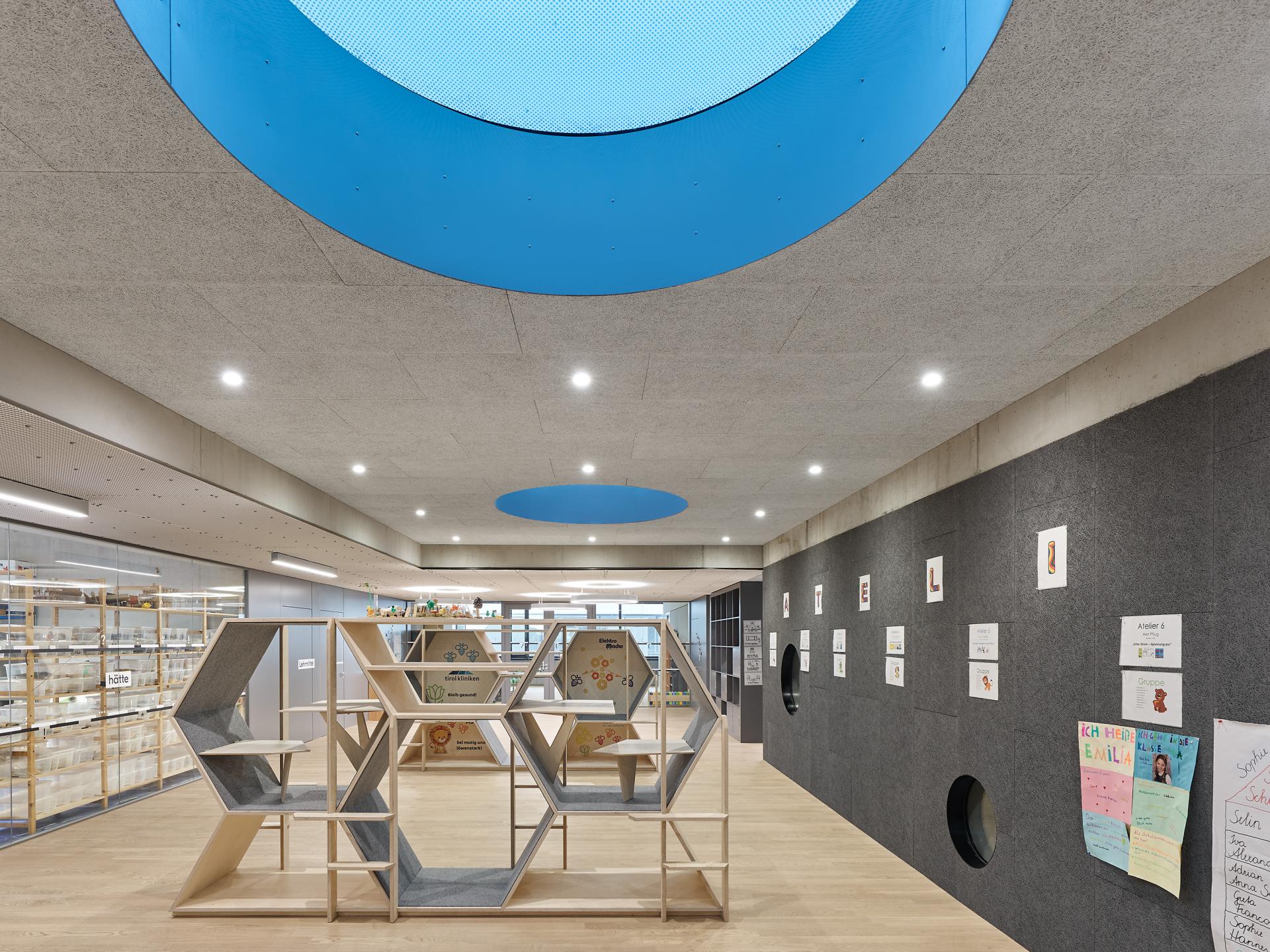
Great importance was also attached to transparency and generosity in the interior. Inner courtyards and patios provide plenty of daylight and a constant connection to the outdoors.
The materiality and colour design is deliberately restrained and thus provides an elegant backdrop for the diversity and colourfulness of university life.
Key objectives for inclusion
The aim is that the teaching and corresponding learning processes in our buildings enable each individual child, each individual young person, all students and teachers - in other words, all learners - to achieve learning success at their own individual level. This implies that the joint teaching of learning groups allows for different learning goals and learning paths. The learning space is then an inclusive space if it enables this joint, differentiated or personalised teaching.
Both in the adaptation of the existing rooms and in the new building, there was a strong focus on joint encounters and accessibility for all areas.
Beyond the learning spaces, the spacious and open building concept of the PHT offers the possibility of barrier-free encounters of all people working, learning and visiting in the building everywhere and at all times. This is also achieved through a variety of support measures: tactile guidance systems, assistance concepts, visual information, lifts, WCs for all and the possibility of using technical and digital systems for barrier-free access.
In the course of the redesign, an old structural concept with segregated rooms and separating structures in the sense of a 20th century pedagogy became an open, modern and inclusive pedagogical concept of the 21st century. This concept envisages designing transparently and openly, enabling entrances and exits, designing common learning processes spatially individually as well without excluding. Transparent room partitions, for example, allow for simultaneous group work on the one hand and the individual need for quiet and concentration on the other.
It is very helpful if learning materials are available at every place in the building so that individual pupils can set out on an individual learning path. In this sense, the learning material is provided digitally to a large extent.
Results in relation to category
The project "Renovation and Extension of the University of Teacher Education Tyrol" started in 2012 as an architectural competition with a defined space programme. In the course of the planning process, the project has developed more and more momentum with the participation of the future users. The idea of sustainability goes far beyond the realisation of an energetic and functional renovation and revitalisation of an existing building, but permeates the spirit of the entire institution as an essential principle. This can be felt in other innovative follow-up projects in and around the PHT campus. The southern park area is being designed and planted as an "experimental field" with the involvement of the teaching staff. An experimental teaching and learning building is also to be realised on the site of this park area: "Sophia", a place of learning for the future as an experimental field for teachers and students, developed by and with architecture students.
And ultimately, the sustainable development of the university can also be seen in the extent to which the teachers and students there identify with their new university campus and use it for their own purposes.
How Citizens benefit
Throughout the planning process, there has been a regular exchange with the PHT institutions.
The concerns of the administrative staff as well as the interests of the teachers of the university and the teaching staff of the affiliated practical schools were taken into account. The topic of inclusion in practice was also given central importance and the premises were designed with this in mind.
A lively exchange took place in each case, from the functional room layout to the furnishing of the rooms to the design of built-in furniture. The future users were also involved in the design of the outdoor facilities.
Innovative character
Classrooms are increasingly being redesigned as learning spaces, learning locations and learning environments which, in times of joint, inclusive teaching, allow space for creative thinking processes in independent and explorative learning, among other things. The (creative) space has an effect on the learning behaviour of the children or the students, the space as a third educator: learning processes are closely related to the design of the consciously built architecture and influences an innovative future-oriented learning culture. Space is understood as an educational content to be discovered and transformed through joint and conscious appropriation in a kind of "living laboratory".
The PHT campus is located in Pastorstraße in Innsbruck (Wilten). The existing building, constructed in 1976, had reached the end of its capacity, and the necessary renovation and expansion was put out to tender in 2012 via a Europe-wide open architectural competition. The design by ARSP ARCHITEKTEN that emerged from this process perfectly implements the required spatial and functional programme in terms of both function and formal aesthetics.
Moreover, from provided learning environments and learning spaces, children and young people not only learn to deal with their own creativity, but also acquire competences such as the ability to work in a team, flexibility, willingness to perform and especially tolerance towards new and different things. Space as an educational content not only educates the individual, but also the society in which he or she moves. Even at a young age, adolescents benefit and learn to a great extent from the environment that surrounds them. Integrating the effect of space in relation to education into the training of future educators is essential and poses a great challenge to the teaching of future teachers.