Prototyping "Jubileumsparken"
Basic information
Project Title
Full project title
Category
Project Description
Hearts, hands, and hospitality created the prototype for the Jubileepark that was built in an old industrial arena in the centre of Gothenburg.
In the centre of Gothenburg, along the river shore is the post-industrial area, Frihamnen located. An area that has been closed for the public for many years. The first step in the development of the area has been to prototype ideas in an open process and create a place created by and for the people.
Project Region
EU Programme or fund
Description of the project
Summary
In the center of Gothenburg, along the river shore is the post-industrial area, Frihamnen located. An area that has been closed for the public for many years. The first step in the development of the area has been to prototype ideas in an open process and create a place created by a transdisciplinary team and by and for the people. Through a step-by-step process we have challenged the common ways and processes on how to plan, construct and design a public space. The method? Time as a tool for sustainability, aesthetics, and inclusion. The result? A place built by hearts, hands, and hospitality and a sustainable way to finally be able to swim in the polluted Gota River by investigation via prototyping the many bathing cultures of the city.
The work of creating `Jubileumsparken´ (the jubilee park) a meeting place for everyone, started in 2014. The project has challenged the common ways of how to plan, construct and design, through a process of prototyping the ideas of what a park could be in the twentieth century. During a timeframe of approximately six years before the permanent functions was decided, and the park officially had an opening date, were opened both the site and the planning process for participation.
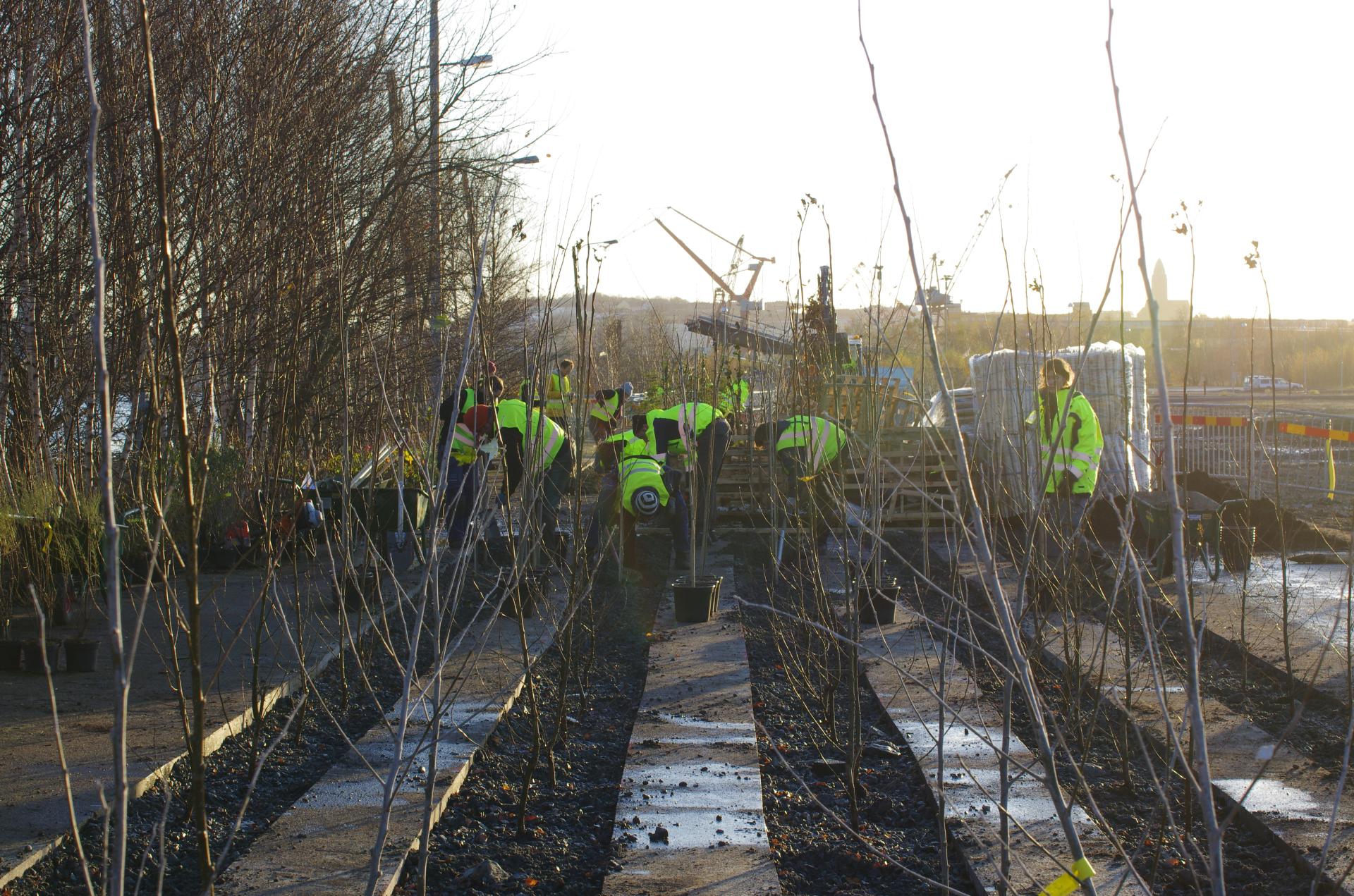
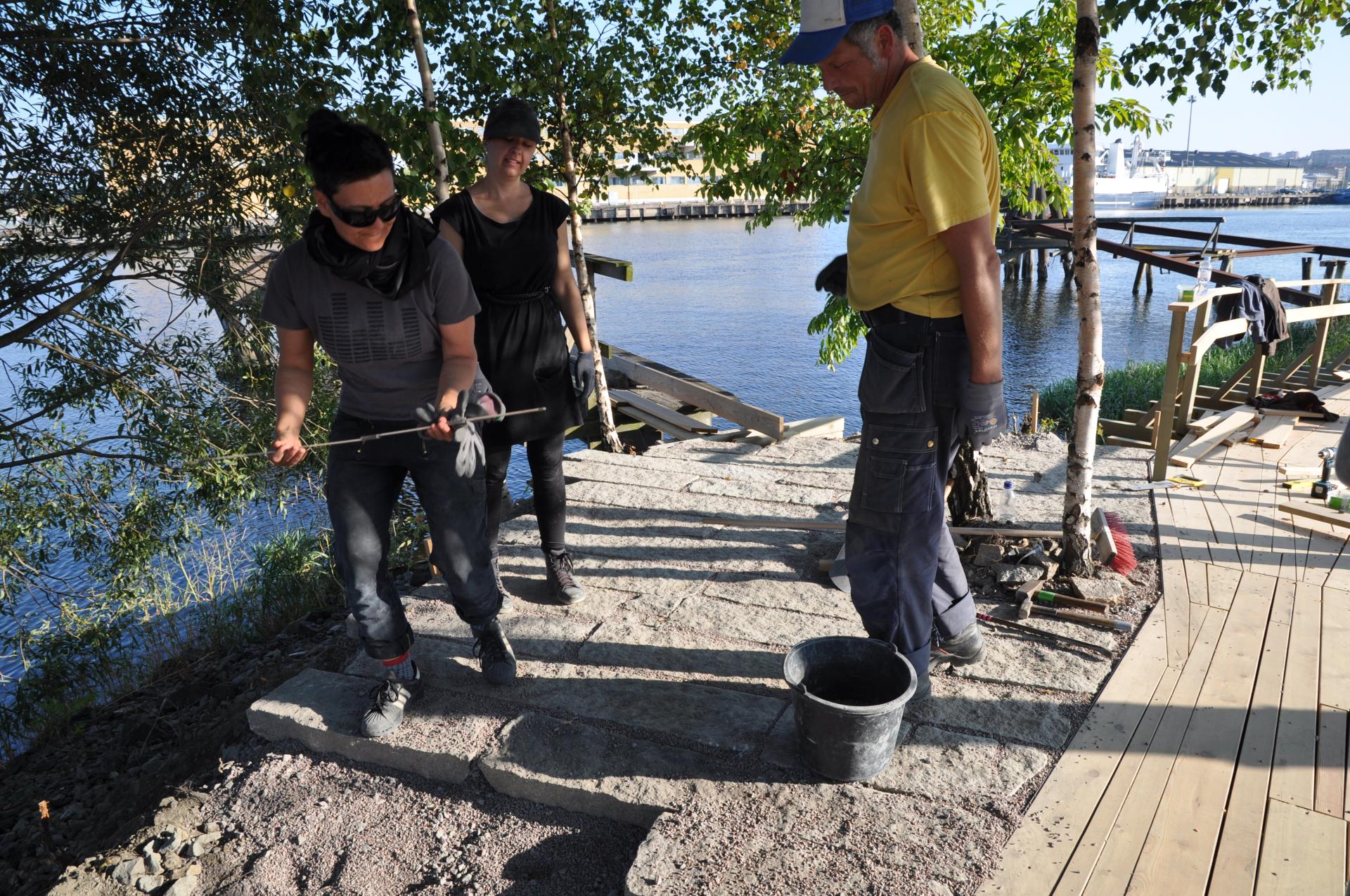
14 so called “open calls” in the prototype park where held, which asked people to join in and build the common rooms of the park. Either with a hammer, a pencil or with your thoughts and ideas. Residents, visitors, associations, activists, and businesses collaborated with designers, architects, artists, oceanographers, engineers all curated and lead by the municipal landowner and the organization for city planning. People were invited to concretely participate in talks, plan, build and further develop the area. Others just became users of the site and prototypes and could though their presence give feedback to the project by highlighting needs and thoughts.
Key objectives for sustainability
The River City Vision of Gothenburg clearly states that the city will be linked across the river. A city at eye level is important to create a city for everyone. A key is to get more people involved. The expansion of RiverCity Gothenburg affects the whole city. It is therefore important that everyone, regardless of where we live in the city, is given the opportunity to be involved in the planning and development. RiverCity Gothenburg should be developed into a green city at the river shore where embarcing the water is in focus as a a natural element in the city environment and seen as an asset for everyone.
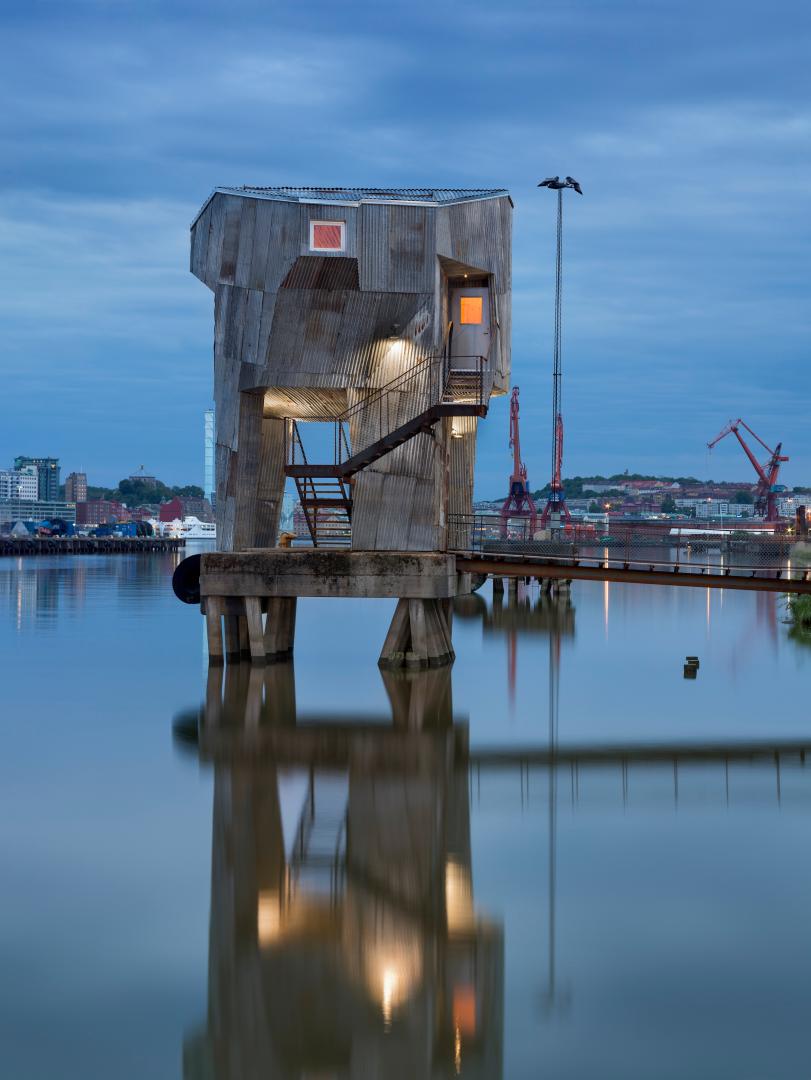
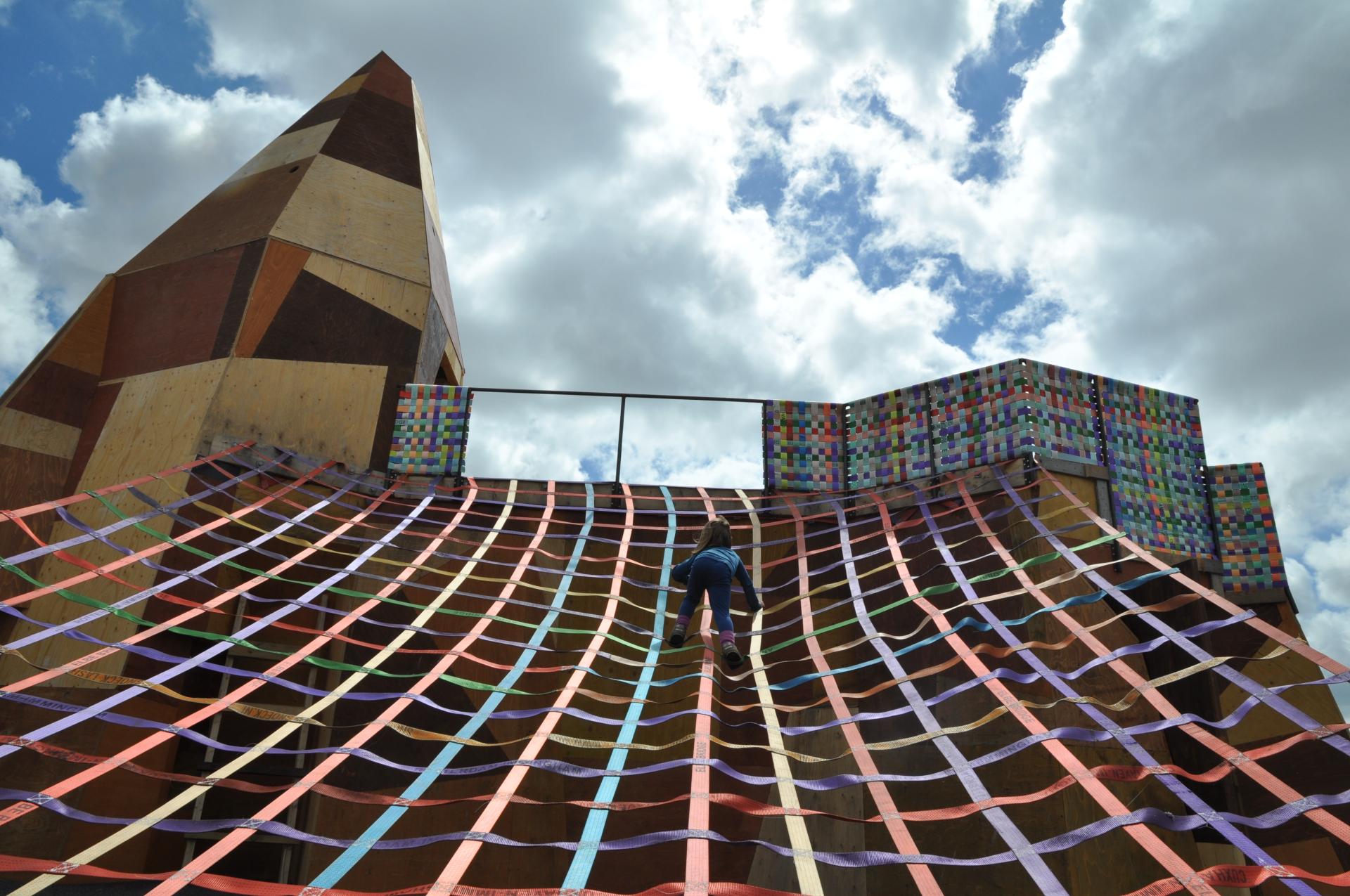
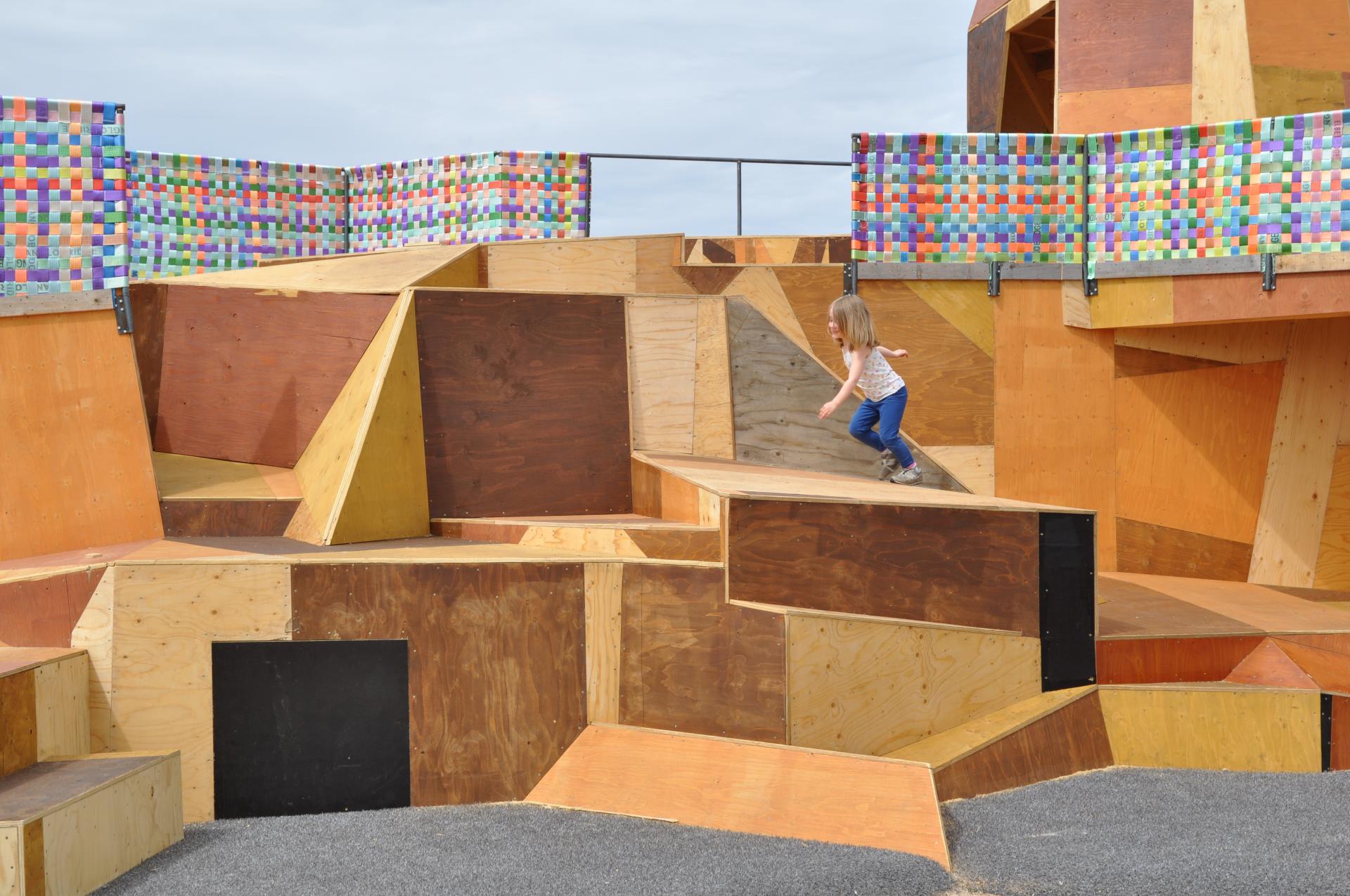
Craftsmanship, art, and design has been in the core of the project from day one whether constructing a sauna or constructing the what we call relational architecture (inclusion). The invited actors where asked to investigate the site-specific potential and to identify qualities for `Jubileumsparken´ as a part of the post-industrial landscape. Working with recycling and environmental sustainability has therefore been done by identifying the existing values on site end re-using material as much as possible. The public sauna, designed by Raumlabor Berlin, was constructed on an old concrete slab in the river, previously used to anchor boats. A choice made to enlighten the cultural values of the landscape. Facades for the changing rooms where made from 15 000 recycled bottles and playing nets for the play mountain, the prototype for art to act as a playground by Akay and E.B Itso, was for example made from straps from containers.
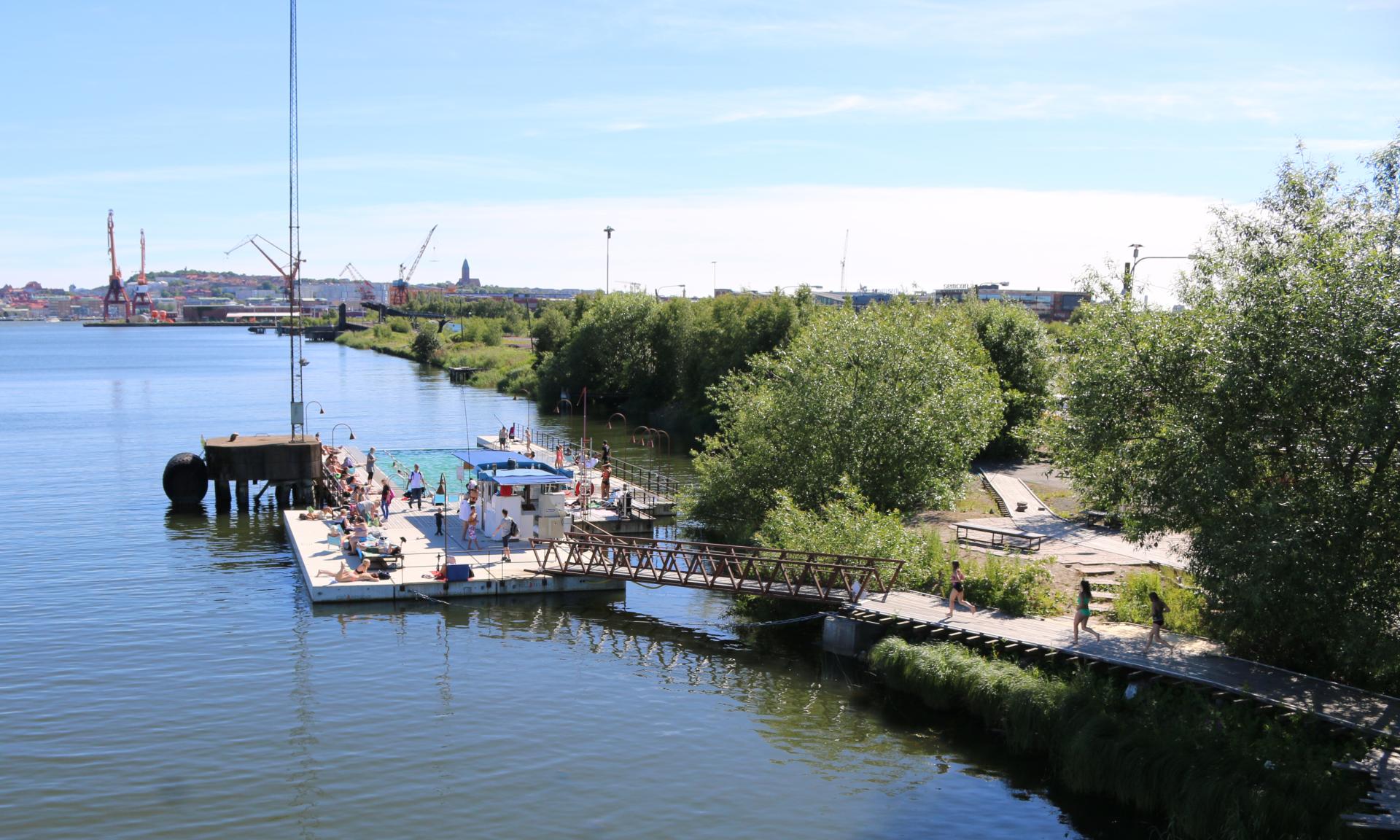
In the river, bathing is nowadays prohibited because water quality or bathing safety is not guaranteed. By working closely in the design team with an oceanographer we found that the City of Gothenburg had a saltwater wedge in the river, that runs six meters below the dirty river water that provides clean seawater, naturally separated from the polluted river water, that by simple means could be pumped up to be used for recreational swimming
Key objectives for aesthetics and quality
Though the carefully curated process `Jubileumsparken´ designers, artists, architects has been investigated the site and tested it in many aspects. It´s functions, the way it is constructed how to work with a post-industrial landscape and identify its qualities as well as maintenance.
Six years ago, the industrial area in Frihamnen was pretty much empty, this central location has not been available to the Gothenburgers for a very long time. But in 2019 (pre Covid 19 and before the next phase in the construction) over 150 000 visitors contributed in creating a meeting place for all. The site offerd prototypes such as a public sauna, a freshwater pool sited in the river, outdoor seating, and bar, sailing school, playground, roller derby track and cultivation plots. All this together have with the premise of free and open to all approach, made the `Jubileumsparken´ a popular destination for both Gothenburgers and tourists.
Physical and cultural accessibility have been important in the design of the meeting place for all. Prototypes are adapted to meet varying functional abilities and our level of ambition has always been to ensure equal opportunities to participate in all activities. The parks bath and sauna visitors can for example choose between booking unisex or gender separated time slots.
The sauna has won awards and been nominated for one of the most prestigious awards for architecture in Sweden even though it is a small budget project. The process received another recognition in Sweden with “the Siena award” for its designing methods.
Key objectives for inclusion
As stated in The RiverCity Vision the area is supposed to be developed at eye level and it is important to create a city for everyone. A key is to get more people involved in the citys planning and developing processes.
It was through a collaboration between Älvstranden Utveckling a municipal company and a non-for-profit organization "Passalen" that the maintenance and programming of the site could find new ways of including young people in the planning and design process. `Jubileumsparken´ recruits between twenty to thirty young people from all the city’s districts, it´s young people with different backgrounds, functional abilities, knowledge, and interests. The recruits are the ones who shape and take care of the operation of all the park's activities, programs, and facilities.
Above all, the `Jubileumsparken´ process has revolved around the hypothesis that the most important things for creating a public meeting place are hearts, hands, and hospitality. Just as important as the physical design is to the relational design. An aspect that is often left to chance rather than cooperated into the design process.
Results in relation to category
The permanent construction of the `Jubileumsparken´ began in 2020 and the first part is set out to cover approximately 30,000 sqm as a permanent park in 2023 (The total park is expected to cover 90 000 sqm in the far future). The heart of the park will continue to be by the river shore surrounded by urban and green qualities. Parts of the prototypes became so popular that the city decided to make them permanent. The public sauna has already become a landmark for Gothenburg. The existing sweet water pool will expand. The prototype of pumping saltwater from a saltwater wedge, that runs six meters below the dirty river water into a small test pool, was a success. It provides clean seawater that is naturally separated from the river water and will in the future be used in a large cycle-like saltwater pool. The thematic of water will continue to be investigated in a separate project of sustainable water use within the area in 2021 – again using time as our tool to investigate for the future development.
The work has not only resulted in prototyping Frihamnens development. It has made a mark in Swedish history of planning and designing. The public space and the meeting place for all and everyone, that the `Jubileumsparken´ offers is demonstrating the ability to co-create and build a notion of shared public space long before the comprehensive plan and construction was launched. This was done by a collaboration within the city of Gothenburg and by using the time gap of temporality as an opportunity to try, test and break new ground in a landscape where the original and industrial functions have been redundant. The `Jubileumsparken´ will get a bigger suit in 2023, the heart of the prototype park will remain. It will be designed with the lessons learnt from prototyping, free of entrance fees, programmed and maintained by the young and accessible to and welcome everyone. And the area of Frihamnen will continue to slowly grow, step-by step, around a common room.
&a
How Citizens benefit
Two very extensive dialogs where held in the City of Gothenburg in the early 2011-2012 with the citizens of the city. Thousands of people contributed to the dialogue. Two visions where created. The RiverCity Vision (2800 people where involved) and The City of Gothenburg's anniversary projects (1680 ideas for Gothenburg). The projects of `Jubileumsparken´ and the Bath are sprung from these dialogues and ideas from the residents of Gothenburg. The projects are an answer to the dialogue and help to fulfill its goals and visions. They also add value to the city through unique solutions that are sustainable in the long term and have the potential to make a lasting impression for the future.
Innovative character
The planning process is seldom perceived to be collaborative. The terms of discussion for what is being planned are difficult to decipher for those unfamiliar with the language, codes, and rules of planning. The hypothesis in Jubileumsparken has involved a proactive process of identifying and creating such common ground prior to the plan's completion. The work with the prototyping “Jubileumsparken” is for the city of Gothenburg, and partly for Sweden, a new way of thinking about planning and development of an area. It is unusual in such early stages of an urban transformation, before detailed plans are fixed, to open a place and a process. The innovative part is to work with this time slot to create space for new groups to formulate planning conditions. The core of innovation is the time, the time gap that exists when cities go from a vision of a city's transformation to its implementation. In this time gap rest opportunities and economics to include civil society and provide opportunities for artisans and new groups to add knowledge to the long-term planning that extends to short-term ideas about art, architecture, design, and participation as decoration. To work with prototypes based on the actual needs of the city we could create livability qualities instantly and at the same time make sure that all material used would be re-designed and re-used in the permanent development.
The work led by the company and the urban planning office is slowly taken over by the administration for park and nature, the permanent organization for maintainance. The non-for-profit organisation will continue the collaboration with park and nature and secure the possibility of involvment in the coming phases.