Green Modules vs Air Pollution
Basic information
Project Title
Full project title
Category
Project Description
The purpose of this research is to propose a solution to the air pollution issue in megacities, which is caused by urbanization through architectures. This Research proposes an architecture module, consists of advanced technology and materials in conjunction with the concept of plant respiration. The new architecture item shall have the ability to be integrated with exterior walls. It shall be an improved version of green walls with the same goals but a higher efficiency and with fewer defects.
Project Region
EU Programme or fund
Description of the project
Summary
The purpose of this research is to propose a solution to the air pollution issue in megacities, which is caused by urbanization and overcrowded population through the use of architecture. Urbanization leads to air pollution because of the lack of greenery and the multiplicity of pollutants. When there is more air pollution, it warms the Earth. Drought and heat will destroy plants that have so far survived. As the cycle will repeat itself, now is the time to find solutions in different aspects of society to stop and decrease its harmful effects.
This Research propose an architecture module, which consists of advanced technology and materials in conjunction with the concept of plant respiration. The new architecture item shall have the ability to be integrated with exterior walls. It shall be an improved version of green walls, which are well known to European architectures, with the same goals but higher efficiency and with fewer defects.
Key objectives for sustainability
I would like to introduce my master thesis project. The product as the result of this project is described as below:
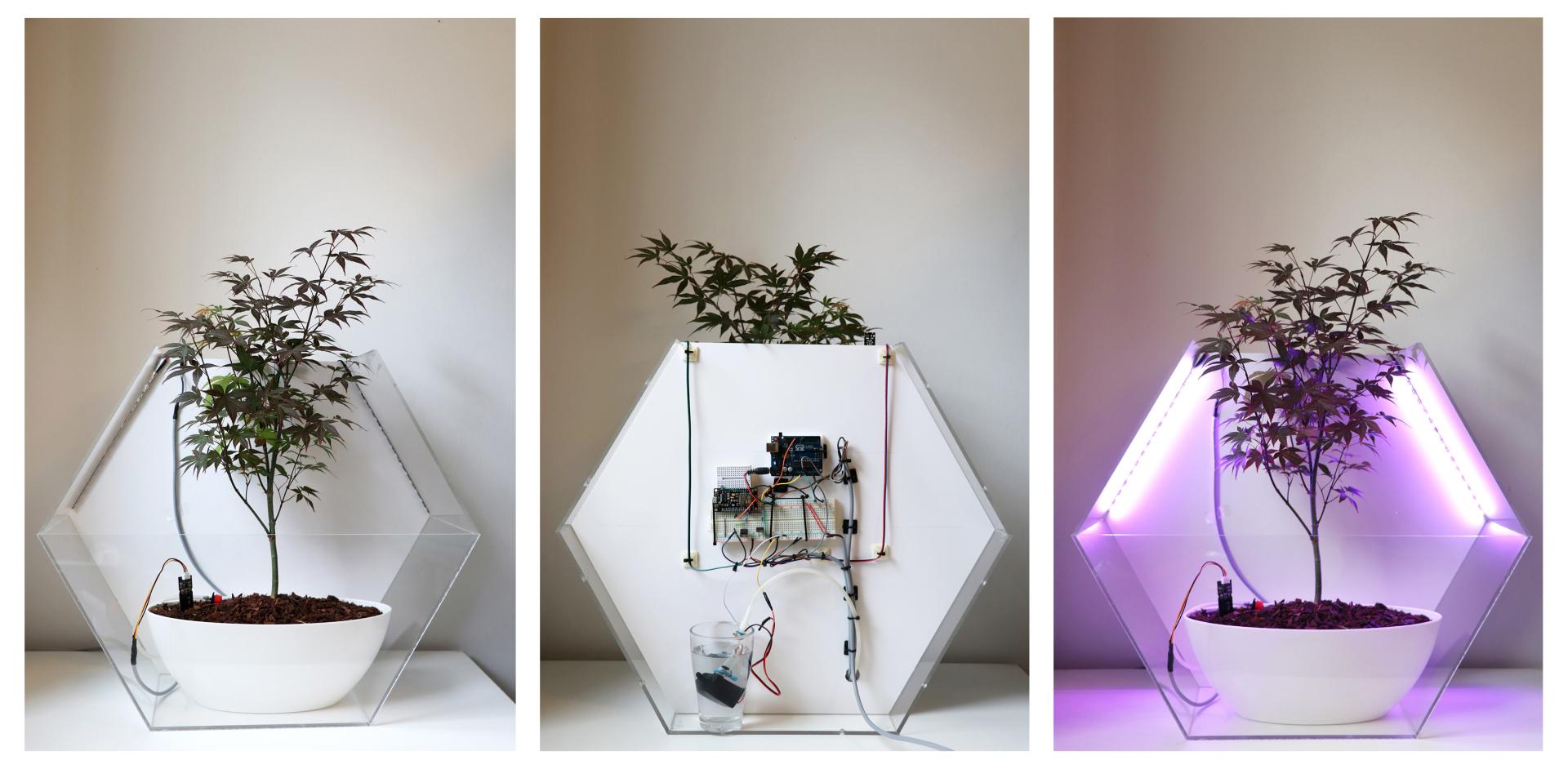
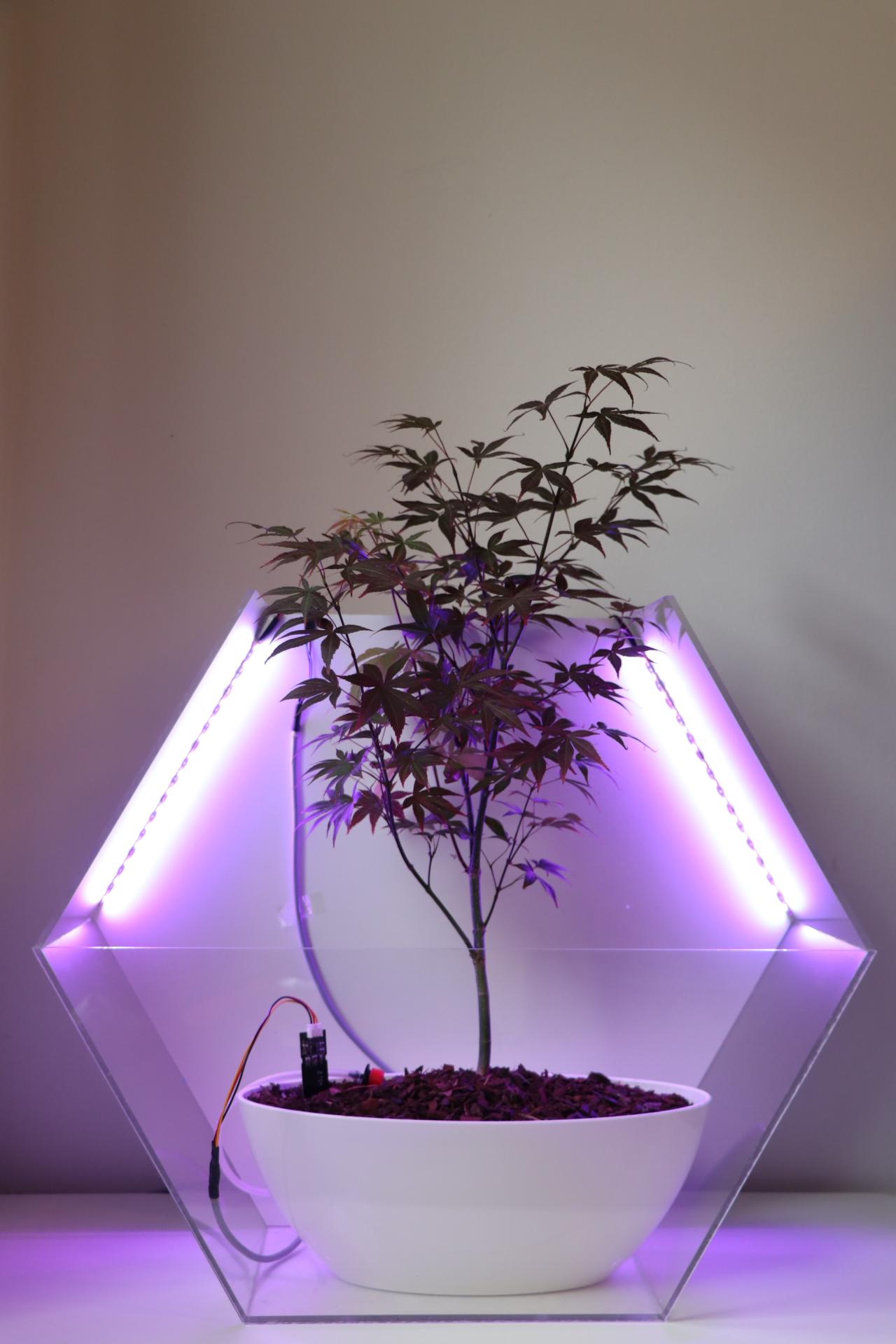
The smart plant stand is a horizonal hexagonal box, of which the four side panels forming the hexagon and half of the front panel are made from transparent solar cells. The top side is open for the plant to grow. The bottom side is where the pot is located.
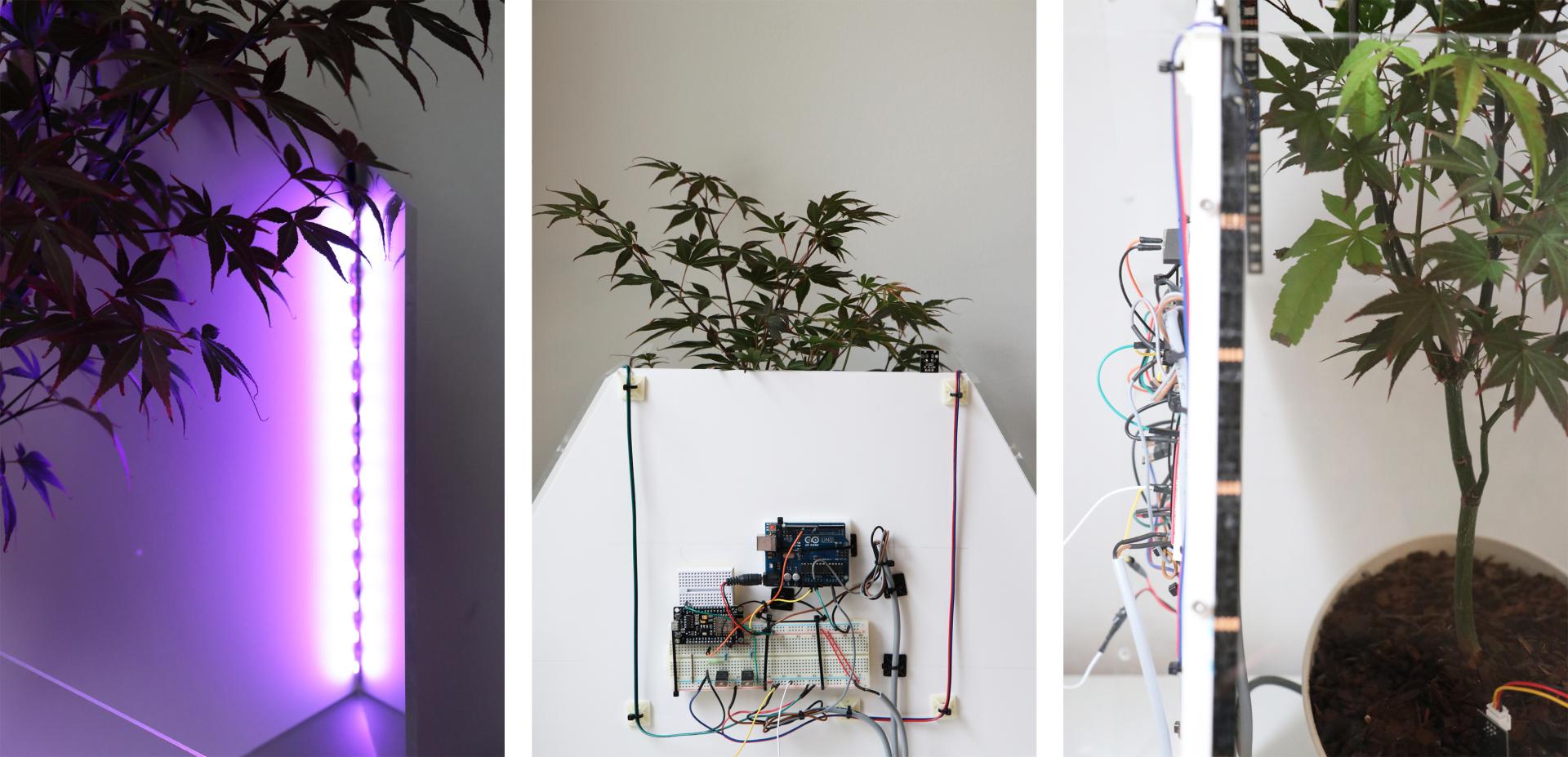
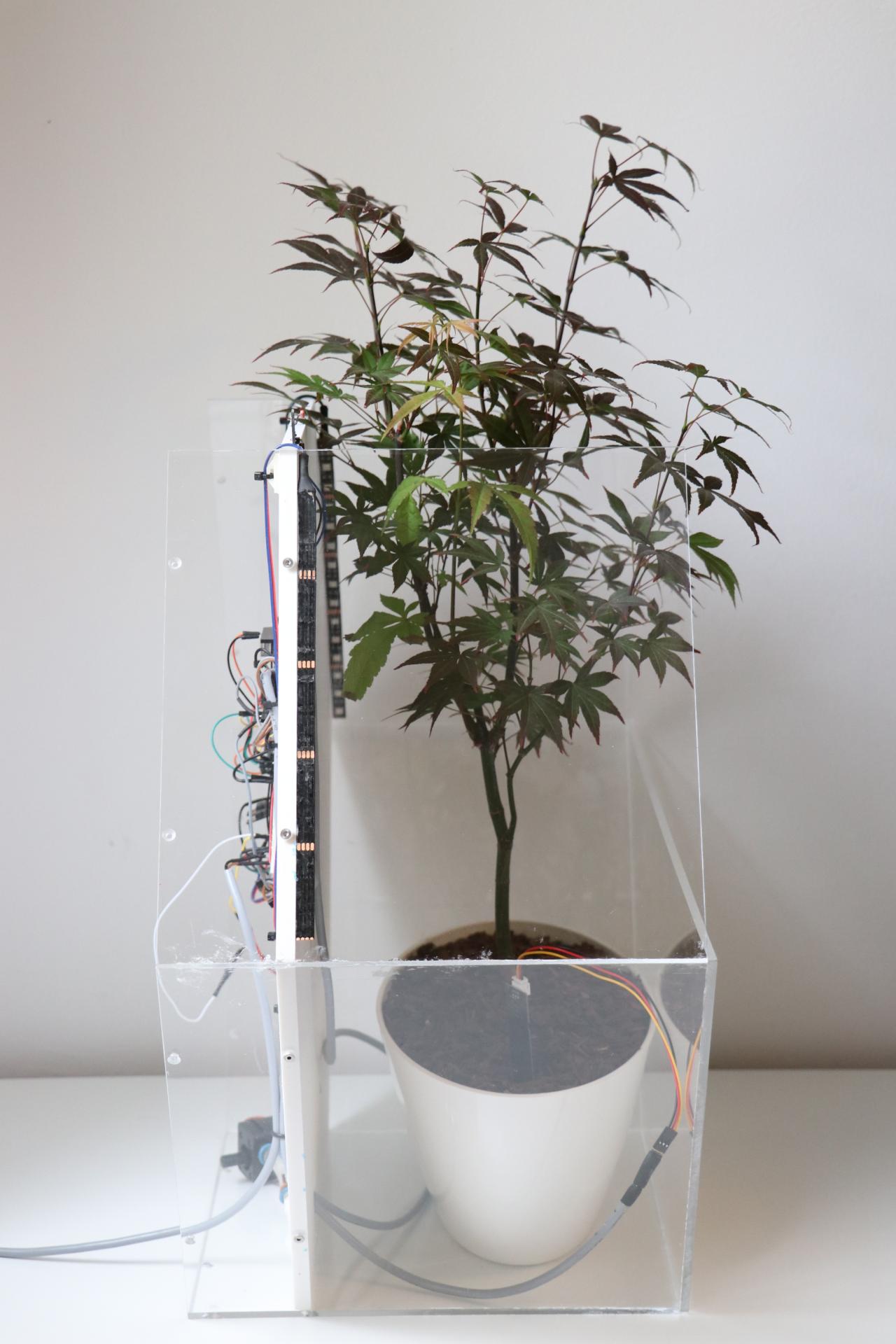
The bottom side is made from aluminium. There is a white PVC plate which divides the plant space from its back which is a place to locate electronics. The plant stand hangs from the aluminium backside to the façade of built areas in groups of as many as possible to help purify the air.
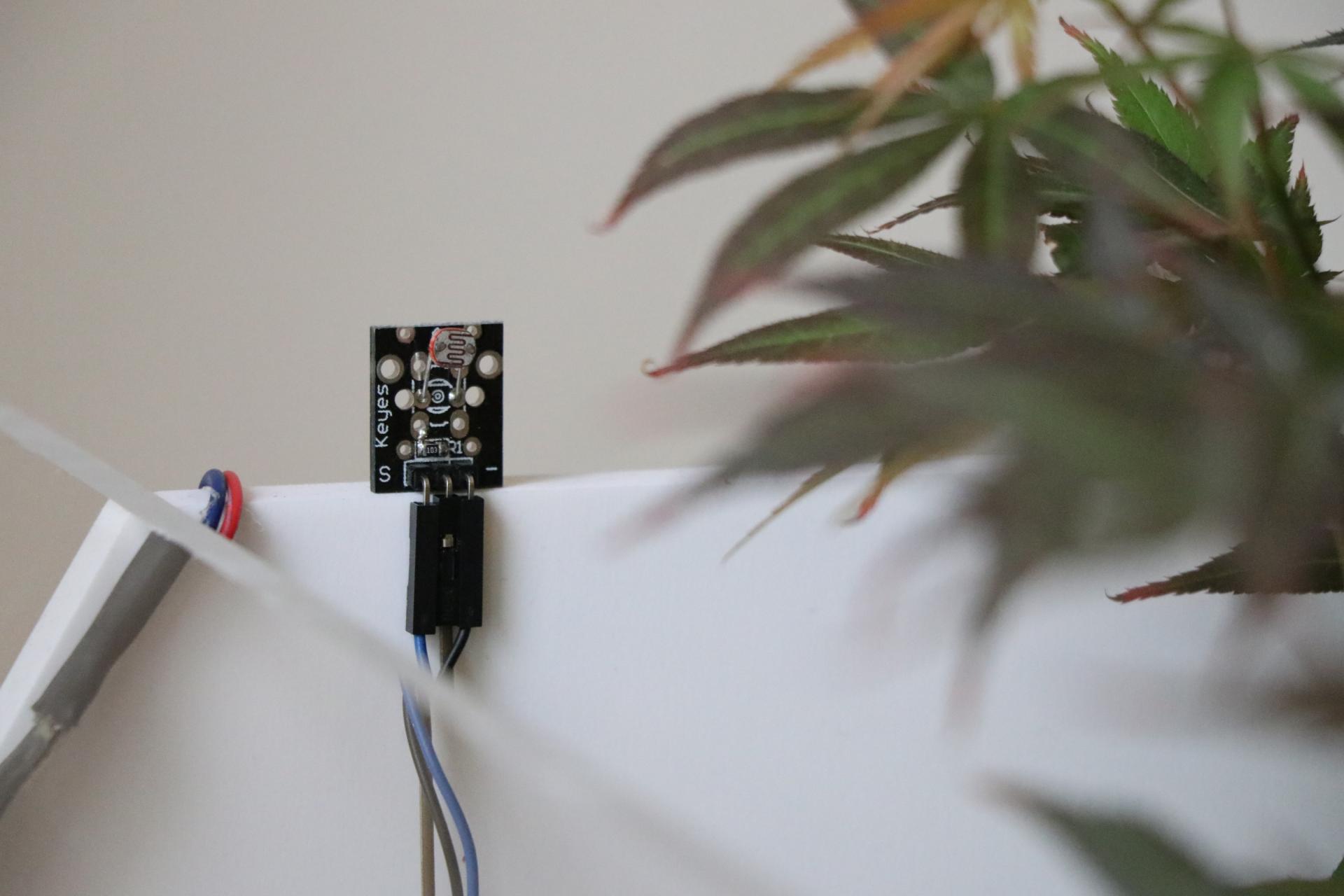
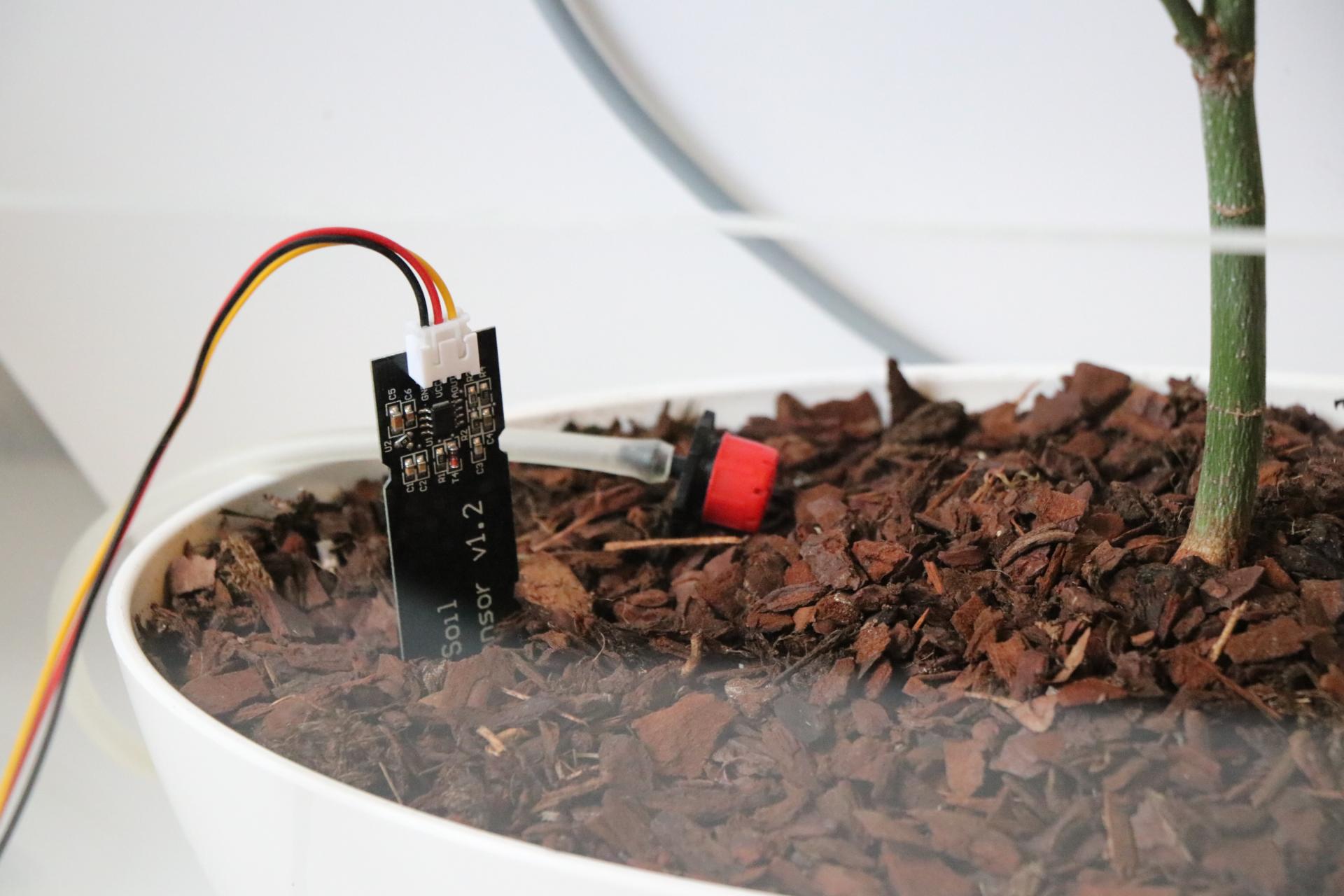
It is a smart plant stand. Each smart plant stand module possesses an Arduino Uno, which is a microcontroller, LED grow-light, and water pumps. There are light sensors and moisture sensors, which analyse if the plant needs more lights and water, respectively. The energy for turning on LEDs and the water pump comes from the transparent solar cells that are provided on the sides of the box. The connection between all of these elements is based on IoT Technology and without the interference of humans.
After hanging the modules on the façade of the building, tiny water pipes come among the modules to provide the demanded water by the plants. It is notable that each module has a hole at the bottom side to bring out the extra water of the soil and also to expel raining water.
The plants, which are chosen for this project, are rich in absorbing CO2 based on NASA investigations. They are Japanese maple and Jade plant, which have red and green leaves, respectively. Using a combination of the plants could help increase the potential benefits.
In the result, the smart plant stand not only effects on aesthetic aspects of cities and make them greener, but also it has functional contribution with the environment and it helps built areas to be as a medium regarding air pollution which acts well as a new identity in cities.
Key objectives for aesthetics and quality
A wall is an architectural object, which is responsible for defining spaces by separating them. It could be a filter between inner and outer spaces. In terms of heat, noise, light, and pollutions, walls could work as insulation.
Exterior walls, or the façades, give the building its appearance. They represent the face of buildings and their effect on the urban environment aesthetically and functionally. They give architecture its dignity. In addition to these responsibilities, a new function could be added to exterior walls with respect to air pollution. While green walls appear to be one possible solution to the problem of air pollution, it must be stated that green walls are not sufficient by themselves; many architects and building owners are not willing to cover facades with plants because it reduces the variety and creativity in built areas’ design and as they might have harmful effects on their environment regarding dirt, insects, allergies, etc. Besides, green walls need a long period to be able to cover the wall and afterward start acting efficiently. Furthermore, most of the current green walls lose their leaves in fall and winter and they transfer to a dried wood branch. Regarding CO2 absorption each leave act as a catalyst. The lack of leaves means there will be a few amounts of CO2 absorption.
This research seeks to find how urban architecture and design can confront this problem. As it is argued in the last paragraph, it is proven that current green walls need considerably a long time to cover most parts of the façade and not only give the city a good appearance but also start to act as an air purifier. This research proposes a “modular green wall system” that is pre-constructed. When it attaches to the facades, it starts to act functionally regarding air purifying from the initial moments. It does not need much time to reach its highest efficiency on the façade because it is already grown in greenhouses.
Key objectives for inclusion
The goals of this research state as below:
This research shall consider all aspects of existing green walls, evaluate the advantages and disadvantages as the initial studies for proposing a better version of them with the main focus of conflicting with air pollution issues. In this regard, I will investigate the amount of CO2 absorption through case studies of green walls using different kinds of plants and considering the efficiency; it is important to document current existing air pollution indices for use as an input and output more accurate statistical models.
The second goal is to improve upon green walls by transforming the concept into a module by proposing three specific plants with high efficiency in CO2 absorption and introducing new methods of using them to improve their air purification capabilities.
An additional goal is to increase architects’ and owners’ enthusiasm of using this module on the façade of buildings. To achieve this, I need to use existing data and find out how it is possible to build a biotechnical module, which has an appropriate CO2 absorption capacity when compared to energy and cost requirements, which waste it produces, and a design that conforms to different wall shapes and acts as a module.
Innovative character
There are many old-fashioned/traditional ways of keeping greeneries around living areas. But, not all people are plant lovers or having green thump which means that they can grow plants very well.
The plant stand I designed for my master thesis project consists of new technology and materials that make planting easy for everyone. The IoT technology make the watering and lighting of the plants completely without interference of human and the transparent solar cell which is very new material in solar material worlds, helps the plant stand to be sustainable and clean.
The project is designed Modular. Modularity is against complexity. modularity is the degree to which a system's components may be separated and recombined, often with the benefit of flexibility and variety in use. The module could be attached together and create a new form. Besides, Shape, texture, angles, material, and colors are important factors in modularity. This project chooses to be modular because it is what will attach to façade of old or new buildings as many as the owners want. If someone wants to hang just one module on the facade, this modular plant stand in transferring the product ideas and aims is as complete as when someone wants to use more than one module. Just like molecules, each module has the whole features of the product.
This Ph.D. research takes architectures as ‘personas’ who have the duty of reduction and prevention in ‘scenarios’ relating to air pollution. Human-made structures cover a noticeable area of cities. This broad zone could be taken as an opportunity to create notable effects on society and human life. This is obvious that we cannot stop urbanization and over-constructed cities and it is not a trivial matter that the more we build, the more air pollution we release.
The innovation of this idea could be seen in the transforming of Green Walls and Climbing green walls, to a modular sustainable stands. In which the plants are chosen intentionally for absorbing CO2.