Recreating Identity
Basic information
Project Title
Full project title
Category
Project Description
The project ‘Recreating Identity’ faces the topic of urban regeneration in North Lambrate, a district in the east of Milan, Italy. It deals with enhancing the public spaces and social activities, through reinforcing the urban structure to give a new life and vibe to the neighborhood and its citizens. The project’s focal point is to recreate a new sense of identity, based on collecting various existing characteristics of Lambrate.
Project Region
EU Programme or fund
Description of the project
Summary
Milan like so many other European cities is growing fast and needs to adapt itself to the upcoming and occurring changes. Urban regeneration is one of the main tools that Milan municipality is taking into account to address the cities demands. As it is described In the Piano di Governo del Territorio (PGT) document, Milan is looking forward to regenerating itself beyond its borders.
Lambrate is one of those peripheral areas that due to the PGT, needs to go under regeneration.
Today Lambrate’s urban fabric, due to multiple reasons needs to be regenerated. Some of the focal reasons are lack of proper accessibility for slow mobility, lack of qualified public spaces, poor social life, poor environmental image, abandoned and underused sites.
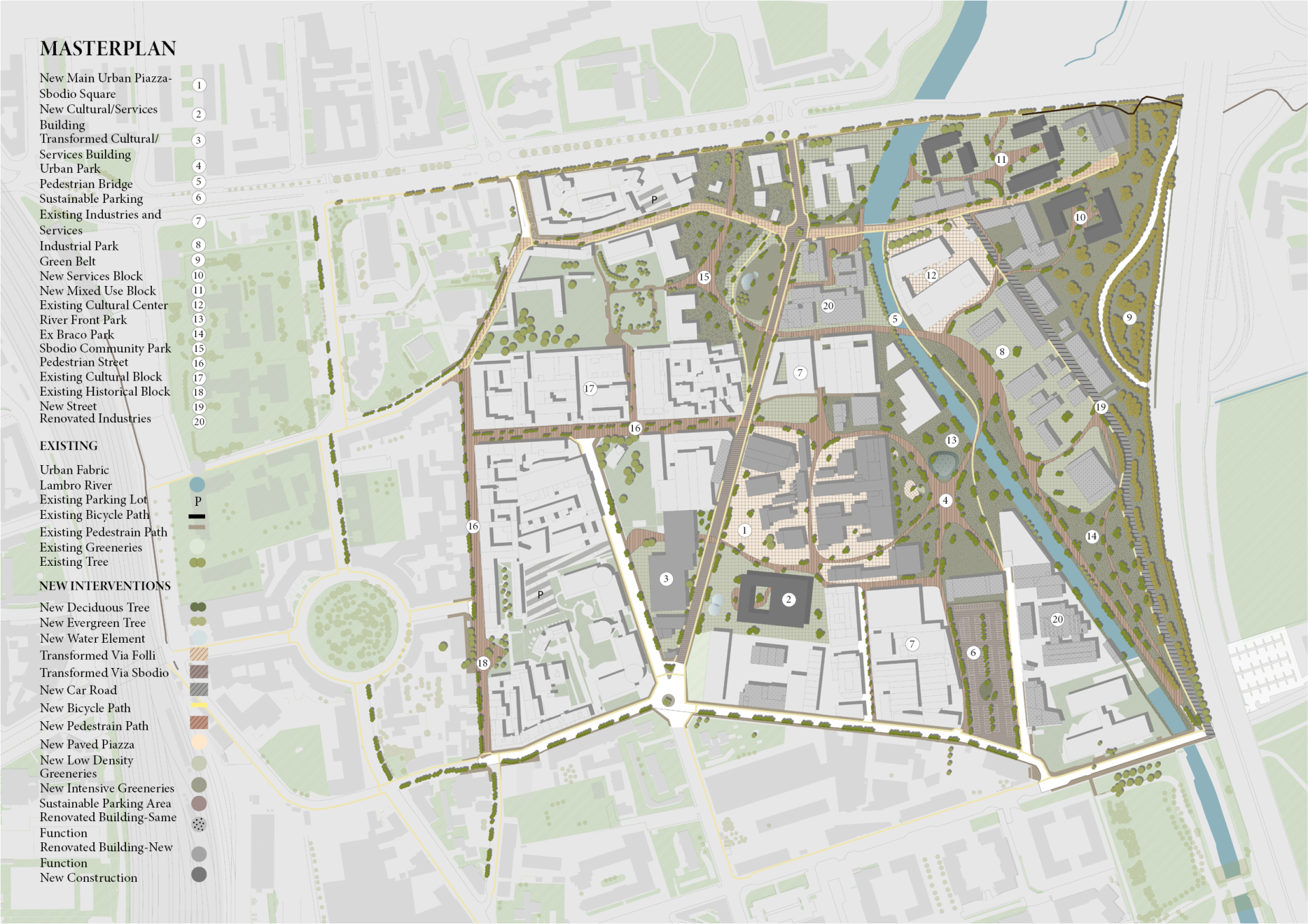
The project mainly deals with creating possible and accessible public spaces. To reach this aim. various tools are employed, such as a major transformation of streets, altering the ownership status of abandoned lands, suggesting new series of functions for abandoned or underused buildings, and renovating or in some cases demolishing the poorly conditioned buildings, to be in better service of public space.
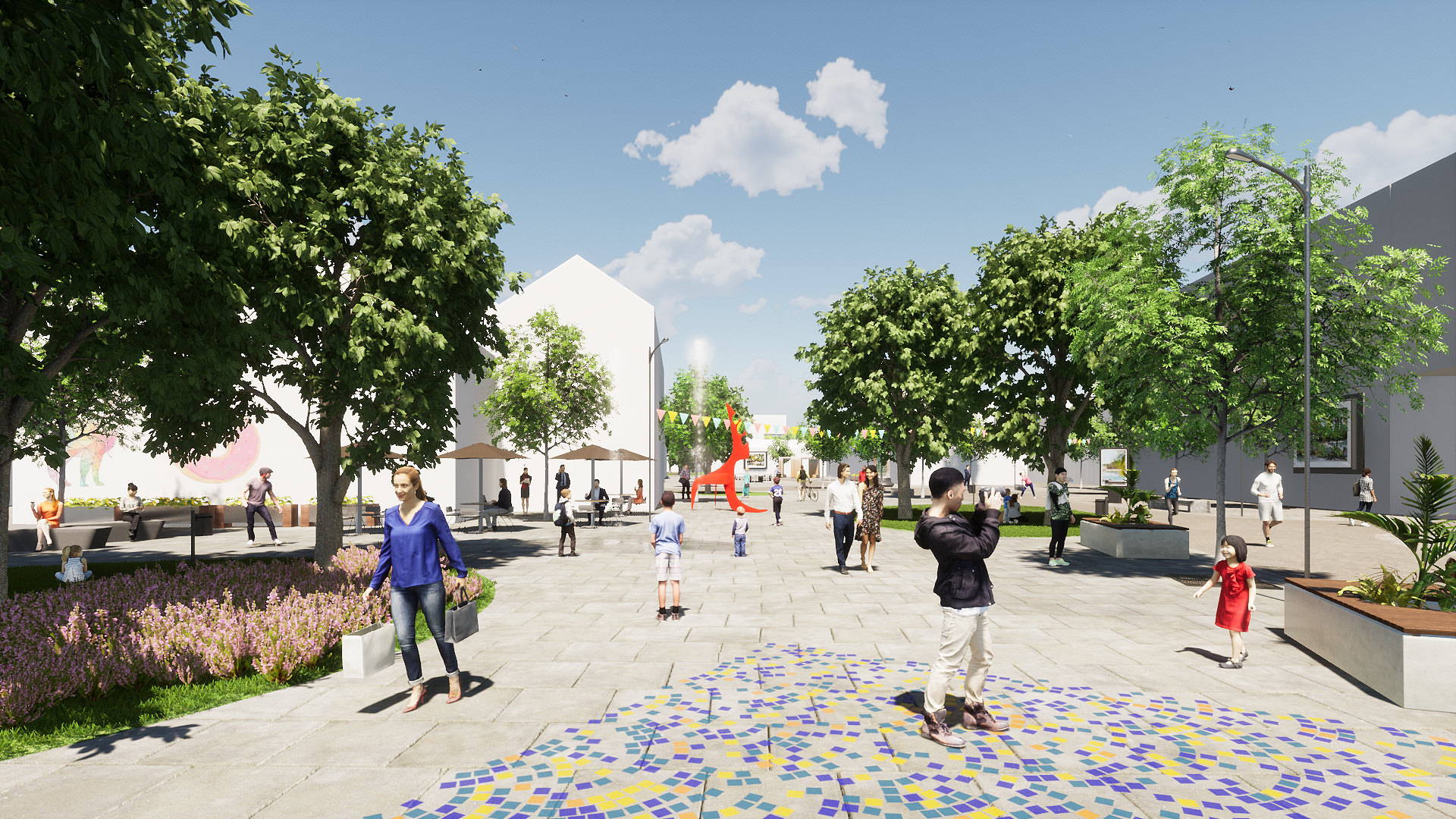
As for the final design, various public spaces with flexible occupations are created. The whole neighborhood becomes fully accessible for pedestrians and bike riders. Neglected spaces such as the riverfront and the abandoned areas become part of the solution.
Key objectives for sustainability
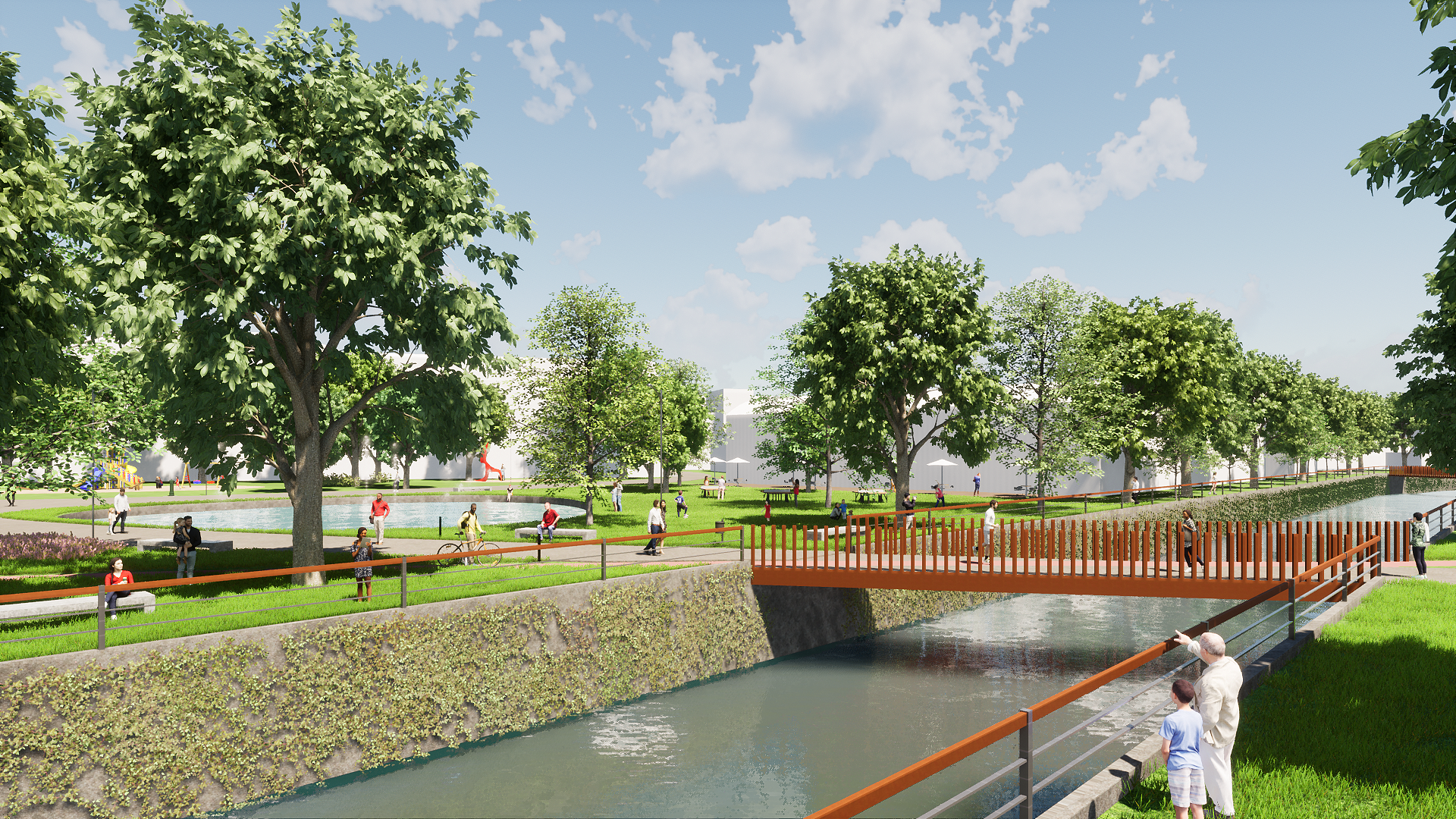
The strategy of the project in terms of sustainability is divided into two main parts. First, to enhance the quality of the riverfront and to implement certain minor efforts to reduce water pollution. Second and more important, since the selected area is in the vicinity of Lambro River, which is neglected and polluted and there are also some fragmented green spaces, the objective is to connect those green nodes and create more possible spaces. Not only to environmentally rehabilitate the area but also to make it safer and give it a sense of identity.
To meet these objectives, our proposal intends to create new greenery and public spaces in underused voids or degraded areas, defining their relationship with the built environment as a way to develop a variety of different spaces. Densify with trees the zones next to the highway, creating a green barrier for pollution and noise. Introduce vegetation on one or both sides of the streets. Create environmental corridors to the industrial zone and the Lambro River. Connect the southeast public spaces to the industrial zone in order to create a green spine along the river. Revitalize the existing green infrastructure and the deteriorated public spaces. Propose sustainable parking lots as flexible spaces to improve the air quality in the urban environment.
The proposed green areas and public spaces will offer open space activities along the year (following the concept of seasonality) Those create environmental comfort and implement climatic devices such as wind protection, shading, and air microflows.
Key objectives for aesthetics and quality
To give a better quality of experience within the site, our project deals with the transformation of the neglected and abandoned industrial site and its relationship with the Lambro River.
For making the whole area accessible, new series of pedestrian roads are introduced. Besides increasing the sense of identity and safety, in each block a public space is designed. Moreover, each street gains a specific character. In the industrial part, new green areas are introduced. Regarding the buildings, we mainly used the technique of renovation and reuse into the existing buildings that are in good condition. We are proposing the demolition of the buildings that are in very poor condition and abandoned, which are affecting the physical environment of the district, in order to create new urban atmospheres for the neighborhood citizens.
We aimed to implement homogenous elements to make the whole intervention unified, we put permeable pavements in the pedestrian paths, moving all over the site, to make the whole plot accessible for the pedestrian. Various types of trees are implemented in the site with different functionalities: Maple, Chestnut, and Linden in the streets and squares, and Catalpa and Willow near the highway and riverfront. Water elements are proposed as design tools for the public space. Green rooftops are proposed in new and renovated buildings. Pedestrian and bicycle bridges are designed over the river to connect the new park with the renovated industrial development. Urban furniture and other resources are provided to facilitate the permanence of people on the site. Internal public places (inside or between buildings) are linked by the squares and have mostly green space inside of them.
Key objectives for inclusion
The concept’s objective is to regenerate North Lambrate by answering the main proposed question, which is: ‘How can we recreate a strong identity for North Lambrate based on its fragmented characteristic?’
To answer the question, various studies on the site have been done. For developing the proposal, from the beginning, three systems were considered: infrastructure and mobility system, built environment system, and environmental system.
The goal of the design is to implement a set of homogeneous interventions that are satisfactory to the site’s peculiarity. The environmental involvement not only tries to enhance the atmosphere and vibe of the space but also provides flexible spaces that could be a possible host for different events.
Moreover, the user and citizen will not be segregated anymore. The site consists of various groups of people with different occupations that all merged within a context. Abandoned areas become employed and lively. Industrial sites and buildings which were underused become physically active either with the same or different vocation. The new design offers a new cultural, commercial, and office district, to make the site feasible, profitable, and to create an employment opportunity mostly for the neighborhood citizens. Also, it enforces the role of Lambrate as a design district through new public spaces. It makes the neighborhood open to a new community and international events, temporarily or permanently. The new design fills the area with trees and forms a green continuous network, giving a good quality of life to the residents. It also creates a pleasant environment, a new pole of creativity, and an integration of social spaces with the working atmosphere, and a new enjoyable space for workers, students, residents.
Furthermore, another new vital character embedded in the site is its potential to adapt to upcoming changes and development through time, by preparing the infrastructure.
Innovative character
The innovative aspect of our design is to study and review the current situation of the area, illustrate its flaws and strengths, and extract a solution out of its potentials to address the existing problems and drawbacks, instead of imposing something new on the area. This approach is a more sustainable way to deal with urban projects.
In the current situation, division among identities has separated the areas and their atmosphere, therefore, creates an eclectic neighborhood. However, we proposed to recreate a collective identity to make all those individualities, blended and glued all the pieces of north Lambrate together.
The designed area becomes a link between three poles of the neighborhood (historical center, the industrial area- riverfront, and the design district). This approach empowered our design by not only finding an answer to the problems but also by enhancing the neighborhood’s sense of identity and creating a conversation within different aspects of the area. Also, it opens the way toward a more flexible future where the neighborhood could more easily adapt itself to the changes by evolving its identity which is rooting through its history.