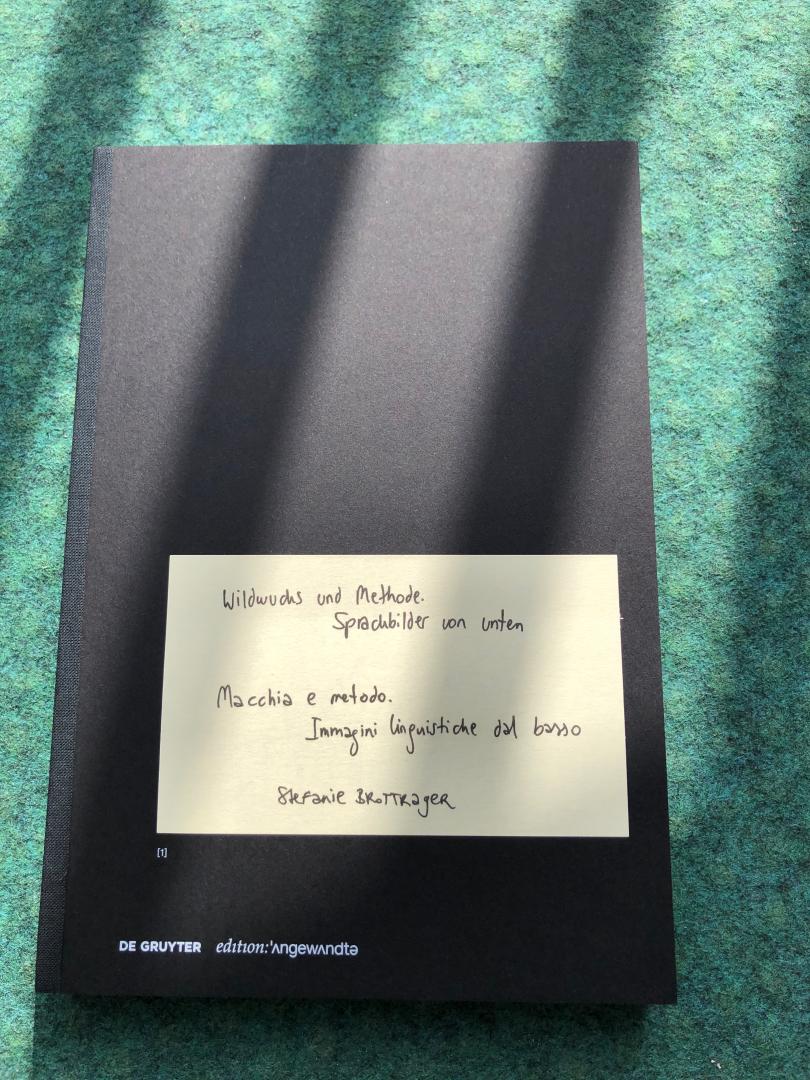
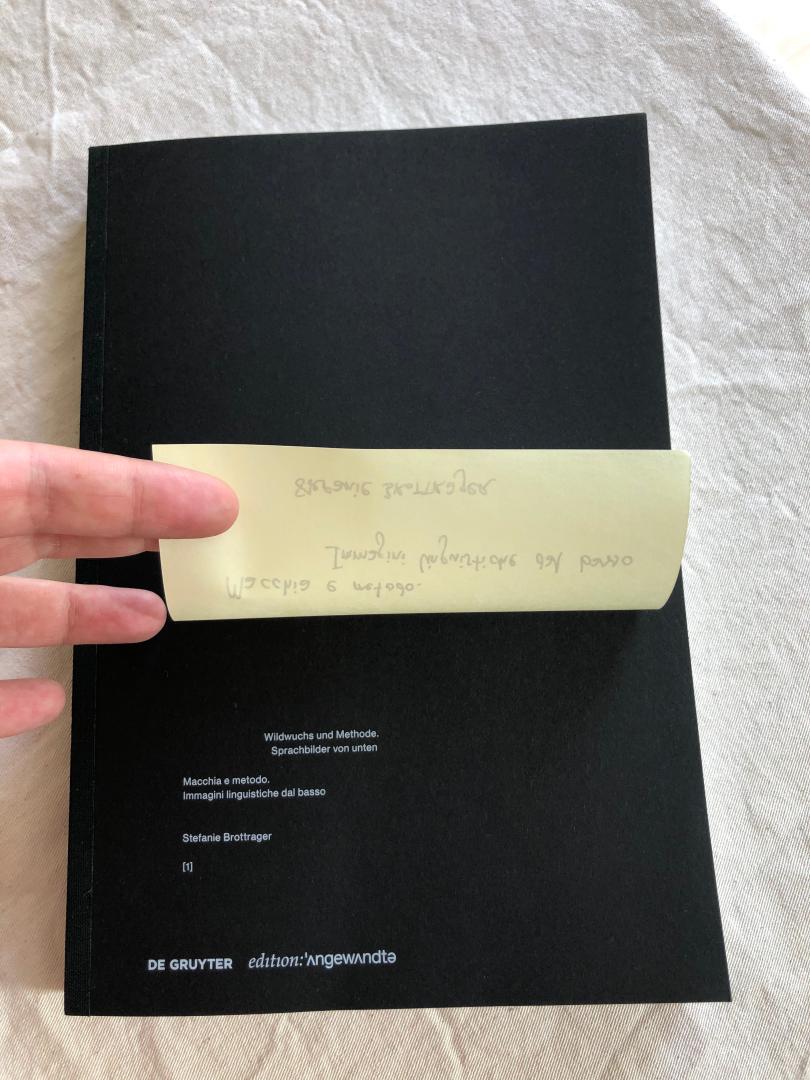
Wildwuchs und Methode.
Basic information
Project Title
Full project title
Category
Project Description
This publication has its roots in the Capital of Culture Matera Basilicata 2019 (Italy) and Vienna (Austria). An internship at the Open Design School resulted in a bilingual book that gives new shape to both the visual and auditory force of intercultural dialogue. Language art, everyday language (Italian and German), design and cultural practices not only translate one language into the other in this volume, but also practice a new expression of plural authorship.
Project Region
EU Programme or fund
Description of the project
Summary
This bilingual book was jointly inspired by the city of Matera, in the Basilicata region of southern Italy, and by Vienna. It presents a comprehensive archive of verbal images as it explores themes of identity, translation, expectation, otherness, shame, and materiality. Personal notes, essays, and expressions are either randomly juxtaposed or methodically ordered based on poetic or quotidian spaces, and condensed into a volume filled with remembered and imagined scenes.
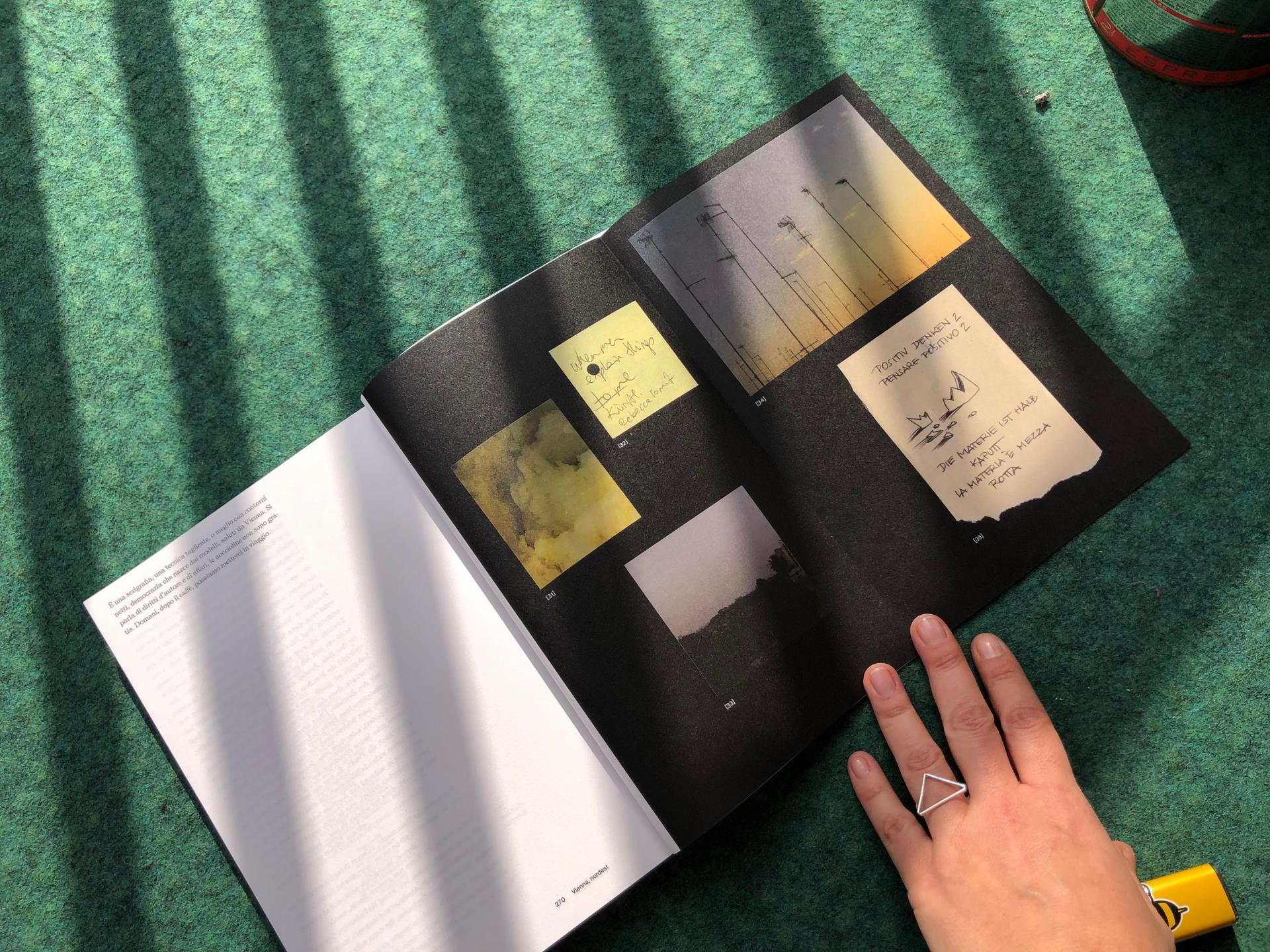
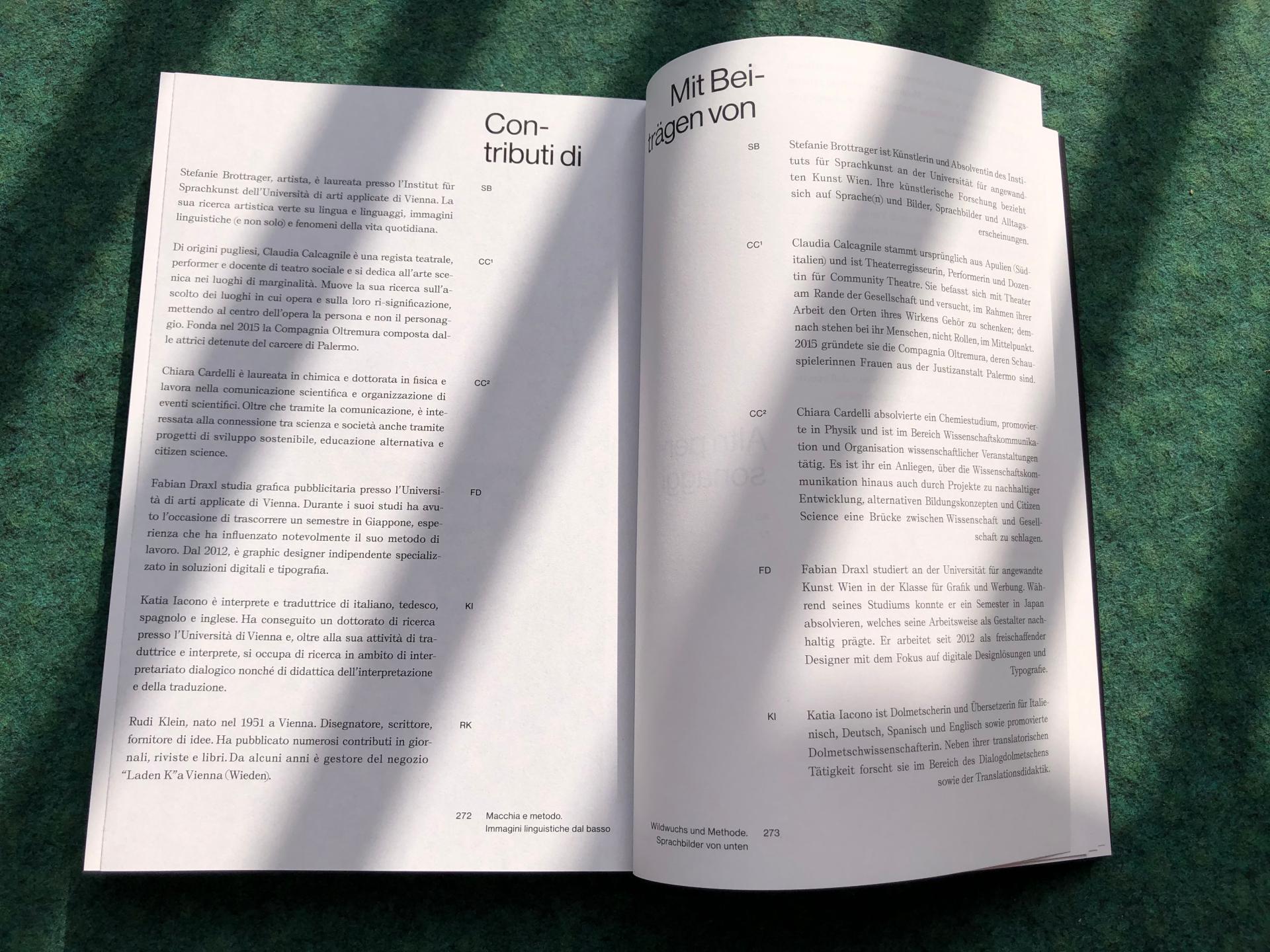
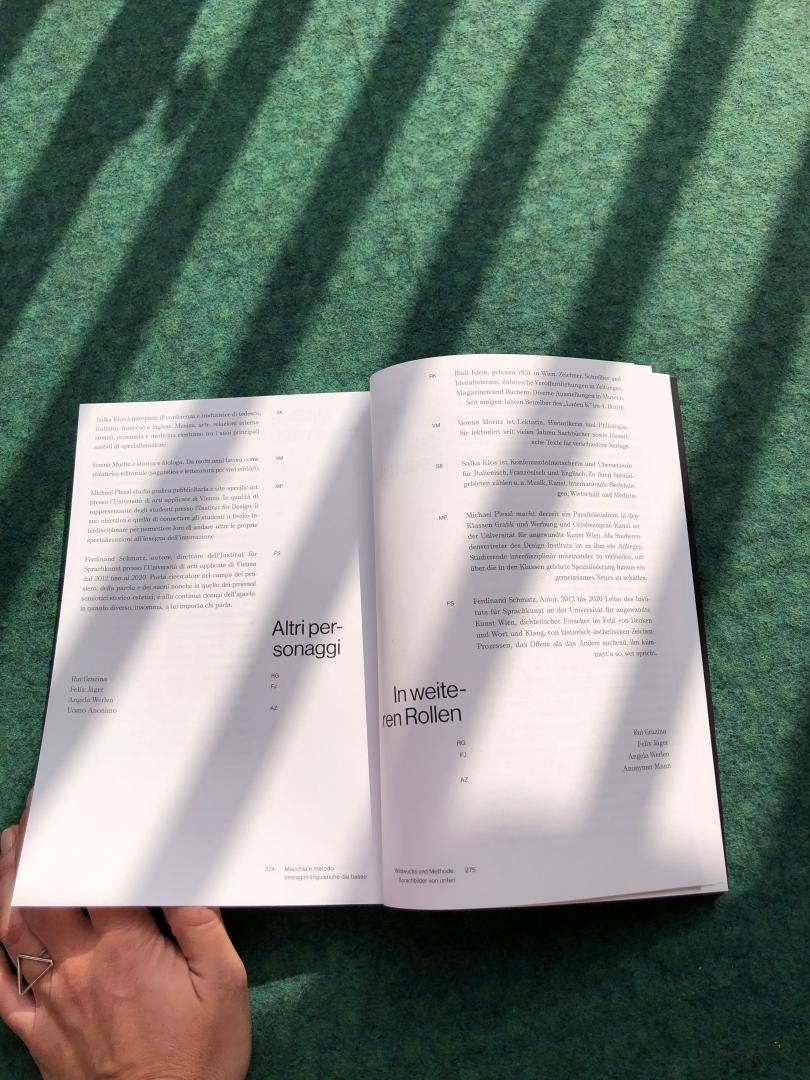
The author’s own texts are complemented by guest input from Chiara Cardelli and Claudia Calcagnile, an interview with Ferdinand Schmatz, and drawings by Rudi Klein. Italian and German texts alternate, together creating with the color images and fold-out pages at the end of each chapter a text-image composition that offers multiple perspectives.
The texts written by the author, Stefanie Brottrager, during her stay in Matera and Vienna 2019–20, collect Sprachbilder or linguistic images. This pathway of artistic writing was established theoretically in her dissertation, and this book uses the theory of "Mellow patterns" for/as artistic practise. The author's texts, which contain many citations and transcribed interviews, are accompanied by texts from the Italian theorist Chiara Cardelli (on Soft Matter), theatre director Claudia Calcagnile (Compagnia Oltremura), and Ferdinand Schmatz, poet and former director of the Institut für Sprachkunst, University of Applied Arts, Vienna. Rudi Klein, Austrian cartoonist, contributes three bilingual comics "on matter".
The very many different ways of using language was challenging, for as well translators and graphic designers and all contributors positively forced to close cooperation.
Key objectives for sustainability
The goal of the publication was to have not only "another publication", but to create a theory-in-practice model for artistic practice and cooperation.
A book, as a very classic form of design product, is not per se sustainable. Even if we create a product of latest sustainable standard, we have to achieve this goal both in use of material (MATTER), and content. In the book we paid very much attention on the democratic use of space for the two languages and freedom of speech. The productive mistake, the productivity of shame and staging as meta-topics have been reflected and applied during the design-process of the book.
Key objectives for aesthetics and quality
The graphic designers Michael Plessl and Fabian Draxl suggested a book design, which expresses the content of "soft matter" and "materiality" in a soft way, Matera. No hard cover, easy to bend, soft and gentle, affordable, like a notebook, beautiful to look at, love to details.
The translators very carefully tried to translate linguistic matter, which means to give readers from both languages the feeling of "learning a new language".
Close cooperation between the two, editor and authors facilitated this experiment.
Key objectives for inclusion
Female and male artists and contributors are equally present in this project (contributors from Austria & Italy). It was carefully checked, that freedom of speech and data protection are always considered.
Results in relation to category
Cultural heritage includes contemporary production and exchange of cultures and expertises. In this book, which could be seen as follow up project to both the Open Design School and art university exchange on cultural matter, cultural heritage is debated and explored in a new, experimental way.
How Citizens benefit
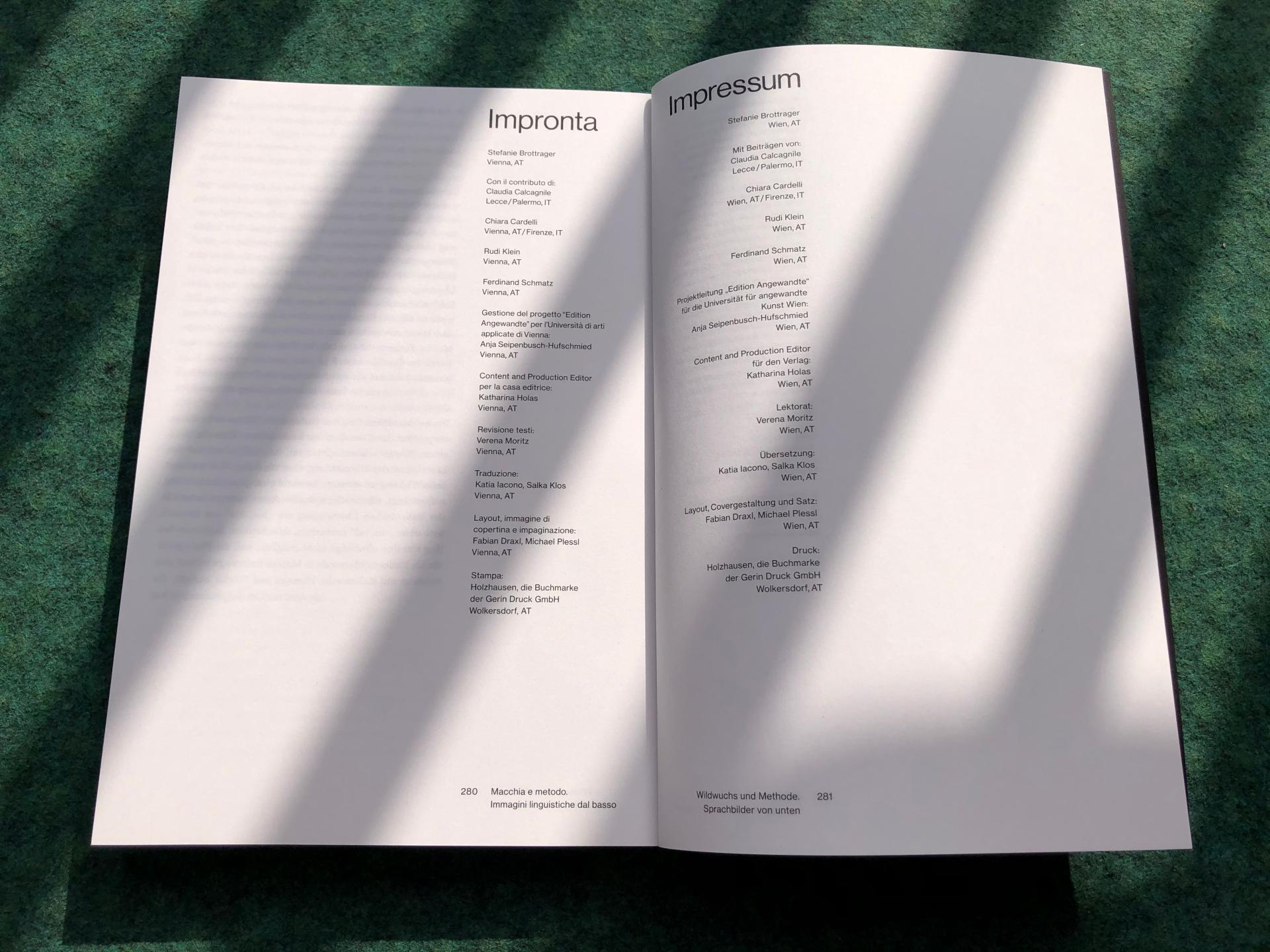
2 graphic designers
2 translators
1 editor
1 university coordinator
1 publishing coordinator
4 co authors
4 guest contributors
All participants of Open Design School during the author's stay have contributed with their engagement
> Impact: direct impact by contributions to the book
Innovative character
The use of language is innovative, as well as the way cooperation between contributors was fundamental for the actual form of the end product.