Piazza Rossini: Green Please!
Basic information
Project Title
Full project title
Category
Project Description
Between 2019 and 2020, Piazza Rossini has been the stage for a participative action of tactical urban planning. The temporary pedestrianization of the location promoted the redefinition of the use of the space in collaboration with the students from the Department of Architecture and numerous local stakeholders. A site-specific green area was co-designed to raise awareness on global heating and enhance a shared sense of ownership of the city’s cultural heritage.
Project Region
EU Programme or fund
Which funds
Other Funds
Horizon 2020 - Call: H2020-SC5-2016-2017 (Greening the Economy) - Topic: SC5-21-2016-2017 - Type of action: IA (Innovation action) - Grant Agreement 7302080 - Name of the project: ROCK - Regeneration and Optimisation of Cultural Heritage in Creative and Knowledge Cities
Description of the project
Summary
The redefinition of the use of Piazza Rossini started as one among the numerous project activities jointly conducted by the Foundation for Urban Innovation, the Municipality, and the University of Bologna during the implementation of the ROCK project (H2020 - SC5-2016-2017).
Piazza Rossini temporary pedestrianization was firstly designed for the square to be part of a greater initiative aimed at promoting, through a 6-days festival, the interconnection between the 5 squares located in the University area: the heart of the historic center, but also a space of meeting and clash of different cultural, social and economic identities.
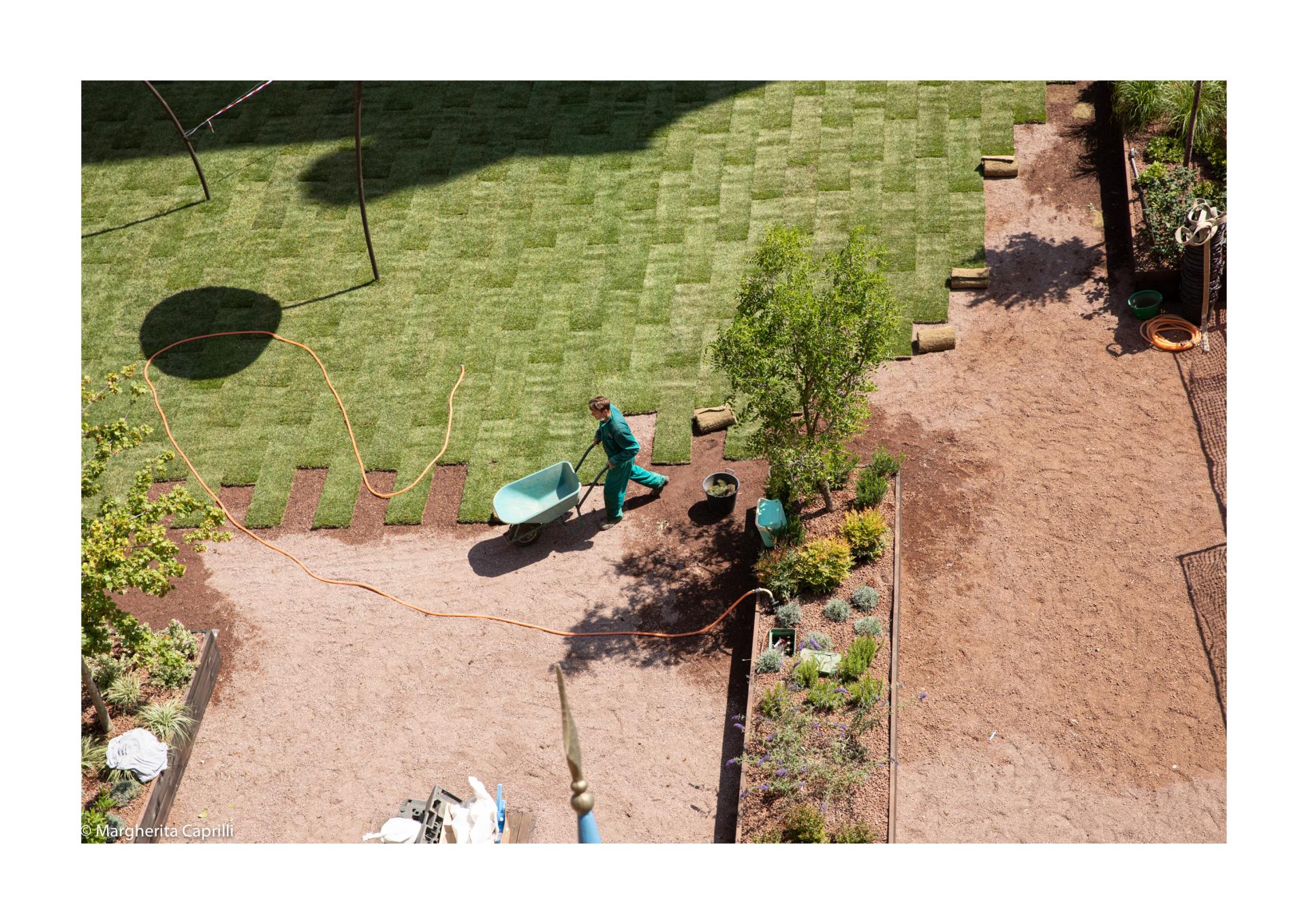
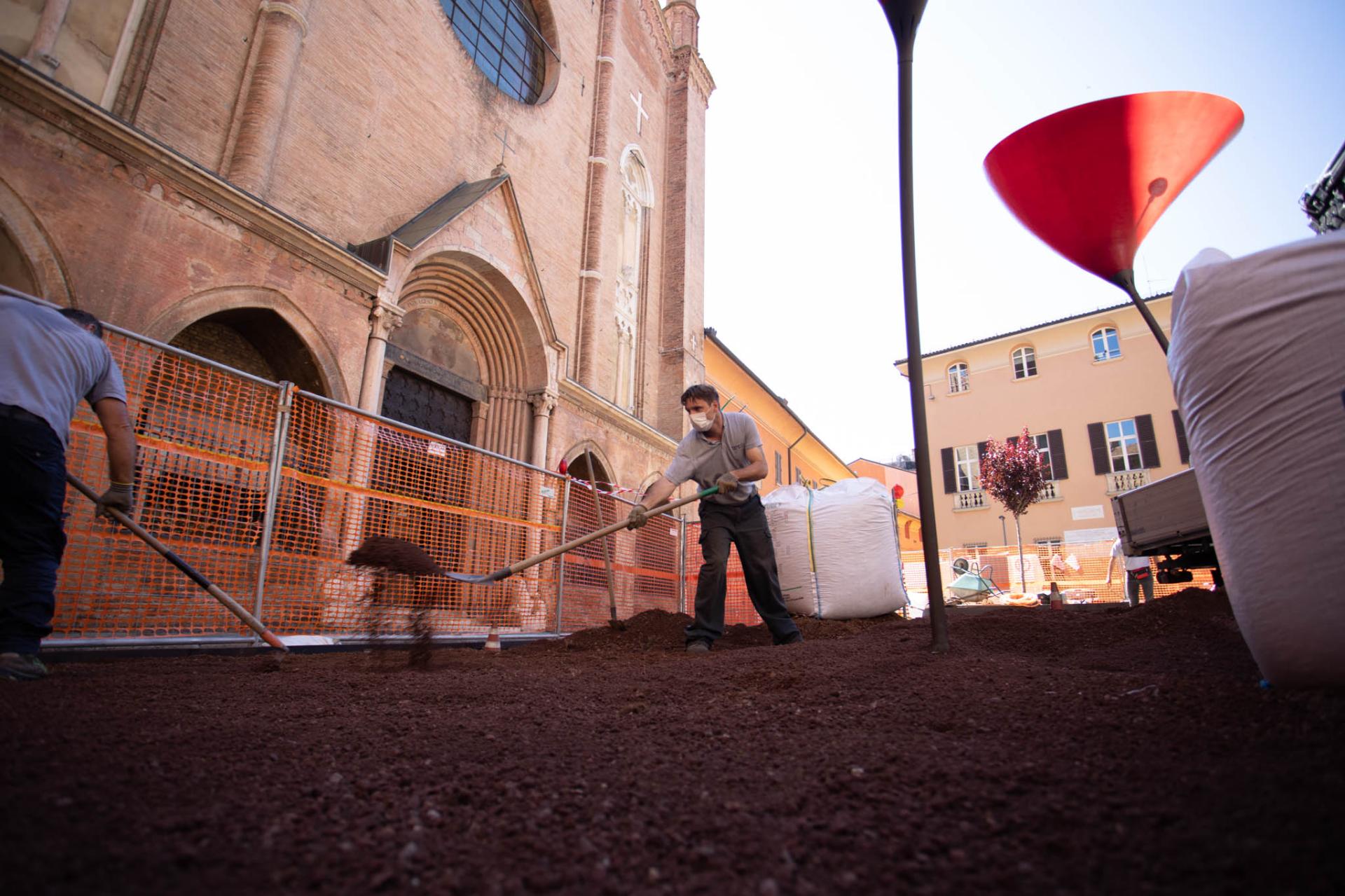
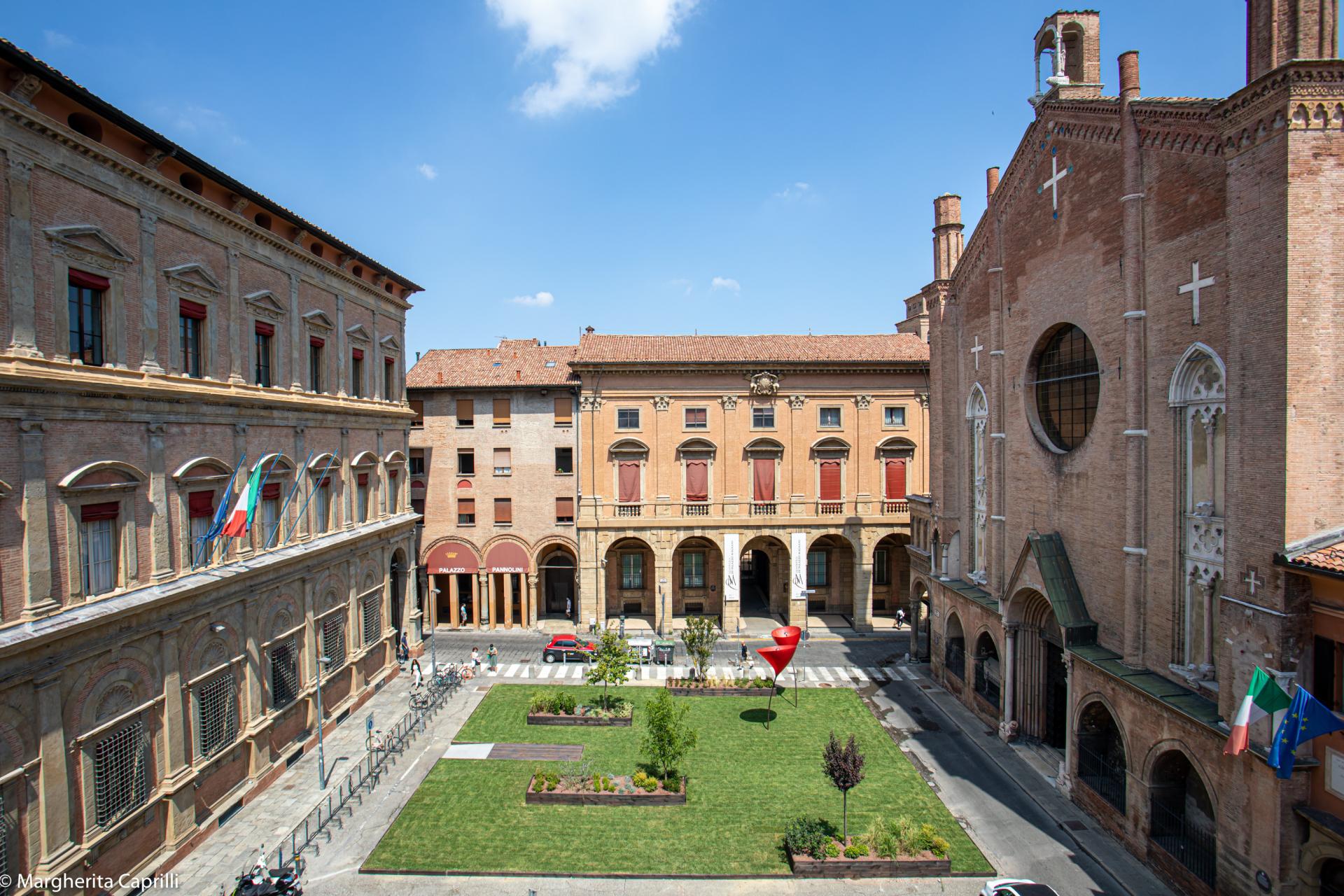
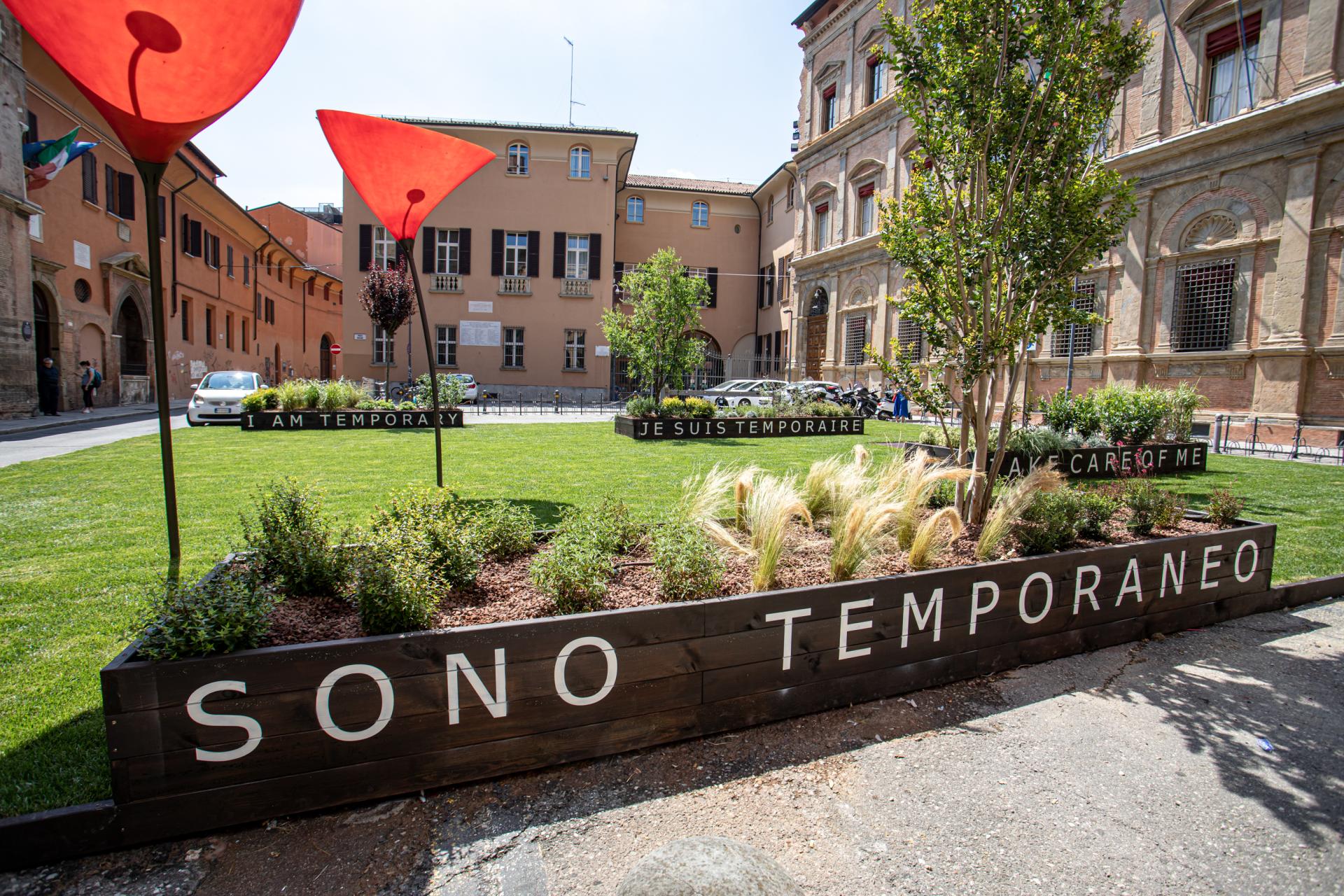
Since September 2019, Piazza Rossini has been the stage of shared green strategies testing for urban regeneration. The first set-up Green please: the unexpected lawn was co-designed and built-in self-construction together with the students from the Department of Architecture of the University of Bologna, and resulted in a green area restoring the route of the ancient cemetery of the Church of San Giacomo Maggiore.
The experimentation phase ended in October 2019. However, the temporary pedestrianization of the square was so successful, that the Municipality passed a resolution to make it permanent. Pending for the final intervention to be designed and implemented, Piazza Rossini 2.0 has been set up in July 2020 to enhance elements of biodiversity, comfort, and mitigation. The new arrangement hosted numerous cultural events and initiatives related to the enhancement of public space during the summer period.
In October 2020, the Foundation, in collaboration with Cantieri Meticci artistic collective, curated an exhibition narrating the steps of this transformative action through visual and perceptive conditioning videos, photographs, and site-specific installation elements.
Key objectives for sustainability
European capitals are at the forefront of efforts to tackle climate change creating urban forests (e.g. Paris) to reduce CO2 emissions. In line with these efforts, Piazza Rossini's temporary set-up aimed at implementing a concrete and demonstrative action to face the increasing heat waves within the urban area of Bologna and raise citizens’ awareness.
The proposed project for the first temporary redefinition of the square Green Please was designed with an ecological, social, recreational, and educational function. The square was covered with a ready-made green carpet and was enriched by Maxxi Poppy, a floor-standing artistic light fitting for outdoor use. The lamp was thought to answer to sustainable and environmental issues, reducing energy demand using a new generation of led-based bodies.
The temporary pedestrianization of the area, until then used as a parking lot, aimed also at experimenting with means and processes for tactical urbanism, to highlight the importance of testing and monitoring as tools for slow-speed urban integration projects. Piazza Rossini's temporary experimentation and the achieved results prove how verifying the concrete effects of urban planning can effectively slow down the threat of climate and global change with small, successful, and shared local efforts.
Key objectives for aesthetics and quality
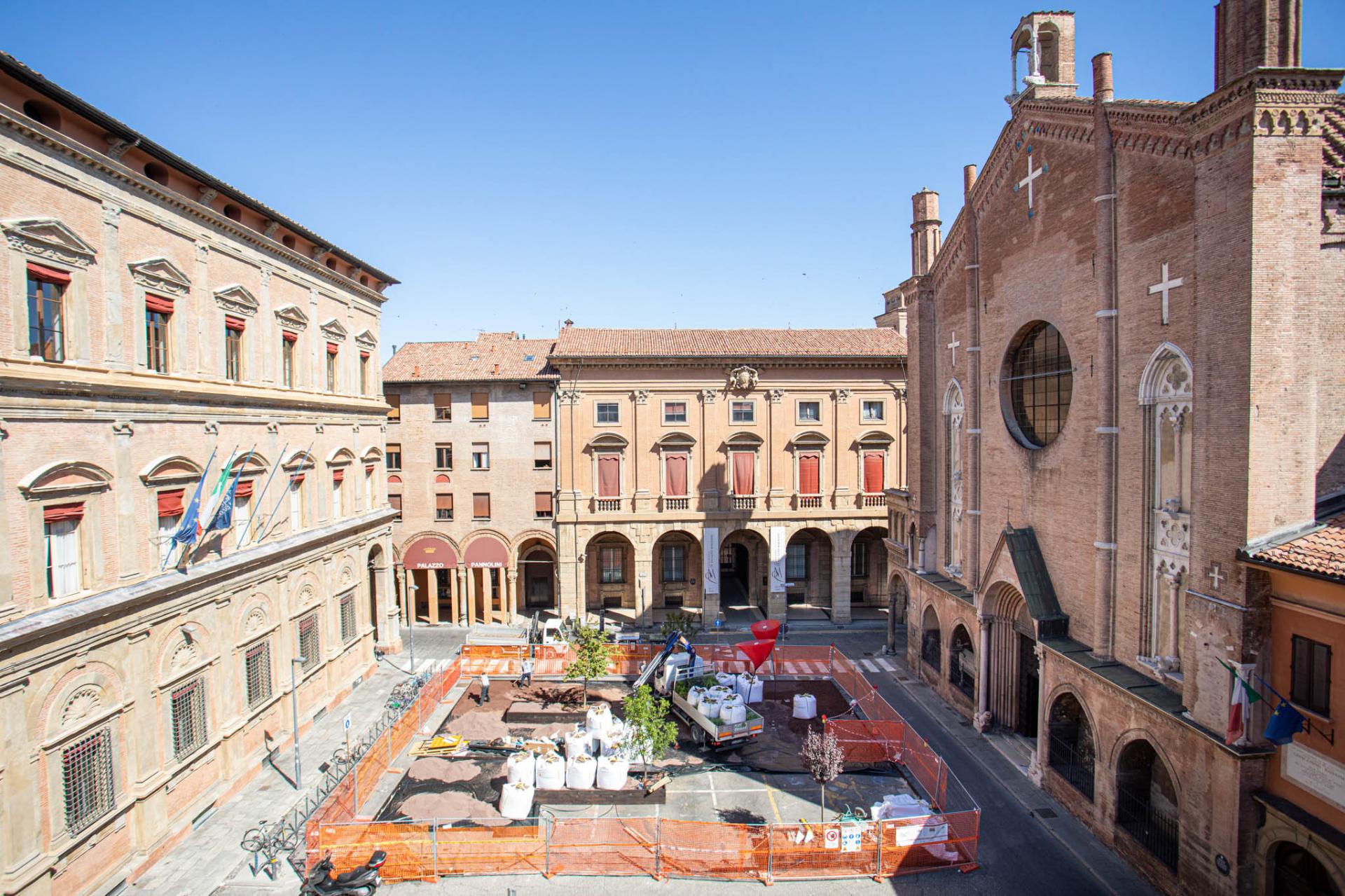
Piazza Rossini is a public space of great historical and architectural value. However, since the square has always been designated to be a public car and bicycle park, pedestrians could only circulate on the narrow edges of the pavement next to the roadway, while the presence of vehicles parked in the center of the area interfered with the view of its architectural scenery. The self-constructed installation was conceived as a performative event, as an active demonstration of the reappropriation of space and its possible and unconventional use.
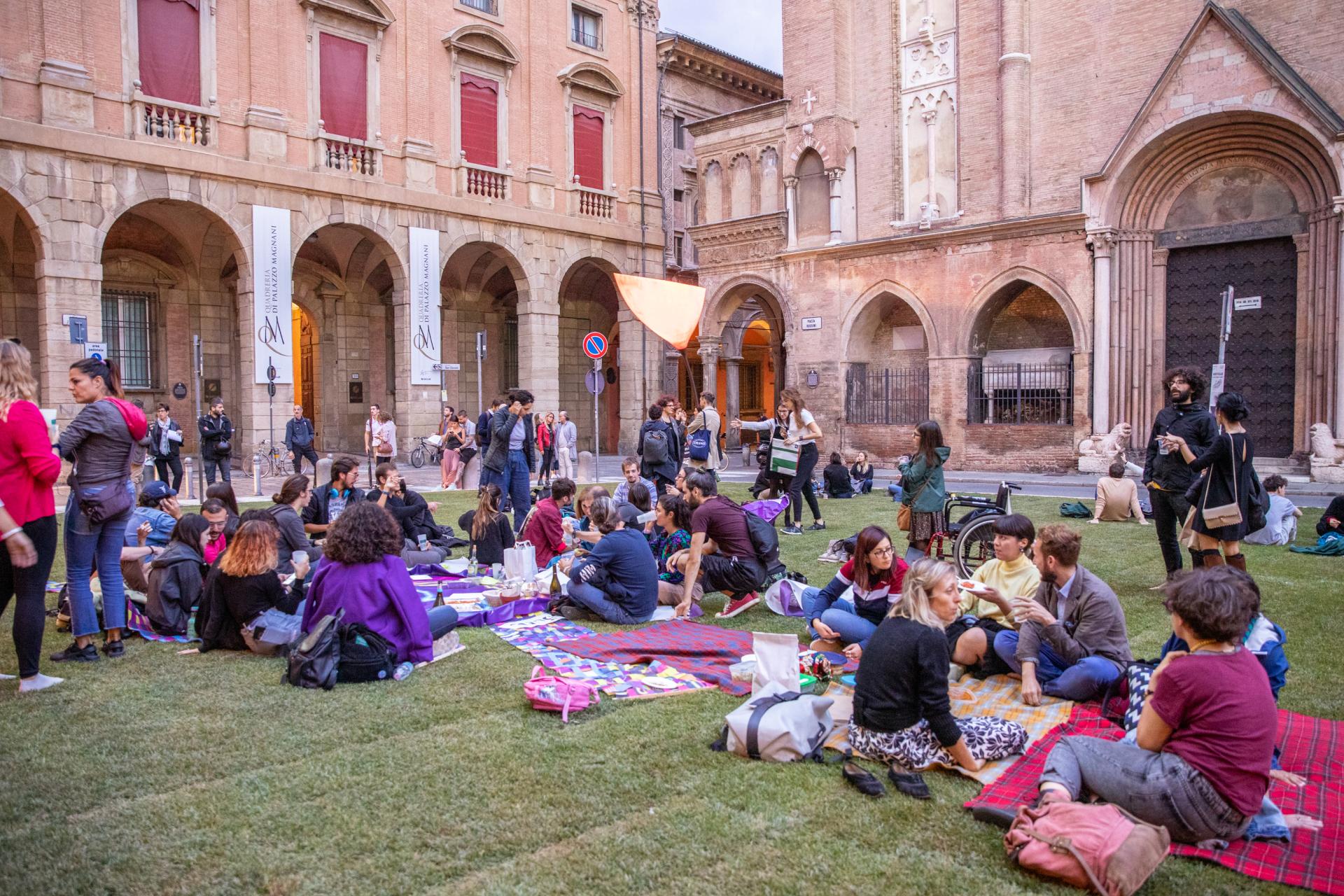
The temporary pedestrianization aimed at restoring and enhancing the quality of experience within the space, by providing the citizens with the opportunity to rediscover and appreciate the details of the architecture surrounding the square. The objective was met by re-defining the function of this space through the Green Please set-up: a green space where to stop by, gather and socialize having an unexpected perspective on the city's cultural heritage. Opening up the possibility to stand in the middle of the square enabled people for the first time to have a complete view of San Giacomo Maggiore cathedral, the late Renaissance front of Palazzo Magnani, the example of 18th-century civil architecture Palazzina Lambertini and the 16th-century Palazzo Malvezzi.
As highlighted by numerous archival documents, maps, and views of this area, part of the ancient churchyard or cemetery of San Giacomo Maggiore cathedral was originally constituted by a green vegetal pavement. Thus, the project proposal for the temporary staging of the square represented also a great opportunity to recover part of the city's historical memory.
Moreover, the two tools for light design Maxxi Poppy were designed to put into value the architectural heritage also by night. As a result of a wider research on the universal value of light this was conceived as a way to transfer information by allowing a kaleidoscope of different perspectives.
Key objectives for inclusion
The transformation of Piazza Rossini into a place of gathering and socialization aimed at promoting a new vision of the university area, which has been considered for a long time a place characterized by social conflicts and a certain level of urban decay and noise pollution.
The main peculiarity of this hybrid place is the coexistence of different communities (students, residents, tourists, business owners) that live and operate within the same public realm, without actually engaging in any interaction or even producing conflictual situations.
The key objectives of inclusion were met by creating an attractive, comfortable, and accessible space for gatherings involving the inhabitants both in the co-design and realization phase of the project. The Green Please idea was born during the "U-Lab" participatory workshop that involved over 250 participants. On this occasion, the need to restore a social dimension to the square, improving the collaboration of all the players in the area (institutions, associations, students, etc.) was brought to light by citizens at first stake. On the one hand, this represented the opportunity of engaging the students in the redefinition of an urban space close to the main university sites, improving the liveability of the area according to the needs of its daily inhabitants. On the other hand, the project was the first initiative to put into practice an active and continuous involvement of local stakeholders, opening up a space for dialogue and confrontation and promoting a common vision for the future upgrading interventions within the area.
Special attention was paid to the development of a universally accessible route also for people with disabilities to ensure the possibility for this community to appreciate the cultural heritage with no limits. The site-specific setup was provided with the installation of a ramp on the side of Palazzo Malvezzi.
Results in relation to category
The temporary experiment's success was proved by a daily attendance of more than 200 000 visitors, monitored by crowd analysis (DFRC) sensors installed in the area between September 25 and October 7, 2019.
Numerous citizens, local associations, and social entrepreneurial activities (e.g. Salvaiciclisti, Dynamo, Kilowatt), professional intermediaries (Architects’ order of Bologna), and ad hoc initiatives (Strade Aperte Bologna) enthusiastically supported the project as a first step towards a future vision and action for the city.
The project - in addition to the spatial transformation of the public square and its changing perception - generated a heated debate among architects, urban planners, intellectuals, art historians, citizens, and citizens associations, on issues such as the compatibility between the character of the historical urban structure and the proposed greening intervention, the opportunity to respond to the need for relationships, sociability, and community spaces toward the risk of improper uses.
The great success of this initiative led the Municipality to recognize the importance of this experimentation for the inhabitants of the area and act so as to ensure its continuity in time. The municipal resolution approval for the permanent pedestrianization seals the Municipality’s willingness to follow up on citizens' consent and share its aims and outcomes. This highlights how both communities’ deep involvement and concrete testing of city solutions are fundamental elements for effective long-term implementation of territorial regeneration processes and may be as well concrete tools to develop exemplary models of cultural heritage enhancement.
How Citizens benefit
Piazza Rossini transformative project was first conceived during the U-Lab hub for collaborative practices targeting the University district and implemented within the ROCK (Regeneration and Optimization of Cultural heritage in Knowledge and creative cities) project co-financed by the EU H2020 program.
The U-Lab was launched in 2017 as a third space for different expertise and sectors to work together on the regeneration of the area. This was structured into two main actions. The first phase of listening and co-design was started with a 4 meetings cycle attended by representatives of the Municipality, the University, the Teatro Comunale, as well as the organizations operating within the area and citizens. A specific focus on Piazza Rossini highlighted the strategic importance of the square for the local stakeholders both in terms of accessibility to the surrounding cultural heritage and services, as well as its potential use for cultural and recreational initiatives. By participating in U-Lab citizens and civil society were involved in the decision-making process, being the ones to first propose the pedestrianization as a means by which to re-think the square, highlighting the need for green and light elements as the main focus for future action.
The realization phase involved the students from the Department of Architecture, professors, experts from the field, and the BAG design studio, through a co-design and co-construction workshop. Thanks to this initiative students were not only engaged as the first users of this new space but also provided with the possibility to concretely participate in the transformation of the area.
Moreover, since September 2019 cultural associations and local organizations benefited from and affected the project development by organizing several activities within this space. Their action effectively contributed to improving the attractiveness of the square, enhancing positive exchanges, and experimenting with unforeseen uses.
Innovative character
Piazza Rossini has been an innovative opportunity to link a small-scale local regeneration project to a widespread awareness-raising action on the overall European objectives and efforts in tackling climate change.
The participatory process leading up to the design and creation of the square has involved various local actors, different age groups, and communities of practice in a process that declined improved livability goals in green city solutions. By collaborating in the development of the project, the local community was called to question the issues affecting the city of Bologna in terms of both social exclusion (e.g. assessing the accessibility of cultural heritage) and environmental impact (e.g. understanding the need for biodiversity to limit the increase in temperature), as well as to face these foreseeing concrete actions. A widespread engagement of local actors in the urban planning process led to unprecedented awareness-raising results, as demonstrated by the growing interest and support for this project in the time leading to the permanent pedestrianization of the square.
This action was further enhanced by the fact that the temporary transformation of this space allowed citizens and local stakeholders to experience in the first person the positive consequences of actions aimed at rethinking both mobility and liveability of urban spaces in a sustainable way.
One of the most innovative aspects of this project was in fact the implementation of means and processes for tactical urbanism. Piazza Rossini was the first space in Bologna where temporary, rather than permanent, urban transformations were first tested. This project thus represents the city's willingness to open up to a new trend of experimentation in urban planning, which uses monitoring technologies and temporary testing as empowering devices for civic participation in urban development actions.