WOOD STUDIO_SCALE 1:1
Basic information
Project Title
Full project title
Category
Project Description
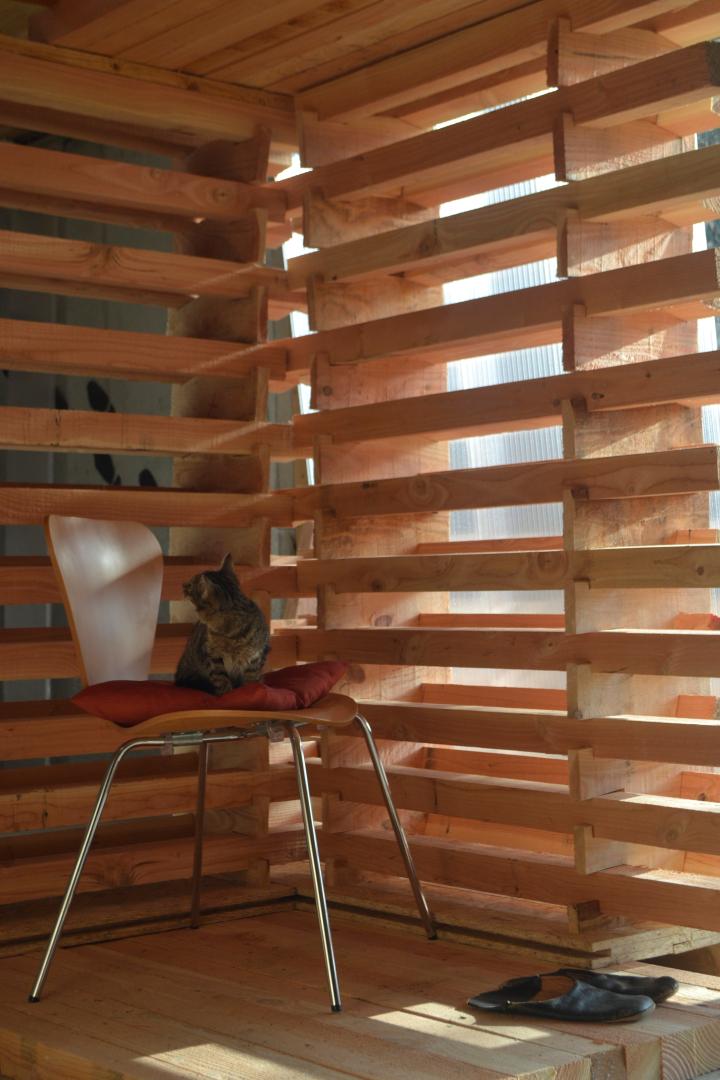
Wood Studio Scale 1:1 is a fifth-year subject of the ETS of Architecture of Barcelona, UPC. It is an international design studio course that aims to introduce wood as a subject of permanent study in the field of architectural projects linking the university with industrial companies and local and international experts, and at the same time considers the current residential and emergency climatic needs, through the design and construction of a livable module made entirely of wood.
Project Region
EU Programme or fund
Description of the project
Summary
Wood Studio Scale 1:1 is a fifth-year subject of the ETS of Architecture of Barcelona, UPC. It is an international design studio course that aims to introduce wood as a subject of permanent study in the field of architectural projects linking the university with industrial companies and local and international experts, and at the same time considers the current residential and emergency climatic needs, through the design and construction of a livable module made entirely of wood.
The configuration of the course is based on a common interest of a group of professors from different areas of knowledge and subjects (in collaboration with other professional external experts) to incorporate the topic of wood construction as a central issue in the teaching of architecture projects.
In recent years, the interest in wood as a construction material has increased in parallel with the growing social concern to give urgent responses to the planetary climate crisis. The good performance of the material in terms of sustainability, energy, and economic efficiency has found an echo on the other hand, in Spain, in a competitive local industry and in architects who have specialized in the field. On the other hand, the high number of humanitarian crises as well as the precarious living conditions in which millions of people live have led some architects to consider wooden housing as a line of work and specialization. The Studio also raises a programmatic reflection on the minimum housing unit that must be modular, add-on, adaptable and transportable, designed to temporarily accommodate residents in emergency situations.
From these premises, a transversal, eminently practical and experimental, international and service-learning teaching experience has been developed with the aim of bringing wood closer to undergraduate students and offering them the opportunity to get involved in the development of a specific modular housing for a concrete real situation.
Key objectives for sustainability
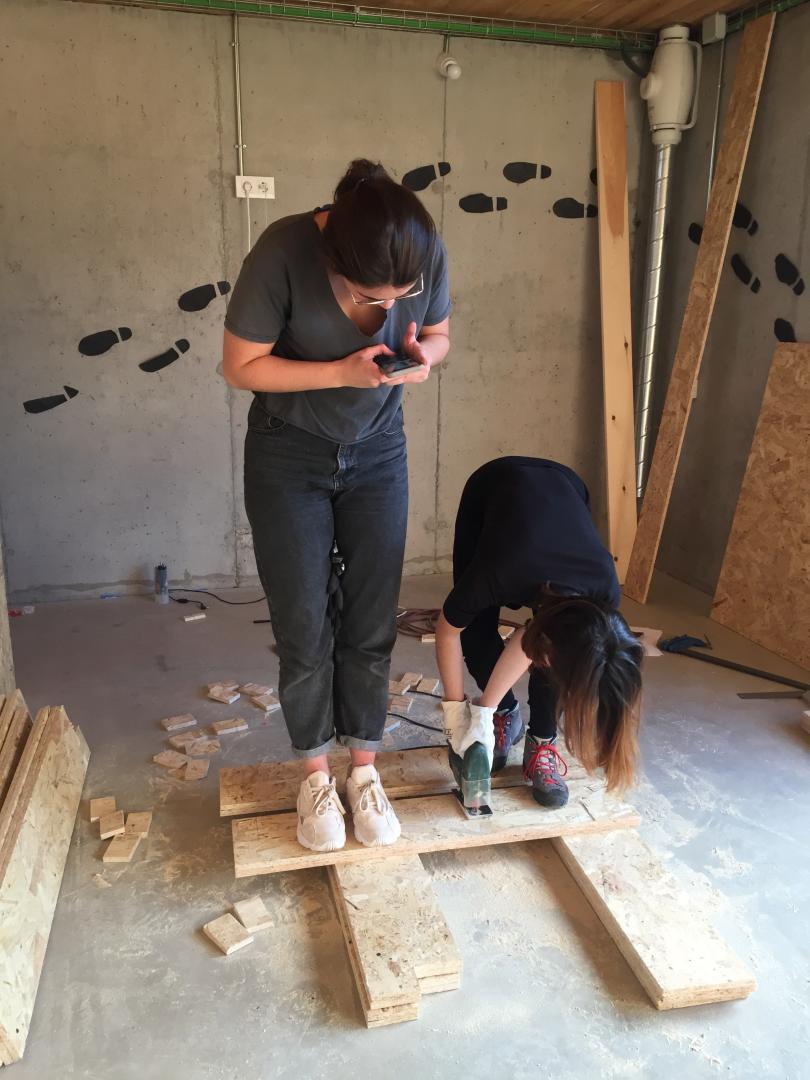
- Constructive sustainability through wood construction is the key objective of the course. It aims to go from academic reflection on the present to technical action. It promotes the awareness of students in the global challenges of the present and trains them to be part of the design of sustainable and ecological solutions. Wood is studied in terms of its sustainability, production, modular and adaptability design, as well as energy and economic efficiency. The students are involved, during the course, systematically with active professionals, on real construction sites, and with visits to industries in the sector. Parallel to the course, intensive constructive practices are carried out for the construction of prototypes at 1: 1 scale of the project worked up.
- Programmatic and design reflection on a Minimum Housing Unit that must be modular, add-on, adaptable and transportable, designed to temporarily accommodate residents in emergency situations to face urgent endowment needs (re-accommodation, health emergencies, humanitarian causes, environmental disasters, etc.), or structural (deficit of decent housing, support to existing infrastructures, etc.). Students are involved, during the course, periodically with different actors involved on real housing needs, and in discussion with them upon the design process.
We take into consideration in this course the sustainable development goals of the United Nations, and the importance of the balance between the different areas of social, economic, and environmental sustainability. Students have learned during the course the importance of the materials and the sustainable conception of construction (passive houses, energy saving in construction, and wood km 0). They considered climate change mitigation through their proposals.
Key objectives for aesthetics and quality
- From the experience to the form - not the opposite-. We consider form as the final result of the design process -not its aim- which, in turn, is based on the search for those spaces which better embrace human activities. The meanings that we are interested in promoting in the projects have to do mainly with the understanding of architectural space as the place of human life. This is based on the assumption that the daily experience of architecture consists of concrete activities –working, eating, speaking, reading, cooking, sleeping… -, not in geometric or measurable dimensions. And that the architectural experience remembered is one that is carried out in activity -reading by a window, rocking in front of the fireplace, playing on the wooden floor… We understand that the inhabitants of the house and their actions are its best definition. Architecture is made up of the essence of things rather than the rationalization of their finished form.
- From research to practice. Reflection and analysis on the programmatic object related to minimum emergency housing are substantial. We consider research as the foundation of the design process. The concept of inhabiting is understood from the most humanistic point of view, still designing it with the minimum possible spatial and material resources.
_ Focussed on people: The course prioritize the needs of the end users of the space in the design process, not only in terms of organizing a minimum housing program, but above all, taking into account the experiential consequences and emotional aspects of each project decision.
- Regular juries and revisions are organized to meet these goals. Among all the teachers involved in this process, obviously, Juhani Pallasmaa stands out as our visiting professor. In his reviews, he is always focusing on the experiential point of view of the architectural spaces and the users perceptions.
Key objectives for inclusion
- The topic decided for the design studio is inclusive in itself. Students are asked to design, develop and construct a minimal wooden dwelling unit that has the possibility to offer an efficient solution to provide a rapid response to current and future emergency housing challenges. This must be a modular, flexible, adaptable, efficient and spatial quality solution to face urgent endowment needs (re-accommodation, health emergencies, humanitarian causes, environmental disasters, etc.), or structural (deficit of decent housing, support to existing infrastructures, etc.). All these aspects consider the inclusion for all the citizens, not only the most vulnerable but also those who might have some specific issues to take into account. The key aspect of the design process is to provide anybody with a minimum living space, independently of physical, economic, or geographical matters.
- The studio is also inclusive in terms of all the different agents that have participated in the project: professors of different specialties, external experts, students, associations, governments, and private and public institutions. One of the key aspects of the course is its transversality. A bridge between different realities, to make them contact: academy-real practice; clients-students; professionals/industry-university; international-local...
Students are involved, during the course, systematically with active professionals, in real work and with visits to industries in the sector. They learn from local innovative and leading companies and work with the technological challenges posed by companies in accordance with the faculty. Parallel to the course, intensive constructive practices are carried out for the construction of prototypes at 1: 1 scale of the projects being worked on.
—From the local to the global: The course includes the participation in international cultural platforms to enhance the communicative skills/public presentations of the students (Seoul Biennale 2021).
Results in relation to category
- Impact on learning: The students' work has confirmed that the best way to acquiring new knowledge is through direct experience. The 1: 1 scale construction; interactions with real end-users; the requirements of international competitive contexts, etc. have been the best stimulus for learning and have fostered greater student involvement.
- Excellent academic results: both for the material production and the quality of the projects resulting from the course, as well as the involvement of all students during all the activities carried out.
- The subject has been awarded the 2021 UPC award for the quality in innovative teaching and has also been awarded by the 2021 Seoul Biennale of Architecture and Urbanism as one of the international student's proposals to be built in Seoul in September at 1:1 scale.
- The results of the course will also be published both by the UPC and the 2021 Seoul Biennale of Architecture and Urbanism, which will also exhibit them in Seoul, during the biennial. Two public presentations of its results will also be made, both nationally and internationally.
- The subject has received different letters of support from different academics (ETSAB Dean and full professors) but, it is especially important for us, to have received various letters of endorsement from the different groups of students until now (2020; 2021).
How Citizens benefit
- The high number of humanitarian crises as well as the precarious living conditions in which millions of people live has defined the programmatic reflection of the course upon the minimum housing unit. The course aims to foster the awareness of students in the global challenges of the present and train them to be part of the design of sustainable and ecological solutions.
- The main objective approach and benefit for citizens are structured around interdisciplinarity, achieved with the active participation of different agents of the civil society: professors of different specialties (Projects, architectural representation, theory, technology, structures, and urban planning), external experts of various kinds (professional, business and/or institutional), students, clients (associations, Seoul architecture biennale, Barcelona City Council). All of them have had an active role in all the phases of the process and the students are involved, during the course, systematically with all of them.
- Knowledge transfer by University / Industries collaboration. The establishment of agreements university / company to support teaching and sponsorship of the course, strengthen channels of dialogue and relationships cooperation with the companies, local governments, external experts, and the civil society.
- The projects and research works carried out during the course represent a necessary contribution to the study and possible implementation of constructive solutions for emergency housing units in wood. Its dissemination and knowledge by society, industries, and sponsoring institutions will contribute to greater knowledge about the study topics and their possible industrialization.
Innovative character
_Constructive sustainability. The course is focused on wood construction as a central issue in the teaching of architecture projects.
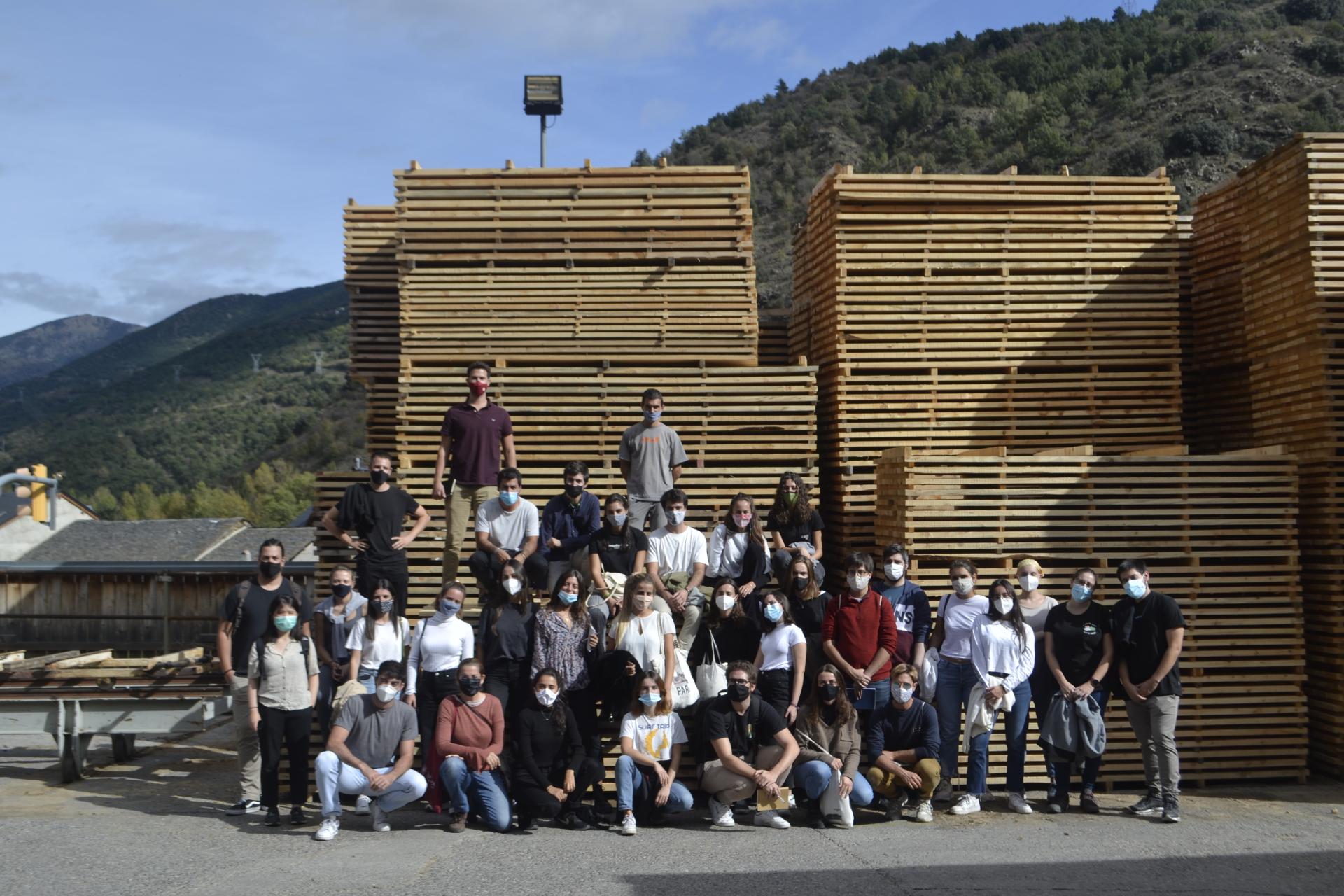
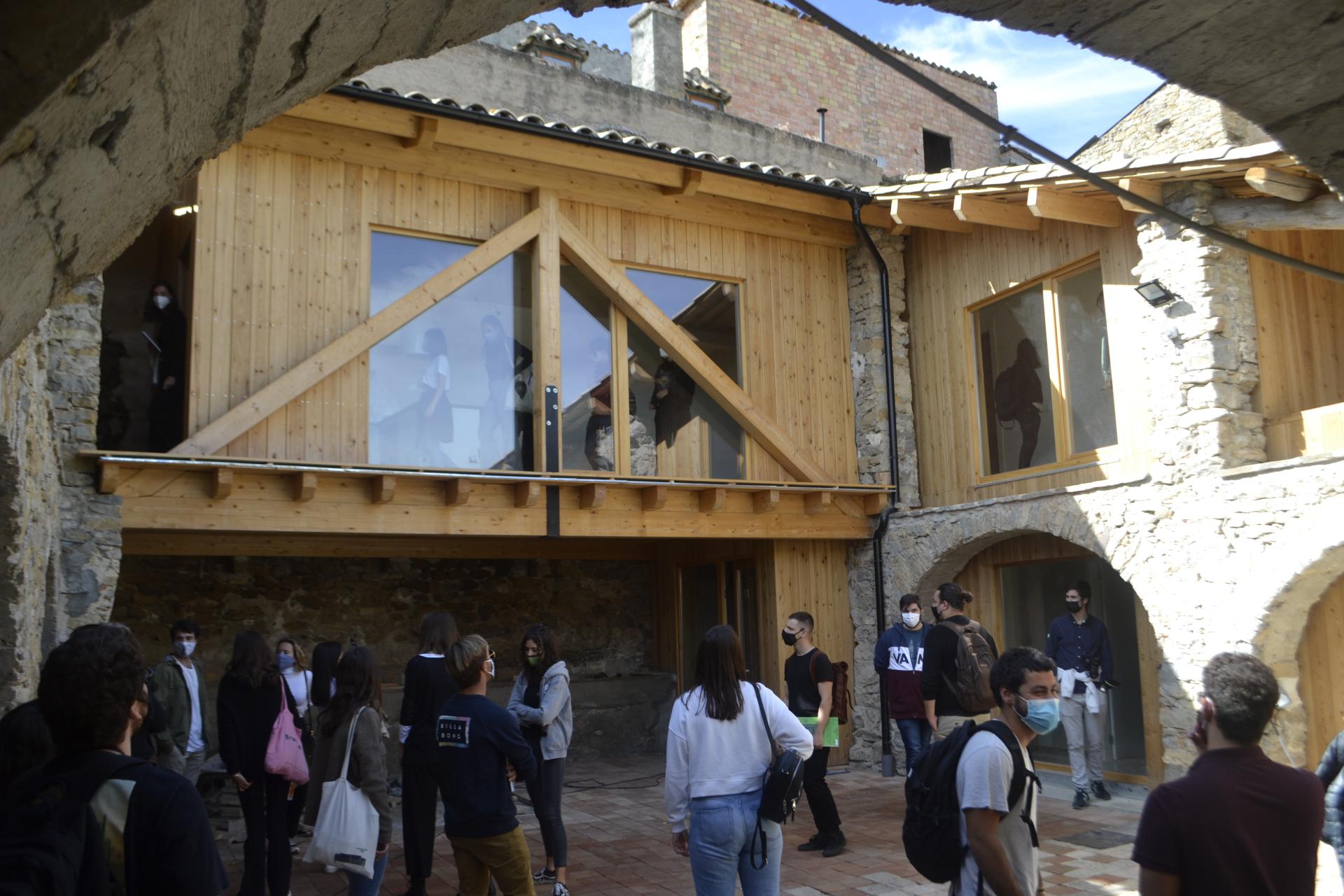
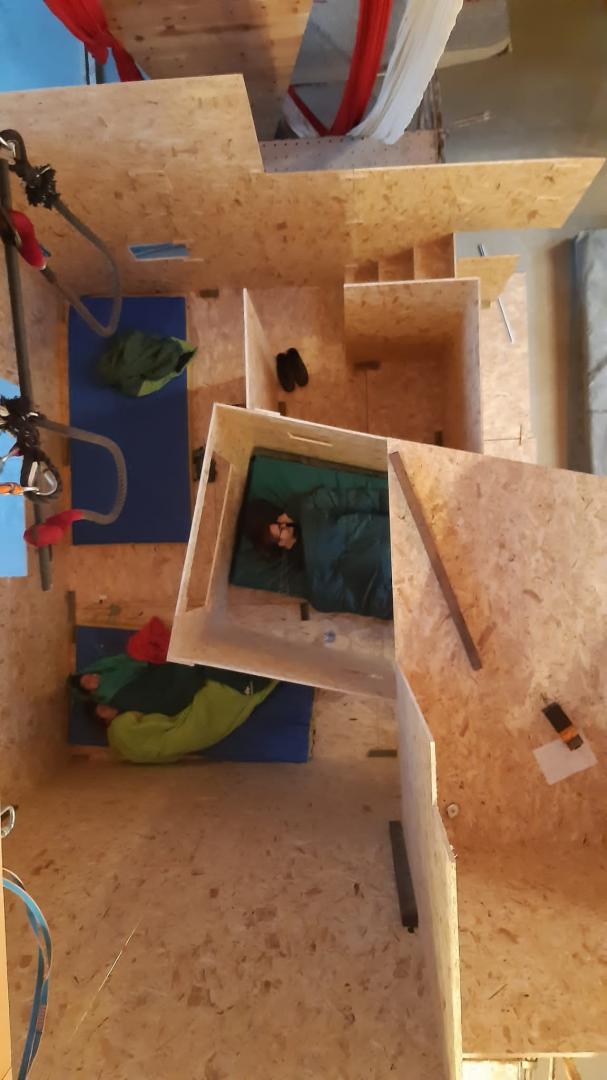
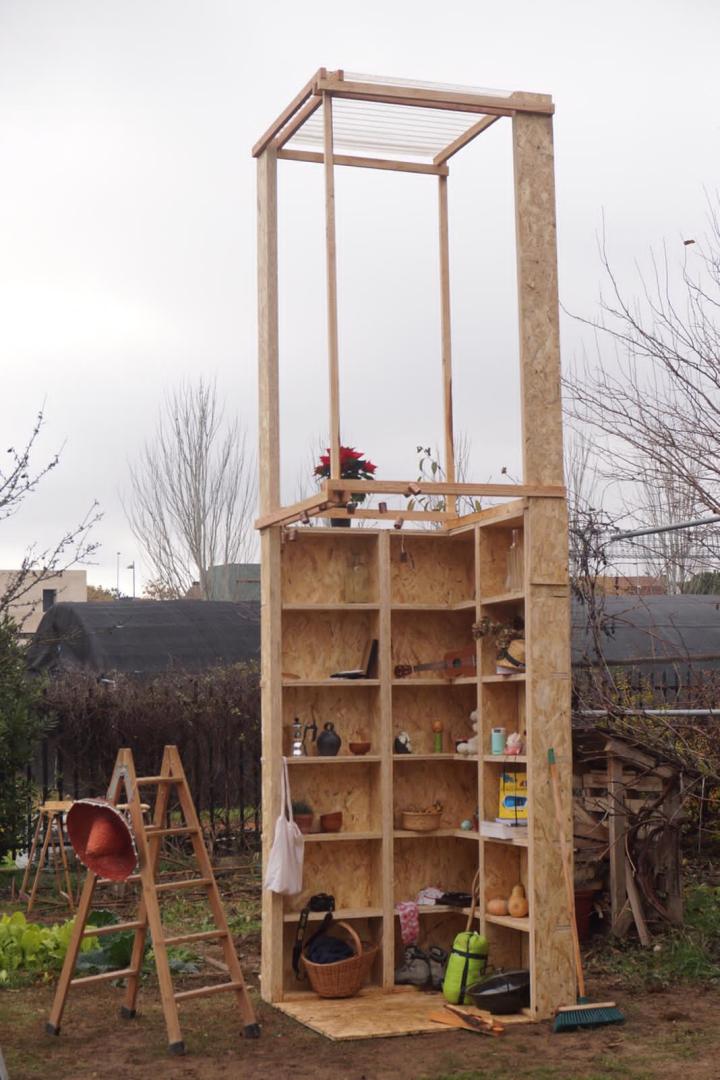
_Experiential learning. From the classroom to the construction site. Methodology of learning by doing. From the project to reality.40% of the classes are outside the classroom: in visits to buildings under construction made entirely of wood and to premises of wood companies. Direct knowledge of the material, characteristics and manufacturing processes. Full-scale construction of prototypes or fragments of the project.
_Learning in a real situation. Teaching based on real experimentation of the profession. Solving real cases that require the design of technical solutions. In dialogue with the actual end-user. From a real statement -raised each course by different external agents-, specific lines of study and action are established focusing on the development of an executive project.
_Interdisciplinarity between areas of knowledge. The professors that participate in the project belong to different areas of research of the School of Architecture: Queralt Garriga (Design Studio), Judit Taberna (Architectural Representation), Jorge Blasco (Architectural Technology), and David Falagan (Architectural Theory).
_Connection with local industry and international experts for the promotion and exchange of knowledge. Visiting professors: Juhani Pallasmaa and Josep Bunyesc, highly experienced and internationally recognized architects in wood construction.
_The project has also received support and funding from various companies and external entities.