The BIQ: The Algae House
Basic information
Project Title
Full project title
Category
Project Description
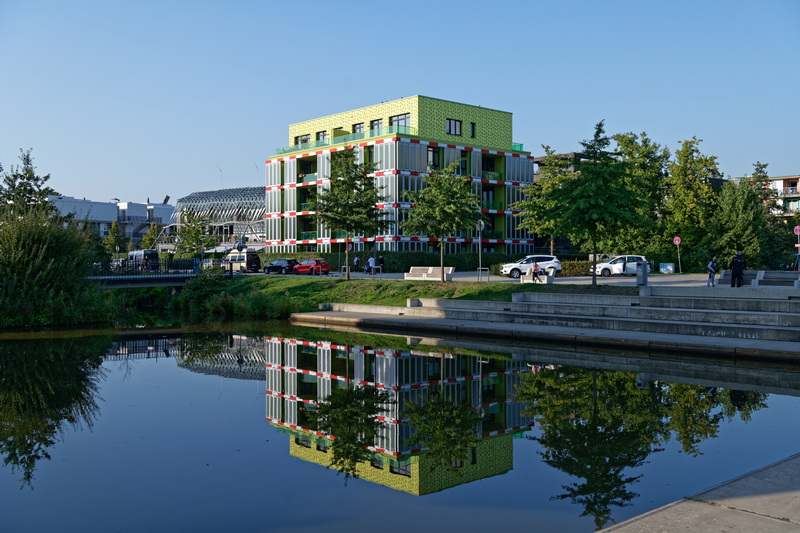
The BIQ in Hamburg is the world’s first building integrating living micro-organisms to absorb carbon and generate solar thermal heat. The building features 129 glass panels to cultivate microalgae on the south facing façades. The residents and the microalgae live in a symbiosis and co-habitation. The building feeds the algae with carbon emissions and minerals, while the algae absorb carbon through photosynthesis and provide heat and high-quality biomass back to the building.
Project Region
EU Programme or fund
Description of the project
Summary
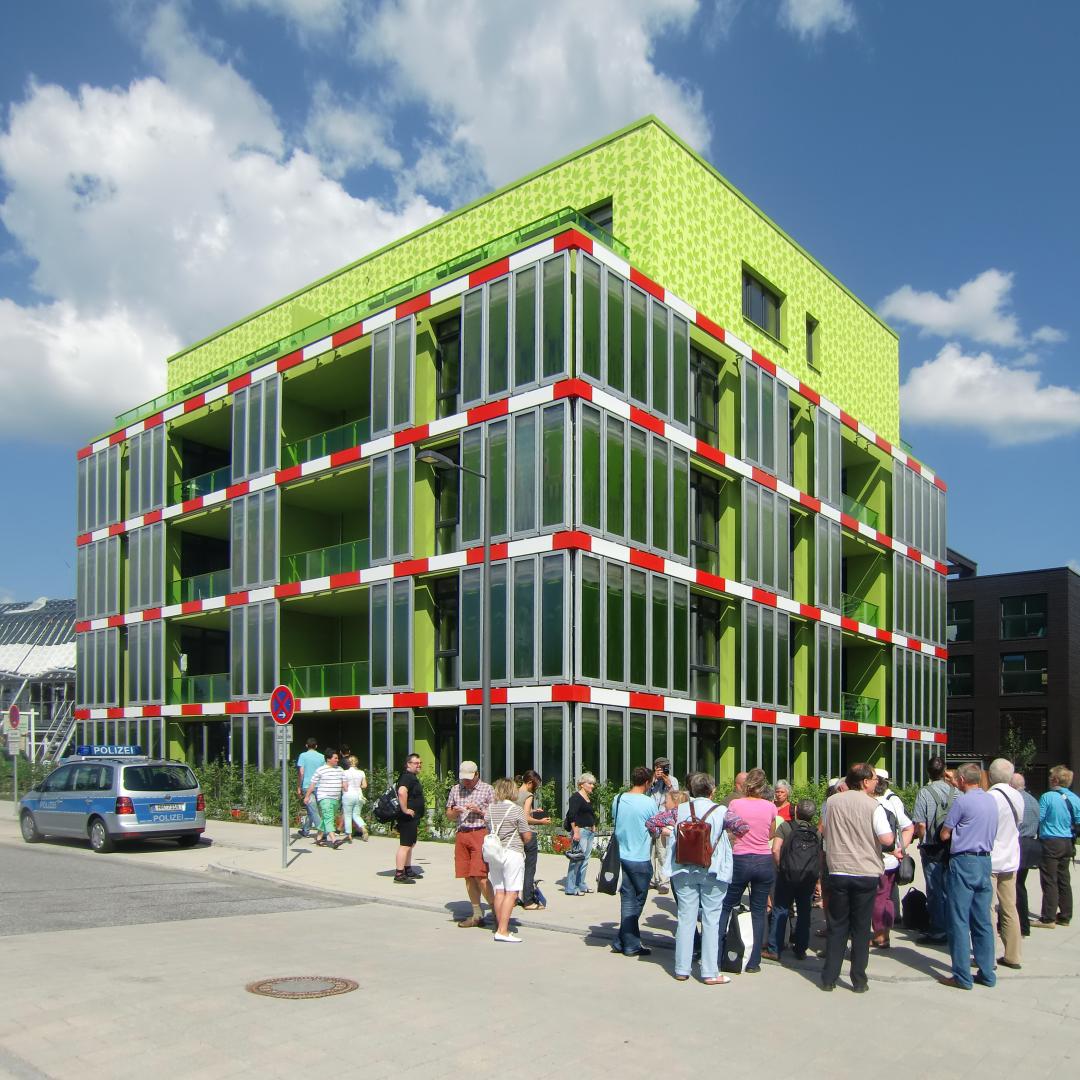
The BIQ is a 4-story residential building realized for the International Building Exhibition in Hamburg in 2013 (IBA Hamburg) following an international design competition. The BIQ - with a Bio-Intelligent Quotient - is the world’s first building with a Bioenergy Façade, integrating living micro-organisms in the holistic design of the heating system. The solar thermal effect provides heat for the 15 units with a total of 840 m² usable floor area. The BIQ - to date in full operation - demonstrates ground-breaking applied research in the field of living building systems and inspires the research and bio-design community around Europe and beyond.
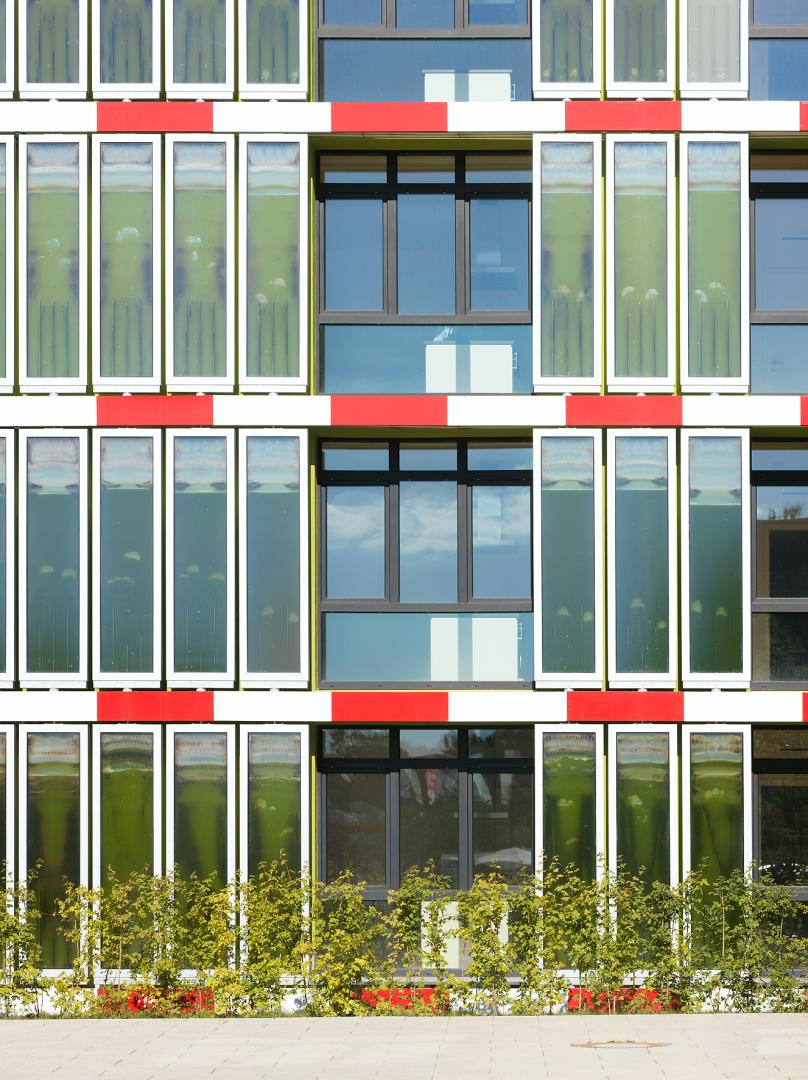
The south-east and south-west facing Bioenergy Facades of the building are equipped with 129 flat panel photobioreactors for cultivating a local strain of green microalgae. The panels provide an ideal habitat for the organisms to absorb daylight and transforming carbon into biomass. In addition, the part of the daylight spectrum not absorbed by photosynthesis is converted to heat through the solar thermal effect. Heat and biomass generated by the facades are harvested on site.
The BIQ reveals how we might live in the future. The flats, designed by SPLITTERWERK long before the pandemic, explore the interconnectedness between living and working and the increased demand for adaptable housing spaces. Two of the fifteen units do not have separate rooms, but rather enable the inhabitants to configure their living arrangements “on demand”.
Idea/Concept/Authorship: SPLITTERWERK, Arup, Bollinger+Grohman Ingenieure, Immosolar ; Design/Architecture/Artistic Direction: SPLITTERWERK ; Bioenergy Facade: Arup, Strategic Science Consult SSC, Colt International / Client: Otto Wulff Bauunternehmung ; Planning Partner: sprengler von der lippe, Tech. Büro der Otto Wulff Bauunternehmung, Arup ; Initiator: IBA Hamburg; All project partners are credited on page 7 of the attached "130530_BIQ_Whitepaper" and need to be mentioned.
Key objectives for sustainability
The building is a passive house and designed to the highest standards of energy efficiency. However, the Bioenergy Facade goes beyond energy efficiency and explores regenerative design strategies for smart, zero-carbon districts to support Europe’s transition to climate-neutrality and the restoration of healthy ecosystems.
Today, approximately 75% of the total European population lives in cities and urbanized areas, and this proportion will continue to increase. Cities, like living organisms, require natural resources, including regenerative energy and raw materials, to sustain the daily life of their inhabitants and their economic activities. With the increasing demand for these natural resources, the growth of our cities put the planetary health at risk.
The project demonstrates how buildings can contribute to the protection of nature by becoming a substrate for nature. Through integration of natural metabolisms in the operation of the building, the BIQ enables short carbon cycles, preventing emissions to be released to the atmosphere. As microalgae perform photosynthesis up to 10 times faster than higher plants, they are effective means to store carbon. The biomass in the façade can double over the course of a sunny day, absorbing carbon emissions from fuel-based energy systems in the neighbourhoods (e.g. from hotels, offices or industrial buildings).
The low-level heat produced by the solar-thermal effect inside the panels can either be used directly by powering the heating system of the passive house or by a heat pump to elevate temperatures needed for the hot water supply. If the façade produces a surpass of heat, it can be either stored geothermally in bore holes underneath the building or fed into the near-district heating system of Hamburg-Wilhelmsburg.
This remarkably sustainable building concept is capable of creating carbon-neutral cycles of solar thermal and geothermal energy enabled by a local heat distribution network and the Bioenergy Facade.
Key objectives for aesthetics and quality
The aesthetics of the building develops a playful, graphically strong yet sensual narrative about technology and nature, the built and the living environment.
The blurring boundaries between natural and human habitats are expressed through the multi-layered surfaces of the building from outside to inside. The outer layer, the Bioenergy Façade, questions the traditional projection of human activity inside the building to the outside by displaying activity of non-human agents behind glass: a local strain of green algae.
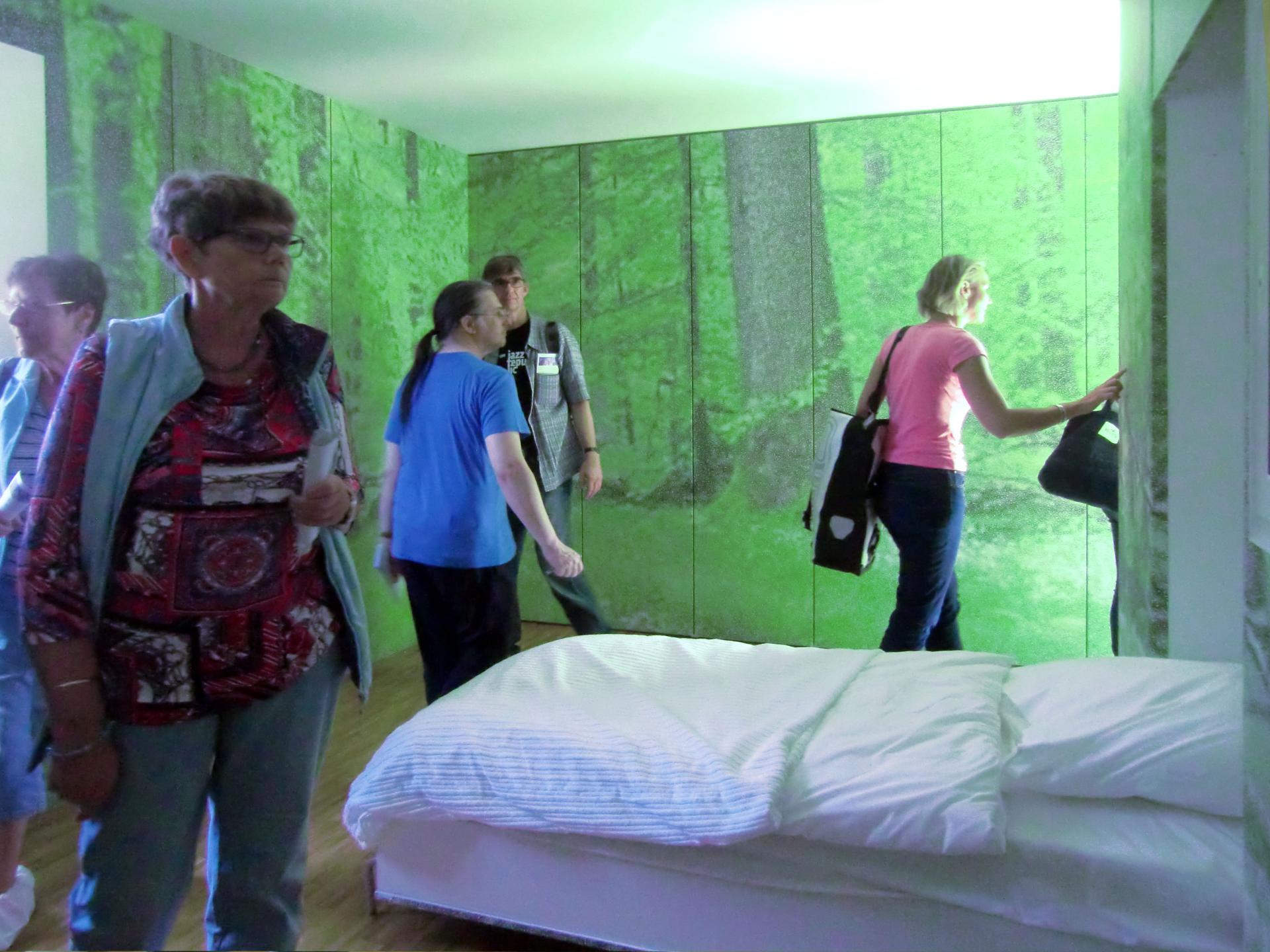
For the public, every facade panel allows a framed view on the basis of all life on earth – the bio-chemical process of photosynthesis. The colour of the panels varies over the course of a day, month and year depending on daylight and weather conditions. This dynamic appearance is strengthened by the rising air bubbles inside the panels that allow an effective uptake of carbon and daylight. The air bubbles displace the green algal medium and create a continuously changing semi-transparency allowing temporary views to the primary building skin behind. Behind the literally living facade, this wall relates to nature through its bright green colour and its decoration with grape-vine ornaments on the upper floor. The inside surface of the same wall on the ground floor displays full height photographic prints of a forest, provoking strong associations of calmness and peace. Nature is becoming the scenography for human activity, visually re-integrating habitants with nature.
Nature and both abstract and literal representation of nature overlay aesthetically on the vertical canvasses of the building, prompting visitors and habitants to re-define their conceptions and views on the more-than-human world. The red and white strips between floors visually frame the BIQ as a unique place for this work-in-progress, ongoing discourse.
Key objectives for inclusion
The BIQ is designed to be accessible, affordable and adaptable - for humans and nature. It is located in Hamburg-Wilhelmsburg, close to the Hamburg city centre. Through the urban renewal of the International Building Exhibition in 2013, this district developed into a lively community embedded in green and surrounded by water. Numerous shopping facilities, restaurants, leisure facilities, schools and a hospital are within walking distance. The BIQ is highly accessible by private and public transport with the "Wilhelmsburg" S-Bahn station being a few hundred metres away.
All 15 units are barrier-free and suitable for senior and disabled citizen. The low operational costs due to the high energy efficiency of the passive house and the public funding for the Bioenergy Façade providing the building with heat, contribute to the affordability of the flats. The varying sizes of the units between 63 m² for a 2-bedroom flat and 130 m² for a 4-bedroom flat, create a diverse multi-generational community. The floor plans of the ground floor flats have been designed to be flexible, allowing the adaptation of the individual living environment over time. These units do not have separate rooms but enable the inhabitants to configure their living arrangements and zone the flat “on demand” by flexible fit-out elements.
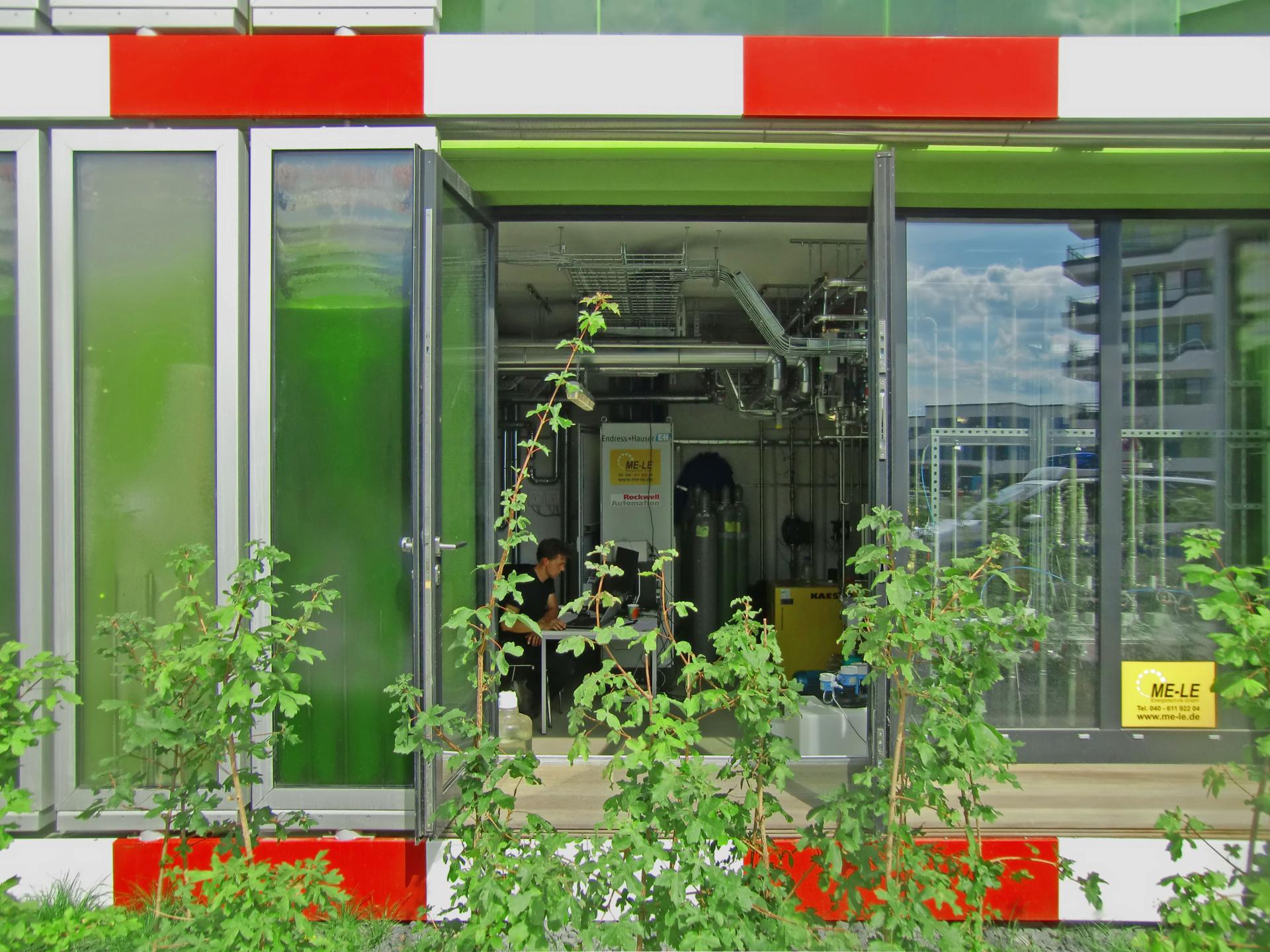
All units have a balcony or a terrace to enjoy direct views into the surrounding landscape. Through the Bioenergy Façade the building strengthens the relationship with nature and makes nature an integral part of the design. The building becomes a habitat for other forms of life. All technical equipment inside the plant room are visible from the outside through full height glazing. The concept is explained by signage in German and English, allowing the public to engage with the building. The building itself communicates openly through two large speaking bubbles on the northern facade, the first bubble asking “Photosynthesis?" and the second replying "Cool!".
Results in relation to category
The BIQ showcases building integrated urban agriculture as a feasible and sustainable solution to produce nutrients and food for the growing urban population, protecting maritime ecosystems and land from extensive agriculture.
The residents of the BIQ live in symbiosis and co-habitation with the micro-algae. The building feeds the algae with carbon emissions and minerals through the technical building systems. The algae absorb carbon through photosynthesis and in return provide heat and high-quality biomass back to the building.
Chlorella microalgae cultivated on the BIQ is very rich in protein and the harvested and processed algal biomass can provide healthy human nutrition in the future. The protein from the algae could, for example replace animal protein in food. In addition, microalgae have various vitamins such as beta-carotene and vitamin B12 playing an important role for a vegetarian and vegan diet, as plant-based food contains little B12. Microalgae also contain Omega-3 fatty acids, which help to prevent cardiovascular diseases and cancer but to date can only be consumed by eating fish. With global stocks being under pressure due to over-fishing, and most fish farms being highly unsustainable, the cultivation of microalgae can protect ocean and water systems. Additionally, the cultivation of algae as a hydroculture in a closed loop system is highly water efficient. Experiments on the BIQ show that nutrients for feeding the algae such as phosphorous and nitrate can be extracted from the wastewater of the households, enabling the substitution of fertilizers that contribute to the acidification of soils and ground water.
With the system installed on the vertical building facades, it has a minimal footprint and uptake of land in contrast to agriculture. This form of urban farming releases the pressure on natural habitats and therefore protects earth systems and soils.
How Citizens benefit
The BIQ was realized as part of the International Building Exhibition (IBA) in 2013. The IBA implemented a comprehensive and continuous information and participation of citizens, landowners, local stakeholder groups and initiatives, associations and private developers and investors. The civil society was informed across the entire process and invited to participate. The IBA offered a range of different formats for citizens, residents and interest groups including idea and planning workshops, public presentations, debates and online platforms.
With the Bioenergy Façade being developed and implemented for the first time, the project team could not build on previous experience of user acceptance. To allow a direct feedback and dialogue with the residents after completion, the BIQ was subject to an intense 2-year monitoring program to evaluate the technical and energy performance as well as the user acceptance. From the beginning users were informed by the project team through regular events. In addition, a team of sociologists from the HafenCity University of Hamburg, Chair of Urban and Regional Sociology Prof. Dr. Breckner, engaged with all residents to ask for feedback through surveys and in-depth interviews.
Through this process concerns and suggestion were captured and reflected by optimizing the protocol for the operation of the system. In most case the feedback from the residents was related to acoustic issues. Consequently, the valves on the panels were replaced, the operation of the Bioenergy Façade generally suspended after dark and the sound insulation of the pump increased. Following this direct engagement, the acceptance was over-proportionally high in comparison with other projects of the IBA and a strong identification between residents with the building could be observed.
Innovative character
The BIQ features the world’s first integrated Bioenergy Façade implementing short carbon cycles for storing carbon emissions, producing solar thermal heat and high value biomass. This technology enables smart carbon negative urban districts based on principles of a circular bioeconomy. The project features several ground-breaking system innovations such as the design of the glass panels for cultivating the algae, the design of the building services and heat management system and the control and maintenance system. The project won the Zumtobel Group Award 2014 in the category applied innovations.
The system has been developed from concept level to a fully operable, tested and approved system in less than 3 years. The industry consortium developing the façade and integrated building services system was led by Arup, an independent, multi-disciplinary design and engineering consultancy experienced in applied research. The complementary set-up including Strategic Science Consult (SSC), as the specialist for the biotechnology, and COLT, as a specialist contractor for the detailed engineering and manufacturing, was key to deliver the innovation successfully. The IBA steering the engagement with the private sector and securing a private developer was instrumental to bridge the “valley of death” between research and the application on a commercial case study project.
Eight years after completion the project is in full operation, being a living lab for numerous experiments to study closed loop and productive urban systems. SSC has performed ongoing research in the field of onsite processing of microalgae, testing different algae strains and value chains and the harvesting of minerals from household wastewater to feed the algae. Based on the robustness of the façade design, the efficiency of the heat management and control system, SSC has recently developed an innovative business model for route to market offering a contracting model for commercial clients.