Romani-BG
Basic information
Project Title
Full project title
Category
Project Description
WHAT IS THE PLACE OF THE INFORMAL ROMANI SETTLEMENTS IN BULGARIA (BG) AND THE EUROPEAN UNION (EU), IN RESHAPING THE EU AND UN STRATEGIES FOR SUSTAINABLE DEVELOPMENT?
Project Region
EU Programme or fund
Description of the project
Summary
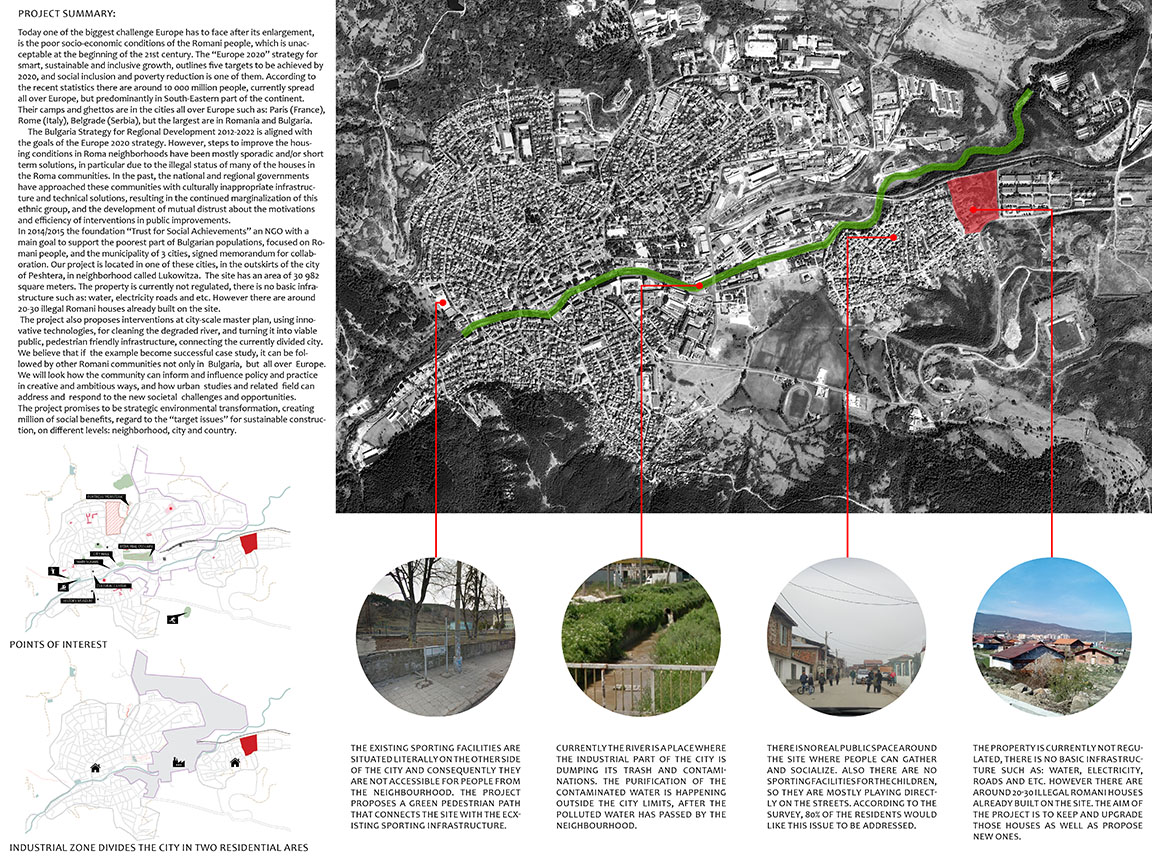
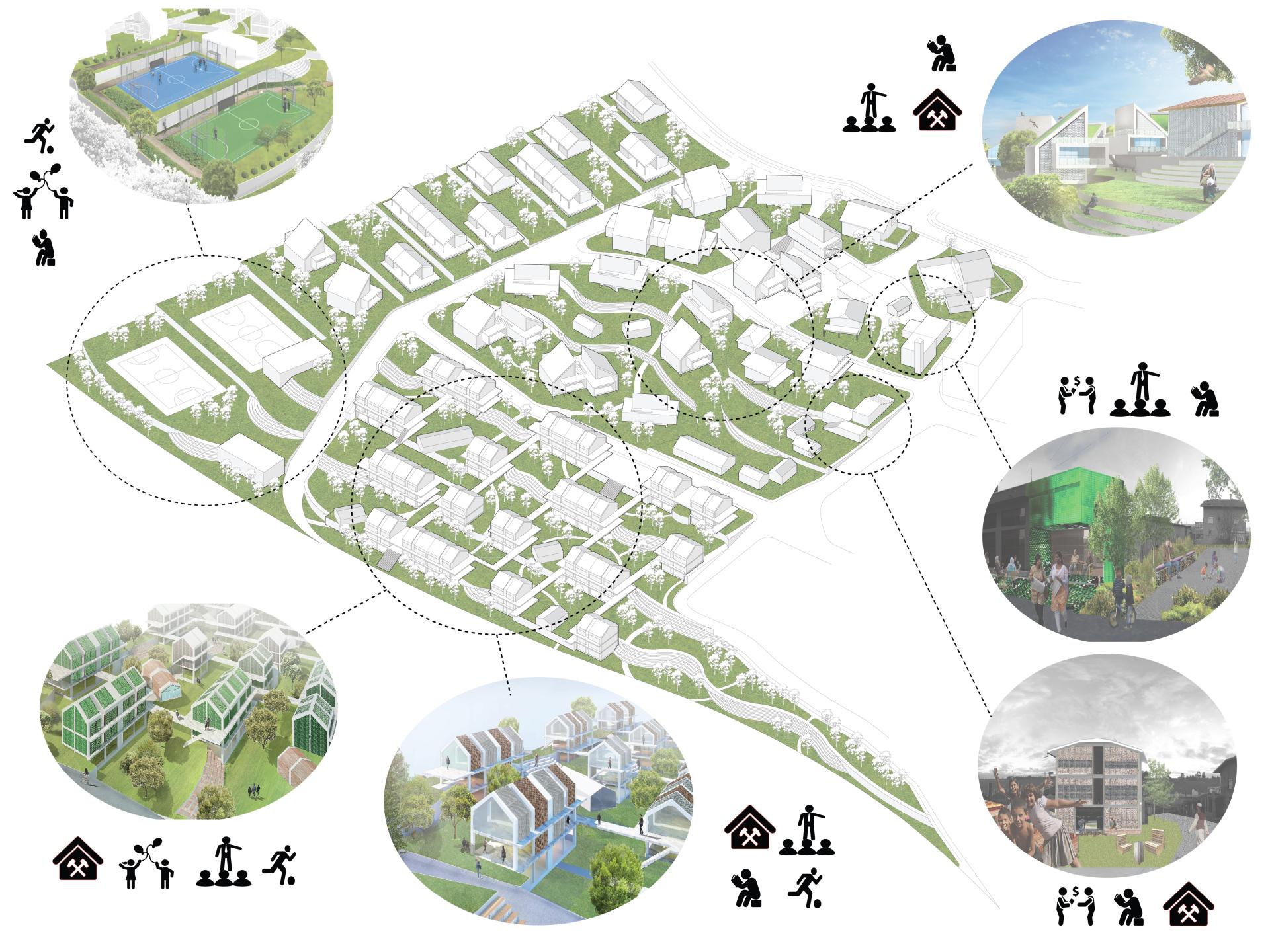
Our project in Lukowitza, located in the outskirts of the city of Peshtera, is targeting the poor socio-economic conditions of the predominantly Romani people in Bulgaria, lacking basic services and adequate housing. There is no basic infrastructure, such as water, electricity, roads and etc. However, there are around 20-30 illegal houses already built on the site. Our innovative solution was not only by offering new housing prototypes, as a model for sustainable improvement of these vulnerable neighborhoods in Bulgaria and across Europe but also by using a more holistic strategy, recommended by the EU framework for integrating Romani people on a national and international level. Approach, where the physical improvement of the neighborhood, such as housing, is combined with the social and economic integration (employment, education, and healthcare). The project also proposes intervention at the city-scale master-plan, connecting the physically isolated neighborhood to the rest of the city, using innovative technologies, for cleaning the degraded river, and turning it into viable public, pedestrian-friendly infrastructure.
The project promises to be a strategic environmental transformation, creating million of social benefits on different levels: neighborhood, city and country.
Key objectives for sustainability
Today one of the biggest challenge Europe has to face after its enlargement, is the poor socio-economic conditions of the Romani people, which is unacceptable at the beginning of the 21st century. heir camps and ghettos are in the cities all over Europe such as: Paris (France), Rome (Italy), Belgrade (Serbia), but the largest are in Romania and Bulgaria.Social inclusion and poverty reduction is one of the five targets to be achieved, outlined by “Europe 2020” strategy for smart, sustainable and inclusive growth. This target is aligned as well, with the 11 Sustainable Development Goals of the Habitat III UN New Urban Agenda for sustainable cities and communities. Our innovative solution is not only by offering new housing prototypes, as a model for sustainable improvement of these vulnerable neighborhoods in Bulgaria and across Europe, but also by using more holistic strategy, recommended by the EU framework for integrating Romani people on national and international level. Approach, where the physical improvement of the neighborhood, such as housing, is combined with the social and economic integration (employment, education and healthcare). We also studied how community can inform and influence policy and practice in more creative and ambitious ways, and how urban studies and related fields can address and respond to these new societal challenges and opportunities.
Key objectives for aesthetics and quality
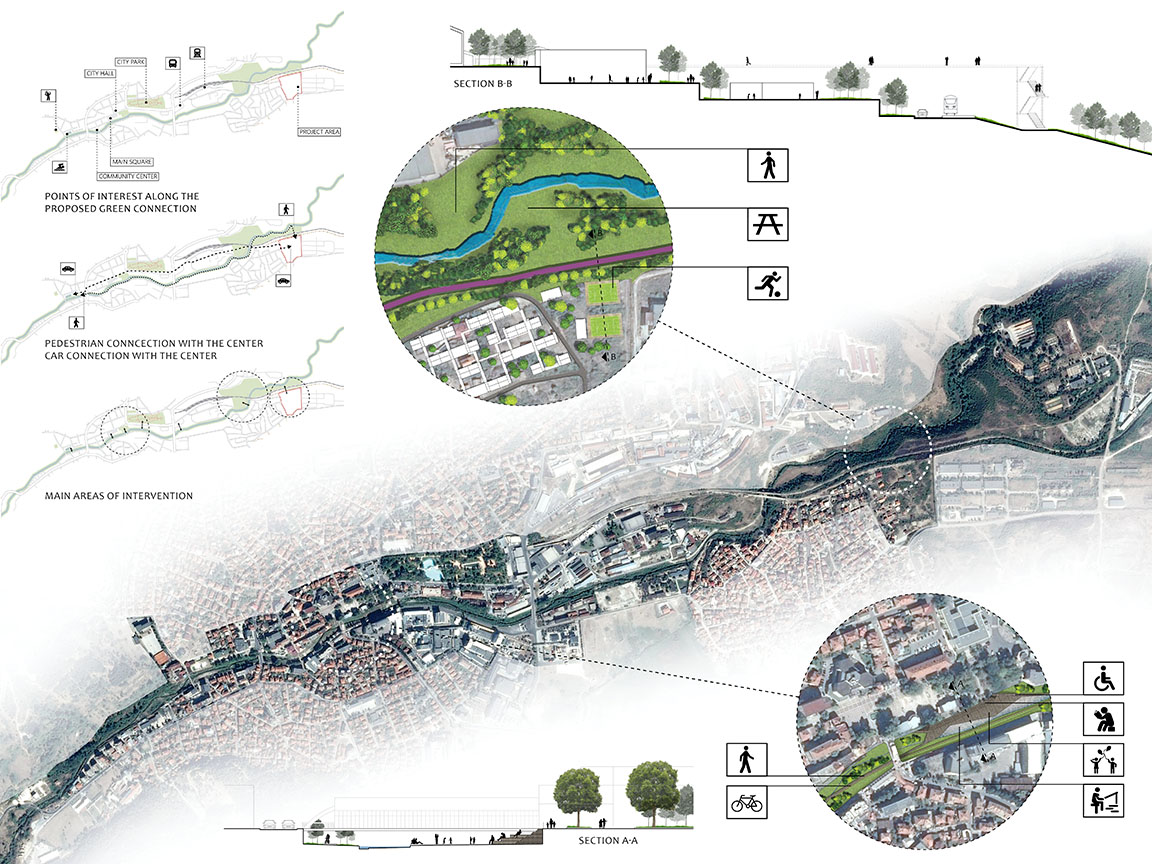
One of the first steps we did when approaching the project was to rebuild the infrastructure to support Lukowitza. The city was divided by a big industrial area, and the Romani neighborhood was very difficult to be accessed. There was no pedestrian path to the rest of the city, just one car road, crossing the main industrial area, with no sidewalks. In order to integrate better this isolated area, we have envisioned a green walkaway along the river, which connected the neighborhood directly to the city center and the train station, turning it into a new amenity and a source of socio-economic revitalization. This new green pedestrian belt will connect the divided city, turning it into viable public, pedestrian-friendly.
In order to design this pedestrian-friendly walkway along the river, we also proposed a new water purification system, because the river was a place where the industrial area was dumping its trash and contaminations. We cleaned the river, using innovative technologies such as Sunlight purification. We also used the multi-functional water-filtration membrane, using titanium dioxide nanotechnology developed by NTU's NANO SUN, which kills bacteria and breaks down organic compounds with the help of the sunlight and the UV rays. The new membrane leaves the current purification membranes in the water industry obsolete. We also supplemented the Nano Sun technologies with the more traditional approach, based on the principles of wetlands, by removing the current concrete river bed and replacing it with plants and beneficial bacteria, capable of purifying the contamination.
Key objectives for inclusion
We looked at how the community can inform and influence policy and practice in creative and ambitious ways, and how urban studies and related fields address and respond to the new societal challenges and opportunities.
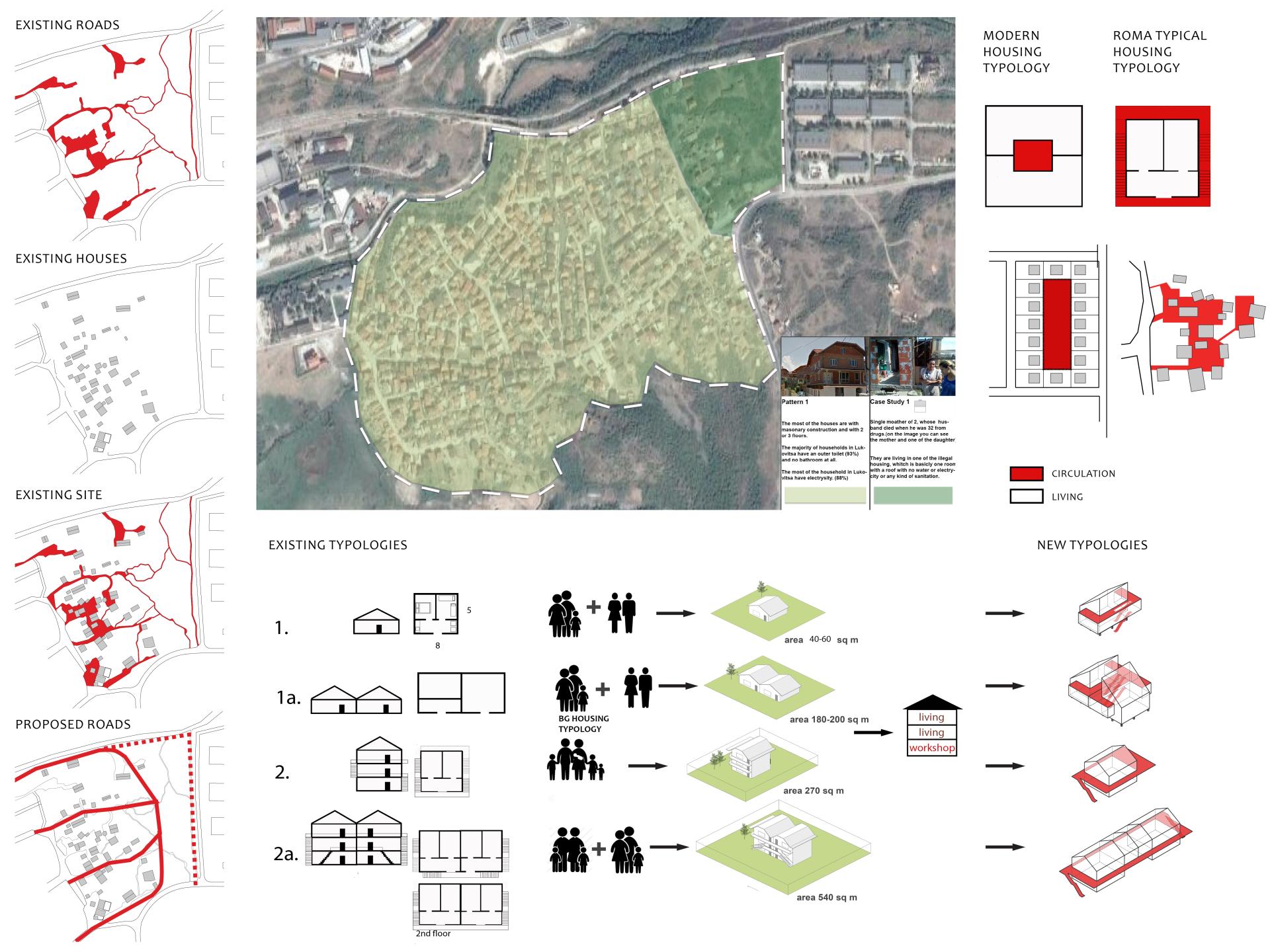
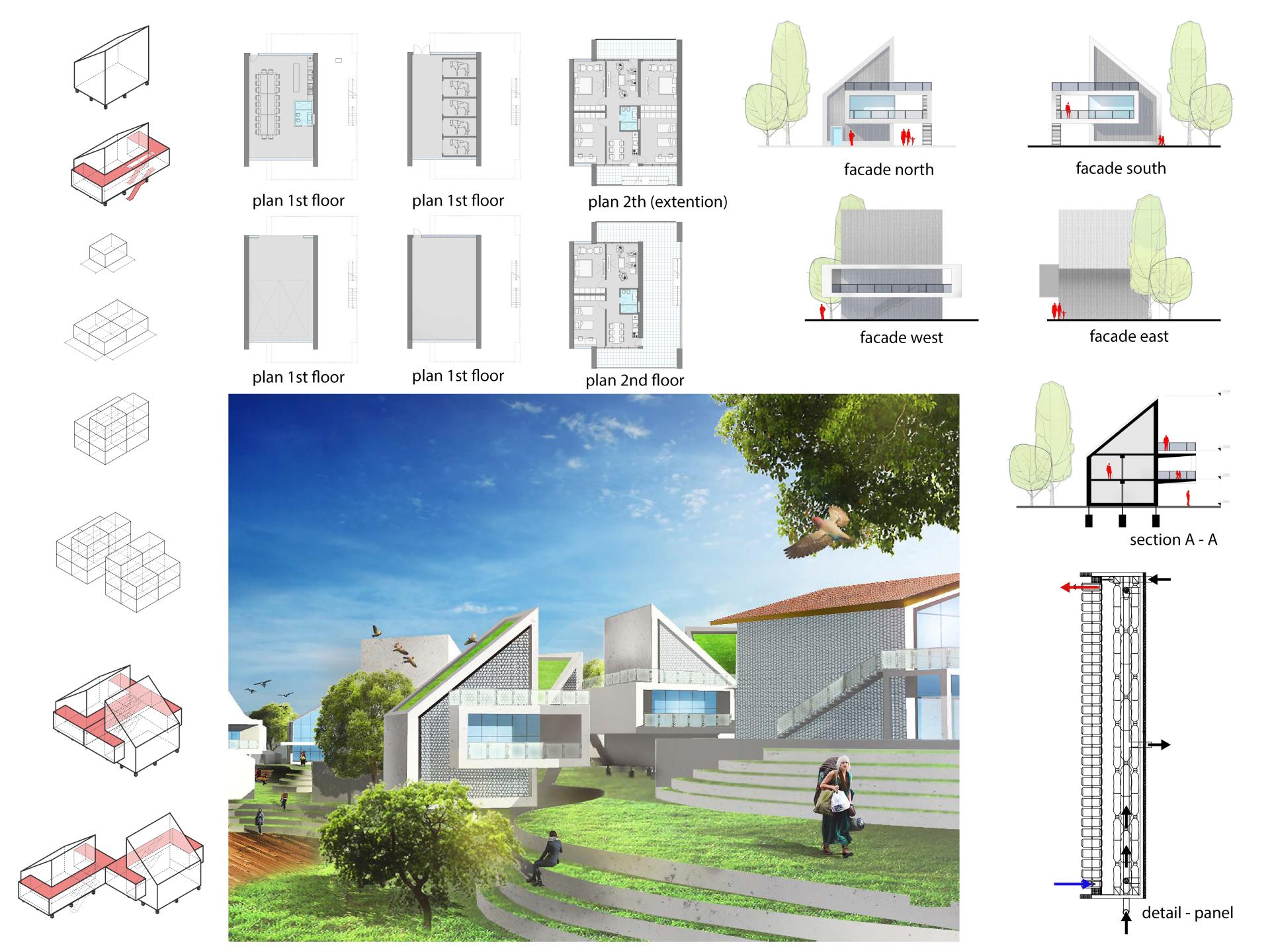
When designing the Romani neighbourhood and the new houses prototypes, we used a bottom-up approach with a constant input of design preferences by the community members. We had several questionnaires and meetings with them, as well as studied in details specific case studies for current living conditions. We designed the new housing prototypes, after careful studying of the typical Romani houses. The idea was that the new housing prototypes should be culturally appropriate for this specific ethnic group and their lifestyles. Our goal was not to demolish the existing ones where possible, just to upgrade them, with the needed infrastructure and safety measures. For example, the units were highly adaptable, allowing them to expand easily with the expansion of the families, and several generations to live comfortably in one house. Critical when designing low-income housing is was also to provide an opportunity for renewable energy installations, and to reduce long-term financial costs to tenants. That is why we used the solar battery system, which stores the energy generated by the solar panels during the day and uses them at night. Without the battery, the excess power is sent back to the power company.
Results in relation to category
Our project was recognized with national and international awards for urban design such as the Global Award for Sustainable Cities and Human Settlements at the (GFHS-XII) forum, for implementing successfully the 2030 Agenda for Sustainable Development. The project was published last year in large-scale academic literature translated in both Chinese and English, "The Library of Global Forum on Human Settlements" (Volume I & II, bilingual in both Chinese and English). These Volumes summarized and highlighted excellent academic ideas, wisdom as well as practices that concern sustainable cities and human settlements around the globe, so as to provide a reference for stakeholders and young students, and to promote broader and deeper sharing, learning, and thinking, as well as knowledge creation.
Volume I is called “Viewpoints”. It is designed to select the speeches, articles, and interviews that were presented at the 15 annual sessions of Global Forum on Human Settlements and published 2 former state leaders, 6UN officials at the under-secretary-general level, 6 ministerial officials, 12 senior officials from UN agencies, 30 well-known academicians, experts, entrepreneurs, and others.
Volume II is called “Models”, which will include about 40 green cities from 6 continents, 10 low-carbon ecological destinations, 8 outstanding individuals and organizations, 20 model communities/building projects, 4 cases on green technology, and 4 best practices on green transportation.
How Citizens benefit
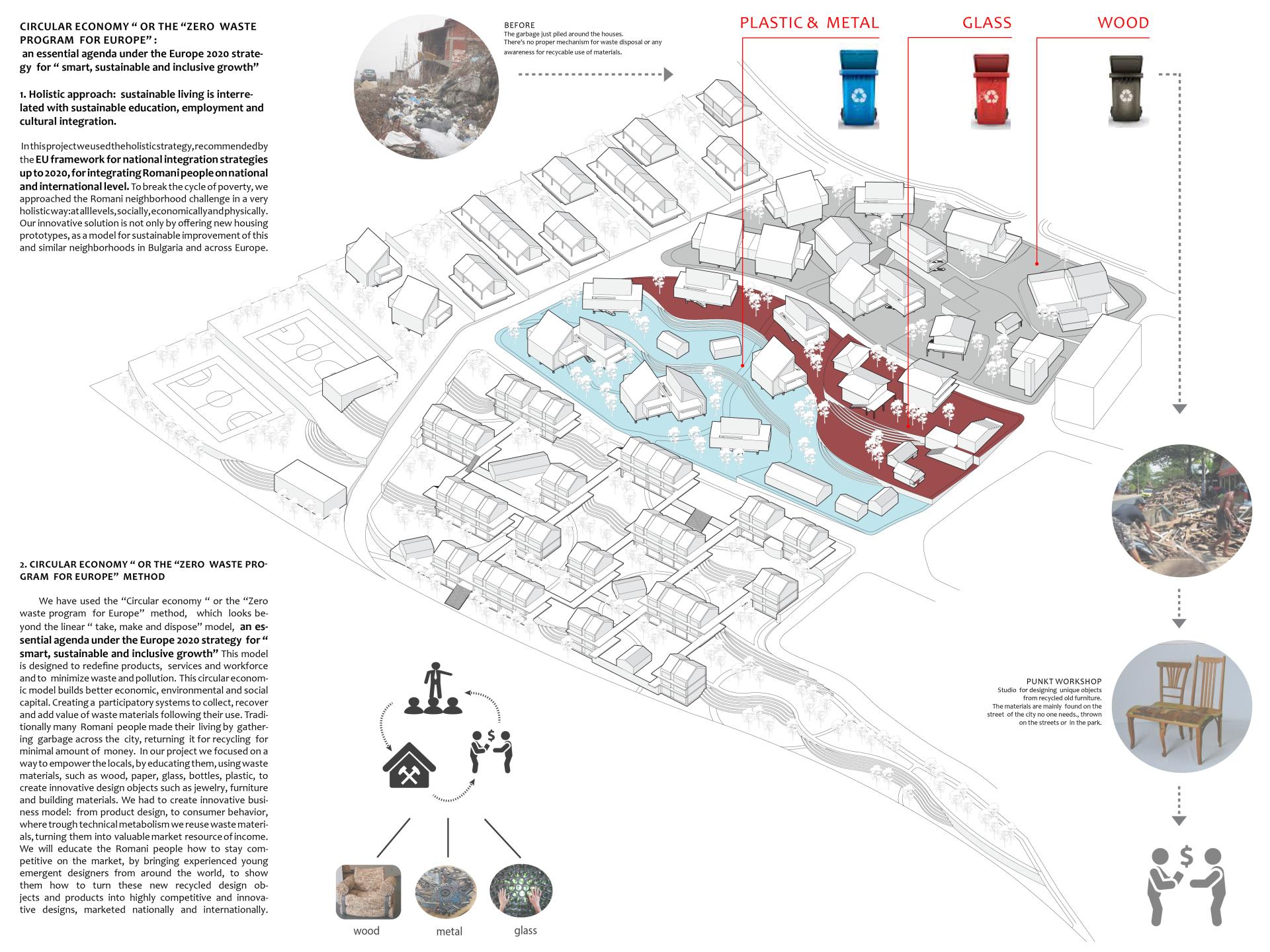
We used the traditional crafts of the Romani's people for their empowerment and integration. Traditionally many people made their living by gathering garbage across the city, returning it for recycling for a minimum amount of money. In our projects we focused on ways to empowers the locals, by educating them, using waste materials such as wood, paper, glass, bottles, plastics, to create innovative design objects such as jewelry, furniture, and building materials. We had to create the innovative business model: from product design to consumer behavior, where through technical metabolism we reuse waste materials, turning them into valuable market resource outcomes. We will educate Romani people on how to stay competitive on the market, by bringing experienced young emergent designers from around the world, showing them how to turn these new recycled designs and objects, and products into highly competitive and innovative designs, marketed nationally and internationally. To support this new economic model, our neighborhood was divided into 3 major districts, where glass, metal, and woodshop recycling workshops were located. Small businesses were created on the ground floor of the each living unit, giving the residents unprecedent opportunity for sustainable living development.
Innovative character
- We not only proposed new housing prototypes, as a model for sustainable improvement, but also approached the challenge at all levels: socially, economically and physically. We used the holistic strategy to break the cycle of poverty, strategy recommended by the EU framework for integrating Romani people on national and international level
- Furthermore, our project incorporated the “ Circular economy” or “Zero waste program for Europe” method, which looks beyond the linear “ take, make and dispose” model is an essential agenda under the Europe 2020 strategy for “smart, sustainable and inclusive growth”. This model is designed to redefine products, services and workforce and to minimize waste and pollution. This circular economic model builds better economic, environmental and social capital. Creating a participatory system to collect, recover and add value to waste materials following their use.