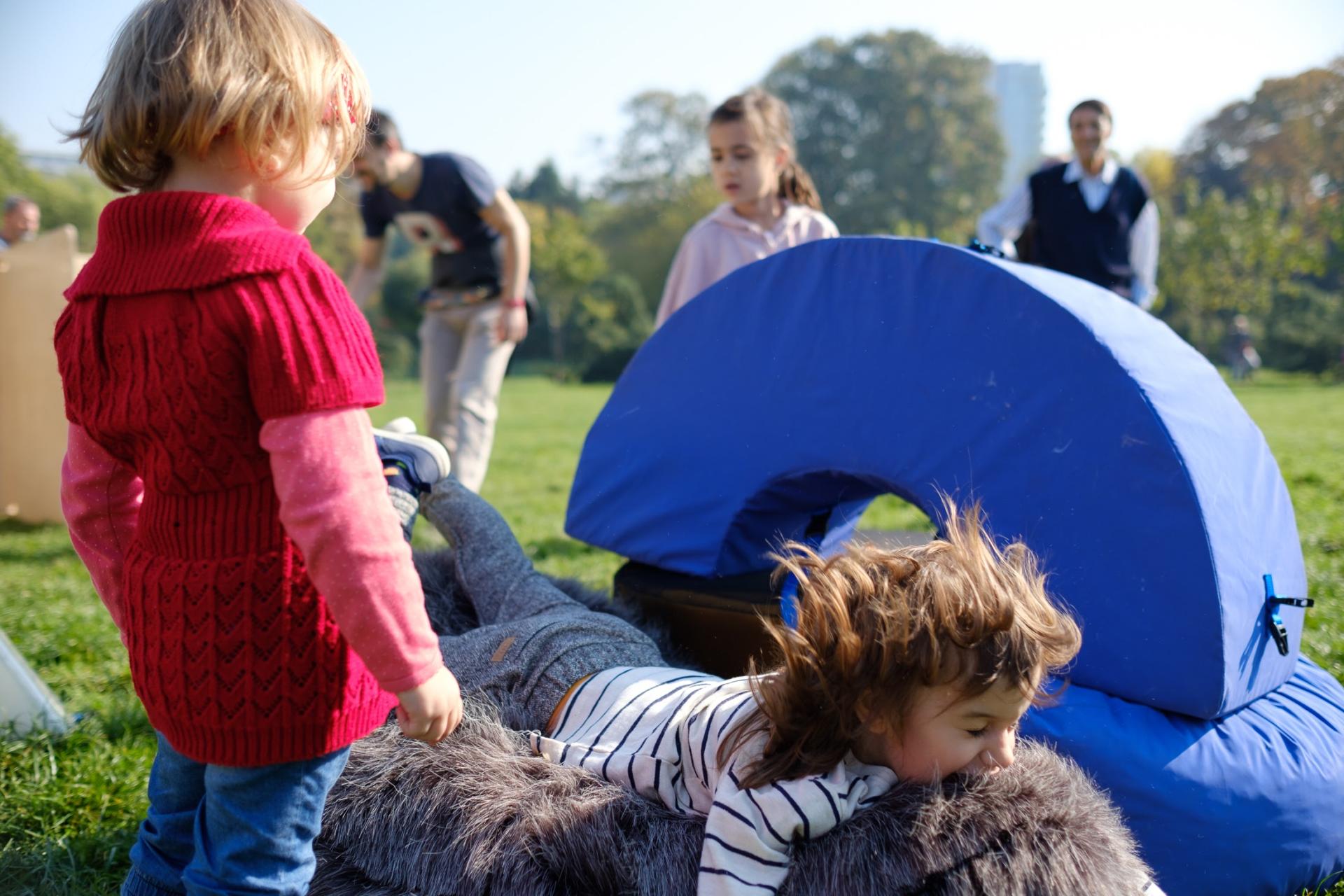
PopUP Raspiua
Basic information
Project Title
Full project title
Category
Project Description
People with disabilities experience an isolation phenomenon due to: the attitude of the people around and the inaccessible built environment. Playgrounds are the places where children become aware of the differences between them. Playing shapes the character of the adult of tomorrow, thus playgrounds must be accessible to every child, regardless of abilities. PopUP Răspiua is a contact platform between able-bodied kids and those with disabilities, embodied as a mobile, inclusive playground.
Project Region
EU Programme or fund
Description of the project
Summary
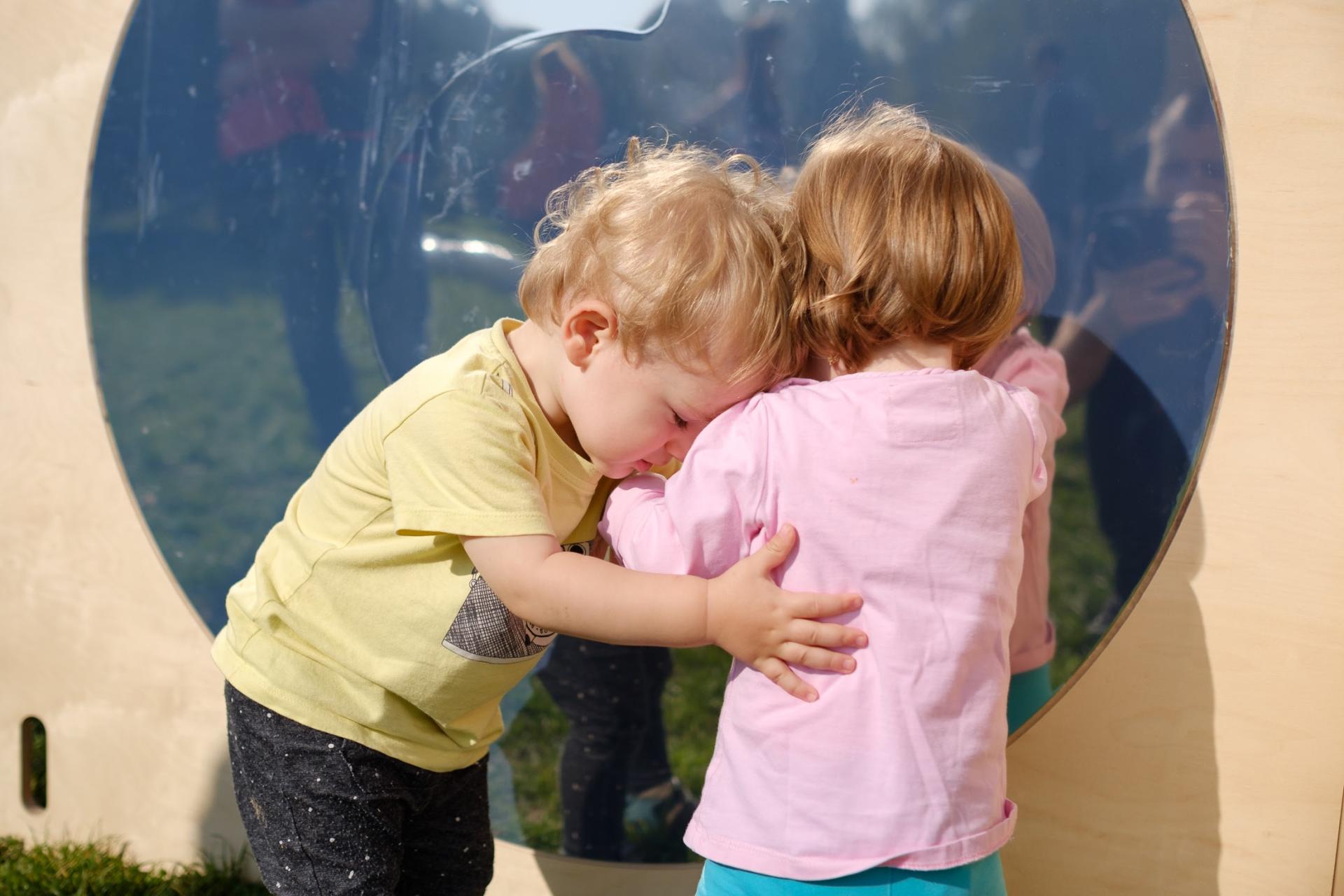
In Romania, people with disabilities experience a self-isolation phenomenon, present also during childhood, at playgrounds - where children become aware of the differences between them. Playing shapes the character of the adult of tomorrow, thus playgrounds must be accessible to every child, regardless of abilities. PopUp Răspiua, is a contact platform between able-bodied kids and those with disabilities, embodied as a mobile, inclusive playground. The design process was participatory, having activities with children from special schools - focus groups, “playdates”, and observation on site. Information has been gathered about preferences, playing difficulties, usability of playground facilities and how children interact with each other. Sensory stimulation is the key element of this inclusive playground, as it helps develop cognition, motor skills and social interaction. Multi-sensory approaches facilitate the interaction between children with different abilities. PR stimulates the imagination of children through basic geometric shapes, textures and modular delimitations, materialized through: armors and casemates. The armors are modular, interconnected and multifunctional tools designed to give children the opportunity to generate various scenarios and to get involved directly into configuring the playground. The casemates draw a line between the world of imagination and grown-ups’ reality by creating semi-protected playing sockets. The playground is designed to give children the opportunity to have an equal shot at playing. The modular nature of PR components makes them adaptable to almost any context (interior/exterior) and the mobility part is helping us promote the public playgrounds accessibility initiative. PR offers the possibility of a personal playing experience - for vulnerable categories - and a playful and empathetic interaction - for able-bodied children. It also raises awareness for the need to replicate such an initiative at an administrative level.
Key objectives for sustainability
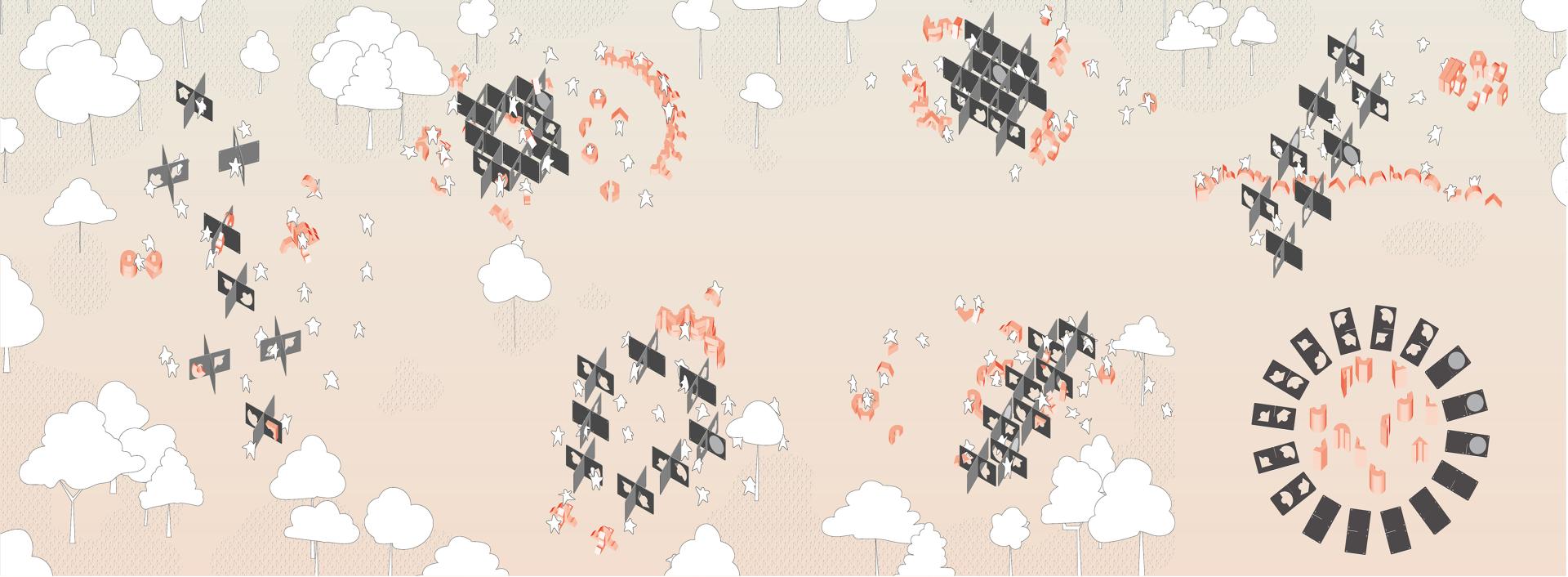
In Romania, public playgrounds are not accessible for children with disabilities. Some of them have universal design elements, but the playground is never designed as a whole to be inclusive, or the elements are not installed correctly (ex. wheelchair adapted castle built on sand). We needed to prove the benefits of inclusive playgrounds, but raising money to build or improve each public playground was not sustainable. Thus, the sustainability objectives have been met by creating a flexible, modular instrument that helps us generate inclusive public playgrounds wherever we need. Using all the modules (armors and casemates) the playground can have from 2.5sqm to 200sqm. Using PopUP Raspiua, an inclusive, mobile playground we are able to reach more children and parents, but also public authorities because we are able to travel with it and install it wherever it is necessary.
Key objectives for aesthetics and quality
The PopUP Raspiua mobile, inclusive playground stimulates the imagination of children through basic geometric shapes, textures and modular delimitations, materialized through: armors and casemates.
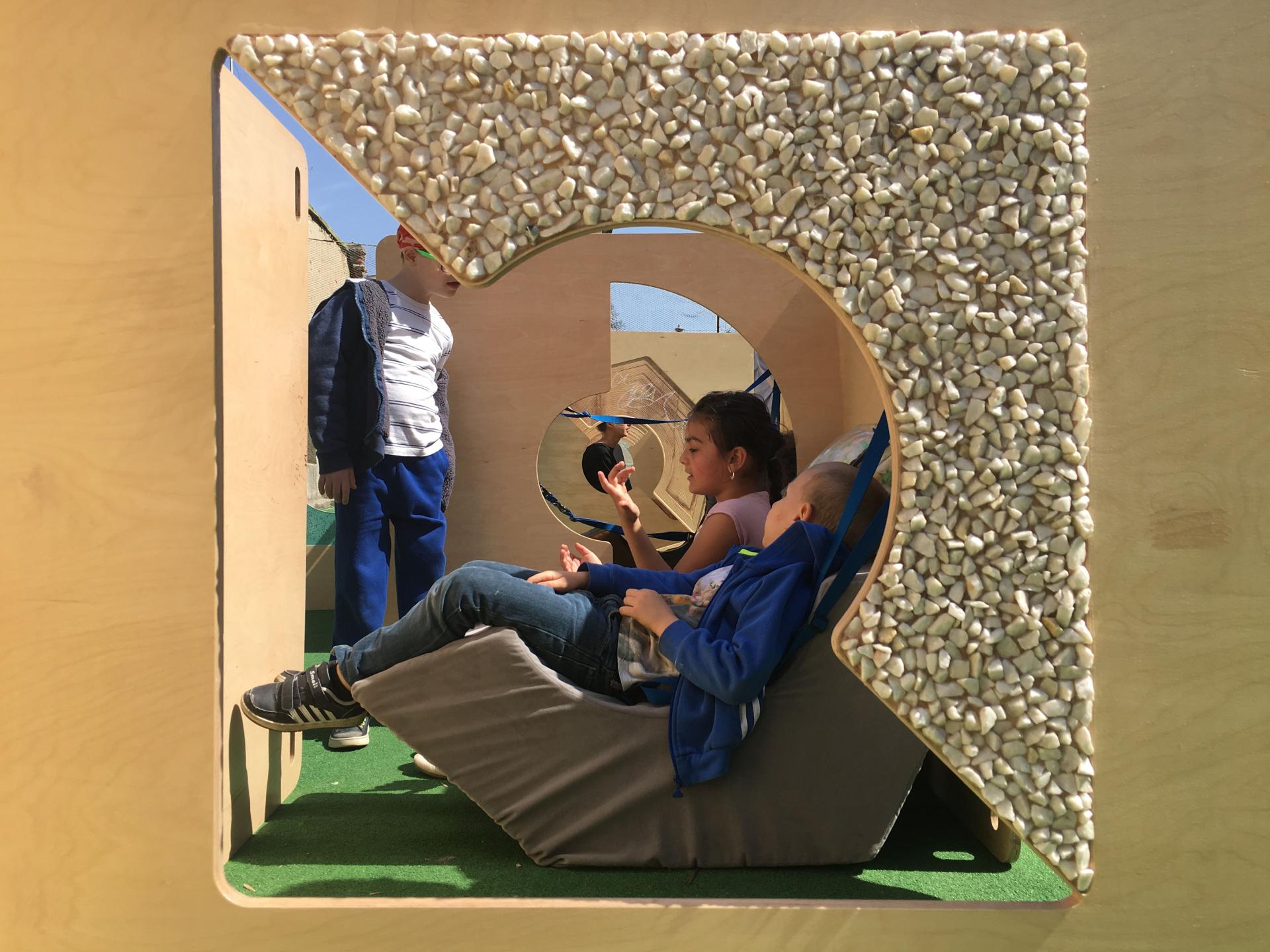
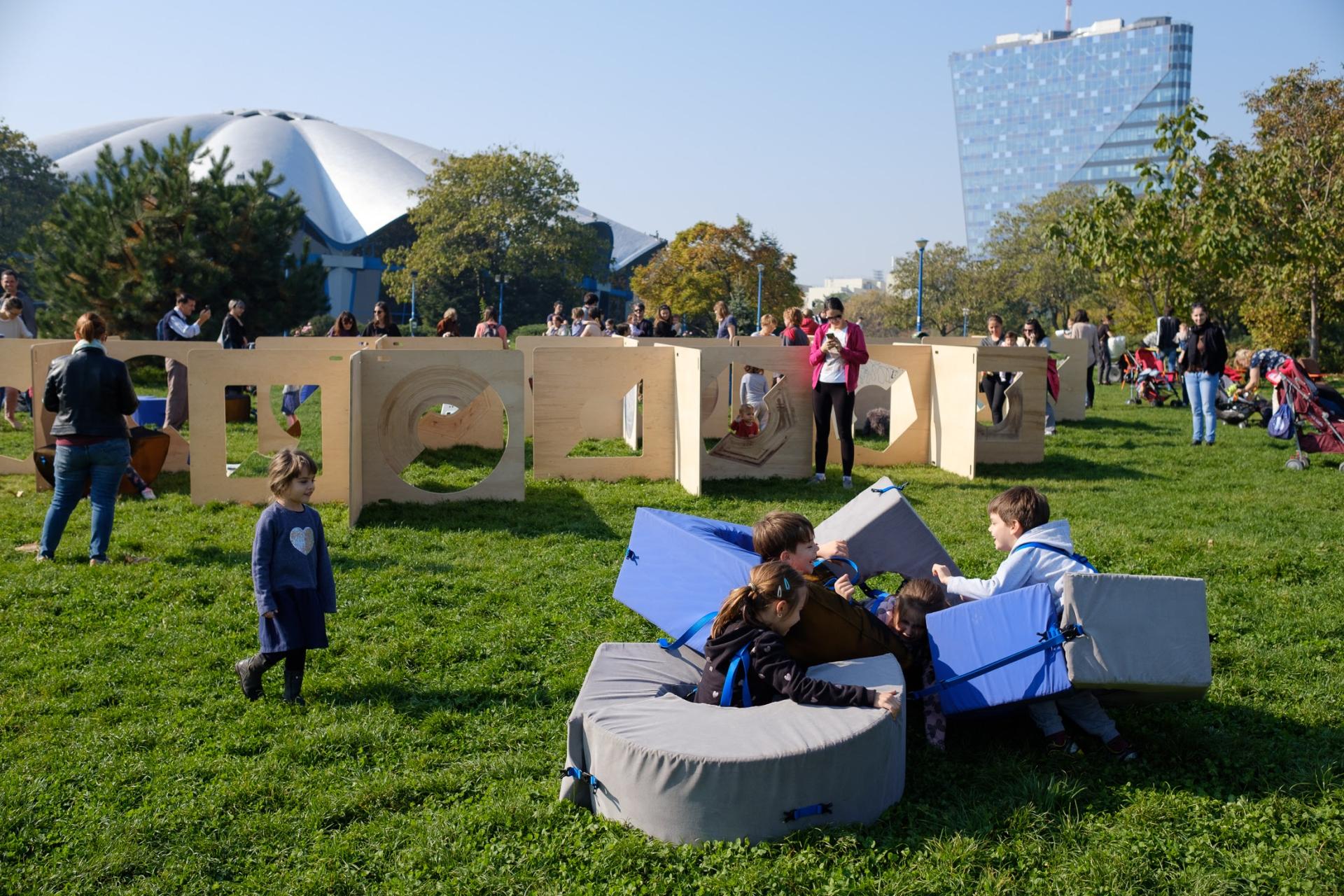
The “armors” have been designed as wearable items, offering the kids the chance to become one with their toys. Once you get into the role, each with their own imagined identity, the children start playing on equal terms. The armors alter the perception of differences and reduce the physical and mental distance between the children. Soft and friendly elements, they also have the role of helping the children in overcoming their fear of exploring an unknown environment. The sponge acts as a protection and provides mental comfort especially in the case of children with various disabilities. The armors offer children the opportunity to generate a multitude of playing scenarios and the chance to be directly involved in configuring the playground. They are: modular - sustaining endless configuration possibilities, multifunctional – flexible in use and adaptable to the children’s and parents’ needs, geometric – basic shapes and materials offer the freedom to be personalized by each child’s imagination, interconnectable – vertical and horizontal connection from two to all together.
The “casemates”, a recurrent element in play history, draw a line between the world of imagination and grown-ups’ reality by creating semi-protected playing sockets and act as playground configuration tools. The walls of the casemates are cut according to the shape of the armors, which makes the space more permeable. These passage areas / portals are given different meanings depending on the rules of the game set by children and enrich the playful scenarios.
PopUP Raspiua “armors” and “casemates” can be used both individually and together. (individual game, in small/large groups, team play, casual play, guided play, play therapy - personal development, motor development).
Key objectives for inclusion
Understanding inclusion starts from identifying exclusion. That is why it was so important for us to have a participatory design approach in our project. The inclusion objective has been met by understanding the context - the obstacles currently faced by children with disabilities and their parents at public playgrounds, but also their preferences regarding textures, materials and playing needs. This part included: focus groups with children from different special public schools in Bucharest, playground visits with them and their parents and an inclusive test playdate with able-bodied children and kids with disabilities. Having the users feedback and involvement in design projects leads to innovation in architecture, while also offering the community exactly what it needs.
The community’s involvement helped us demonstrate that senses and multi-sensory stimulations represent the key to an inclusive playground. Stimulation of sensory perception is the key element of this inclusive playground for two reasons:
1. sensory stimulation during play helps cognitive development, motor skills, language and communications
2. the senses become the main channel that facilitates the interaction between children with disabilities, both between them, as well as with able-bodied ones.
Results in relation to category
The project has a versatile character having a great impact on several levels: cognitive-educational (play seen as an alternative education method), social (social integration of children with disabilities by accessing the playground, personal development) and medical (stimulating development of muscular and skeletal system through mechanical activities).
In the short term, the mobile playground becomes a contact area between people with disabilities and able-bodied ones, playing an important role in eliminating the phenomenon of social isolation of vulnerable groups, offering the chance to play for all. In the long run, the project will have a major impact on tomorrow's adults. Through play, children with disabilities will gain self-confidence, thus managing to become independent members of society. It is also a great opportunity for social interaction between able-bodied children and those with disabilities that will reduce the prejudices that occur with the transition to adulthood.
This mobile, inclusive playground has offered our NGO an instrument to facilitate popup inclusive contexts of interaction between people with disabilities and able-bodied ones wherever we need it. Over the past 3 years more that 2500 kids with various abilities/disabilities have played together without emphasizing the differences between them. It has been placed outdoors in the public space (streets of Bucharest, parks) and indoor (museums, schools, community center) and has traveled through Romania (Bucharest, Sibiu, Cârțișoara, Timișoara, Buftea).
How Citizens benefit
At AMAIS, we apply inclusive design principles through our social projects and our services of consultancy and design. Thus, involving the users in the design process has been our main focus in creating this inclusive, mobile playground. Before designing and producing the playground, we have had an analysis and testing period of 6 months to identify preferences, playing difficulties/obstacles, usability of public playground facilities and how children interact with each other.
During this time, 104 children from special schools (hearing impairment, visual and / or mental deficiencies, autism spectrum disorders, associated diseases) participated in observation and interaction activities with the AMAis team, as well as at the focus groups organized within the partner schools, where the children played, chose and 'debated' a series of materials, pointing out preferences or sensations that they provoked in each case. Moreover, feedback regarding public playground facilities has been gathered from more than 50 parents of kids mentioned before.
Approximately 50 children (both able-bodied and with disabilities) participated in the playdate event to test the conclusions gathered from focus groups and observation activities. Following the event, the design team was able to confirm or refute various game and play hypotheses in an inclusive context, in order to then integrate them into the design.
After designing and implementing the project, feedback has been gathered directly from the beneficiaries, both kids and parents, during the public playdates. The data gathered has been used to further improve the PopUP Raspiua (for instance: adding different scents to the modules).
Innovative character
- The project brings into discussion a topic ignored by the public authorities in Romania: the accessibility of public playgrounds
- The design of the inclusive playground is very versatile and easy to use in very diverse contexts and situations, making it a perfect instrument for various specialists working with / for children with different abilities/disabilities
- The playground is a product designed and produced by an NGO (AMAIS) and design studio (Rhizome) formed by an inclusive team (people with disabilities and able-bodied ones), who opted for the involvement of direct beneficiaries in the design process (architecture / participatory design)