Arhitektuurikool
Basic information
Project Title
Full project title
Category
Project Description
Arhitektuurikool is an active hobby school that offers children and youth basic knowledge about quality built environment for everyone. Among its various activities, the team has developed a unique elective architecture course implemented across highschools in Estonia; engaged in training the teachers and preparing the teaching materials for them. The goal is to raise a new generation of citizens with increased spatial awareness and sensitivity—the future shapers of quality built environment.
Project Region
EU Programme or fund
Description of the project
Summary
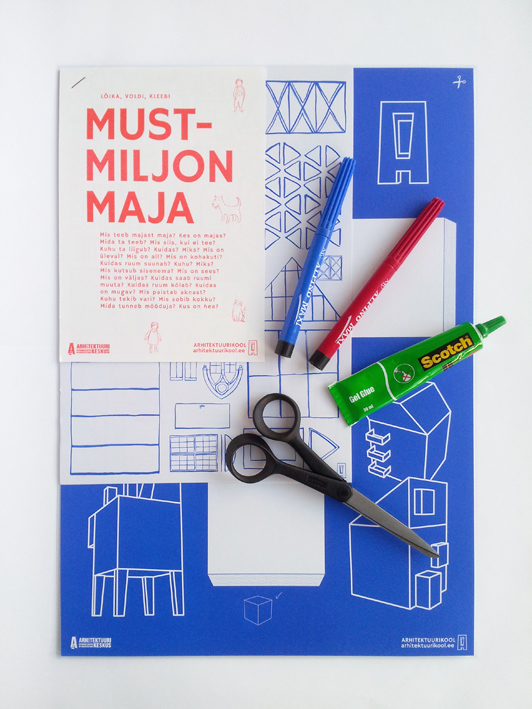
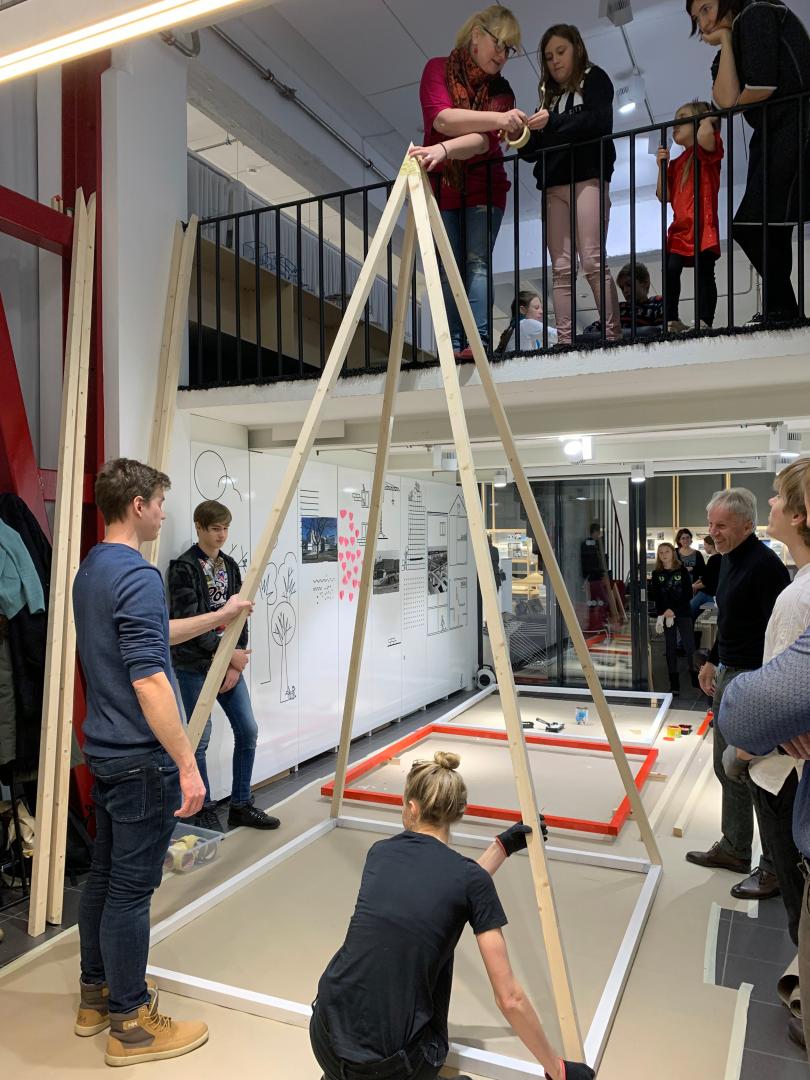
Arhitektuurikool (The School of Architecture) offers basic knowledge about architecture and quality built environment for children and youth. It is a platform that includes hobby school and a whole palette of related activities. In addition to the weekly lessons held in Tallinn, Tartu and Rae parish for children and youth at age 7 to 19, the school also organises inspiring architecture-related events throughout Estonia, publishes study materials for the promotion of creative thought and provides built environment education at regular schools. Arhitektuurikool has developed and implemented elective course "Architecture and living environment" for high schools, organises teacher training courses for the elective course; has elaborated interactive creative program "Kooliruum" ("School Space") for schoolchildren to help them analysing their own school environment; organised workshops e.g. hut building summer workshop; created publications and study materials, videos, urban games about architecture and living environment. Last but not least, Arhitektuurikool's team has curated and designed the permanent exhibition about experiencing architecture "Explore Space!" at Estonian Architecture Museum. The exhibition teaches how to experience space and grasp the essence of architecture. The environment created in the vaulted basement of the Rotermann Salt Storage offers experiences for different senses, inviting everyone interested in architecture to smell and touch architecture and experience it with their whole body. Arhitektuurikool is an independent non-profit hobby school that provides architectural education in collaboration with leading organizations in the field since 2011. Arhitektuurikool and its curriculum have been registered in the Estonian Education Information System. Arhitektuurikool is unique in Estonia and also in the Baltic countries.
Key objectives for sustainability
Arhitektuurikool has been operating already for ten years since 2011, with growing interest among children and their parents across Estonia—an underlying sign of sustainability of the organisation. It was initiated and is run by professional architects who formed the NGO Spatial Education (MTÜ Ruumiharidus). The school operates in close collaboration with partners from the public, private and third sector, i.e. with all leading organizations in the field at the national, regional and local levels. Most essentially, sustainability matters at large (including the environmental and climate goals, societal cohesion and well-being) are at the very core of all Architektuurikool's activities. The courses, workshops, summer camps, contests, highschool activities and other events deeply integrate sustainability aspects with other topics relevant for the built environment. The sustainability of the activities is also ensured by high level of professional and pedagogical competence in spatial design and architectural education within the team. All teachers are experienced in discussing spatial topics with children and teens, as well as in developing new learning activities. Furthermore, the school operates in close collaboration with partners from the public, private and third sector, i.e. with all leading organizations in the field at the national, regional and local levels. Thus, sustainability of the activities is also well ensured by involvement of a broad range of stakeholders, among them different ministries (Ministry of Education and Research, Ministry of Culture), venues (such as the Estonian Museum of Architecture), local governments and schools (e.g. highschools implementid the elective course „Architecture and the living environment“), the professional community (Association of Estonian Architects, Estonian Centre for Architecture), higher education institutions (Estonian Academy of Arts, TTK University of Applied Sciences, etc.) and private supporters.
Key objectives for aesthetics and quality
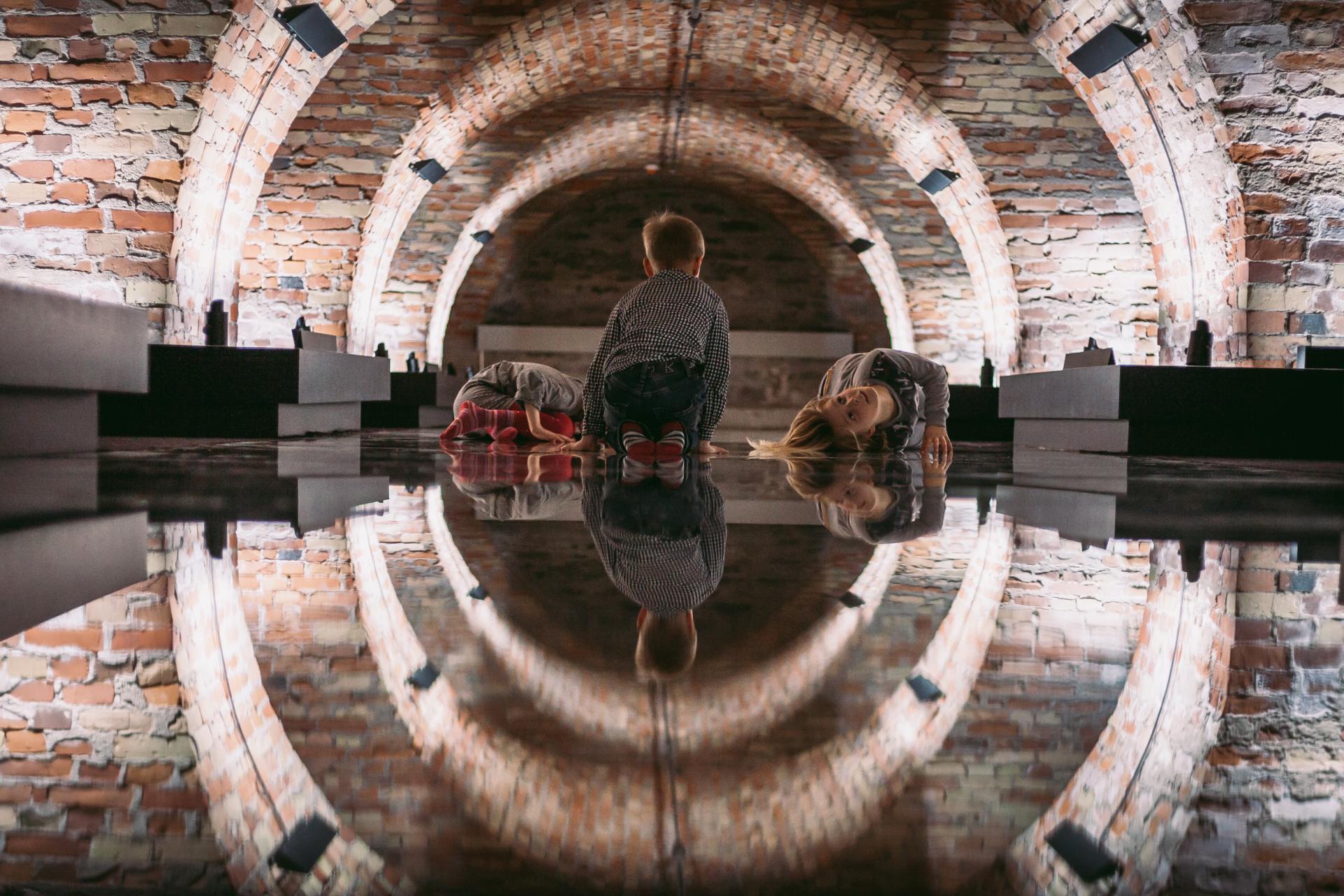
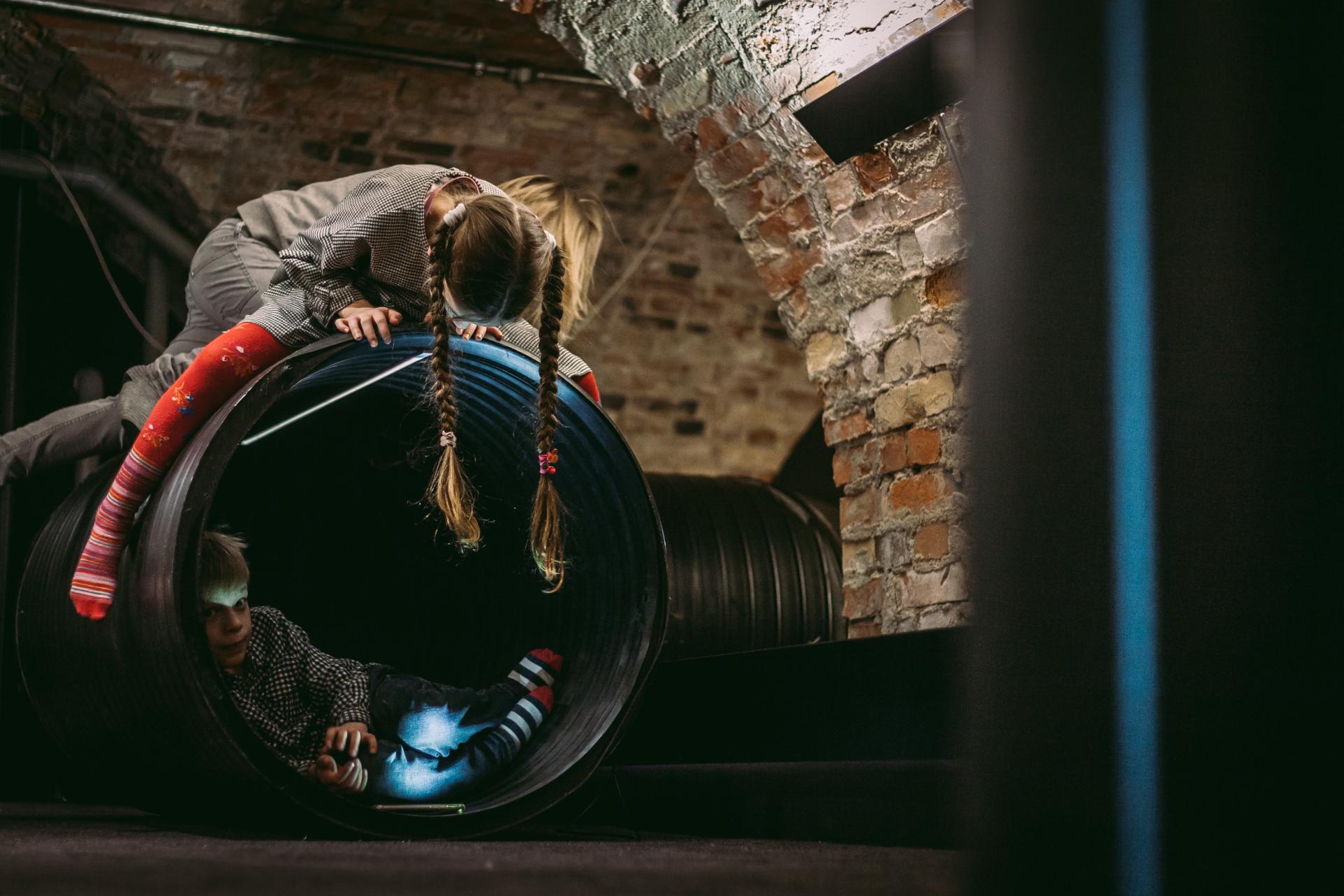
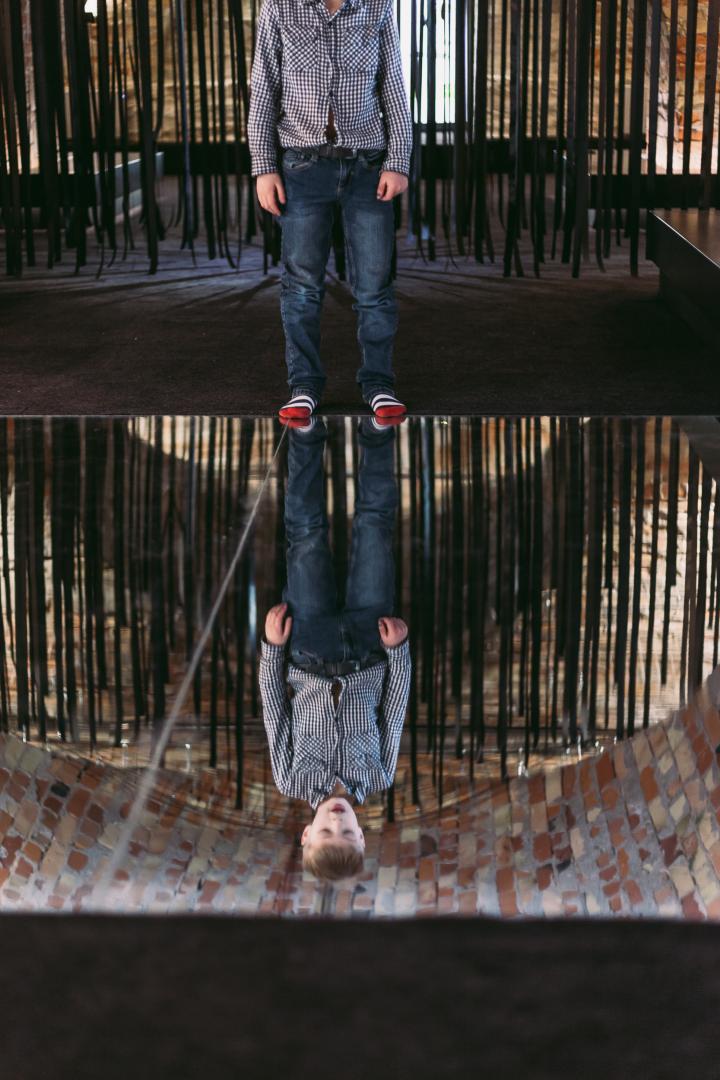
Aesthetics and quality of spatial experience are an integrated part of Arhitektuurikool's educational program. A good example of how Arhitektuurikool approaches the quality of spatial experience beyond functionality is the permanent exhibition "Explore Space!" at the Estonian Architecture Museum, curated and designed by Arhitektuurikool's team, together with school students who offered their views on the spatial qualities which they enjoy. The exhibition offers an augmented learning experience of diverse spatial qualities that inform our senses, as well as simple tools to analyse and understand the relation between the various spatial conditions and how we experience them. In other words, the exhibition teaches how to experience space and grasp the essence of architecture. The environment created in the vaulted basement of the Rotermann Salt Storage offers experiences for different senses, inviting everyone interested in architecture to smell and touch architecture and experience it with their whole body. Upon entering the exhibition, visitors are greeted by a unique spatial installation Reflexio where a mirror floor and game of lights expands the boundaries of the viewer’s perception and the concept of physical space. A totally different experience is offered by the forest of ribbons hanging from the ceiling. Walking through it you will find a sphere—a safe nest for being on your own. Various display items direct children to identify different building materials and constructions, think about the ‘circulatory system’ of a house and the specific smells that relate to various rooms. There are tubes to crawl through and an animated book where rooms, streets and the entire city come alive as the pages are turned. Light design plays an important role at the exhibition, where the play of light and shadows draws out the old vaults and red brick columns of the salt storage—all covered with a permanent crust of salt.
Key objectives for inclusion
Inclusion of children and youth of various age groups is essential to Arhitektuurikool educational program, as it is open to all interested children and young people who want to develop their understanding of and skills in spatial design. Playful and exciting assignments as well as creation and discussion help the kids to see, understand and value their everyday spatial environment from different viewpoints: aesthetical, functional, social, etc. Arhitektuurikool’s teachers are experienced in discussing spatial topics with children and teens, as well as in developing new learning activities. To give an example of one lesson, during an hour and a half, under the guidance of architects, one topic is introduced, concepts and questions are discussed, built, crafted, drawn or sketched. Afterwards all examine together, how the completed work relates to the topic, what solutions it offers or what questions it raises. Younger children find questions, answers and new knowledge through manual activities, older students analyse new topics in depth and gain experience through discussions and practical tasks. Arhitektuurikool does not teach new architects, but rather focus on noticing, understanding, perceiving and creating everyday space. The courses include also visiting different buildings and exhibitions, where students learn to analyse what they see and consciously experience architecture. Every child has an important role in Arhitektuurikool, because their thoughts and spatial experiences are unique. They can always express themselves and discover how their companions see the world. Another key aspect is involvement of teachers in the process, thus the educational materials are prepared together with the teachers across highschools in Estonia. The feedback has been truly encouraging, as the course has exponentially grown popularity among the teachers who have pointed out how well the program expands and diversifies the students' understanding of the built environment.
Results in relation to category
The School of Architecture has received multiple national awards in recent years for its activities. E.g., the Estonian Cultural Endowment – the key supporter of Estonian culture – awarded Arhitektuurikool the Action Prize 2017 for developing and piloting the elective course „Architecture and the living environment“ in upper secondary schools across Estonia.
The Ministry of Environment prized Arhitektuurikool as Inspiring Innovator 2017 for its activities in raising spatial awareness among children and youth. The aim of the award is to recognize schools, kindergartens, student groups, teachers and non-formal environmental education centers and nature schools for their effective work in raising environmental awareness and shaping values and attitudes that support sustainable development.
The Estonian Museum Council recognized the exhibition “Explore Space!” as the best permanent exhibition of 2019 and the winner of the grand prix, the Great Museum Rat.
One of the most important achievements at the national scale in promoting spatial learning in Estonia is the development and implementation of an elective course "Architecture and the living environment" in upper secondary schools. The feedback from the teachers who offer this elective course shows that the course has become more and more popular among teachers from year to year, and in some schools the volume of lessons has also been increased. According to the teachers, it works well for combining design and architectural knowledge and skills. Teachers have pointed out that during this course students will see a more complete picture of the living environment and ask meaningful questions, in other words, their understanding of architecture and the built environment will expand. Also, that the tasks are diverse and exciting to solve, and a good sign is also that there is a continuous demand from teachers for further materials.
In addition to children, their parents have started to participate in the program.
How Citizens benefit
Our understanding of culture and a cohesive society develops from the very first years of our lives. Arhitektuurikool’s goal is to raise a new generation of citizens with increased spatial awareness and sensitivity—the future shapers of high-quality living environment. In addition to the weekly sessions, workshops and other educational activities held in Tallinn, Arhitektuurikool organizes inspiring architecture-related events across Estonia, publishes creative study materials and provides built environment education. More than 450 children have attended the regular hobby school program, while over 1500 students and 110 teachers from more than 70 schools across Estonia have taken part in the interactive "Kooliruum" ("School Space") program, in addition to many who have participated in workshops or other events. Additionally, there are 15 highschools currently offering the elective course that over 2000 students have completed to date. Arhitektuurikool students develop environmental literacy: through noticing, understanding and seeing alternatives to spatial solutions, and their implications. They learn about the living environment and its cultural layering over time, thus they are able to make better use of the potential of it and, in turn, live a better life. The built environment is shaped over time by many different people together, such as decision-makers, designers, implementers. A very small proportion of these people are architects or planners, but if everyone has a strong foundation in spatial education, the result is a more enjoyable living environment. We live in a civil society where everyone should have the opportunity and the courage to influence the space around them: Arhitektuurikool’s objective is to raise (pro-)active citizens who know and want to have a word about shaping our living environment. Among other skills, spatial education develops social competence, i.e. cooperation and communication skills.
Innovative character
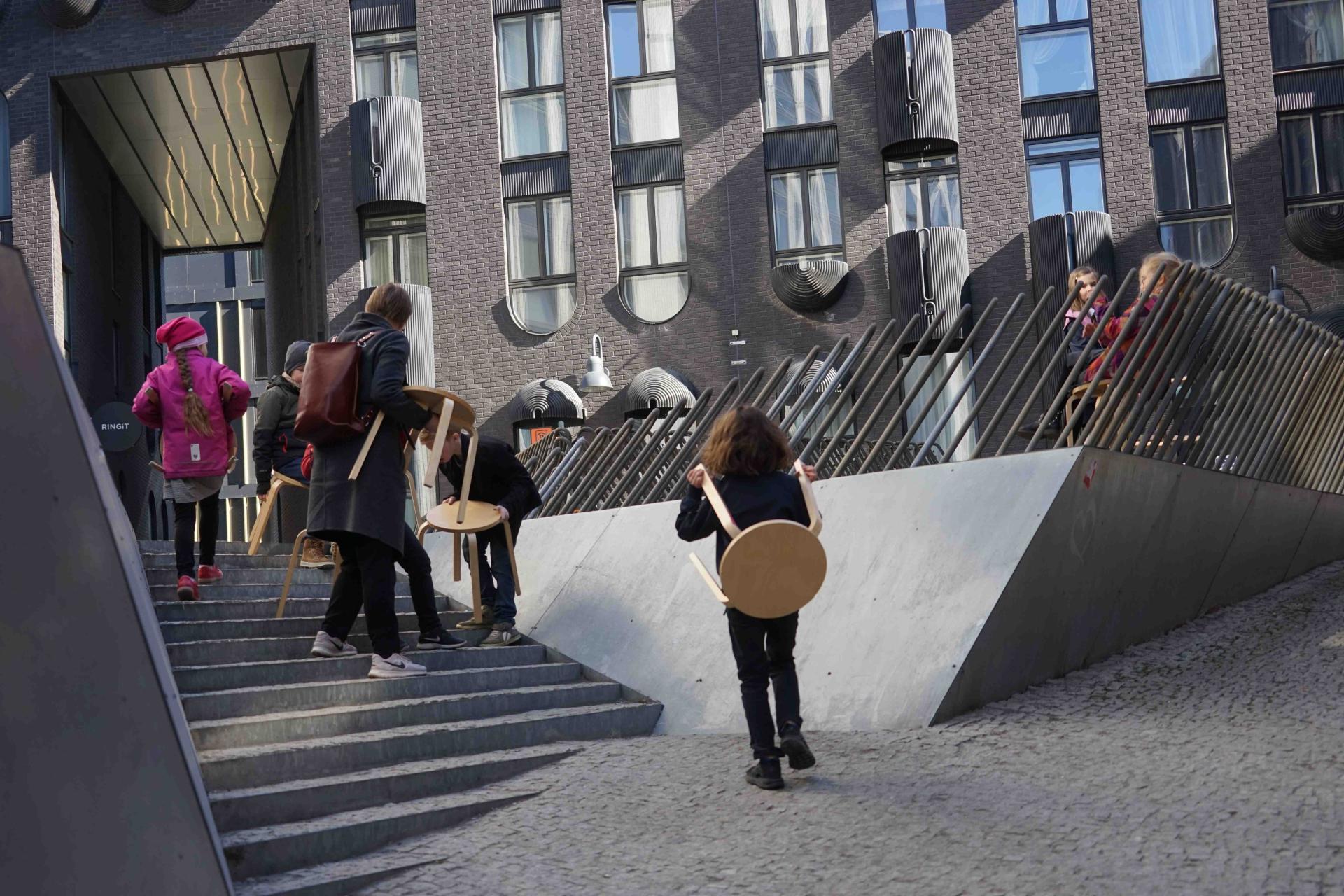
There is no other initiative like it in Estonia and only a handful in Northern Europe and the Baltics. The weekly lessons at the School of Architecture take place in the Museum of Estonian Architecture in Tallinn. Playful and exciting assignments as well as creation and discussion help the kids to see, understand and value their spatial environment. The teachers of the School of Architecture are experienced in discussing spatial topics with children and teens, as well as in developing new learning activities. The workshops address the built environment with an emphasis on human-oriented space and sustainable development. The aim of various one-time events is to inspire young people to take notice of their environment and use it in active, positive and inventive ways. Each year, public workshops are held in various places around Estonia (schools as well as cultural events, such as the Opinion Festival, Design Night, Tallinn Architecture Biennale, Plektrum Festival etc.). The academic year culminates with a hut-building summer camp inspired by the Finnish school of architecture Arkki. In addition to regular lessons, the School of Architecture is also involved in various one-time or recurrent projects aiming to popularize topics related to the built environment. Particular attention is paid to general education schools, so that young people all over Estonia could explore their everyday surroundings in exciting and educational ways. The study materials published by the School of Architecture support a new approach to education with a focus on exploratory and investigative learning where students play an active role, as well as practical topics that combine different fields. The materials and training courses meant for teachers make it easier to explain architecture, instruct students and conceptualize the use of space within the school building itself.