GREEN STEPS
Basic information
Project Title
Full project title
Category
Project Description
GREEN STEPS –is a long-term environmental-artistic project in which the community, especially youth, is activated towards environmental protection in an innovative and creative way by collecting urban waste and transforming it into art pieces. It fosters an interventionist attitude, arouses the curiosity and interest of the entire community in good ecological practices and behaviors. The project strives to make people more responsible, wiser, and sustainable consumers as well as active citizens.
Project Region
EU Programme or fund
Description of the project
Summary
GREEN STEPS project started five years ago. We decided to make something different that could be not only visually impacting but also could spread a message. Sustainability is our top priority and with a simple plan, we made a huge impact.
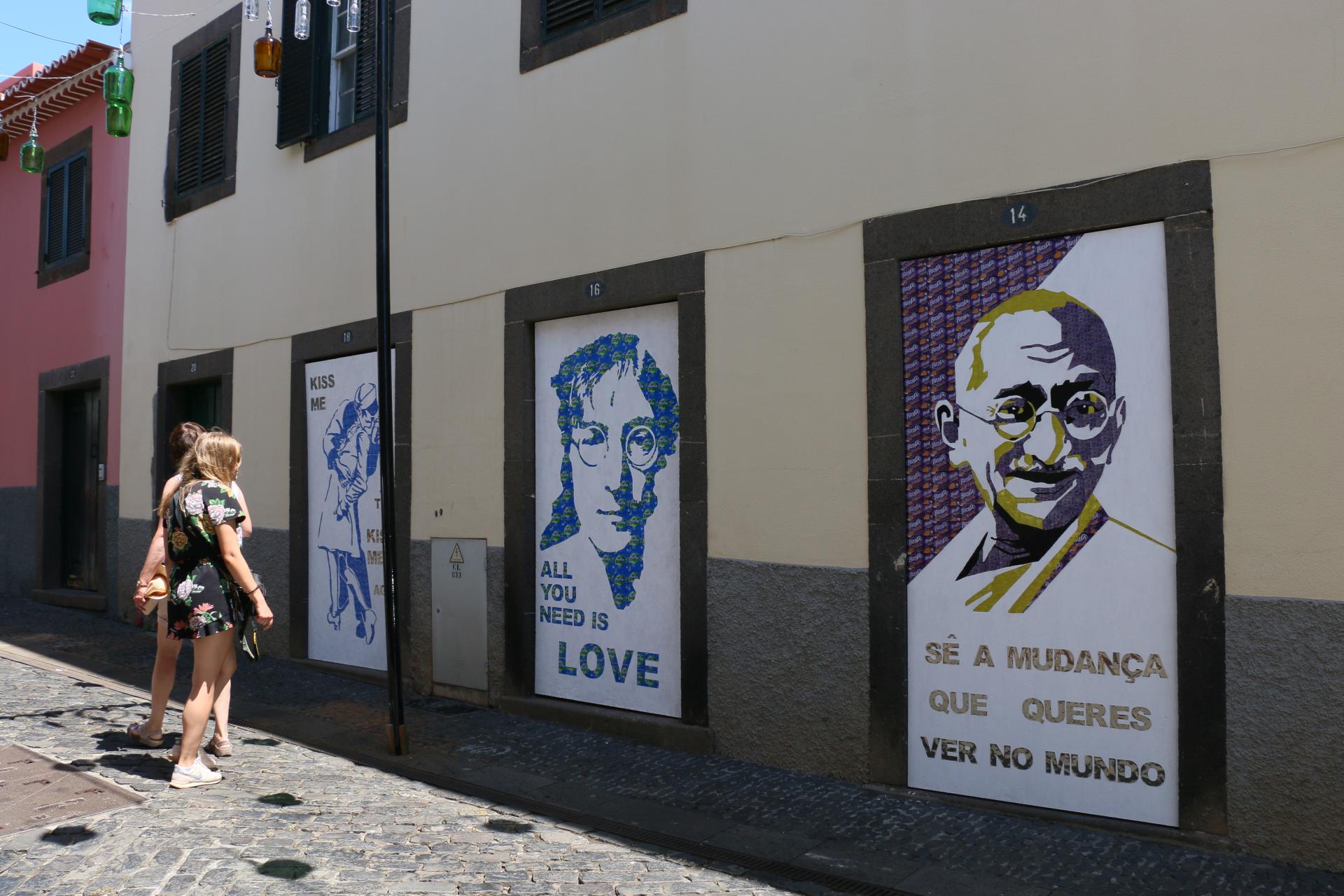
Each installation takes around half a year to be completed. An active group of volunteers collects urban waste constantly. The local community is involved, being also part of the process and gaining as well environmental conscience. Other entities cooperate in the process too. After gathering waste materials, we start building the art pieces and transferring the skills to the least experienced people. Each art installation has a different name. During the construction, depending on the item that we are using, we talk about its life cycle and its implications on the environment, human health, and economy. This way, we prepare the volunteers, who are helping in the construction of the art installations, to be ready to explain to the viewers what the objective of that specific installation and its meaning is.
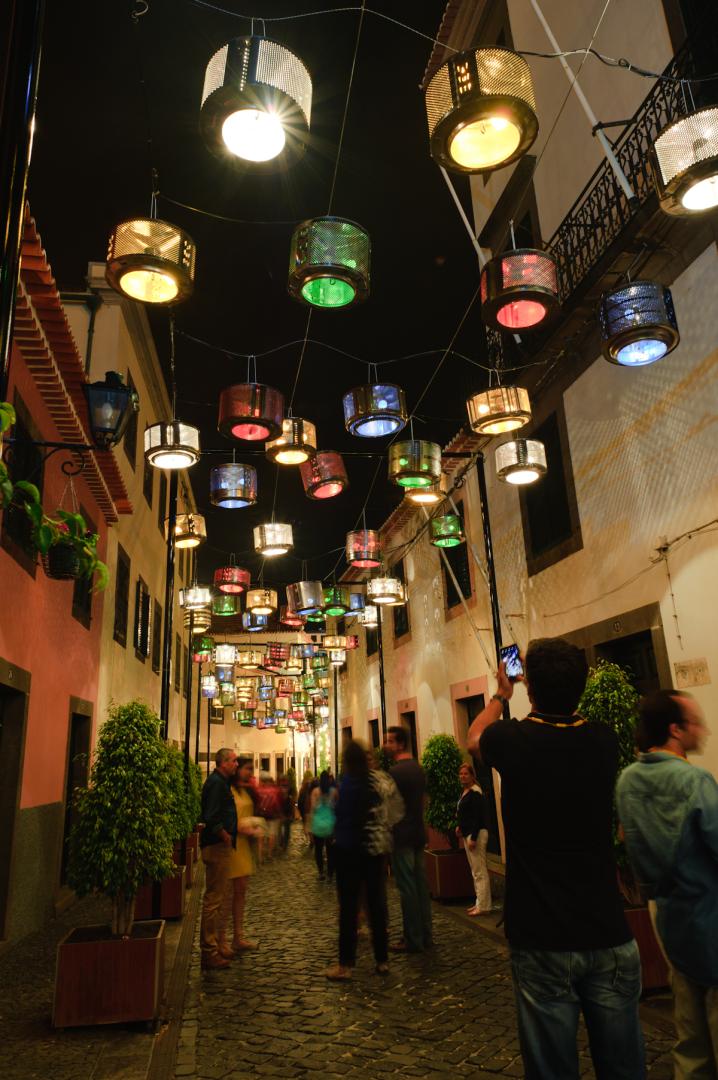
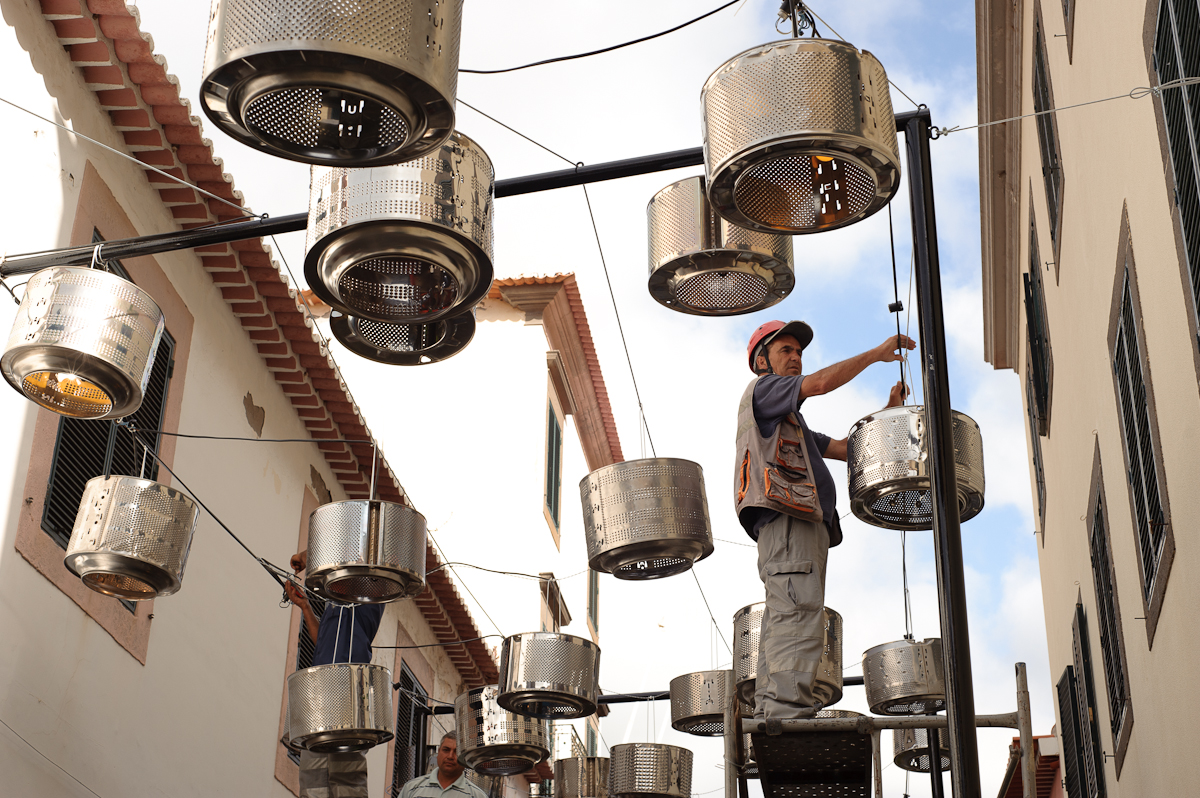
Under the project “Green Steps” we have created and developed many environmental activities. For example, in 2016, we had "A Midsummer Night´s Dream", a steam-punk street installation composed of old washing machine parts. 133 drums were turned into lamps with colorful lights to illuminate the street. The project was spread all over the world and reached thousands of people: https://youtu.be/aYsEo6kqjFU
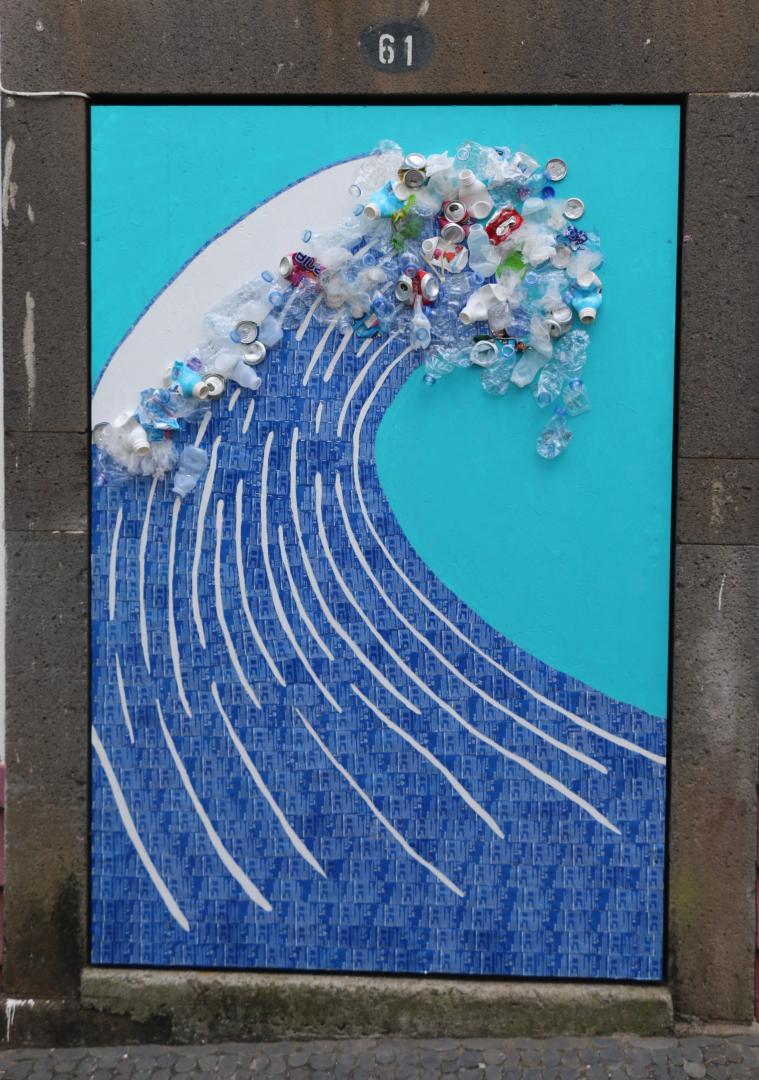
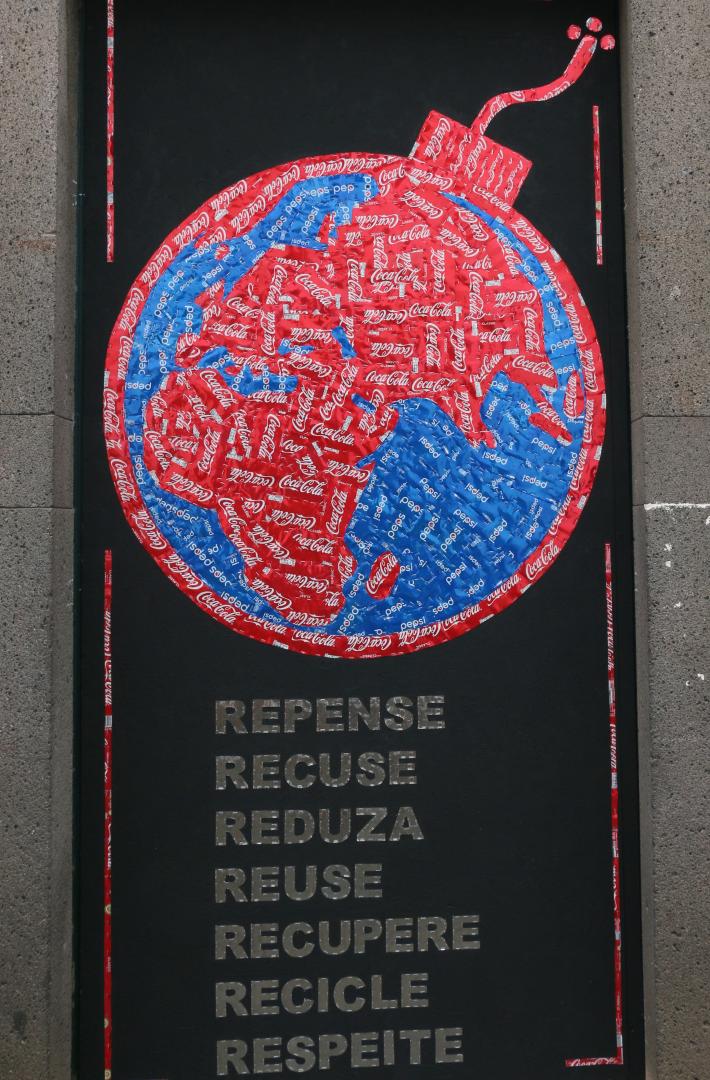
In 2017, and again in 2018, we collected more than 25 000 empty soda cans, around 400 glass bottles, and two dozen of old bicycle wheels to transform them into artwork. center of Câmara de Lobos. 2017: https://goo.gl/TdJTCZ 2018: https://goo.gl/wiLfoZ
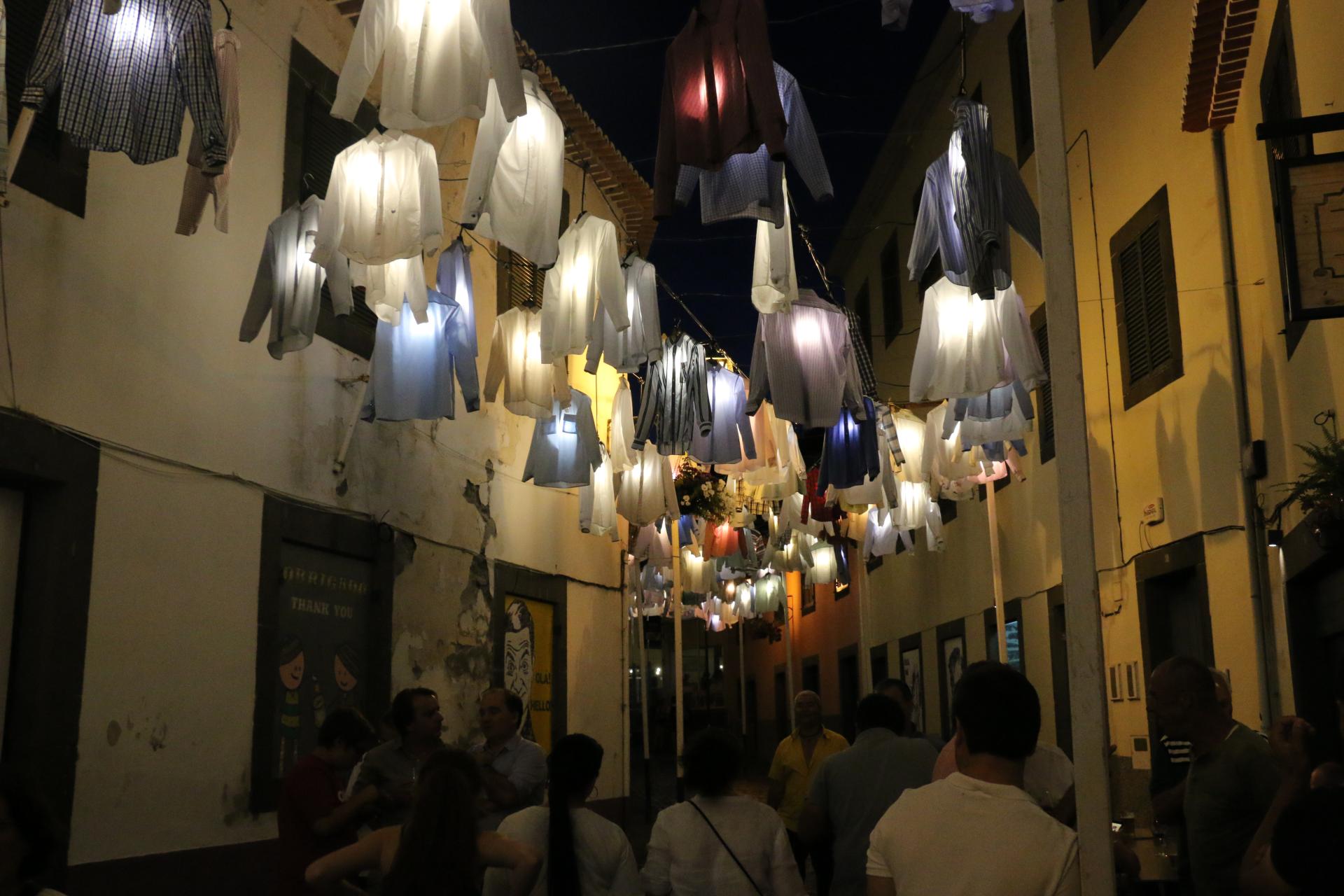
In 2019, we reused old shirts to make chandeliers. Besides the street installations with upcycled waste, we develop and participate systematically in other activities like seminars, workshops, discussions, campaigns, and eco marathons. 2019: https://bit.ly/3fNNMaw
Key objectives for sustainability
GREEN STEPS project activities are contributing to the 2030 Agenda for Sustainable Development. Some of our key objectives are:
- To mobilize people to work in teams, reinforcing the values of friendship, cooperation, responsibility, and mutual respect.
- To educate through non-formal methods for the conservation of the environment.
- Strengthening the skills of young people in social and civic areas.
- Enhance the acquisition of environmental knowledge, as well as the critical sense for situations of and active participation in environmental protection actions.
- To increase the knowledge level of the community in topics like global interdependencies (from environmental, cultural, economic, and political approach); SDG (Sustainable Development Goals); social and global justice; climate change; consumerism and sustainable lifestyle; sustainable development.
- To increase the level of sustainable lifestyles of citizens in general and trigger positive organizational changes.
We have already a good practice of making environmental activities and raising awareness. The artistic environmental missions have impacted thousands of people over the years. GREEN STEPS project also comprehends other environmental activities, using non-formal methods of education. We organize seminars, movie discussions, street campaigns, eco marathons, and many other activities which have the purpose of activating citizens to be more environmentally friendly. We invite the whole community to be part of the process and they feel inspired by the results of our activities. There is still a lot to be done, however, we feel people more open to change and to be part of a healthier planet, by fostering a Green economy.
Key objectives for aesthetics and quality
Our project is based in Madeira island – Portugal, but our works are recognized not only locally but also at the international level. We live in an outermost region, which makes it difficult for us to have access to the latest advanced technologies. However, with a simple idea, we managed to create very impressive artworks that were immediately recognized at the international level. We produce videos of the activities connected with the GREEN STEPS project, which shows how are the working process and the results. The international community has recognized us as an example and we keep being invited to be present in various seminars, webinars, or other events connected with the circular economy, green transition, among other environmental topics. We were invited to make an exhibition abroad, in Amsterdam for the light festival. We also were going to send it to Germany, but we were not able because of the pandemic situation. When we started building the art installations, the local community did not believe in us, and it was hard to get people involved, but after being spread internationally, everyone loved it and contributed somehow to make the project go further. A lot of tourists come to see our street installations during the year, taking photos and spreading them around the globe.
If we sum up the whole experience and look back on how we started, what we had, and what we have now, we can say that our project grew a lot and our community behaviors and attitude have positively changed. We increased the level of knowledge from the community in topics of climate change; consumerism and sustainable lifestyle and if in the beginning, it was difficult to engage the community to participate and give a hand, now they are more aware of what we do, and why we do. We already reached our aim and showed the community that our actions can influence the lives of other people and contribute to diminishing the human impact on the environment.
Key objectives for inclusion
We are a non-profit association whose purpose is to organize cultural and educational activities for the benefit of the community’s development. Our objectives are to develop the social and personal competencies of children, youth, and adults through non-formal education principles. These methods allow a greater involvement from the members of the community and a bigger approach to the surrounding reality. The constructions are made over several months, by local volunteers, without any artistic training. During the construction of these street decorations, we have been involving many people, realizing as well that these street art projects are excellent opportunities to promote inclusion and active participation. Participation in our activities is free of charge. Everyone is invited to come and contribute the best way they can. In some specific activities, we provide food and transportation so nobody stays behind for economic or geographical obstacles. It is possible to contribute to the project in different ways and in different stages wherever it is during implementation, dissemination, preparation, etc. People can contribute simply by collecting materials and bringing them to the association, by phone calls to call asking friends, family, or someone else who can collect the urban waste. The idea was generated by a group of friends, who wanted to do something out of the box to help our community and environment. The project grew and became international, as during the year we receive international volunteers who come to help in our activities. This way we also give space for intercultural dialogue, a key pillar for inclusion. With the contribution of all volunteers, local community, partners, as well as the support of local authorities, we have managed to do notable work.
Results in relation to category
In 2019, we won international recognition for all the effort and enthusiasm we have been putting into constructing these art pieces. We were recognized by European Commission and we won “The European Sustainability Award”. This award had no prize money. In the same year, we received from the hands of the President of the Republic of Portugal a national award, the Gulbenkian Prize for Sustainability, in the value of 50 000 euros, for being considered a reference as a youth organization that promotes ecological behaviors and raises awareness for sustainable development. Our project was a pioneer in the region and other organizations were inspired by us. In the following years, almost all organizations participating in the embellishment of the city for the summer festivities reused waste.
How Citizens benefit
GREEN STEPS is essentially a community project. We cooperate with local bars, schools, restaurants, hotels, City Hall, and other non-governmental or governmental environmental entities. Environmental issues are on the public agenda and each member of the community is committed to the process of making individual or collective change. When we began this project, nothing similar had been done in the city center of Câmara de Lobos. When we were collecting urban waste, firstly people didn’t understand what we were doing and we felt some resistance. People in Madeira stick to what is traditional and only when our works were widely spread at the international level, the negative feedback we had at the local level before the opening was mute after so many compliments from the international community. We changed communities' minds and they learn with us how to reuse materials and give a new life. Now the expectations from locals every year is high, they are curious to see what will be next, to give their hands and support as much as they can. More people are sensitized to our cause and almost no resistance is found when we need support. People involved in the process also teach others what they learned during the process and spread the knowledge among their families, peers, and colleagues. As we involve many young people, conditions were created for the occupation of youth leisure time, diverting them from less healthy ways, such as drug addiction and delinquency, which also benefits the community in the sense that diminishes the numbers of small thefts, mendicancy, etc. By carrying out this project, the community, in general, is more aware of their role as global citizens and understands the global impact of their actions whether if it is on the environment, economy, or socially.
Innovative character
Reusing and upcycling garbage is not a new term, however, in the context, we live in, Madeira island, initiatives of this kind are exceedingly rare and uncommon. Our works are out of the box and also make people think about environmental problems.
Despite the concept not being new, our artistic installations are unique in the world and nowhere to be found. The constructions are made over several months, by local volunteers and sporadically international ones, without any artistic training. Our project is also innovative in the sense that given the scarcity of opportunities that we face for being from an ultra-peripheric region and as associated with few resources, we manage to create these big artworks by engaging different people/actors from civil society. At the same time, we educate them on environmental issues and sustainable development, giving them possibilities to develop a set of skills that will increase their future opportunities. Our project involves the community, as many people contribute to the art installation's construction. Even those who do not participate directly, take part in the process as spectators.