Ferropolis - City of Iron
Basic information
Project Title
Full project title
Category
Project Description
Ferropolis is an expression of the cultural power in transformation. Five large-scale open-cast mining machines standing on the peninsula are the result of a common idea between arguing students from the Bauhaus Dessau and miners. Live events preserve the industrial heritage and strengthen the identity of the place - through external attention. And the music festivals and sporting events are both a regional economic factor and an occasion for the constant optimization of the Ferropolis-region.
Project Region
EU Programme or fund
Which funds
Other Funds
On December 18, 2019, the Investment Bank Sachsen-Anhalt (IB) approved the LEADER / CLLD project for Ferropolis. This means that around 1.087 million EUR are available from European Union funds to promote the tourist use of large-scale opencast mining equipment in accordance with historical monuments and their inclusive development. The investment volume amounts to around EUR 1.2 million (funding rate: 90%). The project sponsor is FERROPOLIS Industriekultur gGmbH. The EU funds are provided by the European Regional Development Fund (ERDF). The project was placed on the list of priorities by the LAG LEADER action group Wittenberger Land in 2017.
After the work has been completed, the "Medusa" spreader will be accessible to all visitors as the second major mining certificate. Even guests with a handicap should then use an elevator to reach the roof of the machine house at a height of 20 meters.
The funding was made possible due to our participation in the LEADER program.
Description of the project
Summary
The Ferropolis open-air museum takes you on a journey into the past and the future. Ferropolis, the City of Iron, was all about energy and technology. This former grey everyday working world today is enlivened by the widest range of culture. Ferropolis is thought-provoking, while also offering relaxation in natural surroundings.
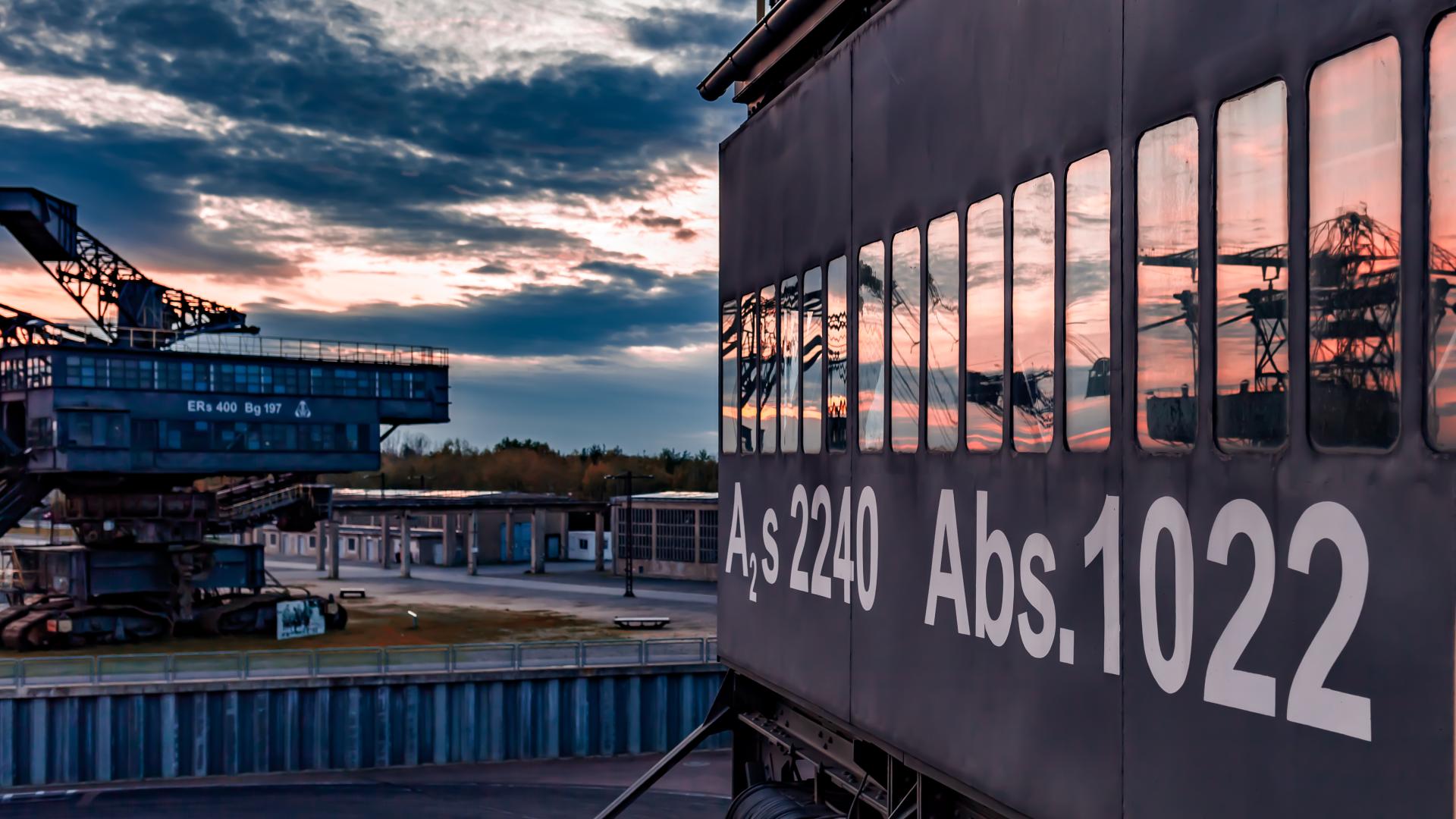
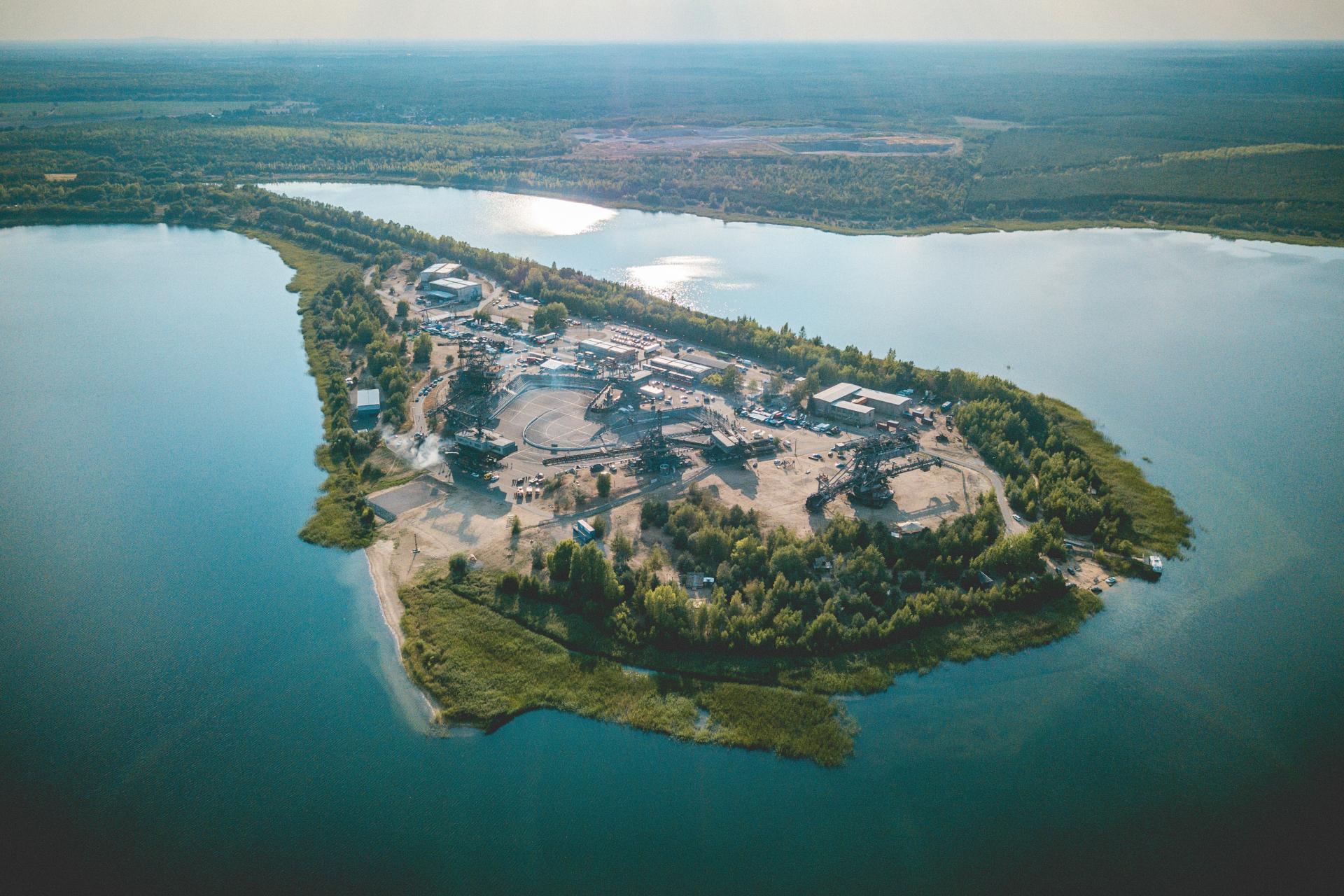
The “City” touches the soul and evokes emotions. Five heavy gigantic excavators each with its own history, stand on a peninsula in the artificial Gremminer Lake that covers the wasteland of an opencast mine: a new landscape of contrasts. A future-orientated, intense present very consciously plays with its past.
FERROPOLIS is a stop on the European Route of Industrial Heritage (ERIH), and an anchor point on the regional ERIH Route in Saxony-Anhalt.
Since November 2018 Ferropolis has been classified with the nationwide designation, ‘Travel for Everyone’, and displays the ‘Information on Barrier-Free Access’ award.
Ferropolis is a museum full of tangible history. The City of Iron is a great ensemble of scenery and events. Ferropolis is a place for different kinds of activities and relaxing. A peninsula far from a stressful everyday life, but still full of energy.
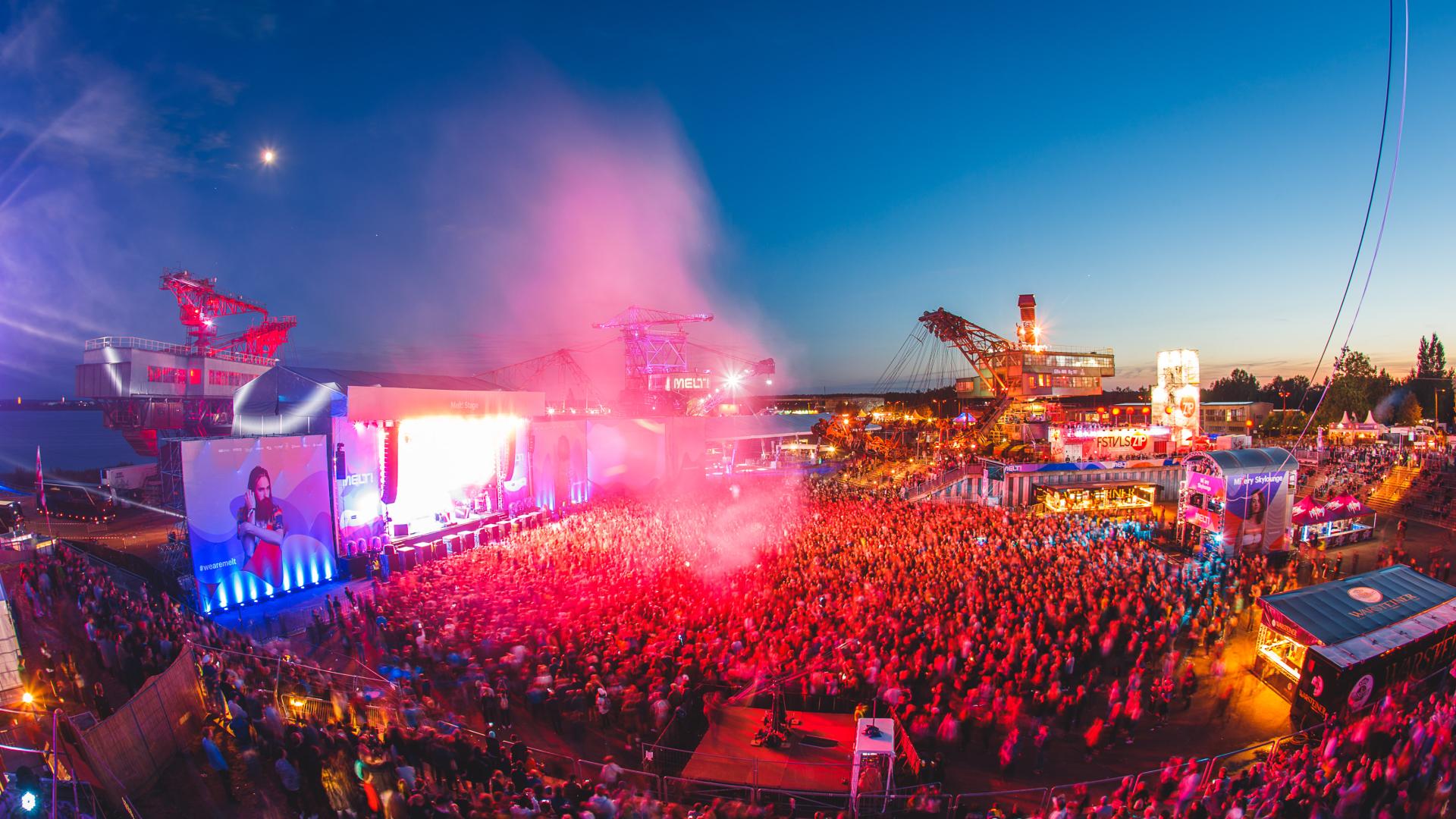
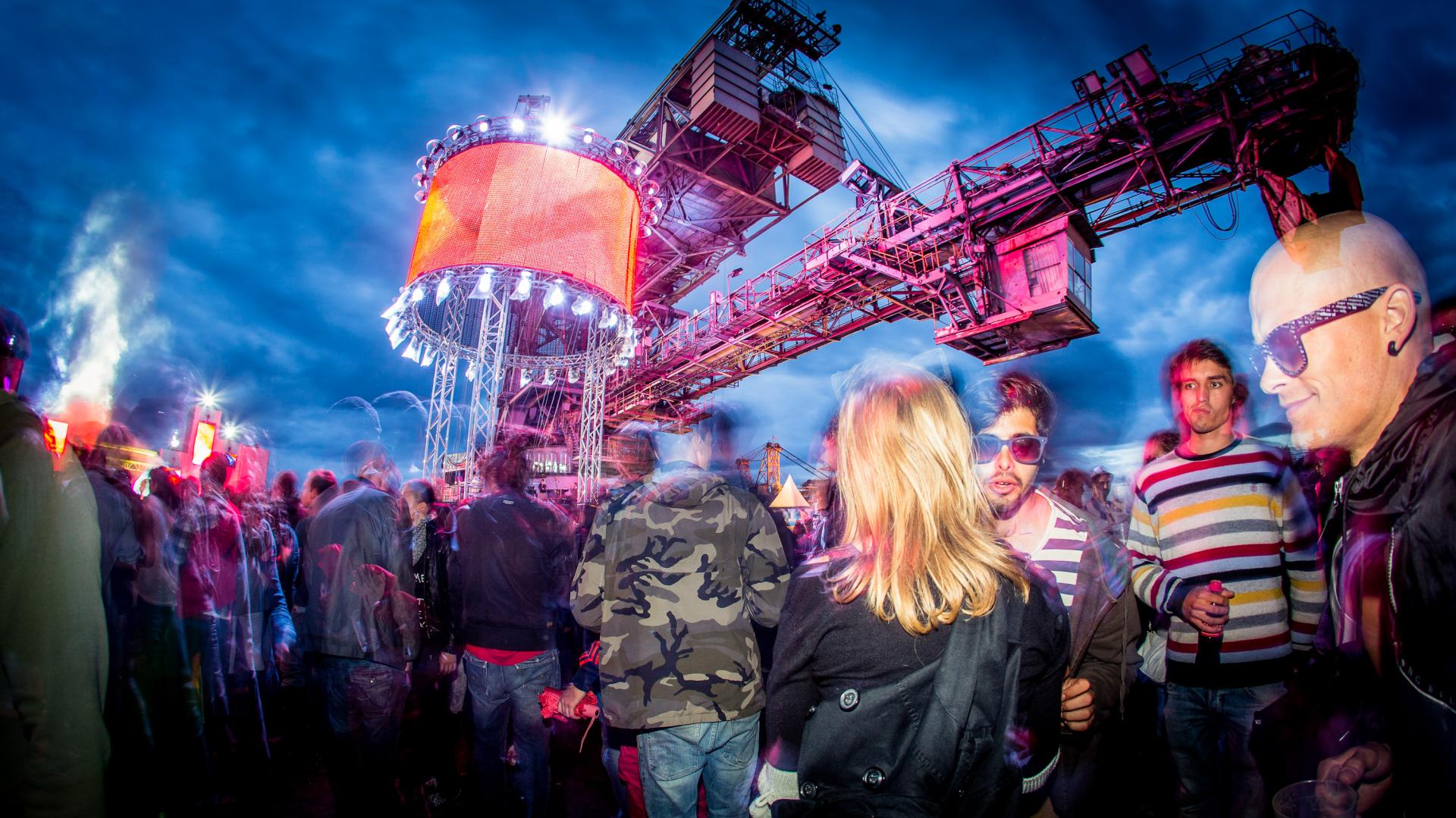
Above all, Ferropolis is the legendary melt!-Festival, a week later the European hip-hop focus at Splash-Festival, and before that, the metal fans met at Full Force. Helene Fischer has also performed here as well as Kylie Minogue, Oasis and Herbert Grönemeyer or Udo Lindenberg, Die Ärzte, Die Toten Hosen - they all leave their mark and are in many memories for Ferropolis, as well as the queer Whole-Festival or a woman Motorcycle meeting - identity is diversity in the middle of the countryside. The place connects the people of Graefenhainichen as well as the guests from around the world.
Discover the diversity of Ferropolis!
Key objectives for sustainability
Ferropolis is the center of the former Golpa-Nord opencast mine. Lignite was mined there until 1989. Today the Ferropolis peninsula is surrounded by Lake Gremmin. A man-made landscape of high biodiversity and the best water quality.
We have been intensively pursuing our sustainability goals since 2011. Inspired by the Green Music Initiative we are gradually implementing our sustainability goals together with our festival partners.
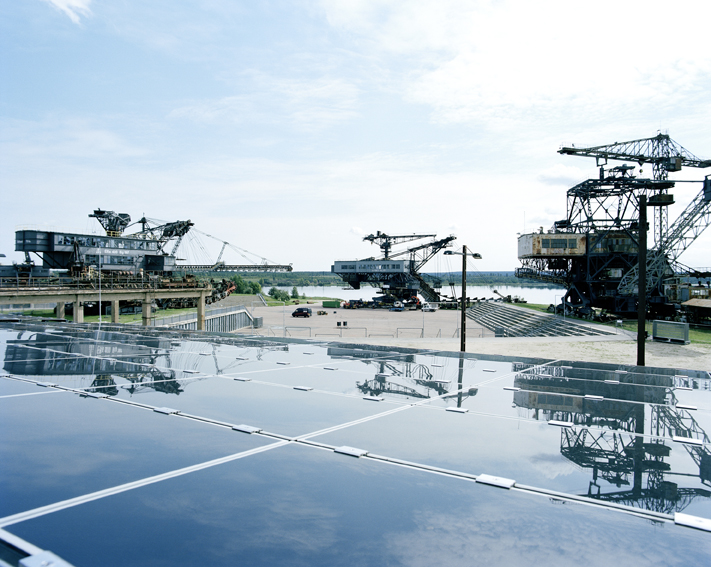
The first measure was the installation of a 210 kWp solar system on the roofs of the former mine buildings. Ferropolis with the large brown coal excavators is a symbol of the old energy. It was, therefore, logical to use and demonstrate new, sustainable energy conversion there early on. The Solar Valley in neighboring Bitterfeld supplied the solar modules.
Further measures were the melt-train and are still sustainable food offers, a waste separation system, experiments with dry separation toilets for recycling the residual products. An innovative recycling system for waste through the use of pyrolysis technology has not yet been implemented.
A concept for strengthening biodiversity in the surrounding agricultural areas, which are used as campsites during the festivals, is available.
The Maker of Humanity Meetings gave us impulses for sustainable further development of the Gremminer See.
Ferropolis has been a starting point for the Energieavantgarde Anhalt www.energieavantgarde.de since 2014. There, work is being carried out on a regional sustainable energy system to combine climate protection and regional added value. To stabilize an old energy region with new energy.
In the meantime, a think tank for a circular economy has also emerged with the Rathenau Forum. The future of the carbon cycle economy connects a neighboring former power plant, once the world's largest lignite power plant Zschornewitz, with the chemical park Bitterfeld and many other partners. The first contact of the actors? At the melt festival on Ferropolis, of course.
Key objectives for aesthetics and quality
The aesthetic message of Ferropolis is its industrial heritage, partly reshaped by nature. A romantic idea of a landscape, borrowed from the neighboring world heritage site Dessau-Wörlitz Garden Realm, emphasized by the decaying large open-cast mining equipment, was the first creative idea of the Bauhaus student Martin Brück in 1991, now an employee of the Bauhaus Dessau Foundation. In a design draft by the landscape architect Gabriele G. Kiefer and the British stage designer Jonathan Park, the idea of developing the place as a cultural location for festival uses then prevailed.
This is how the particular acoustically successful arena was created. It's Y-shape enables events of all sizes.
In recent years, the newly growing young forest on the lakeshore has turned into a fragmented, natural experience space during the festivals.
The flexibility of the site allowed us to switch to use as a campsite within a few days during the pandemic crisis when the major events were banned. Camping under excavators was therefore a very special offer in 2020/21.
Structurally, the continued use of the halls and office buildings from the opencast mine predominates. The former 30kV station became a museum. The energy school-laboratory can also be found there.
Multifunctional re-use is the most important and sustainable topic on the site.
We made structural additions carefully, partly in the form of wooden structures and in the vicinity of the large equipment to strengthen the aesthetic unit in the form of a large container system, our backstage building.
This flexible system also has the advantage of being able to be dismantled in a landscape following mining in the event of subsidence or geological changes, because the landscape around Ferropolis is alive.
Key objectives for inclusion
The inclusion goals for Ferropolis were not fixed from the start. They developed mainly as a result of the experiences at the festivals.
The Splash Festival in particular, which has been our guest for many years, is in close cooperation with the barrier-free festival initiative. https://www.facebook.com/barrierefreiesfestival/
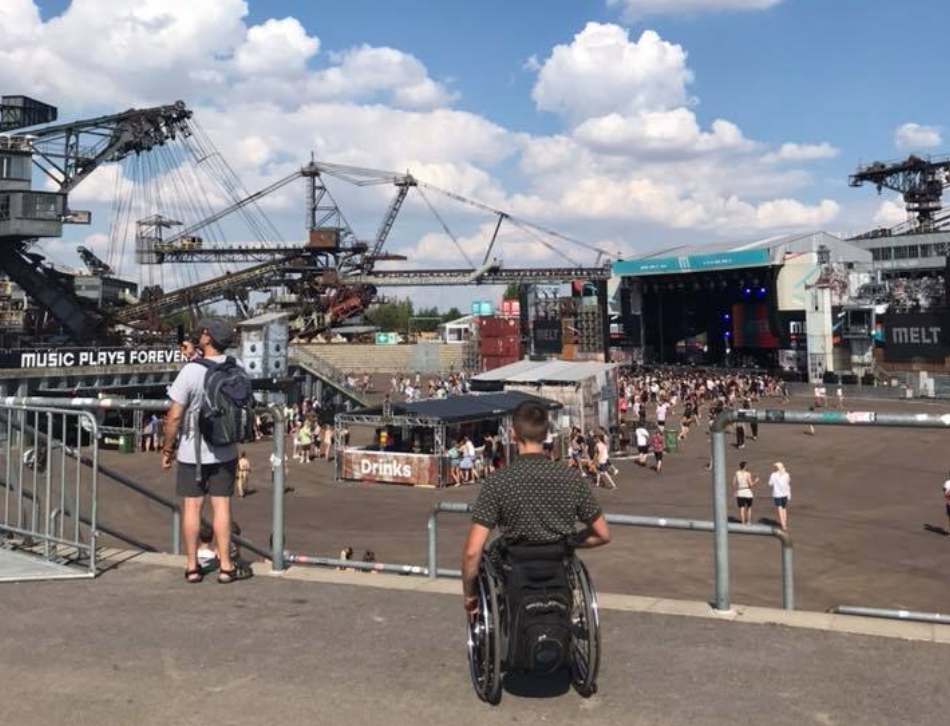
These experiences at Ferropolis have encouraged us to set our own inclusion goals. Accessibility is the first step and has already been achieved in almost all areas of the site. The backstage building also offers barrier-free areas.
This year we have reached a new level of development with the offer of a barrier-free large open-cast mine. The renovation of the machine with the addition of an elevator and a new view from the machine house roof over the lake and landscape will also be another attraction for museum visits and tourism.
But inclusion is more than accessibility. In the meantime, inclusion is also a criterion when selecting our employees. The considerations for cooperation with an inclusion company from the neighboring Lutherstadt Wittenberg are currently being discussed among the Ferropolis shareholders.
Our museum offering an audio guide enables the content to be conveyed to many target groups, including people with handicaps. Our focus on families in our visitor structure is also part of our inclusion goals.
We are currently experiencing further stimuli from the queer Whole Festival. This is also about encounter and tolerance, which is quite a challenge in a rural region. Especially for the inevitable encounters between the population and festival guests. In a certain sense, the festivals and their guests challenge the tolerance of the citizens of Graefenhainichen.
This inclusion path on Ferropolis has only just begun.
Results in relation to category
For many years, the former miners in particular, as well as many local politicians and state politicians, were skeptical of developments on Ferropolis. Thousands of people celebrated here where the miners had recently lost their jobs. The cultures first had to develop their understanding of one another.
So a project like Ferropolis takes time. And a cultural code that can be agreed on at a distance.
In the Ferropolis case, this was music and street art. And the growing importance of industrial culture itself.
When it was possible to gain support and trust from politics and administration in the early years, enthusiasm for music was usually the basis.
Later it was added that many citizens of Graefenhainichen got feedback when they said they live near Ferropolis. The place Ferropolis became more and more well known, and with it, the acceptance on site increased.
However, some miners remained skeptical. This skepticism could only be overcome through the work of the street artist ECB (Hendrik Beikirch). ECB portrayed eight former miners in larger-than-life, monochrome portraits on the factory hall walls in Ferropolis. This artistic work involved very extensive interviews. Art gave the miners a voice.
Since then, the Ferropolis project has been recognized by almost all local citizens. Contemporary witnesses from the open-cast mining era now lead guests, accompany theater productions, are available for documentaries and films, and see Ferropolis as their place, their neighborhood.
How Citizens benefit
The first idea for Ferropolis arose out of contact between citizens and artists. Students at the Bauhaus Dessau wanted to climb the decommissioned excavators, the former miners deployed in the security guard had to prevent this. So both got into conversation with each other.
This dialogue turned into a joint project, namely Ferropolis. Since then, the place has stood for a constant discussion about goals and means.
The main owner of Ferropolis is the city of Graefenhainichen. Therefore, all plans and ideas must be qualified and implemented in local political discourse.
The Ferropolis-Förderverein is also an important dialogue partner. The association of former miners secures and communicates the local history. The association rented one of the buildings on the site free of charge.
Club activity, therefore, supports the Ferropolis development.
Other discussion partners are also important. The SME Association, a conservative regional organization, also meets annually at Ferropolis and discusses the development as well as the neighboring citizens' initiative "Auf der Kippe". Ferropolis is a common theme across many borders.
The economic importance of the industrial heritage is also becoming increasingly important. In 2014, a scientific dissertation worked out that a festival on Ferropolis would generate EUR 1.4 million in the region, through hotels, restaurants, petrol stations, supermarkets, etc. outside the peninsula itself.
Small gestures of good neighborliness are also helpful. Every year Ferropolis invites all citizens to an open day, with thanks to the fire brigades, paramedics and all citizens for enduring the noise of the event. And all Graefenhainich citizens over 50 years of age can visit the site on festival Sundays and get to know which music and which festivals their children and grandchildren celebrate.
Innovative character
New ideas and techniques, i.e. innovations, require freedom for experiments. And they need systematic work.
In the initial phase of the Ferropolis project, both came together in the Industrial Garden Realm workshop of the Bauhaus Dessau Foundation. This initial situation was a stroke of luck and a condition for this innovation of a cultural location of such a dimension in rural areas.
Further innovations emerged from crises several times. For example, after a critical phase of the Ferropolis development, the cooperation with the tour operator scene was put on a cooperative basis.
Flexibility and an open-minded team are further prerequisites for innovation. And curiosity for connections.
The most important innovation idea at Ferropolis is the understanding of a living industrial culture. We are two things - museum and events. Both areas strengthen each other. We have been following this principle of AND for many years and thus create a temporary connection between rural and urban cultures. We create the connection between old and new energy. We enable Makers for Humanity and former miners to meet. We offer virtual storytelling and lively tour guides on the machines on site.