Space of Nature, nature of Space
Basic information
Project Title
Full project title
Category
Project Description
The project can be understood as series of artworks or as a serious research of micro natural structures where in proportions and relationships between voids and matter we find astonishing beauty.
Project Region
EU Programme or fund
Description of the project
Summary
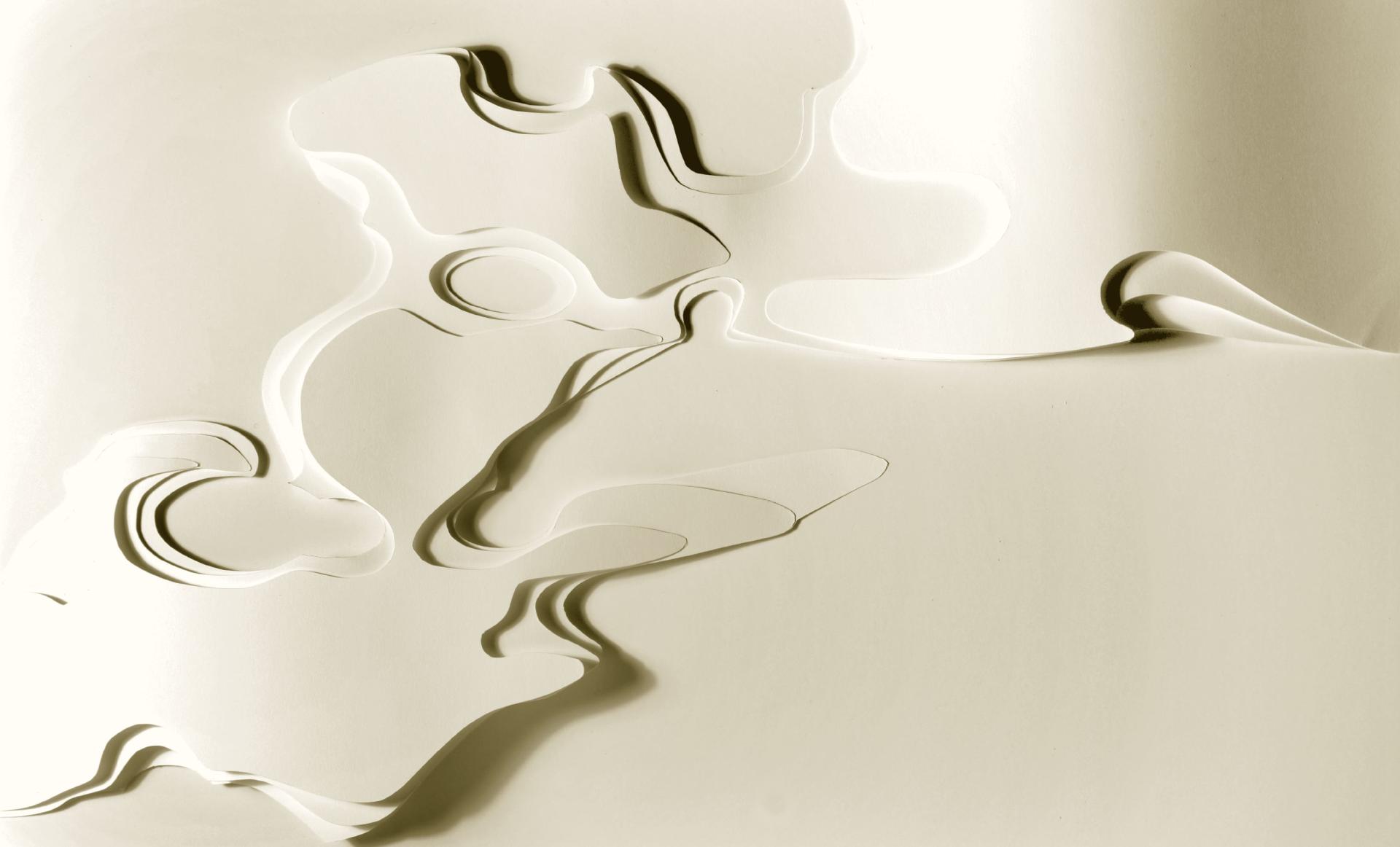
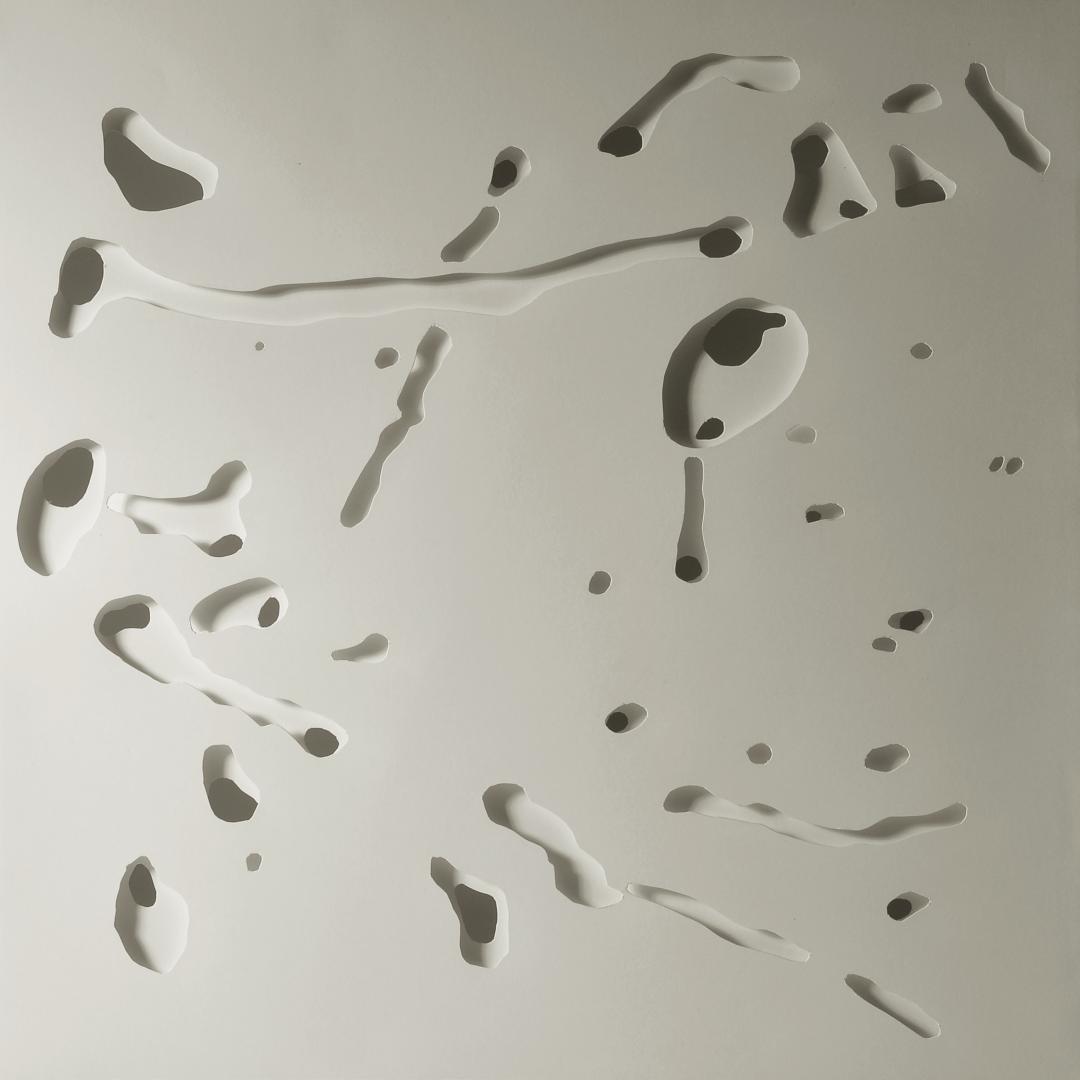
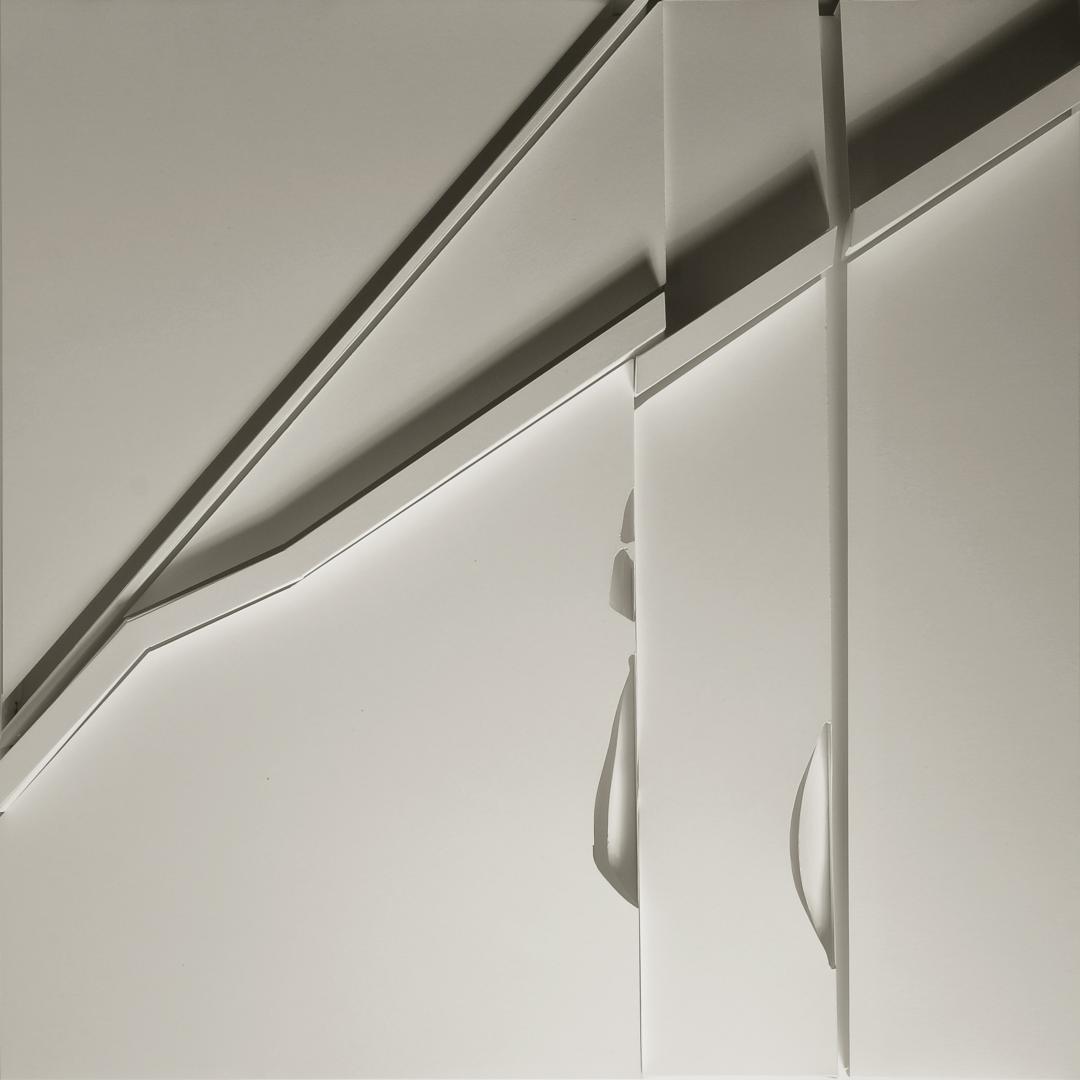
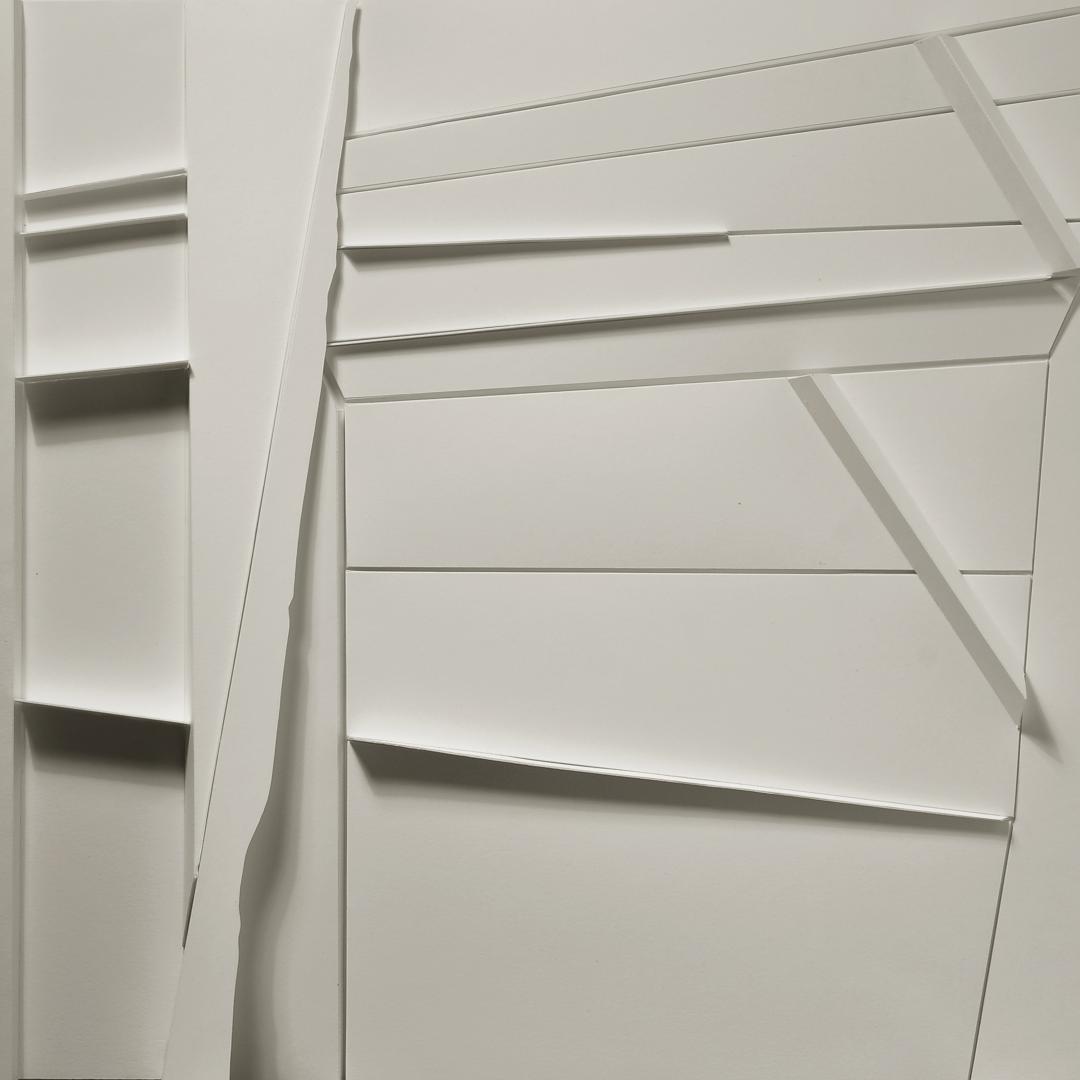
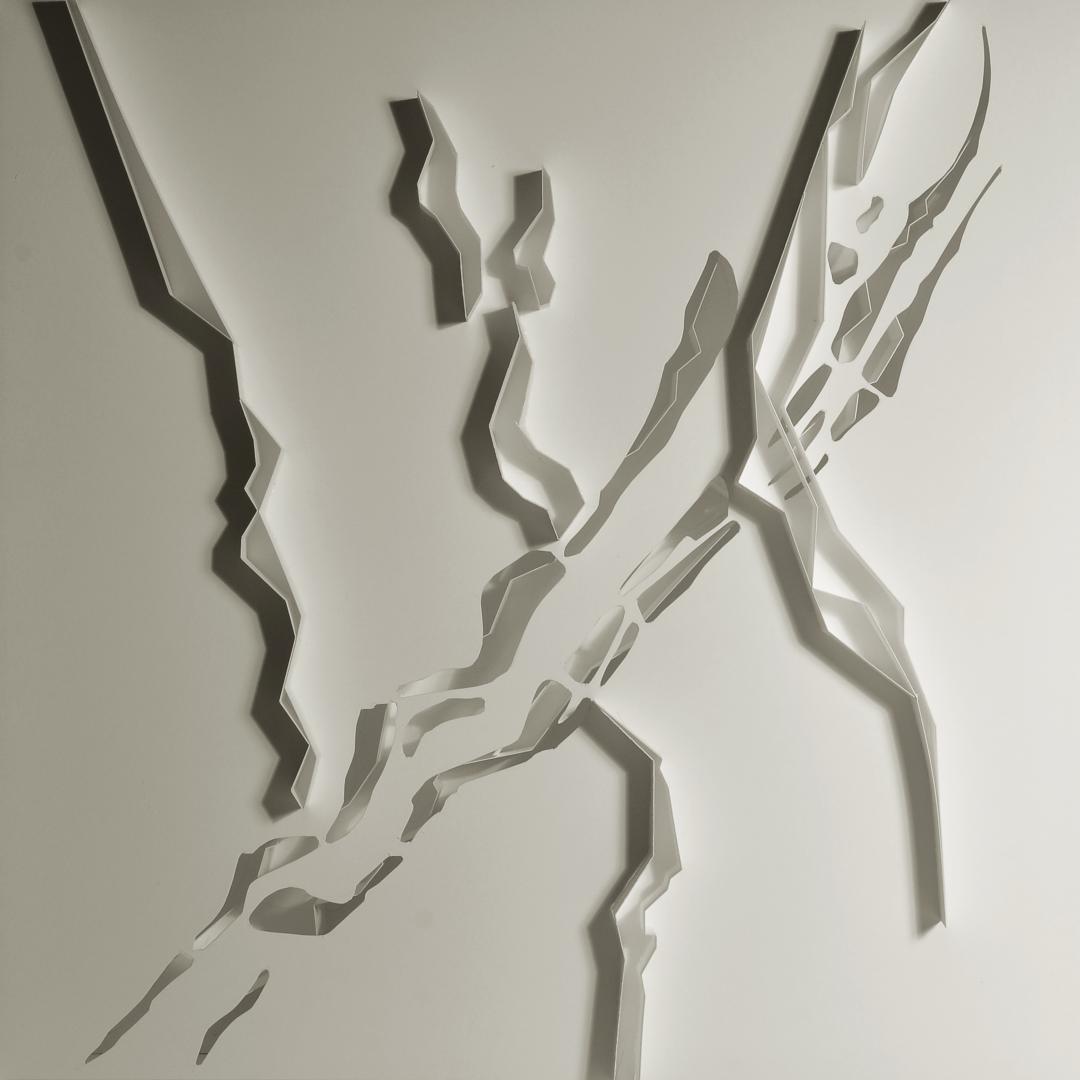
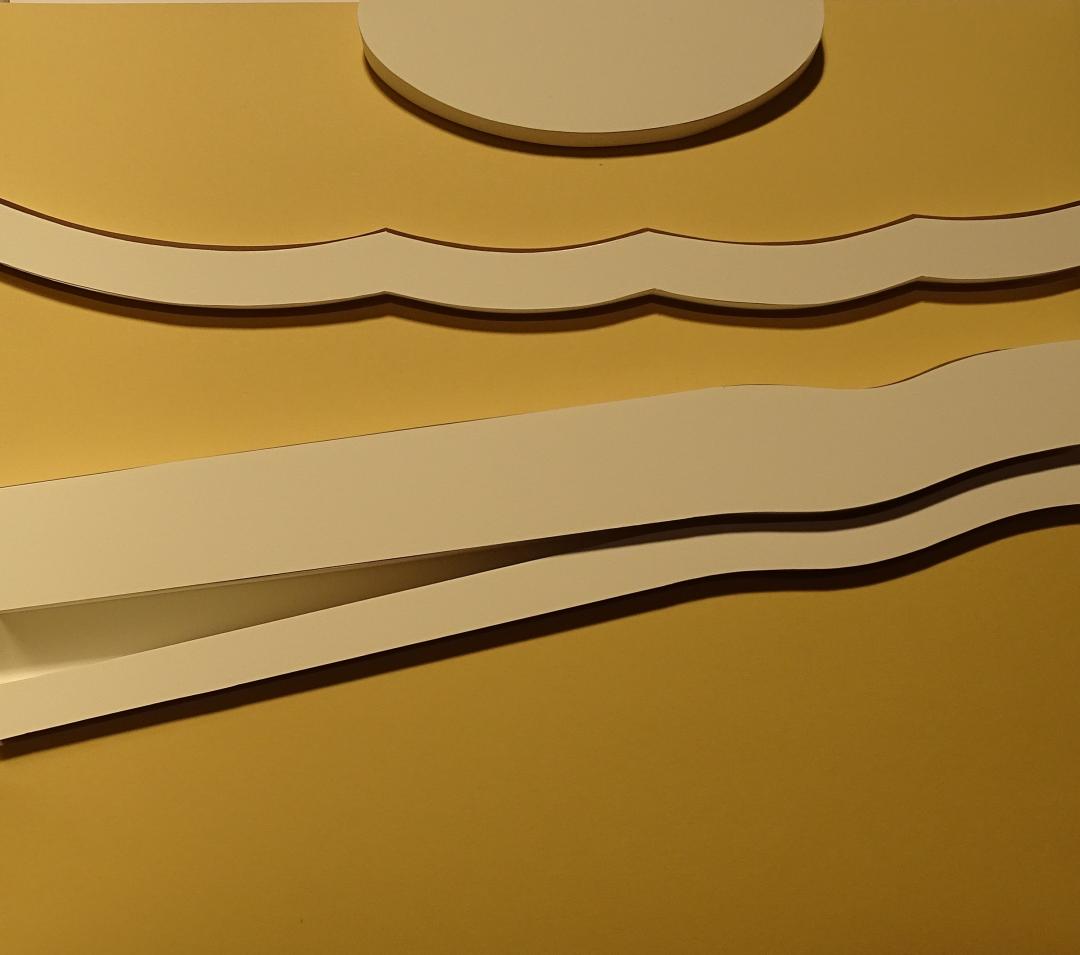
The project began in 2010 and was developed through the last decade. Observing natural structures as stones, dry leaves, barks of different trees and similar small parts of nature through a magnifying glass I have found hidden astonishing beauty. This beauty can be described as perfect but non-linear relationship between voids and matter in a piece of nature. Study of relationships and proportions has led to paper models, which correlate to relationships and proportions of studied structures. Enlarged they reveal the beauty hidden in objects which are always in front of us but we usually do not see them, or if we do we are not aware of their beauty because to see it we need to take time and a magnifying glass.
The study has shown that relationships between voids and matter and their proportions possess universal characteristics. Enlarged they allude to spaces in bigger scales, in landscapes and in urban and architectural spaces. This fact was proved at a number of international exhibitions where visitors understood narrative of the artworks in different scales and different spaces.
The objective of the project is to reveal beauty of micro natural structures, and to show universal characteristics which can be found in all scales. These recognitions might help designing humane environments, not by copying forms from nature, but by understanding principles of nature and space and learn from them.
Key objectives for sustainability
By researching micro structures of nature effective relationships between voids/space and matter have been revealed. It can be proved that these relationships are functional but they are at the same time also beautiful. Sustainability depends on many parameters. One of them is voids/space and matter relationship. This one is especially important in architecture, urbanism and landscape architecture, disciplines that create human environments. Environments become humane, effective and sustainable when we understand the holistic phenomena of life where all entities of it are in balance: people, societies, nature, energy, space, material and time e.g. They depend on each other and are co-related. If they are not considered together as a whole we hardly speak of sustainability.
The thesis of the project is that creating environments during the last century we have forgotten to consider space as an entity. Understood as an object to manipulate space has been abused. The results of the abuse in contemporary urban, suburban, peri-urban spaces and landscapes are evident.
Mathematicians and physics of the late 20th century have proved that space is non-linear, complex and seemingly chaotic system. This we can also see in nature observing voids between material of natural structures. Learning from micro structures of nature we become aware of the sustainable effectiveness of nature, and also that without considering space (voids, which are not emptiness) as an important entity of wholeness we cannot speak of sustainability.
Key objectives for aesthetics and quality
Researching the micro world of nature we find astonishingly beautiful proportions and relationships between voids and matter. They cannot be translated into Euclidean geometry. They need to be understood as non-linear proportions and relationships. As such they express very high aesthetic values.
Key objectives for inclusion
Talking about inclusion we usually think of people. It is time to think beyond human-centered world and shift the paradigm to nature where humans co-habit and co-create environments together with nature. The objectives of the project is to include people and nature and learn from nature for people. The specific objective is to learn from nature's processes of forming relationships between voids and matter and through this knowledge to create environments for people, let it be in urban, suburban or rural spaces. We believe that revealed knowledge of nature can help to create inclusive and humane environments.
Results in relation to category
Photos of paper models were shown at a number of international exhibitions and received positive reviews and feedbacks:
- Capuder Vidmar, T., Exhibition Inspiring Landscapes, Gallery of Art Academy. Sarajevo, Bosnia and Herzegovina, 2011.
Opened by the Attaché for culture of Slovene Embassy in Sarajevo.
http://sarajevo.veleposlaništvo.si, 15. 3. 2011
- Capuder Vidmar, T., Exhibition / selection of the Sarajevo exhibition, Tržaška knjigarna, Trieste, Italy, 2011, curator Fran Vecchiet.
Newspaper review: Merkù, J., Neobičajen pristop Tatjane Capuder Vidmar do podoživljanja okolja / Unusual way of perception of the environment by Tatjana Capuder Vidmar , Primorski dnevnik, 11. 5. 2011; www.slomedia.it
- Capuder Vidmar, T. Exhibition Imprints of Nature – Impressioni della natura, Milko Bambič Gallery, Opicina/Opčine, Italy, 2011.
Newspaper review by Jasna Merkù, Graphical Imprints of Nature by Tatjana Capuder Vidmar, Primorski dnevnik, 31. 3. 2011, TV spot RAI III, evening news, 16. 4. 2011.
- Capuder Vidmar, T., Exhibition Landscapes II, International Society of Biourbanism, Artena, Rome / Italy, 2013
Interview with Tatjana Capuder Vidmar, International Society of Biourbanism, 22. avg. 2013. http://biourbanism.org/interview-with-tatjana-capuder-vidmar/.
- Capuder Vidmar, T., Exhibition Space within natural structures: flash exhibition, Dinâmia’cet, ISCTE-IUL, University Institute of Lisbon. Lisbon, 2015
- Capuder Vidmar, T., Exhibition Scales of Space, International Society of Biourbanism, Artena, Rome / Italy, 2019. http://www.biourbanism.org/wp-content/uploads/2019/04/Biourbanism-Summer-School-Program_2019.pdf
How Citizens benefit
There were rather indirect impacts on the project. Friends, colleagues and visitors of exhibitions reported that they have seen paper models of natural structures as different spaces in different scales. This has given to the project an approval that the proportions and relationships between voids and matter are universal and can be transmitted to other fields of creativity in space.
Here is one of comments in written:
When I first set eyes on Tatjana's "miniature prints", I was moved by their purely abstract yet primally organic morphology. The bright luminosity of elegant curves, outlined with skilfully modulated contours of shades in all possible grades of greyish black, can immediately take the viewer from the dark, subdued tones of the present into a dream world of light, openness and beauty. There, fine and minuscule patterns and structures from nature, our eternal teacher that the global nomad no longer has time to notice, speak to us with the minimum intervention from the artist in their autonomous vocabulary, their pure artistic language. Once again, this shows that the motif itself is not the only yardstick of a piece of art; more important still is the way in which we view or grasp it – that is, the perspective we chose to view the world from.
Consequently, a picture suddenly comes to us not just as an interesting layering of bark; its power of association either transports us among north sea archipelagos or lake landscapes, or invites us into the softly open atriums of future kindergartens or into the organic lines of futuristic green housing developments.
In short, we are addressed by minimalistic black-and-white yet also magical imaginary landscapes, which are universal in their narrative, evocative in their inspiration and open in their address. And today, this is the best that art can do to redeem us.
Aleksander Saša Ostan, architect, 2010
Innovative character
The Theory of Chaos has proved universality, Ray and Charles Eames have shown it in the film Powers of Ten comparing human body to the Universe.
We are showing universality in micro structures of nature made by voids and matter, aluding space in bigger scales as architectural and urban spaces and landscapes.