WaldLehrRaum | ForestTeachingSpace
Basic information
Project Title
Full project title
Category
Project Description
WaldLehrRaum - Im Wald über den Wald lernen
ForestTeachingSpace - Learning about the forest in the forest
Project Region
EU Programme or fund
Description of the project
Summary
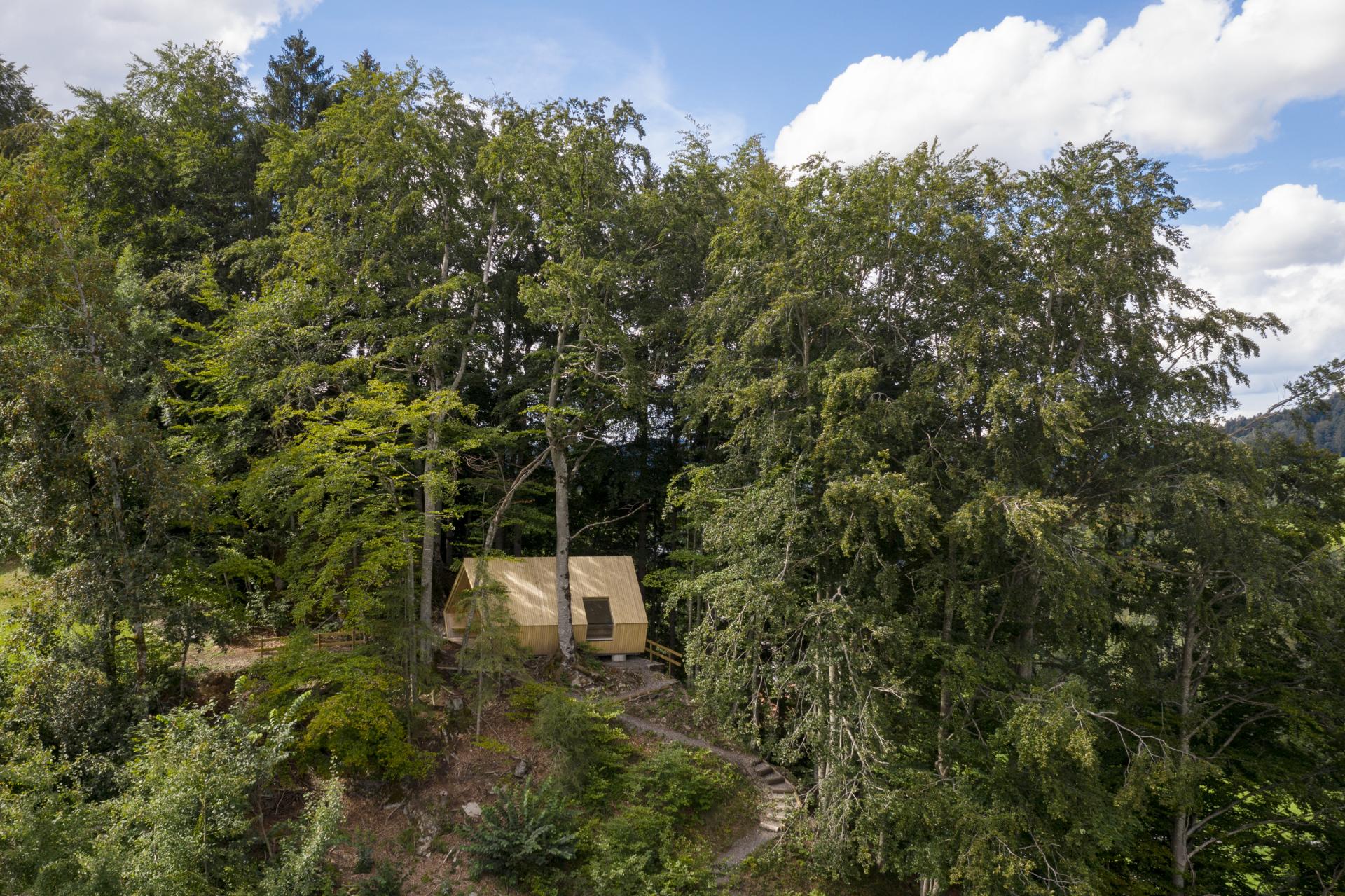
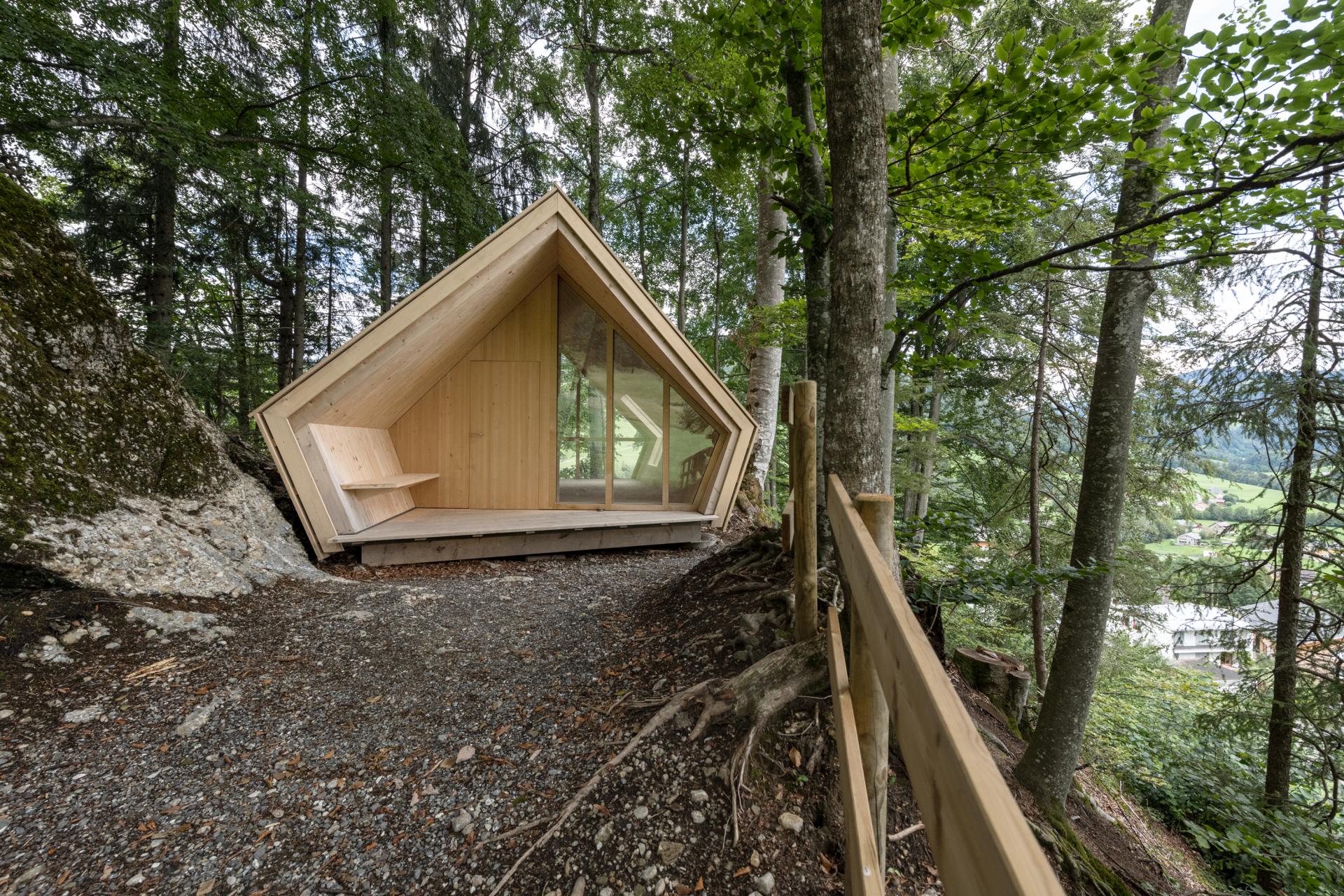
WaldLehrRaum is a single space building on an elevated site in the forest of Hittisau, a municipality located centrally in Bregenzerwald, Vorarlberg. The buildings’ functions are innovative: Primarily intended as a learning space for local primary school children, it is also open to the public as a meeting place in nature and positioned immediately next to a local hiking route, able to provide shelter in adverse weather conditions.
The project for the community of Hittisau was developed over 2 years from design to planning and construction by students and teachers at our school HTL Rankweil, the region’s construction technology college. Design competition and construction formed part of the building technology and carpentry lessons under the supervision of Dipl. Päd. Arnold Schmid and Dipl. Ing. Anne Tschabrun.
For the school community, most importantly the students, it was a unique opportunity to be involved in the entire planning and construction process from concept design to completion and to deliver a building employing sustainable and innovative construction methods to the community. Through this process boundaries between school, education, community, place, landscape and building were dissolved.
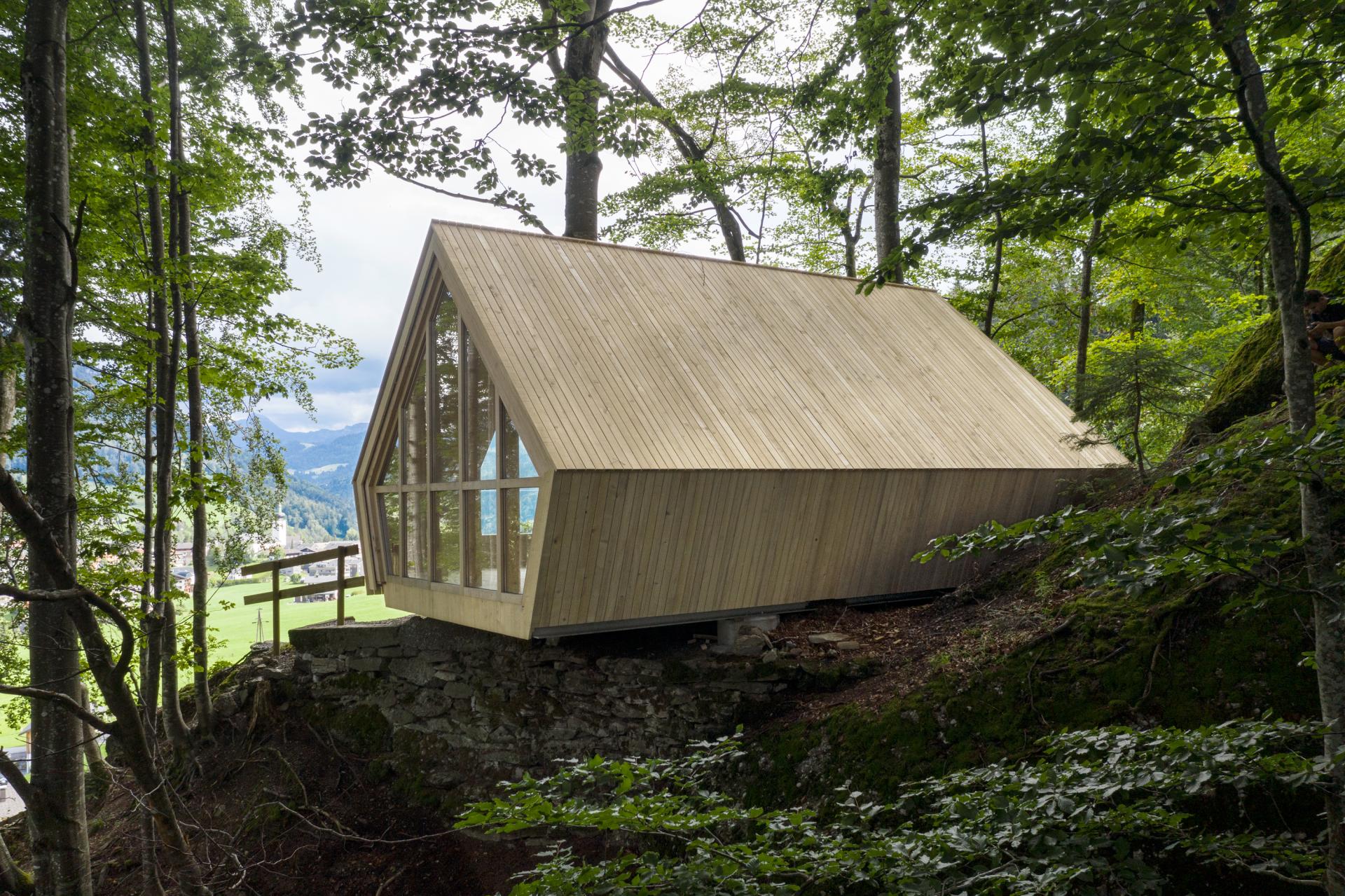
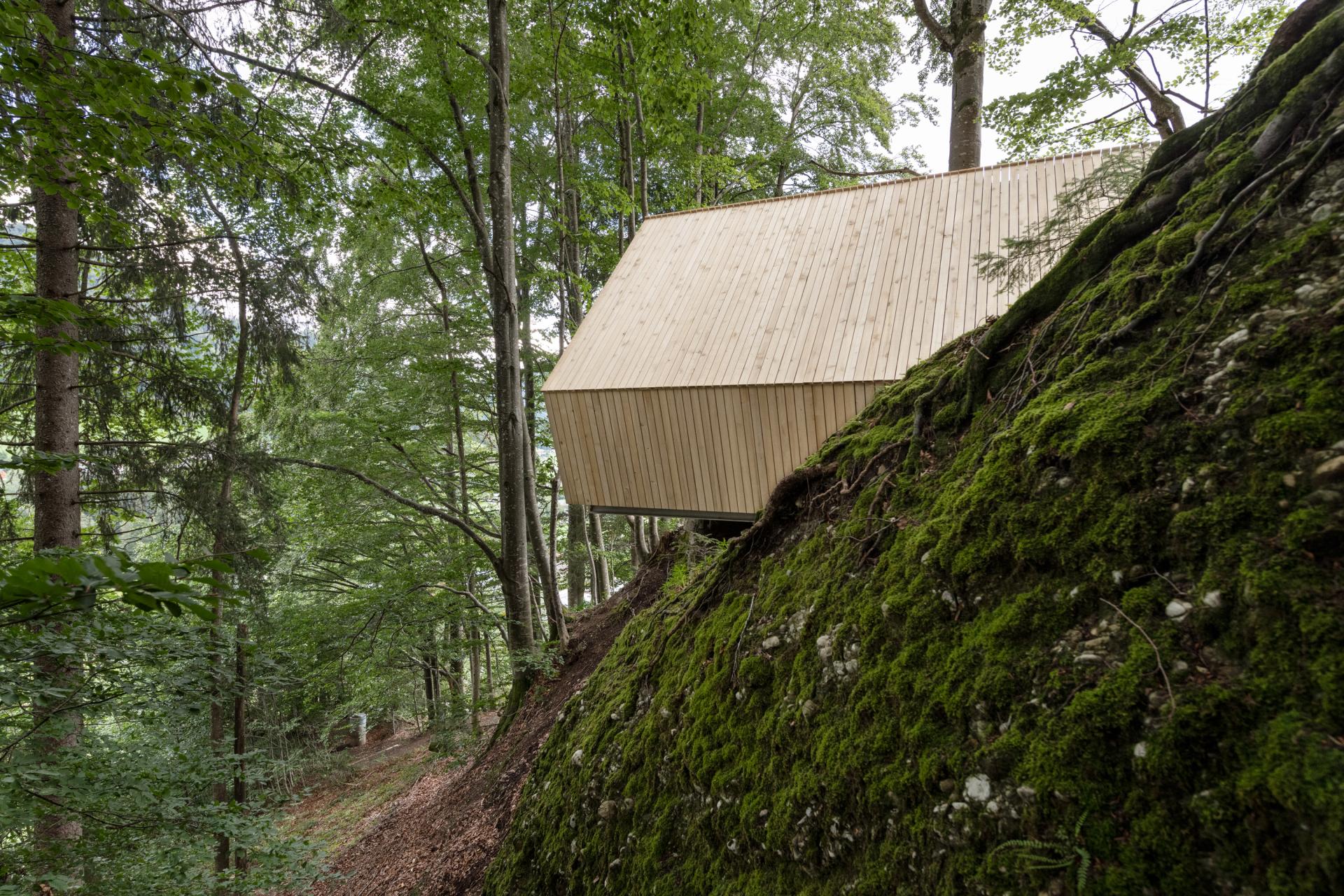
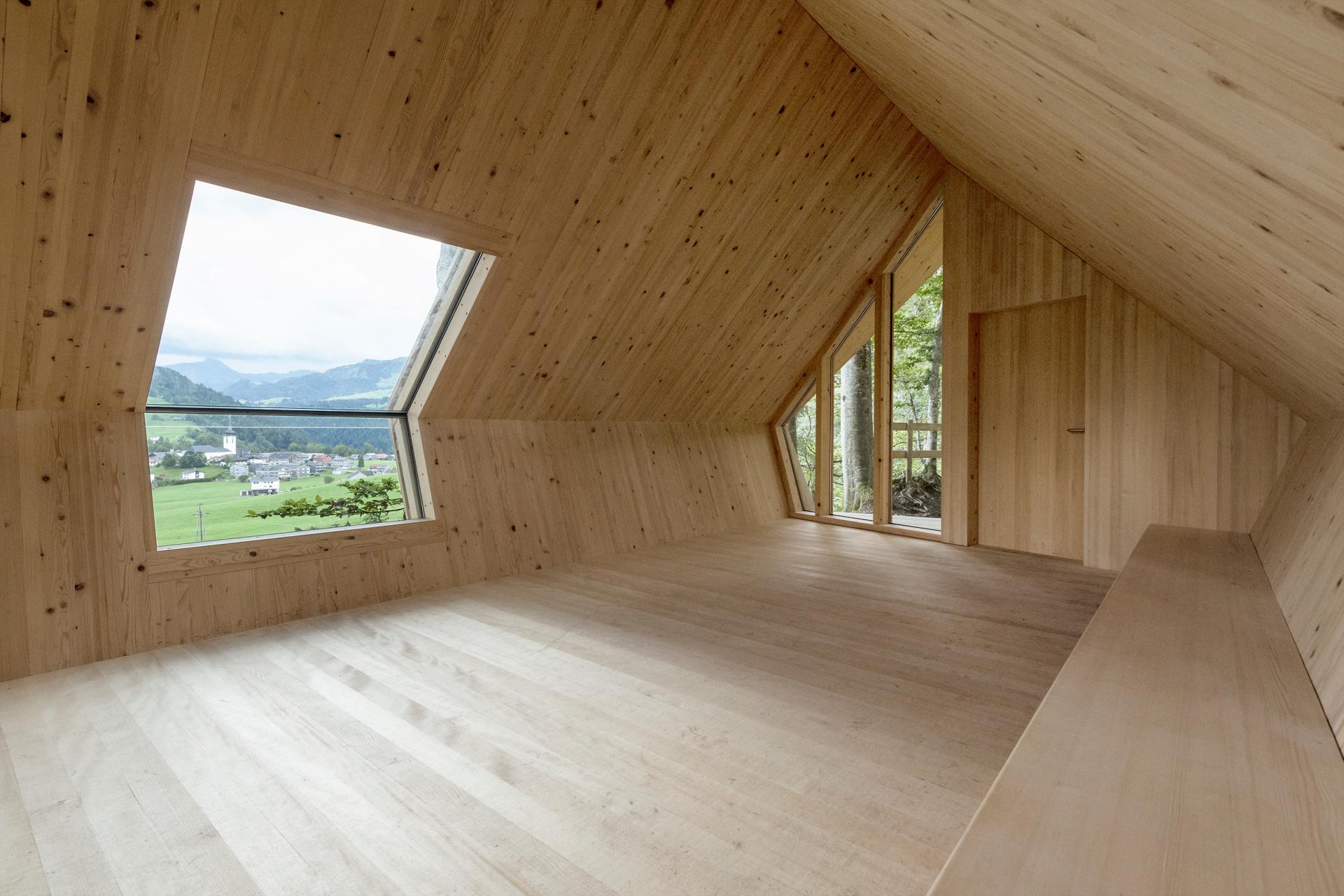
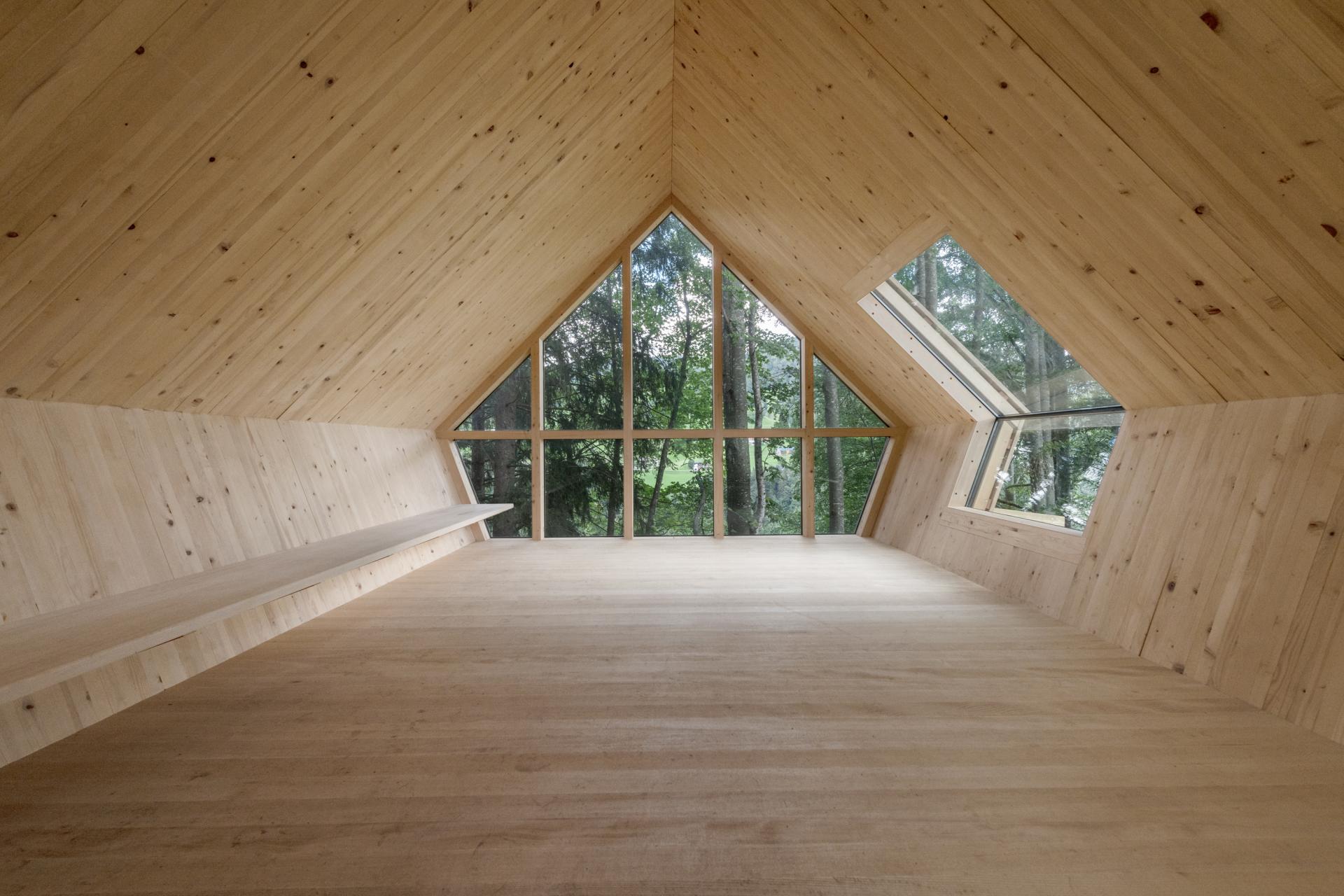
The building is of strong geometry, yet fits seamlessly into its environment, it frames the views across the landscape and establishes axial views with the centre of Hittisau. The natural conditions of the site remain unaltered: neither the ground conditions (rock) nor the existing tree stock on or around the site were altered or adapted in any way. The building is uninsulated and has neither electricity nor water supply. It remains unlocked and accessible to the public at all times.
Projekt Team
Students: Maria Flatschacher, Lina Gasperi und Madlene Ruetz (competition stage) + Second Year Students (carpentry, assembly)
Teachers: Dipl. Päd. Arnold Schmid, Dipl. Ing. Anne Tschabrun
Key objectives for sustainability
Placemaking in the forest: Many people of Hittisau associate the site with memories of their childhood and youth. A log cabin once stood here, where children from the surrounding area used to meet. It was a space of freedom and independence, a retreat in nature away from the watchful eyes of parents. Years after it was swept away by a storm, the community decided to reinvent the place for current and future generations with the additional use as a base camp in nature for pupils, a learning space where holistic perceptual development and sensory training can take place and nature can be experienced.
The site: It was a key requirement of the project to reuse the redundant foundations of the cabin and that no damage be caused to the rock-based ground. The existing landscape including all trees on and around the site are retained in their found condition.
Regionality: The entire design, planning and construction process was carried out in the region. The community’s project brief formed the basis of the internal architectural design competition at the School, the jury comprising representatives of the Hittisau community, regional external architects and teachers at HTL Rankweil. After the winning design was selected, a collaborative adaptation process took place between teachers and students. The planning application, construction drawings and documentation were prepared by the School’s representatives and the building was prefabricated and assembled by students and teachers as part of the carpentry construction curriculum.
Sustainable materials: Bregenzerwald is a densely forested area, with an ecological forestry management-strategy. The area is internationally known for its traditional and innovative contemporary timber architecture. The WaldLehrRaum is executed almost entirely of local timber, the steel connections to the foundations being the only exception. The durable native white fir was chosen for the construction and mechanical connections minimised.
Key objectives for aesthetics and quality
The key objectives for the building were that
- it would be an inviting and friendly place suitable for children and various activities
- it would be accepted and well-used by the community
- it would integrate into and interact with the surrounding landscape
- its shape would be defined by the given space with the restrictions of the rock and tree stock
- it would establish a visual relationship with the community of Hittisau, especially the church at its heart
- it would provide and frame views over the surrounding landscape, increasing the perception of the seasonality of the forest
The design solution is rooted in the typology of the traditional hut, which primarily provided shelter from the elements and comfort to its occupants. A single material, white fir, associated with warmth and wellbeing, envelopes the building in a flowing transition from external wall to roof, from the exterior to the interior. The building is carefully positioned on the site, with its strong geometry responding to and benefiting from the constraints. The windows are positioned and angled to maximise the desired views and visual connections.
Key objectives for inclusion
The building is inclusive in that it is open to all, symbolised by the absence of a lock.
Whilst primarily a space for young people, it can be enjoyed by everyone, irrespective of age and origin, whether hikers passing by or locals wanting to enjoy nature from within a sheltered space.
The true value though lies in the transportation of the memory of a place of significance to the local community to future generations, the handing down of a piece of cultural heritage founded in the regions’ agricultural tradition and architecture.
Results in relation to category
The WaldLehrRaum IS a reinvented place to meet and share for pupils, locals and visitors, a place for exchange between generations, a place to experience nature and feel part of it. A tranquil and meditative space which enhances the experience of the landscape.
Its sense of place is deeply rooted within the local community.
The completed project has already begun to encourage the dialogue between generations, providing added value in several respects: For the municipality of Hittisau, an additional teaching room was created for the primary school; for the region, the building represents a focal point.
The WaldLehrRaum has become a valuable asset to the community and its visitors.
How Citizens benefit
The benefits to the citizens are addressed above.
What has transpired in the design process is the importance of the memories, stories, traditions and cultural heritage of the local community, which so strongly informed the scheme design and completed building. The sensitive dialogue the WaldLehrRaum engages with its setting is clearly legible and could never have been achieved without this exchange.
For all involved parties, especially the students, the process has highlighted the importance of these values in the decision-making process.
Innovative character
The innovative typology and character of the building has already been described above. Additionally, the building’s geometry, generated by its responsiveness to its surrounds, is innovative.
Further unchartered territory was the fact that the entire project was realised by the schools’ students and teachers from design to completion. This posed a number of difficulties and bureaucratic hurdles had to be overcome in the process:
- The various design, planning and construction stages and processes had to be accommodated within the school curriculum, lesson plan and term time.
- Legal responsibilities for the planning and building control applications, responsibility for construction had to be addressed.
- The problematic interface between school operation and practice responsibility.