Rethinking Urban Green Infrastructure
Basic information
Project Title
Full project title
Category
Project Description
Intensifying and accentuating different forest-urbanism systems
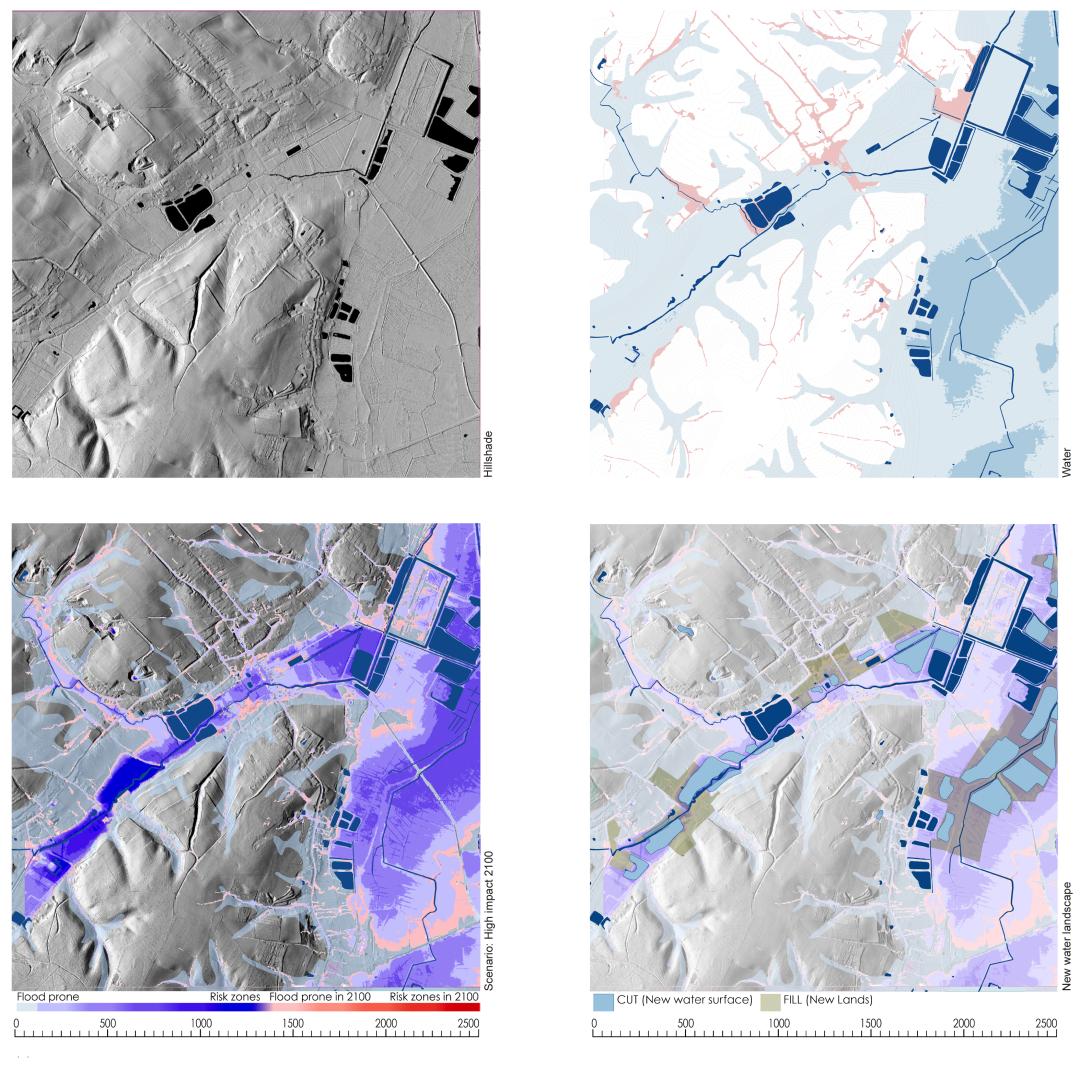
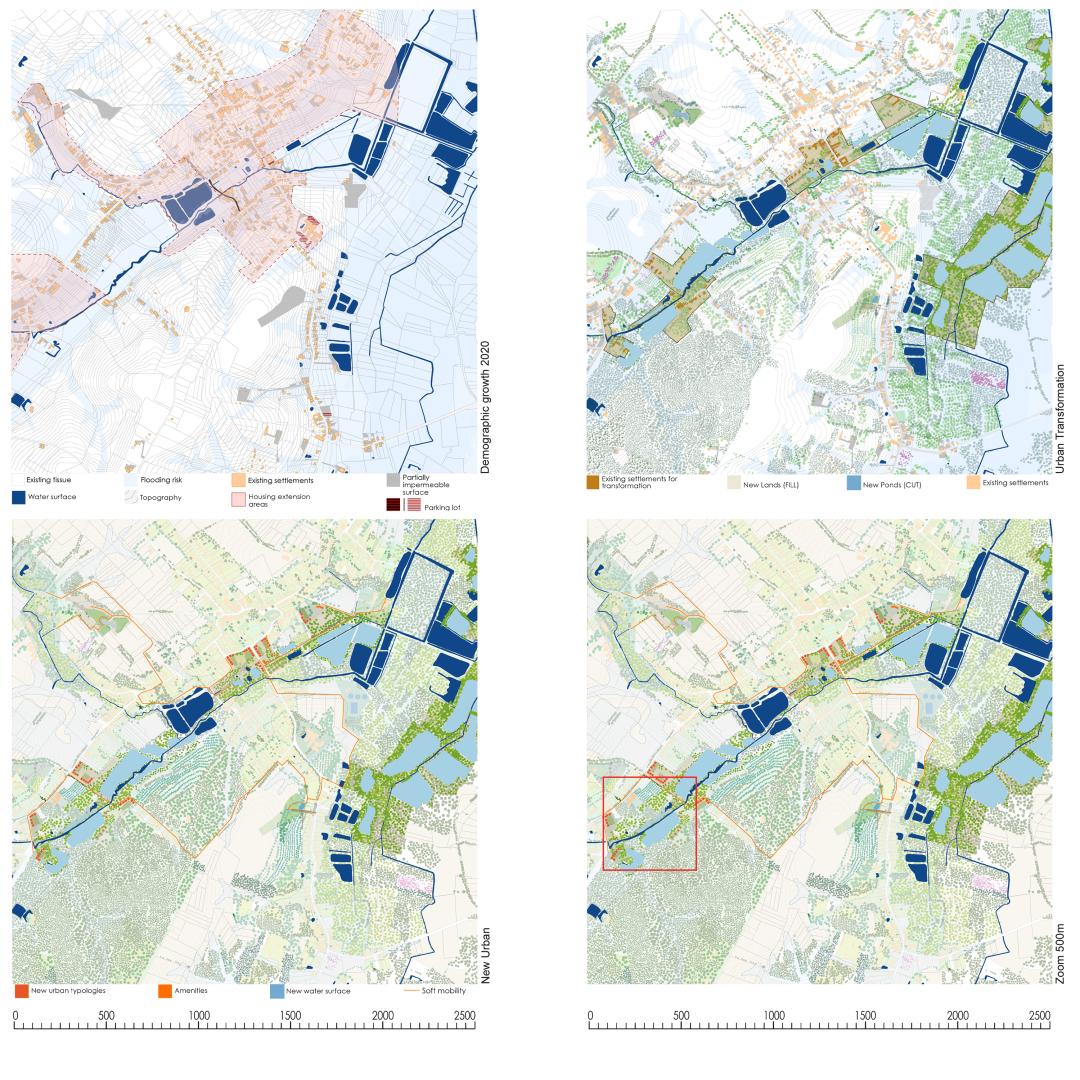
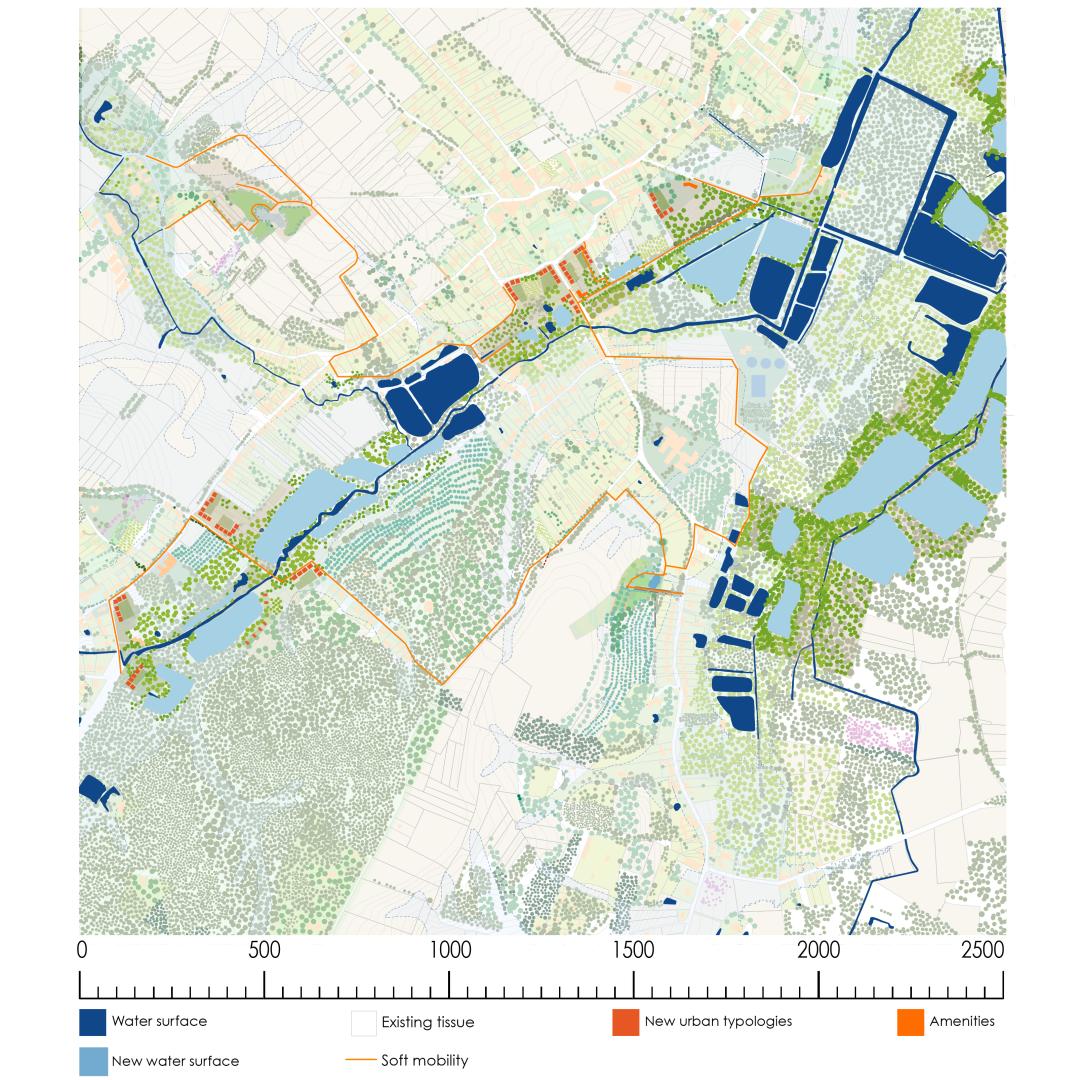
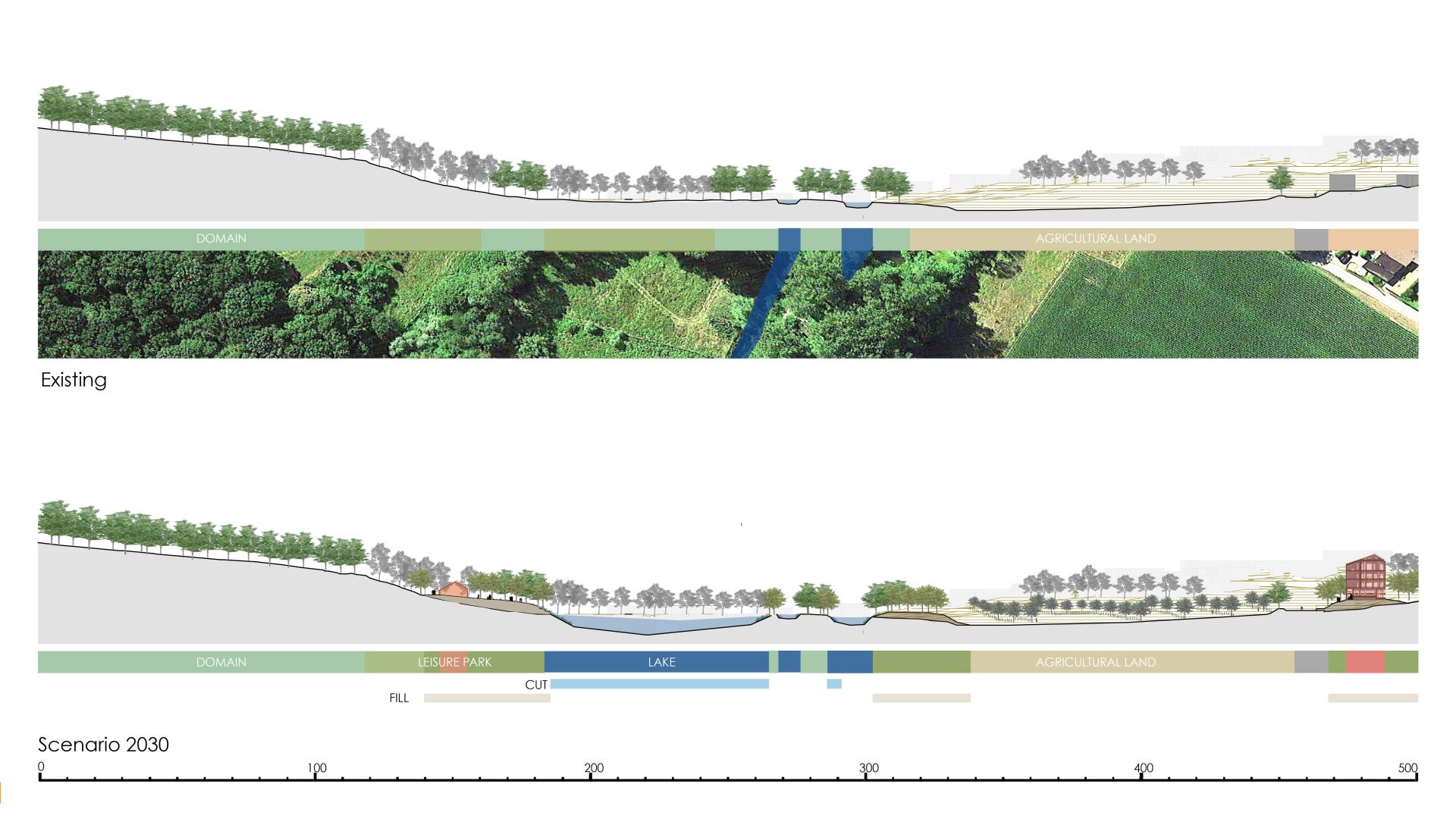
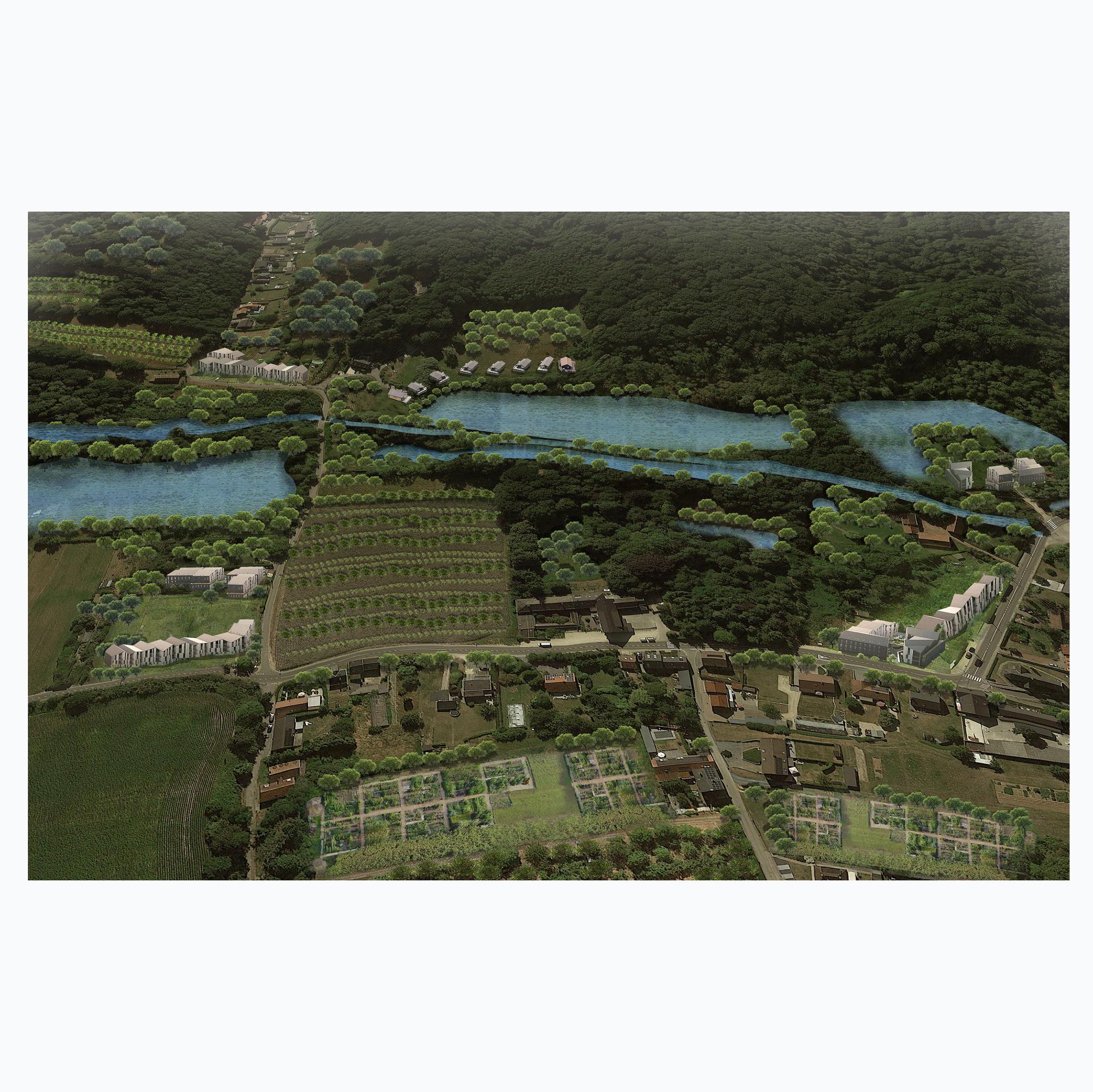
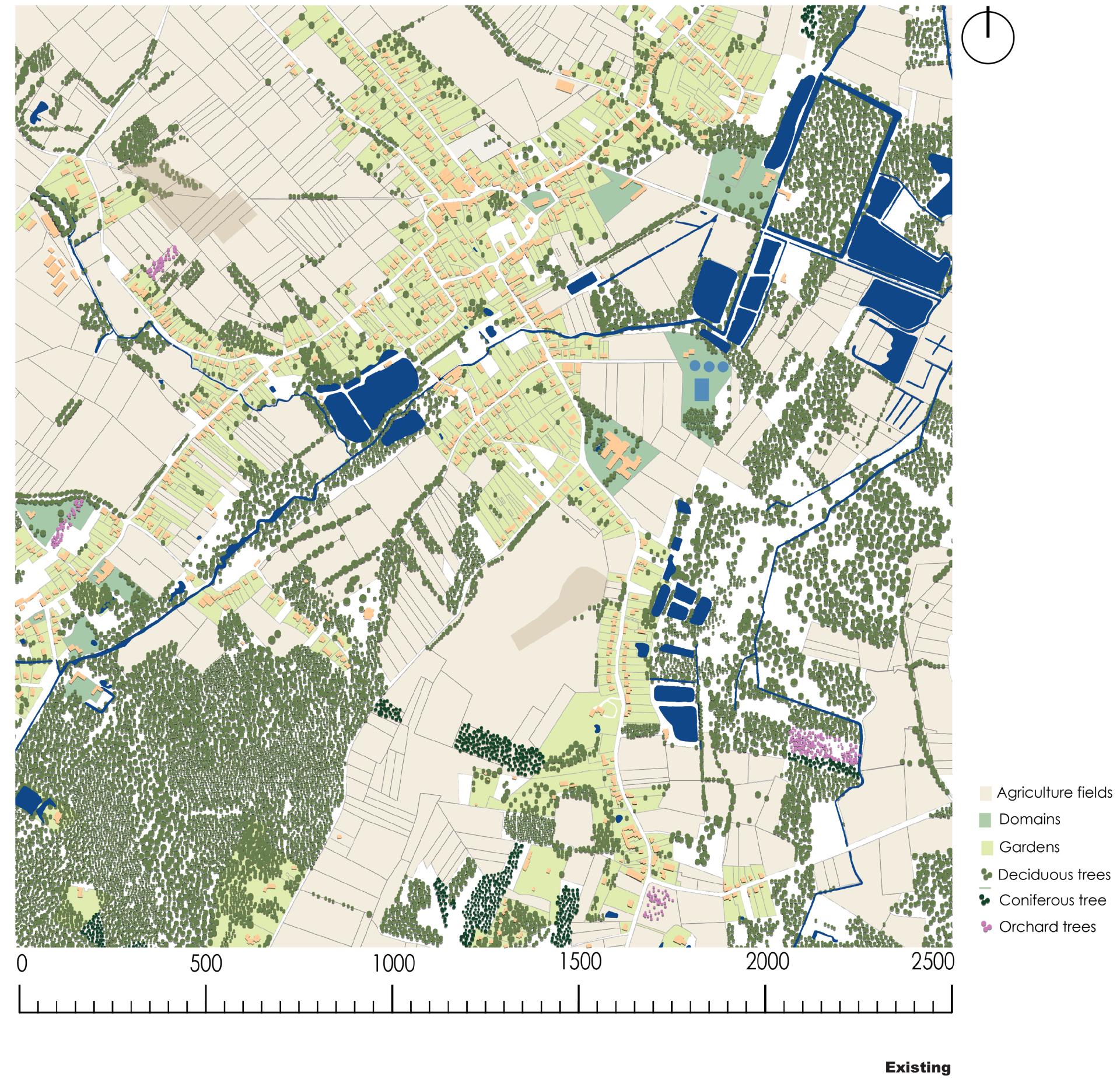
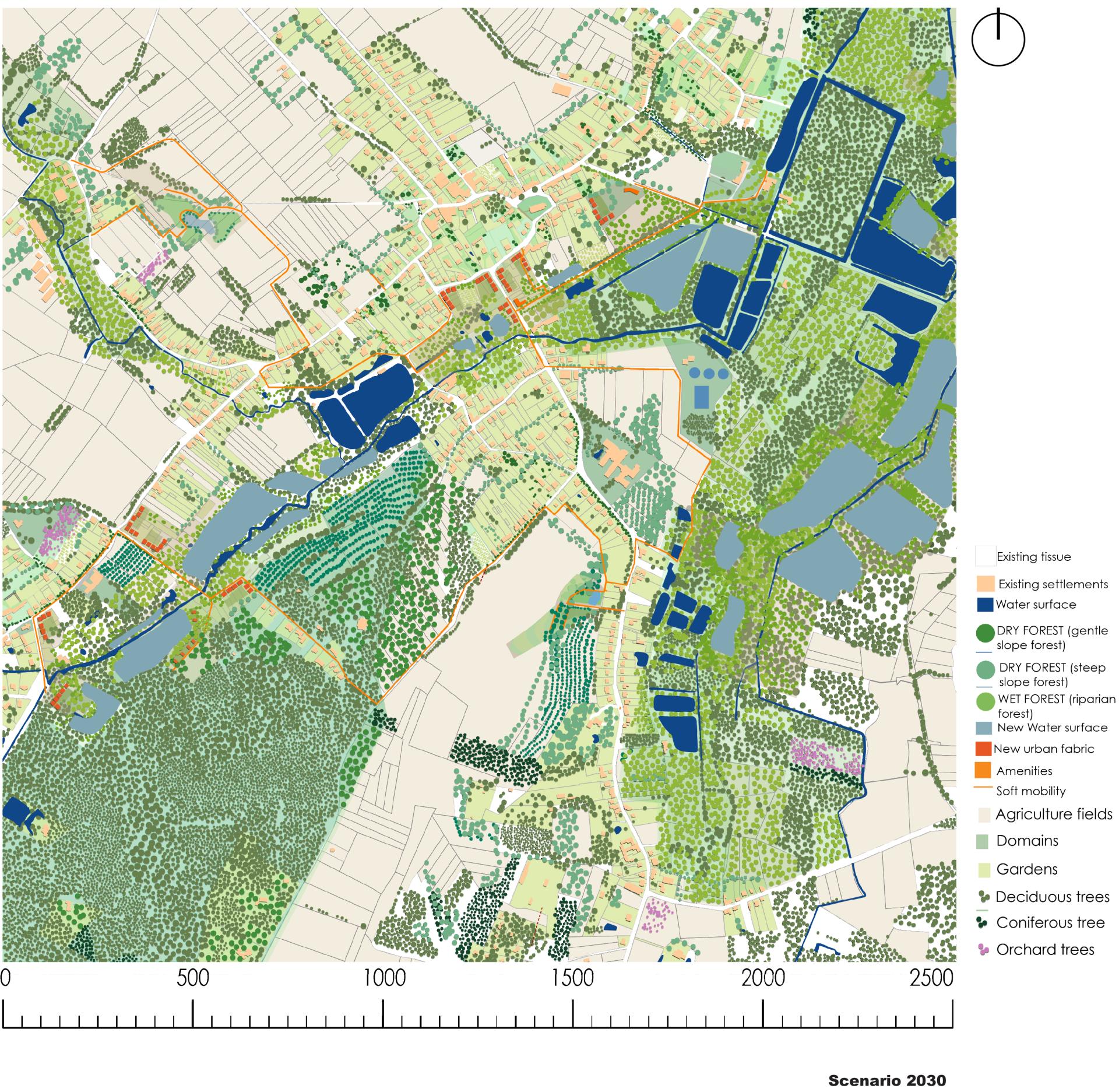
The vision focuses on an area of 2.5x2.5km, which seeks a proposal for a new system of surface water that could help store floodwater and reduce flood peaks, and how it is know that the process of land fill is through the creation of “new land”, as the creation of new #nature and urban transformation with new housing typology, and recreation and leisure programs, but at the same time preventing urban sprawl.
Project Region
EU Programme or fund
Description of the project
Summary
It is time to rethink water and forest management for a sustainable urban planning, considered as a key component, including the conservation of biodiversity, which is the pillar of recovery mechanisms, with ecological principles applicable to forest management for the improvement of nature and the human well-being.
Intensifying and accentuating different forest-urbanism systems
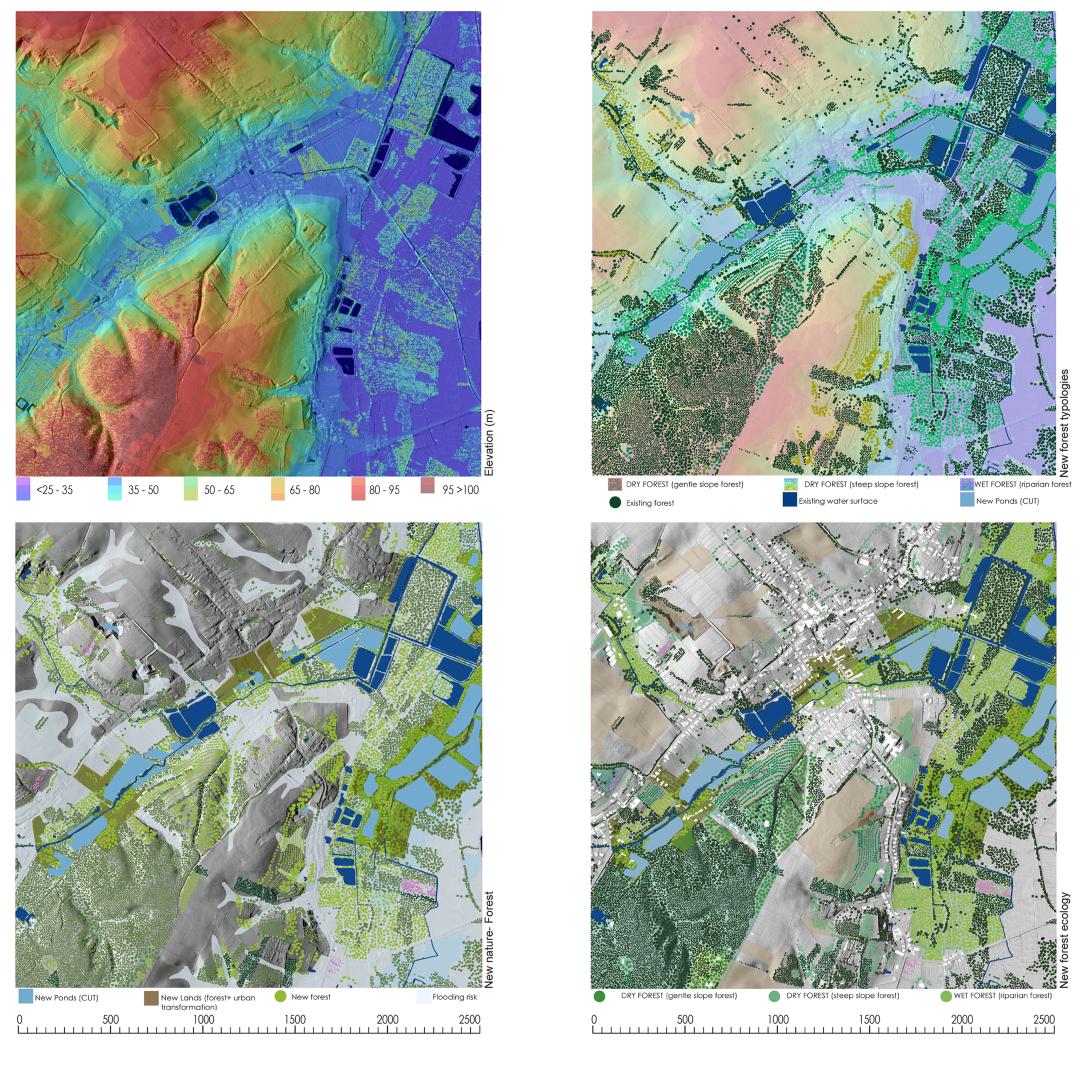
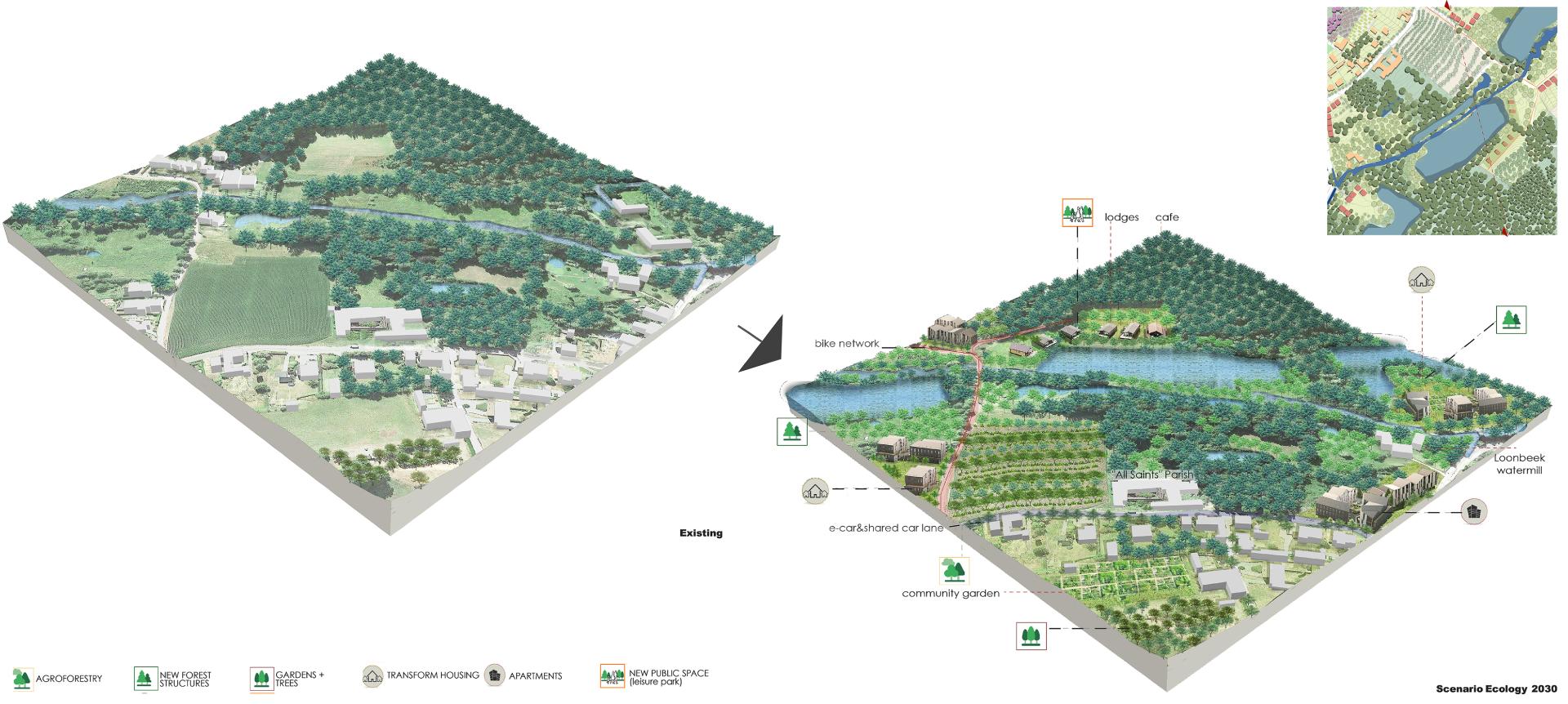
The vision focuses on an area of 2.5x2.5km, which seeks a proposal for a new system of surface water that could help store floodwater and reduce flood peaks, and how it is know that the process of land fill is through the creation of “new land”, as the creation of new nature and urban transformation with new housing typology, and recreation and leisure programs, but at the same time preventing urban sprawl. Also, creating new ecology as a new floodplain riparian forest in lowlands (wet forest) and other different forests systems working on steep and gentle slopes combining with agricultural lands (dry forest) and this also as part of the erosion control plan through agroforestry program while at the same time taking an approach to the conservation of open spaces and the benefits they provide.
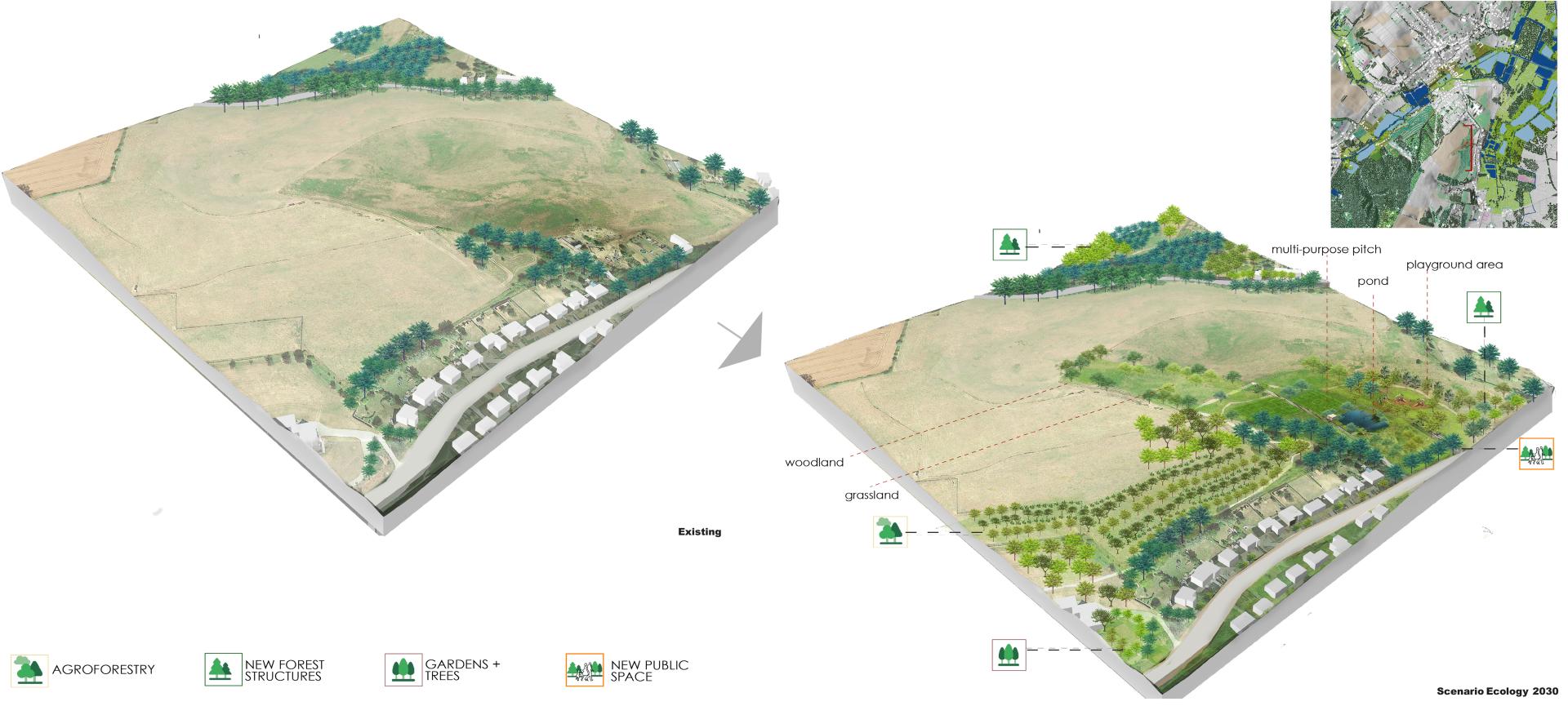
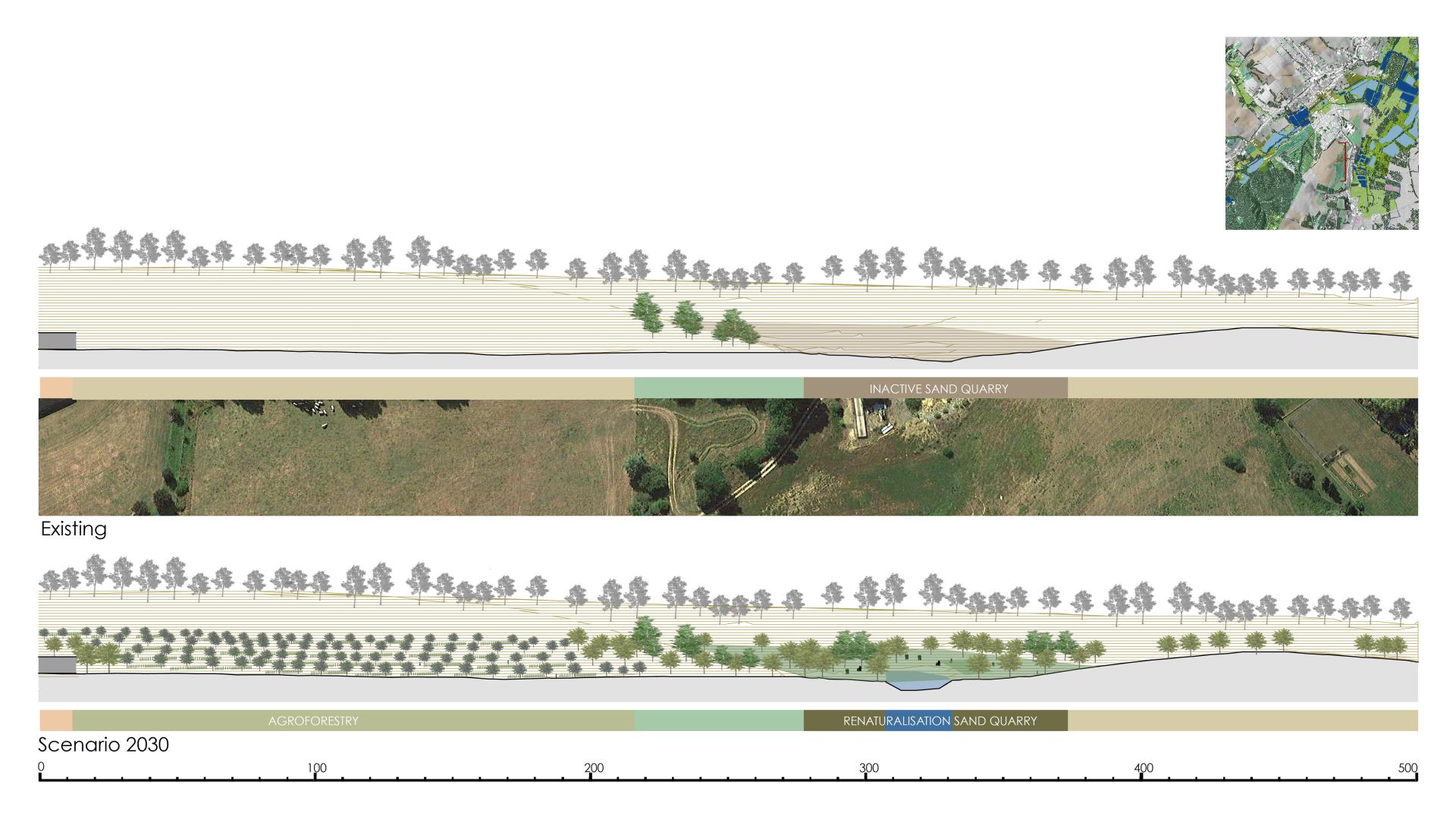
Areas of abandoned quarries are an important element of the landscape; these territories will be transformed into public places while minding the sustainability concept. Therefore, these strategies become as an ecological approach for urban design and urban ecology.
Key objectives for sustainability
Urban and peri-urban forests as green infrastructure strategy: Huldenberg plays a key role in the development of the ‘Brabantse woods’ National Park, and this is possible by making effective decisions, reinforced by the potential of a new National Park ‘Brabantse Wouden’, the objective can put forward by implementing tree landscape programs as an extension of the existing integration with new ‘natural connections’, which aims to connect the Sonian forest with other green areas by creating green corridors and combining agriculture with forests.
Sustainable urban mobility: a new approach: Faced with the challenging problem, the current advancement of the electric bike could be an opportunity for locals to get on their bikes. Wide-ranging measures are needed in which the role of the car is required to be focused on sustainability and soft mobility on some roads is essential for safe driving. Towards a new mobility of a continuous and functional cycle route network; that is, a safe and quality connection with workplaces, public transport hubs, etc. inside and outside the municipality to make cycling more attractive.
A responsible growth while preserving ecological areas: In the case of Flanders (Belgium), there is a new decree in progress to create a “market” for trade in development rights. Therefore, this vision aims to explore the possibility of rethinking this practice, as a strategy to stimulate economic growth and improve the land use efficiency; for example, in flood-prone areas (shipping areas), landowners receive fair compensation from those who purchase development rights in receiving areas.
Key objectives for aesthetics and quality
Peri-urban environments: an opportunity to restore ecosystems: The characteristics of the peri-urban landscape and the relationships between urban and rural areas influence the quality of our landscape and the conditions and ways of life, which some recent transformations and urban changes often do not take these characteristics into account. This is only a reflection on how different problems should be faced in different territorial and urban contexts in order to preserve or enhance the structural and perceptual characteristics of peri-urban landscapes.
Urban forestry: Today, more than half of the world’s population lives in towns and cities, and that proportion will continue to rise for decades to come. When cities are well planned, they can become strategic places to live; however, many developments wreak havoc on the environment and therefore create problems such as air pollution, flooding, and urban “heat islands.” Ultimately, this translates into the deterioration of citizen well being; and for the planet, this implies the degradation of soils and waterways, as well as an increase in greenhouse gas emissions and other wastes.
Soft / shared mobility: Huldenberg has an extensive network of slow roads, such as Dijlewandeling and IJsewandeling, and a wide green plain with high entertainment value, which makes it an attractive destination for recreational walkers. There is a good example of slow road policy: no fewer than seven slow roads are built every year, which offers opportunities for sporty and recreational cyclists, but at the same time, it is less attractive for daily use of the functional bike.
Transfer of Development Rights: The transfer of development rights method, occurs between sending and receiving areas; TDR is a tool designed for conservation and growth through voluntary transactions between developers and rural owners, helping cities achieve additional density in areas where further growth is needed while protecting forests and family farms
Key objectives for inclusion
Built environment restructuring and landscape management, can contribute to ecological connectivity and address strategies for the conservation and sustainable use of biodiversity in new transformed landscapes, implementing landscape management tools, combining urbanism with ecology and urban design with forest, that contribute to the ecological connectivity in the Brabante Wouden, including solutions for ecosystems according to topographic factors such as elevation and slope (dry forest and wet forest) with proposed activities linked to the recovery of abandoned places through existing scenarios: with forests, wetlands, orchards, gardens, agroforestry, fruits, crops of local species, are part of this new reality.
Innovative character
It is time to rethink water and forest management for a sustainable urban planning, considered as a key component, including the conservation of biodiversity, which is the pillar of recovery mechanisms, with ecological principles applicable to forest management for the improvement of nature and the human well-being.
A new transformation for Huldenberg has been guided by four main approaches: Peri-Urban Transformations + Urban Forestry + Soft / shared mobility + Transfer of Development Rights. A new transformation is proposed to green (and blue) infrastructure that characterizes the landscape of Huldenberg.
1. Strengthen alluvial forests, wet grasslands, reed beds, along the meandering streams and river (IJse and Dijle), largely conceived as a nature reserve.
2. Strengthen open agricultural areas and the forest plateau partly considered as agriculture area and partly as nature.
Huldenberg plays a key role in the development of the Brabantse Wouden National Park. Forest management, as the first step towards a strong ecosystem, is the main role that should be played more often through the trees. By combining trees and forest elements with other functions (such as infrastructure), tree structures are created that make an important contribution to the ecosystem.
By focusing on soft mobility in Huldenberg topography, such as electric bikes, which is one of the best means of mobility. In this sense, it is necessary policies that can adapt on the development of slow road network and safe and comfortable bicycle facilities for people. With a new soft mobility network, safe and quality slow connections are created with workplaces, public transport hubs, etc.
Single and spacious family housing is over-represented, thus, rethinking how to qualitatively densify without affecting the rural characteristics of Huldenberg, and in turn, contribute to further development of open space in the context of the “Brabantse Wouden” National Park, with a diversified housing method.