Transformative Design Education
Basic information
Project Title
Full project title
Category
Project Description
We are design students at Anhalt University in Dessau and, once again on Bauhaus campus, we change the way design is studied today. Inspired by the Bauhaus heritage and permaculture principles, we initiated a grassroots movement to restructure how we work, learn and live together – by design. We started with a vision, created a space for it, grew into a community and changed the organisation bottom-up. Now the idea is much bigger than us and we want to share it far beyond the borders of Dessau.
Project Region
EU Programme or fund
Description of the project
Summary
In 2016 we were unsatisfied with the present design studies. “If designing is a problem-solving technique, how can we apply it to the studies itself to redesign them in a human-centred way?”
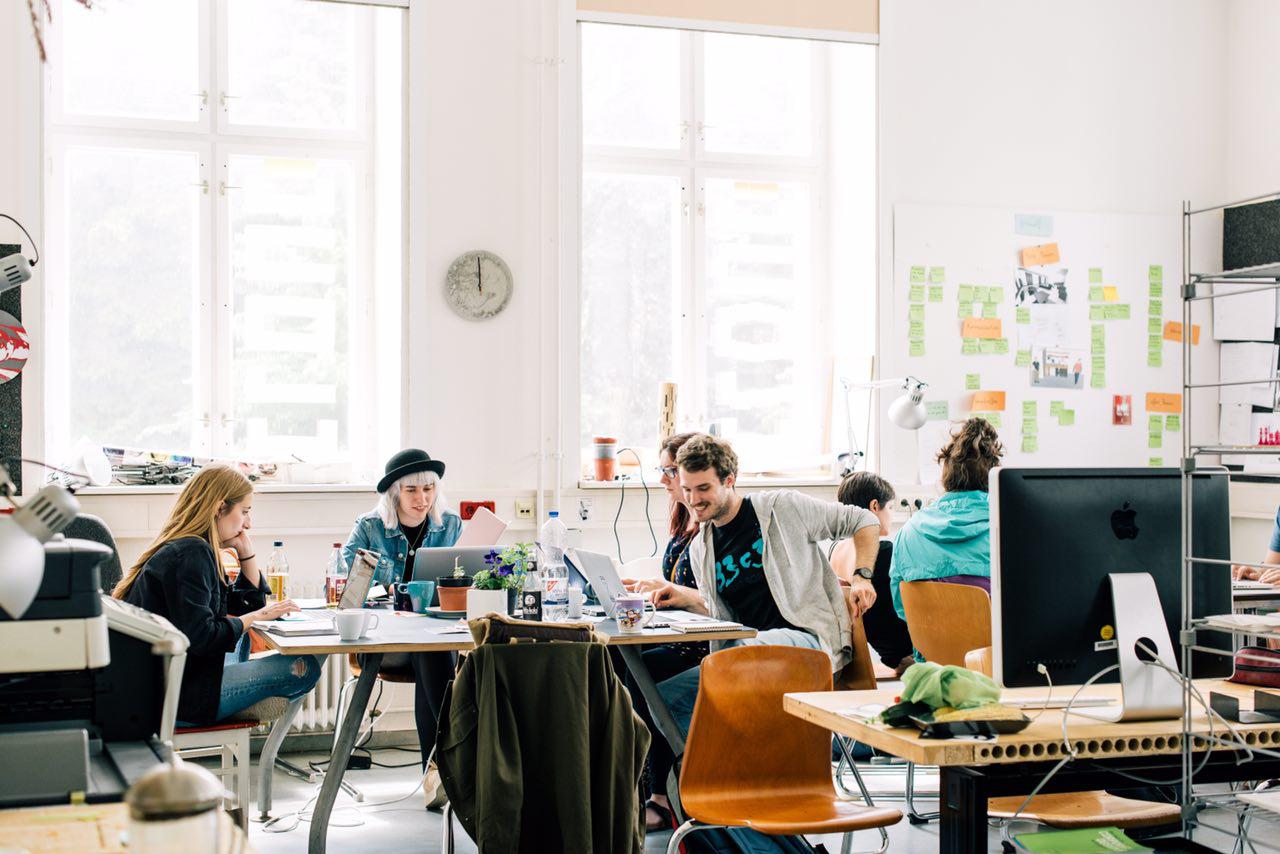
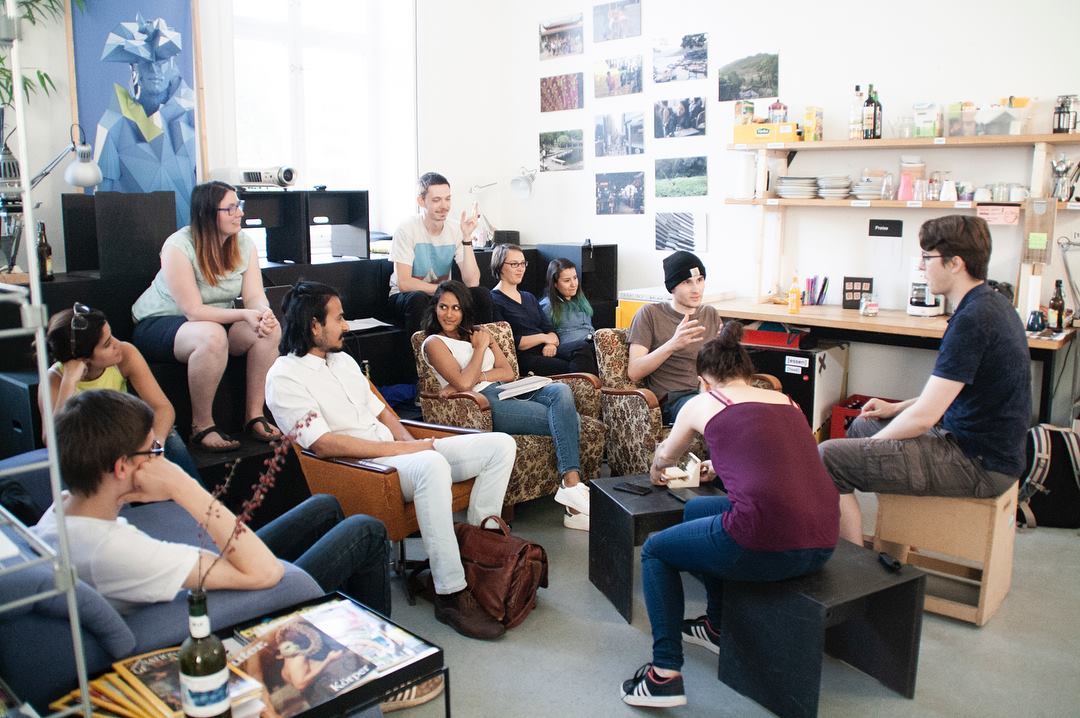
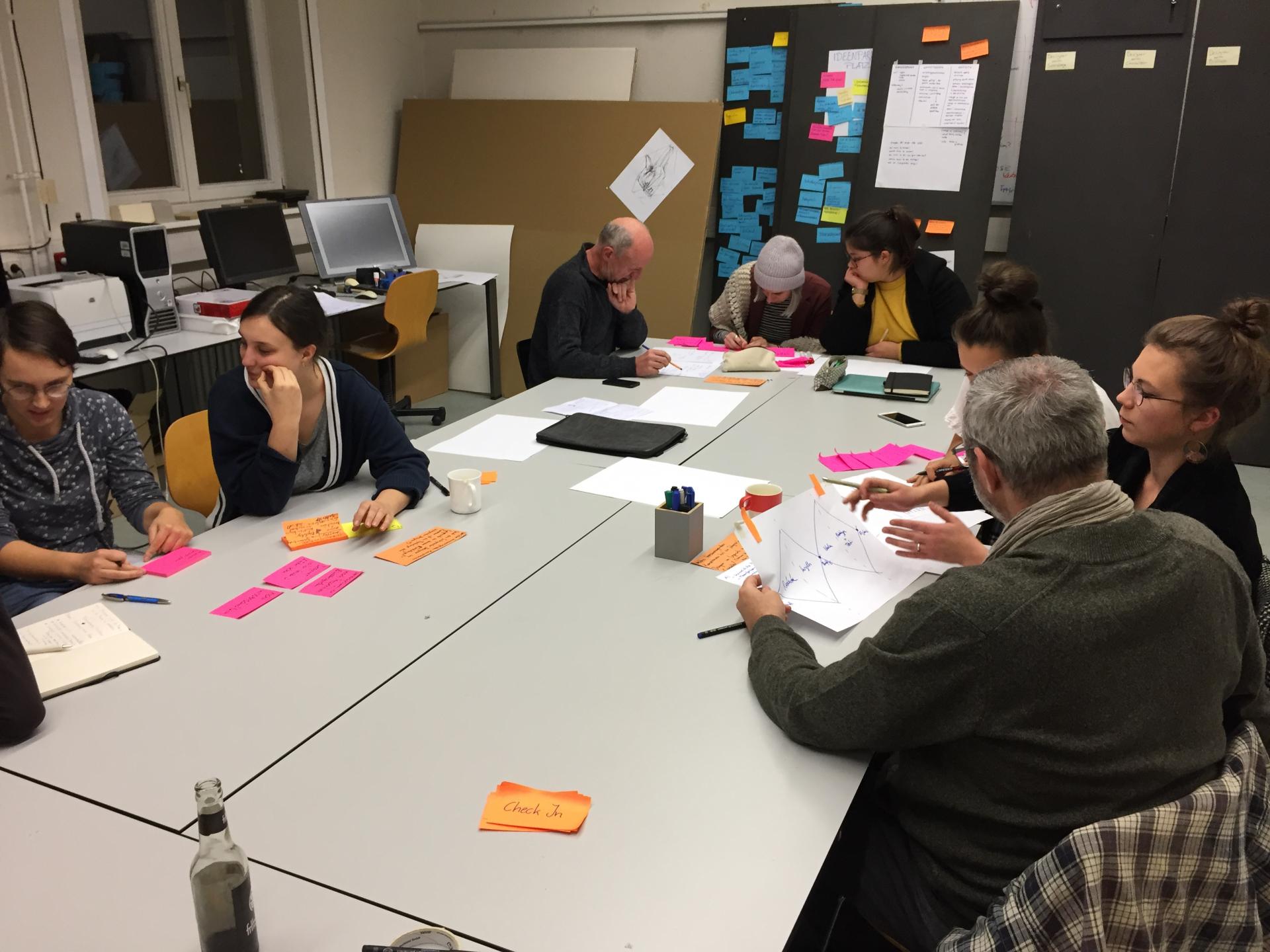
We started with a single room in our university that we called “[cloud]”. We created a platform for free, democratic exchange, events and co-working across all status groups. A physical space to meet, discuss, share ideas and solve the university's challenges together. We created a collaborative community culture within the Design Department by asking: How can we learn and study better together? Our vision became a movement that keeps on spreading. We convinced professors and academic staff to join this transformative process using our collaboration and reflection tools in their classes and meetings, with phenomenal effects on motivation and outcome. But we didn’t stop there.
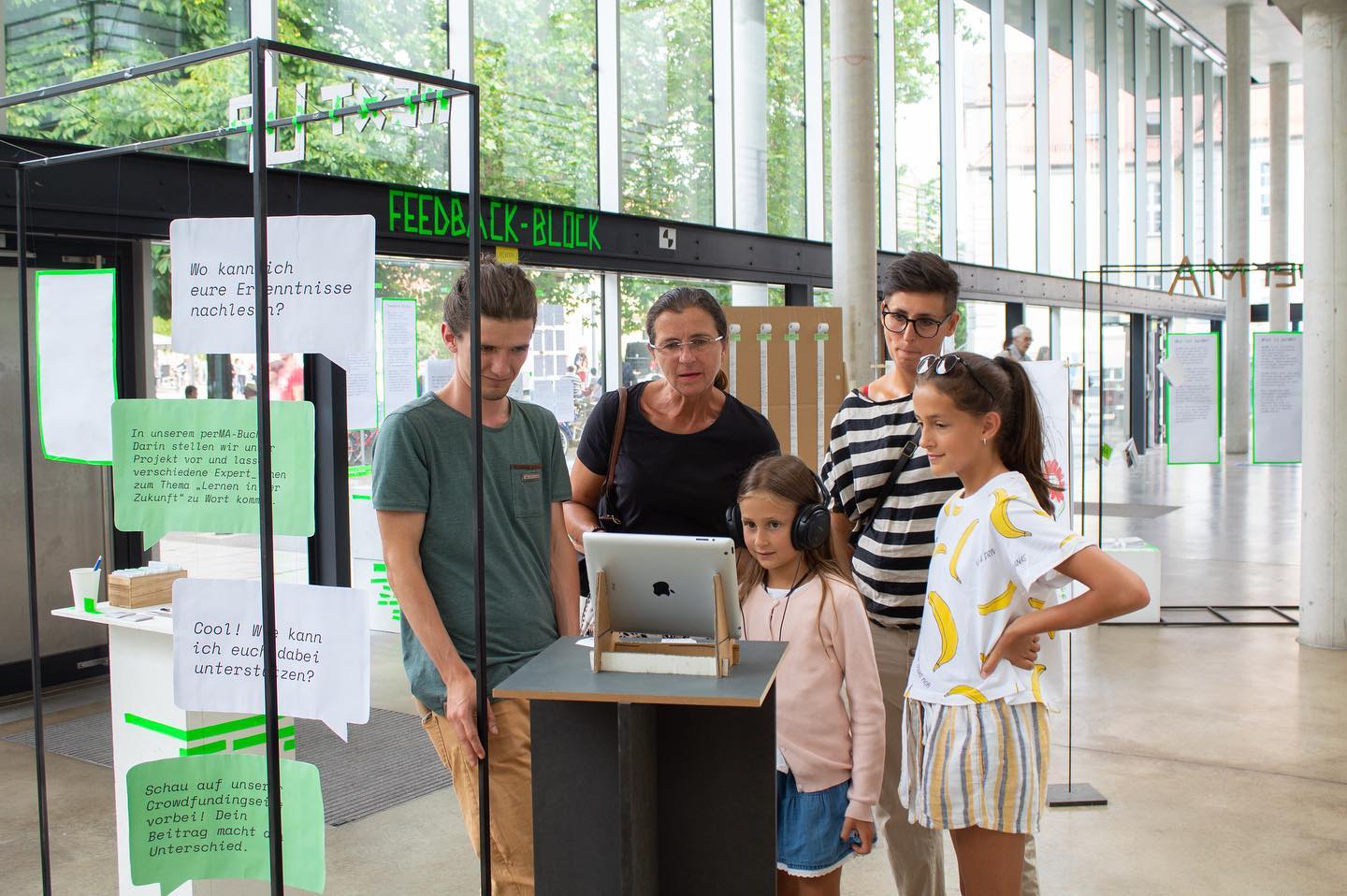
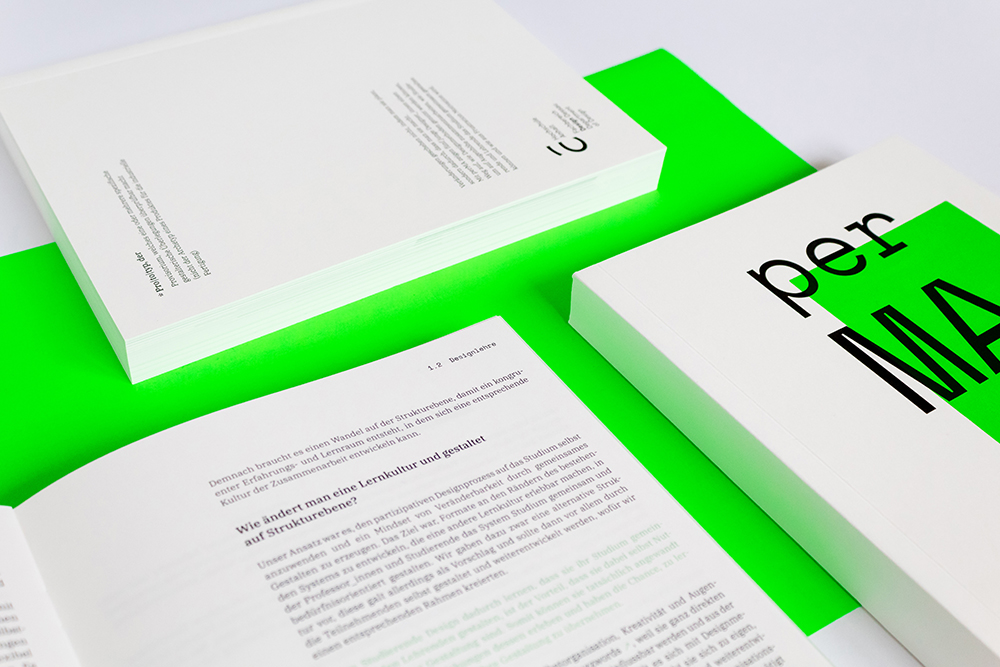
Inspired by permaculture principles, we founded “perMA”. We designed classes with new hierarchy models and feedback structures, where students and professors teamed up to improve their study experience and circumstances on campus through design. In addition, we published an open-access book that illustrates the process and promotes an understanding of classes as co-created, iterative workshops. And we didn’t stop there.
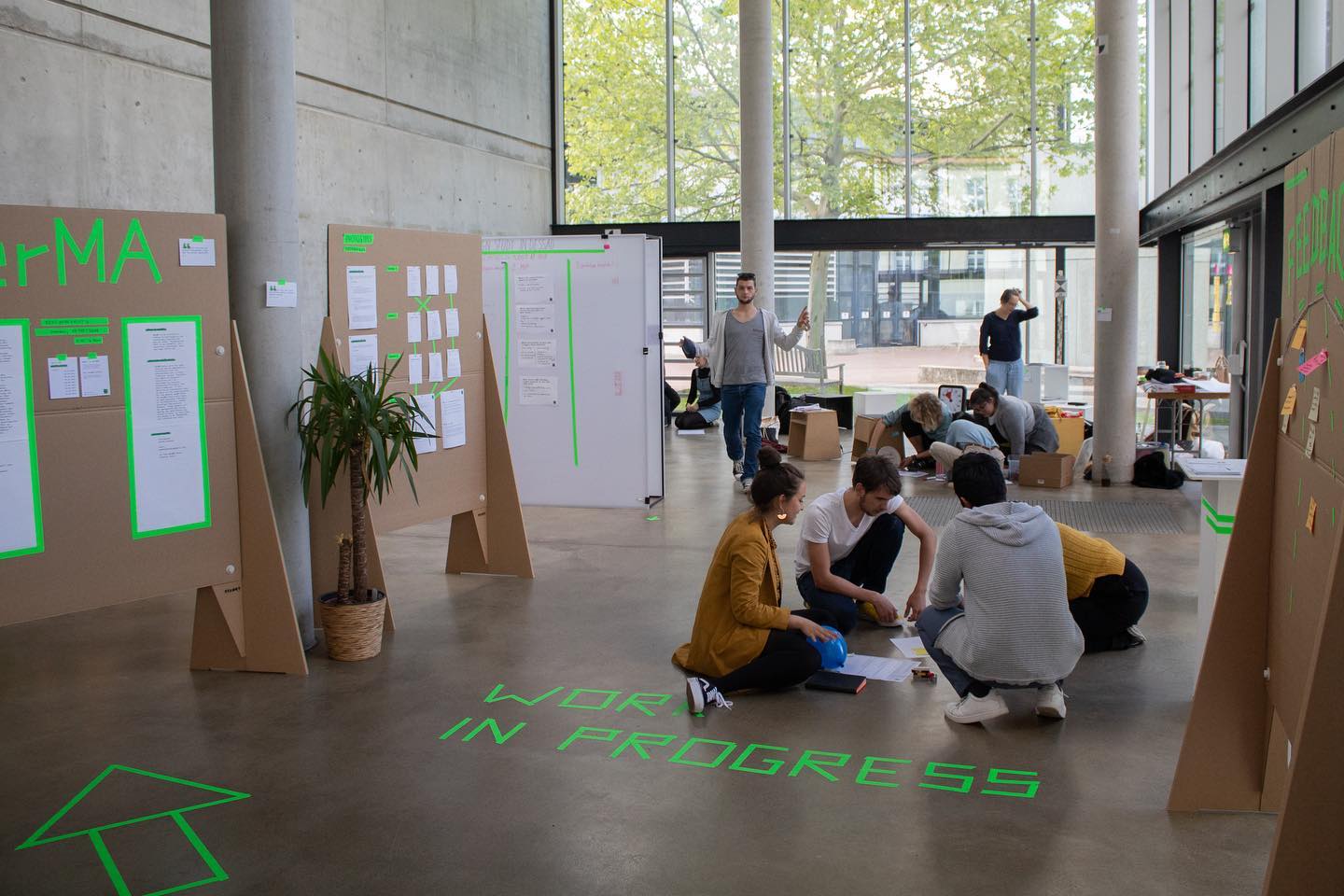
With a generation of self-determined students, we used the democratic processes to convince university officials at Hochschule Anhalt and co-design the underlying structures. We started the “Workgroup Curriculum” to let professors, students and staff collaboratively restructure the design education in Dessau. As an outcome and first experiment, all seminars and classes are organised as workshops and working groups this summer.
Through constant reflection and documentation, we found patterns in our work that can pave the way for circular learning at eye level in various contexts. We call this approach Transformative Design Education. But we won’t stop here, this is where our story begins.
Key objectives for sustainability
It is not only the climate crisis that calls for more sustainable ways of design. Our generation who only experienced a globally connected and digital world, demands entirely new teaching and learning approaches to design future sustainable worlds. In conclusion, we need to bring both together and start living the values of sustainability and democracy that we need in the world (of design) already in the education of future designers.
Just like in permaculture, a sustainable system requires long-term thinking and short-term adjustment to changing conditions. We implemented both. We developed and established a system that allows its stakeholders to restructure the educational system in a circular, constant process. In this way, design education and its students become future-proof and live a culture of sustainability, just like a garden, which you continue to cultivate every year to produce rich yields.
From the very beginning, we onboarded subsequent students, professors and staff to ensure a seamless handover. We entrusted them with responsibilities, cared for their opinion and feedback because they had fresh perspectives of things. We showed them how the system works and helped them adjust it to their own needs through input and design. Consequently, the involved students took ownership and it grew into a design culture with iterative prototypes including the next generation.
We prepared the ground, so that now, more than five generations of students later, we can harvest the actual fruits of this movement in the form of a collaborative culture. Professors and students now sit together every week in the “Workgroup Curriculum” to work on new curricular ideas to prototype.
Through publications, conferences and workshops, we share these fruits and keep planting new seeds. We connect globally with other people and institutions to exchange ideas, methods and develop a transferable system for a new, sustainable culture of design education.
Key objectives for aesthetics and quality
Permaculture as a mental model shapes our work. The aesthetics and experiences of our projects derive from the circular and sustainable way of thinking, which we map into formats and spaces to make them accessible.
The aesthetic of transformative education is in the short-looped iterations of our formats, making them so flexible to changing inner and outer conditions.
The aesthetic is in our spaces and projects’ prototypical character, making them so obviously imperfect and invites to participate.
The aesthetic is in the inclusion and diversity, making the projects more rich, robust and powerful.
The aesthetic is in a vital feedback and failure culture – doing, testing and improving, instead of over-thinking conceptual processes.
The aesthetic is in the community and the co-creation on eye level, leading to a flourishing exchange and safe feeling.
The aesthetic is transparent communication, enabling everyone to be a part of designing the collaboration.
The experience that we create in our spaces, workshops, classes and educational models is a transformative one.
Individuals experience a transformation towards more social and collective behaviour by being taught how to work as a team.
Teams experience efficacy by transforming collective circumstances through design.
Students experience empowerment and take over responsibilities by being trusted and provided with a safe space.
Teachers experience increased motivation and freedom by co-creating classes with the students instead of working for or even against them.
We call it transformative because of the two core experiences in our work. One is the sustainable transformation of the surrounding world, which you can only achieve as a team. The other is to open up for a deeper humane connection and let the world around you transform yourself.
Key objectives for inclusion
They knew it at the Bauhaus, and they know it in permaculture – diversity is the key to a robust and fruitful system.
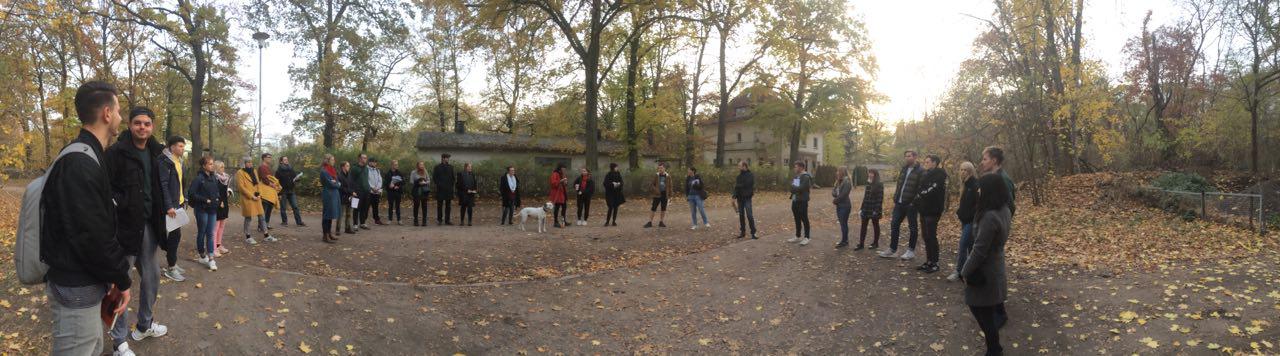
Inclusion became a fundamental principle in our movement. We made sure that the [cloud] room is welcoming everyone. That its spatial design already enables exchange among all status groups at university. We fostered encounters among people who usually do not meet and turned a regular room into a platform for participation. It became a space for coworking, workshops, coffee breaks, movie and game nights, project presentations and feedback. But most importantly, it became the central space for a colourful community that is always ready to help and welcomes everyone to be who they are.
When we took a step forward to change the curriculum, we wanted to include all status groups in this co-creation process – from first semester students to international masters, from professors to academic and non-teaching staff. Because redesigning the educational system is a complex challenge that only a multiperspective team can approach, we wanted each stakeholder group to be represented in the “Workgroup Curriculum”. Therefore we paid attention to gender-neutral language and designed the whole process bilingual to reach international students and non-English speaking staff. We constantly invited everyone, but in reality, not everyone felt invited. The feedback from people who feel excluded in any way is often the most valuable and the hardest to receive. We did a lot of research about invisible barriers and tried to understand why people felt excluded. We interviewed the ones who seemed most sceptical and identifying their needs helped us discover blind spots in the process. But most impressive was that, when they felt heard and respected with their doubts, when they were sure that work was not being done against them, they often became strong supporters of the project.
Innovative character
In the Bauhaus tradition, our approach is human-centred and we focus on innovation of social structures and transformative processes – but updated to the 21st century.
Of course, agile teamwork is nothing new in start-ups and enterprises, but working in role hierarchies, design sprints, and iterative prototypes is innovative when it’s applied to higher education institutions. And we are not only talking about changing classes but the transformation of a traditional design institution. And we do not have a master plan for this. We work with principles.
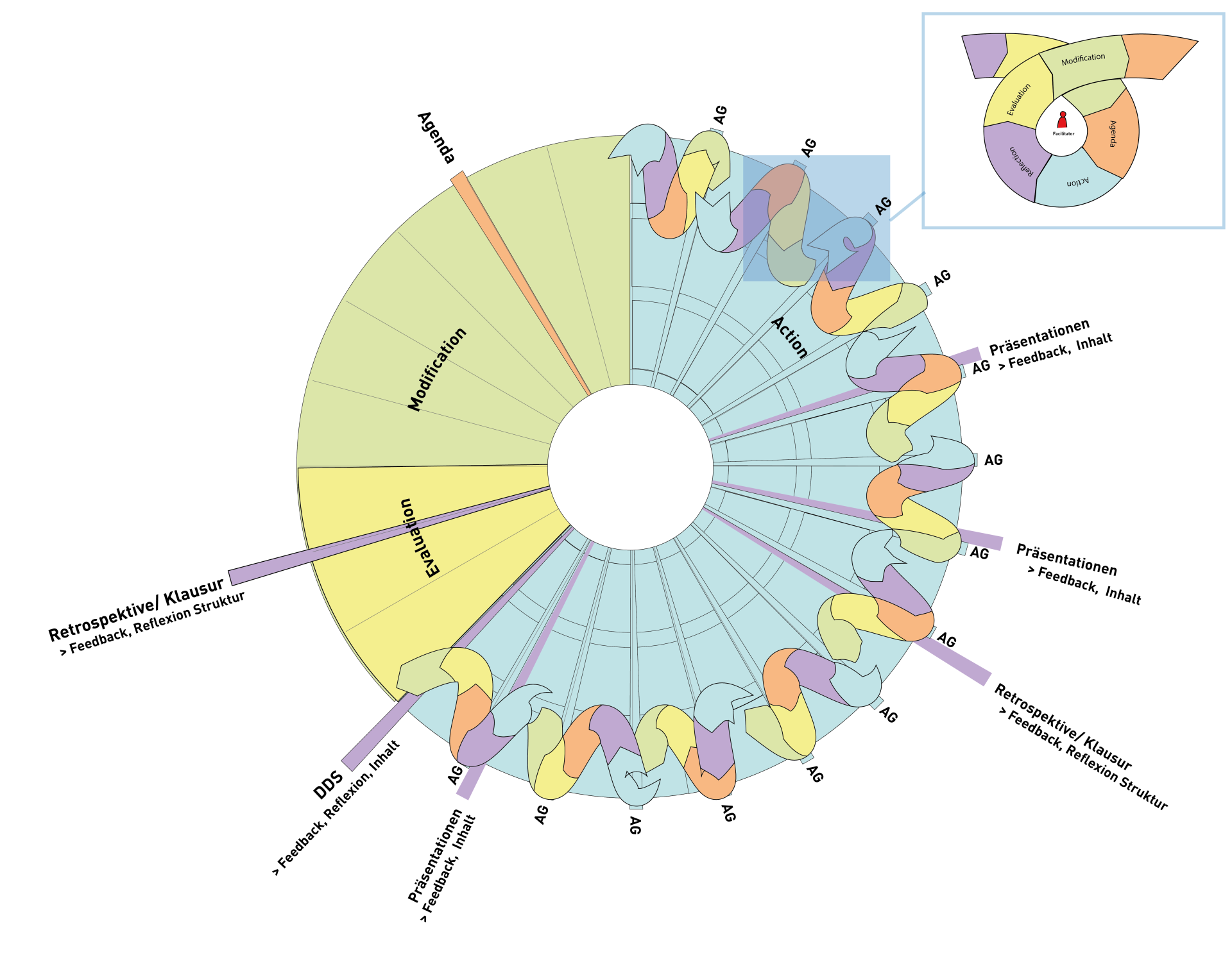
Because there is no one-size-fits-all solution in educational formats, it is innovative to co-create classes bottom-up to adapt to its participants' needs. Every group is different. Some like to work with a frontal teaching style, and others more self-organised in little groups. Maybe a group decides to start their classes with guided meditations or collectively decide to change the topic. Everything is possible and works. All it takes is figuring out the needs and letting the group explicitly decide on their mode of collaboration, then reflect on it and change the frustrating aspects.
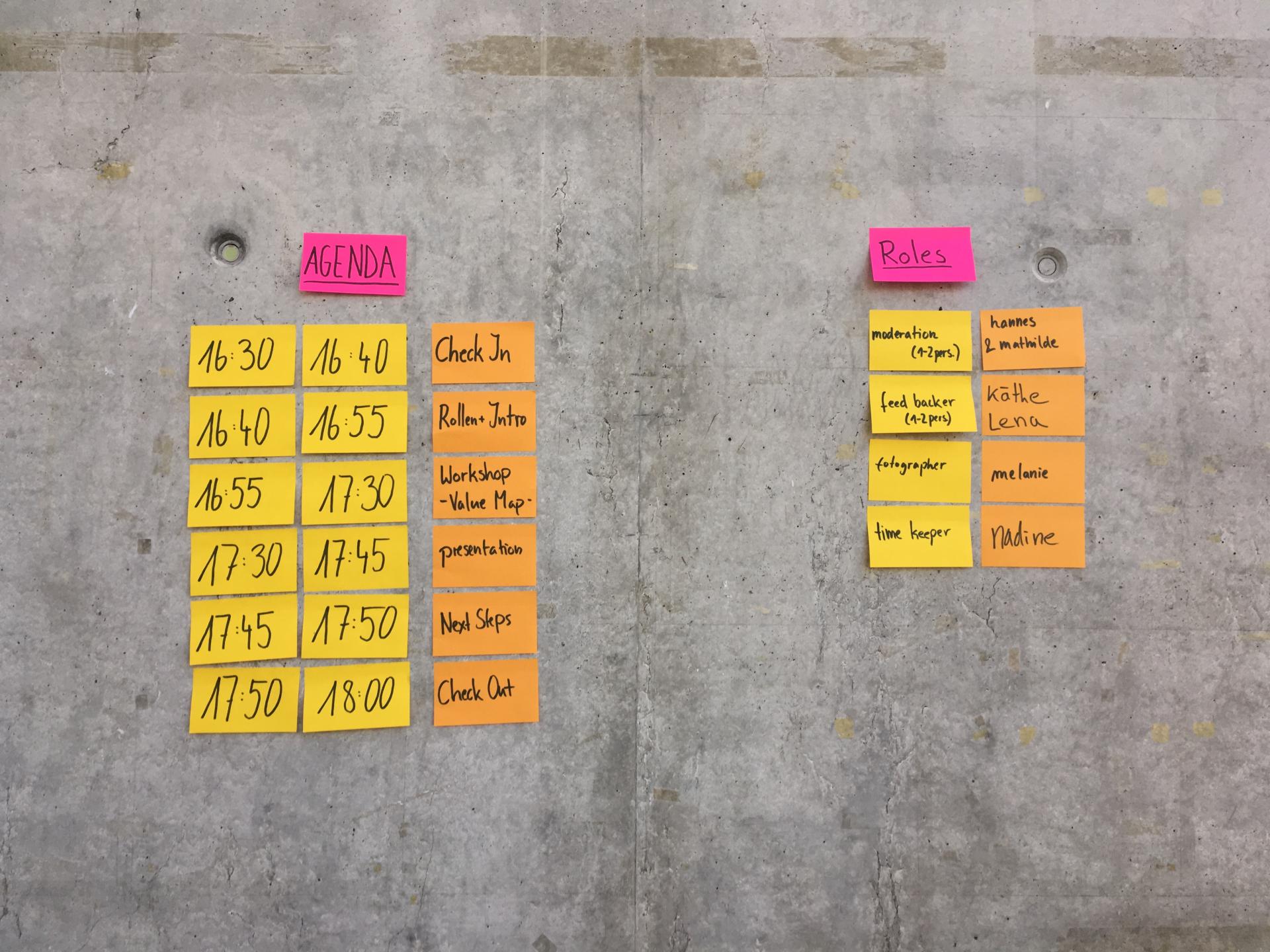
Like all democratic processes that require a shared set of roles and clear facilitation, the professor can be the facilitator here. Still, we motivated students to take over this role and to learn how to organise a group. In that way, the learning culture evolves much faster towards a co-creation on an eye level. Structuring the class as a workshop and treating the format as a design prototype that you test, reflect and improve next time, builds a safe atmosphere for experimentation and increases the inner connection in the whole team.
Students and Professors are learning as a team. Our classes learn to take responsibility for themselves. An entire curriculum is designed democratically bottom-up. We think this is truly innovative.