Das Beet & Der Zolli
Basic information
Project Title
Full project title
Category
Project Description
A cultural kiosk café that is along with other initiatives transforming an abandoned soccer field into a park of biodiversity and cultural meeting point. We provide the extra pepper into the soup of co-creation of a communal space with music, creativity and an extra portion of good food. Cause good food, is good for the mood. With sustainability as our carriage, we ride towards a brighter future. Was geht? Das Beet!
Project Region
EU Programme or fund
Description of the project
Summary
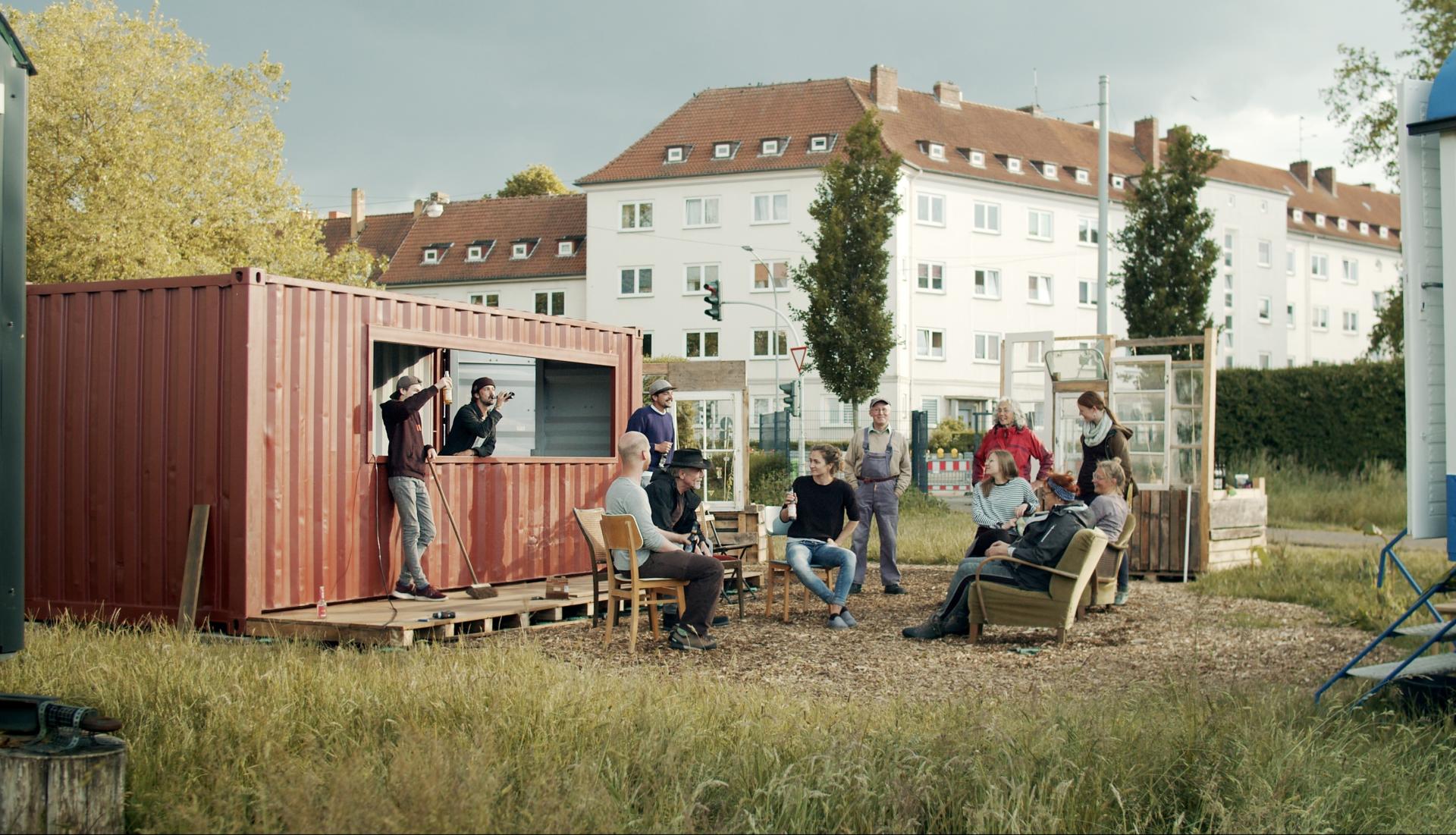
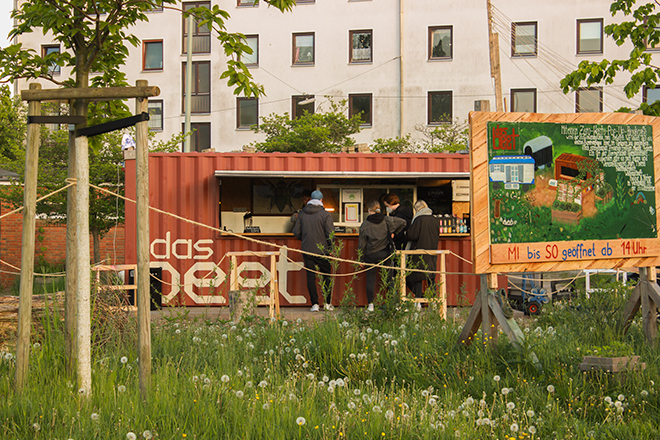
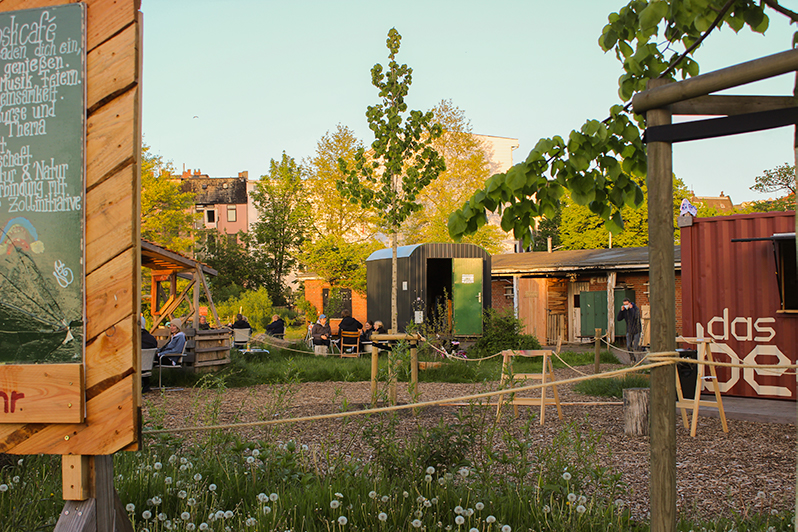
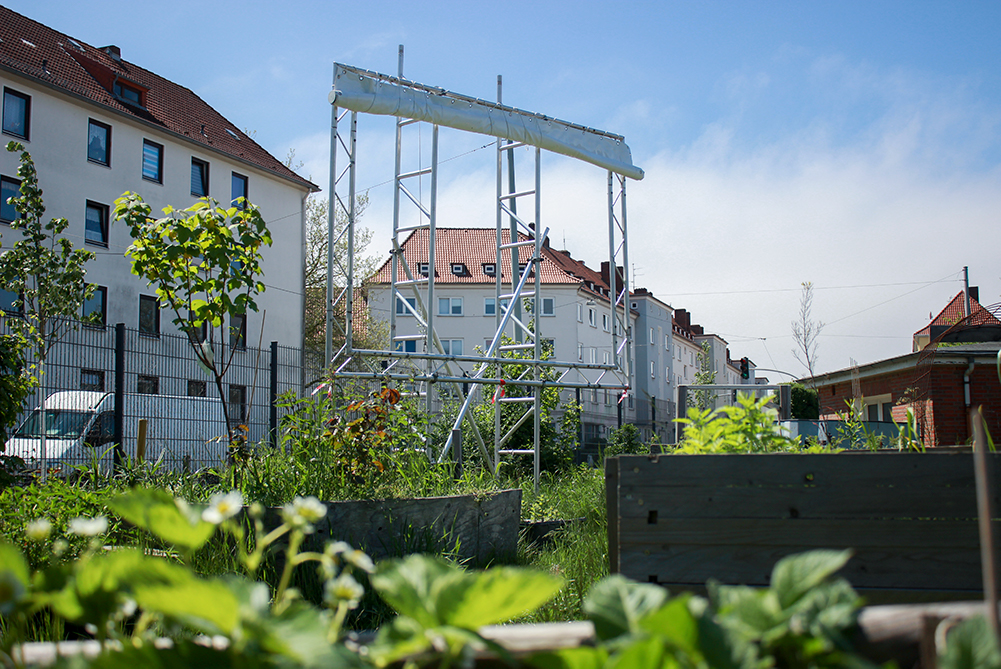
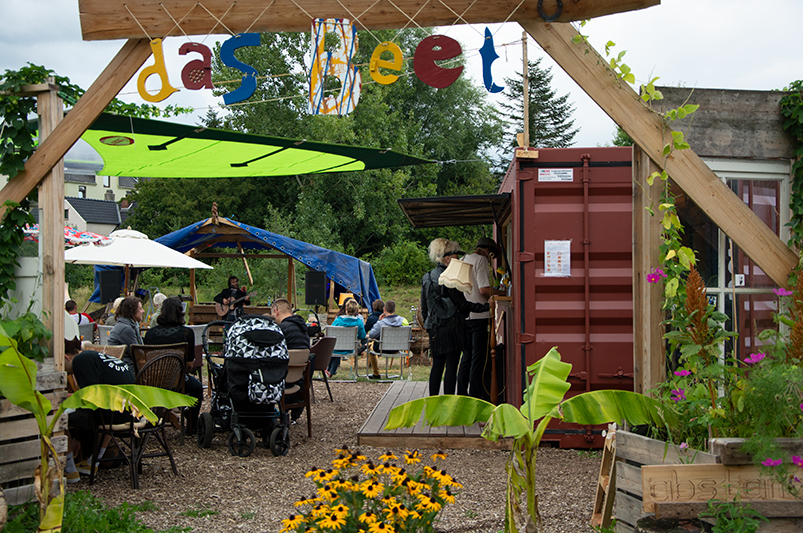
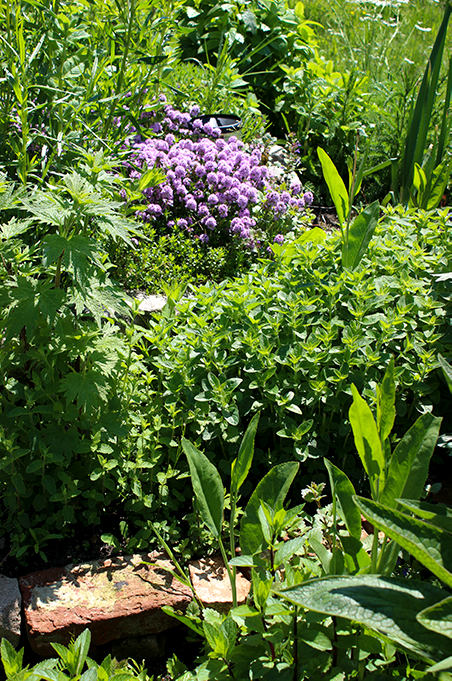
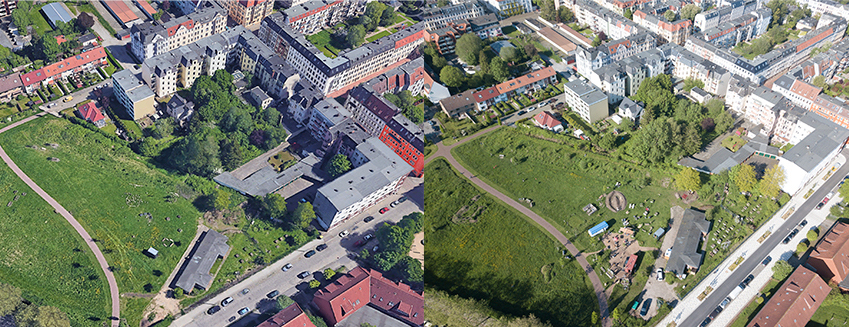
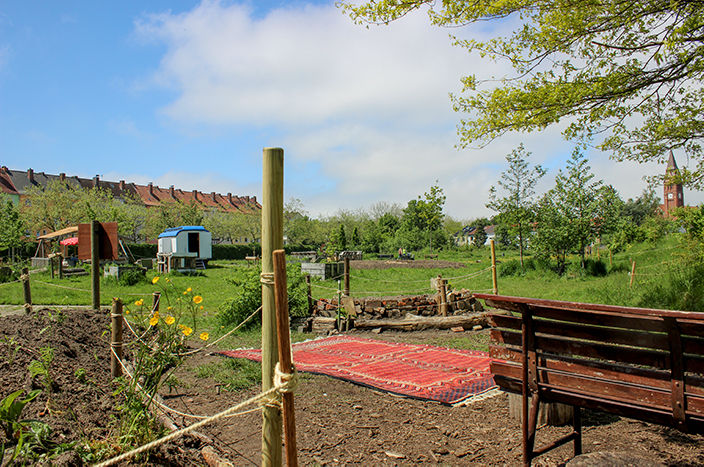
“Das Beet” (engl. the garden bed) is a newly crowdfunded cultural kiosk café located in a community group managed city park in the heart of Bremerhaven. Even though I was the initiator of this concept, I will further write as we. It is a communal project and would not have been possible without the help of many others. The Zollinlandplatz is an abandoned soccer field that started its transformation into a park of biodiversity and encounter in 2015. It is about the joint design of a non-profit area, a creative free space, which is to be enriched by many with life, ideas, and culture. Our aim is to create an outdoor gathering place on the Zollinlandplatz in Bremerhaven. A place for get-togethers, recreation, and common activities. In doing so, one focus of the Zolli-Initiative is the expansion of plant diversity and animal species is to be implemented further by growing herbs, salads, and vegetables in our own plant beds. We offer this produce directly from our beds into our gastronomy. As much as possible, avoiding the generation of non-recyclable waste. We want to create and expand awareness for a better handling of ourselves, the environment, and the available resources. In this way, we would like to illustrate the thought in cycles and place it more in the focus of our daily activities. “Das Beet” and the Zollinlandplatz should be a cultural contact point for all people of all generations, all nations, all cultures and all sexes. We believe that societal activities are a main communication tool to expand awareness for sustainability. With cost free cultural activities, we attract people from all backgrounds in spite of the higher price for sustainable, good, delightful drinks and food. This is only possible through a funding of our cultural office in Bremerhaven, who see the importance for a free cultural offer.
Key objectives for sustainability
From the construction, the use of tools, the production, the use of the existing resources and the service we think about sustainability.
Construction: A sorted out 20ft shipping container is the base of “Das Beet”. The foundations are compacted crushed rock, rather than cemented foundation blocks. We focus on mechanical connections, then adhesive bonds. The container is a non-permanent building and can easily be moved to a different location. It can be easily dismantled, and materials can be separated again. The laid infrastructure for water, wastewater and electricity can easily be dislodged, if “Das Beet” will ever close.
Use of tools: The only new tools in our kitchen are a panini grill and a milk foamer. Everything else is either bought second hand or is rented for a specific purpose. Together with the Zolli-Initiative and the Urban Pergola project, we now have a wide variety of tools, and these are shared among the groups.
The production: We obtain roughly 80% of our raw products either ecologically or regionally. We aim for the 100% and are constantly looking for producers in our region that fit our criteria for sustainable agriculture. Our food scraps are composted in the park in a communal compost station. We use reusable containers or pant system with most of our partners. The electricity consumed is from renewable energies.
The use of existing resources: 80 percent of the kitchen equipment is second hand. All our seating area is either self-build from recycled materials or is second hand from flea markets, eBay or donations.
Service: A sustainable service with our customers is important to communicate our values and the opportunity for them to experience this vibrant location. We use table napkins made from old fine tablecloths that we get from house clearances. The Zolli-Initiative e.V. in cooperation with “Das Beet” received a dry separating toilet granted from the Climate City Office Bremerhaven (Klimastadtbüro)
Key objectives for aesthetics and quality
Our key objective in terms of aesthetics and quality of experience is strongly rooted in the Zollinlandplatz and its surroundings. With “Das Beet”, we are creating a new location together with the Zolli-Initiative and are strongly identifying with the values of the Zolli-Initiative in terms of biodiversity and sustainability. We are experimenting with a mix of creativeness in this location.
We have the many raised beds, on one hand, that we built to grow food and provide a small garden for neighbours. All the beds are made from recycled materials. With our form of construction and designs, we want to create an aesthetic of self-build, reuse and practicality. The individual character of each construction, due to the variety of people who conceptualized or assembled it, emphasizes this aesthetic. Thus, showing that the development of such place from a poor neighbourhood can be shaped through time investment and use of waste streams rather than money.
On the other hand, we have a modern and artistic aesthetic when it comes to the interior and exterior of the container. Our idea is to present the container in a minimalistic look, focused on materials like wood, cork and stainless steel. The interior is precisely built and demonstrates a perfect aesthetic. With this aesthetic we draw another field of guests to our location.
In addition to all of that are our artists, art, and nature, that bring liveliness to our compositions and to this place. They bring the small details that make a visit an experience and an ever-changing space. To promote nature and biodiversity is one of the main goals of this park and to connect human made shapes and forms with more playful natural forms is an aesthetic we are welcoming and progressing.
Key objectives for inclusion
“Das Beet” is in Bremerhaven Lehe. It is not only located in the socially weakest district of the city but also in one of the weakest in Germany. Bremerhaven Lehe is in 2020 the poorest district of Germany and over 35% of its population is overindebted. Nearly half (45%) of its population has a migratory background. The crime rates are high, and businesses are rather leaving than moving to Lehe. “Das Beet“ became a meeting point of all social classes and backgrounds in just a year and we strongly promote an open character of our space. With an ecological and sustainable concept, we do not have our targeted group situated directly in our neighborhood. With our concept we promote sustainability in a very alternative and not elitist way. We scaled down on many of our prizes, to make our offer available to many neighbours with lower income. During the development, we constantly involve our neighbors in our creation processes, and we had help in many different fields. One main thing, that astound our team, was the mix of age in our customers. Originally planned to provide a cultural and gastronomical offer for the younger generation, we attracted with our concept people of any age. Our team is diverse in age, sex, and cultural background.
The Park is partly accessible with a wheelchair and the seating area of “Das Beet” is filled with wood chips. In 2020 all guests in a wheelchair were able to move on this field. We have a dry separating toilet that is barrier free.
We believe a key factor to include people in a structurally lagging city like Bremerhaven into sustainable ideas, urban gardening, healthy and local gastronomy is when those messages are combined with cultural events.
Innovative character
In our perception Bremerhaven has been a fragmented city, interaction between native and new “Bremerhavenas” as well as among different social sectors have been rare in our experience. In Bremerhaven there is no abundant pool of young and urban people to co-create and finance. “Das Beet”, we must go new ways. Our response was to openly embrace everyone showing remote interest in the project. Located at the cross-section of the poorest neighbourhood of Germany and Bremerhaven’s center of young, artistic and cultural life, we naturally draw in people from both neighbourhoods. We offer free cultural events together with the cultural office of Bremerhaven. As described multiple times we are deeply connected with the Zolli Initiative, we act as development grounds for a new project with the local university and connect with the Klimastadtbüro. Our community and our partners let us grow integrated to the people around us. We have farm to table products and can show our customers how our food is grown, cooked, and eaten. Guests can partake in the growing of produce and can develop a tangible connection to the food they consume. We invite everyone not just to have a drink and a snack but also to participate in the development of the location. Instead of sourcing treats from industrial bakeries, we have neighbourhood grannies eager to make use of old and new recipes. Instead of presenting a finished space, we most literally offer a garden of opportunities to develop the empty space and people are taking us up on the offer. Our lived concept of shared ownership makes us resilient and provides needed atmosphere.