Low-cost housing with earth & soul
Basic information
Project Title
Full project title
Category
Project Description
Abrazo House ecological centre builds affordable homes to attract residents to a rural area that's losing people.
Our building system uses local & natural materials (stone, wood, straw, earth) to create houses that are low-impact, healthy, super-insulated, durable and beautiful. We also cultivate productive, diverse "edible landscapes" for food and fuel.
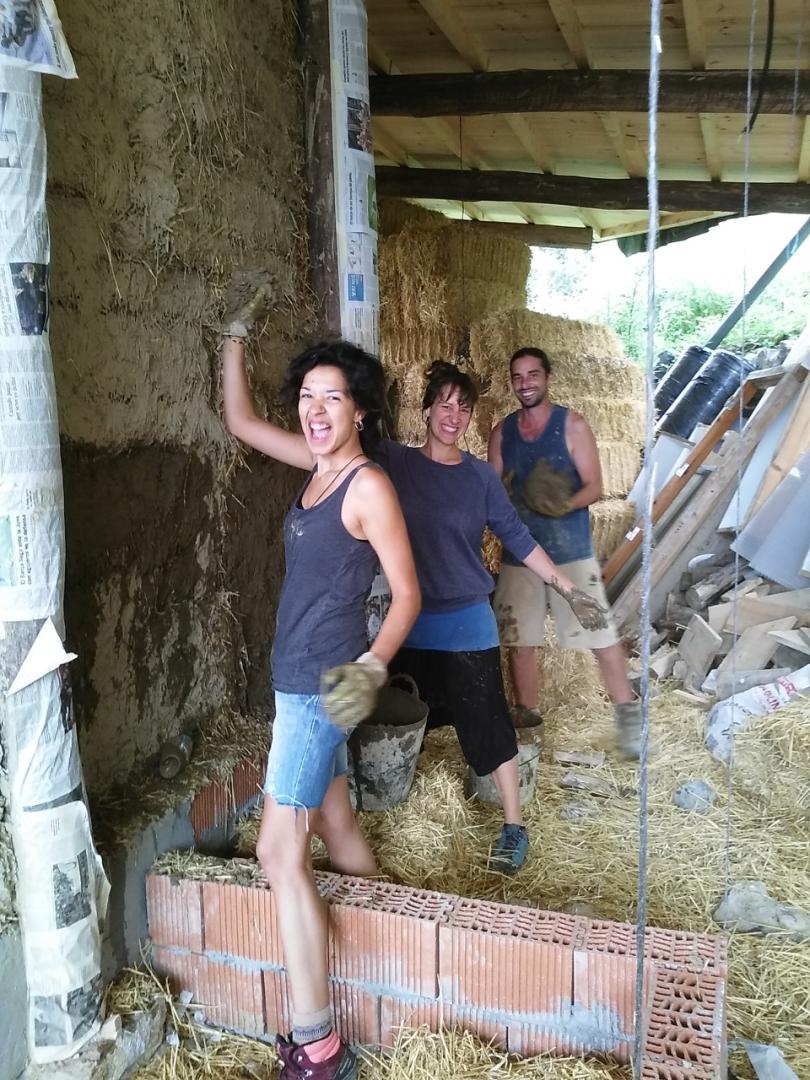
Future residents as well as students and volunteers take part in the work, learning new skills while building self-reliance and community
Project Region
EU Programme or fund
Description of the project
Summary
Since 2006, Abrazo House ecological learning centre has been developing eco-design and building techniques, using low-impact, local & natural materials (such as stone, wood, straw bales, and earth) to create homes that are healthy, affordable, non-toxic, super-insulated, durable, and above all, beautiful.
We aim to go beyond sustainability, to achieve regenerative ways of building that promote ecological diversity and stability, instead of merely doing less damage. Our buildings have negative embodied carbon, and use passive solar heating, natural lighting, and ecological wastewater treatment systems.
We have also converted our land from monoculture (pasture) to "edible landscapes": diverse, productive ecosystems that provide food and fuel for the residents. We have planted fast-growing "nurse" trees that help the climax species to get established, while drawing down CO2 rapidly from the atmosphere.
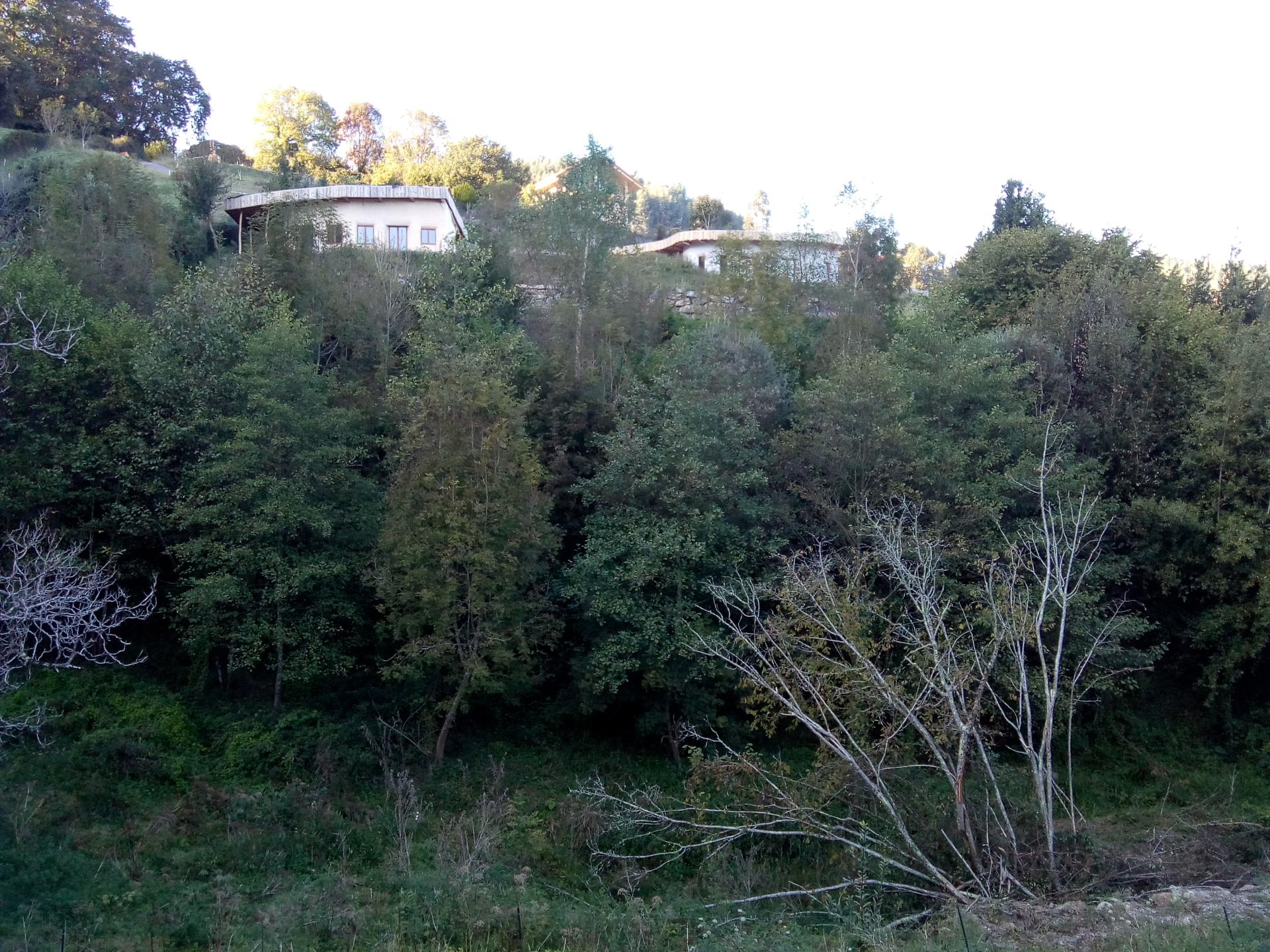
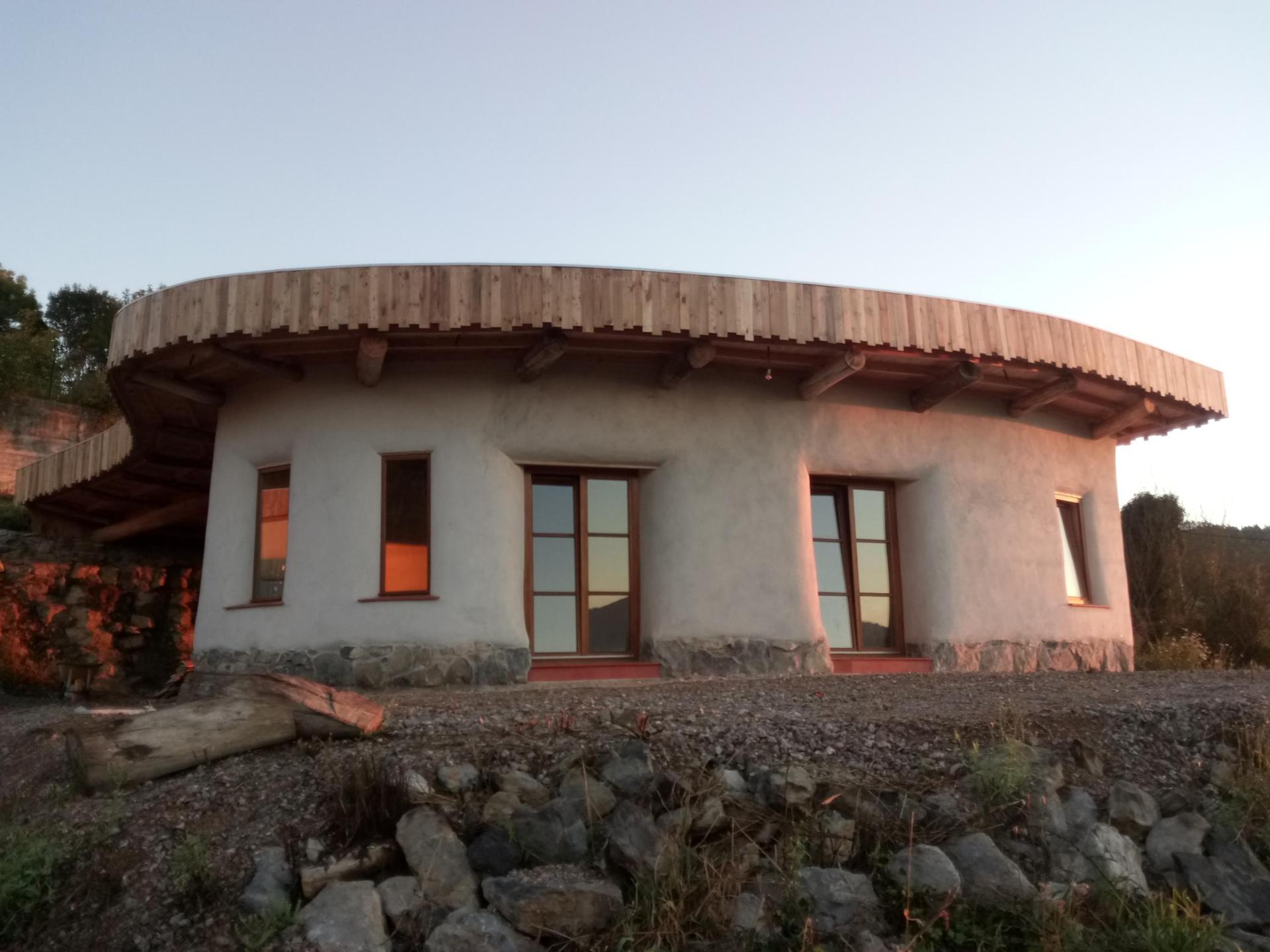
During 2016-18, applying the knowledge gained over the first ten years of the project, we built two new low-cost eco-houses, with the aim of attracting new residents to an area that's been losing population steadily since the 1950s. The houses are built in cob/straw bale/timber frame, earth sheltered to the north, with green roofs that integrate them visually and aesthetically in the natural environment.
Future residents as well as students and volunteers have taken part in the construction and gardening work, learning new skills while building self-reliance and community. Most of our participants come on a work-exchange basis, trading work for food, accommodation and learning.
Key objectives for sustainability
Objectives in terms of sustainability:
-
To build houses with negative embodied carbon;
-
To make use of locally & sustainably produced materials;
-
To build houses that are super-insulated and energy efficient;
-
To make effective use of natural light and passive solar heating;
-
To make use of solar thermal hot water and heat pump / PV panels for supplementary lighting, heating & hot water;
-
To cultivate "edible landscapes" which will provide food and fuel for the residents while regenerating pasture into a diverse, productive, and stable ecosystem.
-
To use ecological wastewater treatment systems.
These have been met as follows:
1. Negative embodied-carbon materials include 11.7 tonnes of timber, 14.9t straw bales, and 19.8t clay soil: total –47.9t embodied CO2e. Other bulk materials include 61.9 tonnes of sand (0.03kg/kg CO2e), 4t concrete (0.15 kg/kg), 13.5t expanded clay brick/pellet (0.22kg/kg), and 20t stone obtained on site (zero): total 5.43t embodied CO2e. Net embodied C = –42.5 tonnes CO2e (excluding transport and non-bulk materials.)
2. Local materials include clay soil and stone from the site; eucalyptus & ash timber from a sustainable plantation 1.5km away; sand from a quarry 8km away.
3. Overall insulation value is ~2.2 m2·K/W. Assuming 20°C indoors, heat loss for average winter T ~10°C is ~4.5W/m2. Even at extreme T of 0°C, heat loss < Passivhaus maximum of 10 W/m2.
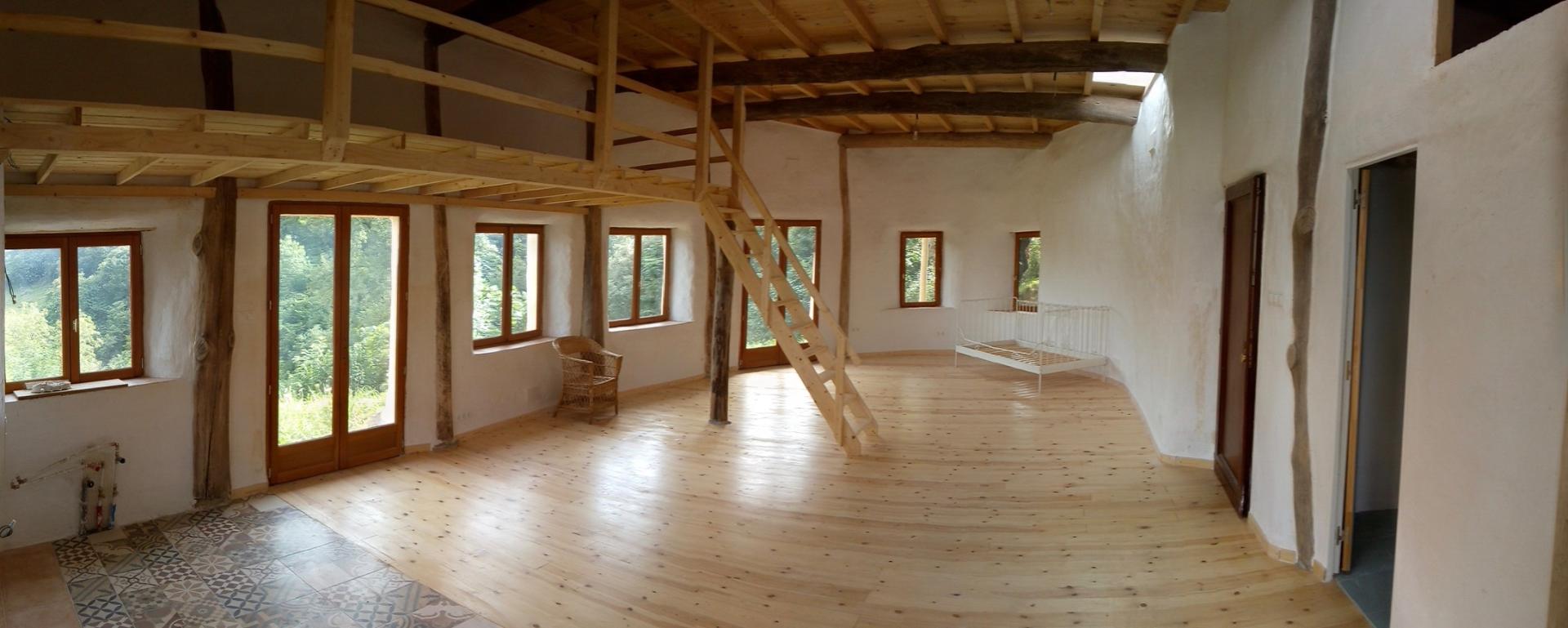
4. Extensive south-facing glazing, overhang & thermal mass for passive solar heating. Skylights ensure well-diffused natural lighting.
5. Solar thermal hot water panels, heat pump and PV panels are included as options to reduce upfront costs.
6. The houses are located on 0,5Ha of south-facing terraces that include food forest and intensive raised-bed food production. Planted in 2006, the forest has fixed an estimated 18t CO2.
7. Separation of grey- and blackwater, with ecological treatment via composting & filtration.
Key objectives for aesthetics and quality
Objectives in terms of aesthetics and quality of experience beyond functionality:
- To build beautiful, organic, handcrafted houses that are aesthetically integrated into the natural and cultural environment;
- To create an experience of building with natural materials that is sensuous, fun, and healthy;
- To facilitate students and volunteers to apply their own creativity through practical hands-on learning;
- To encourage people around the world to pursue the creation of beautiful hand-made buildings.
These have been met as follows:
- Earth, wood, stone and other locally obtained, natural materials, worked by hand to give an organic texture, provide an aesthetic that integrates seamlessly into the natural environment. Green roofs and earth-sheltered design reduce the visual impact of the houses. Through the participation of the residents in creating and modifying both the buildings and their surrounding ecosystem, a process of co-evolution is set in motion that progressively integrates the houses with their environment.
- The experience of building with natural materials such as wood and earth is completely different from working with steel and concrete as in a conventional build. Working with natural materials encourages a relaxed and alert state of mind and body, becoming an almost meditative practice. The construction industry is the most dangerous in terms of worker accidents, but since 2006 we have never had an accident on site more serious than someone stepping on a nail.
- The warm, flexible and friendly qualities of natural materials, combined with their low cost and ease of recycling, encourage even novice builders to experiment freely and express their creativity.
- The beauty and accessibility of natural building have made it into a global grassroots movement. Hundreds of volunteers and students have spent time at Abrazo House, gaining skills and confidence which will help them build their own beautiful houses some day.
Key objectives for inclusion
Objectives in terms of inclusion:
-
To allow people on moderate incomes to attain a high quality of life by providing high value affordable housing;
-
To educate, empower, and encourage people who want to build their own low-cost, low-impact houses, through hands-on learning;
-
To improve access for women in the building sector;
-
To improve access more widely to high-quality low-cost eco-housing by disseminating knowledge about design and construction.
These have been met are as follows:
-
Two affordable single-family eco-houses were completed in 2018, with the participation of the future residents. The retail price of the houses was 798 €/m2, or 22% below the average price of houses in the same municipality (Voto, Cantabria). In addition, the running costs of these super-insulated, energy-efficient houses should be substantially lower than those of a conventional dwelling. This proves that eco-building doesn't have to be a niche market only accessible to the wealthy.
-
Since 2006, hundreds of volunteers and students have learned about the design and construction of eco-houses, in theory but especially in practice, through our formal and informal educational programmes, while gaining confidence that they can some day build their own home. These programmes are mostly offered on a work-exchange basis (labour in exchange for food, accommodation and learning), meaning that they are accessible to people on low incomes.
-
The construction sector is traditionally very male-dominated, but natural building uses materials and techniques that are safe, healthy and require less physical strength. Roughly half the participants in the project have been female.
-
During the same period, thousands of people have learned about low-cost eco-design and self-build via our website and newsletter, as well as through the media (Spanish national and regional TV and press), guided tours and our self-published book.
Results in relation to category
Solutions for the co-evolution of built environment and nature
A healthy ecosystem is not necessarily one where people are absent, but one in which there is a mutually beneficial relationship between human beings and other species. Buildings can be an integral part of this relationship, provided they are not conceived as static and imposed/imported from elsewhere, but flexible and growing organically from the place.
The design of these houses, with low-impact, local & natural materials, green roofs, earth sheltering, and organic forms, places special emphasis on integration into the natural environment and co-evolution with it. The aim is for these houses to have a beneficial, practical and aesthetic impact that steadily grows over time, not only during the construction phase but throughout the building's life. This co-evolution is not something that can happen by design on paper or a computer screen, but demands a patient, continuous cycle of observation and intervention. As Stewart Brand said, buildings "learn" (i.e. co-evolve gracefully over time with their environment) when they "are made from low-cost, standard designs that people are familiar with, and [are] easy to modify."
Our construction system uses these low-cost materials in ways that are easy to learn and practice, even for people who are not professional builders. This means that residents can participate as co-designers and co-builders of their immediate environment: the house, the edible landscape around it, and the interactions between them.
This co-evolutionary process is especially notable in the development of the edible landscape around the building, where the cycle of observation and intervention takes place over successive growing seasons, as the residents interact with the living environment—planting, cultivating, and harvesting—constructing a mutually beneficial relationship.
How Citizens benefit
Since 2006, many hundreds of volunteers and students have spent time at Abrazo House to learn about eco-building and sustainable living, in theory but especially in practice. This is not a one-way exchange but a mutual learning experience. Everyone has something to contribute to the project, and everyone leaves their mark in some way: whether it's a design suggestion, a new technique, or a song or story that they've shared.
The development of our place, our buildings and landscape, has been profoundly influenced by the work, creativity and enthusiasm of these countless helpers, who in turn have taken their learning and inspiration out into the world with them. Former participants have gone on to build their own ecological houses in other places — whether as close by as the same valley, or as far away as North America.
We offer monthly guided tours, organised through the local Agenda 21 agency, to introduce visitors, both local and from elsewhere, to our project and thereby to disseminate these materials and techniques within civil society. We have also appeared several times in the national and regional TV and press.
Innovative character
Without reinventing the wheel, we are innovating by adapting techniques, such as earth and timber building, that have been in use for hundreds of years; others, such as straw bale, have been around since the late nineteenth century.Others, such as green roofs, are less than fifty years old.
In many cases, we are helping to revive techniques, such as bioclimatic design or earth building, which are found in traditional construction throughout the world but which have been lost since the advent of standardized industrial building materials and the ready availability of fossil fuels. The innovative character of the project consists of adapting these techniques to our specific context in ways that are low-cost, durable, and high-performance, yet easy to learn by inexperienced builders.