Children's National Hospital
Basic information
Project Title
Full project title
Category
Project Description
Sofia is the only European capital without a children’s hospital, where seriously ill children can receive adequate and immediate care. The case "New National Children's Hospital" in Bulgaria was one of the topics of 2019 and is keeping its relevance until today. It is a very mandatory problem in our society and I want to present a different way of doing hospital architecture, in which the main focus is on patients/kids/ how they feel in this place and how it can help their healing process.
Project Region
EU Programme or fund
Description of the project
Summary
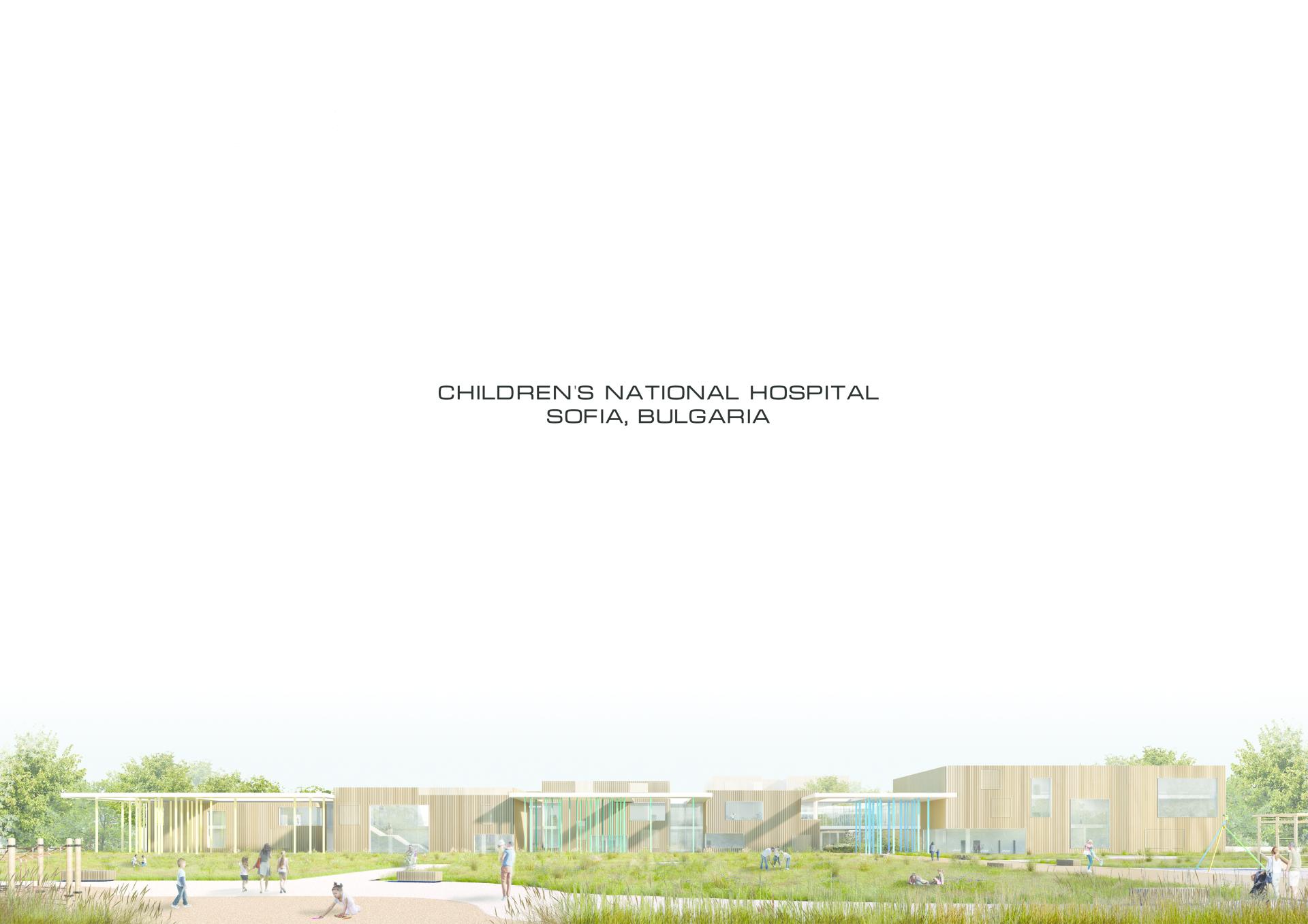
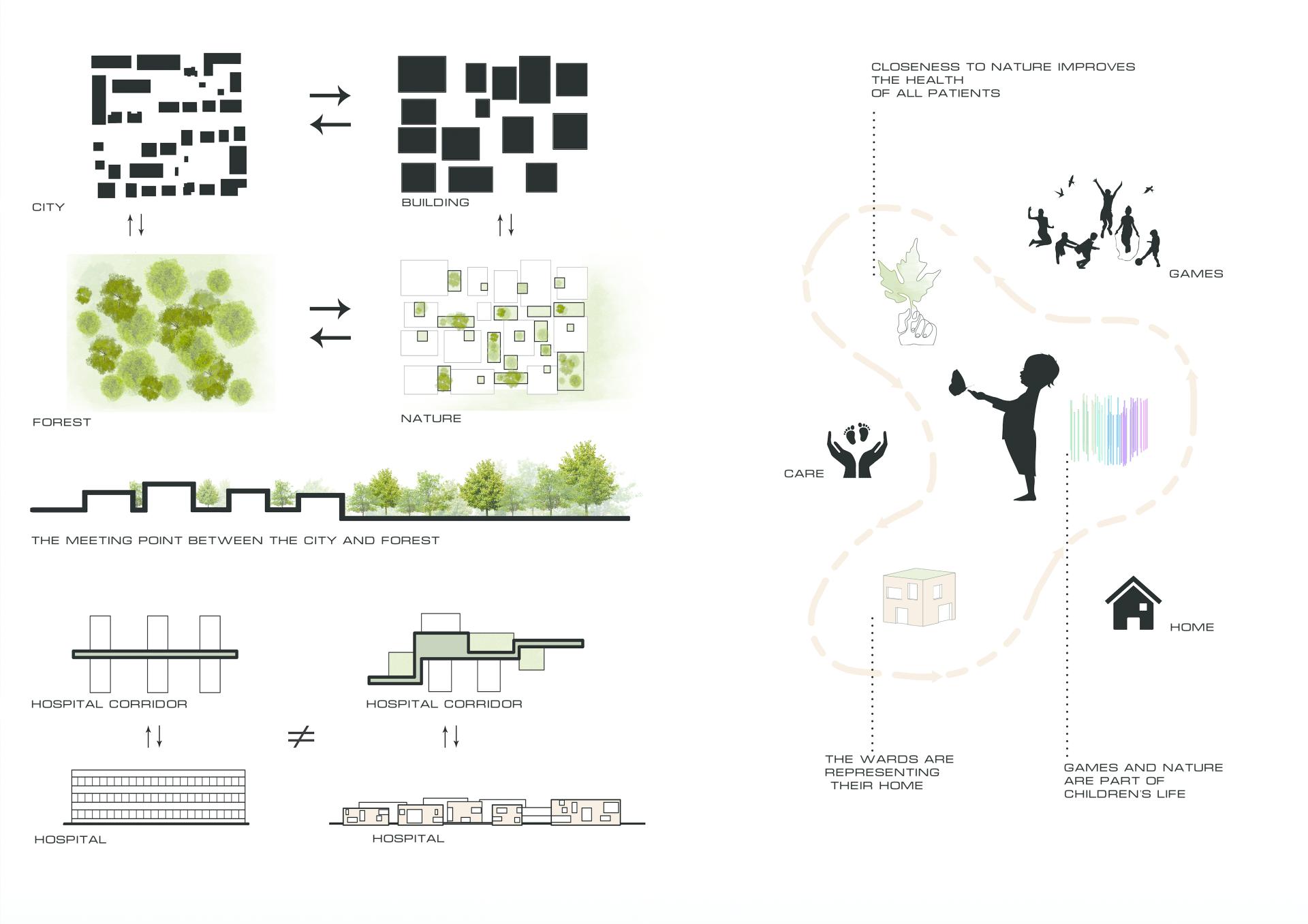
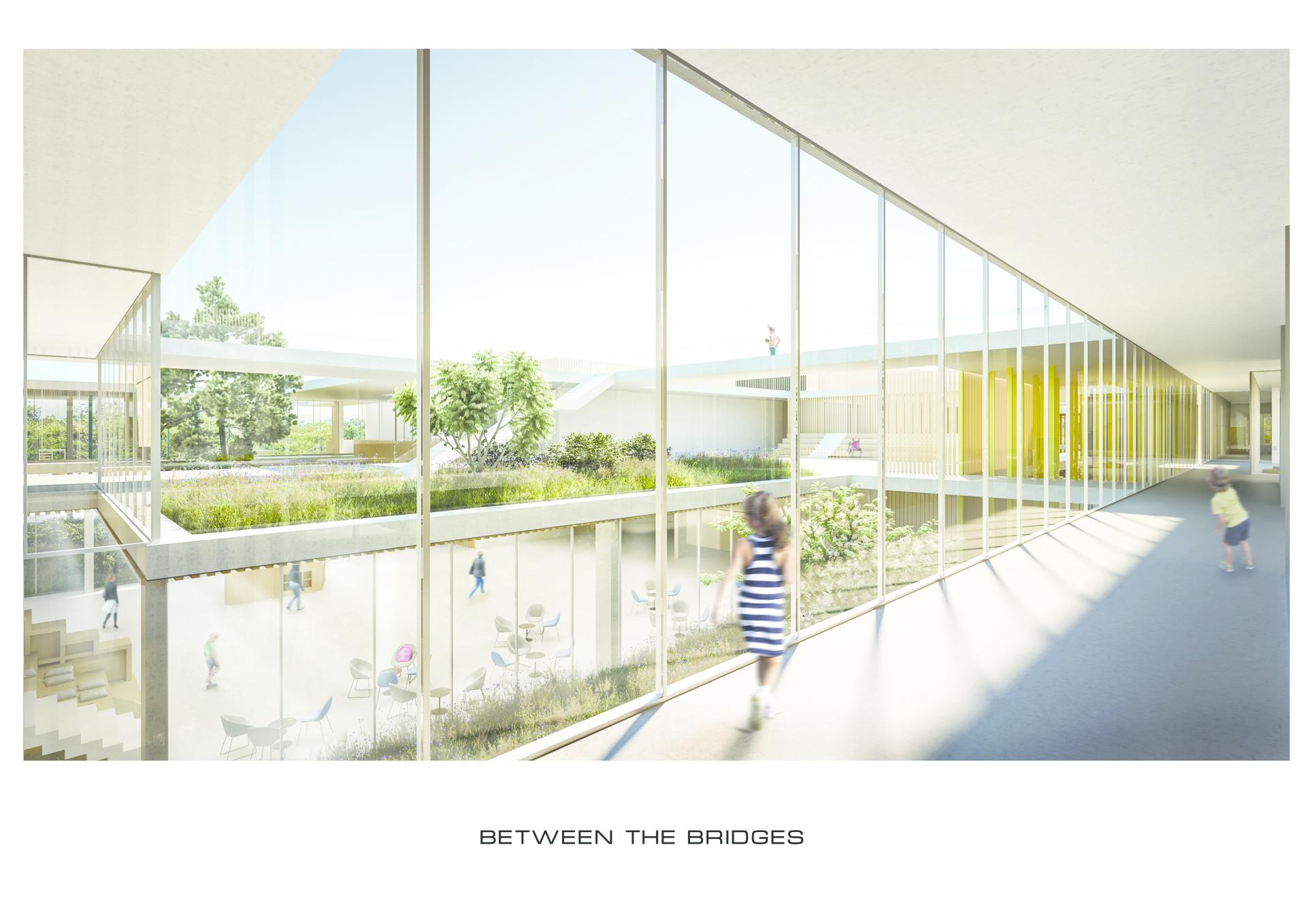
The main goal of the project is the complete escape from the feeling of a hospital as we know it, paying attention to how this can affect the physical and mental condition of children and their health.Closeness to nature is strongly associated with the healing process of children!Located on the border between the forest and the city, the building itself recreates the place where these two meet and enter each other. It is a diffuse environment composed of volumes penetrating the forest and many green areas scattering between them.The corridors in it are not long and dark, but well lit, taking our gaze to green courtyards, passing through common areas for waiting and playing. The large scale that the building suggests is broken down into smaller volumes with displaced windows that create a small children's town. The pavilion structure of the wards creates a sense of home for children, and the colored columns serve as a guide and are part of children's play.Through these means of expression is presented a children's world, very easily accepted by the child's psyche.
Key objectives for sustainability
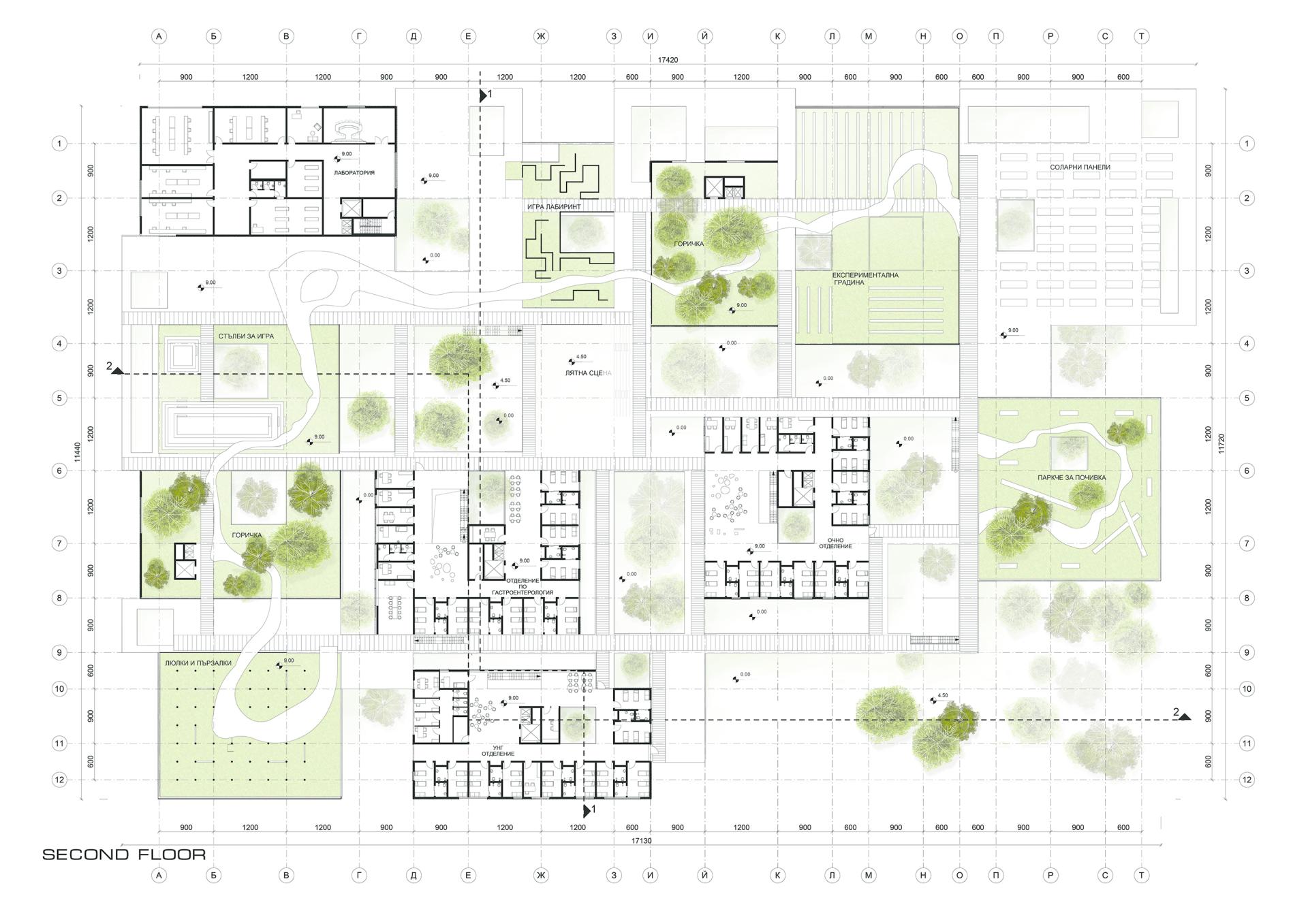
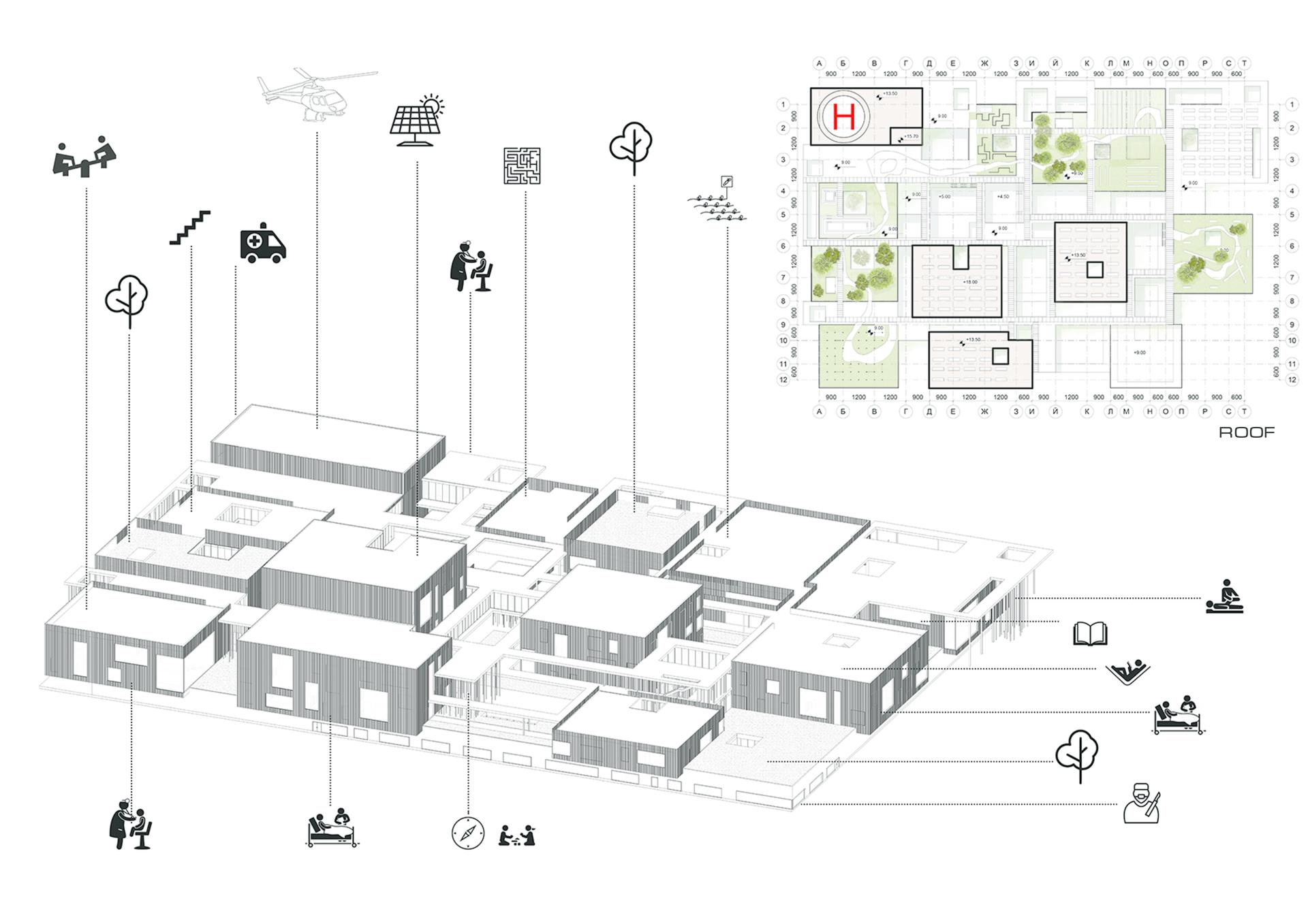
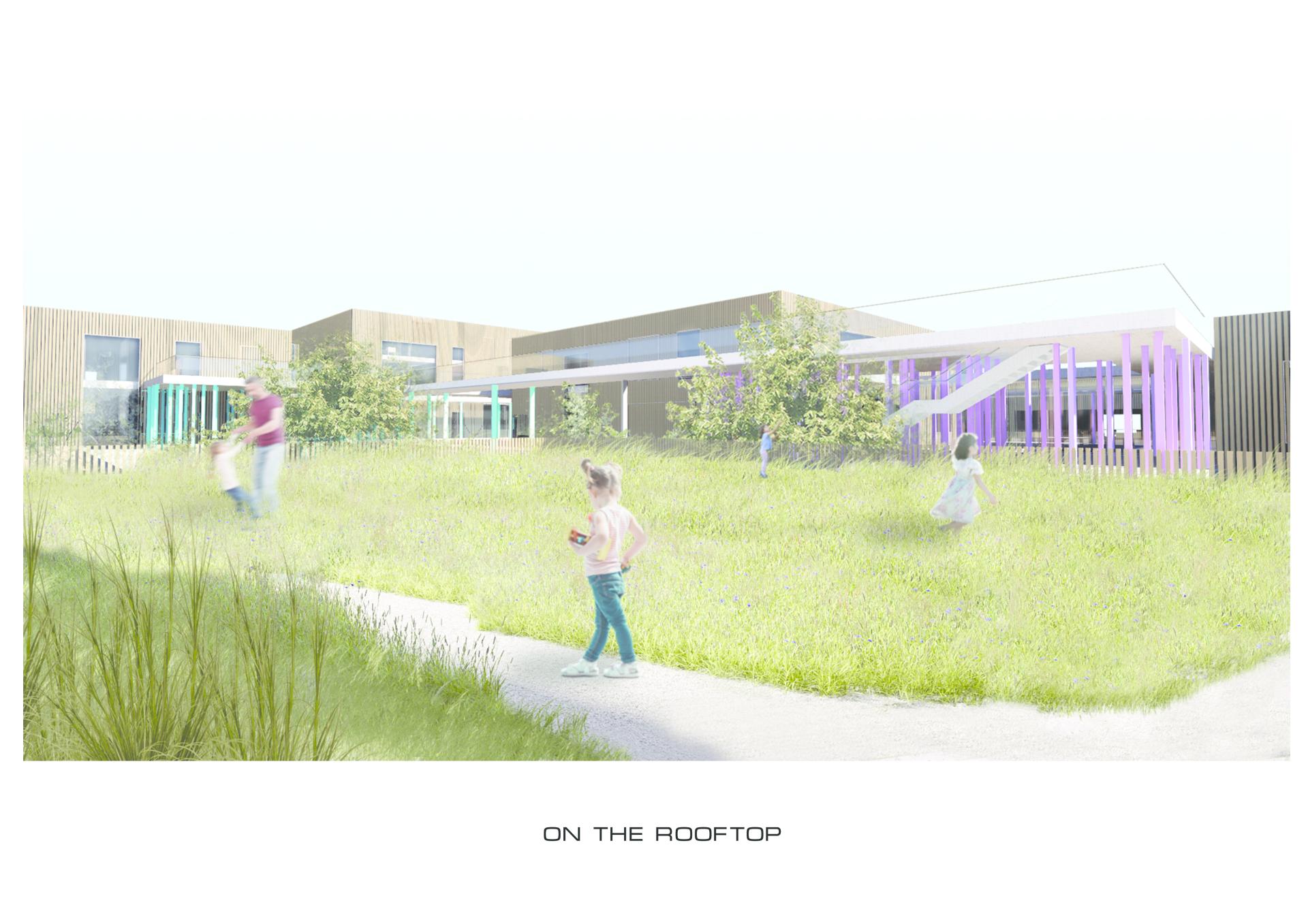
The closeness to nature is one of the most important features implemented in the healing process of the patients.The forest and the building are dwelling this place together. On the green roofs and yard children can play and relax, learning to value the nature. The choice of wood as a main material comes as the most natural solution which strongly emphasizes the idea of the building.The upper roofs are used for solar panels, through which the building can generate most of the energy used.
Key objectives for aesthetics and quality
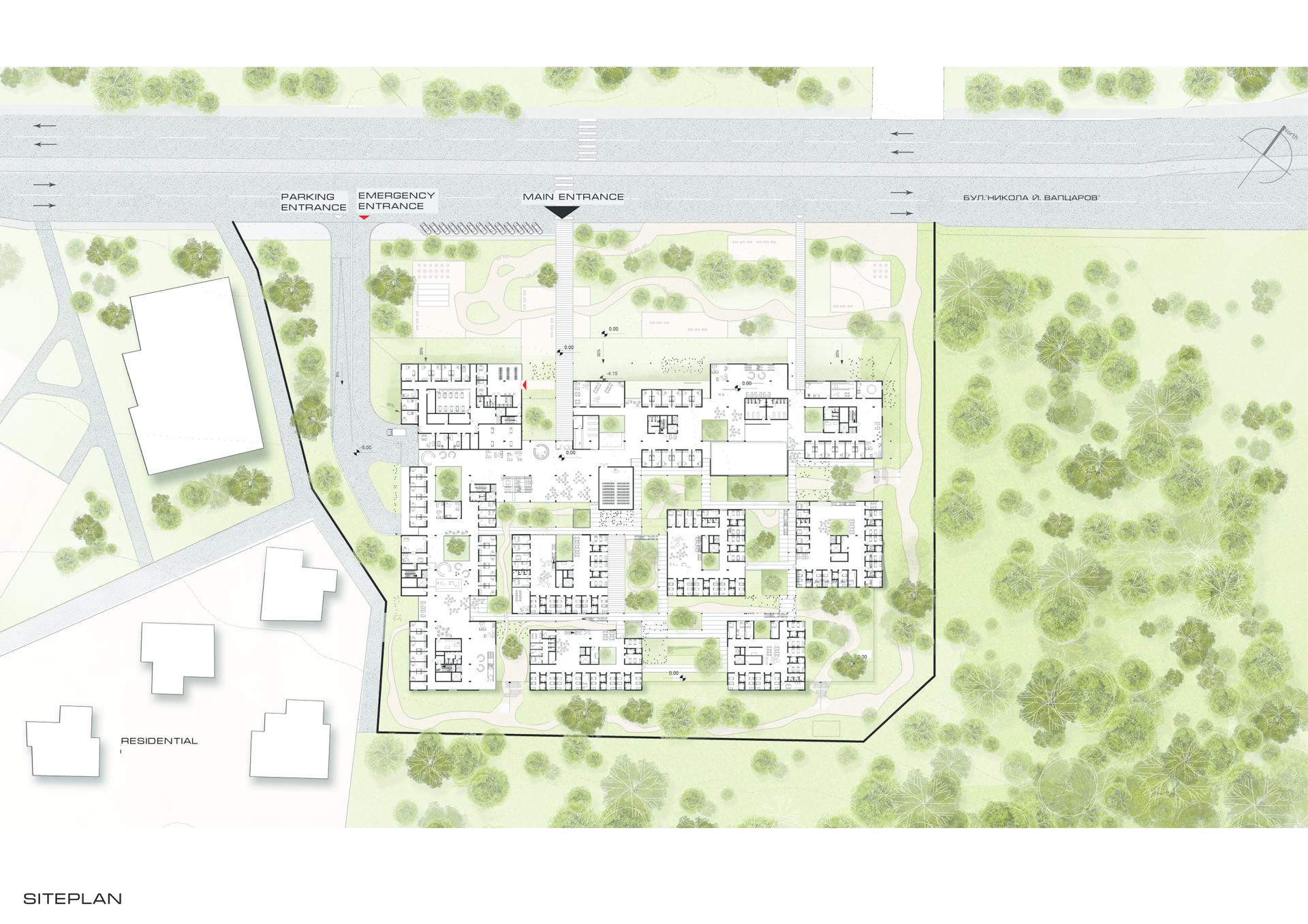
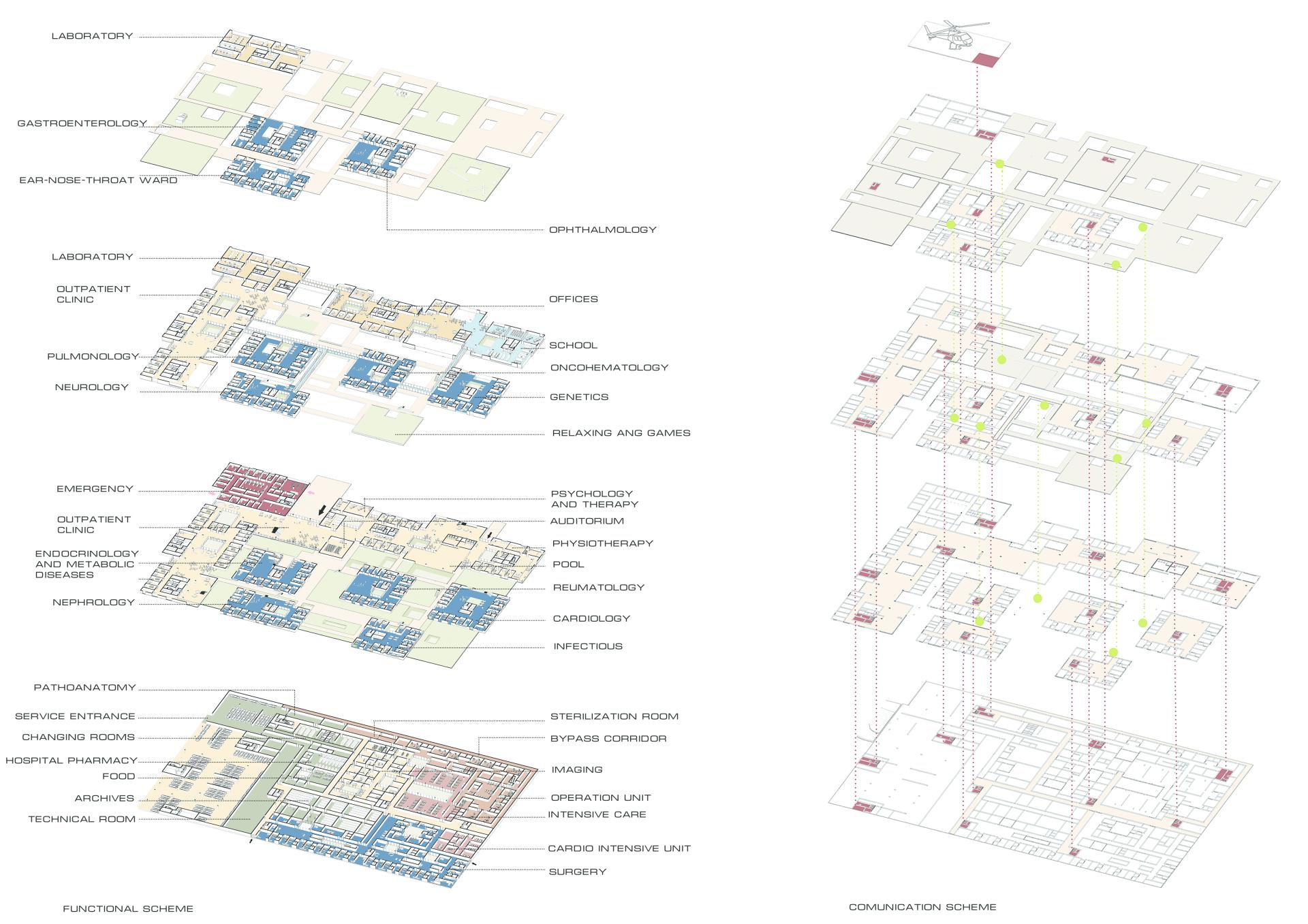
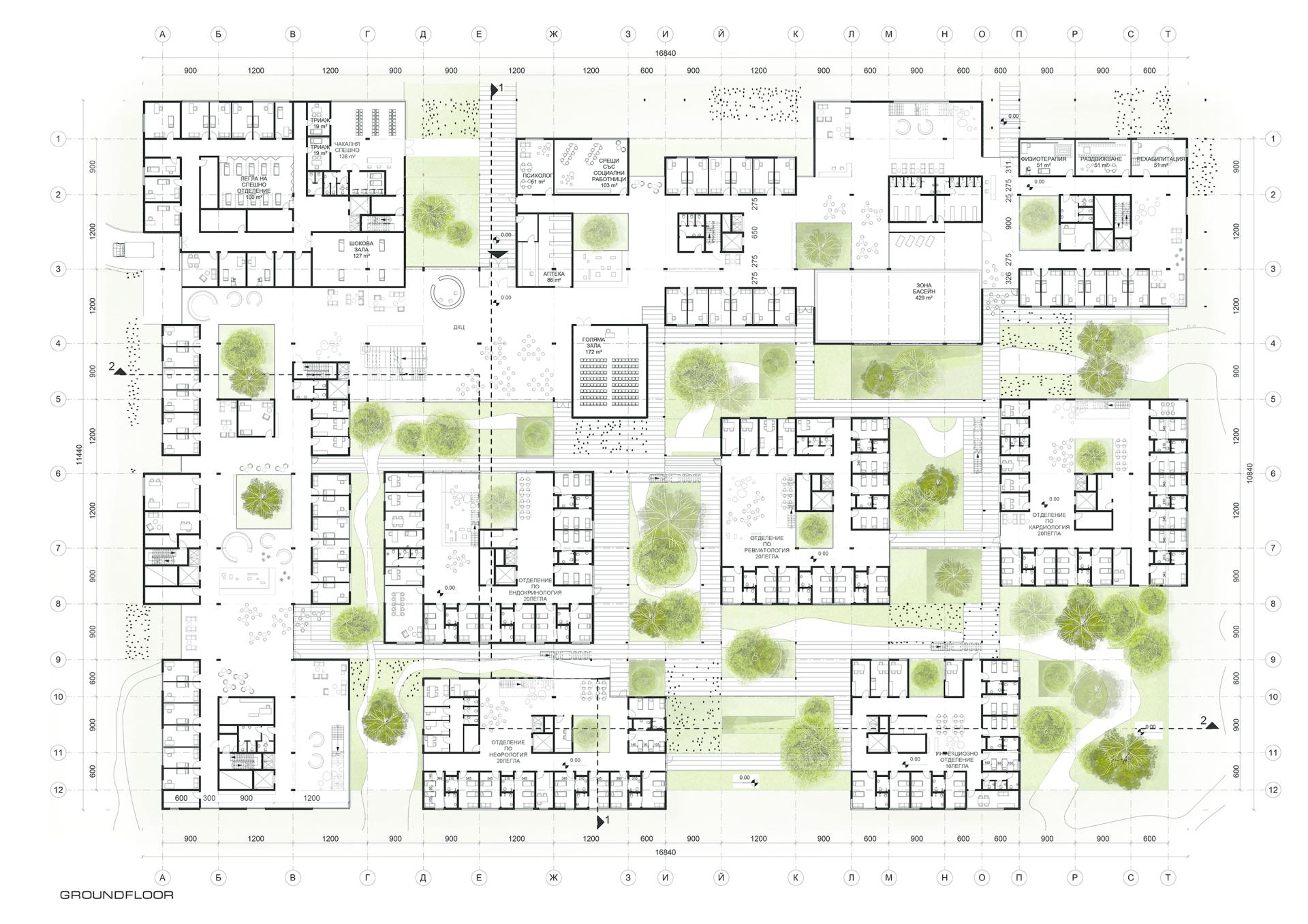
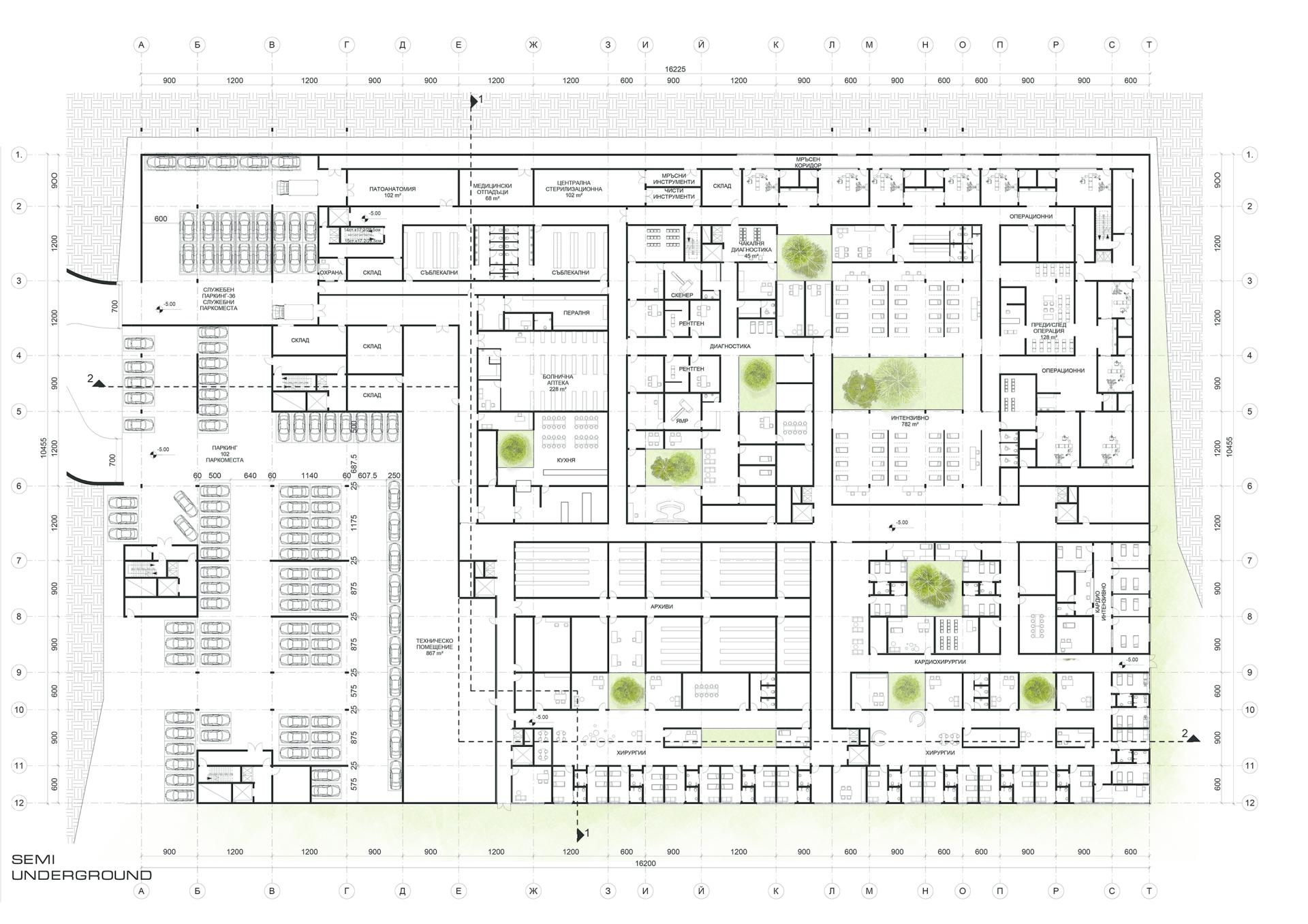
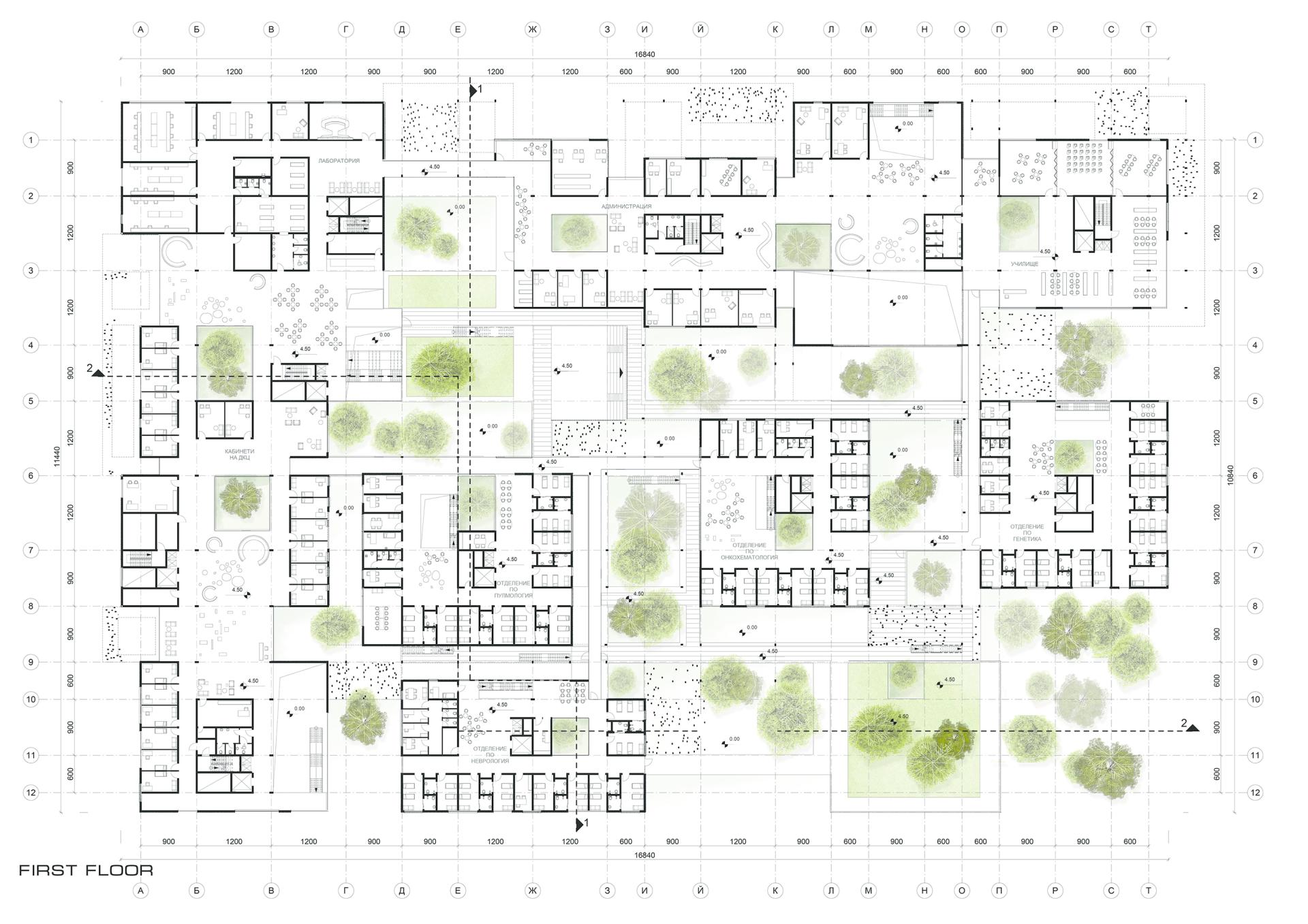
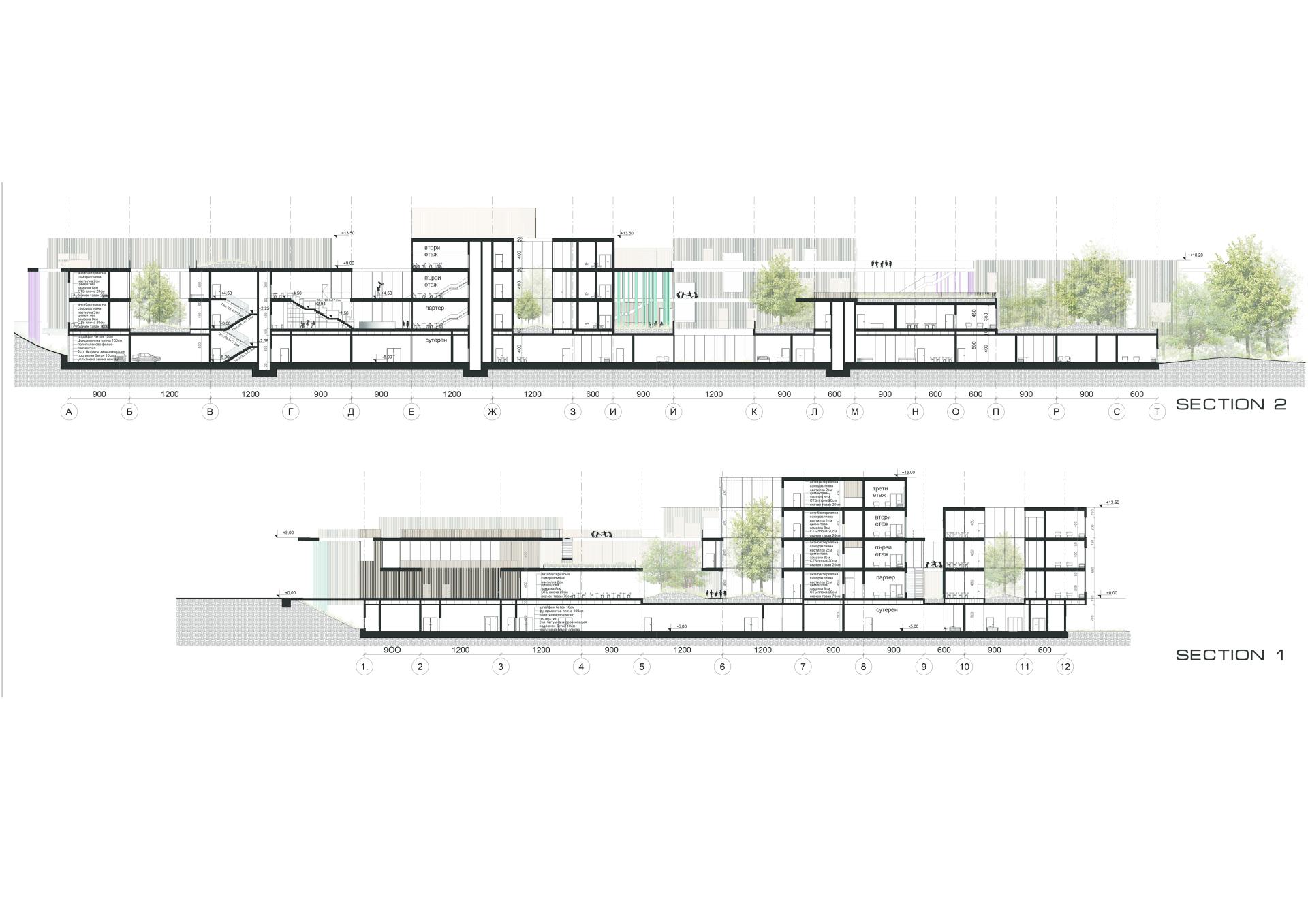
United in one common body (the outpatient clinic, emergency, laboratory etc.) build the northwestern front of the building, which surrounds the wards and creates a protective buffer between them and the city. The most convenient option is to unify the outpatient clinic units for quick and easy reorganization as medicine is constantly evolving and the requirements for organization around them are also changing. These areas, intended for outpatients, naturally form a division between themselves and the wards , which are organized in pavilions between the incoming forest from the southeast. The compartments can work completely independent of each other, being connected, vertically to the semi-underground floor, for their service. For this reason, horizontally, they have only one corridor connection at the first level, which provides the minimum necessary communication between the staff of the different wards and the connection of all wards with the training area. All areas are provided with natural lighting for higher hygiene and comfort.
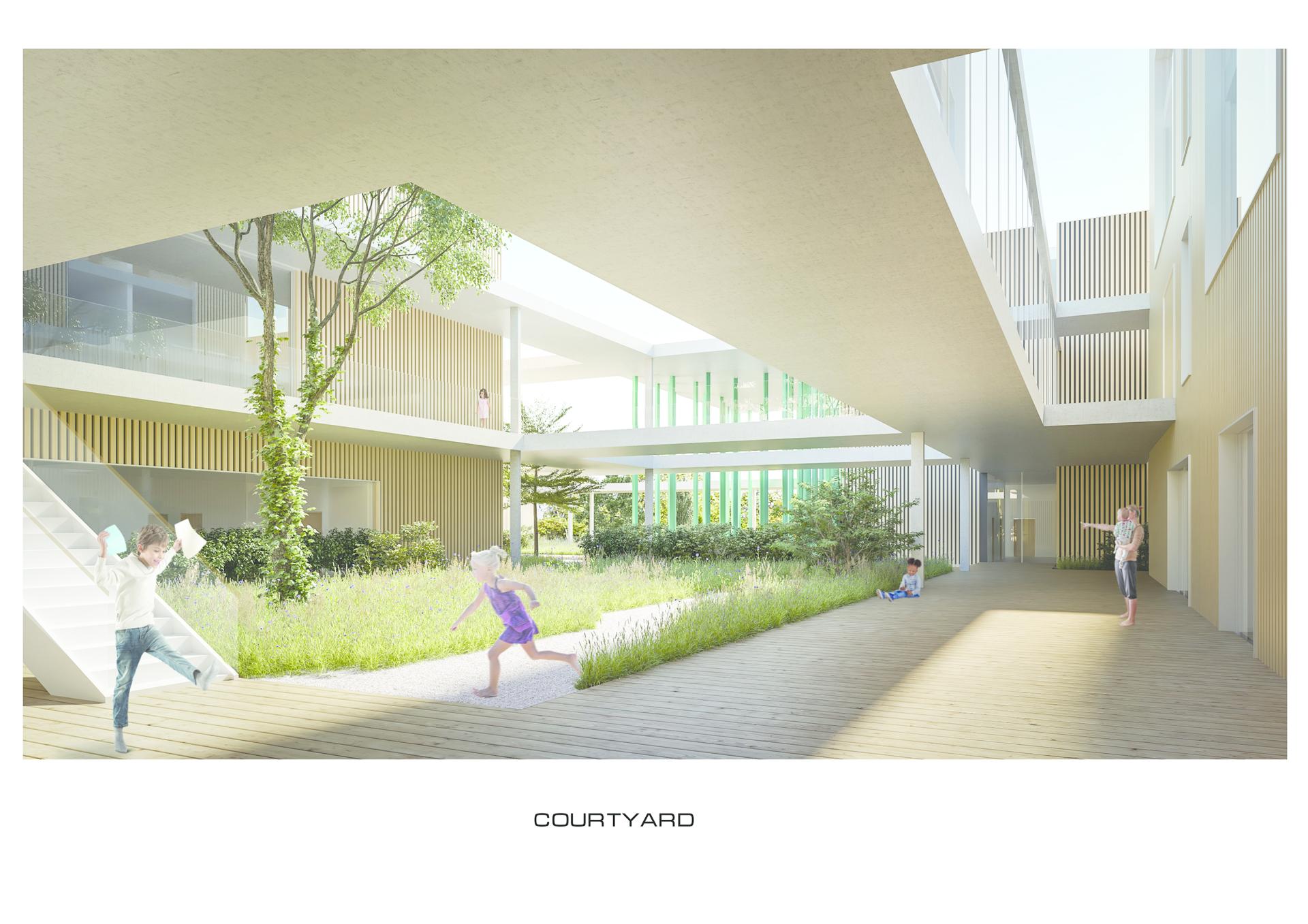
The pavilion structure of the wards allows the organization of pleasant courtyards, which encourage children to go out into the fresh air more often. Colored columns represent an orientation game highlighting the path to the different wards, because children associate best through colors. At each higher level in the wards, the children, in addition to seeing the crowns of the trees in the forest, will also have access to nature, on the floor on which they are located. Thus, it becomes an integral part of their treatment. On the first floor are also placed these warm connections between the compartments, with beautiful views of the treetops and the green roofs of the lower volumes. The second level is dominated by a net of usable roofs and bridges that connect the roofs on which are created different areas for children in the wards.
Key objectives for inclusion
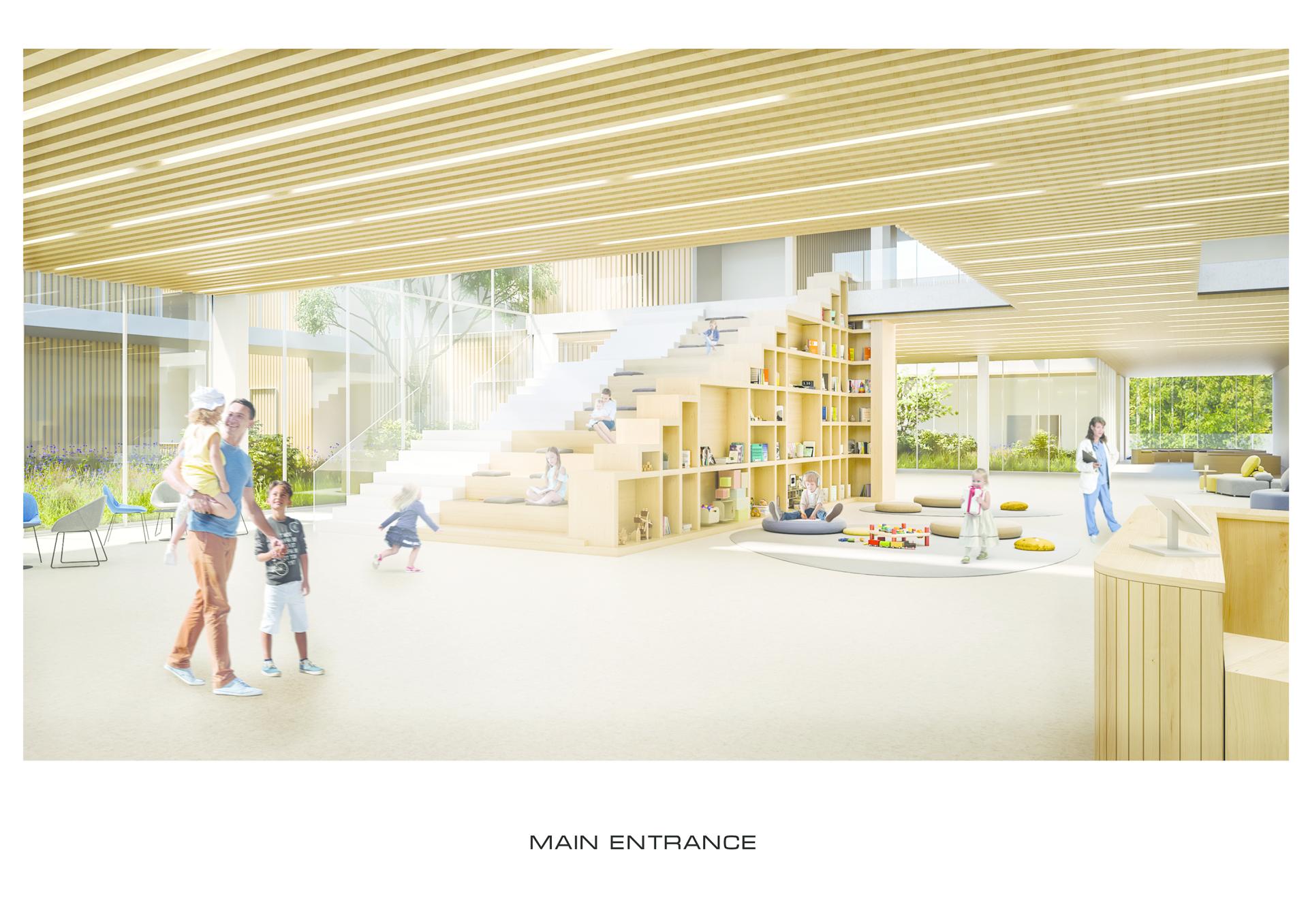
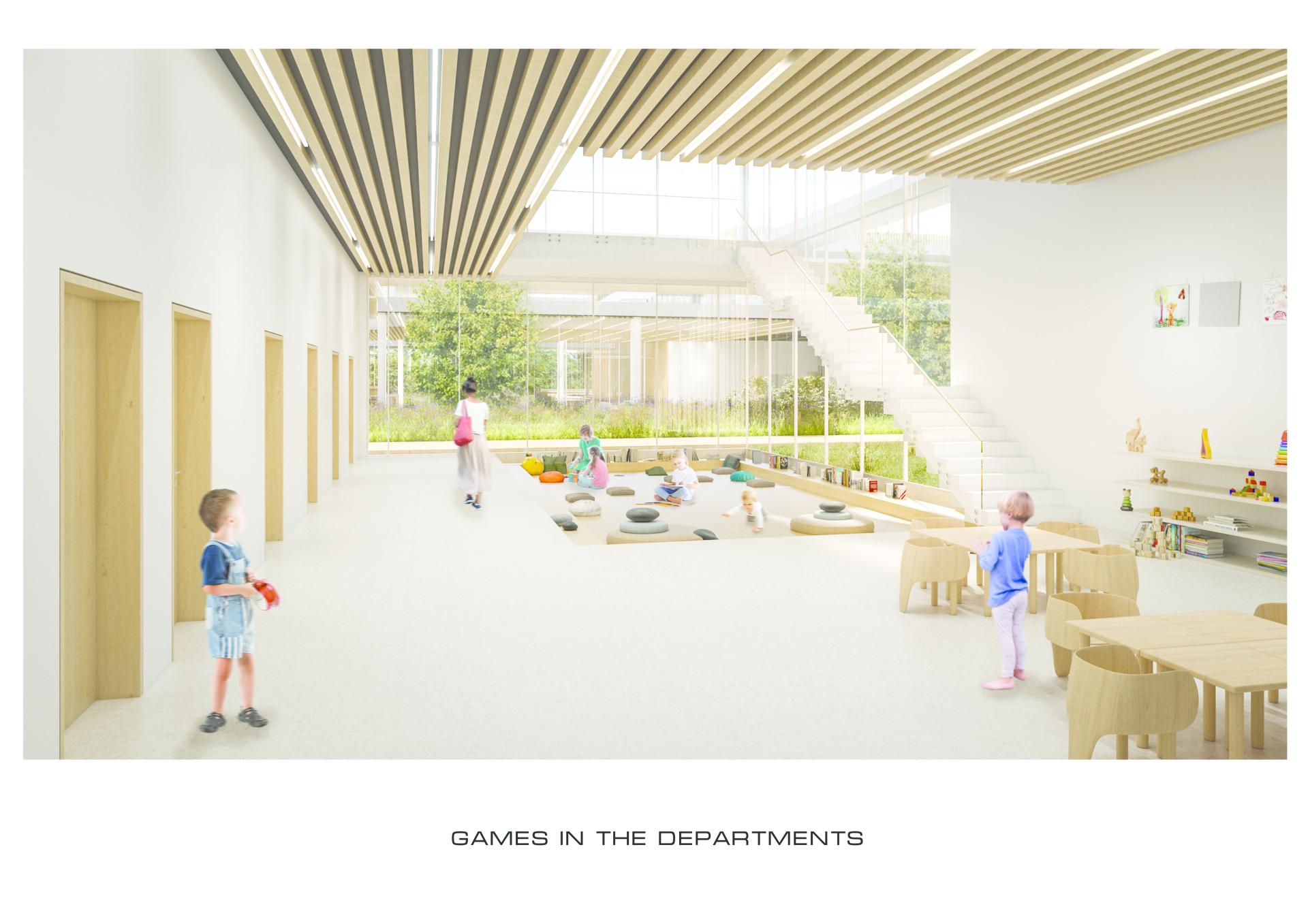
A feeling of home and coziness can be felt in each of the wards, as outside the hospital rooms are formed common areas for eating and playing, again overlooking the surrounding greenery, the goal is to encourage patients to get out of the hospital bed, which helps to their recovery.The picture of the main entrance clearly shows the escape from the hospital corridors. Here they take your gaze to courtyards, pass through play areas and create a system much easier to navigate and naturally lit. The entrances are separated for the emergency unit , outpatient clinic and reception and for the physiotherapy and rehabilitation unit and all of them are on the face of the building easy to recognise by the coloured columns in front of them. The choice of wood as a main material comes as the most natural solution. Which strongly emphasizes the idea of the building. It is implemented both in the exterior and in the interior, which complements the feeling of comfort that is created. All this elements (courtyards, play areas and pleasant common areas, small scale, colored columns, wooden lamellas, green roofs and bridges) strongly influence the mood and feelings of a child, respectively his healing process. In this way, hospital design helps to treat patients and fulfills the basic meaning of architecture - and that is to work for the benefit of people.
Innovative character
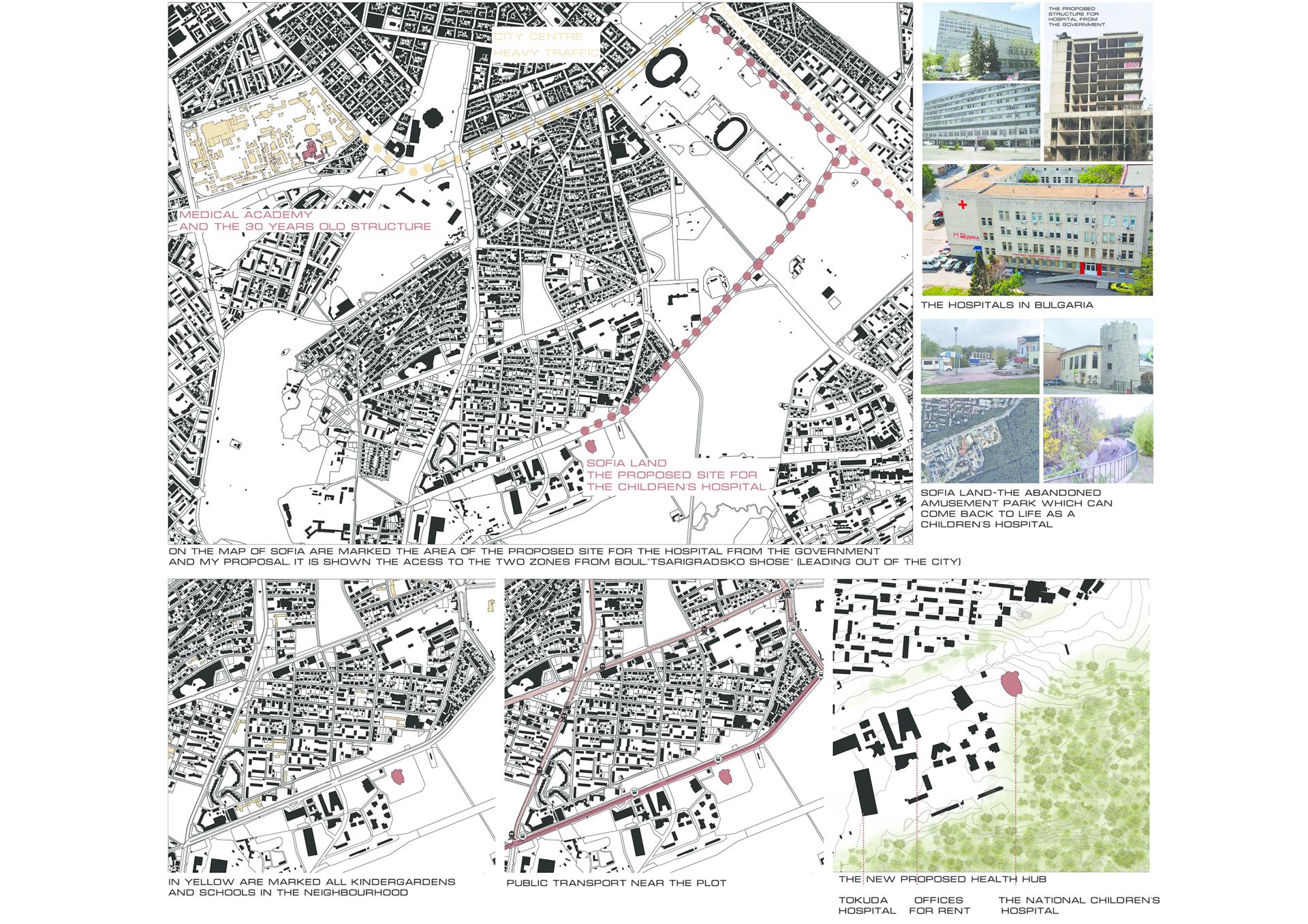
Hospitals in Bulgaria are dark, unfriendly places with the features of a typical soviet architecture-harsh old buildings with ribbon-shaped windows from end to end. In such a building they wanted to place the National Children's Hospital. Meanwhile, in other countries, we see examples of hospitals with a completely different approach. Hospital design needs to be constantly studied, and we as architects need to focus more and more on patients and how they feel there.
The government is proposing that the hospital be housed in a 30-year construction site located to the other hospitals around the Medical Academy, moreover:
1)Constructing another large hospital there does not imply quick access to it from and outside the city, due to the heavy traffic around the place, as we see on the map.
2)The place figured for its construction provides a high-rise building, where children will not have access to nature and terrain, and will be closed on the floors and the view will be old hospital buildings around.
That's why I headed to the terrain of Sofia-Land (former amusement park - now abandoned and crumbling) where:
1)There is quick access to the place from the city, with bus stops and metro station and outside the city with its closeness to the main boulevard(Tsarigradsko shose Blvd.)
2)It is located on the border between the city and the forest which is a prerequisite for a good relationship with both.
3)The terrain is large enough to build a low-rise and wide area building that works as a single organism.
4)There are prerequisites for the establishment of a new "health hub" due to its proximity to Tokuda Hospital and the offices that can be leased to pharmaceutical companies.
5)And the very history of the place - this place is taken from the forest for the creation of Sofia Land, which is designed for children.After a few years closes its doors and sinks into oblivion, now the place can be revived, and again be used to serve the children returning even nature there