eRelief
Basic information
Project Title
Full project title
Category
Project Description
eRelief offers a new multisensorial way to experience visual art.
It consists in a dynamic surface that allows the user to perceive the artworks through touch.
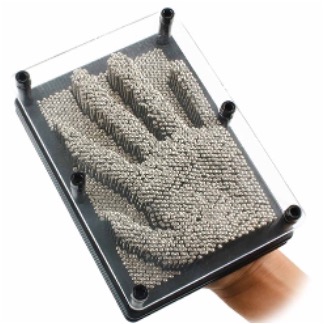
Inspired by the principle of pin-art, it creates the high-relief of any artworks - previously transformed in a 3D digital model - through the ascent and descent of its pins.
The aim is to create a new way to explore art and, at the same time, to give people with visual impairment the possibility to appreciate artworks.
Project Region
EU Programme or fund
Description of the project
Summary
eRelief is a device with the appearance of a table (measuring about 0.6m²), equipped with a dynamic surface based on the principle of pin-art, which allows the user to perceive through touch the shapes of artworks.
Through the union of modern design and smart technology, eRelief allows everyone to expand their perceptive skills, constituting an advantageous edutainment opportunity. At the same time, it allows cultural institutions to be more inclusive for visually impaired people, with a single purchase and occupying a limited space.
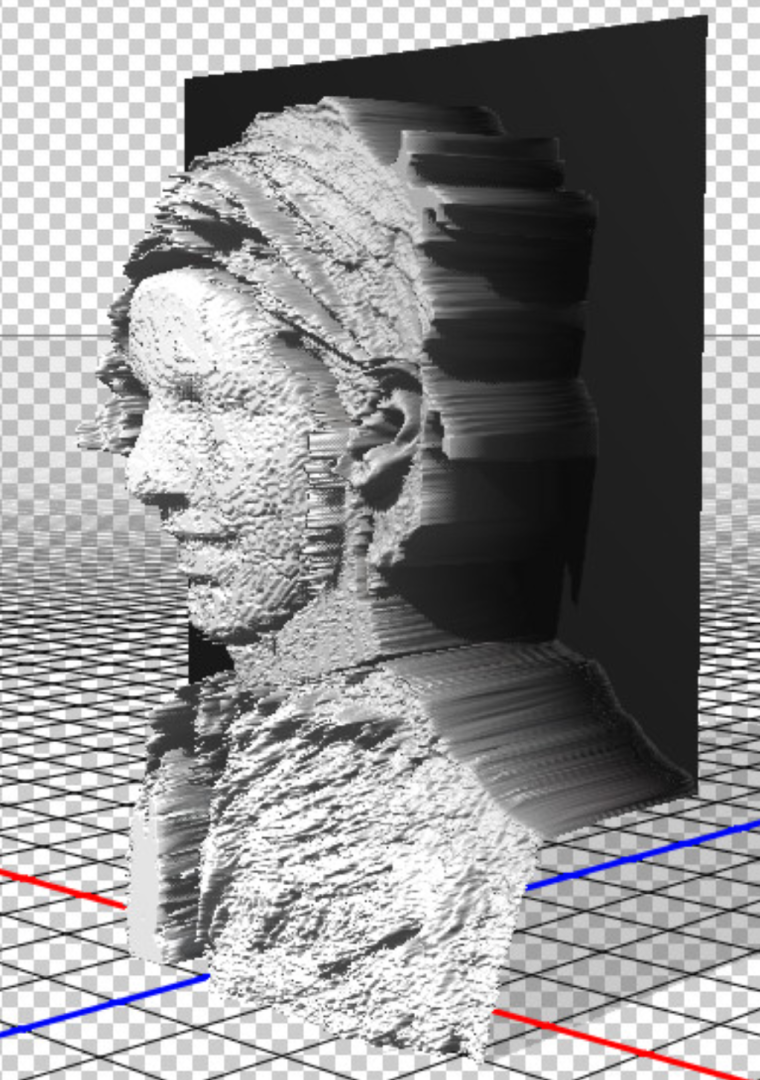
The device works in two phases: first, a software converts the 2D picture of an artwork in a 3D digital model. Then, the 3D model is transmitted to the hardware, that will reproduce the shapes of the image by moving up and down its pins.
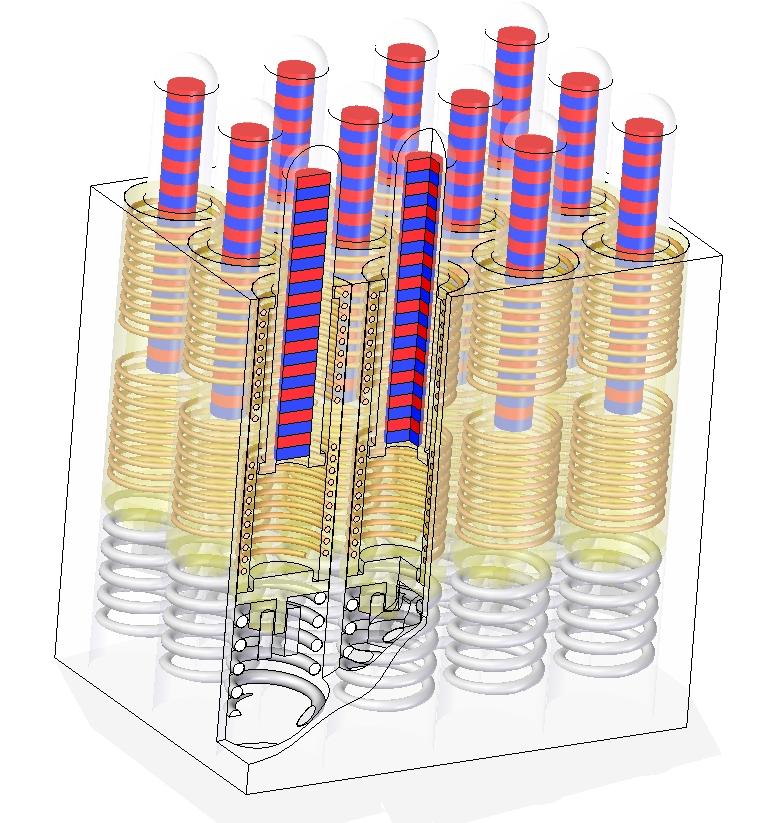
At the base of the device, under the touchable surface, there are some actuators that moves the pins recreating the shapes of the 3D digital model of the selected artwork. More specifically, two actuators will be connected to each row of pins, in which one adjusts the height and the other moves it along the sides.
In the building process of the prototype, adopting a haptic system could bring numerous advantages:
- 2-3 mm spatial resolution to meet the requirements of fingertip perception of gross shape;
- extremely low cost (< 0.10 $) per pin;
- large dynamic movement range in the height direction to render complex 2.5D shapes;
- sufficient force to provide robust contact while pins are perceived by the user’s fingers and hands;
- low noise to not disturb or distract users;
- refresh rates under 1 second to allow for interactive applications;
- reasonable weight so the setup can be taken with the user as a mobile device.
Key objectives for sustainability
The goal of eRelief is to offer a new multisensorial way to experience visual art, creating a new edutainment opportunity and making the world of artworks more accessible for visually impaired people.
In answering this need, eRelief constitutes also the most sustainable solution.
In the first place, it consists in a single device, capable of reproducing almost any visual artwork, whereas per today to obtain the same result are needed many 3D fixed replica, one for each artwork.
Right now, in fact, the only solution to this necessity has been the production of one bas-relief (or high relief) reproducing the 3D digital model of an artwork.
If the inclusivity is an objective that actually has to be reached, it could be done so only with the construction of a huge number of bas-reliefs and high reliefs. Aside the problems regarding the actual usability of such solution, it could be hardly considered sustainable.
Moreover, those objects are often built with non-ecofriendly materials, such as non-recycled plastic or plastic resins.
Thirdly, eRelief could allow to avoid collateral polluting activities, since the manufacturing of bas-reliefs or high reliefs would require also the costs of international transportation, packaging etc.
Key objectives for aesthetics and quality
Through the union of a modern design and a smart technology - inspired by pin-art - eRelief allows everyone to expand their tactile perceptions and aims to eliminate all sorts of social discrimination, including veiled discrimination. Regarding the combination of aesthetics and functionality, eRelief allows the museums to become more accessible to blind visitors by purchasing one single device that will occupy a limited space, in order to meet international objectives (UN CRPD) and ministerial guidelines on cultural accessibility. The Guideline Act on Scientific and Technical Criteria on the operating and development standards of museums (DM 10 May 2001), recommends as follows: within the conditions of use, are to be considered included all those measures which allows visitors with various disadvantages to fully enjoy the visit and the services, experiences, and information. Sight and hearing problems are to be taken into account, in the setting up, since they may de facto restrict access to part of the visitors.
Regarding this issue, eRelief facilitates universal use and allows you to touch even works usually relegated to museum stores. The idea was also born to ensure compatibility between the exhibition rooms and the product, integrating it and making it part of the museum path. Compared to existing solutions (audio guides, tactile maps, reproductions), eRelief’s display is based on the principles of Universal Design and a perfect combination of technology and sensory learning, without neglecting ergonomics and adaptability to the context. The surface of eRelief adapts to the human touch and the perception of shapes and volumes will help understanding and stimulate curiosity about the works among the visitors. The placement of the product within the area of the museum will be properly studied together with the staff, to allow an innovative and unforgettable experience.
Key objectives for inclusion
Inclusion is the groundwork of the project, hence the positive and constructive acknowledgements it received in months of existence. As a matter of fact, the first key objective has always been to assist people with visual disabilities, from the partially sighted to the blind ones, and allow them to enjoy the visit of a cultural site or to take part in a school lesson.While to date there is no prototype, its creation is the first objective of eRelief, that can combine its innovative ideas and a well-known practice, since tactile panels already exist. Moreover, the group had the pleasure to interview blind people at the Istituto dei Ciechi Cavazza in Bologna and results were thrilling. If before this experience there was some doubt about the validity of the model, after the interviews it turned out that the chances of success were high.
The second key objective is to build a device which benefits impact not only on visually impaired people, but everybody, since it is meant to be “designed for all” and part of the “universal design” movement. The eRelief team believes that inclusion is reached when all visitors during an exposition can easily gather around the object and interact or the whole class can play educational games together. This includes, for instance, adjusting the height of the table for wheelchair users or children.
Last but not least, eRelief’s third key objective is to support institutions reaching the 2030 Agenda for SD adopted by the United Nations. Specifically, the tenth goal about reducing inequality within and among countries and the ninth about promoting inclusive industrialization or fostering innovation. Nowadays a large number of people with disabilities cannot enjoy the same exhibition route as normally able-bodied people do or to access the same level of education, procedures that should no longer exist.
Innovative character
The project relies on two different innovative features. The first concerns the digitisation of cultural heritage. A semi-automatic method to translate portraits in three dimensional files that can be read by the proposed device has already been developed. This process starts with the reconstruction of the face using an open-source software and then the remaining part of the artwork is completed through 3D modelling. In this way, almost every portrait of the art collections can be converted in a limited time, which makes the project very scalable. The second innovative feature concerns the dynamic surface of the product. This surface will faithfully represent the relief of every piece of art that the user wants to touch in a limited space. This last characteristic is what distinguishes the suggested solution from the common tactile relieves that are bulky and therefore cannot cover the whole museum exhibition because their deployment would take up too much space in the galleries. The potentialities of this technology can go beyond representing artworks for people with visual impairments and can provide an unprecedented interactive experience which could be very interesting for everyone. For this reason, during the design process the team is following the rules of “Universal Design” in order to help museums in making art exhibitions truly accessible and inclusive. To sum up, the proposed product will be a powerful tool in the hands of cultural institutions, necessary to adapt to the latest European (Decision 2017/864 of the European Parliament and of the Council) and UN (UN CRPD) directives.