Re-Use Oil Tankers
Basic information
Project Title
Full project title
Category
Project Description
"Planet Earth, year 2050, carbon 0, we did it. It's today's news that after the last discharge, the remaining cargo tanker has finally turned off its engines: a new era begins. The WNPS (World Network for Planet Safety) in agreement with the remaining governments, confirms the possibility for spontaneous communities to independently regenerate oil extraction, transportation and processing structures, according to principles of sustainability and inclusive collaboration."
Project Region
EU Programme or fund
Description of the project
Summary
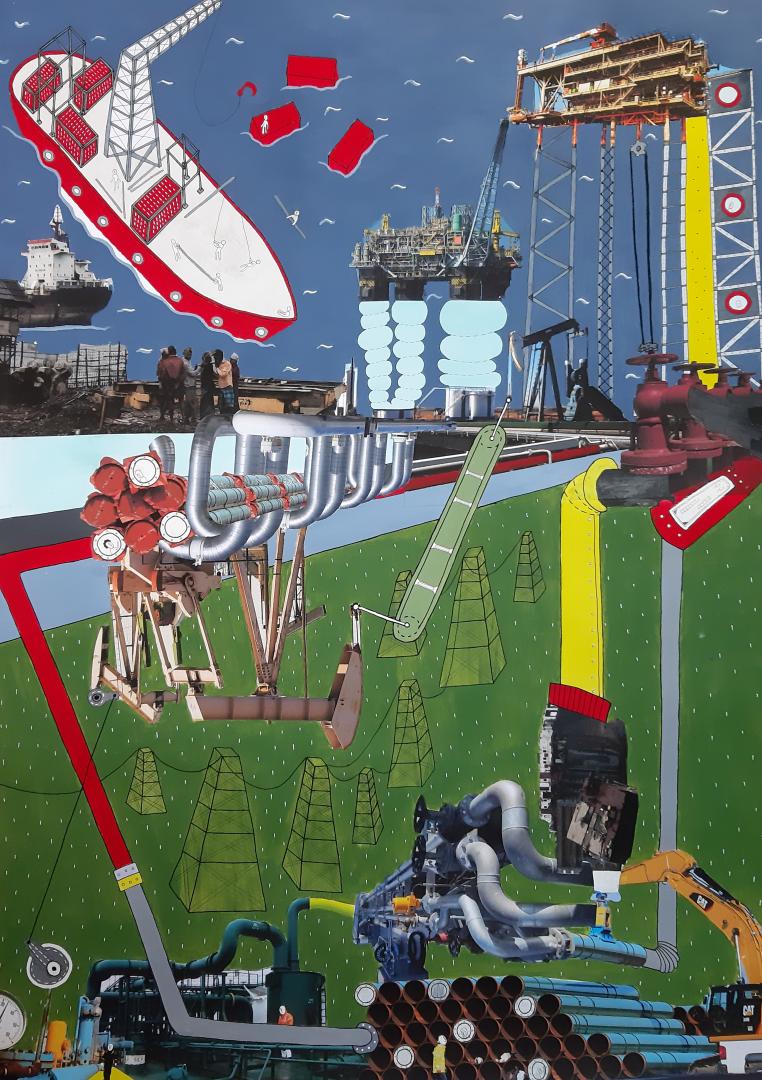
Recently we are experiencing violent weather events around the world, related to the phenomenon of climate crisis. In 2018 fall, the worsening of the events grabbed growing attention on the theme by the media. In December during the same year, the IPCC confirms as inevitable the increase in the next 12 years of 1.5°C compared to pre industrial levels; it was stated that to stem the problem, it would be necessary to reduce the emissions in 45% by 2020 to reach zero in 2050. If this will happen, we would be faced with the dismantling of structures related to the extraction, transport and processing of oil, a graveyard of shipwrecks, drills, oil platforms, pipelines, processing systems. Nowadays there is no alternative future for them rather than abandonment or dismantling, a process that takes place in hellish worksites along the coast of Bangladesh.
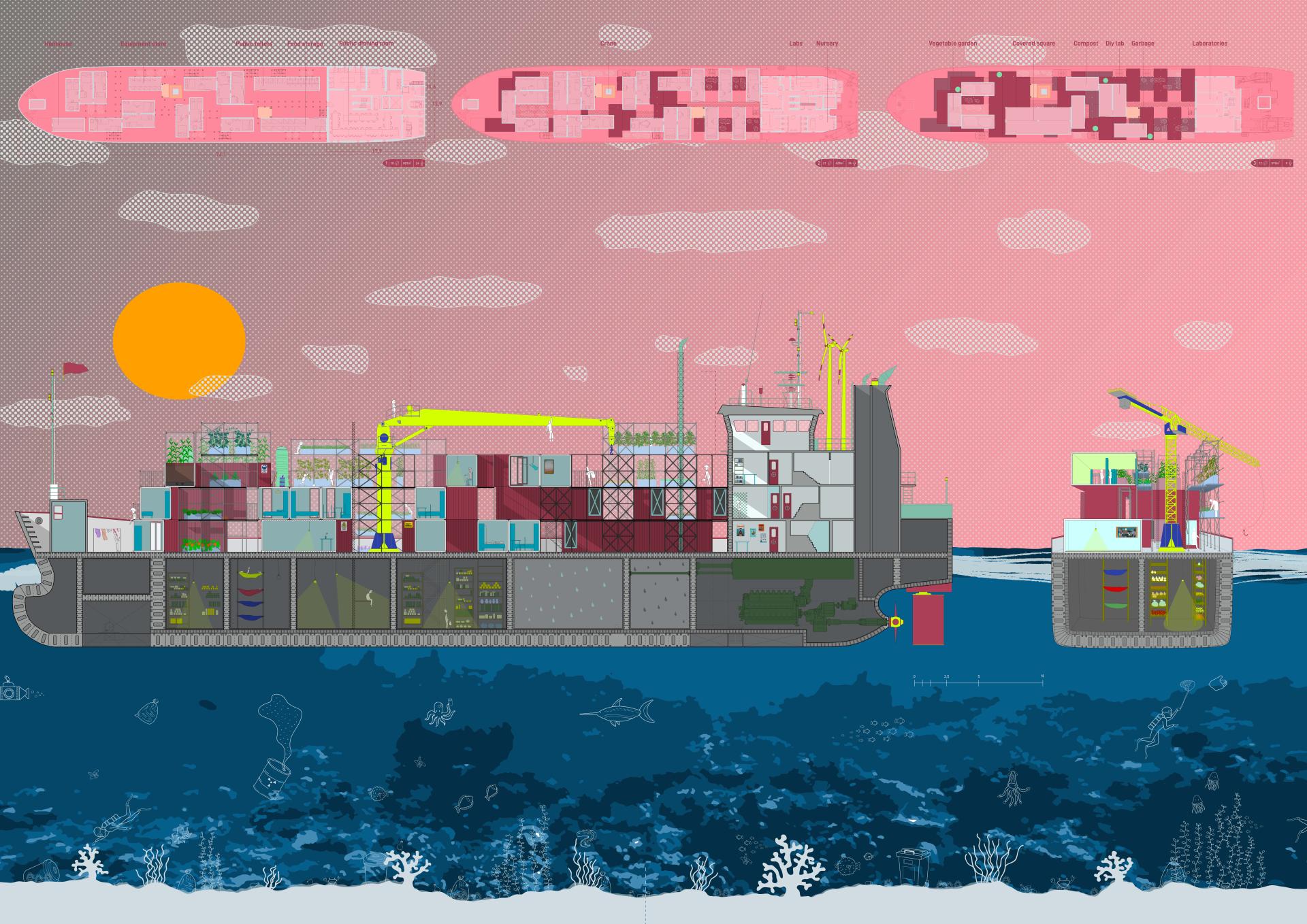
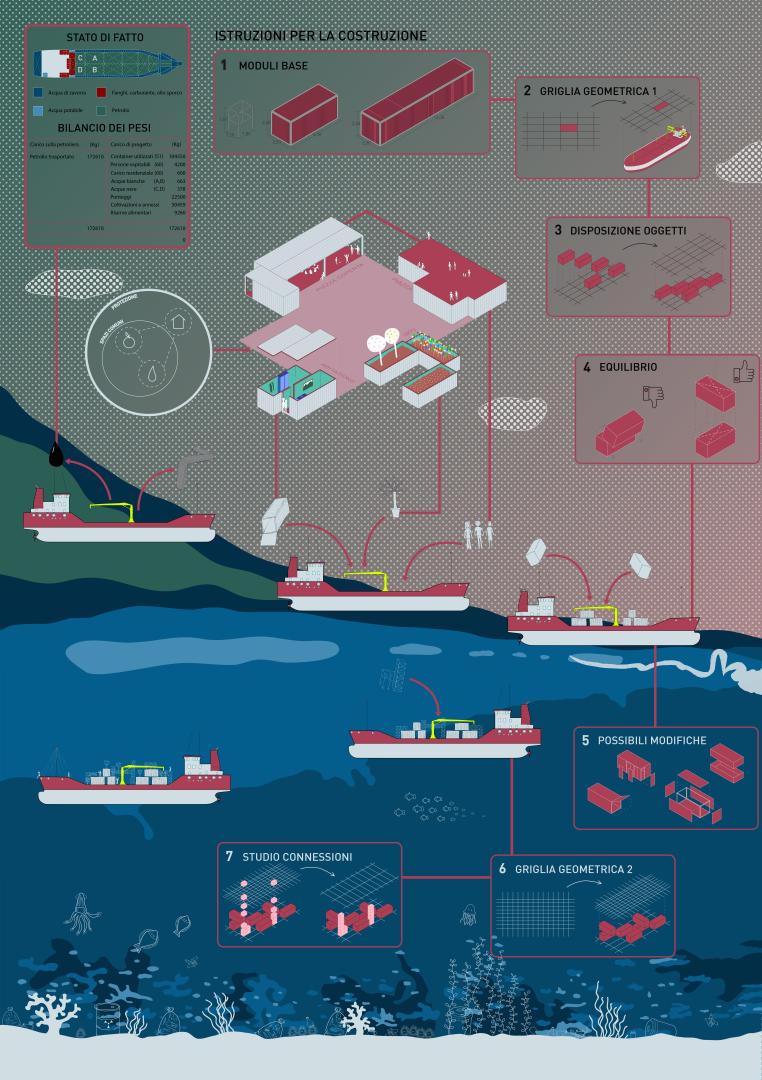
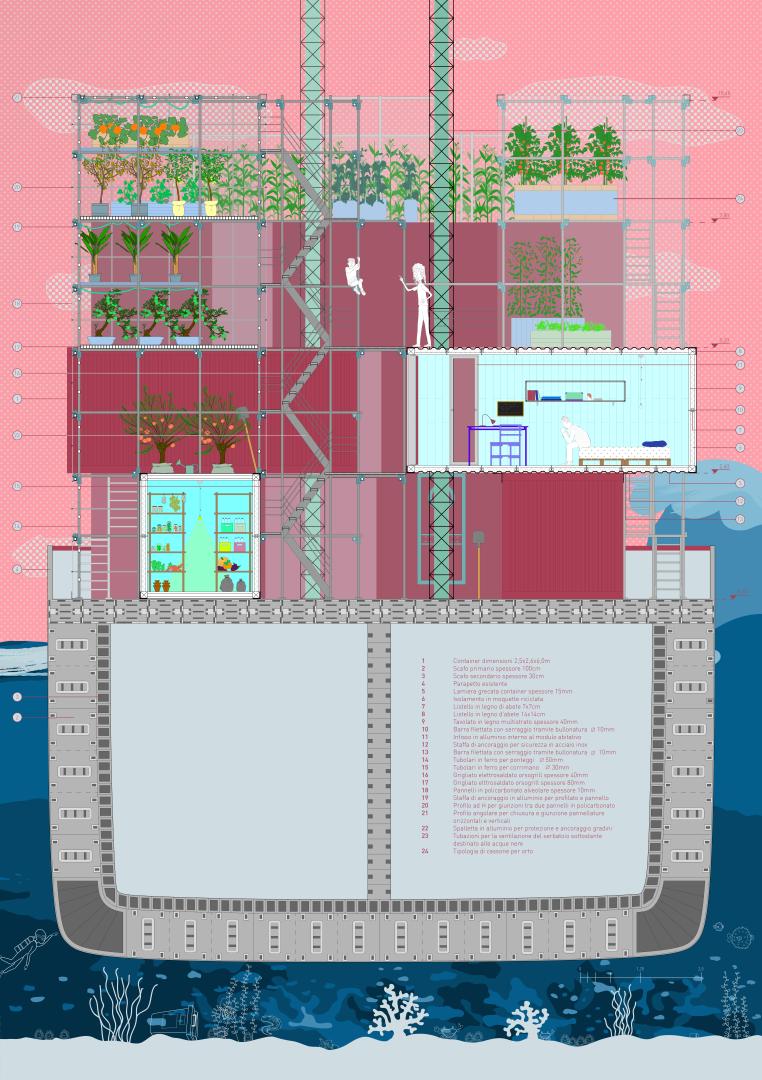
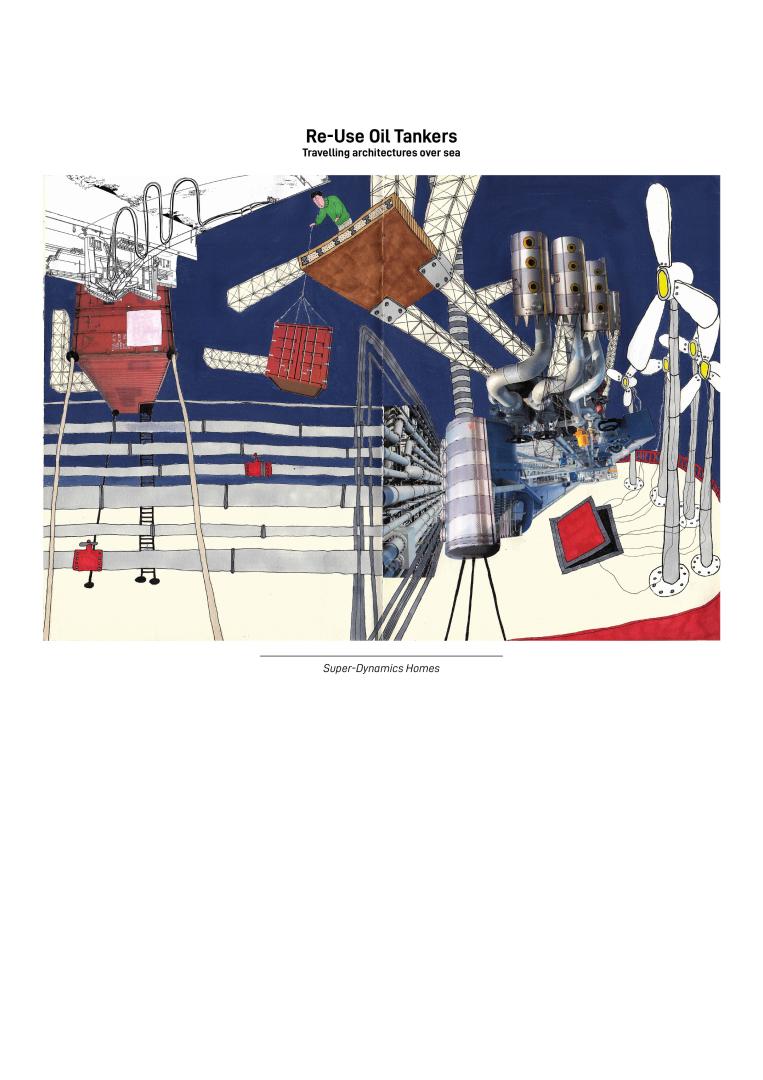
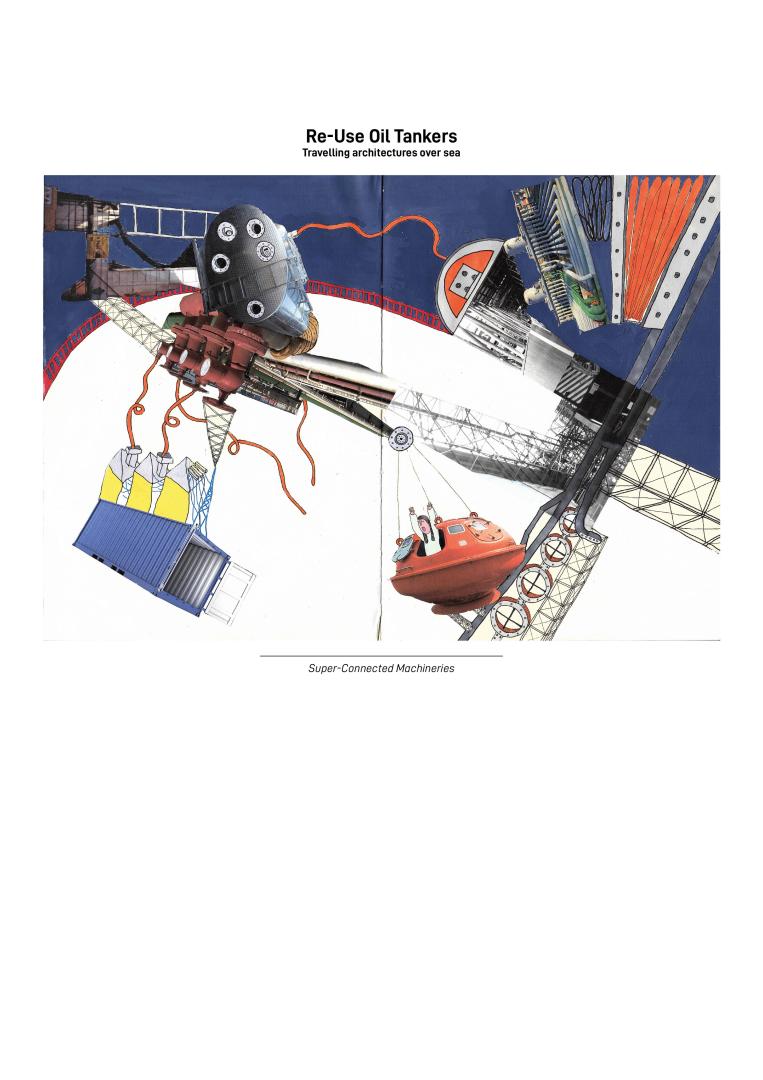
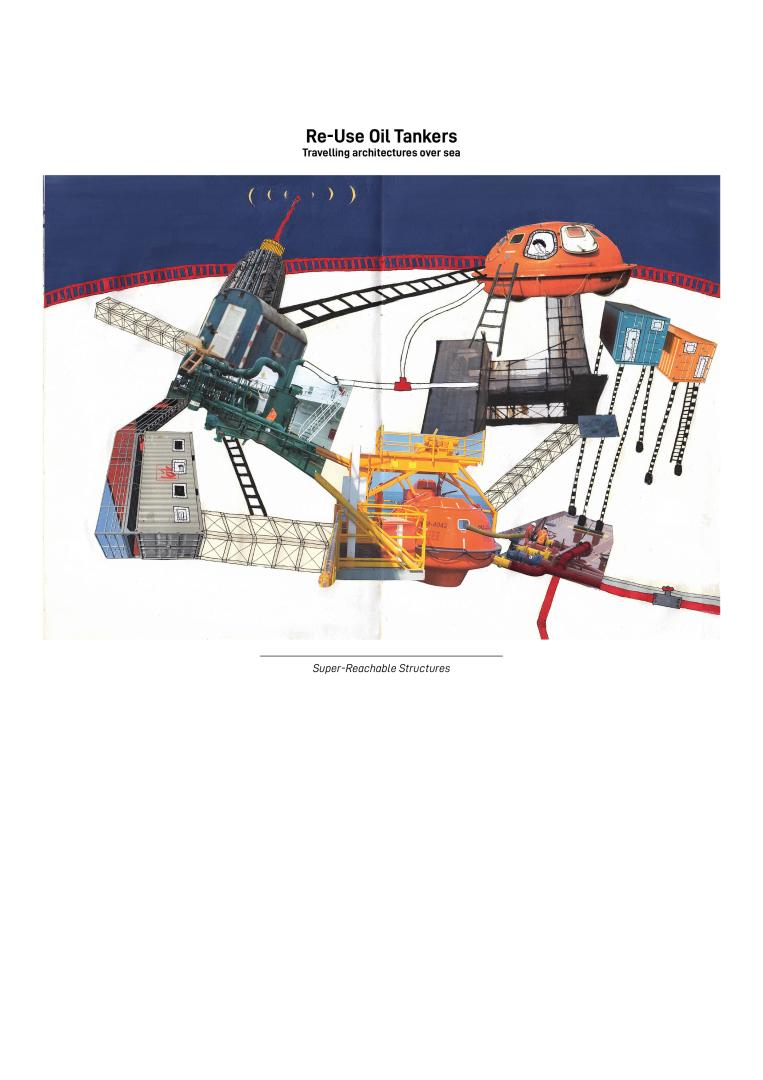
The project imagines an alternative to this situation and to do that an oil cargo ship has been chosen as the object of reuse; it is hypothesized that the structures will be left to free redevelopment and a small community will decide to settle in one of them to start building its own home. Starting from shared essential needs, they begin to self plan the settlement, considering forces and capacities available. Using containers and scaffolding as main elements, which can be moved thanks to the crane in the middle of the ship, they begin to compose, on modular grids, the system composed of full inhabitable and walkable (containers) and connecting empty spaces or, if insulated useful for cultivation (scaffolding). A small self sufficient village is born with water and food reserves, housing modules, warehouses, greenhouses, workplaces and sharing spaces. In this way the community, dividing between the members the tasks essential to its functioning, can assure its survival and one day choose to leave for other shores.
Key objectives for sustainability
The project deals with the urgency to implement strategies to reduce emissions to zero. The theme of sustainability is developed on two levels: the first level, is focused on the time of dismantling of oil facilities, the second level deals with a possible immediate application.
In the first level, looking ahead to 2050, we start with an analysis of oil facilities and investigate disposal or regeneration strategies. Proposals for regeneration and reuse of structures in general are then developed to focus on the specific case of cargo ships, which are the most difficult. The project hypothesizes an implementable, reproducible and scalable modus operandi useful for the rethinking in residential use. The research can be applied to other industrial areas for disposal and regeneration; the aim is to reach a circular approach, extending the life cycle of the structures.
On the second level, the project finds an immediate application in the promotion of more sustainable life models. This is not only from an environmental point of view, but also an economic and social one. It is a review of lifestyle in the sense of essentiality and proximity; the community that settles in the tanker generates its settlement in self planning, moving from shared essential needs. It creates the nucleus of an evolving system based on the energies and capacities of the components, self subsistence and self construction, in this each individual is fundamental.
In a hypothetical apocalyptic scenario, the communards are climate migrants; this is a complete and extreme model that could be applied starting from a small part from tomorrow by each one of us, who should not feel distant from the topic.
Key objectives for aesthetics and quality
The theoretical reference that generates the conceptual path is "The Survival Architecture" by Yona Friedman, according to him, we are running out of resources. This will lead us towards "the new poor world". The optimal solution in this context would be to redistribute resources equitably, revolutionizing our way of life to respond to essential needs.
We live in a congested reality, but this does not exclude the possibility of distancing ourselves from the culture of consumption. Everyone could use their personal time and talents to carry out useful tasks for the community, to the extent necessary to ensure its survival. In this way, work becomes an expression of individual talents; once the useful tasks have been solved, there remains time to make one's own inhabited space pleasant and personal, with aesthetic implications peculiar to the community itself. The idea speaks about the possibility of getting closer to a "human scale" lifestyle, in a dimension where beauty consists in the full valorization of human relationships, in a renewed relationship of mutual care between individuals, lived space and time. Once domestic work is done, it is possible to use the energies that remain in personal interests, a dilated time dimension that gives the person new time useful only to himself is born. This leads to gain in personal well being that reverberates in the community. Similar lifestyles already exist in various communities around the world; it is not immediate to move towards such lifestyles and to do so requires study and work, but every approach is accessible to all and a step towards increasing the quality of life and personal satisfaction.
Key objectives for inclusion
Applying practical and imaginative energies to transforming one's lifestyle into something more essential means proceeding to achieve economic, environmental and social sustainability. Essential lifestyle also means accessible to all, this is not true for lifestyles that require huge resources, which are exclusive and exclusionary. A system based on essentiality can be built through the implementation of circular processes, this can work most effectively if they are more multidisciplinary as possible. Here each individual is a critical element by virtue of diversity of the other. The human figure is a small part of a complex system that requires synergic collaboration with all the elements: plant, animal and even inorganic. In this project also the relics of the oil era (of a hoped future) are included in the system: they are the most distant from the human dimension and for this reason they are interesting engines of an imaginary to be built. The result of the discourse is to include as many creative thoughts as possible to force the boundaries of the imaginary. This coincides with the desire to work to implement the processes necessary to write a really alternative future. The writing and implementation of models that communicate the wide ranging need for inclusion in order to build supportive and resilient communities is the possible immediate application of the method. Until we don't do something about it, we are all potential climate migrants and may remain so.
Innovative character
No other developments on the topic are available at this time. In the web there are few examples of reuse of offshore platforms and various proposals about tourism and preservation of marine biodiversity. Platforms are only a small part of the structures we would have to deal with and the ones that present less problems of cleaning up compared to transport and processing devices.
In the first phase of the project, the only existing concept was the one developed by a Dutch architectural firm. After the first phase of the project (April 2019, then published), a BBC article came out in July talking about engineering studies for the reuse of cargo ships for energy production by tidal power and other strategies or for productive commercial purposes. There is another research documentation on alternative analyses and strategies to current dismantling methods.
The innovative aspect of my project is to propose a suggestion that refers to a model in total contrast to the consumistic one. The imagined scenario is described through collages, comics and illustrations to communicate in a simple and accessible way to stimulate reflection on the theme and the birth of new proposals. The world portrayed is apparently utopian, but it is made up of completely realistic elements that speak about many possibilities. In the project I studied a strategy potentially reproducible at various scales through a well functioning architectural project of the settlement.