edition/19: Community, Space, Studio
Basic information
Project Title
Full project title
Category
Project Description
The edition/19 initiative is an agile space as well as a agile community united by an interest in interdisciplinary experimentation at the intersection of art/culture, technology, craft, science, society and education. In current interpretation of the Bauhaus and its pedagogy it is a laboratory of life in the midst of civil society. Numerous activities involve citizens in the sense of inclusion in a way that contributes to their basic education in the digital age in view of the climate crisis.
Project Region
EU Programme or fund
Description of the project
Summary
The initiative edition/19 consists of the agile place in Siegen, which is studio, laboratory, workshop, project and educational space. Furthermore, it consists of the community of:
- People representing interdisciplinary interests
- Associations (like Chaos Computer Club Siegen: https://chaos-siegen.de, Hacker Agains Climate Change)
- companies (like fnordkollektiv: https://fnordkollektiv.de, Bruchwerk Theater: https://bruchwerk-theater.de) and
- departments of the University of Siegen (vocational and business education: https://www.bildung.uni-siegen.de/berufspaedagogik/index.html?lang=de, Fab Lab: https://fablab-siegen.de)
who come together (partly on a project basis) to create activities in experimental settings, especially at the interface of art/culture, technology, crafts, science and society. So far, this has been demonstrated with the inclusion of citizens in the form of lectures, workshops, exhibitions, and the remote network meeting Chaosflux (https://chaosflux.de). In this respect, edition/19 contributes to the basic education of citizens in the digital age in the face of the climate crisis, in line with the idea of inclusion. Edition/19 was founded in 2019 by educationalist Katharina Gimbel. She was inspired by the historic Bauhaus and its pedagogy. In the continuous rethinking of the Bauhaus in the form of edition/19, she refers to appropriate publications by Prof. Dr. Ulrike Buchmann (https://www.bildung.uni-siegen.de/berufspaedagogik/home/buchmann/?lang=de#div_publication) and her own (such as https://www.degruyter.com/document/doi/10.1515/9783110745054-002/html). In this respect, edition/19 is an attempt to make scientific findings accessible to civil society. In addition to areas established in the Bauhaus, such as printing, woodworking, theater, painting, edition/19 also integrates current, such as: Hacking, Critical Making, Gaming. In the public activities of edition/19, visions of the future are imagined together with citizens.
Key objectives for sustainability
With regard to sustainability, Edition/19 aims to stimulate an enlightened and creative relationship in dealing with and shaping analog and digital practices. In doing so, their potentials with regard to sustainability are creatively worked out and processed. For example, edition/19 did this together with citizens in the context of a lecture by Prof. Dr. Niko Paech in 2019. The post-growth economist discussed with them how analog fabrication possibilities and craft skills can contribute to the sustainable life extension of products and artifacts. This talk was co-sponsored by the Open Climate Alliance and Hackers Against Climate Change.
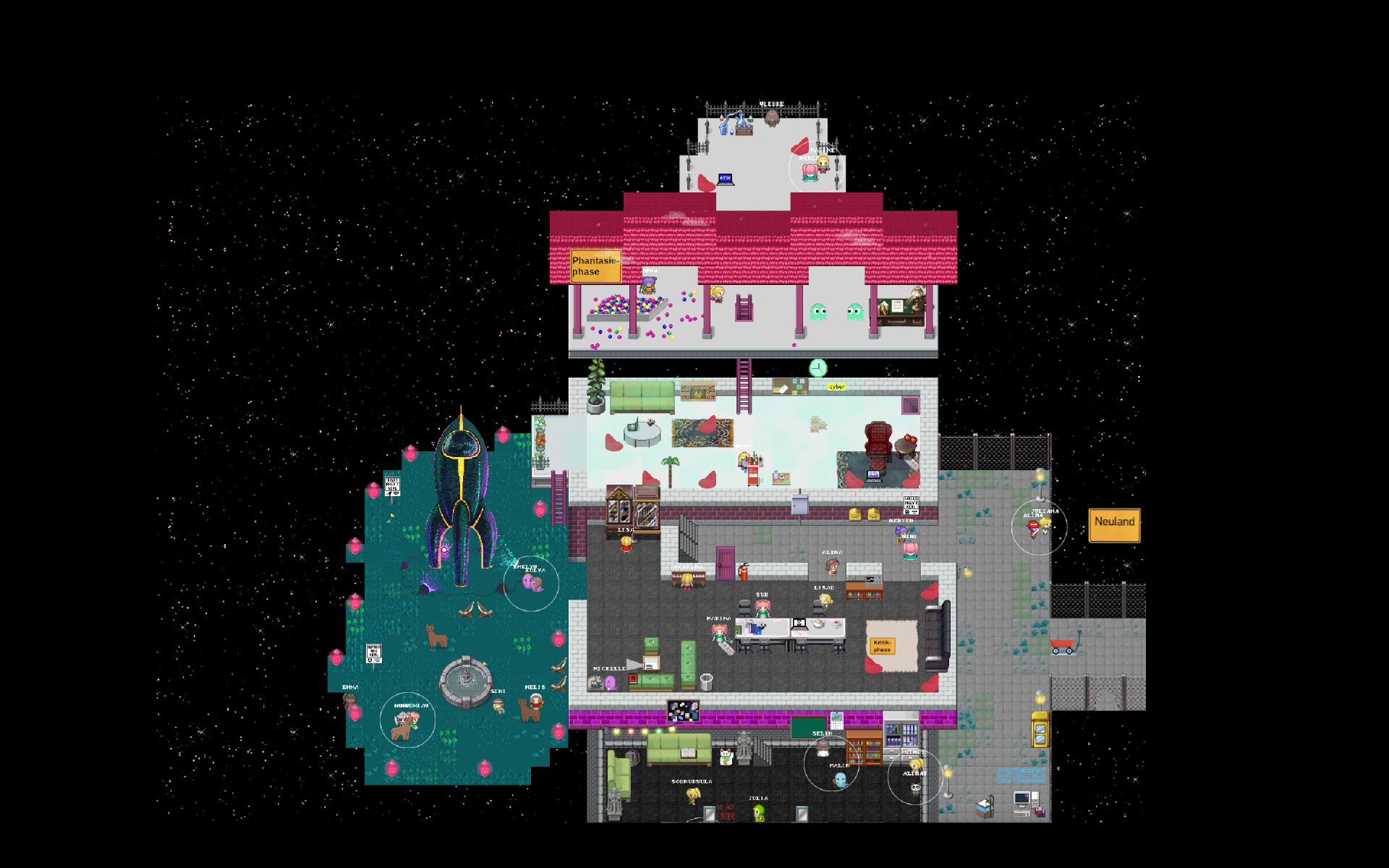
Another example is the collaboration of different edition/19 members in the remote netzwerktreffen Chaosflux in early 2021 (https://chaosflux.de/en/). Johanna Meurer works in the field of user experience research. Her work focuses on user-centered design of digital media in the areas of social and environmental sustainability. Tobias M. Scholz, is active in the field of human resource management. He founded the E-Sports Research Network. For him, e-sports (gaming) is a laboratory of the future of our society. Katharina Gimbel is an educational scientist and artist who works on theories of inclusion. In the context of interdisciplinary curriculum research, she thinks especially about interfaces between art/culture, sociology, technology, media and society in the face of current transformations (climate change, sustainability deficit, aestheticization of all areas of life). All three have continued their professional interests in public work for edition/19 within Chaosflux, co-creating an innovative program and concept. The collaboration resulted in innovative ways to engage citizens in thinking sustainable visions of the future under the conditions of the pandemic: e.g. digital workadventure based 2D world (https://world.chaosflux.de).
Key objectives for aesthetics and quality
The goals of edition/19 were based on the organic idea of the Bauhaus, which, according to Gropius, constituted its essence. The organic idea shows itself as a socio-political goal with a pedagogical mission. It allows the Bauhaus and its pedagogy to be rethought according to changing conditions. To do this is a goal that edition/19 implemented: In contrast to the historical model, which was a laboratory of life separated from civil society, edition/19 is an experimental laboratory of life in the midst of civil society. The Bauhaus and its pedagogy have been rethought: potentials of aesthetics are explored in the context of basic education of citizens in the face of current transformations (e.g. digitalization, climate crisis). Aesthetics is not functionally subordinated to this goal in the sense of a pure method. Aesthetics and aesthetic experiences enable the interdisciplinary perspective of edition/19. Since the goals are not subordinated to pure functionality, creative impulses of aesthetics and experiential quality can emerge that could not be expected before. In this way, positive visions and utopia of the future can be conceived and shaped. This was implemented, for example, in the curation of the interdisciplinary network meeting Chaosflux, which had to take place remotely due to the pandemic. The community managed to create a 2D digital world based on Workadventuer that playfully mapped the community's locations. The participants of the meeting were able to join the meeting with avatars and think together with others visions of the future.The following links document this: https://chaosflux.de/en/about/. and https://chaosflux.de/de/fahrplan/.
Another example of implementation is the participation in the meeting "Bauhaus Paradigms. From Design Utopia to Pop Culture?" in October 2019 with the workshop "Hacking and Critical Making: Phenomena of the (Post)Bauhaus Community?" held at the Fab Lab of the University of Siegen: http://www.bauhaus-paradigmen.de.
Key objectives for inclusion
In the sense of inclusion, edition/19 explicitly addresses groups that tend not to participate in cultural and/or social activities due to social inequalities. As well as to those who find it difficult to access current challenges, such as aestheticization and digitalization of all areas of life. Since current societies are highly complex, this task must increasingly be performed by initiatives in the midst of civil society. Edition/19 is excellently suited for this purpose because this complexity can be dealt with in the interdisciplinary and agile perspective. To realize inclusion, the community's educational scientists develop ways and approaches to reach disadvantaged groups of people. They do this in collaboration with other areas of the community in an interdisciplinary way. In experimental settings, ways of addressing are developed that are tailored to different target groups and their needs. Concrete examples of this are:
- The edition/19 community hilt a talk and workshop at the remote rC3 congress of the Chaos Computer Club (https://events.ccc.de/2020/09/04/rc3-remote-chaos-experience/#english) at the end of 2020 as part of the assembly "Cyber4edu". The talk was about how Bauhaus pedagogy has to be rethought in the presence of digital transformations in order to be able to prepare the upcoming generation for the future in the sense of inclusion: https://www.youtube.com/watch?v=BBzNamjz4dQ. In the workshop, the focus was on how the aesthetic approach of theater can contribute to winning over groups for the topic of digitalization that have so far been excluded from it.
- Working with people with refugee experience: z.B. workshop as part of the Hochschultage Berufliche Bildung 2019 at the University of Siegen on the topic "Bauhaus now: Innovative approaches to digital natives with refugee experience" at the Fab Lab of the University of Siegen: https://www.htbb2019.uni-siegen.de/htbb/ws/.
Results in relation to category
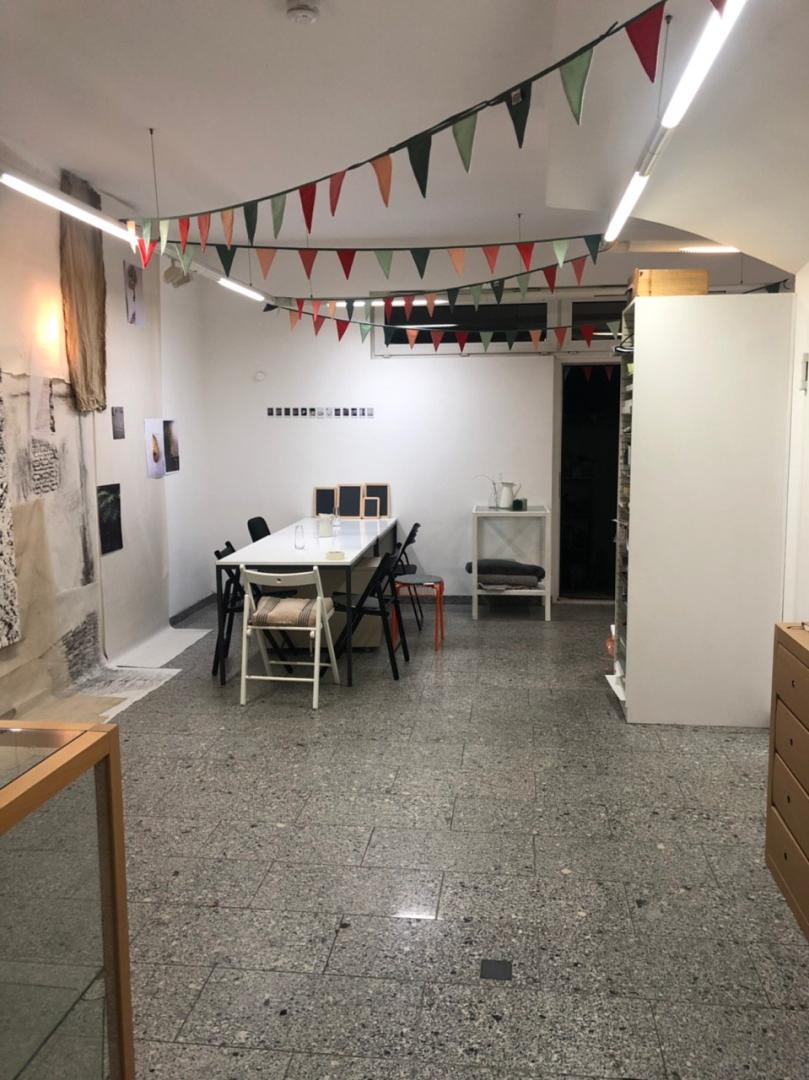
It is precisely the artistic perspective of edition/19 that has contributed to the coming together of an interdisciplinary community that had not worked together before. Aesthetic approaches are a common thread connecting all edition/19 activities: work in the studio, e.g. tailoring, spinning, printing; workshops, such as coding, lockpicking; exhibitions, lectures and conferences.
Edition/19 contributes to the sustainable building of interdisciplinary communities that have realized activities at the intersection of arts/culture, technology, crafts, science, and society that:
A. support social inclusion and the Green Deal: e.g. by offering public and free lectures on post-growth economics by Prof. Dr. Niko Paech with the support of the open climate alliance Siegen. Or by edition/19 being active as an initiative alongside the project Resis-Mitwelt of the University of Siegen, a real laboratory on co-environmental economics.
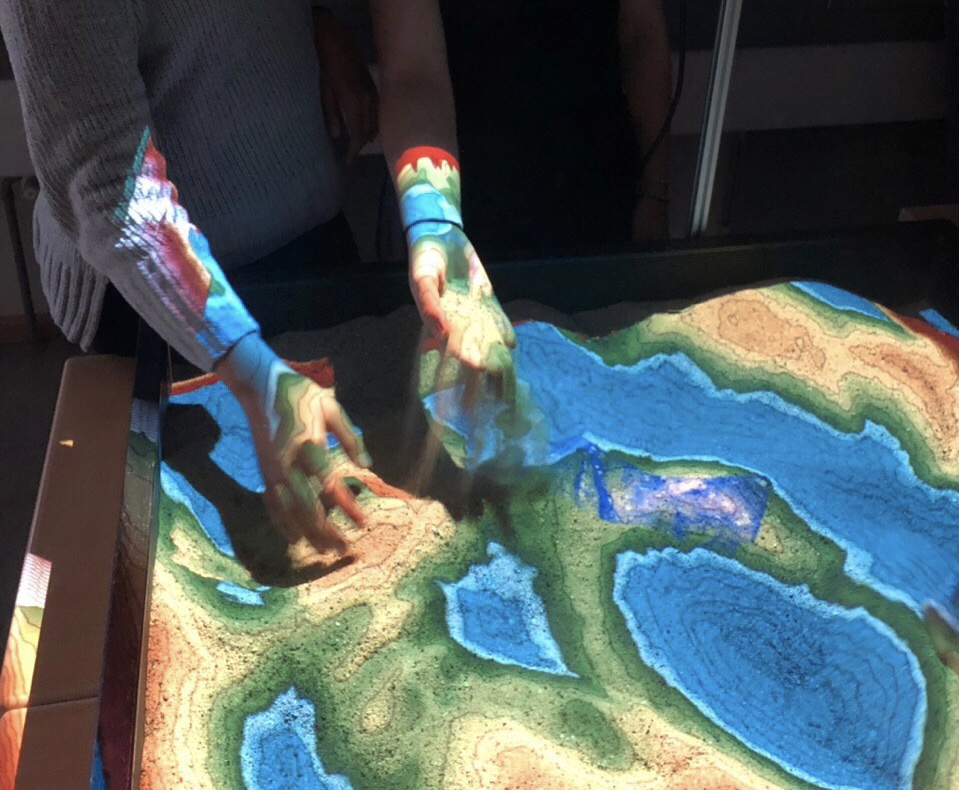
B: Transformational activities focused on art and culture that help to strengthen social cohesion and develop a shared sense of responsibility for space: for example, edition/19 has created a free exhibition for the public Siegen Art Day in 2019 with various exhibits mapping the space and its surroundings. These artistic research perspectives range from photography to graffity to terraforming and agmented reality. In addition, a remote network meeting called Chaosflux (https://chaosflux.de/) took place this year in cooperation with the Chaos Computer Club Siegen (https://chaos-siegen.de/), the Hackspace, the Fab Lab of the University of Siegen (https://fablab-siegen.de/) and the Bruchwerk Theater (https://bruchwerk-theater.de/siegen/), exploring current transformational activities between art, culture, technology and science.Themes explored new digital and established artistic practices:Reaction Videos, Computer Art, Critical Cartography, Quantum Computing, 2D World Enterable with Avatars, Intentionless Storytelling, Game Design, Image Cultures.
How Citizens benefit
Citizens have been involved so far in various edition/19 activities. Examples are:
- Online network meeting Chaosflux (https://chaosflux.de/en/). Citizens could participate in the online meeting as listeners but also become active themselves. For example, they could become artists. They could create computer art themselves. Or they could create their own avatar with which they could explore and discover the creative and game design oriented 2D world of the conference (https://world.chaosflux.de/). In the virtual world, they could communicate with other avatars and interact with them and the world. In the 2D world, they could also discuss the practice of Critical Cartography with artist Simon Weckert. Within the 2D digital world, the edition/19 community was also able to interact with citizens and civil society. The community learned, for example, that some citizens had problems participating in the remote meeting because they did not have the necessary technical knowledge. These were especially older citizens who do not deal with digitization on a daily basis. The members of the edition are now considering how they can enable these citizens to participate in the next Chaosflux. Specifically, they are thinking about offering a pre-event workshop for interested citizens.
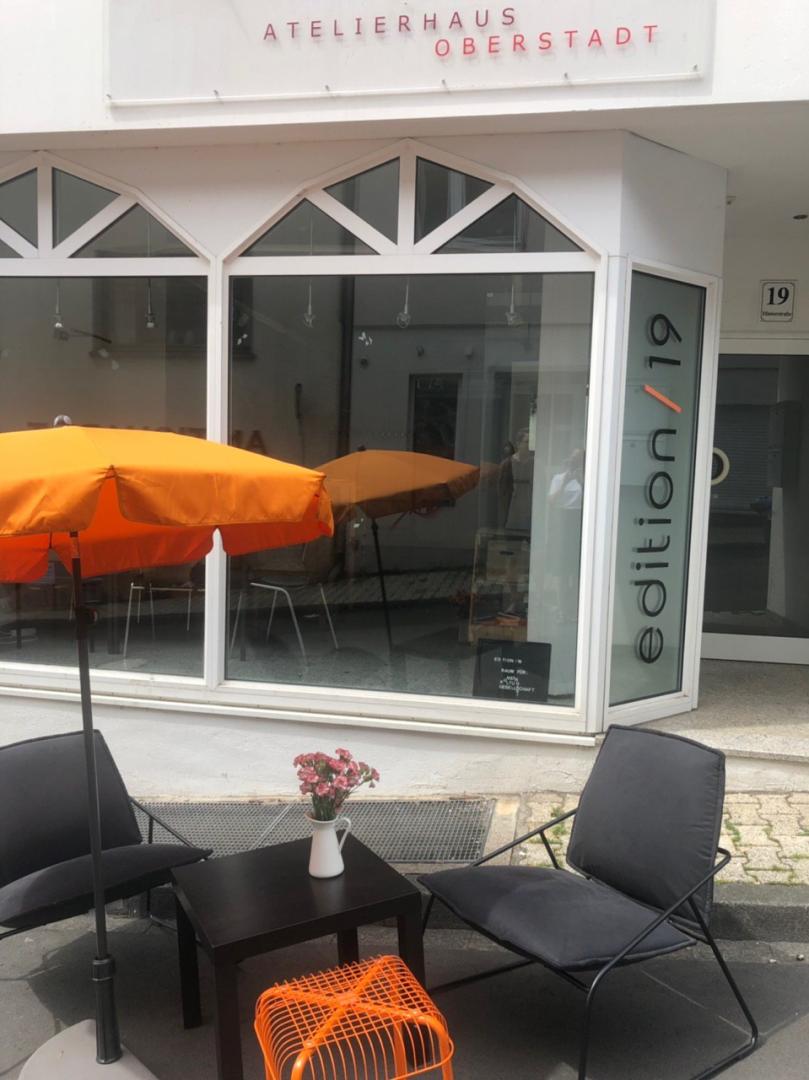
- As some associations and initiatives are part of the edition/19 community, it is in active exchange with other sectors of civil society. In this way, synergies can be used. The location of edition/19 has a shop window and is centrally located in Siegen. Edition/19 is therefore used by some parts of the community as a communication space in the city. This way, citizens can be addressed directly without having to visit rather decentrally located places.
- Citizens who were involved in lectures (e.g. on post-growth economics or incels) or hands on workshops (e.g. lockpicking) were able to actively participate in discussions or crafts. The feedback of the citizens serves the community for development.
Innovative character
Edition/19 is unique in that it emerged from the current scientific study of the Bauhaus and its pedagogy. Thus it is an experimental laboratory of life in the midst of civil society: Scientific knowledge is made accessible. The people who come together are often scientists (e.g. art-, educational-, media-, computer science, business administration, quantum physics) with an interest in art/culture, craft, gaming, hacking, making and interdisciplinary perspectives on design. In personal union many are in associations that play a role in the work of edition/19: such as E-Sports Research Netzwerk (https://esportsresearch.net/), Spieleinitiative Siegen, Chaos Computer Club Siegen (https://chaos-siegen.de/), cyber4edu (https://cyber4edu.org/c4e/wiki/doku.php), Chaos macht Schule (https://www.ccc.de/schule).
The managing director of the NRW Regional Cultural Policy Coordination Office for the cultural regions of South Westphalia, Susanne Thomas, welcomes edition/19's initiative to profile itself as an agile and open creative space for the idea of the "New European Bauhaus". Within the framework of regional cultural policy, the initiator of edition/19 has taken on the curation of the interdisciplinary network meeting Chaosflux (https://chaosflux.de/), and has thus laid an important building block for bringing art, culture, technology, science and society (once again) closer together. For the further development and rethinking of art in the region, new and above all agile artistic initiatives that deal with interdisciplinary artistic interventions, which also have pop/tivial acultural areas in mind, are of great relevance. Recording to Thomas, the region currently lacks contemporary creative spaces such as edition/19, which has a unique selling point in its agile form and its cross-disciplinary networking approaches. Thomas hopes that edition/19 will have an inspiring effect on the region of the Siegen-Hagen art axis, which is not sufficiently populated culturally.