A reborn Milano Porta Romana railway
Basic information
Project Title
Full project title
Category
Project Description
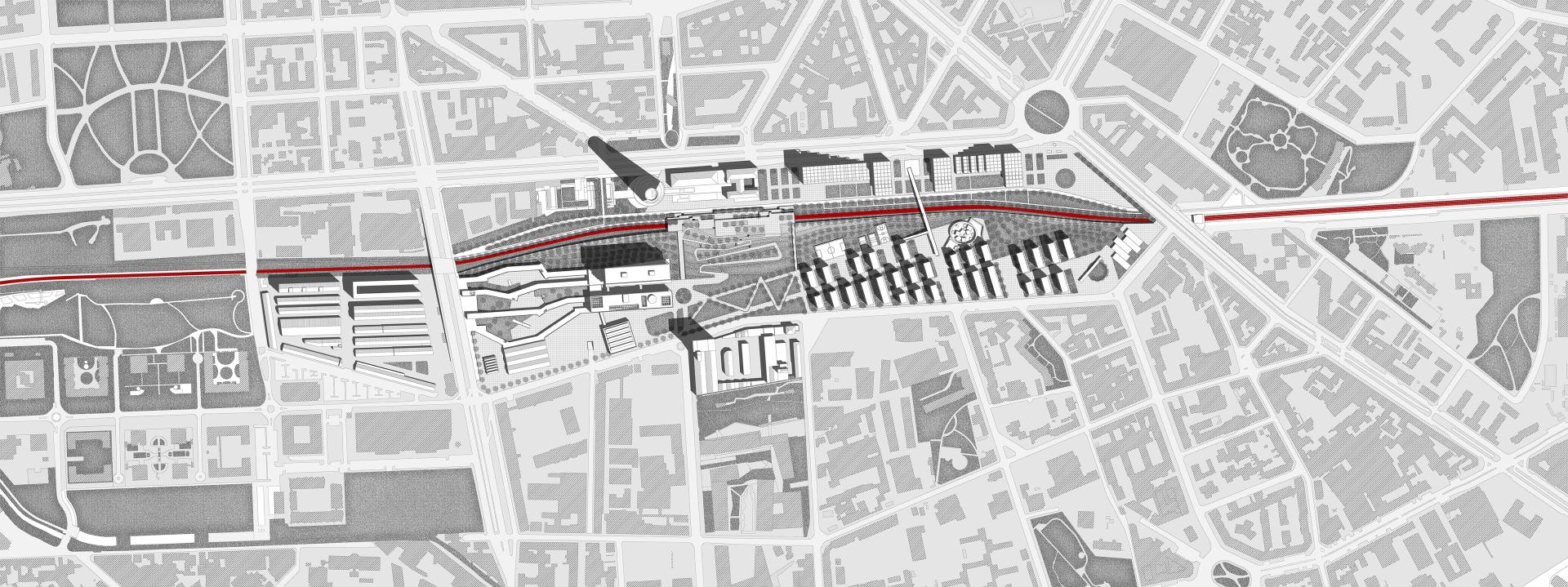
The theme is the redevelopment of the Porta Romana railway station in Milan. The project consists in some dense built-up parts held together by a linear park that follows the train tracks that cut the entire area. Another topic is the relationship with the context: the linear park that continues the green system and cycle-pedestrian paths already existing; the building that reflects some characteristics of the context, the compact blocks of the 1900 century and those of industrial origin.
Project Region
EU Programme or fund
Description of the project
Summary
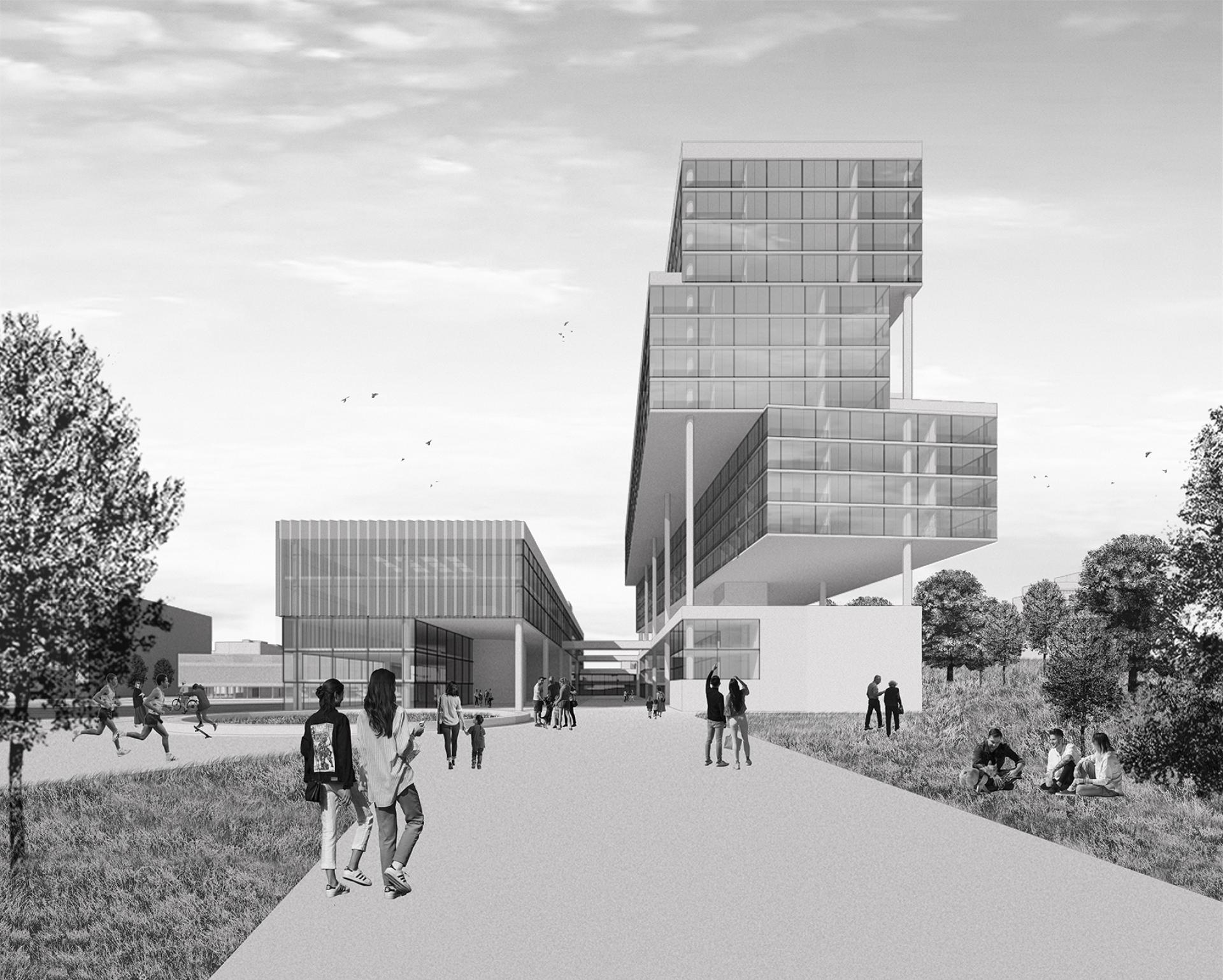
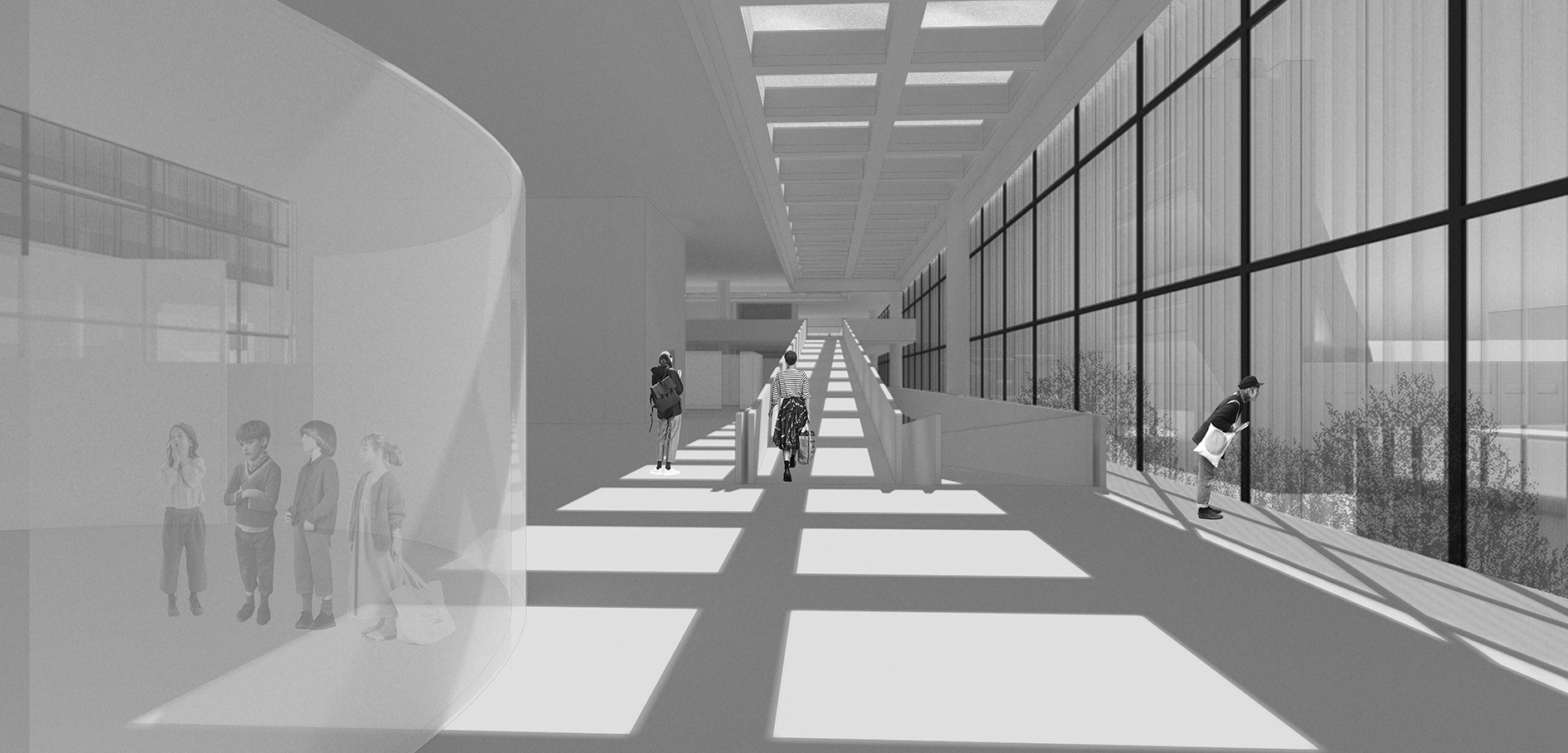
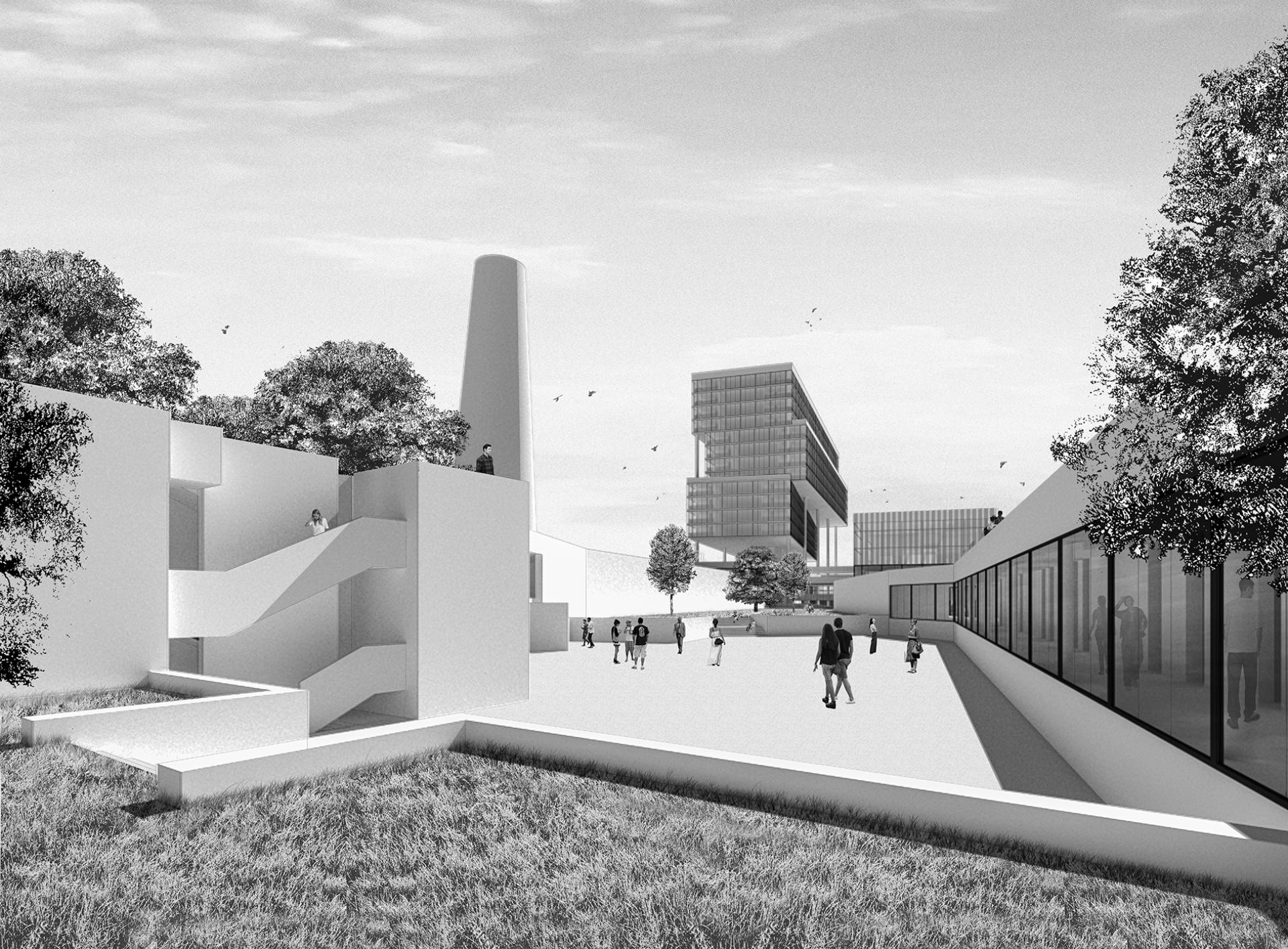
This work proposes a project experimentation of the former railway station of Porta Romana. Seizing the opportunity of the 2026 Milano-Cortina Winter Olympic Games, which will see the Porta Romana railway station hosting the Olympic Village, the project consists in the idea of redeveloping a huge abandon area by connecting the centre of Milan to the suburbs, which are divided by the railway itself. The aim is to give back to the citizenship an active and dynamic public place with an important cultural imprint, firstly embodied by the nearby Fondazione Prada. The surrounding context takes a fundamental part in this work as the inspirational element from which this area is completely indivisible and dependant. Indeed, every single part of the project reflects the main characteristics of the site. The core of the work consists in a linear park, which develops longitudinally following the railway, connects with the existent green system, and hosts two points of climbing over the rails: a wooded hill and a thin bridge. This park also connects the building clusters added along the site. Every single building tries to communicate with the pre-existing structure promoting the variety of settlements that has been developed in the centuries: the unified front in the northern part tries to create a relation with the nineteenth-century dense blocks; the south linear buildings generate a permeability that allows the entrance to the near Parco Agricolo Sud; and the new building of the Olympic Village and Music Centre communicates with the overpass, the near block and the exposition tower of Fondazione Prada.
Key objectives for sustainability
One of the main elements of the project is a linear park. This green river has had a crucial role in the idea of sustainability involved in this work. In the first place, the constitution of a Green Lung through the increasing of green areas, trees and nature would contribute to decrease the amount of CO2 air contamination in a city as much polluted as Milan is. In second instance, this linear park hosts many cyclo-pedestrian connections, which complete the already existent, yet fragmented, cyclo-pedestrian system, and is also linked to the public transport system thus encouraging and stimulating a mobility as much sustainable as possible.
Key objectives for aesthetics and quality
The redevelopment of the railway station envisages, as fundamental and founding element, the presence of a linear park, which has an extension equal to about half of the entire area of the Porta Romana station. Consequently, the project proposes an immersion in nature, both wooded and more controlled, while remaining within a strongly urban context. As far as the buildings are concerned, some formal and typological choices have been made that reflect more a substantial idea of the city rather than an aesthetic one. The city, in fact, is understood as extremely complex, a palimpsest of historical stratifications and languages. Precisely because of these stratifications, extremely contemporary buildings, such as those of Big 670 Mosquit in Los Angeles and the residential buildings of Figini and Pollini for the Harar district in Milan dating back to the 1950s, both belonging to the now consolidated idea of the rationalist city, come face-to-face in the project, through the method of assembling references.
Key objectives for inclusion
This project works on two different levels of inclusion. In the first place, by focusing on an abandon and degraded area, this work points the attention to the necessity of create a connection between two part of Milan divided by the railway. Indeed, it attempts to erase any kind of barrier by expanding the edge of the city, and by connecting and increasing the accessibility to the centre from the suburbs. Secondly, all the buildings and places are public (except for the residential buildings) and available to the citizens, who can find inclusive, active, and dynamic social points of meeting. Eventually, all the residential buildings are designed as social housing so to create accessible apartments for the lower middle-class.
Innovative character
The main innovative character of my work consists in the choice of the intervention area. Indeed, it does not aim at land consumption, but rather redevelops an existing area that has remained idle for years. Moreover, a further reasoning has been made on the building dedicated to the Olympic Village. In fact, although for events such as the Olympics and Paralympics temporary structures are usually made, whose function expires at the conclusion of the games, in this case it has been favoured the idea of a greater continuity of use of space, before, during and after the Olympics, in order to bypass long periods of inactivity of the spaces. For this reason, the residences for athletes have been flanked by a Music Center, a public activity available to citizenship that integrates well into the cultural context, primarily embodied by Fondazione Prada.