Silent Architecture
Basic information
Project Title
Full project title
Category
Project Description
Silent Architecture is a floating cabin designed to engage in a collective reflection on the environmental impact of our lifestyles and our way of inhabiting the world. It is an architecture manifest that invites us to question the future of static constructions and their constant dialogue with an environment in perpetual evolution. It’s a space to think the future differently.
Project Region
EU Programme or fund
Description of the project
Summary
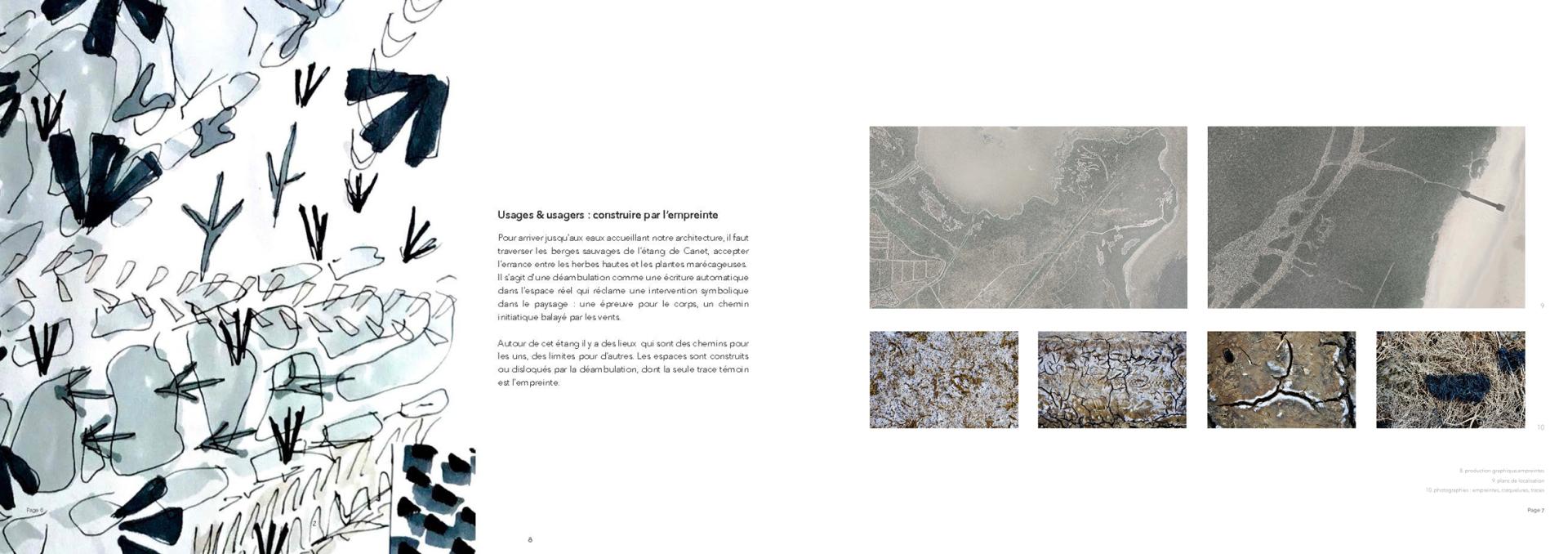
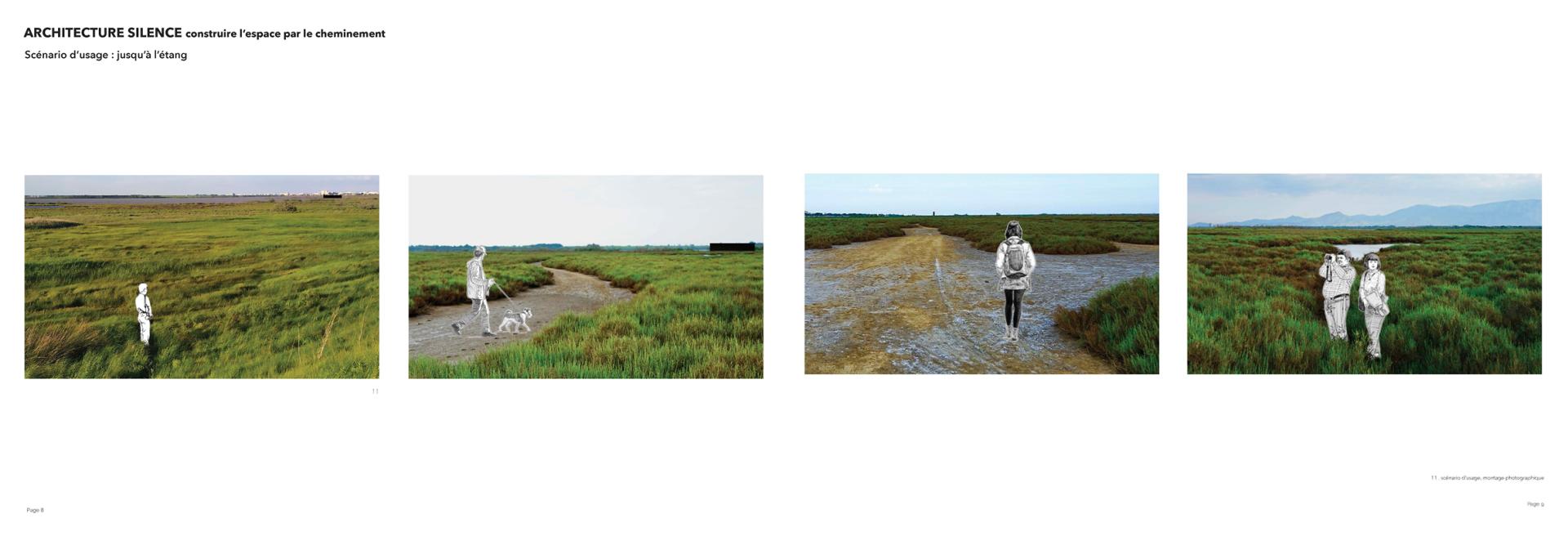
To get to the waters welcoming our architecture, you have to cross the wild surroundings of the Canet pond, and to accept to wander between tall grass and marshy plants.
It is about wandering like an automatic writing in real space which calls for a symbolic intervention in the landscape: a test for the body, an initiatory path swept by the winds. Around this pond there are places that are paths for some, limits for others. Spaces are built or dislocated by walking, of which the only traces are footprints.
Entering this architecture is a whole experience for the body and for the mind continuing the walk: the curious visitor must forget the before to better discover the after, reset a form of memory to better understand this subtle environment. He is invited to explore the emotional content of the project which offers a muffled and padded atmosphere, made out of emptiness. It’s an architecture manifest that invites a reflection on static constructions in constant dialogue with an environment in perpetual evolution. Silent Architecture is inspired by the prehistoric monoliths, the first static architecture, a symbol that linked earth and sky, man and landscape, and men between them. We wanted to recreate this thousand-year-old experience by offering a new meeting point because our generation is now at a crossroad in choosing what will be the world of tomorrow. Silence Architecture offers an alternative way to appropriate landscape, and a space to think about the future differently.
Key objectives for sustainability
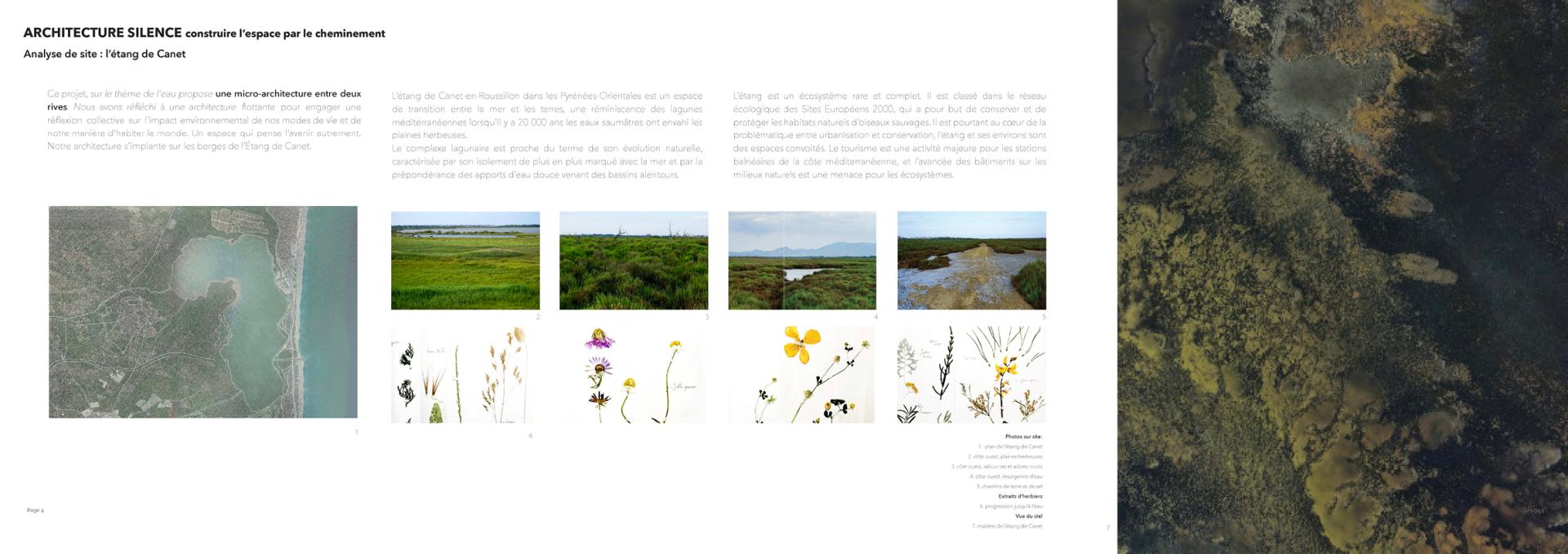
The Canet pond is a rare and complete ecosystem. It is classified in the ecological network of European Sites 2000, which aims to conserve and protect the natural habitats of wild birds. Yet it’s at the heart of the conflict between urbanization and conservation: the pond and its surroundings are coveted spaces. Tourism is a major activity for the seaside towns of the Mediterranean coast, and the advance of building on natural environnements is a threat to ecosystems.
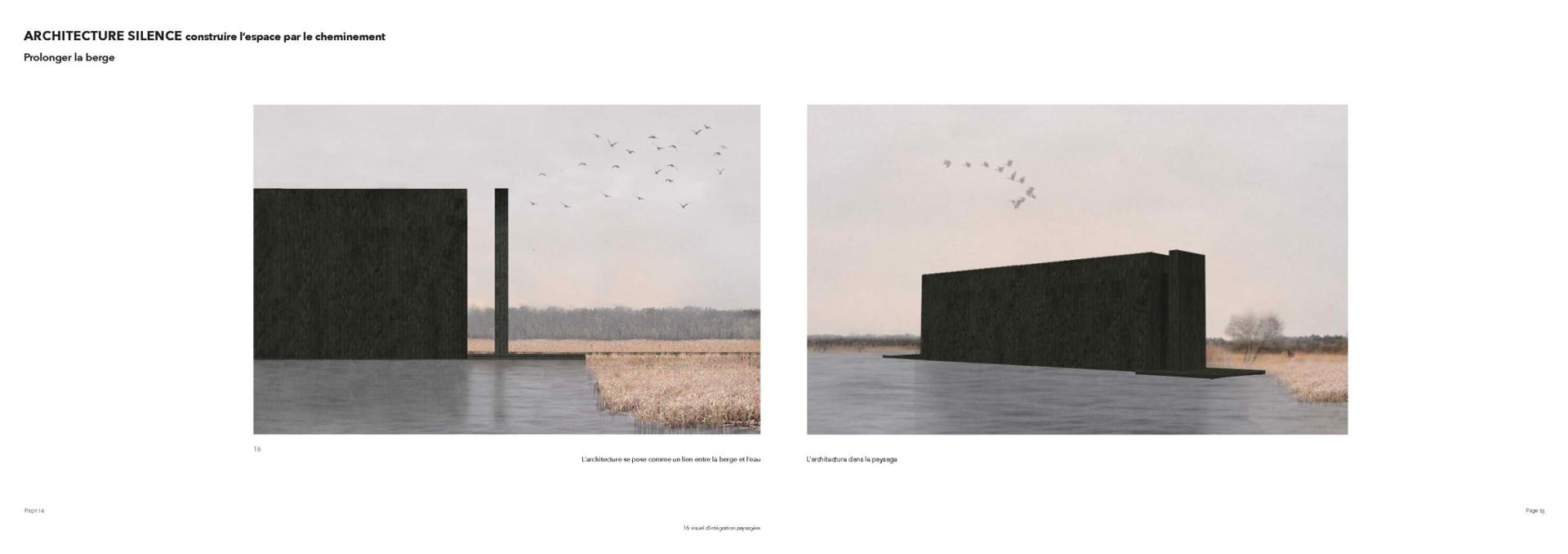
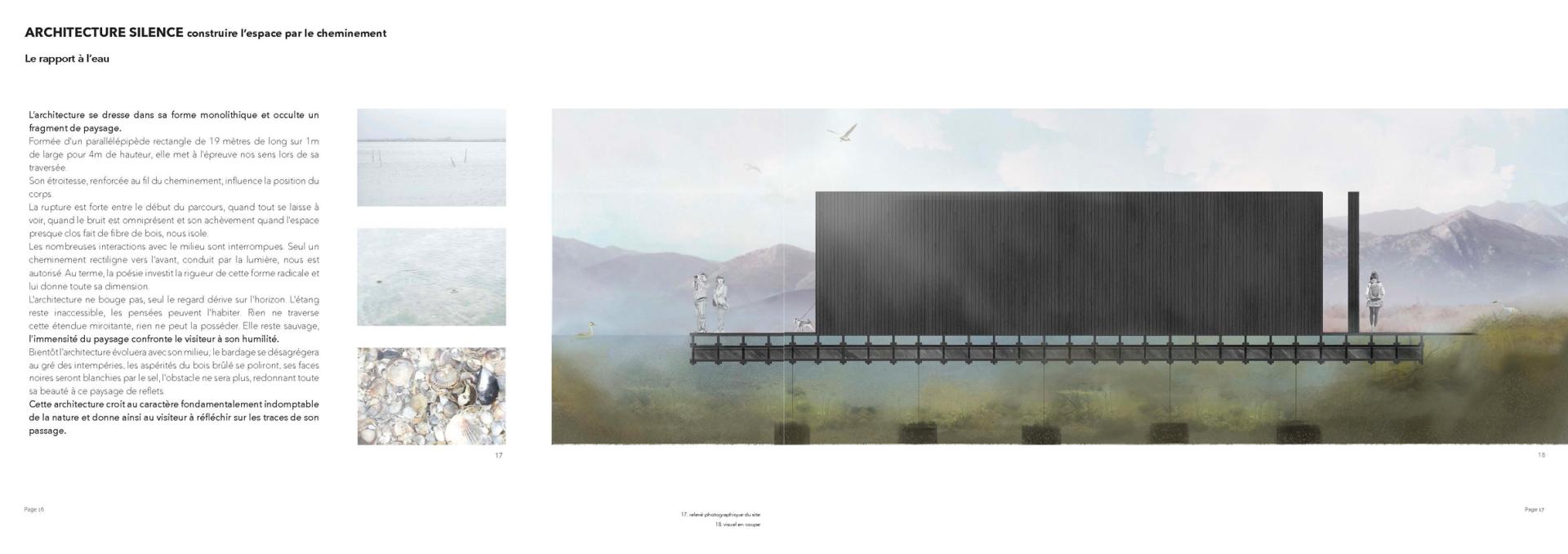
Our project is placed at the center of these urban issues to explore sustainable solutions to bring architecture and nature into a harmonious dialogue. Silent Architecture does not move, only gaze drift over the horizon. The pond remains inaccessible, only imaginate can inhabit it. Nothing crosses this shimmering expanse, nothing can possess it. It remains wild and the immensity of landscape confronts the visitor with its humility. Soon the architecture will evolve with its environment; the cladding will disintegrate because of the weather, the roughness of the burnt wood will become polished, its black sides will be whitened by salt, the obstacle will no longer be, giving back all its beauty to this landscape of reflection.
Key objectives for aesthetics and quality
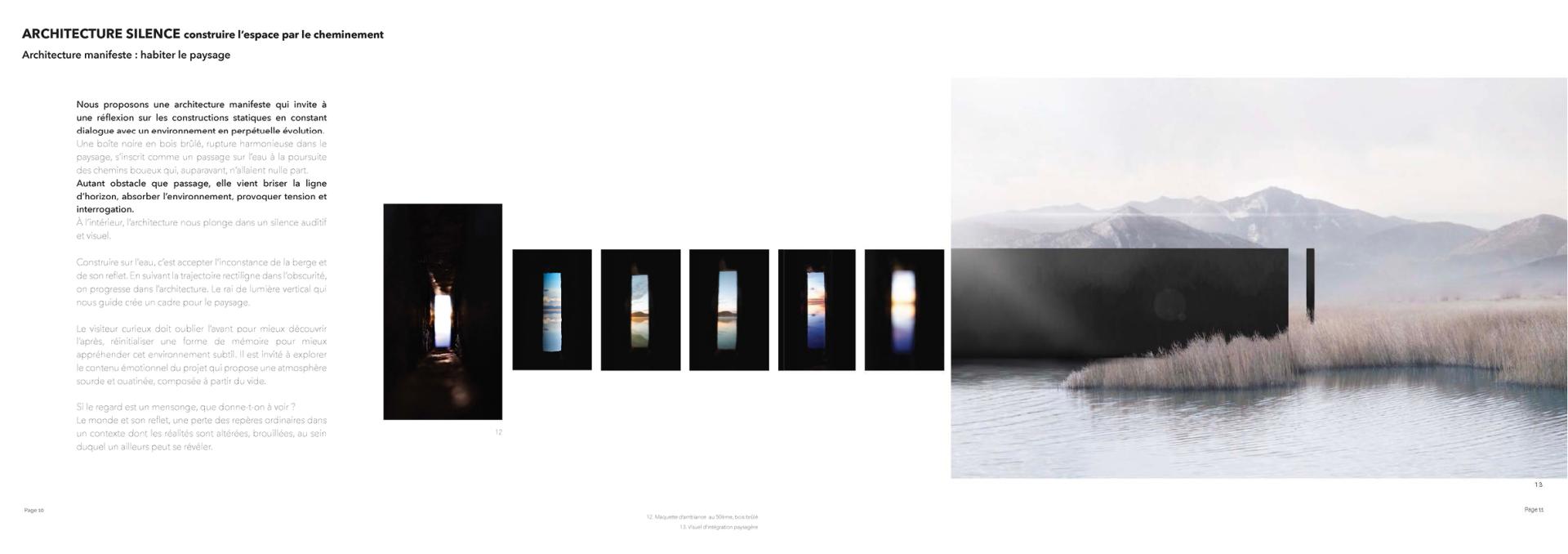
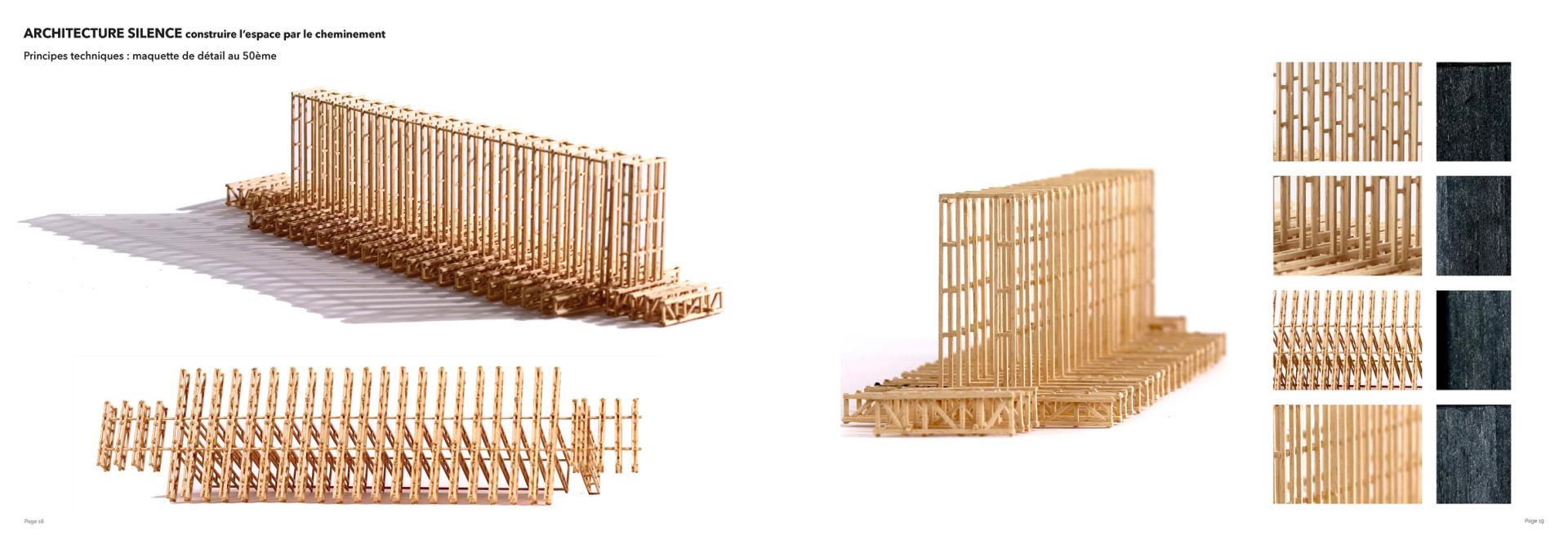
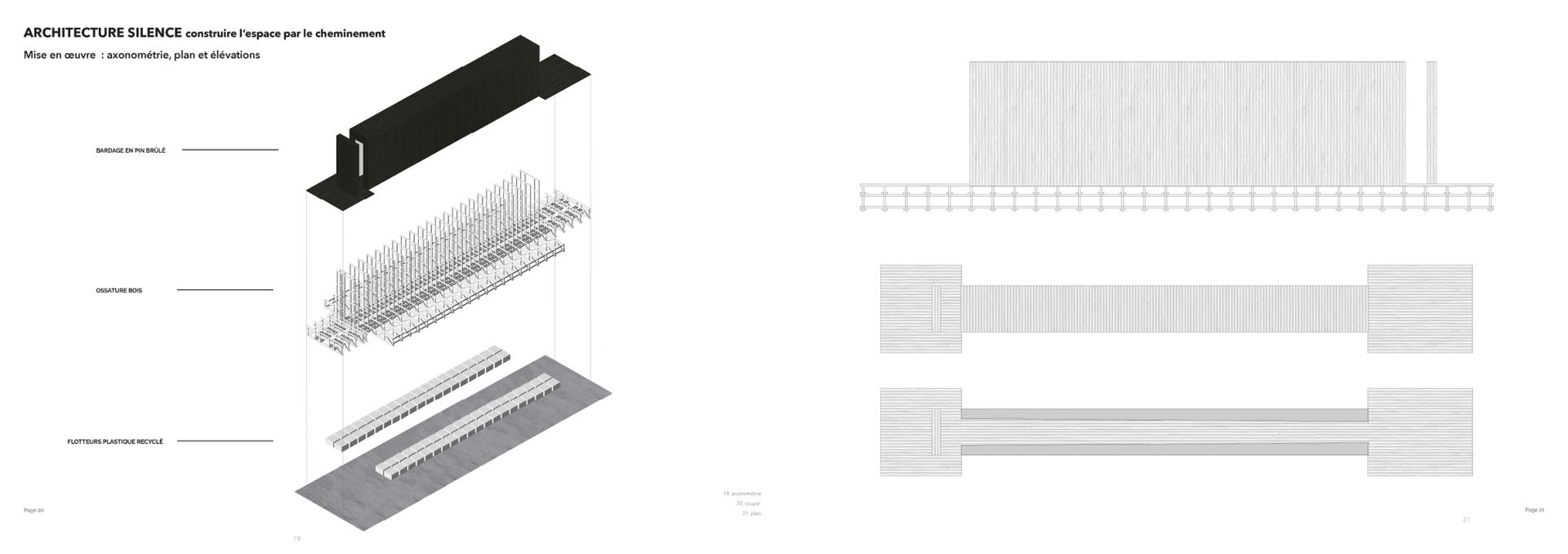
The architecture stands in its monolithic form and conceals a fragment of the landscape. Made up of a rectangular parallelepiped of 19 meters long by 1meter wide and 4meters high, it test our senses when we walk through it.
Its narrowness, reinforced along the way, influences the position of the body.
There is a strong break between the start of the path, when everything is visible, when the noises are omnipresent, and its end when the almost closed space made of wood fiber isolates us.
The many interactions with the environment are interrupted. Only a straight forward path, led by light, is allowed to us. In the end, poetry invests the rigor of this radical form and gives it all its dimension.
This black box of burnt wood, a harmonious break in the landscape, is like a passage over water in pursuit of muddy paths that previously led nowhere.
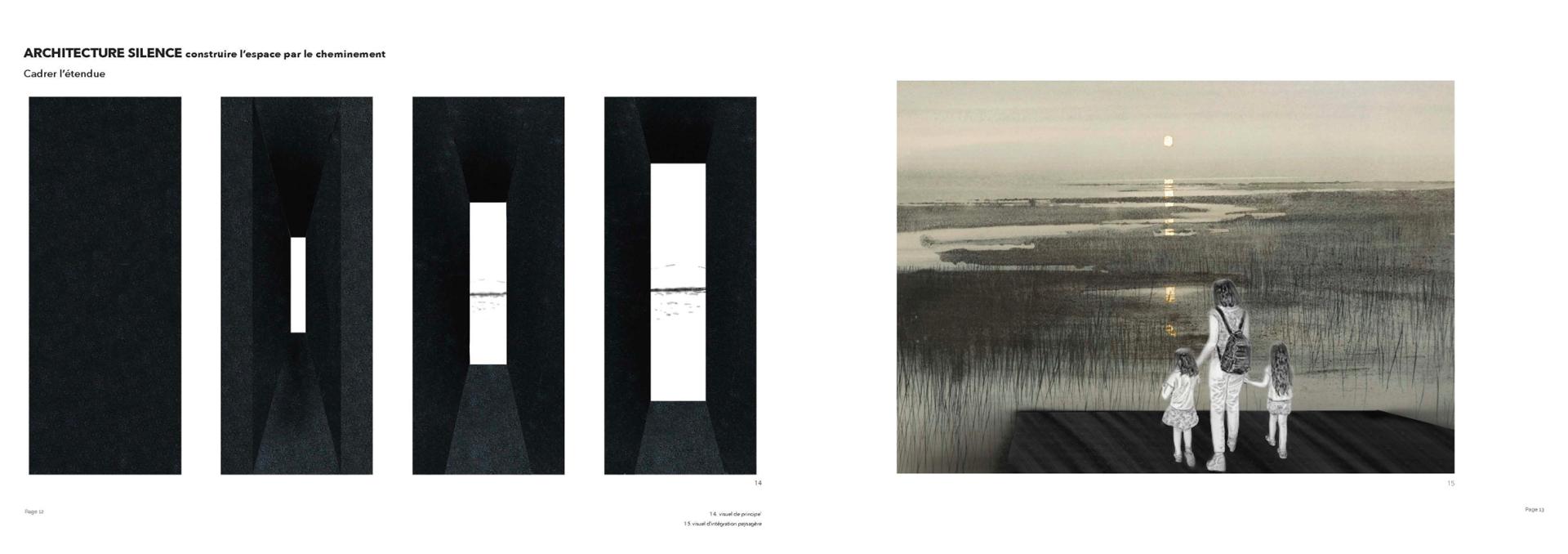
As much an obstacle as a passage, it breaks the horizon line, absorbs the environment, provokes tension and questions. Inside, the architecture plunges us into auditive and visual silence.
Building on water is accepting the inconstancy of the bank and its reflection. By following the rectilinear trajectory in the dark, we progress in the architecture. The vertical ray of light that guides us creates a framework for the landscape.
The curious visitor must forget the before to better discover the after, reset a form of memory to better understand this subtle environment. He is invited to explore the emotional content of the project which offers a muffled and padded atmosphere, composed from emptiness.
If the gaze is a lie, what do we show?
The world and its reflection, a loss of ordinary landmarks in a context where realities are altered, blurred, within which an elsewhere can reveal itself.
Key objectives for inclusion
Silent Architecture is a public space open and free to everyone. There is no hierarchy between gender, age, ethnicity, or social background. This human experience allows us to forget ourselves, and to forget our differences in the size of the surrounding landscape. However, Silent Architecture is mainly dedicated to hikers curious about the wild paths that lead to the pond, hardly used and passable for disabled people.
Innovative character
Silent Architecture is built from emptiness : it’s not the architecture itself that we inhabit, but the surrounding landscape.
We want to prove that building a space is not just about erecting walls, choosing the location of our doors and windows, putting down our chairs and tables. We have been driven by the very origins of architecture: walking. When in prehistoric times Europe was crossed by nomadic peoples, the landscape was omnipresent, and nature our habitat. The first architectural interventions were the monoliths, erected on the most popular paths, a symbol that linked earth and sky, man and landscape, and men between them. We wanted to recreate this thousand- year-old experience by offering a new meeting point. Our generation is now at a crossroads in choosing what will be the world of tomorrow. SAilent Architecture offers an alternative way to appropriate landscape, and a space to think about the future differently. It is an architecture manifest that invites reflection on static constructions in constant dialogue with an environment in perpetual evolution. This architecture believes in the fundamentally wild character of nature and invites the visitor to reflect on the traces of his passage.