Zuzeum
Basic information
Project Title
Full project title
Category
Project Description
Zuzeum is a new indoor and outdoor space for art in a former cork factory in Riga. The idea of Zuzeum is to provide a safe, multifunctional and inspiring public space for all regardless of their self-identities, cultural and socioeconomic backgrounds. Zuzeum opened its doors as an art centre in 2020 and it was a good year for community spirit in Riga. Voters elected neighbourhood activists into the city council. Volunteers transformed a derelict plot into urban allotments.
Project Region
EU Programme or fund
Description of the project
Summary
Zuzeum, a new space for art in Riga and the home of the Zuzāns Collection, opened its doors to the public on 10 September 2020. Founded by Dina and Jānis Zuzāns, collectors of Latvian, Russian, and international art, Zuzeum is a new addition to the arts infrastructure of the Baltic Sea region, providing a unique space for debate and cultural exchange. The idea of Zuzeum is to provide a safe, multifunctional and inspiring public space for all regardless of their self-identities, cultural and socioeconomic backgrounds.
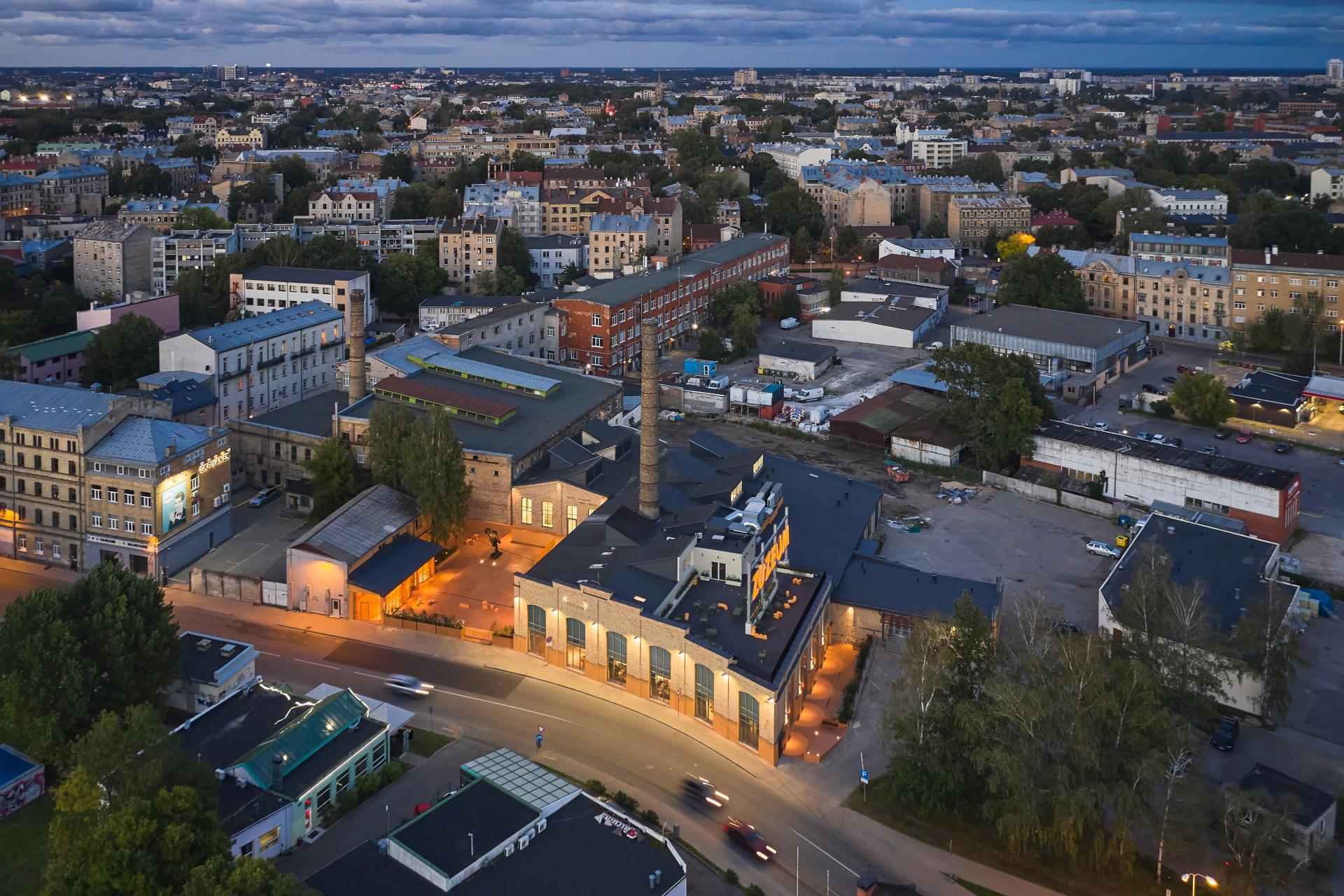
Zuzeum is housed in a former cork factory designed and built in 1910 by architect and engineer Edmund von Trompowsky. Located in between the historical centre of Riga, a UNESCO World Heritage Site, and the upcoming Rail Baltica railway integrating Helsinki, Tallinn, Riga, Vilnius, and Warsaw into the European rail network, the yellow brick building aims to continue the story of Riga's metropolitan past.
The makers of Zuzeum come from the background in business, media and architecture. These are people who saw potential in a building in a part of Riga crying out for the attention of city planners. Together with the neighbourhood activists they became one of the pioneering spirits bringing change to the Avoti neighbourhood. It is a working class, industrial neighbourhood. Not necessarily rough, but modest.
The transformation programme followed the modest character of surroundings, and included keeping the historical substance, cleaning and polishing, and creating beautiful and multifunctional spaces where once was a dump and broken asphalt. The renovation project was designed by a local architecture company Annvil.
Key objectives for sustainability
By transforming, upgrading and opening-up to the public a neglected and semi-closed territory, the Zuzeum project has contributed to the effective land use in the existing urban environment within easily walkable borders of the historical centre of Riga. By re-using such architecturally attractive but badly accessible and undervalued territory, Zuzeum is also diversifying the character of the cultural heritage and public space of Riga and actively contributing to the challenge of bringing people back to the city centre. It is done by careful programming of the space and services that include free access to art and public space.
Other components of sustainability include adaptability, flexible and multifunctional use of the space, improved accessibility, increased safety in the neighbourhood, indoor-outdoor programme that proved to be effective in the times of the global pandemic, use of natural light and strong aesthetics.
With minimum storage space, the building aims at effective use of the whole space for public functions seven days a week. Future plans include the community art garden that will create a green safety belt between Zuzeum and a busy car-centric street and the railway line.
Key objectives for aesthetics and quality
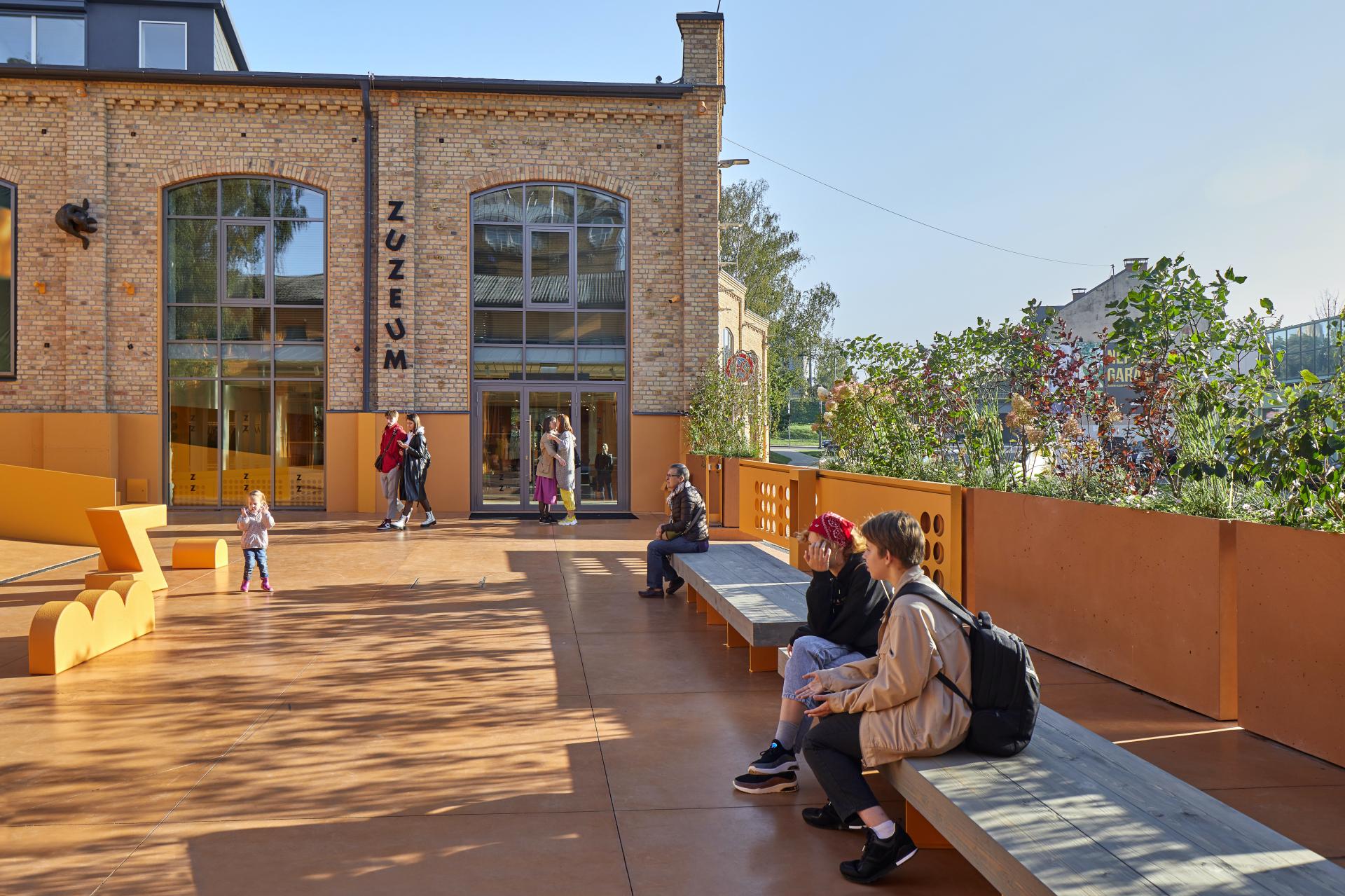
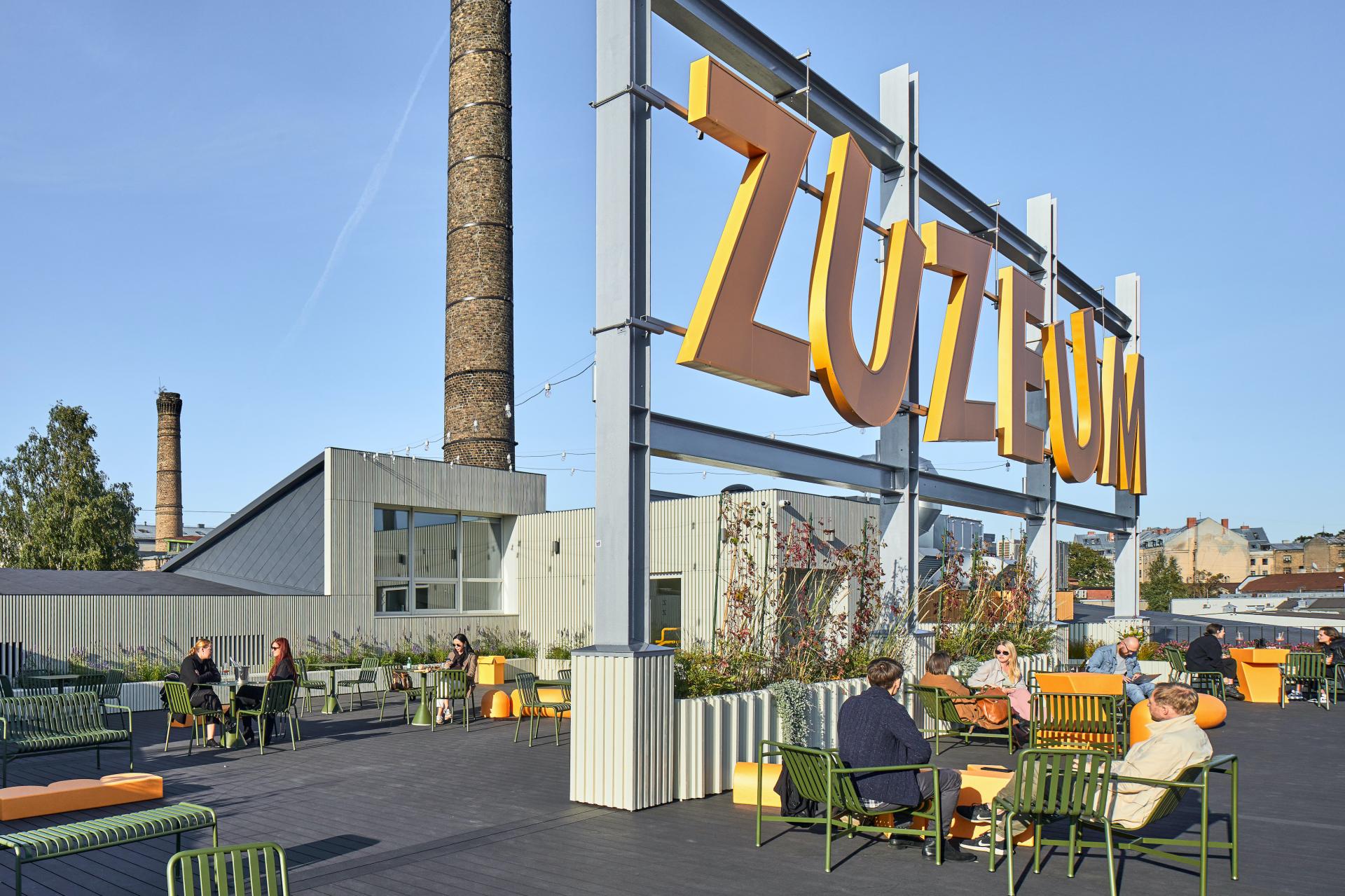
With the opening of Zuzeum, Riga has acquired a new public indoor and outdoor space that serves as a soulful investment into the physical, social, economic, emotional and aesthetic character of the city. Carefully planned indoor and outdoor spaces – galleries, courtyard, cafe, workshop, hallways, small garden at the back entrance and rooftop terrace – are made as a meeting place where different social groups can interact, form relationships, and strengthen a sense of community. It is a new meeting point in the city for each and every interested party to meet, share, debate, converge, relax, make friends, and discover new things.
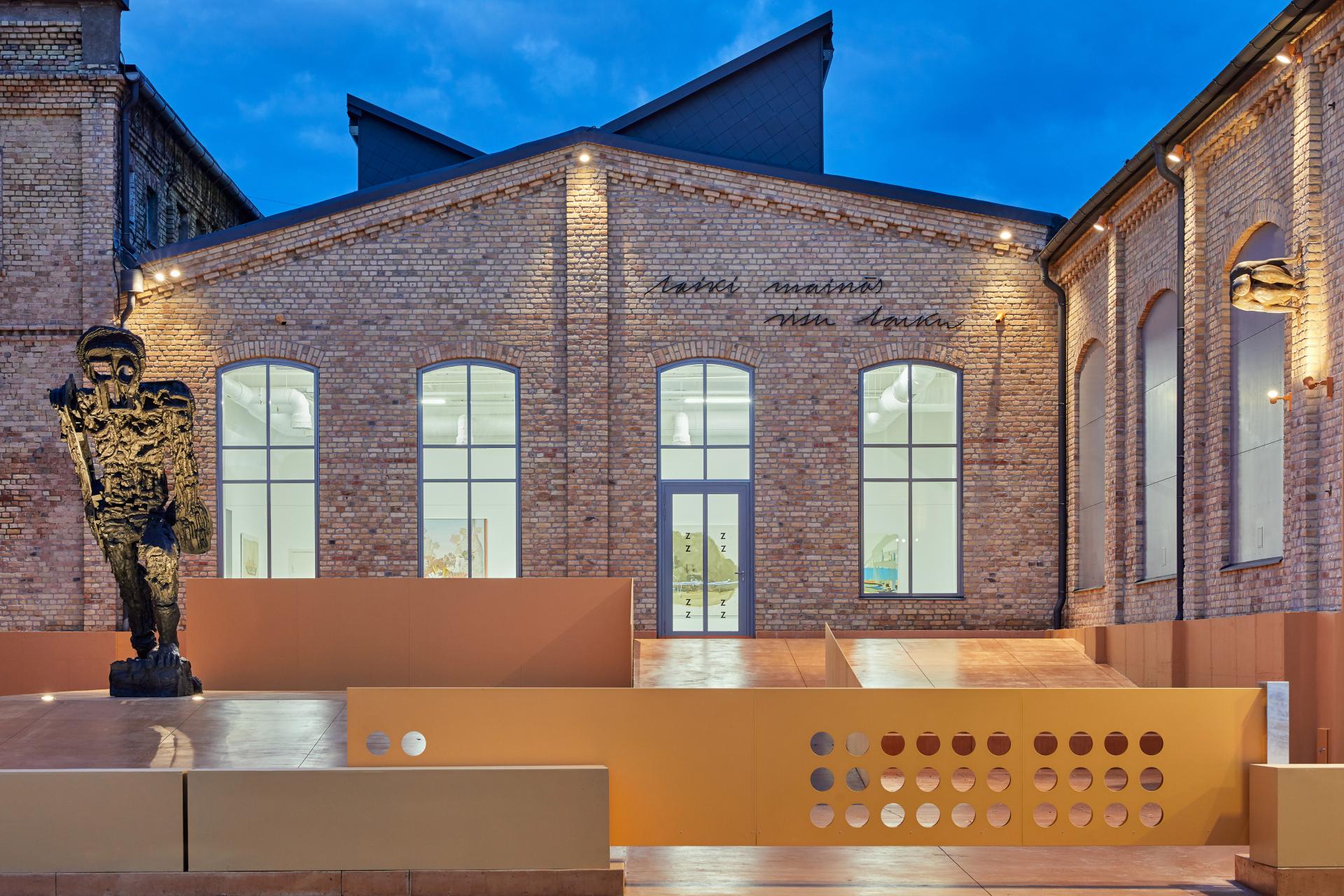
One of the key elements of the public space, interior and whole identity of Zuzeum, is orange colour. It embodies strength, power and energy that directly affects the soul of this place, the present and the future of Zuzeum, the emerging community spirit in Riga. Orange stimulates the appetite for communication and promotes dialogue. It stimulates physical and mental processes that trigger the flow of thoughts and human actions. Orange is the color of adventure and social interaction. It provides emotional power in difficult situations. Orange brings spontaneity, positive motivation and encourages to look on the bright side of life.
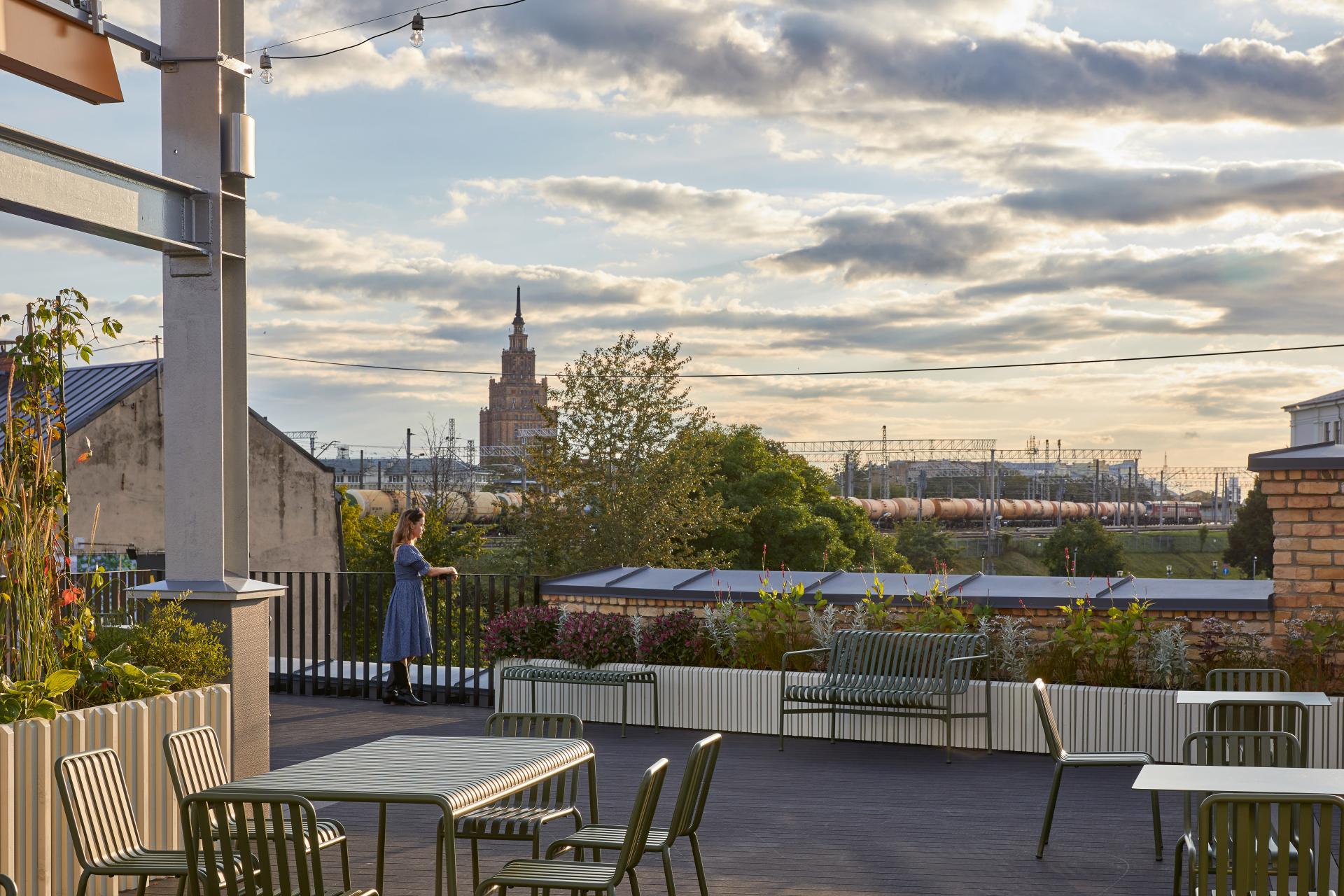
Another important element of experience is the ability to explore the Zuzeum and its surroundings in a way that is not necessarily directed by the programme. One can wander around freely around the sculpture garden, or find a new lookout on the roof for discovering the rich layers of architectural and industrial heritage.
Key objectives for inclusion
The idea of Zuzeum is to welcome and include each and every visitor, and to provide a safe, multifunctional and inspiring public space for all regardless of their self-identities, cultural and socioeconomic backgrounds.
The undefined and fluid programme of the space does not create boundaries and makes all the services and programmes accessible. The building and its outdoor space is intended to be open from all sides and has the fifth facade – the roof – with its own programme offering an unexpected encounter with the industrial part of the city with exciting views over the neighbourhood.
Well before the renovation works started, Zuzeum created its pilot project The Ear that became the first step towards building a community. By participating in film screenings, urban sketching and youth education programmes, many youngsters became natural ambassadors for Zuzeum.
With the programme and architecture, Zuzeum aims at serving the local and international community. Entry to all exhibitions at Zuzeum is free for under 18 year olds.
Results in relation to category
Since the early 1990s many private investors took the initiative to transform buildings and territories that were not officially listed as valuable parts of cultural heritage in Riga. Yet these unique examples have been praised by heritage organisations like Europa Nostra and national architecture awards. Zuzeum continues this path by contributing to the economy, culture, tourism, cultural and professional exchange of knowledge in the region.
The Zuzeum project is directly responsible for a powerful makeover of a former industrial territory next to the railway and busy, car-centric streets. It was a place that demanded attention for decades, but never got heard until it transformed itself as a private initiative. The Zuzeum project addresses many problems of the city by showing an example of how to include marginalised neighbourhoods and to diversify the official image of the city. Riga acquired its famous face with hundreds of Art Nouveau buildings, parks, historical museums and theatre buildings in the times when industry flourished. Remains of this upheaval should be included into the agenda of local, national and European cultural heritage.
This example of transformation is a reminder that every building has a potential and right to be renovated. Even as small as Zuzeum's Greenhouse, a modest 1990s annex to the historical substance now used as a window display and outdoor art space in the Sculpture Garden.
How Citizens benefit
The project was developed in a close relationship with the client, art professionals at Zuzeum, designers and architects from Annvil, and with the ongoing citizen activism in Riga in the background. 2020 was a good year for community spirit in Riga. Voters elected neighbourhood activists into the city council. Volunteers transformed a derelict plot into urban allotments. A former factory powered forth as an art centre. And those are just a few wins.
Zuzeum has become a part of the movement where individuals, neighbourhood activists, business owners are actively contributing to the making of a better city. In that way the project fulfills not only the functional needs of an arts organisation and vision of an art collector and patron but contributes to the growing number of private initiatives rediscovering the potential of the city.
The Zuzeum opened its doors during the times of global pandemic and there has not yet been the chance to operate at full capacity and therefore measure the achievements. However, the neighbourhood sees life returning.
By creating a new destination that is still easily reachable on foot, Zuzeum has encouraged social interactions and contributed to the perception of the neighbourhood. By showing the potential of marginalised territories it encourages others to undertake similar initiatives, to open small businesses and to offer cultural programmes.
The project has increased physical and social access to art, as well as provides the access to activity. The once remote destination has become a safe destination and improved the neighbourhood walkability.
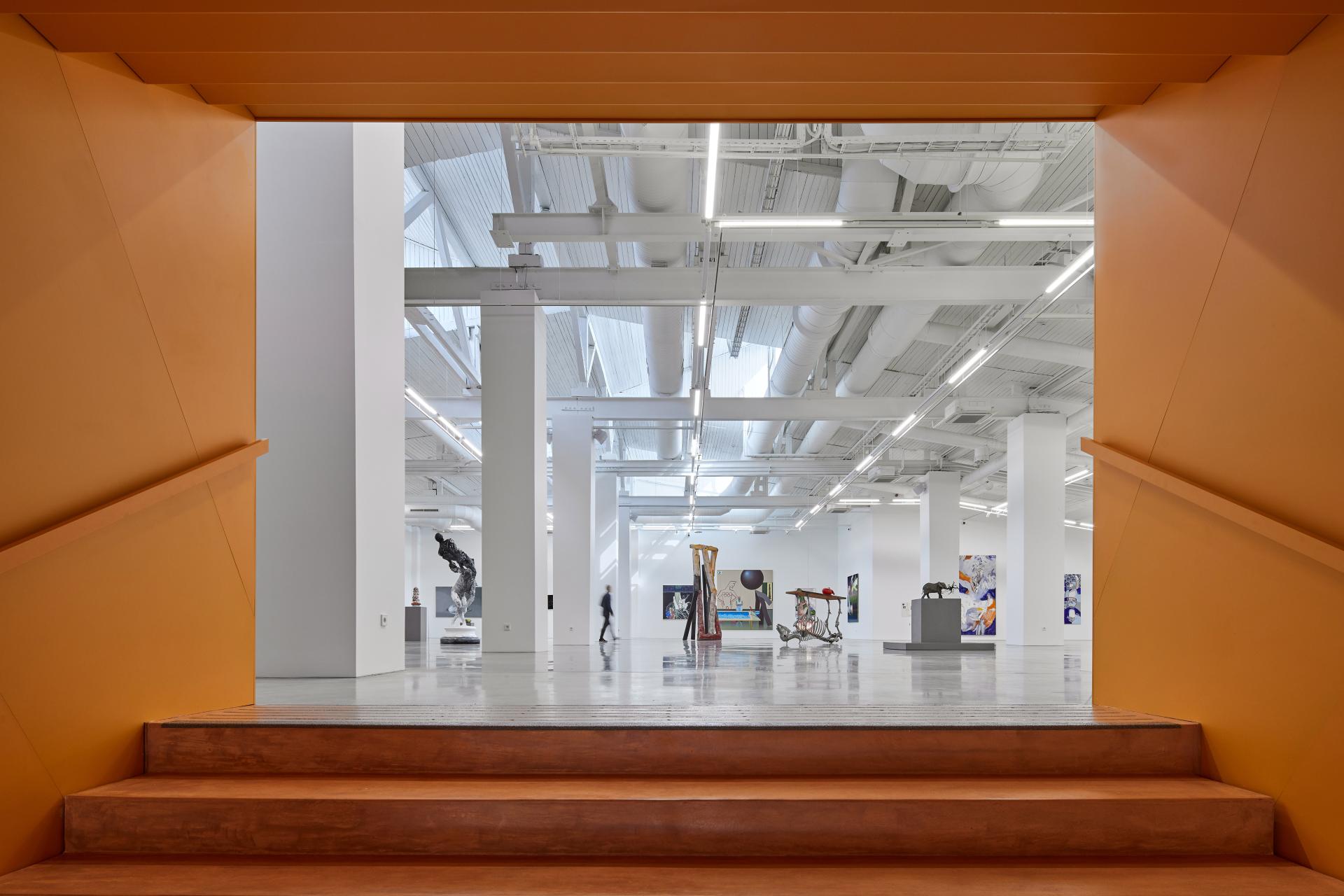
With 1,250 square metres of dedicated exhibition space spread over two galleries, a sculpture garden, workshop area, cafe, roof terrace, and art shop, as well as programmes of guided tours, talks, meditation, films, and music nights, Zuzeum invites everyone to feel at home with art.
Innovative character
The innovative character of the project can be highlighted by courage to follow a modest transformation programme and use of bold interventions of colour and lots of outdoor space in not so outdoor friendly climate. It is not a unique example of innovation in a global context, yet it shows innovative ways of approaching renovation in the Baltic region. We did not do much with the building and the inside of the building, the biggest attention was paid to the ways of connecting the building to the city and creating new outdoor spaces. Even though the main attraction – an art exhibition – is inside, the outdoor space has its own programme for whoever wants to use it.