BioMat Biocomposite Mock-ups
Basic information
Project Title
Full project title
Category
Project Description
BioMat (Biobased Materials and Material Cycles in Architecture) is a research group at the ITKE (Institute of Building Structures and Structural Design), University of Stuttgart and aims to investigate various aspects of sustainability in architecture. The last two mock-ups realized by BioMat explore TFP technology with natural fibers and its potential application in structural components made of fiber-reinforced composites.
http://www.hanaadahy.com/pavilions/
Project Region
EU Programme or fund
Description of the project
Summary
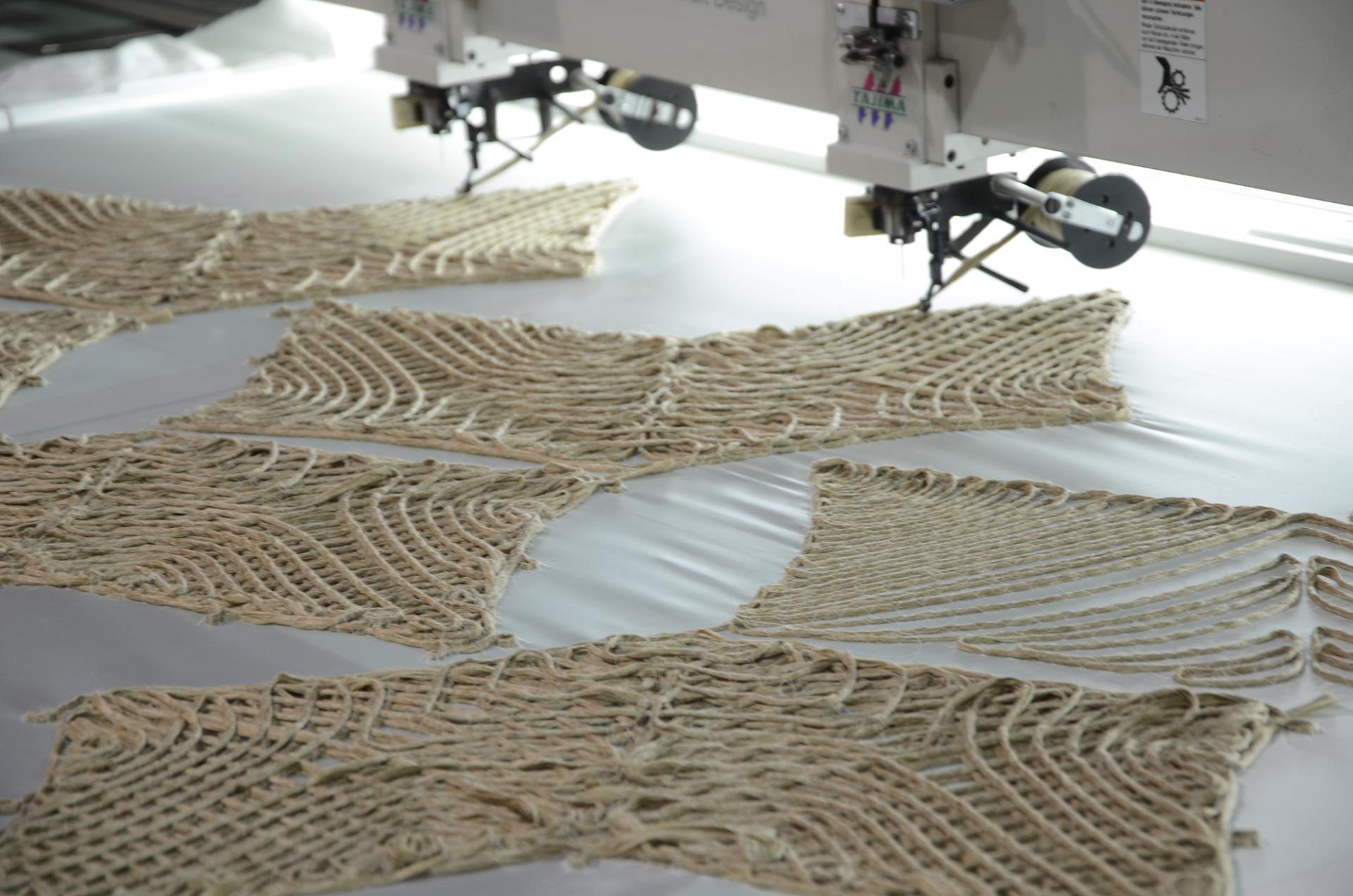
BioMat (Biobased Materials and Material Cycles in Architecture) is a research group at the ITKE (Institute of Building Structures and Structural Design), University of Stuttgart. The last two mock-ups realized by BioMat explore Tailored Fibre Placement (TFP) technology with natural fibers and its potential application in structural components made of fiber-reinforced composites (FRC). The TFP technique is an automated textile manufacturing method, which ensures precise manufacturing as well as force-oriented positioning of the natural fibers, which are a biodegradable and annually renewable substitute for synthetic fibers.
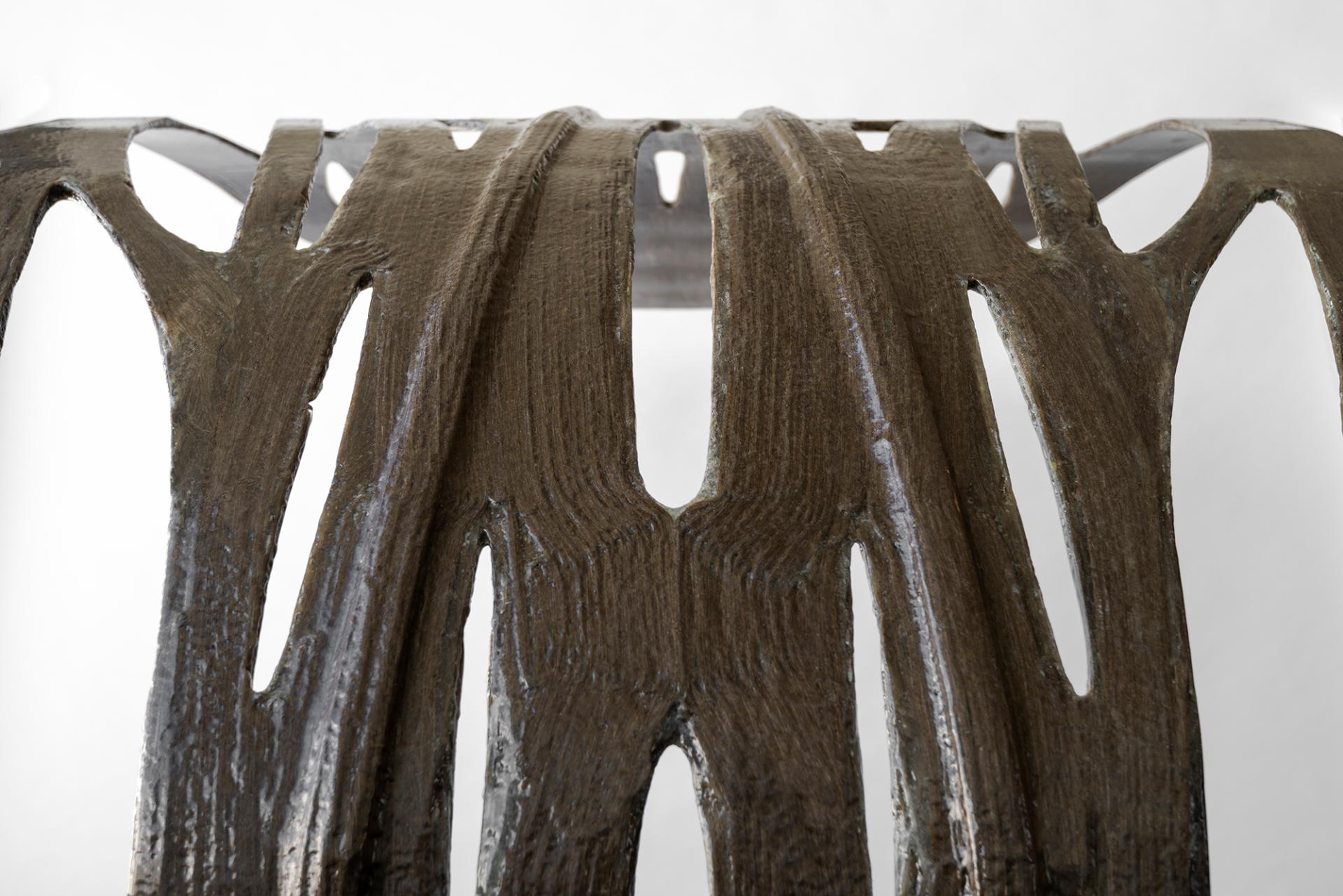
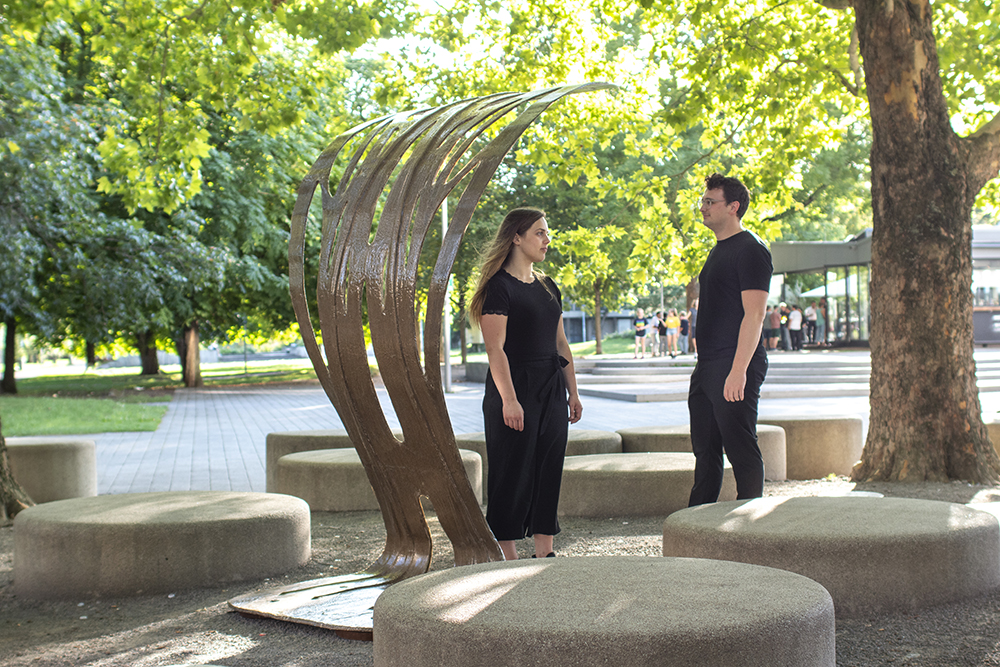
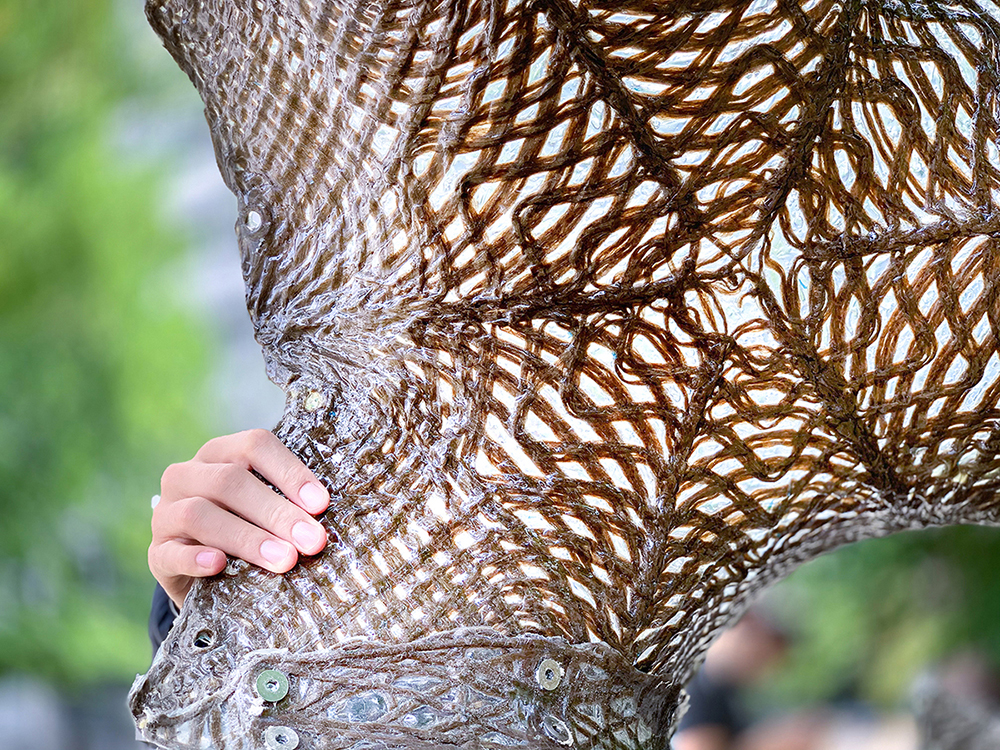
BioMat Mock-up 2019 is a simple curved structure, generatively designed as a lightweight structure of 225cm height and 125cm width. Generatively designed geometry was topologically optimized to reduce the amount of unnecessary material and achieve optimal lightness. Further topology optimizations helped determine the optimal smooth direction of the continuous flax fibers. A reusable mold was developed for the mock-up. Using TFP technology and continuous natural fibers, it was possible to create a 2 meter high shell structure without additional connections.
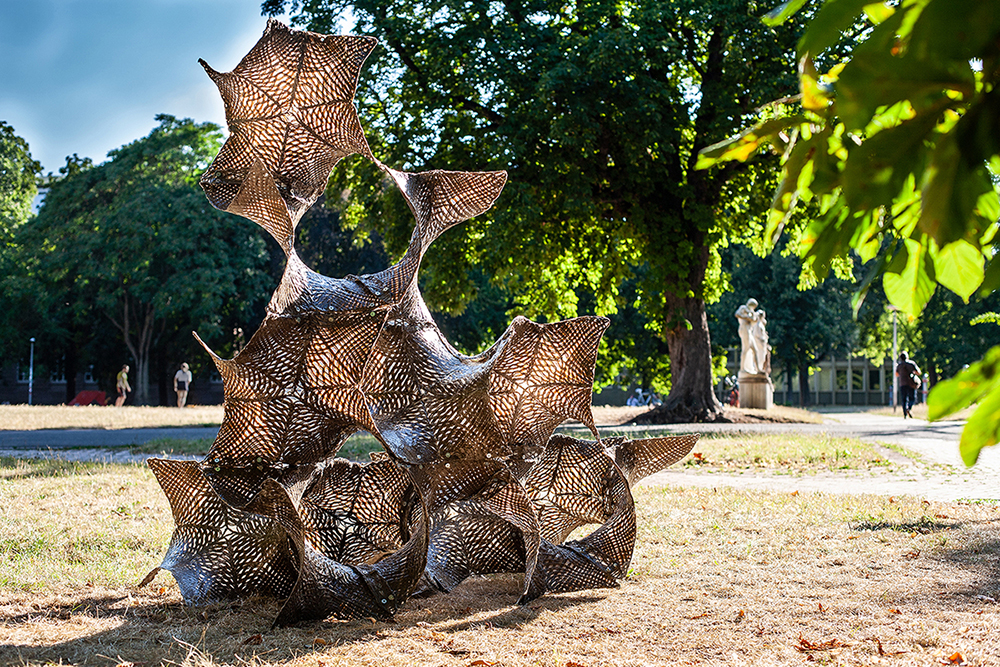
BioMat Mock-up 2020 is a modular, lightweight biocomposite structure. The design was inspired by lightweight foam structures and is based on the gyroid shape. The basic module is a double-curved surface and its rotation makes it possible to connect the modules at the edges and expand the structure in any direction. The removable connectors allow easy disassembly and reuse of the modules in any other constellation. Optimization of the modules helped to minimize the area of a basic unit, thus reducing material consumption. The optimized TFP embroidery pattern follows the geometry and the applied loads. The final shape of the module was achieved using the vacuum-assisted moulding process. The assembled structure is 2 m high, consists of 14 modules and weighs only 20kg.
Key objectives for sustainability
The project aims to minimize the environmental impact at each stage of life cycle. For both projects it was decided to use natural fibers, which are a biodegradable and annually renewable substitute for synthetic fibers. The computational form finding and optimization of the mock-ups helped to reduce material consumption. The TFP technique allowed for the creation of very complex geometries with minimum waste from fabrication , which is a significant advantage over wood. The removable connectors make disassembly and reuse possible. Reusable molds present an exemplary sustainable solution for the mass production of TFP manufactured parts.
Key objectives for aesthetics and quality
Thanks to the force-oriented fiber alignment, it has been possible to use natural fibers in the structural elements. Apart from the effective structural performance, the elements create a completely new aesthetic. With the use of TFP technology it is possible to fabricate lightweight openwork double curved surfaces. Such forms can be applied in a variety of architectural applications such as facade elements, interior design as well as in construction elements.
Key objectives for inclusion
The two mock-ups were created in cooperation between architects, engineers and architecture students. This collaboration created a venue for discussion, exchange of ideas and experience, resulting in these two unique projects in terms of technique and aesthetics.
Results in relation to category
The project is another important step in the development of green building materials and provides an example of how the construction industry can reduce its negative impact on the environment. Using computational design, digital manufacturing technologies as well as bio-based materials, these two mock-ups are a vision for lightweight and sustainable architecture in the future.
How Citizens benefit
The two mock-ups were created in collaboration between architects, engineers and architecture students and showed design and fabrication methods that followed the philosophy ‘Materials as a design tool’. In the projects students experience the whole architectural process from design to completion within a very short time, which is different from classical architectural educational models. The integration of sustainable approaches, which are already in architectural education, is important for the next generation of architects who will have to deal with alternative materials, digitally-driven fabrication and effective life cycles of future buildings.
Innovative character
The TFP (Tailored Fiber Placement) technique is an automated textile manufacturing method in which the fiber material is fixed to a base material using a sewing thread onto a base material. The technique ensures precise manufacturing as well as force-oriented positioning of the fibers. This technique has so far been used mainly in the automotive and aerospace industry, its application in architecture is something completely new and not yet explored. Cooperation with Institute of Aircraft Design, University of Stuttgart has made it possible to test new digital fabrication manufacturing methods and, through them, to create new architectural forms.
Another new approach is the use of natural fiber-reinforced polymers (NFRP) as a structural component. Application of biocomposites in architecture are still in the investigational phase. NFRP same as fiber-reinforced polymers (FPR) can provide lightweight and durable structures. However carbon or glass fibers are a non-renewable fossil based materials. Natural fibers such as flax or hemp fibers are annually renewable, and therefore an eco-friendly alternative to synthetic fibers.