"Mayr in der Wim" New life in old walls
Basic information
Project Title
Full project title
Category
Project Description
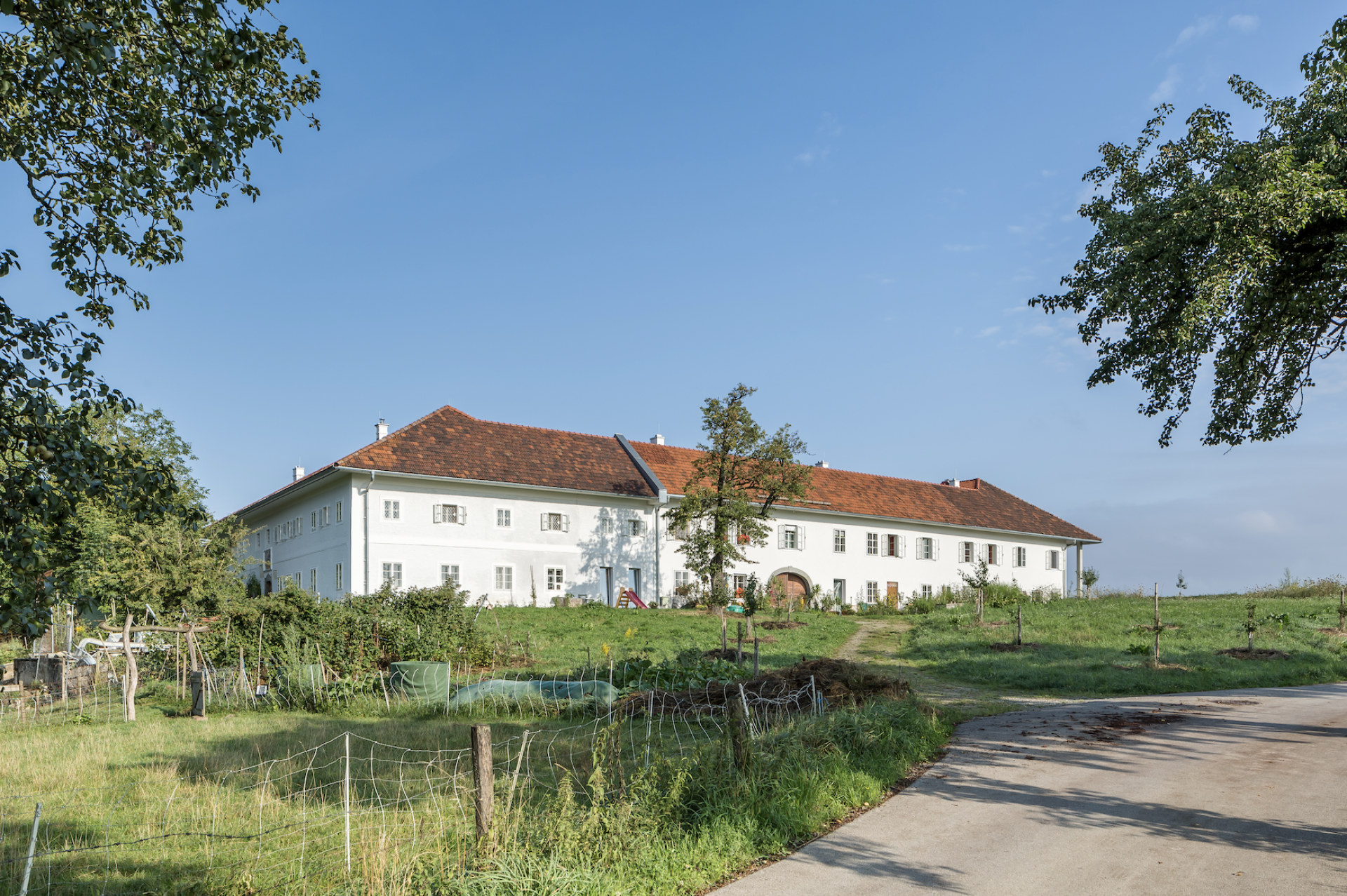
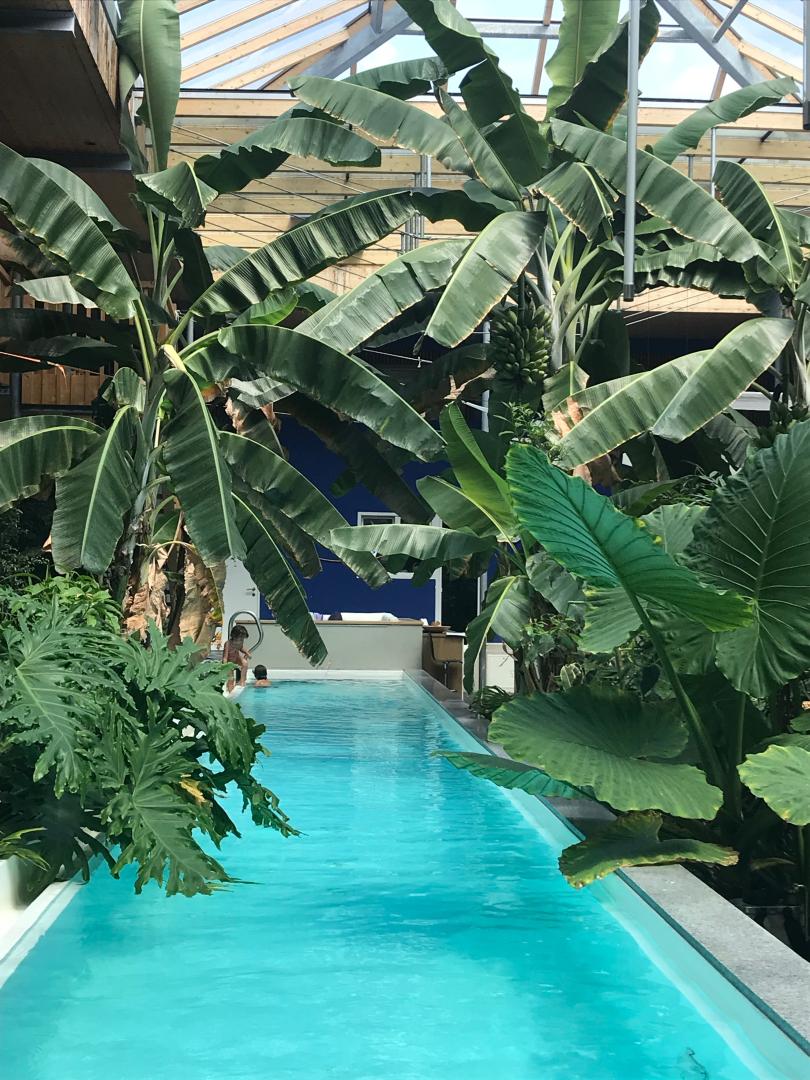
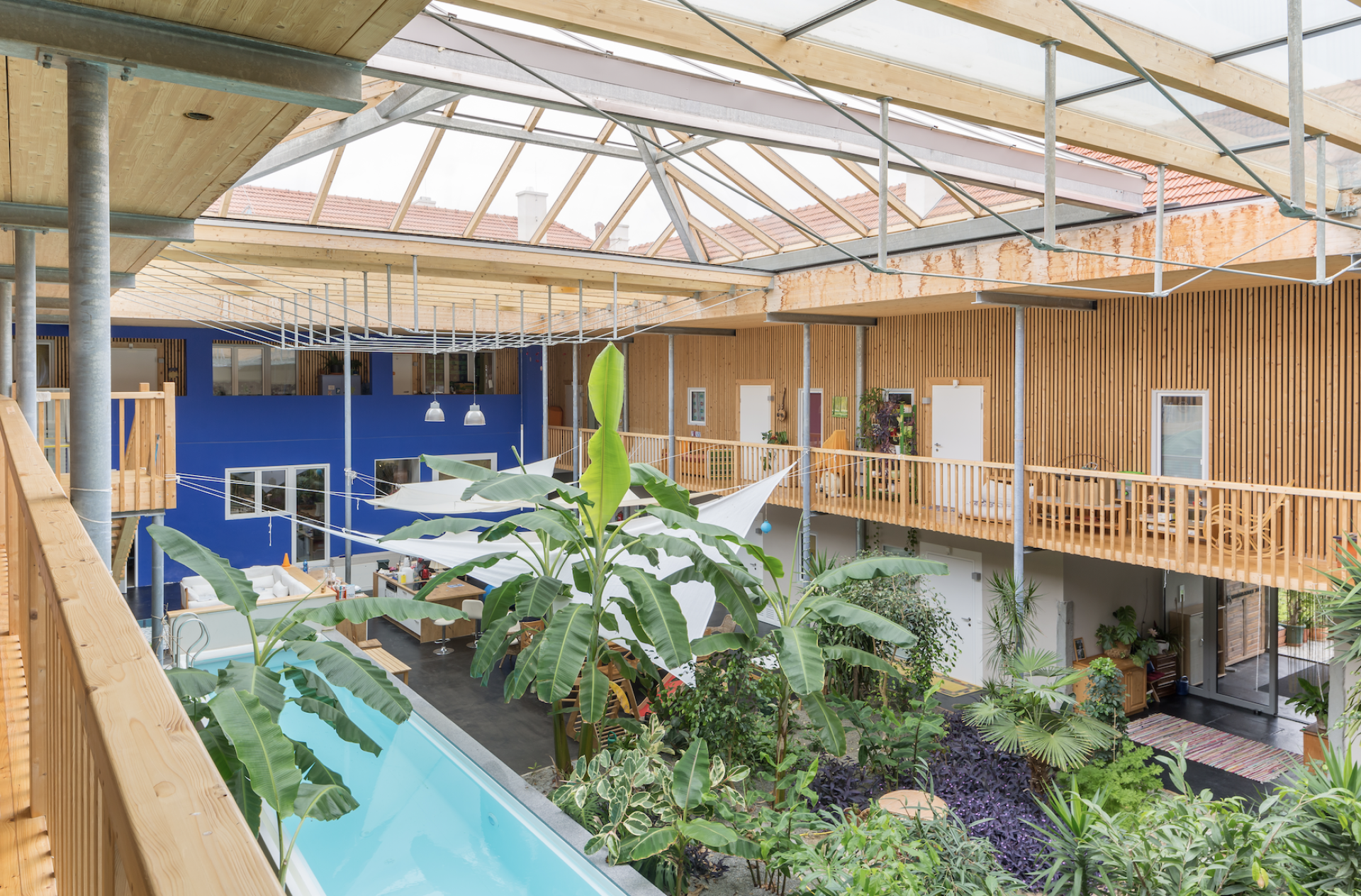
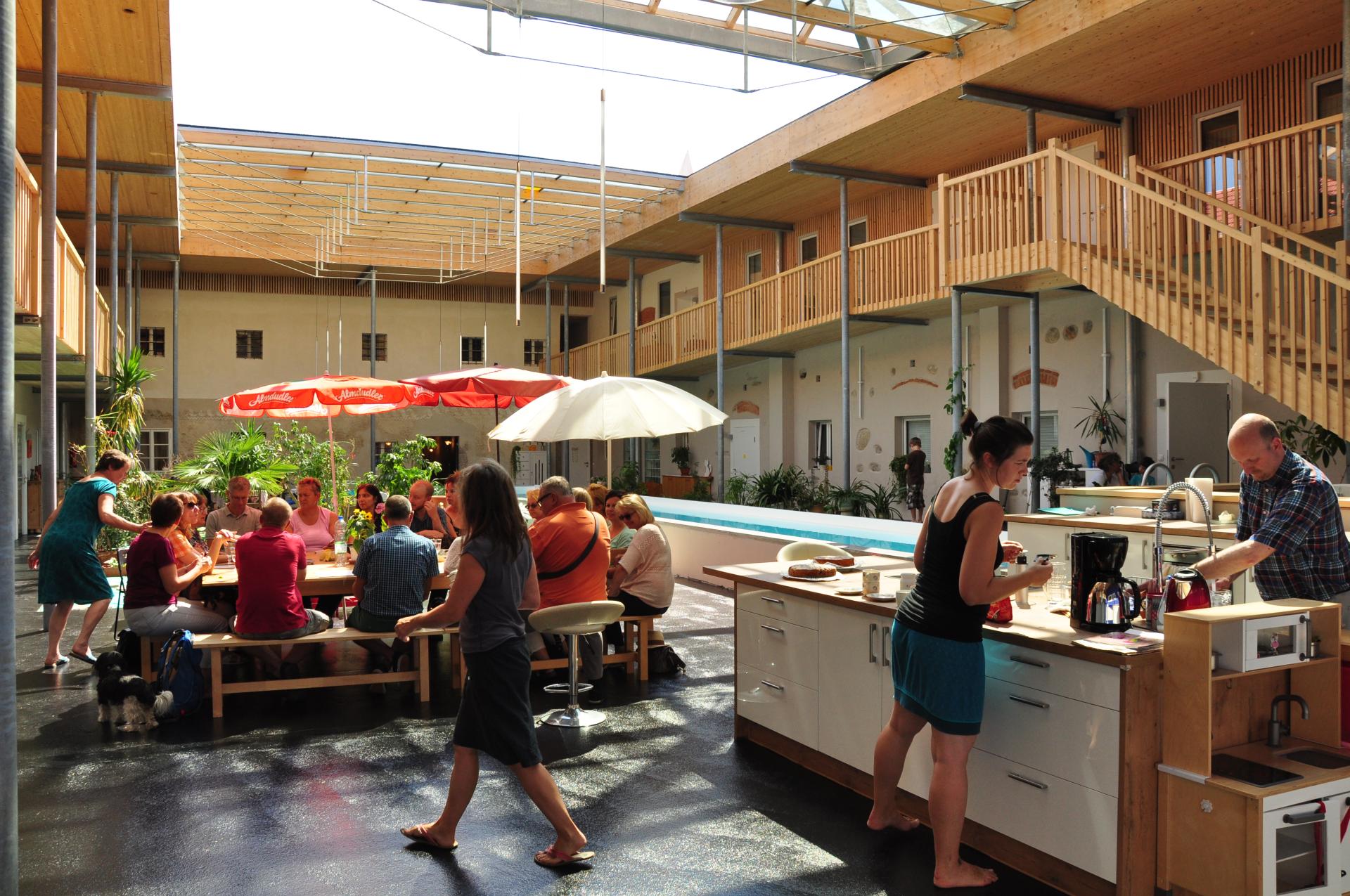
Many of the courtyard buildings of monasteries and farmers will no longer be needed in the future, such as the listed 550-year-old manor in Garsten. With the sustainable concept of "Protect by using", the inner courtyard was covered with a mobile glass roof that captures solar energy, and 22 apartments were built into the old structure to enclose this winter-proof atrium. 110 m2 winter garden, a 20 m swimming channel and a shared kitchen make this social environment a new home worth living in.
Project Region
EU Programme or fund
Description of the project
Summary
Many historically valuable monasteries and manors will no longer be needed in the future. They are an important historical building creation that give the landscape a special character. One of these courtyards is the listed manor from 1459, which has fallen into disrepair for the past 25 years. In order to revitalize the courtyard and use it again sensibly, the idea arose to turn it into a community housing project. Even if it is positive to pay attention to economical energy consumption, the important social warmth is all too often forgotten and the necessary meeting areas are not created anywhere. In order to take both into account, a project was designed that takes both the environment and the need for community into account. At the same time, an architectural monument was saved from deterioration. It makes more ecological sense to use existing buildings than to build new ones. You don't need a new infrastructure, you can use existing resources and you don't need any new building space. The formerly agricultural cultural asset has now become home to 22 families. With the glass roofing of the inner courtyard, a 471m2 attractive common room for the residents was created in the heart of the house. A third of the glass surface can be moved electrically to prevent overheating in summer. At the same time, the yard is now also a huge solar collector. With the radiant heat of the surface heating of the old masonry, a high level of comfort is achieved with the least amount of energy. The cooling effect of the massive historical mixed masonry made of stone and clay bricks is achieved in summer without the use of energy. Further positive effects of this project are that the cohesion of the people is promoted, which is necessary for an aging society with its social costs that are difficult to finance. An alternative to urban sprawl is offered and moving the dwellings closer together also saves energy.
Key objectives for sustainability
The revitalization of an empty monument with a very large building volume is an important task of the architecture of our time. In the present project, with the installation of 22 apartments as the main residence, compared to other commercial use, it was achieved that the property will most certainly not have to be vacant in the future and the existing property would then be at risk. Another necessary aspect of this revitalization was a planned upgrade of the property. In this case, the glass roofing of the approximately 471 m2 inner courtyard resulted in high energy savings and, with the associated reduction in external wall surfaces, heating costs were reduced by 23.5%. With the glass roofing, the former outer walls on the courtyard side became inner walls and did not have to be retrofitted with energy. In addition, these former outer walls are now permanently protected from all weather influences. With this intervention, an attractive, approx. 7 m high common room that can be used all year round was created, which is the heart of the environment with 110 m2 of palm garden, 20 m swimming channel and a communal kitchen. How well this concept worked can be seen from the great popularity of the residents of this newly created atrium. Enthusiasm and intensive use of the space are particularly high among the youngest and oldest residents. The reduction in energy consumption for heating was also successful and contributes significantly to the sustainable use of the monument.
Key objectives for aesthetics and quality
The aim of the project was to preserve for posterity a historical monument from the Rennaisance period (1459) that had been unused for 5 years without having to use public tax money for it. The enormous number of monuments in Austria is high at 38,519, so that financing the preservation of architectural monuments by the taxpayer is not justifiable in the future and alternatives must be sought urgently.
The historically transmitted building culture is of inestimable value, increases the emotional well-being of people and, with its history-heavy nature, cannot be achieved with contemporary architecture.
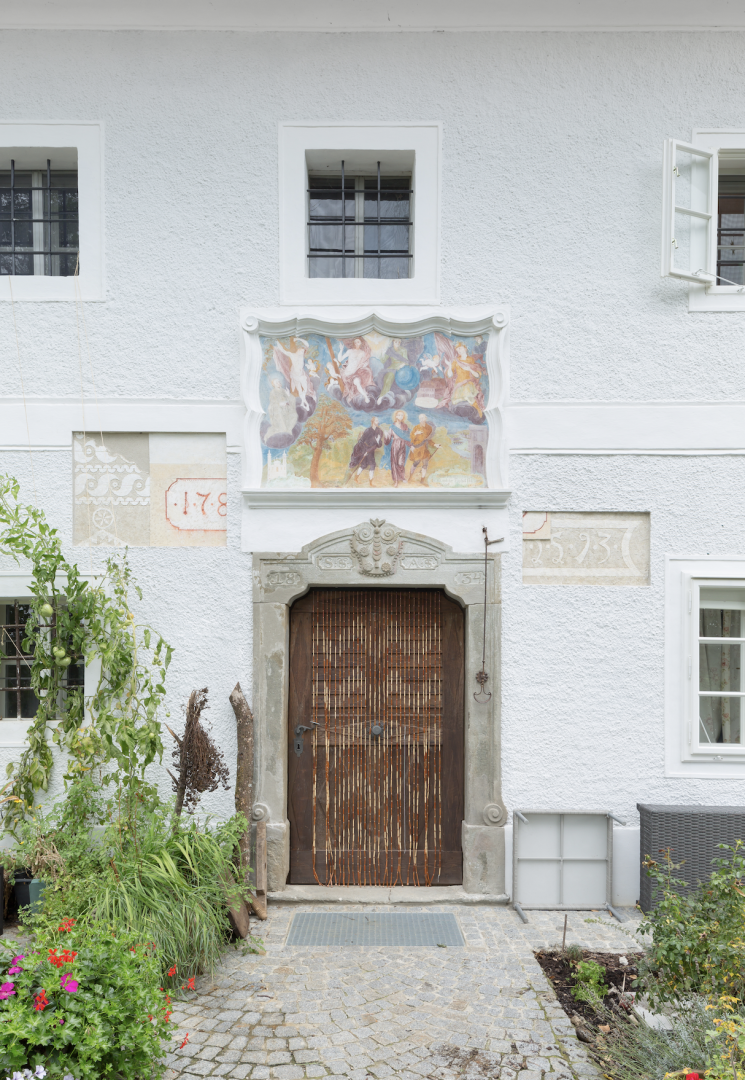
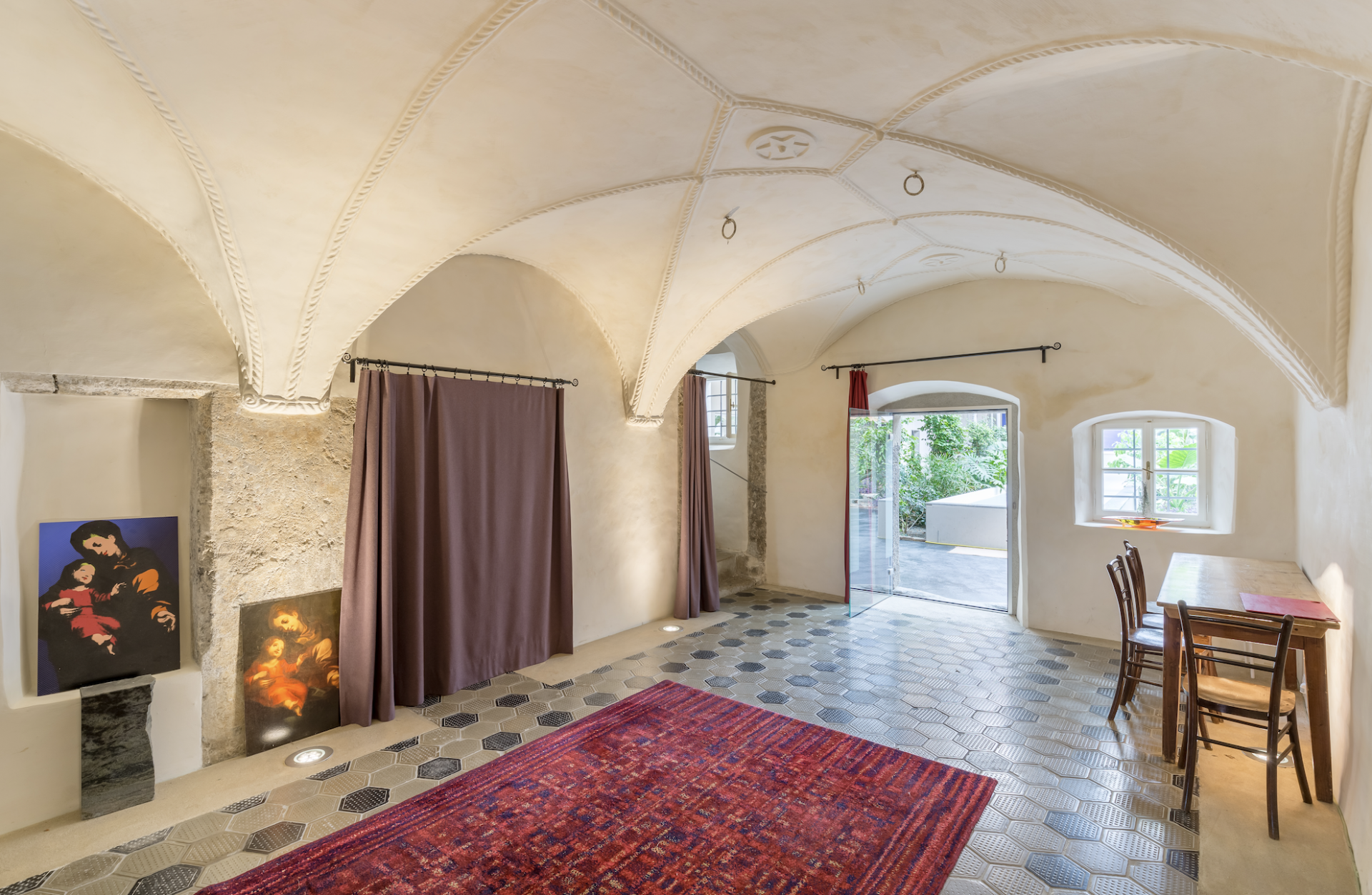
It was not about a complete return of the courtyard to the time of its creation, rather the type of restoration should stimulate the imagination of the viewer through "historical time windows" to imagine the original condition of the object. The many years found in the sgraffito facade alone allow the turbulent long building history of the courtyard to pass in review.
The roof of the entire courtyard was thatched when it was built. The dimensioning of the wooden structures was accordingly economical and therefore unsuitable for the replacement on roof tiles carried out in the 19th century. Often these economical wood dimensions led to very poor auxiliary constructions in the meantime. This resulted in the structural necessity to completely renew the roof structure. The old roof tiles were removed with great care and subsequently relocated to the necessary new roof structure. In this way, the old patina was impressively saved into our time. The components for the barns, which were made of wood during the construction period, were rebuilt from prefabricated wooden elements. This means that the original state of use remains clearly legible for the observer: here masonry for people and animals, there wood for storage and ancillary rooms.
Key objectives for inclusion
The realization of this project was under a lucky star right from the start. The owner of the estate, the Bishop of Linz, tried unsuccessfully for many years to find the best possible use for the property. And so our suggestion of revitalization was very welcome from him. The first contact with the local mayor was extremely positive, as he had to watch the slow decay of the monument with concern during the vacant years of the manor and he saw himself as the first building authority to be responsible.
The given clear building structure with a building in the form of a courtyard was very convincing for our idea of using it for communal living. A basic plan was quickly put on paper, and we addressed those people who have always wanted to live in good neighborhood, in a “house for people”. Co-determination of the future users (participation), our planning principle for many years, was also popular here. The dominant location of the Guthofe in the middle of the landscape, together with our planning proposals, convinced a group of people of different ages to create their living paradise here.
With the enrichment of the monument with a glass roof over the inner courtyard to an atrium that can be used all year round, the dream of communal living in high social quality can now be fully lived out.
No vanity on the part of architects brought down the planning wishes of the future residents.
The strong desire of the residents in the planning phase for a communal kitchen almost in the center of the atrium resulted in a convincing realization that I, as an architect, did not really believe in and that works fully in practice.
The main users of this atrium are the children, who find a huge indoor playground here and always have friends to play with. And what the architect has not thought of is the fact that this form of communal living can perfectly integrate older people.
Results in relation to category
The peculiarities of architectural monuments often do not only consist in their architectural art Value, but rather also in the careful search for the most suitable building sites. Many historically valuable courtyards of castles, monasteries and manors are built in an erratic form of a courtyard and will no longer be needed in the future. They are not only significant historical building creations, they also often give the landscape or cityscape a very special character. The same applies to the example presented “Mayr in der Wim”. Quite a few owners of such cultural assets are now thinking about a new use of this kind, so that such objects are not abandoned to decay when they are not in use. Follow-up projects in this regard are being considered in many places. A concept has already been drawn up for a nearby castle from the Baroque era, Schloss Losensteinleiten in Garsten / Austria, and a large number of interested people from the population who dream of “New Life in Old Walls” are already reporting. A special feature here is that the municipality of Wolfern / Austria is involved in the glass roofing of the 550 m2 castle courtyard in this new project. The congregation has recently been using its event space for concerts, theaters, and the like. lost n. With this expanded use by the community beyond the use of the glass-covered castle courtyard as a common room for the residents, a perfect integration of the new castle residents into the community of the community will take place. In this way, the previous historical public significance of the castle can largely be restored. It remains to be hoped that this type of example will find correspondingly strong followers.
How Citizens benefit
For the residents:
Reduction of heating costs through solar entry from the solar collector glass roof
Reduction of heating costs by reducing the building surface by 23.5%
No costs for increasing the building volume by 66%.
Reduction of administrative costs through self-administration of the community.
Cost savings through neighborhood help
Possibility of synergies in elderly care through guest apartment.
For civil society:
No costs for maintaining a historical monument.
No building land required.
No new sealing of agricultural land
No costs for the construction of a new access road
No costs for the construction of a new sewage disposal system
No costs for building a new water supply
Innovative character
Great increase in the value of the monument and the apartments through communal facilities in the atrium such as 20 m swimming channel, communal kitchen, installation of a lift, café area, shared dining area, 110 m2 winter garden with tropical plants and ongoing harvest of bananas, Establishment of the orchard with 50 trees and revitalization of the historic farm garden, children's playground with trampoline, ball playground and playhouse. Massive improvement of the real value through planning measures (glass roof). Mobilizing the interest of the population in “new living within old walls”. Implementation of the African proverb: To raise a child, it takes 100 parents1 or an entire village, such as an entire atrium courtyard here. Ultimately, the use of existing building fabric helps to consume fewer resources during construction and to reduce embodied energy to a minimum. All in all this gives: a very high emotional, physical and social housing quality, which is associated with affordable costs due to the optimal concept.