SISCODE
Basic information
Project Title
Full project title
Category
Project Description
How can co-creation contribute to empower communities to sustainable innovation ecosystems, while giving impulse to changes at a larger scale?
SISCODE explored bottom-up and design-driven participatory approaches to better integrate civil society in science and innovation. Through 10 pilots across Europe, it successfully engaged multiple stakeholders from the context, constructing 10 ecosystems as designing, enabling, and innovative communities where to co-create desirable solutions together.
Project Region
EU Programme or fund
Which funds
Other Funds
Funded under H2020-EU.5.f. and H2020-EU.5.c.
Topic: SwafS-13-2017 - Integrating Society in Science and Innovation – An approach to co-creation
Call for proposal: H2020-SwafS-2017-1
Start date:1 May 2018; End date: 30 April 2021
Grant agreement ID: 788217
Description of the project
Summary
Revolving around the concepts of inclusivity, empowerment, and responsibility, the H2020 project SISCODE (siscode project.eu; youtu.be/Po7VtcOhsFk) explored the use of co-design to operationalize Responsible Research and Innovation for a better Europe. Adopting bottom-up and design-driven approaches, it engaged 17 cross-sector partners in expanding knowledge on how co-creation and co-design can foster the development and implementation of user-centered policies to better integrate civil society in science and innovation.
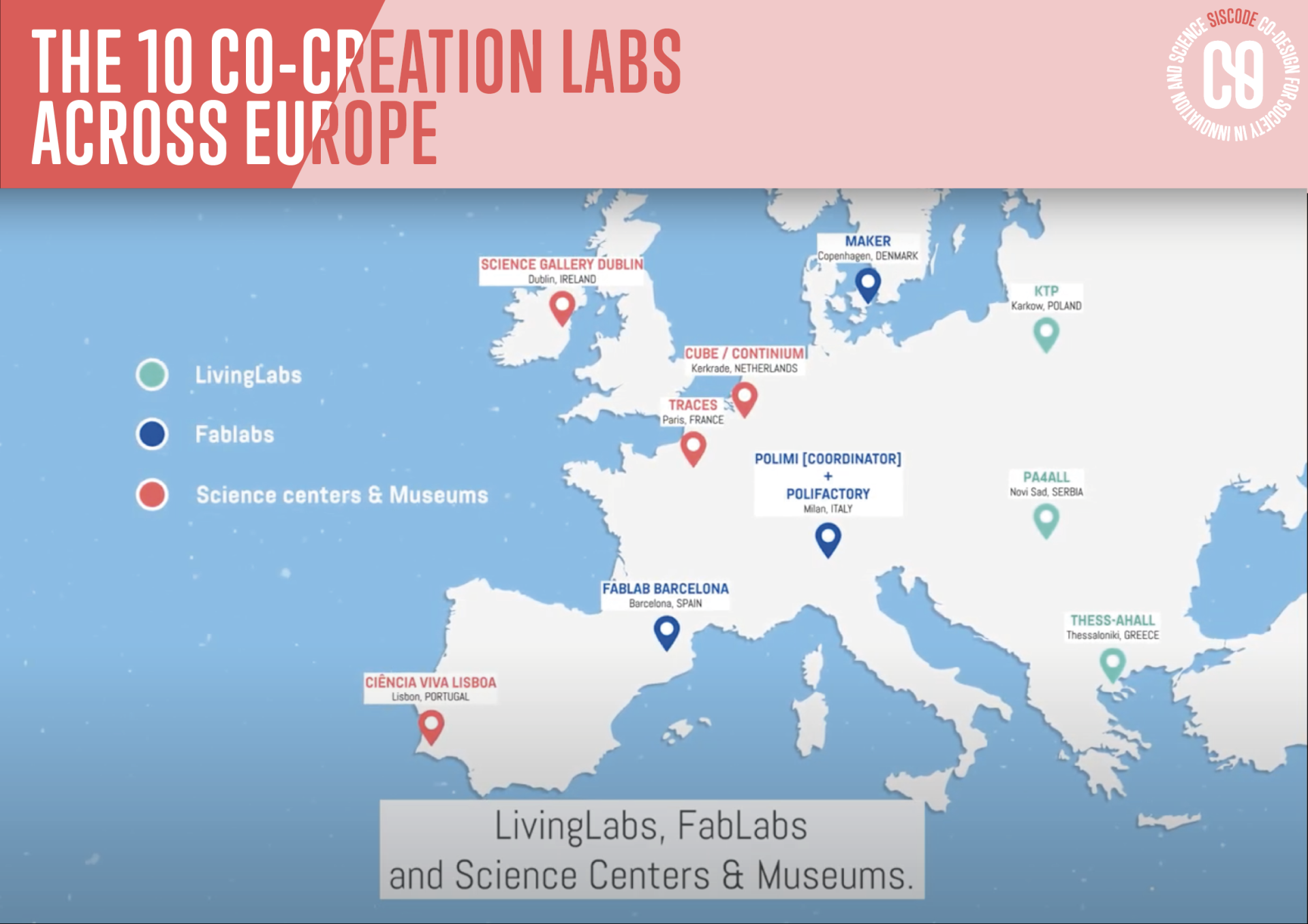
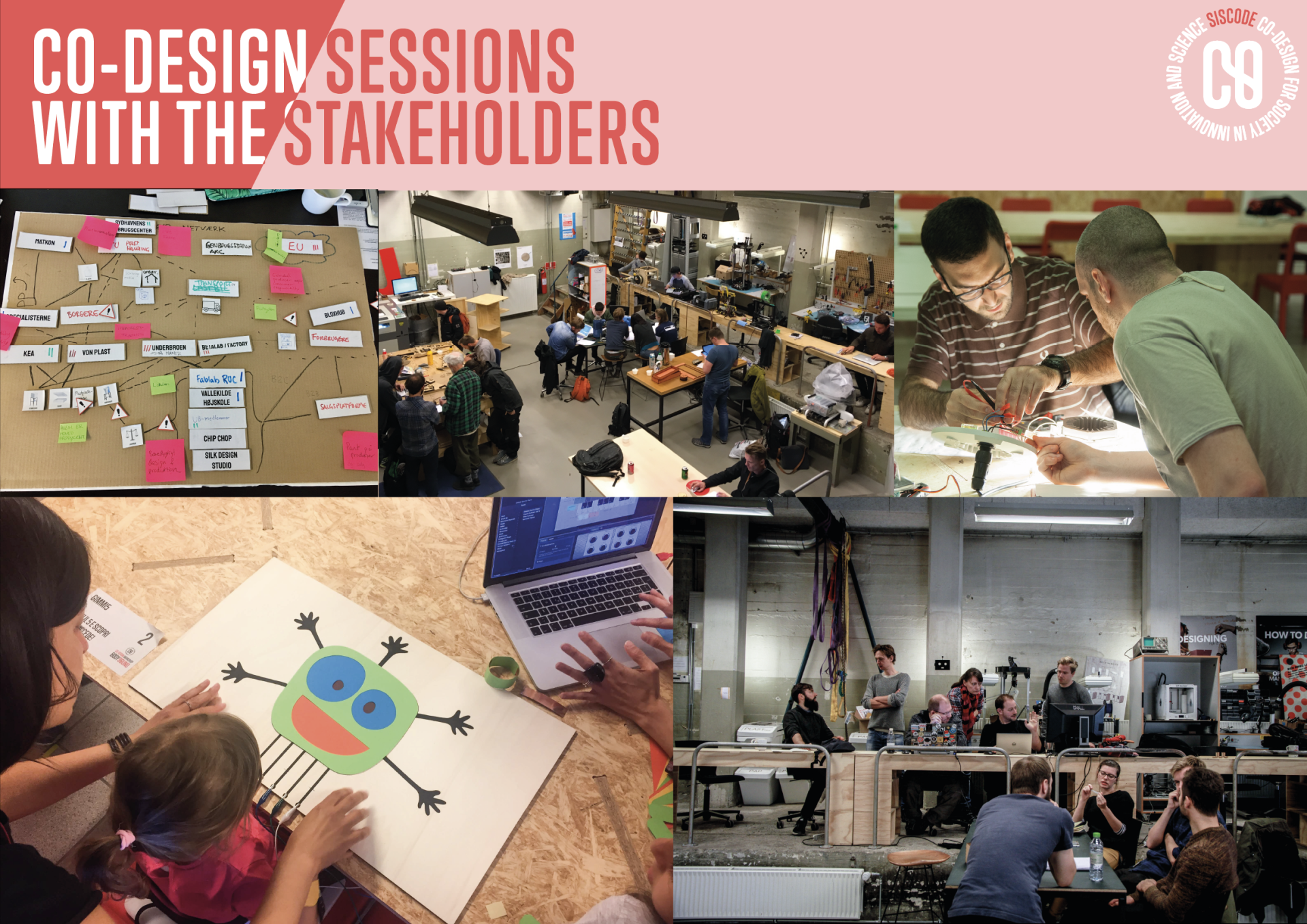
To do that, the project conducted 10 real-life experimentations in as many labs from 3 different networks: The European Network of Living Labs (ENoLL), the Fab Lab network, and the European Network of Science Centers and Museums (Ecsite). Over 21 months, 10 labs across Europe successfully engaged multiple stakeholders from the context, promoting the construction of 10 ecosystems as designing, enabling, and innovative communities where to co-create desirable solutions together.
Starting from SDGs particularly relevant to the context, researchers, designers, citizens, and policymakers came together to co-create and prototype sustainable and inclusive solutions to real challenges. SISCODE endorsed and promoted integration and engagement, supporting communities in capitalizing existing knowledge and expertise, inspiring new perspectives and ideas, reinforcing networks, building new partnerships and synergies that opened up opportunities for citizens, organizations and civic society to engage actively and co-produce values and outcomes.
Hence, SISCODE impacted communities and their actors, incentivizing the growth of innovation ecosystems able to promote sustainable, enabling, innovative, and inclusive transformation. Then, going beyond the small-scale experimentations, it informed the broader policymaking landscape, impacting on policies giving impulse to changes at a larger scale then the ecosystem where the experimentation occurred.
Key objectives for sustainability
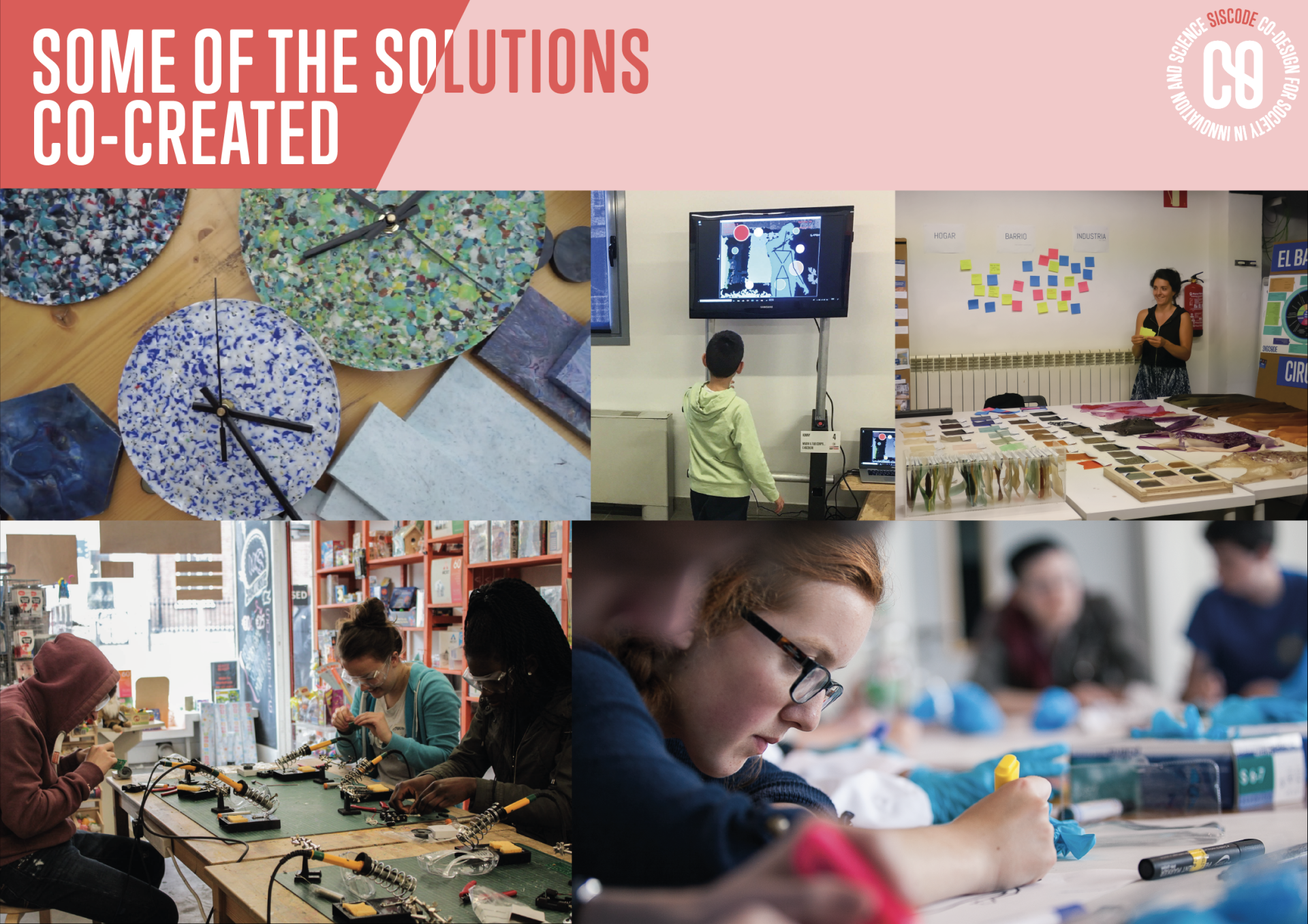
Co-creating with multiple-level actors for sustainable innovation at the encounter of society, democracy, and economy, SISCODE combines knowledge, know-how, and the natural-environment-system into an inter and transdisciplinary framework. Through its 10 pilots across Europe, it aimed at sustaining the reinforcement or construction of as many innovation ecosystems, turning labs into inclusive spaces devoted to co-create beautiful and desirable solutions together, answering real contextual needs. The co-creation considered the UN SDGs and real local societal problems as starting points, with the intent to contribute to the socio-ecological transition of society. Given these premises, each lab undertook a co-creation journey to deliver the following working and sustainable solutions: A symbiotic systems for food surplus and bio waste valorization in Barcellona’s Barrio; A circular system for local sourcing, recycling and production of sustainable polymerics; An Air Protection Program for improving the air quality in the Malopolska region; An ICT-based education program to prepare for agriculture of the future; A program for constructing life-sized, usable watercraft to safely reappropriate and enjoy the beauty of the river in Lisbon; A series of collective events and performances to raise the issue of intelligibility of Artificial Intelligence; A program that empowers young people using hobbies for improving mental health; A social currency for ensuring the quality of life in an ageing society; A life-long learning program for older adults and chronic patients; A game-based system for motor stimulation of children with cerebral palsy.
The co-presence of various know-how, expertise, competencies, and perspectives in favorable circumstances and conditions triggered the reasoning on how to utilize existing material and immaterial resources innovatively to benefit the society and its economy, while being environmentally conscious, socially acceptable, and relevant.
Key objectives for aesthetics and quality
Each pilot resulted in an active, welcoming, empowering, designing community: an ecosystem of innovation where multiple actors encounter, envision and develop together actionable innovative solutions for a better future. Mainly targeting social challenges from the context as environmental sustainability or health-related issues, each community mobilized to find an answer to relevant and pressing needs. Here, the effective engagement of multiple actors granted a perspective respectful of the variety of interests from the context, embracing diversity as a value. The co-created solutions are beautiful beyond their aesthetics: they follow principles of (ethical) acceptability, sustainability, social and societal desirability, while paying constant attention to the scientific, environmental, educational, and technological dimensions.
Going beyond the scale and functionality of the solutions themselves, SISCODE encouraged an eco-systemic, inclusive, often distributed design with an eye to circular economy and digital transformation. In doing so, it ignited methods and practices that keep empowering multiple social actors. Relevant outcomes concern indeed the cultural intervention boosted within the innovation ecosystems: it enhanced the awareness of local communities on how to co-create together, re-circulated materials and knowledge, leverage the networked nature of the ecosystem and capitalize on its multiple expertise, while building strategic synergies and lasting partnerships.
Finally, the involvement of decision-makers throughout the co-creation process contributed to bringing attention to relevant issues to be addressed, while showing the multiple benefits derived from a progressive culture of inclusive engagement. In doing so, SISCODE showcases how small-scale experimentations and solutions developed bottom-up acted as boundary objects that promoted co-creation, created value, and triggered a larger impact on the innovation landscape and STI policies.
Key objectives for inclusion
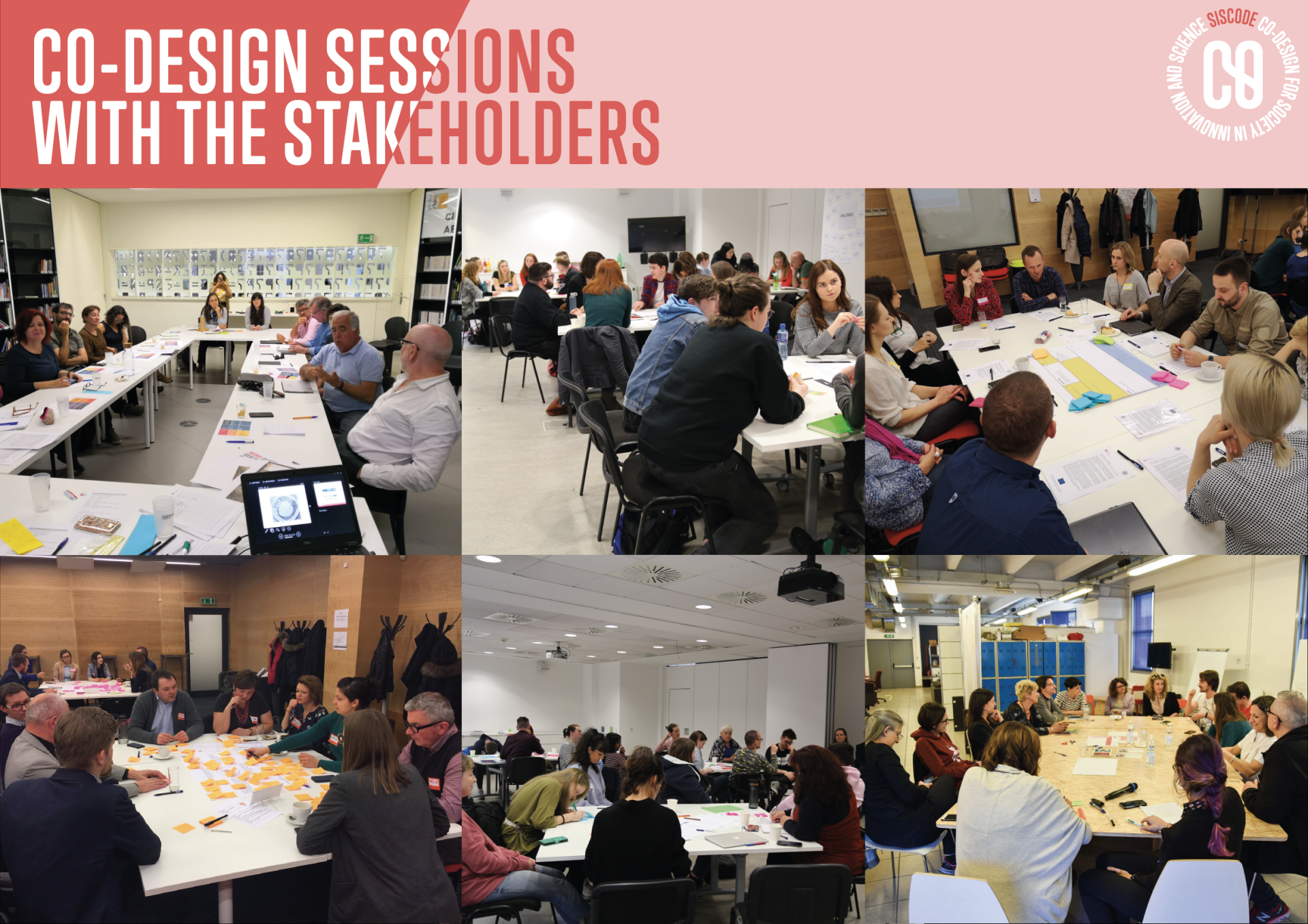
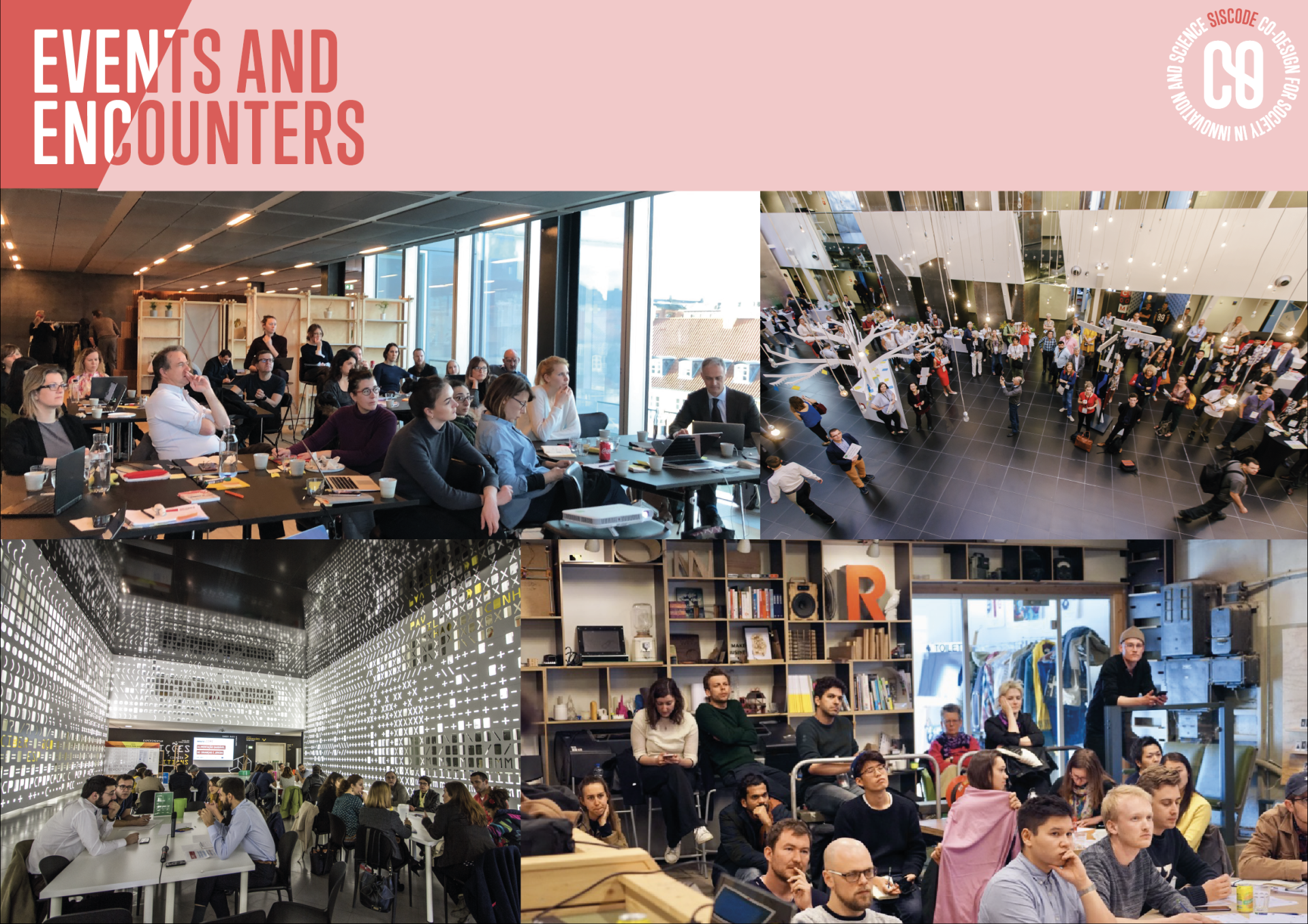
A paramount RRI principle is that the concrete inclusion of multi-level stakeholders from different backgrounds can make innovation more responsible. Hence SISCODE sought to maximize the engagement and be inclusive by adopting public engagement strategies such as festivals, public debates with experts, multi-stakeholders workshops. As a result, meaningful participation was reached, leading to an effective and active engagement of citizens, laypeople, and societal actors. Here, especially taking ownership of local challenges and working together across sectors contributed to making the process and solutions more accessible, affordable, sustainable, desiderable, accountable, and relevant to their context.
Science Gallery Dublin and BioSense/Precision Agriculture Living Lab engaged high-school students respectively in co-creating educational initiatives to improve mental health and well-being, and an ICT-based program to address the agriculture of the future. Fab Lab Barcelona and Fablab Viadukten/Maker involved entire communities in developing circular economy systems respectively for food waste and plastic recycling. In the process, we also engaged vulnerable communities and stakeholder groups, being aware of the unique perspectives and contributions they could bring in building more sustainable and desirable solutions: Fab Lab Polifactory engaged children with cerebral palsy, their families, and doctors, while Cube Design Museum and Thess-AHALL included elderly in designing solutions aimed at ensuring a better quality of life in an ageing society.
Finally, one of SISCODE’s aims was to impact local and broader policies in the long run, transforming the political agenda and eliciting a sensitivity among local and national decision-makers. Therefore, a further fundamental inclusion regarded the engagement of policymakers, who were involved in specifically designed initiatives aimed at opening a dialogue and fruitful exchange within the ecosystems.
Results in relation to category
Bridging global challenges with local solutions, SISCODE explored dynamics for better and effectively integrating society in science and innovation under diverse societal, cultural, and institutional circumstances. It gave back to the communities of practice and research a fundamental, actionable understanding of how this design-driven approach can empower and mobilize everyone interested in developing implementable RRI and STI solutions and policies, triggering inclusive and synergic cooperation. Including citizens, expert groups, academia, and policymakers in co-creation processes, the pilots demonstrated how a consolidated sectoral approach to STI policy-making could be surpassed. They showed how co-creation contributes to overcoming barriers and resistance to change, leading to sustainable transformations with a perspective of replication and scalability. It gave policymakers the opportunity to test new, collaborative ways for conceiving policies, reconnecting policy design with grassroots initiatives and citizens.
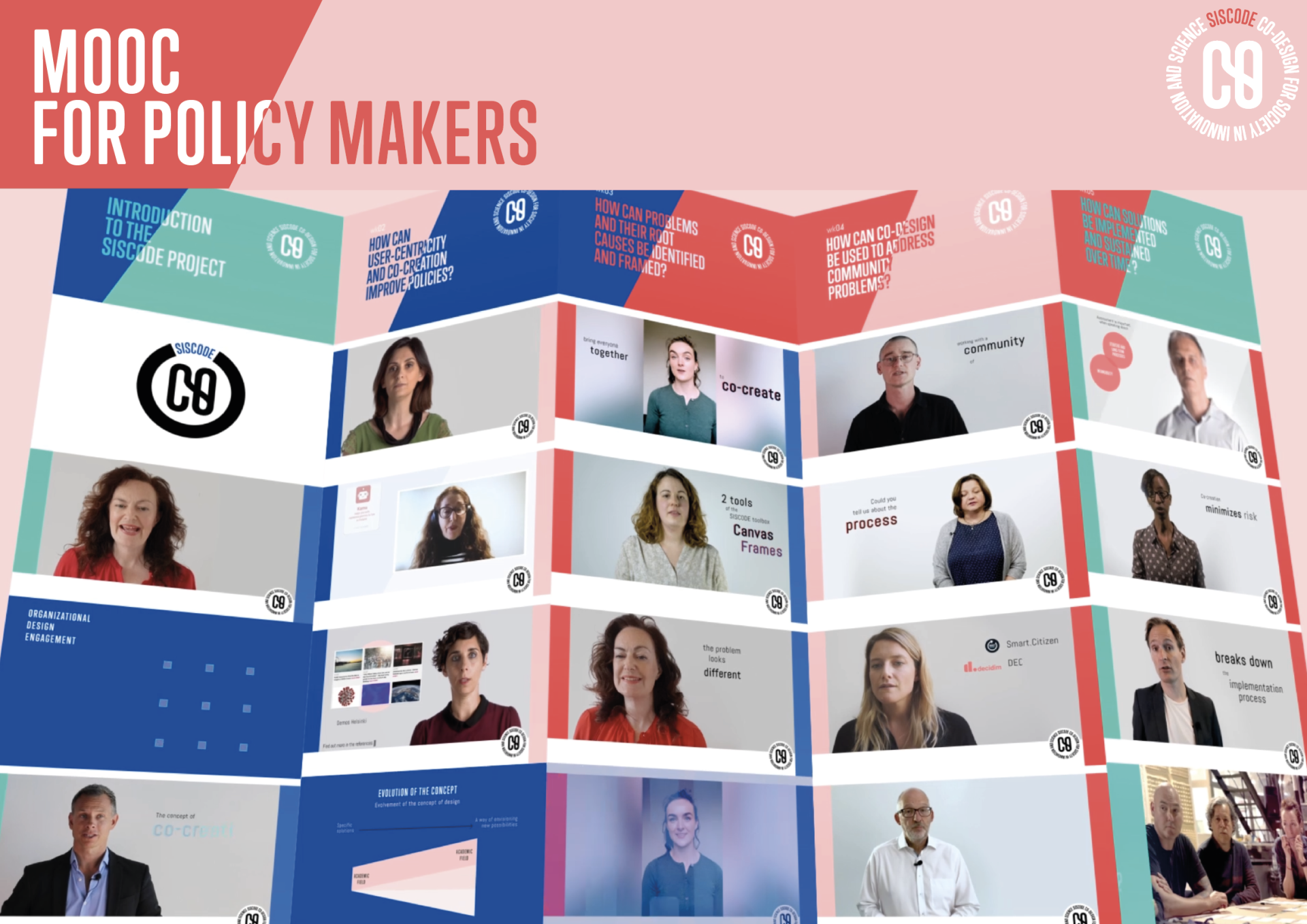
In response to the limited familiarity of practitioners, researchers, and policymakers with the integration of participatory processes in constructing innovative products/services and their linkage with STI policies, SISCODE produced a relevant contribution to operationalize co-creation. The learning framework gives effective guidance through the process, from the design to the assessment of the solutions and their impact, favoring the building of new skills and triggering reflection on multiple levels. Knowledge is shared as recommendations and lessons learnt, MOOC, Digital Learning Hub, and adaptable tools and practices (a toolkit, canvases and guidelines, an Interactive Guidebook).
To mitigate the gap between theory and practice, the project established a community of practice (CoRRI Forum) that spreads and opens SISCODE results for including co-creation and public engagement in decision-making processes to other communities and projects.
How Citizens benefit
Aiming at integrating society in science and innovation, and its policies, SISCODE actively and constantly engaged citizens and social stakeholders, keeping in high consideration their interests and values. In the co-creation labs as vibrant and welcoming spaces, inherently transdisciplinary, prone and open to exchanges, multiple stakeholders still meet, share ideas, gain new knowledge, grow together, and are empowered, benefitting from the presence of experts from across disciplines. Here, the interactions between actors to seek desirable innovation are incentivized and operated within the protected spaces of the labs and their ecosystems. As a result, iterations, exchanges, and reflections triggered by the combinations of various stakeholders and users allowed to combine existing expertise and competencies, building valuable and fruitful interdependencies. The inclusion along the overall process facilitated transformation and change, which were seen as opportunities towards a better future. Hence, the co-presence of practitioners and researchers contributes to bridging the well-known gap between practice and theory while increasing the quality, relevance, social acceptability, and sustainability of research and innovation, and its outcomes.
To favor a radical shift towards a better Europe, each ecosystem developed as a space where various actors meet and co-create in the perspective of sustainable development based on a fruitful encounter and coevolution of knowledge society, democracy, and economy, paving the way for real social innovation. The result is a win-win situation in which ecology, knowledge, and innovation are systematized and synergized.
Finally, a broader attempt was encouraging the concrete inclusion of citizens and users in political decision-making processes, mitigating a second established gap: that between ideation and the implementation of co-created policies.
Innovative character
SISCODE explored co-creation as a bottom-up and design-driven phenomenon for social innovation and change. It engaged citizens, expert groups, academia, labs and communities of practice, and policymakers in co-creation processes that include the environment as a societal context for a more comprehensive ecologically-sensitive perspective. In doing so, SISCODE successfully reaches out to the five helixes of the innovation model framework, using the fundamental knowledge gained to cross-fertilize RRI practices and policies at a broader scale.
For this purpose, 10 among fab labs, living labs, and science and technology museums all over Europe ignited sustainable processes of inclusive engagement for jointly building a better and more desirable future. Their spaces acted as vibrant, friendly, and empowering hubs where communities could come, experiment with responsible innovation and research, and grow together, also beyond the project. Indeed, particular attention was given to exchanging cross-sector competencies and expertise, encouraging peer-to-peer learning and capacity building as continuous empowerment of everyone involved, maximizing possibilities of replication and scalability of both solutions and participative processes.
The project was especially aware of (i) the different cultural, organizational, institutional, and regulatory conditions under which co-creation flourishes, and (ii) how the diversities among actors and stakeholders (gender, culture, education, and backgrounds) can favor social innovation. Here, the inclusion of vulnerable groups was vital for supporting integration. This harbored innovative, inclusive trajectories able to impact society at different scales (from neighborhoods up to procedures and programs of European STI policymaking).
To facilitate this multi-level integration, resources and tools that inherit the flexibility of adaptation to contexts and needs were constantly developed, disseminated, and made available open access.