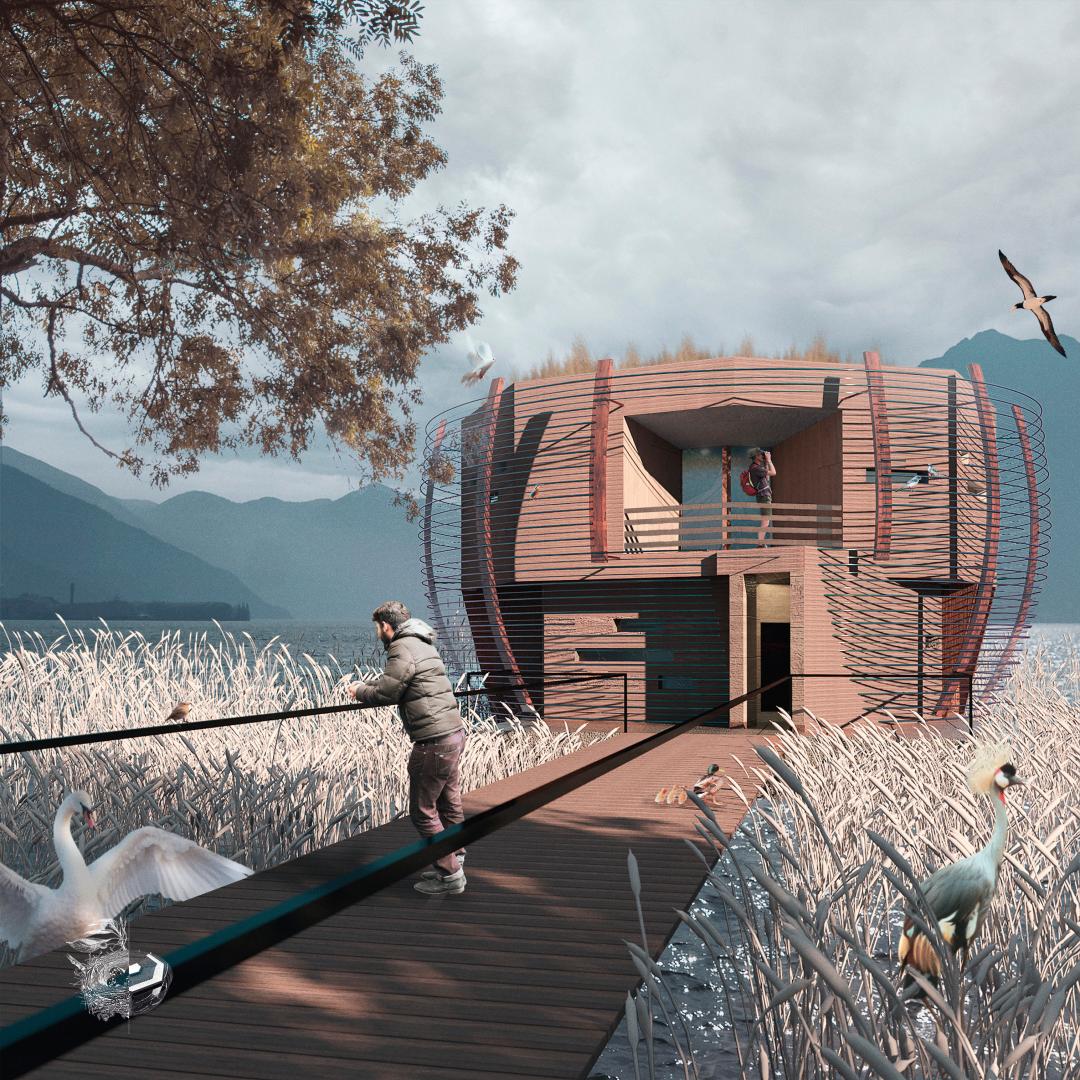
Floating Nest
Basic information
Project Title
Full project title
Category
Project Description
Hidden among the reeds of Lake Iseo, the Floating Nest is a haven for both birdwatchers and those looking for a peaceful retreat. Mimicking the nests of the protected avian species in the area, it blends seamlessly with the environment, allowing for discreet fauna observation.
The design of a floating platform avoids soil consumption and prompts full natural integration. Plants and birds are free to take over niches expressly designed favouring the overcoming of the dichotomy natural-artificial.
Project Region
EU Programme or fund
Description of the project
Summary
The project involves the construction of a floating house on the waters of Lake Iseo, the "Floating Nest".
The idea comes from the context, the unspoiled shores of Lake Iseo, near Costa Volpino in Lombardy, Italy. This area hosts a flourishing flora along with fauna of small aquatic creatures and even protected species of birds.
Hence the idea of designing a houseboat immersed in the reeds alongside the coast, a place to immerse oneself in nature and engage in birdwatching.
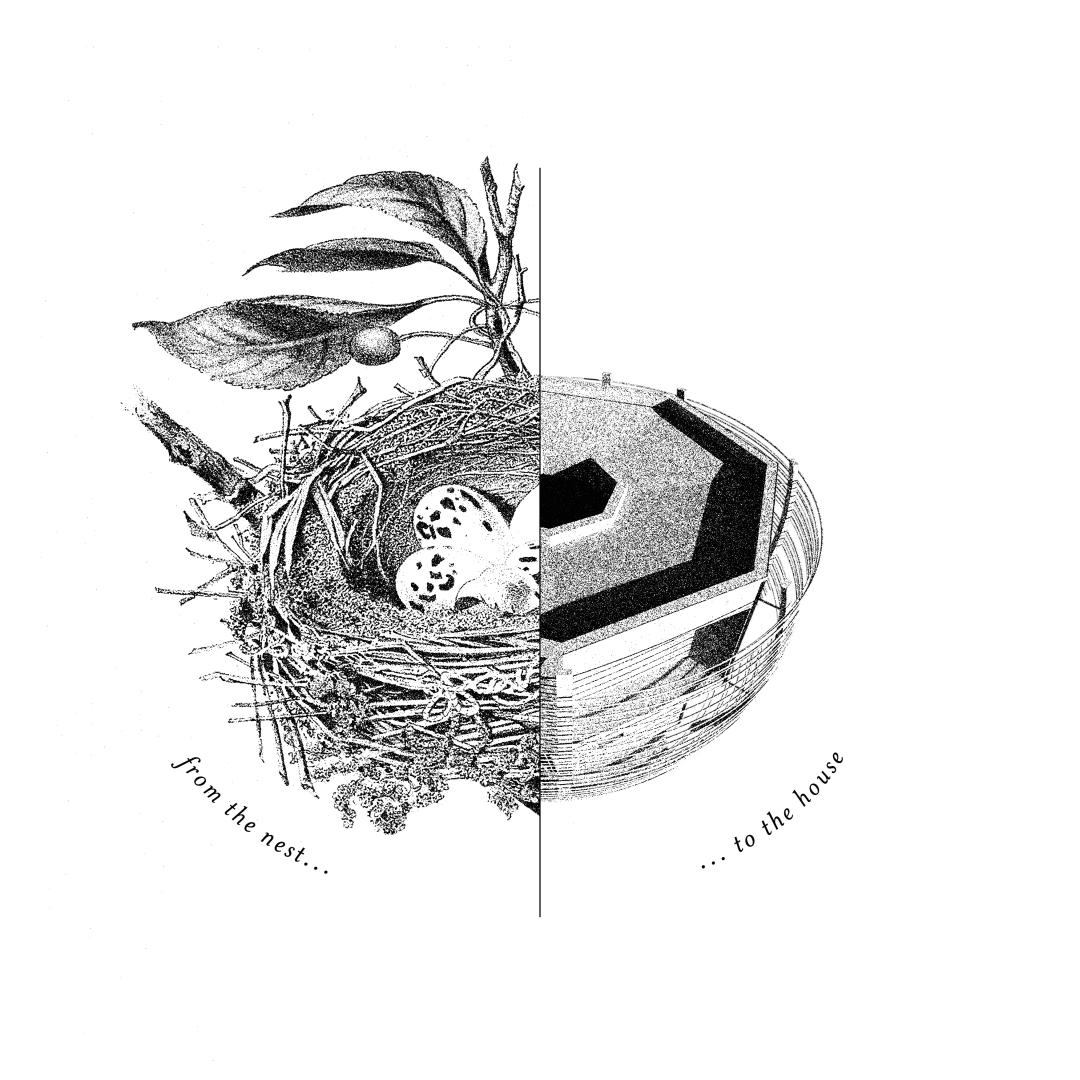
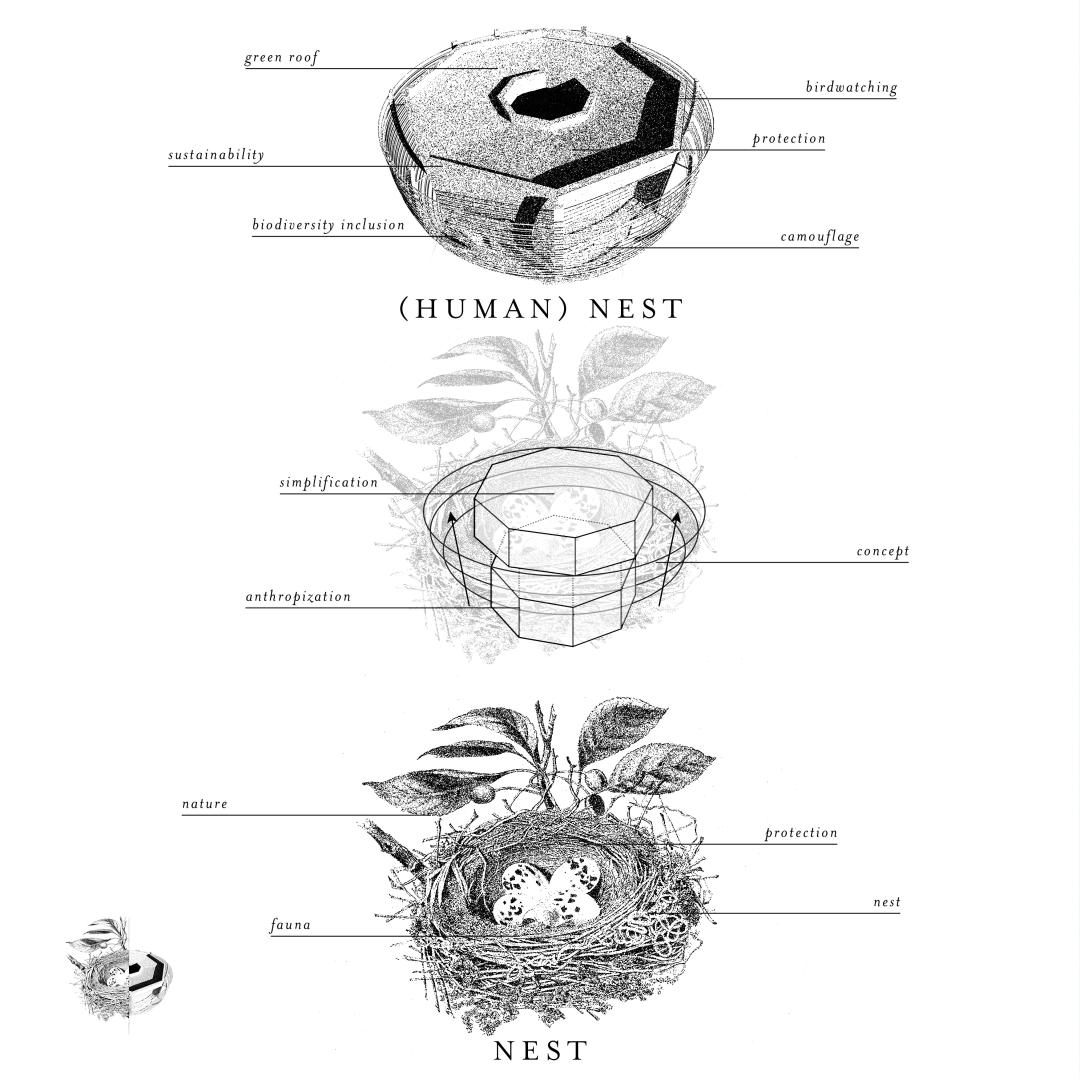
The idea behind it revolves around perfect camouflage and integration with the surrounding environment, as it happens with the nests of the birds present in this area. For this reason, the architecture blends with the landscape and itself becomes an element of the natural and uncontaminated environment. A nest for humans, hence the name Floating Nest.
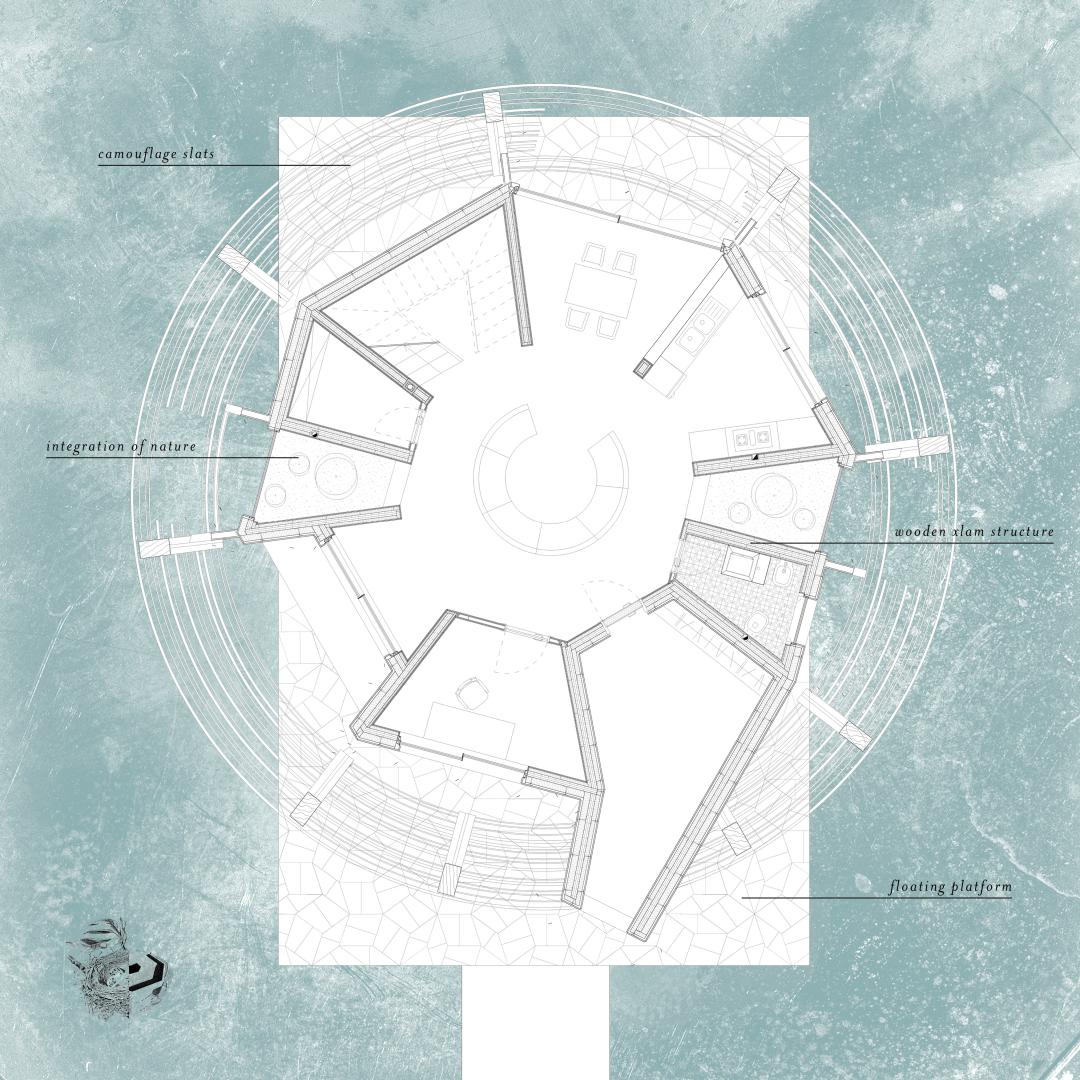
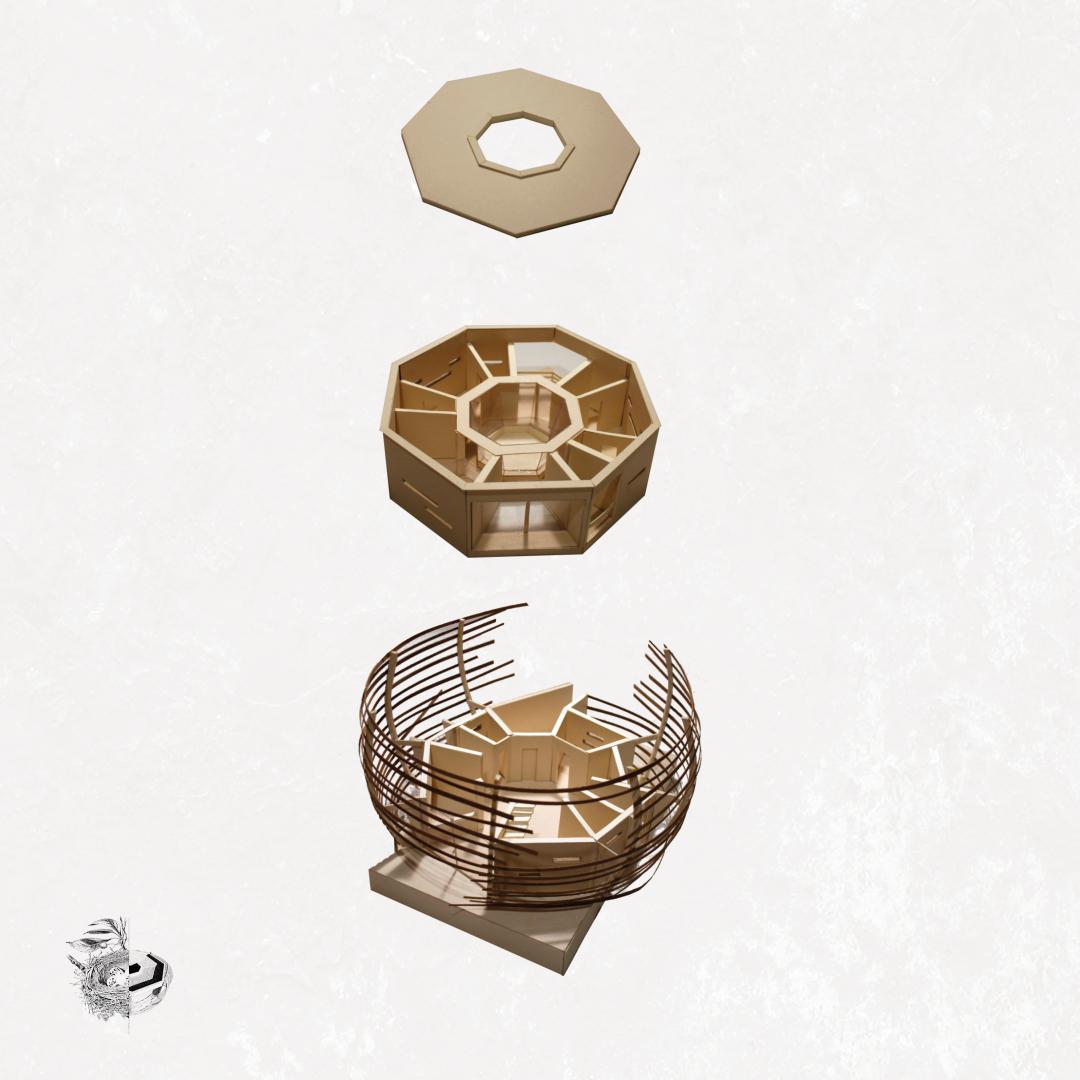
Like a real nest we have picked natural materials available nearby, such as wood which also becomes the load-bearing structure of the building. Externally instead a system of circular slats embraces all the architectural masses, hiding the human presence so as not to disturb the fauna. At the same time, this leaves open the possibility of observing the surrounding nature to those inside, with the presence of internal "aviaries" that allow plants and animals to enter the house directly, making it not a fully anthropic habitat but rather a “hybrid” one. Finally, the green roof guarantees energy comfort, with an eye to sustainability, allowing once more the merging of natural and artificial, blurring the line between the two.
Key objectives for sustainability
It is with a spirit of profound respect for nature in all its forms that the project was conceived and developed throughout its phases.
Starting the concept itself, a floating house that does not take over any soil. The adoption of a floating platform makes it possible to avoid the use of concrete and steel resources, which constitute a big amount of the energy consumption of the building whole life just by themselves. The platform, on the other hand, allows easy assembly, with a considerable reduction in resources used as well as production time and labour costs. What’s more, it allows disassembling and reusing of the material at the end of the building life cycle, alternatively offering the change of more sustainable disposal options, transforming it into something new.
The next choice towards sustainable construction was the use of low impact resources, wood that is used both as a supporting structure and as external cladding. In particular, the use of XLAM, prefabricated wooden panels, allows again for easy assembling and disassembly in situ with the consequent cut of construction times with a reduction in costs and the environmental discomfort that the work generates. Wood, a non-toxic, bio-compatible and renewable material, is also perfect for integration into a natural context and helps the blending of the building into the landscape.
Finally, particular attention was paid to integrating nature itself with the building, with the aim of making architecture an element of the context itself. Open niches allow greenery and small fauna such as birds, to enter the house directly, appropriating these spaces. The green roof allows both an even greater camouflage with the context and an increase in thermal comfort, helping to reduce the heat dispersion naturally.
Key objectives for aesthetics and quality
The approach to the project is based on the awareness of the context in which it is located, the shore of Costa Volpino on Lake Iseo. A place of flourishing flora and fauna. By recognizing these qualities it was decided to propose a floating house which would blend in with the surrounding reeds, directly recalling nature through its very shape.
Albert Einstein once said "everything you can imagine, nature has already created". Indeed, nature is very rich in inspiration both in terms of aesthetics and technical solutions, so the project is based precisely on the insights coming from its thorough observation.
First of all as regards the shape itself, which recalls that of a bird's nest. In this case the case, the nest becomes a refuge for humans, from which it is possible to observe the surrounding fauna without being seen.
The entire architecture is in fact conceived both as a real home and as a place to enjoy birdwatching. Cardinal principles of the building’s aesthetics is camouflage and integration with nature. This goal is achieved first of all with the positioning of the house directly among the flourishing reeds but, above all, thanks to strategies implemented to disguise the architecture as a natural part of the environment. The very shape recalls a nest, which from oval as it normally is in nature, becomes octagonal to adapt to anthropic occupation. All around the entirely wooden building, dense circular strips wrap around the hards shapes, inspired by the twigs in a bird’snest so as to dissimulate the harsh corners.
Bigger glazed areas are pushed back from the main facade, in correspondence of open niches allowing nature to directly enter and contaminate the building. Narrower windows are instead positioned along the facade to enable birdwatching without letting the users be spotted from outside.
Key objectives for inclusion
Inclusion is one of the most important themes within this project, in particular that of nature within architecture. The goal is in fact to encourage adjacent vegetation to appropriate designated parts of the artificial spaces in order to make the building somewhat more “natural”.
To do so, the location of the floating architecture was thoroughly studied, and a rich reed bed was chosen for its variegated presence of plant and animal species. The whole project is designed to facilitate the approaching of the natural sphere to the human one in a way that is respectful of both. The goal is for nature to be free to permeate and appropriate the architecture in different ways. As already mentioned, the green niches offer a direct approach for nature on the lower level, whereas the green roof aims to create a comfortable environment for lower plants and birds alike, and finally the circular strips enclosing the architecture are thought as a support for vines and other creeping natural species.
However, inclusion does not only refer to the natural sphere. Attention was also paid to the issue of accessibility with respect to the home, so a floating walkway was developed, which allows to connect the mainland to the platform ensuring easy access for everyone, wheelchair users as well as others.
Innovative character
The project aims at demonstrating how it is possible to promote an architecture capable of respecting nature while successfully integrating it in its shapes. At the same time, it becomes an example of good practice with respect to environmental sustainability issues.
Firstly, the theme of the floating house, in particular thought inside an environment precious on terms of nature and landscape, wants to be a feasible innovative solution to reduce the consumption of new land as well as both material and energy resources. As explained, the use of a floating platform, which is easily assembled and disassembled, compared to traditional foundations guarantees the achievement of this goal. This idea is combined with that of inspiration from a natural form, the nest, as an emblem of a new living able to integrate with a well-defined natural context. It offers not only an aesthetical appeal but also a technical one, with the use of wood for the supporting structure and circular strips around the architecture to favour camouflage. Form and function come together, with a building that recalls natural forms, camouflages itself and is designed specifically for birdwatching activities.
Finally, the most distinctive and innovative character consists in adopting a new architecture capable of integrating perfectly with the natural context, respecting the biodiversity of flora and fauna and integrating it directly within the project, so as to no longer have the natural-artificial dichotomy but favouring an entity that merges the two to obtain mutual enhancement.