Form Follows Nature
Basic information
Project Title
Full project title
Category
Project Description
How can we involve and celebrate further nature and the living in the way we design, build and experience public spaces?
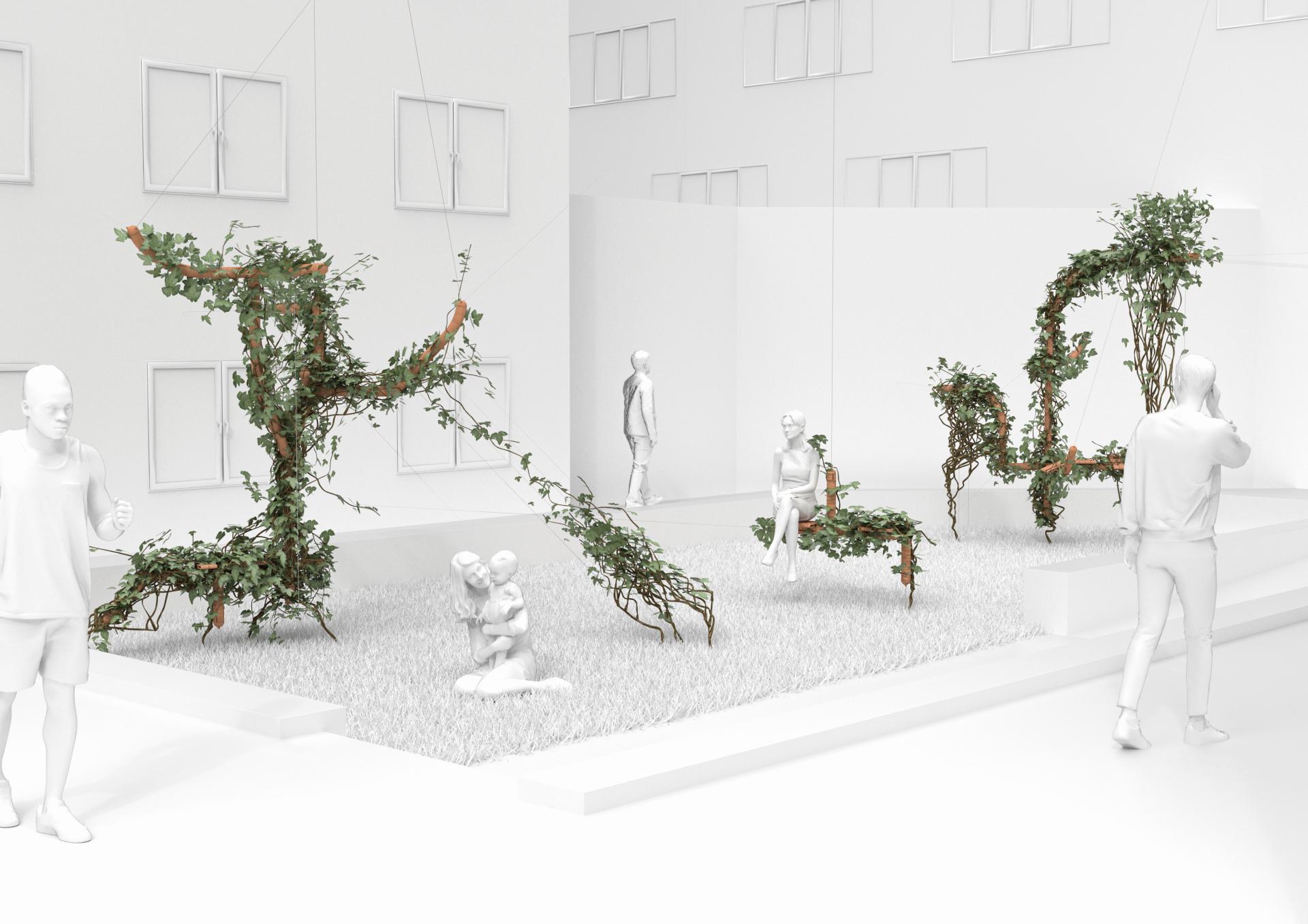
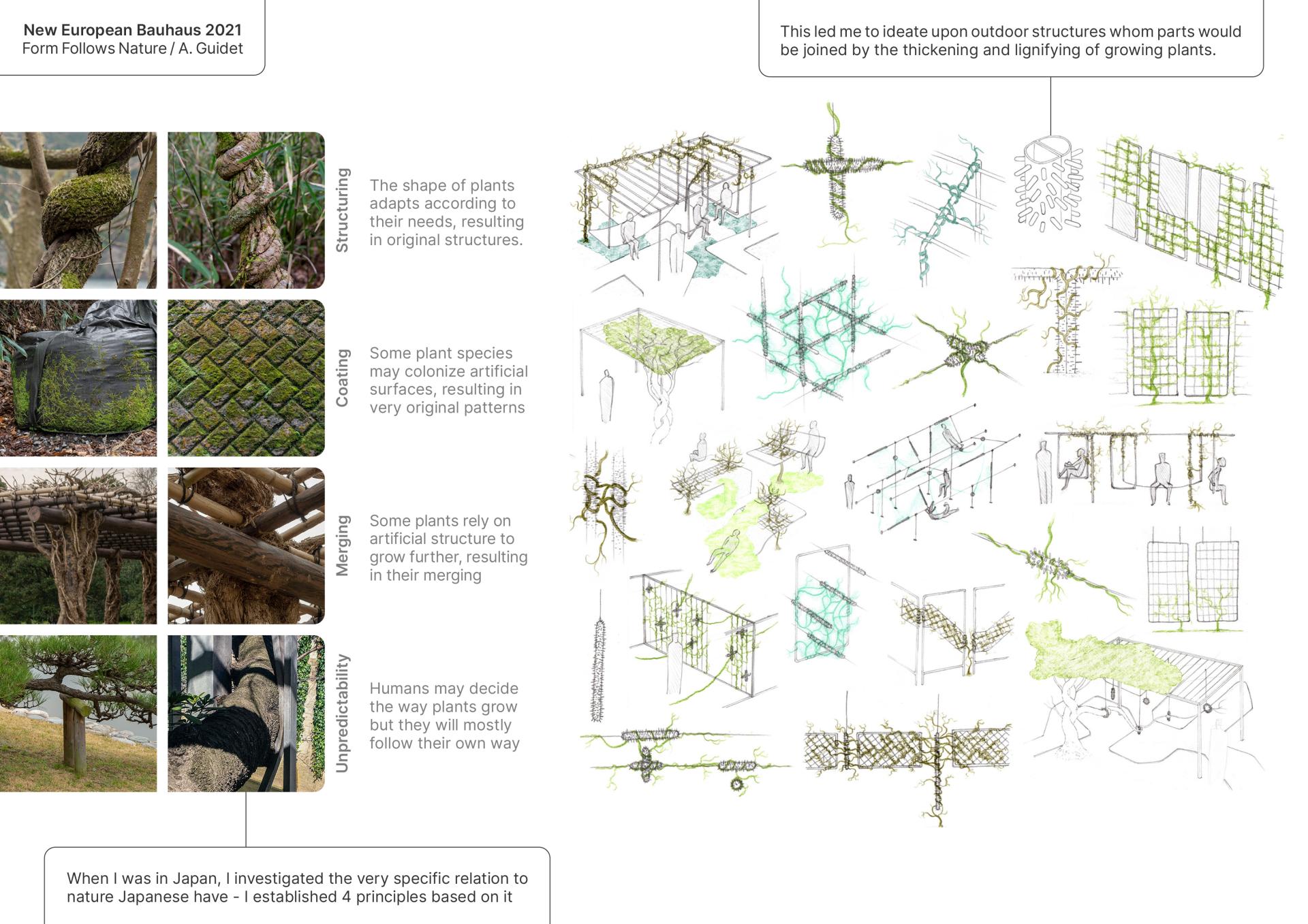
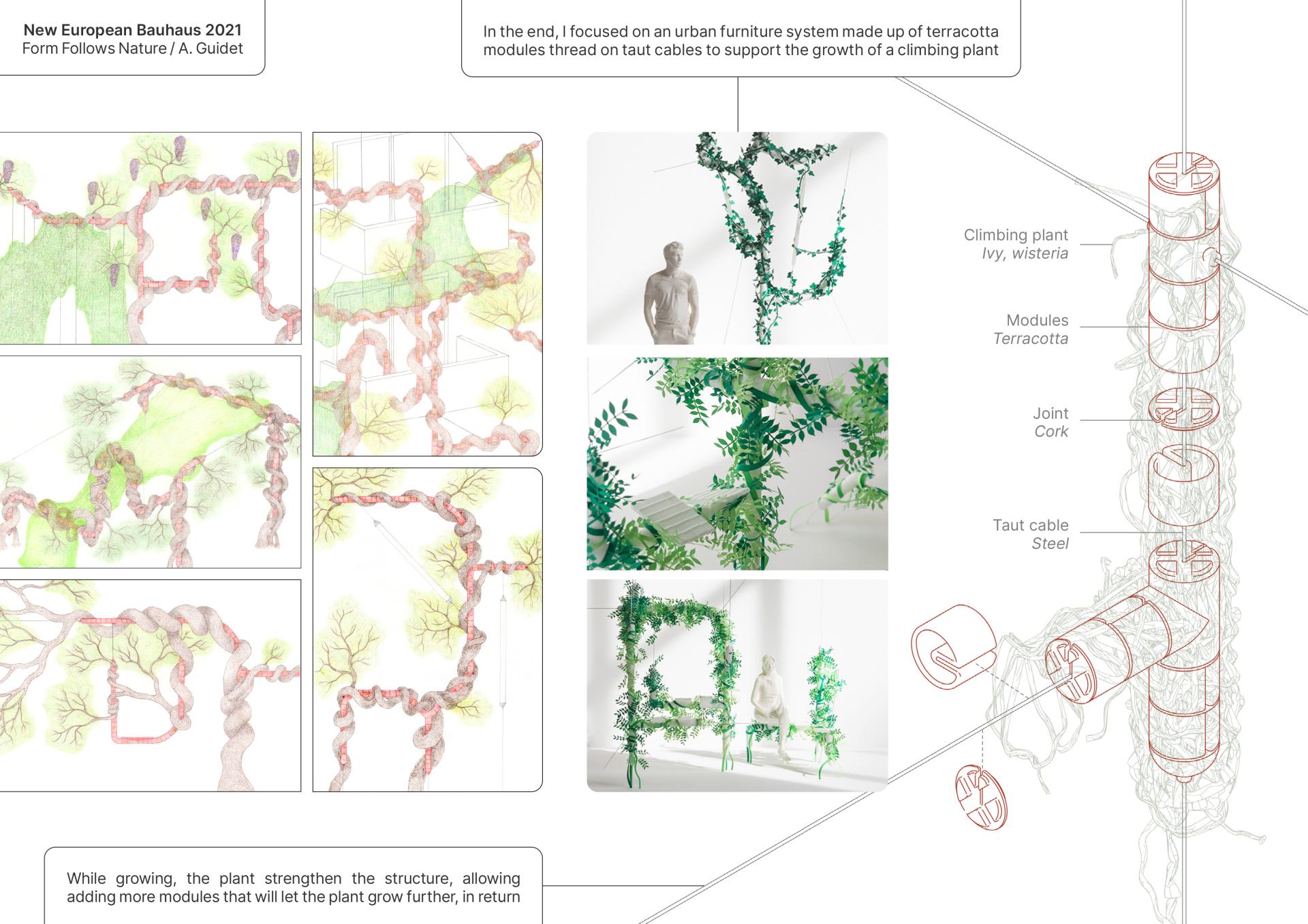
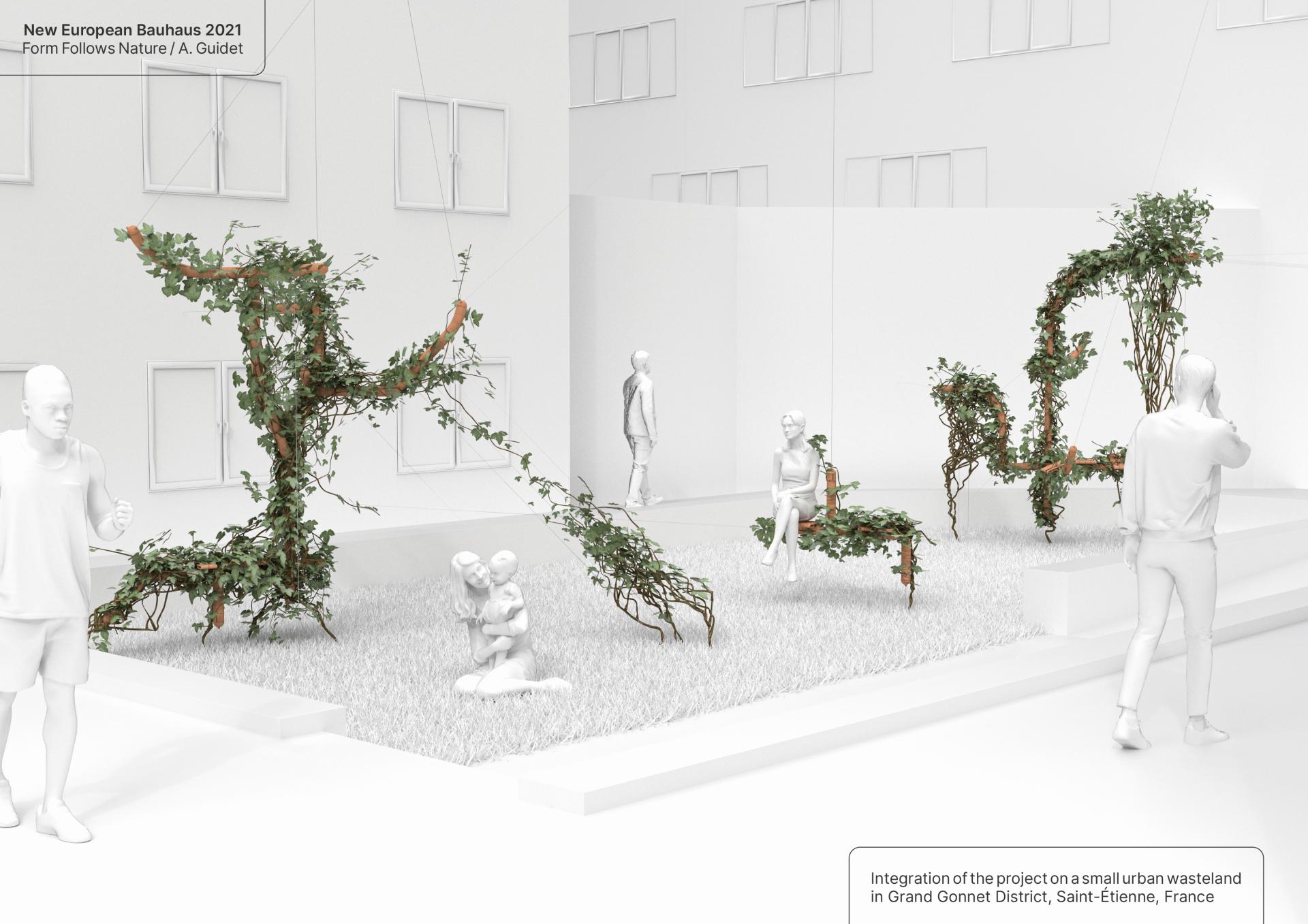
In order to make cities more sustainable, inclusive and creative places as well as to raise awareness of how humans may equitably collaborate with nature, I designed semi-organic urban structures and furniture concept whom making process rely on a terracotta modules/taut cables system and the growth of a climbing plant, like wisteria or ivy.
Project Region
EU Programme or fund
Description of the project
Summary
The "Form Follows Nature" project aims to strengthen the bond between humans and nature by integrating the qualities of the living into the design and the making process of public structures and urban furniture.
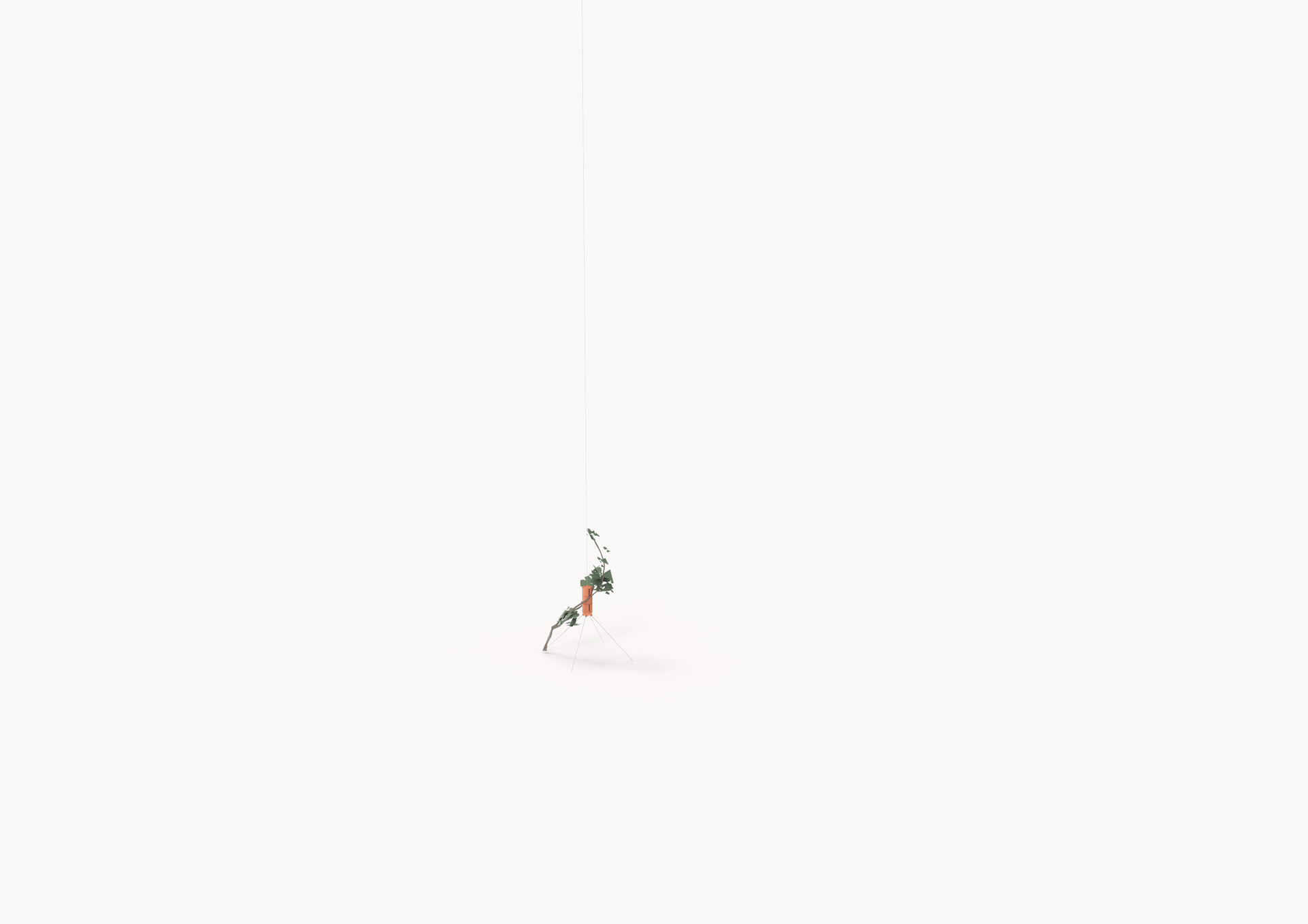
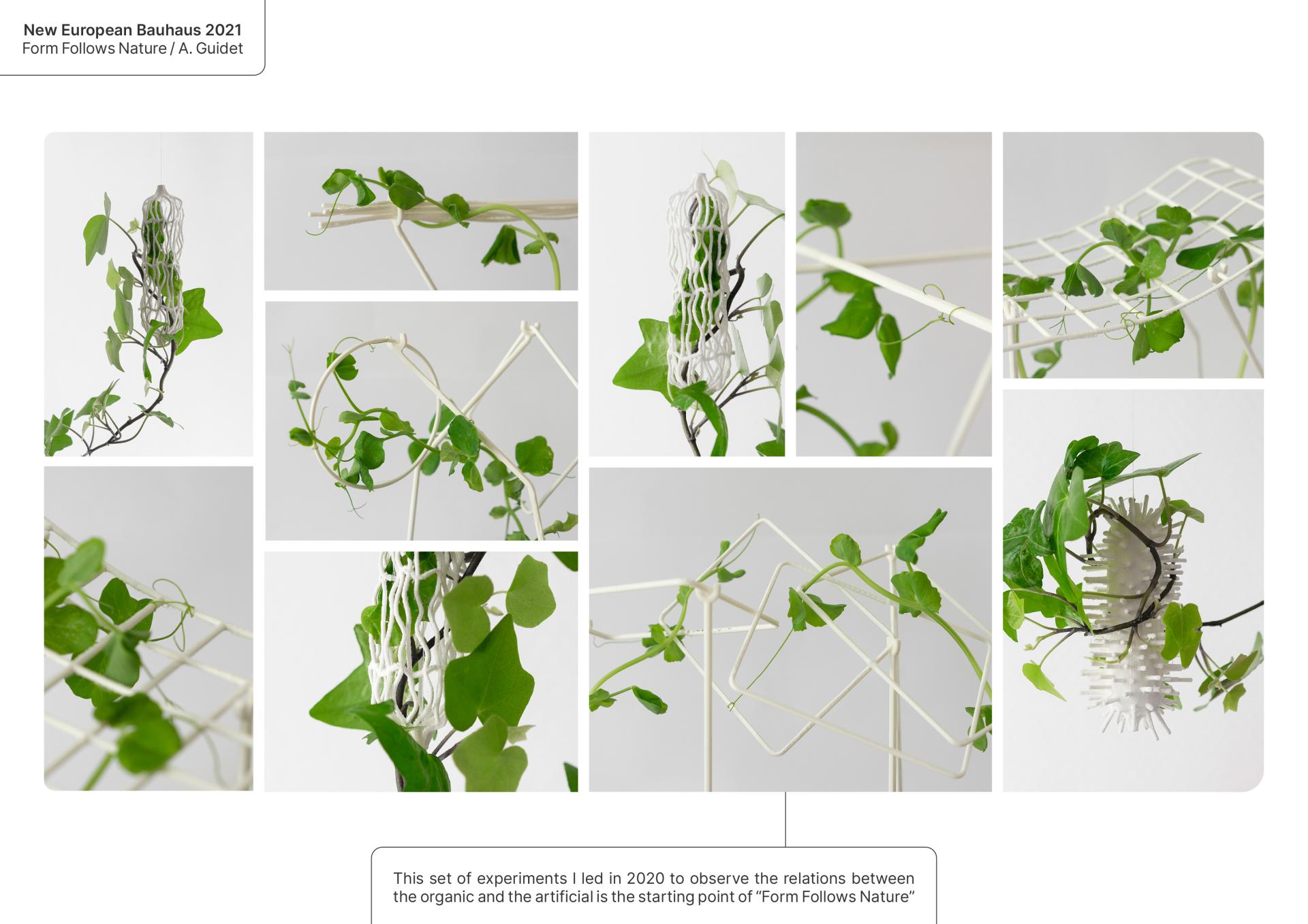
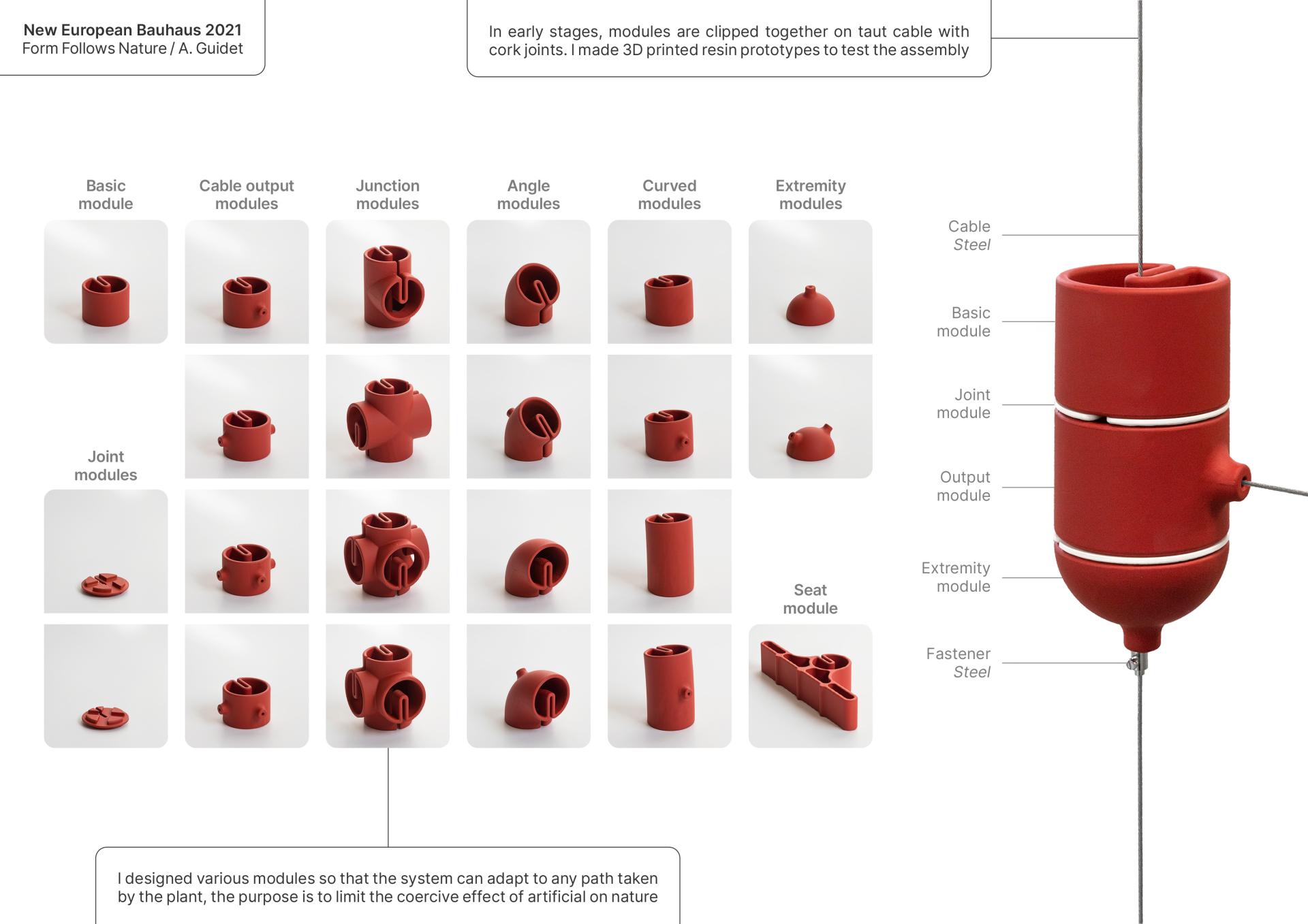
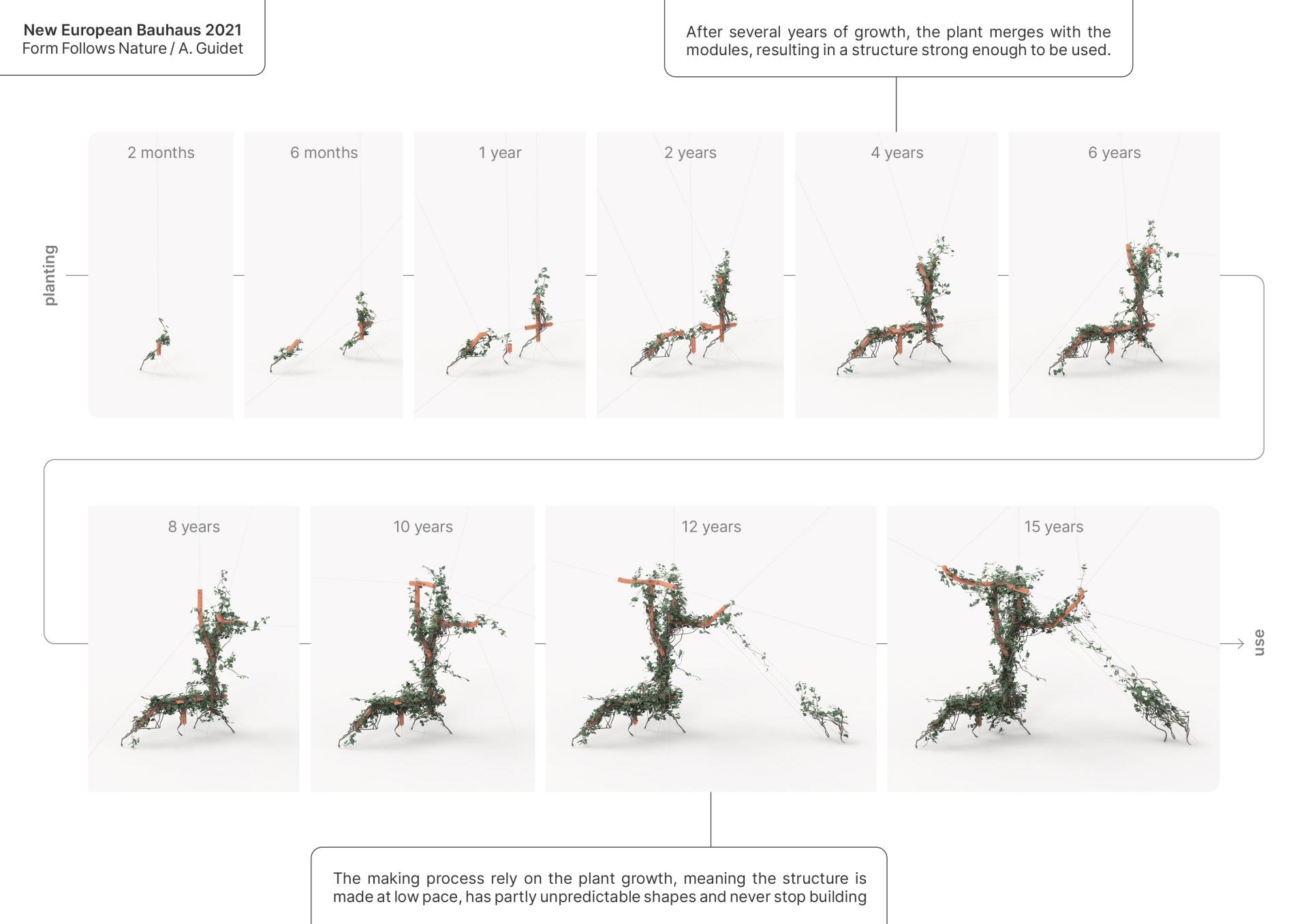
To do this, I designed a system consisting of taut steel cables and terracotta modules that support the growth of a climbing plant such as ivy or wisteria. In return, the plant consolidates the joint between the modules by climbing and wrapping around them. Thus, the growth of the plant allows the addition of more modules, which in turn will help the plant grow further, etc.
While time goes by, this process leads to the progressive appearance of semi-organic structures whom functions depend on the direction taken by the plant while growing as well as the modules selection. Thus, the project celebrates the qualities and specificities of nature and humans by involving both of them actively and equally in the making process.
The project is designed to have a concrete impact on the city’s sustainability in terms of urban planning, building, maintenance and living ecosystems. It also aims at bringing out urban paradigms with greater ethics in UE cities by actively including citizens into the development of their neighbourhood and by raising their awareness of how humans and nature may exist concurrently and fairly.
Key objectives for sustainability
By integrating climbing plants into the making process of public infrastructure and urban furniture, I would intend nature to be not only an addition to the city landscape but a critical player of their development in the long term. Indeed, bringing together the artificial and the organic in urban properties would concretely and naturally link the renewal of cities to a sustainability logic.
In addition, the project would significantly reduce the use of non-renewable resources for two reasons. First, materials typically used in the construction industry such as concrete, cut stone or metal would be partially replaced by living organic matter from the climbing plants. Secondly, the project reduces the use of primary resources by exploiting the surrounding buildings since they are needed to hang the cables involved in the modular system.
On a larger scale, the multiplication of climbing plants throughout the city would decrease, thanks to the vegetation cover, the temperatures thanks to the shade it produces. Moreover, it would absorb the thermal energy of the sun as well as the C02 emitted by the transport and the nearby industry, resulting in the reducing of strong air pollution which characterizes the urban spaces.
Finally, making semi-organic structures and urban furniture would revitalize the often-poor urban ecosystems by multiplying living spaces for birds and insects and other plant species.
Key objectives for aesthetics and quality
Beyond its concrete answers to sustainability issues in cities, the project aims at shifting and pushing forward the traditional aesthetic of the old EU cities which struggle to reconcile the past and the present due to the contrast in building aesthetics and the complex planning of streets, parks, etc. due to the lack of free space.
Thus, the addition of plants in the manufacture of public infrastructure and urban furniture would bring a new urban aesthetic that could merge with any pre-existing one and that would evolve continuously. Cities would become partly organic by growing at the same pace as the plants involved in each structure or furniture, leading to a slower and more rational growth of the landscape. This would lead to a hybrid aesthetic resulting from the living, shapes of plants and the inert artificial ones.
Citizens could enjoy structures and furniture that unexpectedly appear over the city, grows day to day and change over the seasons, making urban area more stimulating, poetic and unique environments. “Form Follows Nature” also aims at multiplying green spots in cities and help citizens reconnect with forsaken areas like wastelands and brownfield sites since they are the best suited spaces to host such project.
Including citizens in the process of designing and building the structure or furniture would also strengthen the connection between them and their environments. As a result, citizens would be able to experience public environments that meet more specific needs on a smaller scale.
For that reason, it would be interesting to develop this project in post-industrial UE cities like Saint-Etienne or Nantes in France or Berlin in Germany.
Key objectives for inclusion
The development of my project and its long-term management requires close collaboration with other professions. Indeed, the selection of a proper area to make the future structure or furniture, then its maintenance and the follow-up of its growing/making process implies that designers, civil engineers, horticulturists and landscapers cooperate very closely.
In addition, the project has an educational purpose for children and adults by showing concretely how cooperation between nature and humans is beneficial to both of them as well as highlighting the importance of biodiversity in the urban environment.
Form Follows Nature project also has an inclusive role by allowing citizens to actively participate in the development of their own environment through their active involvement in the structure design and its growing/making process. Citizens could take care of the climbing plants with the horticulturists and decide with the designers what functions need to be further developed according to their needs.
This would raise awareness of how humans and nature can work together by bringing citizens together around current ethical issues that engage universal values, meaning the importance of nature for next generations.
Innovative character
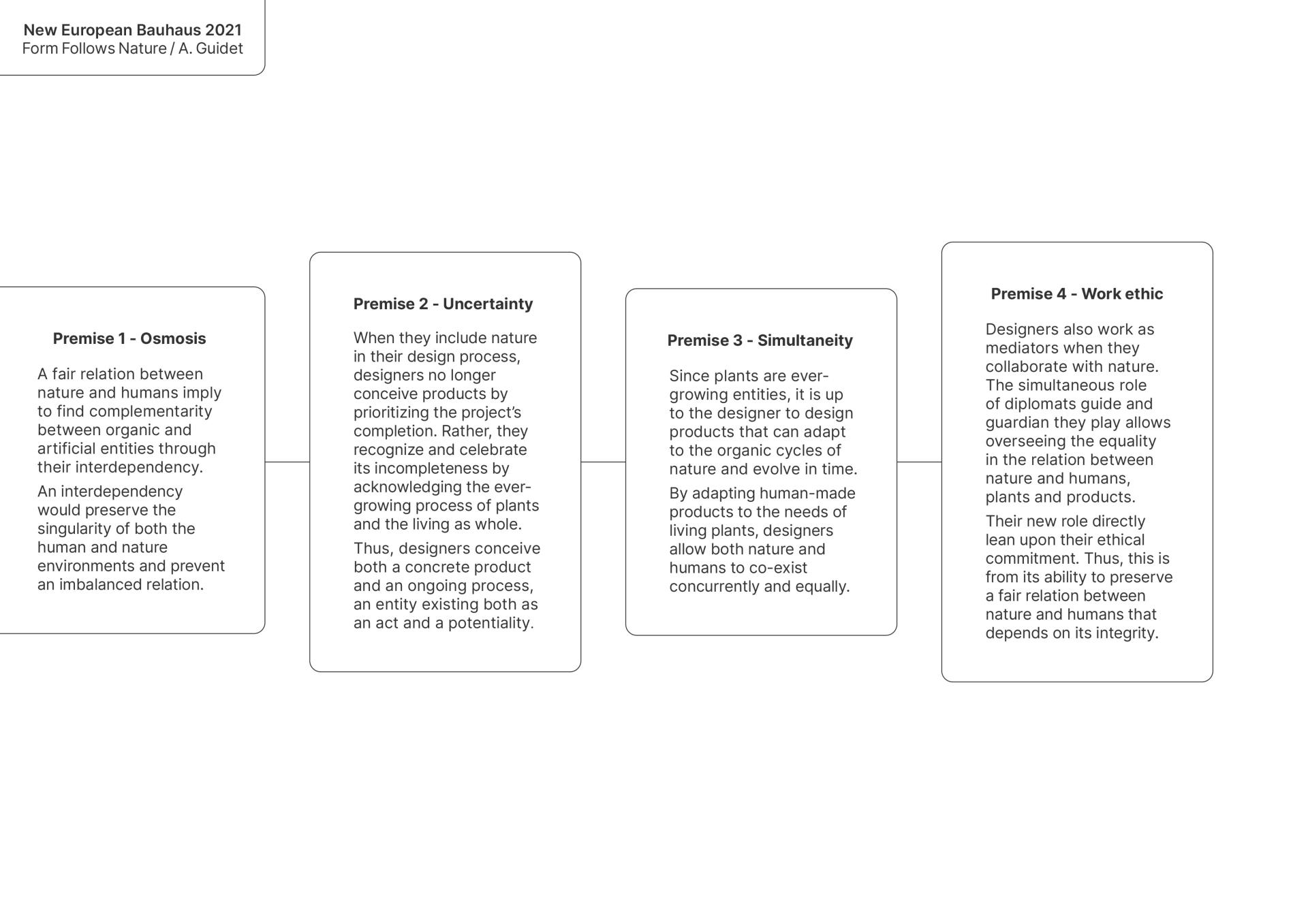
“Form Follows Nature” project aims to reconsider the role of nature and the living in the way we design, produce and experience urban areas. I believe that in order to build less superficial but more sustainable cities, we need to re-evaluate our relationship with nature by combining its specificities together with the qualities of what we artificially design and make.
Indeed, I think that the unpredictability, the self-sufficiency and the never-ending growing process characterizing the living and nature would have a revolutionary impact on how we plan and build our urban environment. Thus, establishing a more respectful and equitable dialogue between us and nature would profoundly shift our living paradigms and contribute to the creation of more sustainable and coherent cities.
Moreover, the involvement of citizens in the creation of their own neighborhood would also change the usual relationship between standardized products and passive consumers. Therefore, combining the will of local citizens with the unpredictable shapes produced by climbing plants would make each city’s neighborhoods a unique place with its own will, aesthetics and identity.
To this end, I am convinced that this project is an interesting start to bring out original and sustainable way of cooperation between humans and nature.