Sustainabe-Sustainable Architecture
Basic information
Project Title
Full project title
Category
Project Description
The Sustainable-Sustainable Architecture Postgraduate Programme is a pilot collaboration between an experimental NGO and an established institute of higher education that empowers its students to re-build houses and re-imagine public spaces with impoverished families and communities while getting everyone’s hands dirty and using natural, local and reclaimed materials as well as low-tech approaches to generate beautiful and healthy habitats adapted to everyone’s needs and imaginations.
Project Region
EU Programme or fund
Description of the project
Summary
Sustainable-Sustainable Architecture is an English-taught postgraduate programme structured into online courses and practical workshops. The program focuses on architecture practices that consider the layered dimensions of sustainability. It combines 90 hours of theory with 210 hours of hands-on-experience bridging topics of sustainable construction, natural building, just urban development, participatory design and social project management. The programme is initiated by Critical Concrete in collaboration with ESAP – Escola Superior Artistica do Porto and assisted by guest lecturers and mentors with recognized experience. Students will co-design and build real social projects in Portugal, as the course is embedded in a project aimed at refurbishing houses of low-income families and public spaces for local communities.
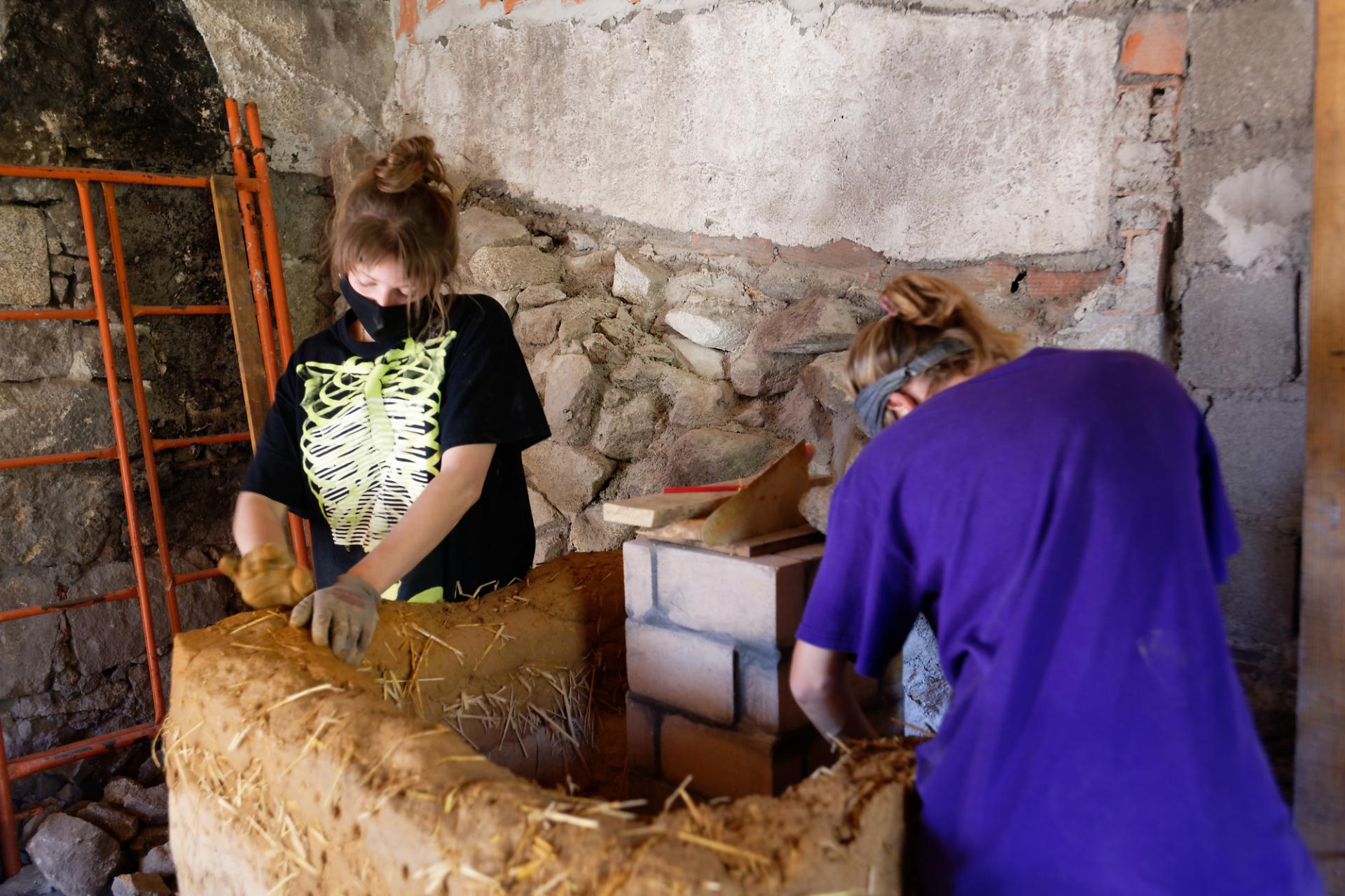
During the semesters, online courses are available on our platform, criti.co. The courses combine theoretical input, interactive communication tools and, – where applicable – hands-on assignments. One course will cover a specific topic and usually last for 4-8 weeks with a workload of 2-6 hours per week. Following on this, the practical workshops are the heart of the programme. Two workshops of 3 weeks each will be held at the end of each semester, translating the input from the online-courses and the results from the participatory design into real hands-on and social practice. Stretching over the online and in-person formats, the students will prepare and participate in the co-design processes of the next projects with the inhabitants and users of the public space. During the first run of the programme, the house of an elderly impoverished couple in a rural setting in Portugal was transformed into a beautiful and comfortable home.
Key objectives for sustainability
Before everyone joins the hands-on work on the site, students will be invited to approach the term of sustainability within various virtual community and educational formats. The goal is to deeply understand the roots and the multilayered dimensions of sustainability and to develop competencies to assess what sustainability actually means in changing contexts. Once on the site they will transform those theoretical perspectives into built reality. Embedded into real social projects, students will immerse themselves into the use of natural and local materials for construction, they will work out how reclaimed materials can get a second life within the building and what low-tech structures can heighten the comfort in the house or in the public space while simultaneously being easy maintain- and repairable.
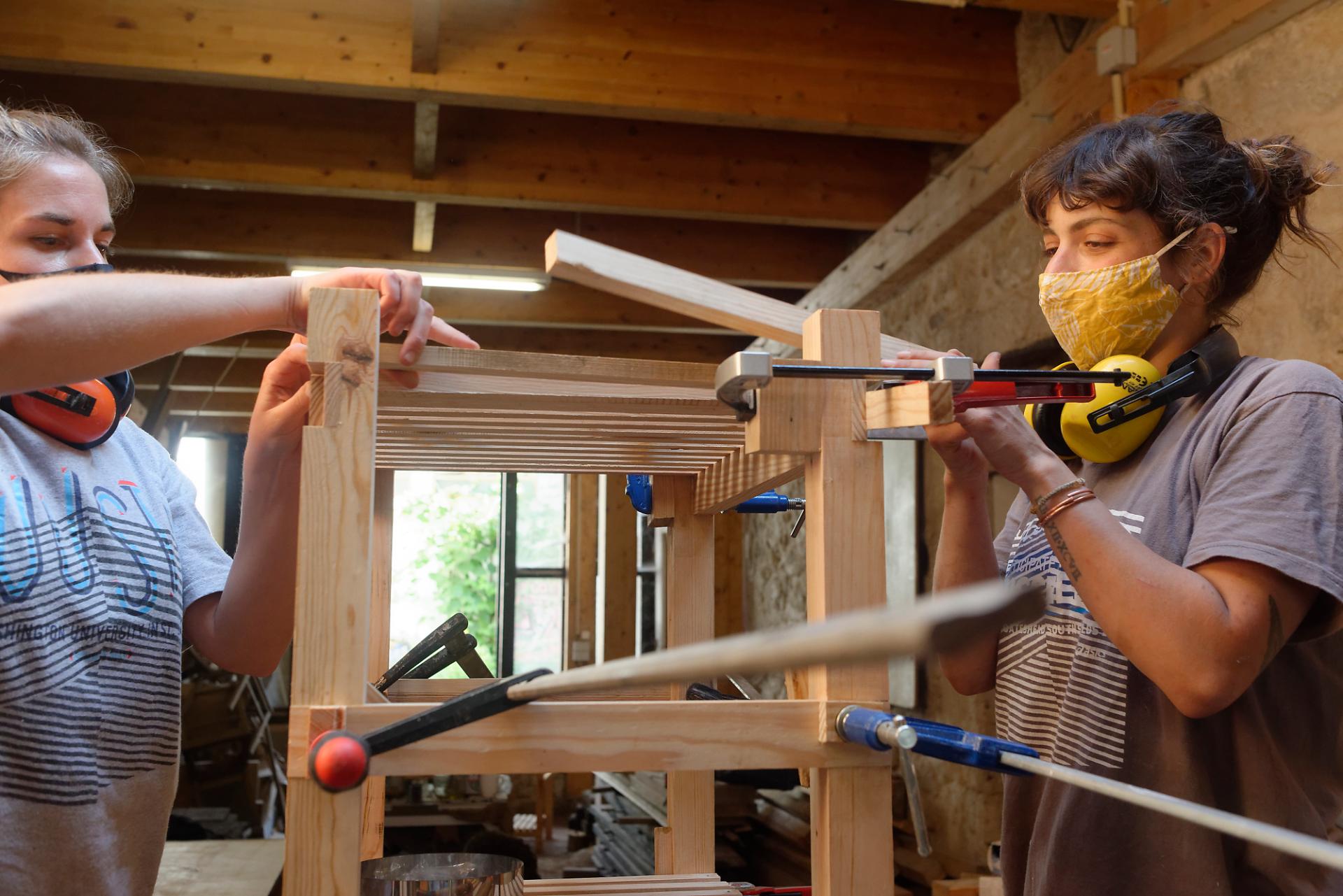
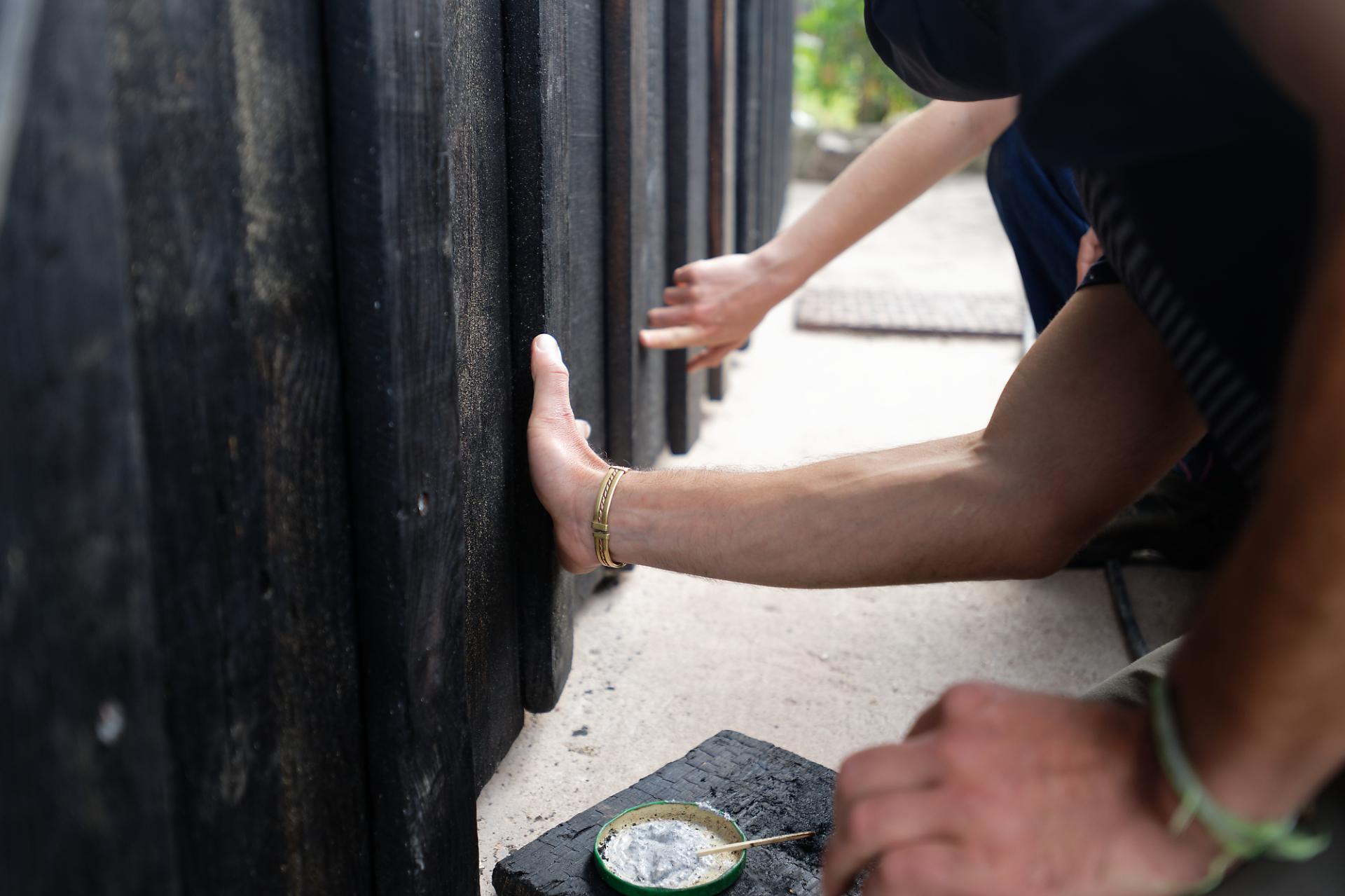
Within the first round of the programme, the house of an elderly couple was re-designed and refurbished. What was before not more than a sheltered storage room that housed the kitchen, dining and relaxing area was transformed into a comfortable and healthy space. The roof was renewed using a traditional wooden structure, the walls were insulated with cork and finished with charred wooden boards on the outside and a warm-coloured earthen plaster on the inside. The center of the room is now the newly built wooden kitchen furniture and an earthen rocket stove, heating the room effectively with natural resources.
The current students also got the chance to get involved in the first participatory design action of the projects to follow: the house of a single old lady and a public space in a neglected neighbourhood.
Key objectives for aesthetics and quality
The aesthetic canon of the initiatives intensively speaks through the material and the simpleness of the structures. Openly displaying the natural materials creates a new and habitual quality that translates into an honest architectural language and connects the individuals to nature with a construction that does not seem to disrupt nature, but is rather a part of its surroundings. Using vernacular techniques that focus on quality and individual work shines a light on traditional values adapted to contemporary context.
In the first project, this is immediately apparent through the charred boards encapsulating the house. Yaki Sugi or Shou Shugi Ban is a traditional Japanese technique. By only charring the surface of the board, it not only looks elegant black, but it also makes the wood resistant to moisture, termites and less flammable. Inside, the unclad ceiling shows the interesting structure of the dark cork insulation panels and the smashed tiles in the natural flooring sparkle and bring finesse. Keeping existing stone structures while adding new wooden and earthen elements forms a balanced communication between the natural materials and produces a dynamic but calm atmosphere.
It might not always be easy or obvious, but with our projects we want to show that sustainable, fair and affordable construction and architecture actually can be very beautiful.
Key objectives for inclusion
Sustainability does not stop at its environmental dimension, an integral understanding sheds light on the importance of an inclusive and fair societal development. To prepare the students for their work with vulnerable persons, a communicative online format at the start of the programme helps them to reflect on their (unconscious) biases and gives them tools on how to overcome preconception while approaching and working with communities. Furthermore, the virtual meetings give impulses to assess common participatory practices regarding their accessibility for people with fewer opportunities and finally draw attention to the wider picture of how sustainable architecture always also is about the political dimension of creating spaces.
In order to truly cater to the needs of the beneficiary’s house and spaces, the students, practitioners and the users develop together the redesign of the object, the whole process adapted to the requirements and possibilities of the users. Getting everybody involved can ensure a sustained connection and care for the place and initiating a sense of belonging.
Besides that, the whole structure of the programme tries to be as inclusive as possible. No specific experience is required as long as the students can state their honest motivation to participate in the course. We invites individuals from all parts of the world regardless of their gender, age, sex, race, class, religion, ethnicity, sexual orientation or gender identity and we keep the participation fees as low as possibile, to reduce the financial barriers. We also offer a limited number of scholarships to those not being able to contribute to the fees.
Results in relation to category
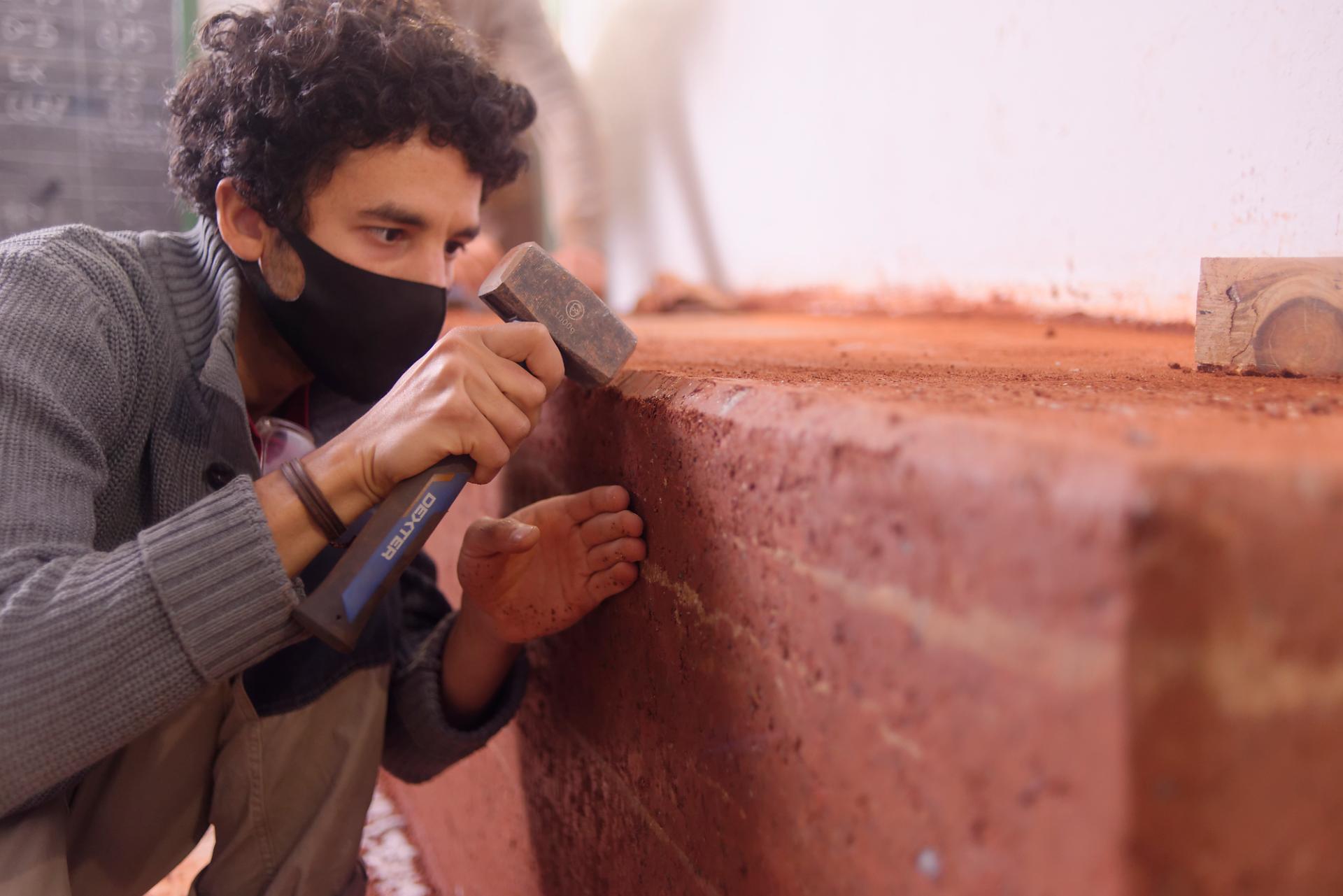
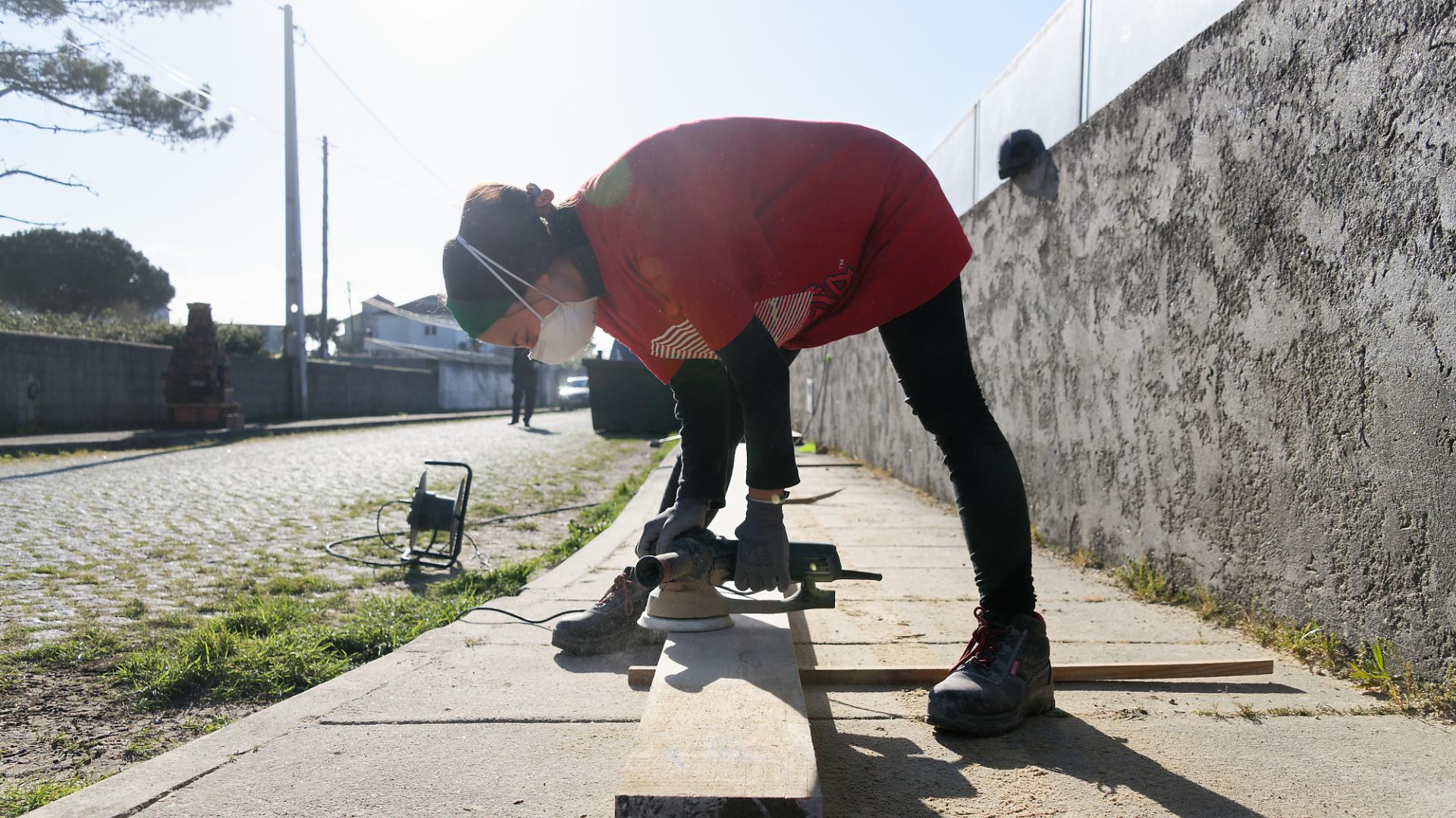
In our project the students gained both soft and hard skills in natural building methods and sustainable architecture through the combination of theoretical online courses, local practical assignments and the hands-on workshops. They have experimented with sustainable solutions in various fields in their home contexts and successfully refurbished a social housing project in Esposende, Portugal. As a part of this they partook in and implemented participatory design sessions with the inhabitants, to fully include them in the process of remodelling their home and so to ensure a sustaining happiness to continue life in this place. Through the collaborative processes in the workshop they acquired skills in intercultural communication and working together towards a common goal. Through the online-formats, the students also obtained a much more in depth understanding of their local environments and the potential of their local materials through carrying out their practical assignments. For example, they sampled the raw earth around them as a building material, they grew their own mycelium objects, they built furniture out of discarded materials and much more. This knowledge paired with the experience of using local materials to refurbish the social housing project in Esposende let them adapt and apply their skills and material knowledge to many different environments. Through the many different treatments of various materials such as ramming earth, building with cob and charring wood the students understood and learned to appreciate the versatility of natural building materials and vernacular architecture. We believe a holistic approach is the most sustainable way of educating people, so once they want to start their own project they already understand the entire process from beginning to end and can work more independently.
How Citizens benefit
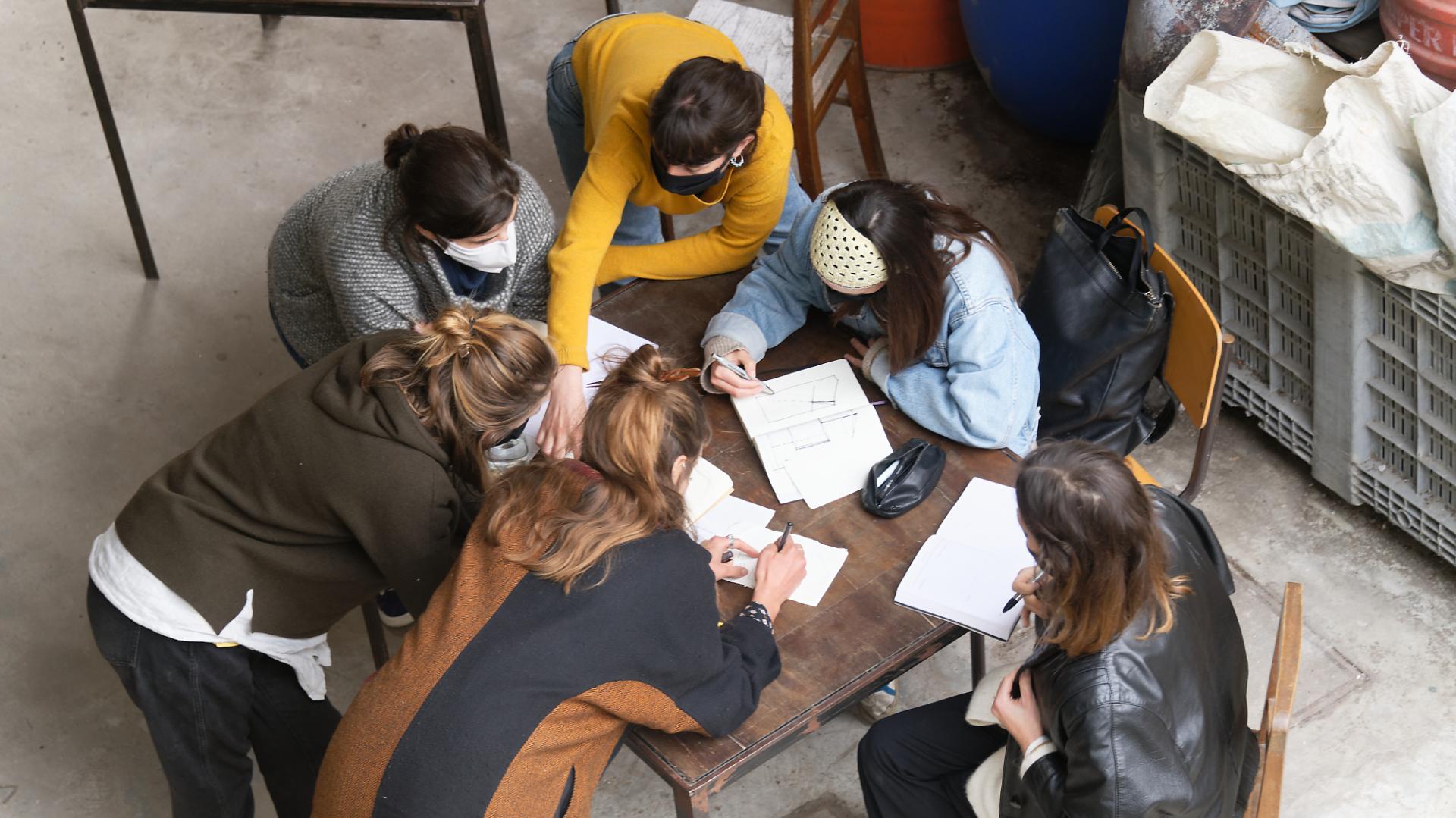
The design for the first project was done involving the inhabitants and throughout the whole building process they were involved when it came to changes and adaptations. The citizens affected by the project were the couple that inhabits the little house which we were remodelling/rebuilding. In order to ensure a process which is in all parties interest, participatory design sessions have been held, including the inhabitants. In these sessions each design decision was made only following a presentation of everyone's proposal. These proposals were then discussed, adapted and the parts they liked were merged together. In this way everyone found a space to present their ideas but also to actively collaborate in the design concept.
During the construction the couple came to visit the site numerous times to observe the progress and bring in their thoughts and suggestions as well as to help out, learn and be an active part of the process. This is resulting in a feeling of empowerment through gaining new skills and being actively engaged in the building of one’s own home. Finally, Carlos and Maria expressed their joy and excitement about their new space and since we are working with easily repairable structures and low-tech solutions, the inhabitants will also be able to take care of their house by themselves, fixing problems that might occur because they are familiar with the technologies. In this way not only the building methods and materials but also the maintenance of the house economically as well as practically is sustainable.
In the next projects, once the restrictions are hopefully lifted, we also want to involve local unemployed individuals to strengthen their employability by gaining new specialized competencies as well as people affected by housing poverty to give them the tools to improve their housing situation themselves.
Innovative character
Our Sustainable-Sustainable Architecture postgraduate program distinguishes itself from other postgraduate degrees since it consists of the collaboration of an experimental NGO and an established higher education institution. This creates a multidisciplinary learning environment where theory can directly be put into practice and the collaborative projects are benefitting real people in need of a renovation of their housing. Further, the project is open to anyone holding a bachelor degree as long as they demonstrate true enthusiasm and motivation. We see the potential and the need for interdisciplinary collaboration in order to inspire innovation. In this way our program has brought together architects, urban planners and interior designers, but also students from the humanities, marketing, biology and the arts. But as diverse as the students, as interdisciplinary is the mentoring board. The students are accompanied through their learning journey by professionals from architecture and urbanism, psychology, economics, ethnography and arts. The programme serves the students with fresh perspectives, eager to engage in dialogue and coming up with new solutions all using their respective expertise.
In terms of diversity, our format pairing online-learning and practical assignments also allowed for students from five different continents, studying and working on their assignments each in their very own local environment and creating and adding value by sharing their experiences. Moreover the very hands-on learning on the site during workshop time does not only connect the students with each other, but also with different techniques and handling of materials making the whole course a holistic learning experience. Even though this is a university course the students get so much more real world experience through collaborating in a real social project, facing and resolving potential challenges together and contributing to a lasting positive social impact.