Accept
Basic information
Project Title
Full project title
Category
Project Description
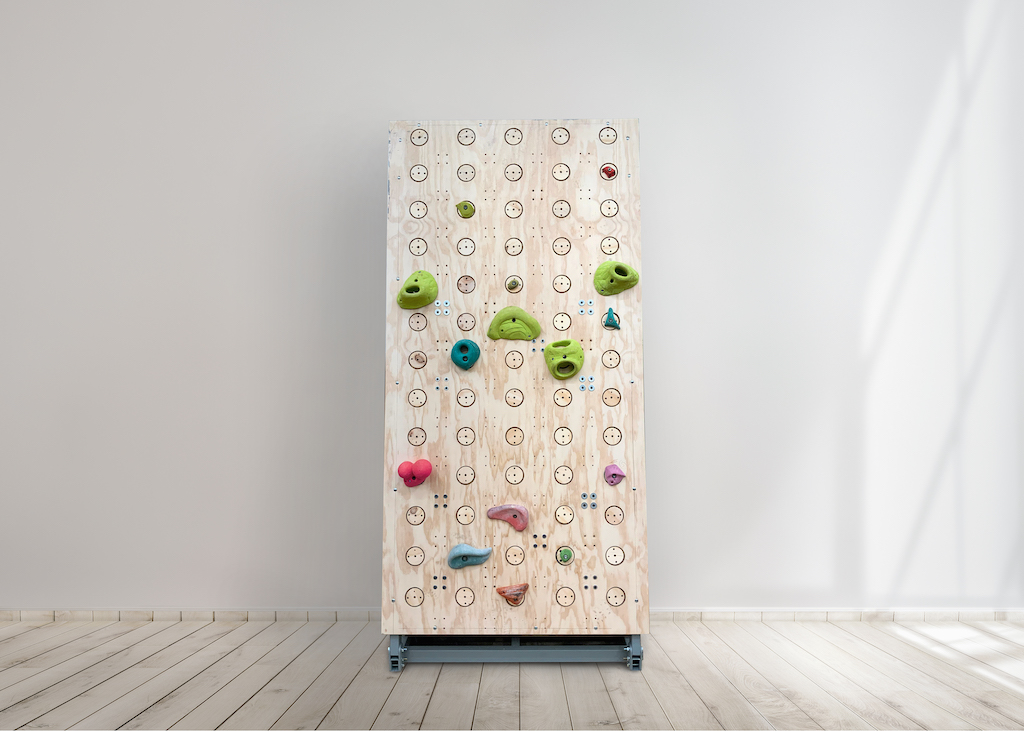
The ACCEPT project, funded by the Polisocial Award 2019 of Politecnico di Milano, addresses designing physiotherapy product, focusing on climbing training for children with Cerebral Palsy (CP). The multidisciplinary team of Politecnico developed ACCEPT, an adapted, senzorized and reconfigurable climbing wall, optimised for children with CP between 6- and 11-year-old in partnership with FightTheStroke, a foundation protecting the rights of young people with CP and their families.
Project Region
EU Programme or fund
Description of the project
Summary
The ACCEPT (Adaptive Climbing for CErebral Palsy training) project, funded by the Polisocial Award 2019 contest of Politecnico di Milano, aims to adapt the indoor climbing activity allowing children with Cerebral Palsy (CP) to rehabilitate, improve the motor movement experience, gain confidence and develop social communication skills (https://accept.polimi.it/).
The multidisciplinary team of Politecnico di Milano developed ACCEPT, an adapted and reconfigurable climbing wall, equipped with sensors, optimised for children with CP between 6- and 13-year-old. The project sees a partnership with FightTheStroke, a foundation protecting the rights of young people with CP and their families.
The project adopted an inclusive design approach to analyse users' needs, organising co-design sessions that involved FightTheStroke's qualified staff, climbing instructors, physiotherapists, designers, engineers. The design and ergonomic requirements defined allowed to implement the wall in terms of shape, surface slope, modularity, holds positioning, and proprioceptive inputs (colours, textures, sounds and lights) to enhance sensory stimulation. The structure is equipped with sensors and sockets that consider the children's motor difficulties. The wall allows to test a sensor patented by the Politecnico, designed to measure the forces applied to a climbing hold. The sensor is inserted into the holds and measure parameters that monitor the improvement of children's performance, such as hand strength and fine motor movements. The holds, adapted for inclusion and currently in the patenting process, facilitate exercises to rehabilitate the upper limbs: they stimulate reaching, grasping, and supination exercises, which are movements typically affected by injury to the neuro-motor system. The wall enables to test different activities during motor rehabilitation sessions and provide medical staff with a useful tool for qualitative and quantitative analysis of rehabilitation progress.
Key objectives for sustainability
ACCEPT adopts the principles of the Design for Sustainable Behaviour (DfSB) approach to consider environmental, economic and social impacts of the product lifecycle and understand user behaviour to drive the development of products that encourage more sustainable use. This holistic approach to sustainability reflects in two ways.
First, ACCEPT is designed with sustainable materials (waste material content), considering the entire product life cycle. Climbing holds are made of Stone 3D Printing, a highly sustainable 3D printing technology that uses residual waste powder from the stone industry to create strong, durable, and affordable structures. This eco-friendly inkjet technology could print any geometry. Also, it offers durability and superior performance at a low cost while using less material. The supporting structure is made of FSC®-certified okumè plywood, a symbol of responsible forest management. This material is more durable and weather-resistant; it is a domestic wood, and no chemical processes are used for varnishing.
Second, ACCEPT considers the sustainable behavioural aspects, spreading climbing as a tool to improve the health conditions of people with a different ability. Indeed, regular physical activity enhances well-being and contributes to the delay of chronic disease. Its promotion is becoming is an essential goal for public policy at the global level.
However, this goal is hindered by a set of barriers typical for this population, such as economic, emotional and psychological issues, necessary equipment, information retrieval. In this context, the ACCEPT project intervenes by proposing a solution that is both training, inclusion, and a tool to analyse rehabilitation progress, introducing children with CP to climbing as a natural approach to physiotherapy, making it accessible and inclusive. ACCEPT brings children with disabilities closer to the practice of adapted sport through an outdoor and democratic recreational activity.
Key objectives for aesthetics and quality
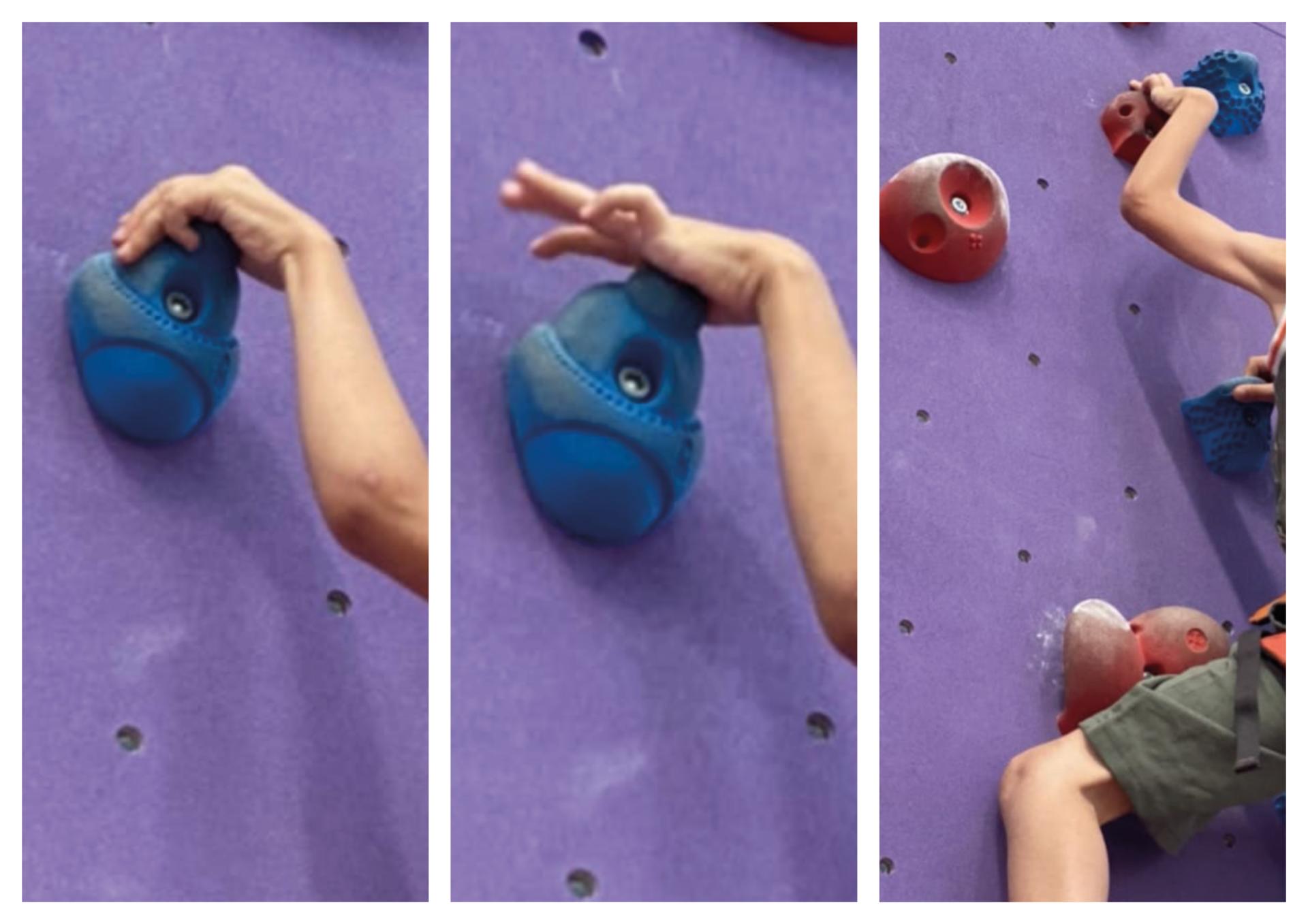
The initial research revealed the need for ad-hoc holds that combine therapeutic exercises with climbing movements and create perceptual pathways to engage the child. Holds with different textures, properly installed on the wall, can suggest the correct movement to stimulate a tactile sensitivity of the injured side. Subsequent expert interviews allowed us to identify four upper limbs movements to stimulate during climbing: hand prone-supination, hand opening, thumb opposition, and elbow extension.
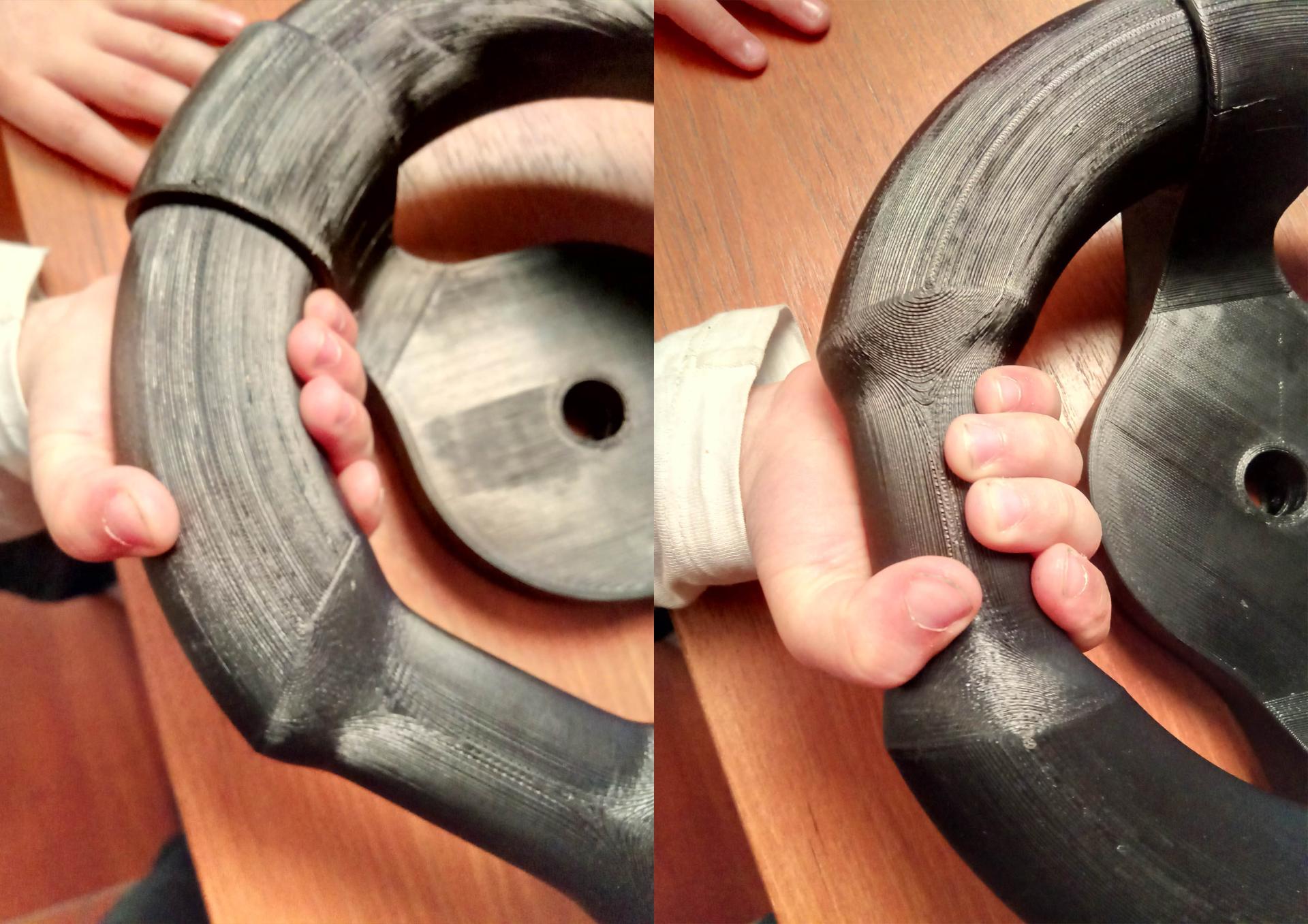
Observing these movements in a real climbing context (see photo) allowed identifying specific holds and the related characteristics that could stimulate them. The Jug hold is important for opening the hand and thumb opposition; the pocket and the undercut holds allow the elbow extension and prone-supination of the hand. It is also essential to prioritise symmetrical shape to encourage the CP children to approach with a two-handed grip. From these requirements, we designed a new climbing hold with a tubular body that integrates three types of holds: jug, pocket/undercut and tubular). The ACCEPT hold has a symmetrical circular configuration that can be rotated, offering the flexibility of use and stimulating different movements in the child. The hold's diameter is carefully designed based on the percentiles of children aged 6-11 to ensure friction force for a safe grip.
Each of the four quadrants resulting from the circular shape has a unique feature: two opposite quadrants present a ring around the tubular with a texture that stimulate children's tactile perception; the other two quadrants have a handle and a jug/pocket hold. The jug/pocket hold has a frontal outgrowth that allows the hand to rest completely, while the inside has a recess to accommodate the hand's fingers. The handle is in continuity with the tubular shape. It has a smaller diameter to allow the CP child to experiment with different hand grips, training their perceptive and sensory capacity.
Key objectives for inclusion
The increasing awareness of social diversity has prompted designers to create solutions to increase independence for everyday tasks. ACCEPT adopts an inclusive design approach largely applied in adaptive sports to improve daily living activities, increase physical capability, physiological capacity, employment levels, social status, and sense of belonging. The project ambition is to explore and promote the role of sport climbing as a therapeutic tool, an inclusive training solution, and a means of tracking rehabilitation progress. Several experiments showed that inclusive sports could help disordered children with their physical performance helping them in their mental process, increasing self-confidence.
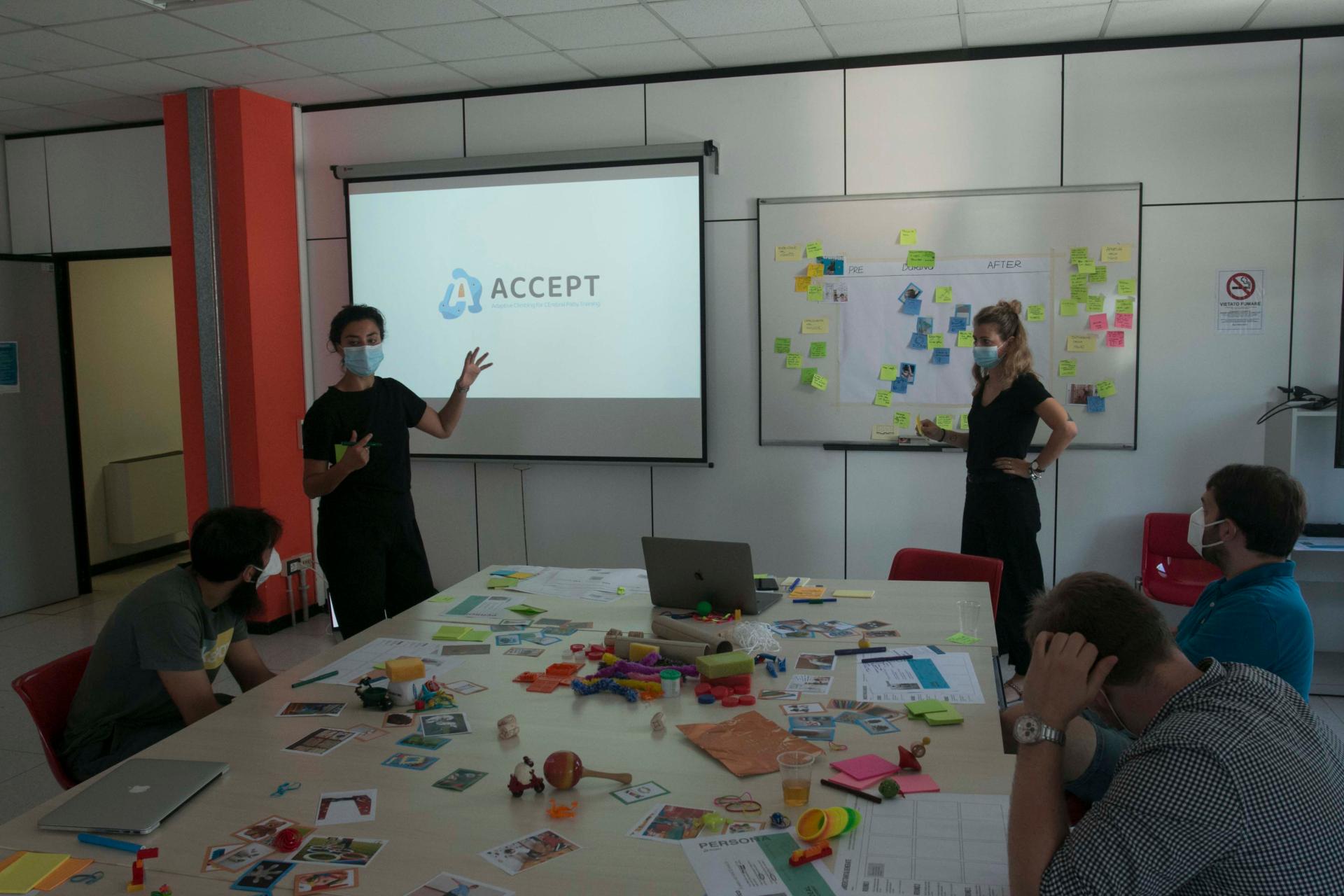
Designing for inclusiveness is a complex and challenging activity. It requires adopting a specific inclusive design process to directly involve the CP children and all the relevant actors dealing with their rehabilitation and the climbing sport: the children family, physiotherapists, climbing instructors and the project researchers. The process allowed identifying the design requirement by deeply considering their needs, desires, knowledge, experience and expertise.
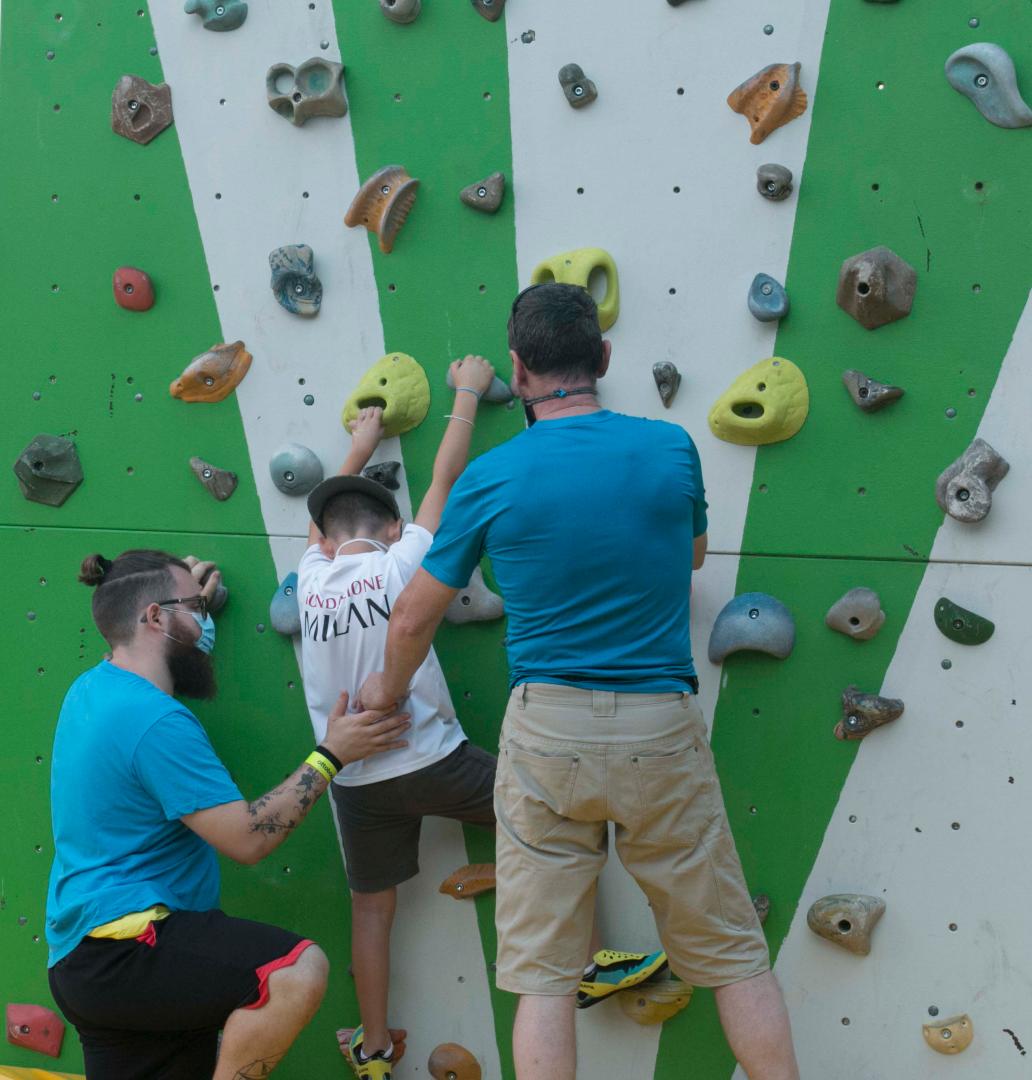
CP is a permanent movement disorder that affects a person's ability to move and maintain balance and posture, while climbing is a physically demanding activity that requires concentration, motor planning and sequential thinking. To introduce children with different skills to this sport, ACCEPT has designed the entire wall paying attention to both the hold, which considers the children's motor difficulties and the routes with scalable difficulty according to participants. ACCEPT answers the need to rehabilitate and to include people in practising sport. It helps children practise balance, become aware of the body's different parts, and increase muscle strength. A dedicated software interface will provide specialists with valuable data to guide therapy and modulate exercises based on observed progress.
Results in relation to category
ACCEPT contributes to providing a sustainable, attractive and inclusive lifestyle for children with a diverse range of abilities in many ways. First, ACCEPT makes climbing accessible and inclusive to CP children, allowing them to carry out rehabilitation work in a recreative and engaging way. An intensive rehabilitation from an early age guarantees the recovery of part of their neuromotor abilities. The association FightTheStroke, a partner in the project, has been working for years to develop evidence-based rehabilitation strategies. These strategies include the organisation of Fight Camp initiatives (https://www.fightthestroke.org/fightcamp), during which children participate in an intensive period of sports initiation and rehabilitation, supported by a staff qualified in adapted motor sciences, occupational therapy, and physiotherapy. It has been demonstrated that intensive motor activity (>60h in 8 days) can lead to functional objectives otherwise achieved in more than six months of traditional rehabilitation in a hospital environment.
ACCEPT, appropriately configured through a human-centred approach, enable CP children to perform typical rehabilitation movements in the context of a game. They will practice sport to build trust and awareness of their potentialities and a sense of accomplishment while training problem-solving and decision-making skills, improving their lifestyle. ACCEPT reduces inequalities and promote the health and well-being of vulnerable groups.
Secondly, thanks to the human-centred inclusive design methodology adopted within the project (see point 8), ACCEPT has been designed to be a scalable product adopted by a broader social system. The inclusive approach allowed to include new and different perspectives, which are the key to true insight, and to learn from diversity by recognising bias. This methodology, which is an outcome of the project, allows to design products that improve more inclusive and sustainable people's lifestyle.
How Citizens benefit
The primary beneficiaries of the project are CP children and the actors operating around them: caregivers, family members, educators. ACCEPT offers them a tool to enhance motor performance through the practice of an adapted and inclusive sport. The project lives thanks to a strong collaboration between experts and a multidisciplinary research team. The first research phase allowed the team to deeply understand CP children's abilities through the direct experience of people with different expertise and knowledge. The involvement of physiotherapists, climbing instructors and climbers, through interviews, provided comprehensive contextual insights and crucial interconnections between climbing and the CP rehabilitation requirements. FightTheStroke has been fundamental to catch the everyday life difficulties of CP children. The same stakeholders have also been involved in the idea generation during the co-design workshop and the prototyping testing. The data and ideas that emerged were applied through specific activities and tested during one week of Fight camp. The Politecnico team is currently testing the overall climbing wall system in their Labs. PlayMore (https://playmore.it/), a social enterprise partner in the project, will host ACCEPT in their spaces.
Its social relevance lies in two aspects:
1) the new rehabilitation tool also helps increase the child's self-esteem and confidence in their abilities and sense of belonging to the community. The lack of adequate inclusive sports facilities has been documented and is one reason for the marginalisation of children with different motor, cognitive or behavioural abilities.
2) it is a scalable product and can be installed in gyms and schools due to its modular design and low implementation costs. The adapted climbing wall gives life to new places of aggregation (e.g. inclusive playgrounds), thus contributing to the spread of a sport recently included among the Olympic disciplines and attractive for new generations.
Innovative character
The project is unique and effective in breaking down the main barriers to sporting activity for CP children: the modular and transportable wall is easily accessible as it can be placed at the PlayMore sports centre and in the gyms of municipal schools, representing a tool for inclusion and aggregation; it does not require expensive equipment for practice; and it benefits from the support of para climbing instructors, trained to initiate into the sport of Paralympic disciplines.
The ACCEPT hold, specifically designed to train the four movements of the hand required for physiotherapy, is currently in the patenting process. Indeed, the adapted hold includes various options for climbers to use as they climb. There are various sizes, with the largest and easiest parts to grip and the smallest providing more challenge in modes of gripping and different textures to improve fingers sensitivity.
In addition, thanks to the presence of a triaxial force sensor applied to the hold, protected by a patent from the Politecnico di Milano (WO2019/123038 A1), ACCEPT can measure the forces exerted by the hands, control fine motor movements and process a report for the evaluation of motor performance. It has the dual advantage of providing medical staff with a tool to help measure progress and, together with the presence of feedback, reward children for the results achieved and stimulate them to overcome their limits ('reinforcement learning'). ACCEPT is therefore proposed as a standard rehabilitation tool capable of creating measurable scientific and social impacts.
Thanks to these characteristics, ACCEPT is a unique product. Currently, there aren't climbing wall on the market that allows CP children to rehabilitate their motor functions.