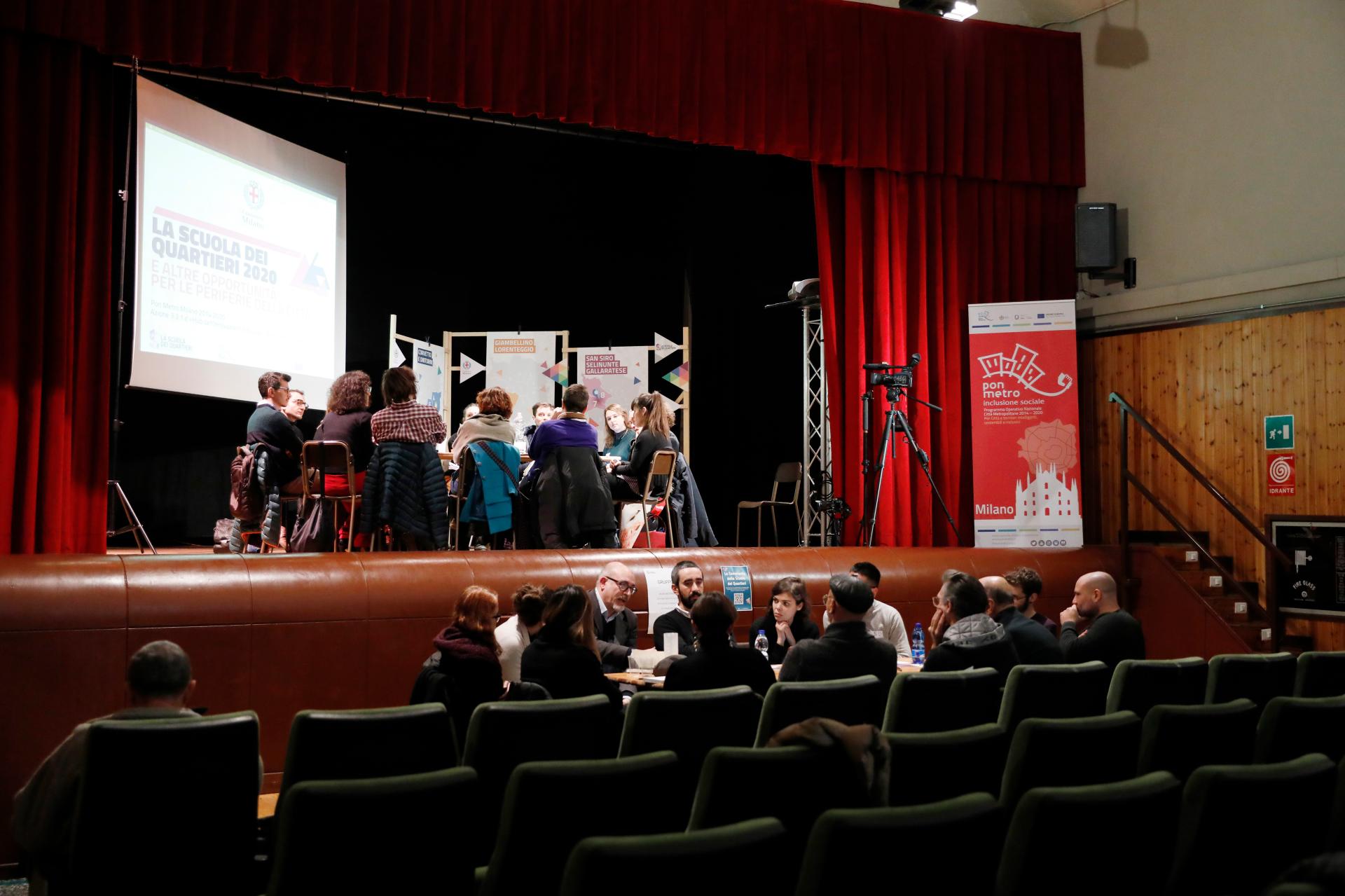
LA SCUOLA DEI QUARTIERI (SdQ)
Basic information
Project Title
Full project title
Category
Project Description
The Scuola dei Quartieri (SdQ) is a free civic school of social innovation open to all citizens and spread throughout the city.
Conceived as a capability-building programme that continues the tradition of Milan's "civic schools", it contributes to the transformation of some disadvantaged neighbourhoods, spreading the ability to design social impact solutions that respond to the desires, needs and aptitudes of the inhabitants.
Without classrooms, it takes place where people live and work.
Project Region
EU Programme or fund
Which funds
Other Funds
PON Metro Milano 2014 /2020 – Project name: Hub of inclusive innovation - Actions 3.3.1.d “New services in degraded areas” and “Support for the activation of new services in degraded areas”.
Description of the project
Summary
The Scuola dei Quartieri (SdQ) is a free civic school of social innovation and entrepreneurship open to all citizens and spread throughout the city. Conceived as a capability-building multidisciplinary programme that continues the tradition of Milan's "civic schools", it contributes to the transformation of some disadvantaged neighbourhoods, spreading the ability to design social impact solutions that respond to the desires, needs and aptitudes of the inhabitants. Without classrooms, it takes place where people live and work and aims at supporting citizens in making things happen, so as to make neighborhoods more inclusive, lively and sustainable.
Promoted by the Municipality of Milano - Council for Labour Policies and Economic Development, and co-financed by the EU - National Operational Programme Metropolitan Cities 2014-2020, SdQ is implemented by a consortium made by Avanzi, a|cube, Comunità del Giambellino, Dynamoscopio, Fondazione Politecnico di Milano, Gruppo Cooperativo Cgm, Kilowatt, PerMicro, Politecnico di Milano – Polimi DESIS Lab, Spazio Aperto Servizi.
The SdQ is organised into 3 main cycles of scouting and incubation, each one of 3 phases:
1. Scouting and participation to the SdQ call: citizens are called to participation through ‘on site’ initiatives organised as an open programme of encounters to match needs and opportunities of neighbourhoods with prospective social innovators, and then to guide them in submitting their ideas to the call.
2. Advanced training: selected participants attend an intensive training programme in which they learn how to transform their idea into an actual solution. Co-designing and prototyping are key-expertise, because engaging multi-stakeholder communities is part of the process as well as the ability to transform a solution into a prototype.
3. Prototyping and personalised support: selected participants receive personalized support and a project grant up to 25000 euros to co-finance the first year of activity.
Key objectives for sustainability
The SdQ has been designed according to the tradition of the Milanese “civic schools”, which are educational institutions promoted and managed by Milan Municipality with the aims of training people in sectors related to the craftmanship and the arts (visual, performative, applied arts). They represent – we could say – the “Milan way” to the Bauhaus, a pragmatic approach to give people opportunities in the labour market, strengthen their capacities to self-expression through creative activities, and improve well-being. The “civic schools” have historically played the role of supporting people’s adaptability and resilience in times of transition. Now it is the time to widen the educational offer of the schools including social innovation.
Actually the SdQ increases the self-reliance of individuals and communities. It sees people as resources to deal with public problems. They are the solution, not the problem. We think that an initiative that enables citizens and makes them promoters of social experiments in the city is a “policy tool” for sustainability, because reduces dissipation (involving and not wasting social energies) and creates opportunity for a “circular economy of the collective intelligence”.
In terms of first outputs, the SdQ trained the participants to a product-service system design approach to innovation, in which behaviour change, eco-design and business model innovation are combined to achieve sustainability. As a result of this approach, the SdQ supported the generation and start-up of innovations such as: “Riselda” - a 'waste-meter' that helps users to sort while earning money; “ConservaMi” - an open source space to learn the ancient practice of repairing; “Still life” - new life to blooming flowers excluded from traditional sales channels; “Ibrida” - a neighbourhood beer that gives a second life to unsold bread recovered from Milan's bakeries; and many other ideas.
Key objectives for aesthetics and quality
The concept of the SdQ has been developed along a process of different stages: the sketch of the seminal idea, the draft of the intervention model, the implementation of the first cycle that we used also as a testing stage, the partial re-formulation of all the three phases of the school in order to increase their effectiveness, the consolidation of the approach for its replicability and the production of the first didactic materials of the school (such as “Seeing like a city”, the guide that participants were invited to use for doing their inquiries: data analysis, participant observation, surveys and interviews, etc.).
So, firstly the aesthetics aspect of the SdQ is in the quality of the co-design process, that we have interpreted as an incremental process of trial and error, of learning through practice. The genuine “Bauhausian legacy” for us is to use experimentation as a source of learning, to frame our initiative as a tool for collective inquiry and societal change.
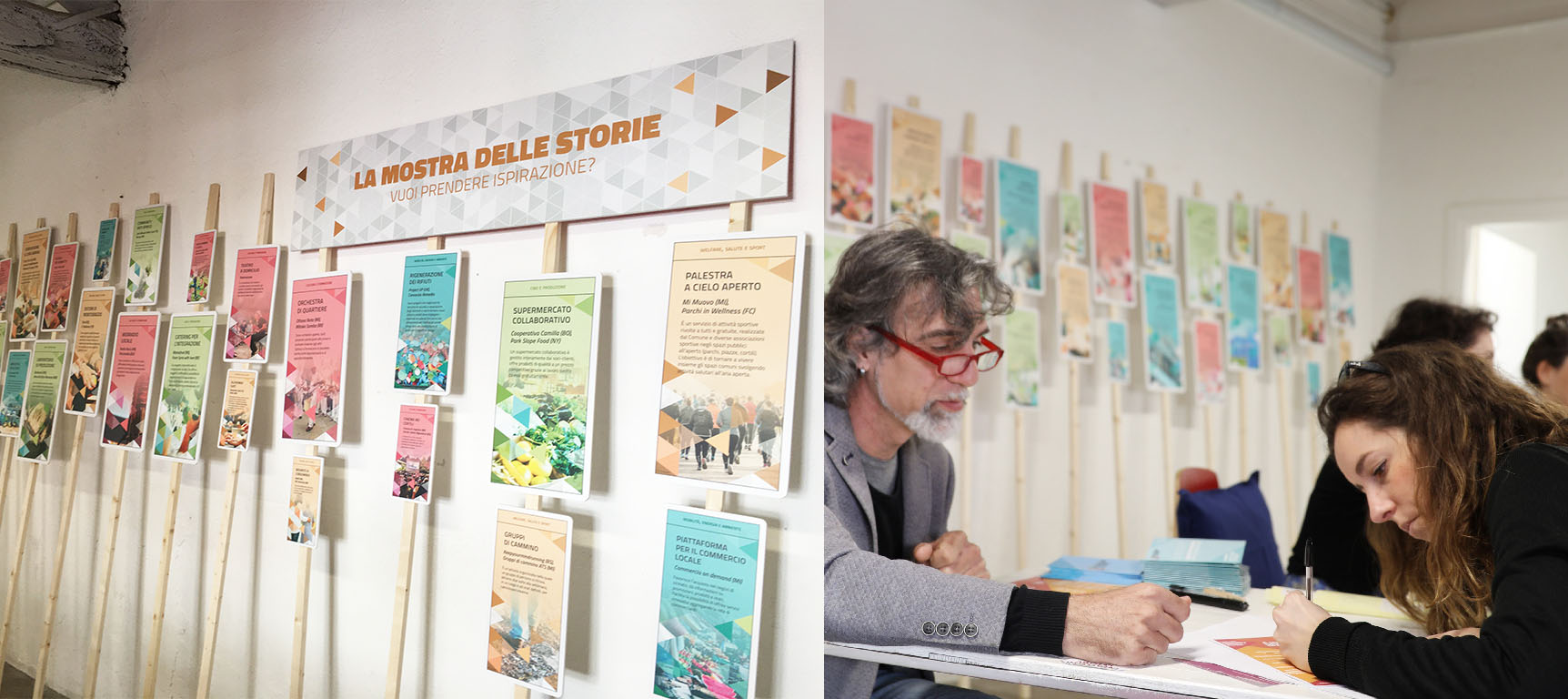
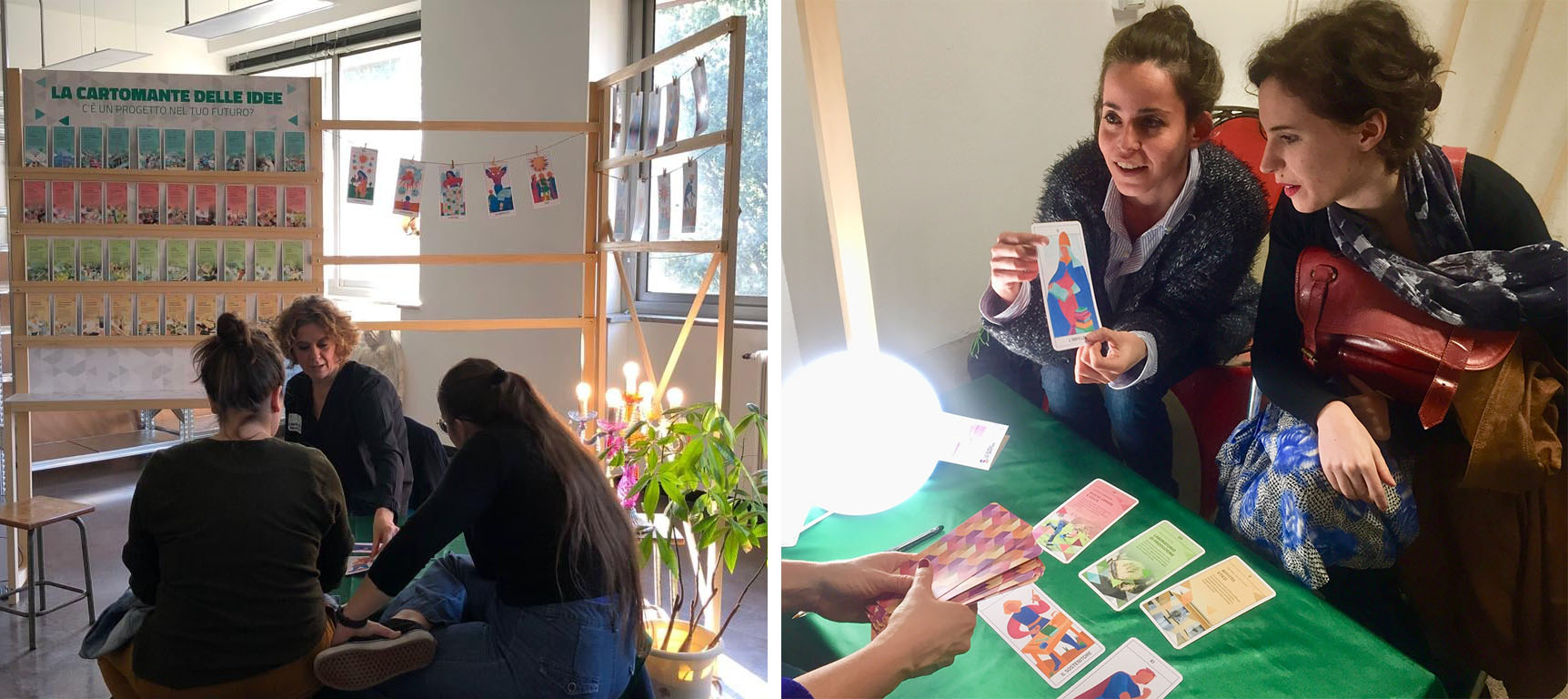
In terms of outputs, the SdQ developed a coordinated project of visual identity for each intervention in the neighbourhoods, to increase a sense of recognition, belonging and active participation. The co-design activities benefited from the design of micro-exhibition sets and the digital and physical artefacts had the goal of generating a high quality “convivial” experiences: the design of the scouting activities (such as the “Ideas’ Festival”, the exhibition of the “Belle Storie” and the “Fortune Teller” card set), the educational formats (supported by edited video-pills and ad-hoc tools), the communication activities (such as the “Live from the Neighbourhoods” and the story-telling videos of the participating ideas).
Finally, the aesthetic value of the SdQ is in the design of the generated ideas, as e.g. “Eppoi” - a free play space for children that uses books as a tool for navigating arts and sciences, broadening their cultural horizons and cultivating beauty and wonder.
Key objectives for inclusion
The key challenge addressed by the SdQ is how to combine innovation and inclusion in urban policies. As the Bauhaus was an effort to disseminate innovation at a large scale and make it available to all, in the same way for the SdQ social innovation is a practice that everyone can put in place and everyone can benefit from. In order to operationalise this assumption, the SdQ has considered the “capacity to aspire” (that is a future-oriented and imaginative capacity) as an endowment that everyone can express, to the extent that a public policy recognises, nurtures and makes it a basic ingredient of its approach.
So the SdQ scouted the people’s capacities to aspire, calling for good ideas (a service, an initiative or even a social enterprise) that could improve the well-being of deprived communities, and provided support in terms of a financial grant, a networking activity and a training programme. Particularly ad hoc training formats have been designed to make the complexity of the design’s tools and means affordable to all participants. We could say that the expected result was to build “learning communities”, in which no one is left behind and everyone can co-design social experiments that can be produce collective benefits.
In terms of the outputs, the SdQ aimed at generating and supporting ideas that were sustainable in economic terms and generative of social impact. The SdQ supported ideas such as: “Milano Mediterranea”- a multicultural participatory art centre, where citizens become active players in cultural programming and production; “Forno condiviso”- a shared bakery that connects the neighbours and a place for training and social redemption; “Officina della produzione”- an audio-video workshop telling the story of a neighbourhood through the voice of the young people; “Attitude recordz”- a record label that gives space to the emerging talents; “Quartiere digitale”- urban workshops to learn how to use web and new technologies.
Results in relation to category
2,300 are the citizens that actively took part in the light forms of training and scouting activities, organized through 70 meetings in the neighbourhoods.
187 are the ideas submitted to the 3 open calls launched, 69 of them have been selected to access the advanced training sessions, with an involvement of 210 participants. This led to the foundation of more than 40 new nonprofit organizations.
The SdQ acts as an open and diffused educational initiative in the Milanese suburbs. Therefore, the outcomes of such an extended educational program comprise all the activities in each stage of the school (scouting, training and prototyping) since they are intentionally designed to transfer both cultural and technical skills necessary to the conception, codesign and production of collaborative solutions.
From the 1st to the 3rd cycle of the SdQ, the number of submitted ideas increased almost 3-fold, reflecting the impact of such activities and the overall capacity of the SdQ to support the ideation of ideas, making people familiar with the surrounding ecosystem and not afraid to experiment and participate. With regards to the advanced training, 100 hours of interdisciplinary education was provided to each participant in each cycle of the SdQ. This impacted in accelerating the transition of the ideas from initial concepts to a prototyping stage and of the participants from informal groups to nonprofit organizations, and allowed a series of codesign sessions to take place in the neighbourhood. Finally, coming to the prototyping phase, a personalized support lasting 12 months allowed each solution to start the experimentation, involving the neighborhood in a process of testing and often co-production of activities. The links with the context emerged to be crucial not only in future scaling the ideas but also in networking the social innovators with the neighbourhood and in grounding the solutions to the actual needs and assets of its community.
How Citizens benefit
The payoff of the SdQ is "citizens make the city”. This means that the community involvement process has been designed according to a co-design and co-creation approach. The SdQ has not been a “traditional” participatory project, in which a local authority tries to involve citizens, because their knowledge resources can improve the quality of the public policies. The SdQ has given the people the opportunity to express their “capacity to aspire” and designed a capacity building program to make this opportunity realistic.
The SdQ has been an attempt to make education a key element of an urban regeneration policy. This is the most relevant way to interpret it and to frame its social impact, and even the most valuable message for the New European Bauhaus.
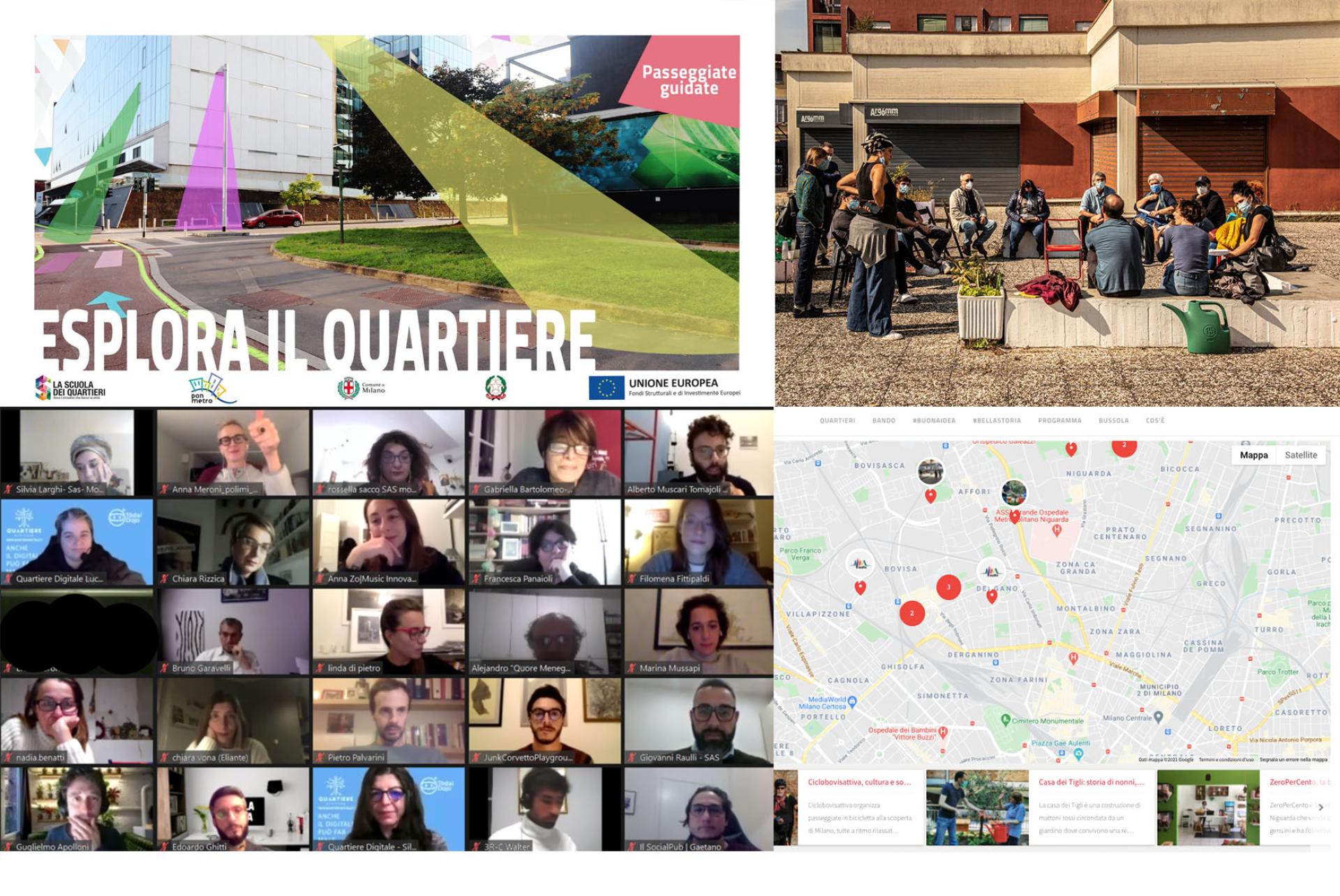
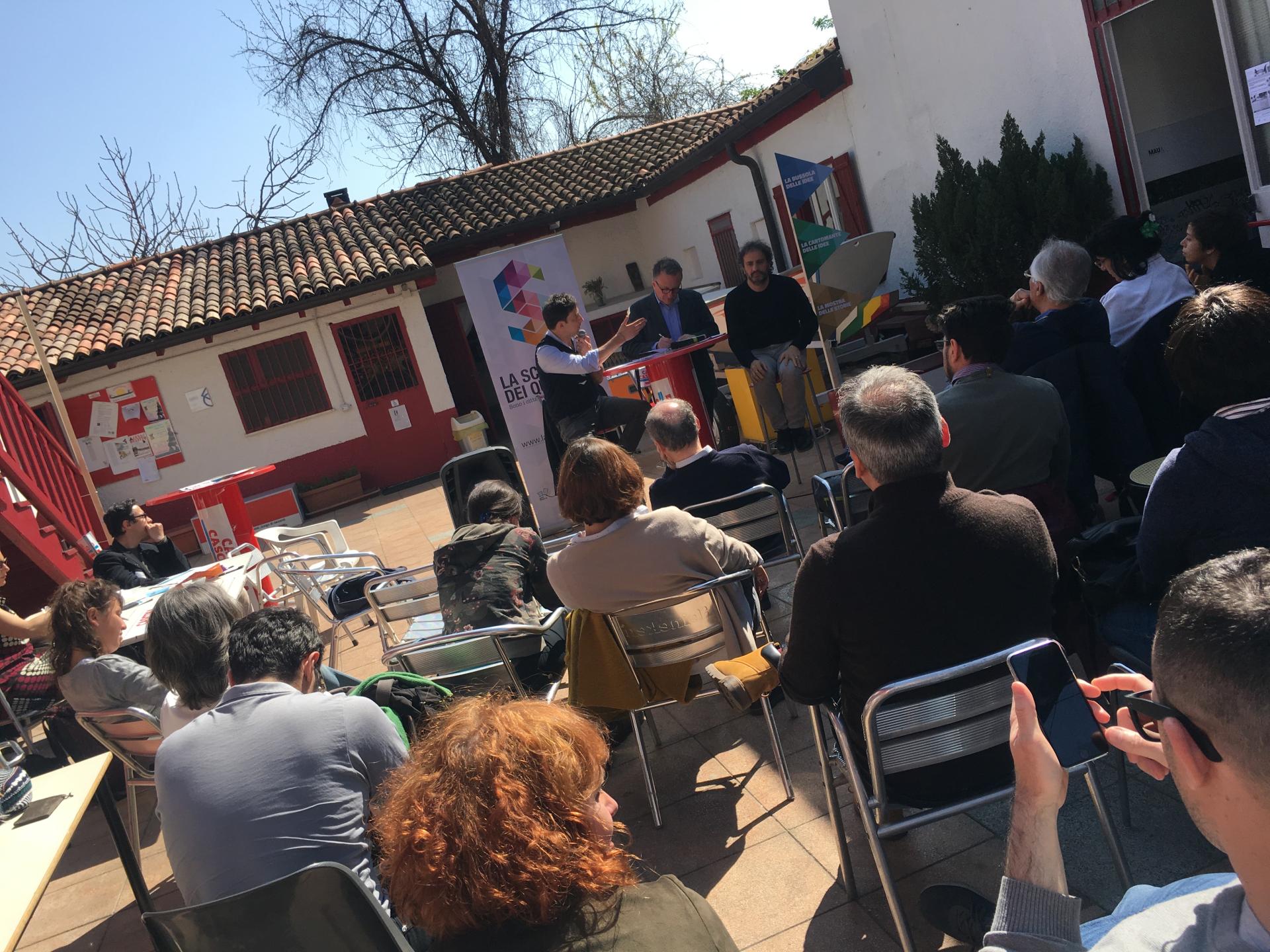
Over a period of 3 years, 70 meetings were held in the neighbourhoods: presentations, exploratory walks, public imagination workshops, ideas festivals, open lectures, codesign workshops, actively involving 2,300 people in the neighbourhoods. Communication and storytelling actions in the shape of social media campaigns and groups (the SdQ online Community), radio formats and online live broadcasting (proposed during the pandemic) have reached the entire city, increasing the impact and contributing to attract Milanese people to the neighbourhoods.
A specific set of initiatives were dedicated to the growth of a SdQ supporters’ community. With the aim of being grounded and endemic in the neighbourhoods, the SdQ mapped and involved local stakeholders (e.g: associations, shops, cultural centres, small businesses, schools, informal initiatives) as well as mentors with the aim of enhancing the existing relationships, increase the collaborative potential and provide a supportive context to the ideas. Moreover, aiming at scouting and sustaining inclusive, socially innovative and sustainable projects, the 67 selected ideas themselves have had an impact on the involvement of citizens in their services and initiatives.
Innovative character
In recent years, there have been many initiatives that have combined public policies and social innovation practices. Most of them have detected existing social practices, identified their innovative characters and addressed the challenge to enable and scale them up, through networking, implementation of new funding schemes, improvement of public regulation, etc.
The SdQ has chosen a different perspective, introducing innovative elements.
The first element was related to the beneficiaries. In Milan there is a significant amount of initiatives (promoted by bank and enterprise foundations, public authorities, etc.) that supports not-for-profit organisations in their community development projects. The SdQ decided to identify a new target group, composed by individuals or informal groups of people which could have fruitful ideas for social projects in deprived areas of the city, but which were usually not considered by the more consolidated initiatives. The aim was to select proposals at a very early stage and to help them in moving their first step.
A second innovative element was to give them two kinds of contribution: a grant and a capacity building programme. The rationale was that they most probably needed not just financial support but mainly a help in better defining their initial ideas, to improve viability, communication strategy and business planning, and to increase their social impacts.
A third element was to build around the beneficiaries a network of mentors and supporters composed by community organisations of the neighbourhoods, that added new important resources, mainly in terms of social webs.
A fourth element was to give the participants the chance to experiment, prototype and even fail with their ideas.
A last element of innovation of the SdQ was the use of education as a tool for urban regeneration policy. In our view, the regeneration of deprived areas is a matter of increasing basic capabilities of the people.