Syku
Basic information
Project Title
Full project title
Category
Project Description
A unique cultural facility, the central idea of which is to combine different fields of art: more cooperation, holistic development, synergy and the arts of collaboration are inevitable.
Project Region
EU Programme or fund
Description of the project
Summary
The aim of the studio:
The aim of the Südalinna Cultural Center (Süku) is to create a platform for world-class cultural events where different generations, communities, and art fields can meet under one roof. Süku combines modern facilities for the Tartu Art Museum and Tartu City Library. It has a complex of event rooms that create new jobs and suitable opportunities for interdisciplinary cultural innovations and business support for building functions.
The concept of our project:
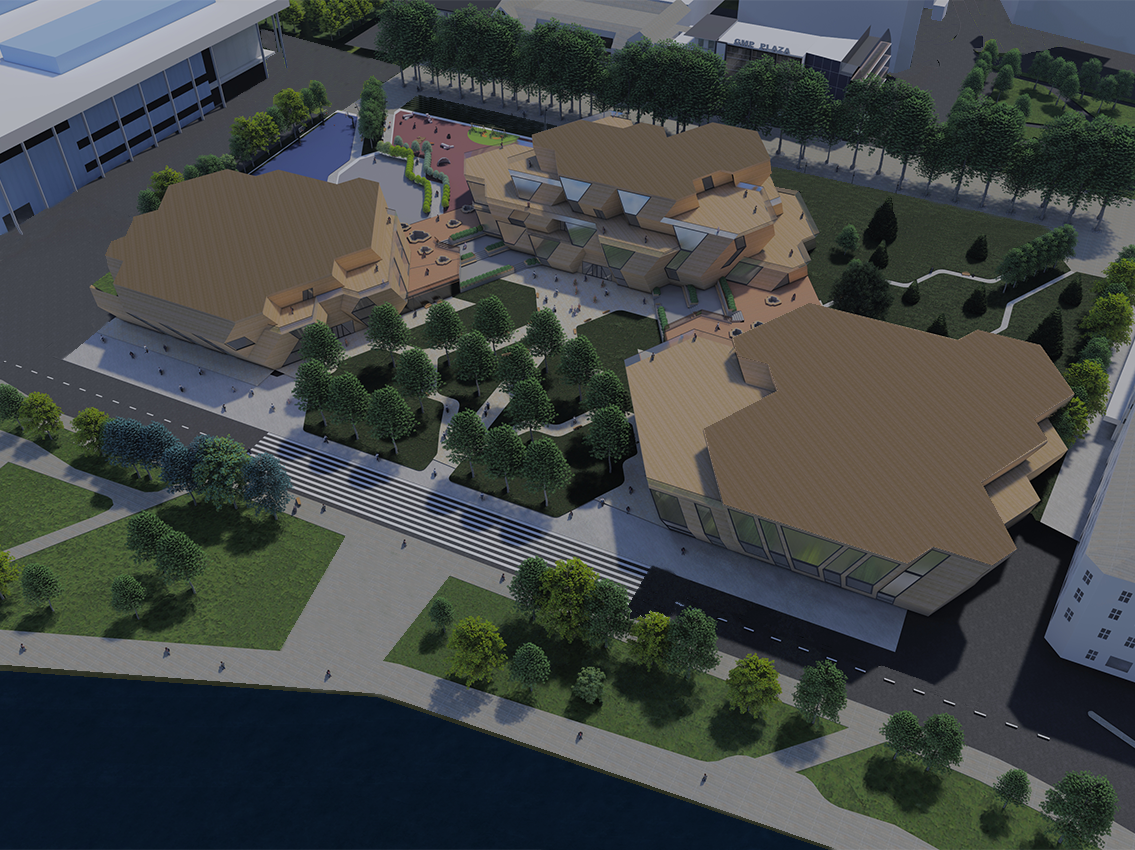
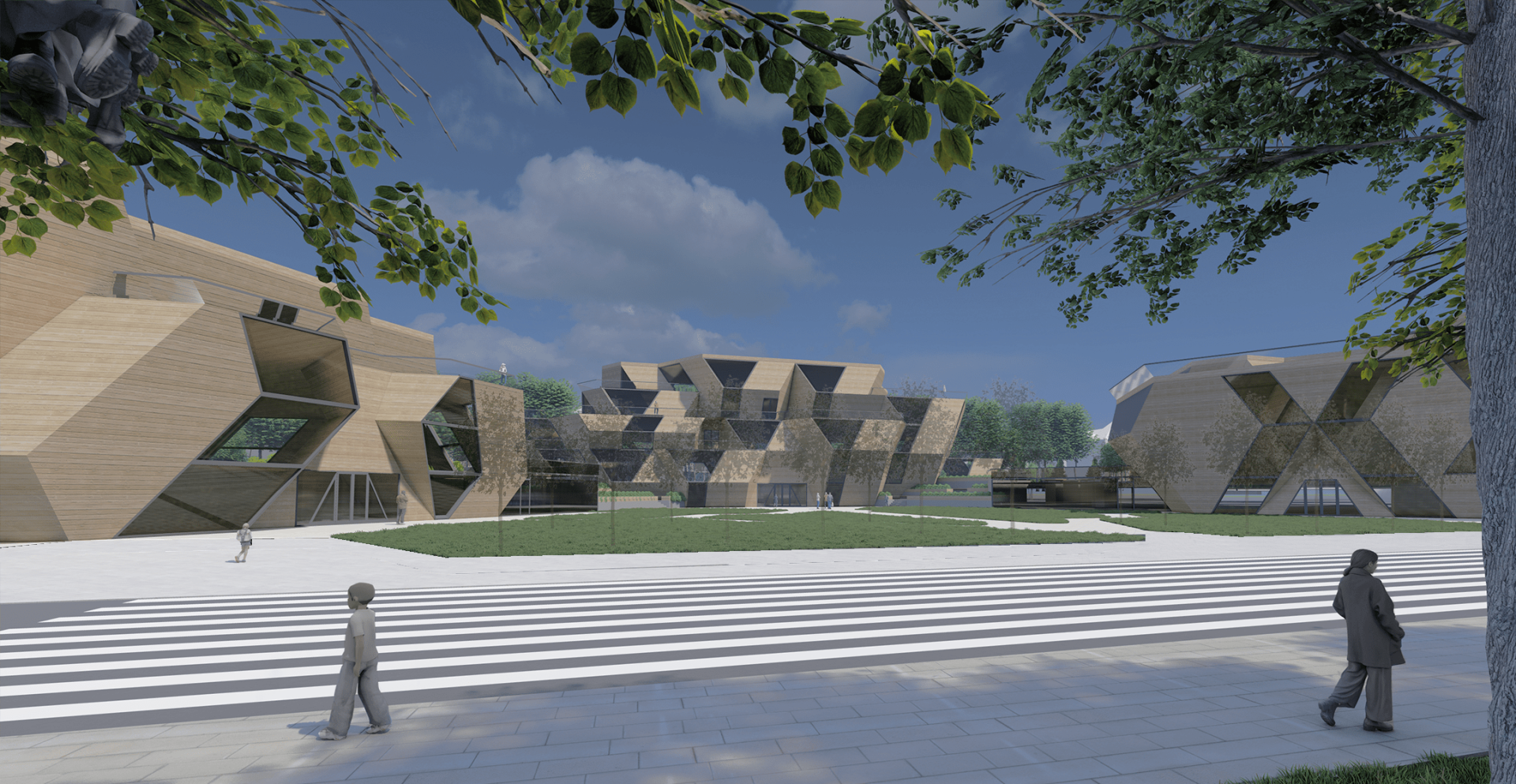
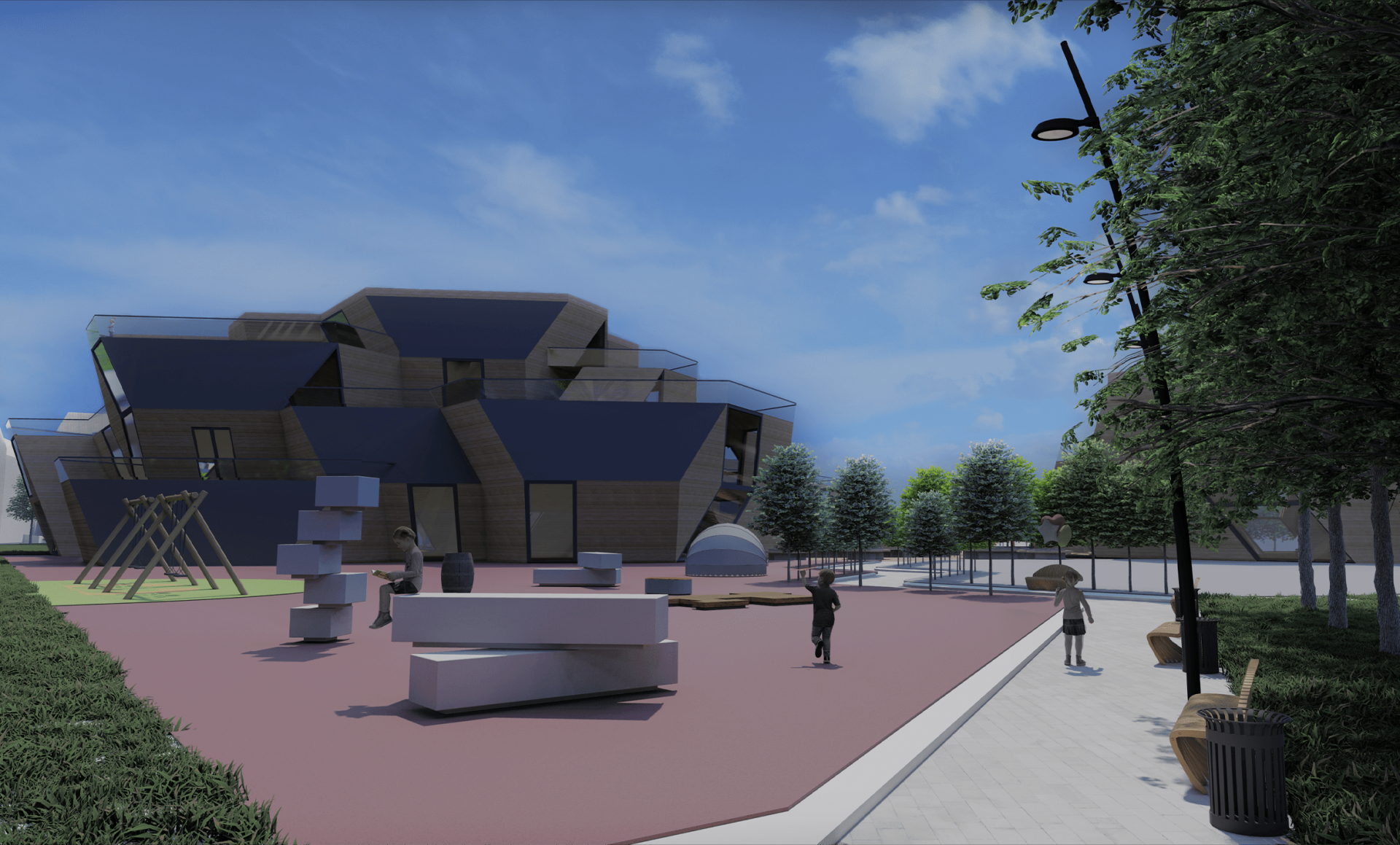
Süku is a new generation Cultural center that provides new ways of experiencing culture in open and accessible ways. Located in the urban city center of Tartu, Estonia, it brings people together to meet and share cultural experiences. This adds a new cultural layer to already existing historic and commercial buildings in the surrounding area for people who want to have possibilities to fill their free time with value. A new kind of cultural center requires a new architecture that would support its values. Therefore, the Center is not one big mall-like box, but it is divided into three main functions: library, art gallery, and concert hall. Three buildings, altough separate, are still sharing spaces on the first floor to ensure easy circulation and multiple entrances cretes flow of people walking in and through the buildings. Therefore, converting the currently underused Tartu Central park to be filled with recreational activities outdoors and cultural activities indoors. Indoor functions can be continued in the outdoor spaces and terraces. The idea of an open street park for everyone persists in our interior. Our buildings have parts open for everyone that do not oblige to use it´s functions, but rather work as living rooms where you can just come and be. However once already entered, the builing submerges the visitors into all that is happening inside and thus even the ones not so culturally active will feel that home and be more eager to know more and participate.
Key objectives for sustainability
Carbon-neutral construction is based on wooden architecture and sustainable design. Today the clt production factories are still producing waste sheets that are normally considered too small to be used in buildng sector. Our project aims to reuse the waste of the factories as much as possible. For example, a wall can be assembled from numerous smaller clt panels. The general aim is to build with zero waste, so all the elements of the building take into account the standard measurements of factory-produced clt panels and the waste. Additionally we tested our buildings´ 3d model in a sunburn analysis to determine where our windows should be fitted to ensure the energy efficiency of the building. Our shape creates surfaces with up-and-down-facing parts. Parts facing upwards are fitted identically to the angle of the solar panels. Parts facing downwards protect the interior from the redundant direct light. Furthermore all the excess energy coming from the cafes is reused as heating power in other interior spaces so nothing goes to waste.
Our modular concept is also notable. We decided to experiment with a new concept of modularity. Instead of simply stacking prefabricated ready-made spatial boxes on top of eachother, our modules can be integrated into each other which allows more flexibility during the creation process of the buildings´ facade and space. In the end, the whole building still consists of the same repetitive elements to ensure efficient production.
Key objectives for aesthetics and quality
Our project aims to create an understanding of new possibilities of timber architecture. We believe that modern timber architecture neither means that it has to look like a traditional rural cabin nor that it has to be a copy of a reinforced concrete building.
Instead of building in traditional 90 degrees we decided to use tetrahedron grid which nevertheless encompasses the orthogonal grid but also sets a base for the new aesthetics. The new grid allows to create flexible spaces with different levels of openness. The spaces are not traditional boring rectangles, they provide a new kind of spatial experience. Furthermore it also transforms the facade into interesting play of forms, thus being a dominant eye catcher in the city center.The clt constructive panels work simultaneously as facade, columns, spatial dividers and integrated furniture so their timber surfaces are left exposed to the interior, enveloping visitors into wooden looks and smell that are still so rare in public buildings. We believe that using timber together with new forms provide a good platform for redefining what is cultural center, bringing it closer to peoples´ hearts.
Key objectives for inclusion
The idea of a living room is that you can be indoors without utilizing its primary functions. Currently, there are a lot of people who are either unintrested in culture or do not think they have enough knowledge to utilize it. The concept of our building is to create an environment where everyone passing by would feel welcomed. Therefore, if an individual does not necessarily plan to go to the exhibition, he can still enter and later decide whether there is anything he wants to do in the particular building. The philosophy is - if an individual is in the environment where he is surrounded by culture, it is inevitable for the interest to spark. Living room creates a feeling of being “your place” or your "acquaintance". The place, where you are no longer a stranger, as it is your cultural center, where you have the right to stay and are welcomed to do so.
Innovative character
On average, local cultural centers in Estonia are Stalinist houses scattered in different parts of cities that are underconsumed by ordinary people. It is innovative for Tartu to plan to build such a large center in the heart of the city as it has a potential to bring people closer to culture and also make it a target destination for tourists. Our innovation lies in the way we approached the ddivision of the park and placement of the functions within it. Our projects connects the existing green area and new body of the cultural center to create a working organism, where buildings and parks function as one entity. Our project takes into account the presence of park and its importance to the locals, respectfully we understand that at the current state of events it is a non-functioning park that is unfortunately, used for nothing more but a short walk, but nevertheless is seen as an important green area in the city center.