Rural Ranaissance
Basic information
Project Title
Full project title
Category
Project Description
Rural Renaissance proposes an alternative strategy for resilient development, which calls for a revival of moral values, cooperation, tolerance, solidarity and restoration of environment. Rural Renaissance argues against clichés associated with the Slovak countryside, i.e. that it is old-fashioned, powerless and backward-looking and reintroduces it as a place full of potential and new opportunities, where people are able to exercise the right to maintain their locality in a democratic fashion.
Project Region
EU Programme or fund
Description of the project
Summary
Alike in other European countries, Slovak rural regions suffer from high unemployment rate, emigration of educated and skilled generation, lack of entrepreneurial activities, and depopulation of the villages on behalf of rapid urbanisation and suburbanisation. Regional inequities and long-term unemployment in Slovakia are among the highest in the OECD and 20.5% of the population at risk of poverty.
To rebalance this situation, the research-design project, the so-called Rural Renaissance, proposes an alternative strategy for resilient development, which calls for a revival of moral values, cooperation, tolerance, solidarity and restoration of environment. Rural Renaissance argues against clichés associated with the Slovak countryside, i.e. that it is old-fashioned, powerless and backward-looking and reintroduces it as a place full of potential and new opportunities, where people are able to exercise the right to maintain their locality in a resilient and democratic fashion.
Rural Renaissance gathers the lessons from the past that rural communities have taught us in order to plan a more sustainable future. The aim is to recover and give value to knowledge, which has been built up over many centuries, and which has been dying away for the sake of a profit-driven development.
The project is manifested on an example of one particular village- Sol. However, it could be adopted by municipalities and local communities in a variety of locations and inform local vision in accord with local potential.
The project Rural Renaissance was developed as part of the author’s study at the University of Cambridge and consists of a comprehensive Thesis and a design proposal.
Key objectives for sustainability
Rural Renaissance follows principles, that aim to bring a holistic solutions for sustainable countryside. These principles were developed in line with the EU sustainable goals and focus on 10 main areas: Identity, Transport, Local economy, Local materials, Clean water, Productive land, Inclusive community and culture, Educated countryside, Healthy countryside and Clean Countryside.
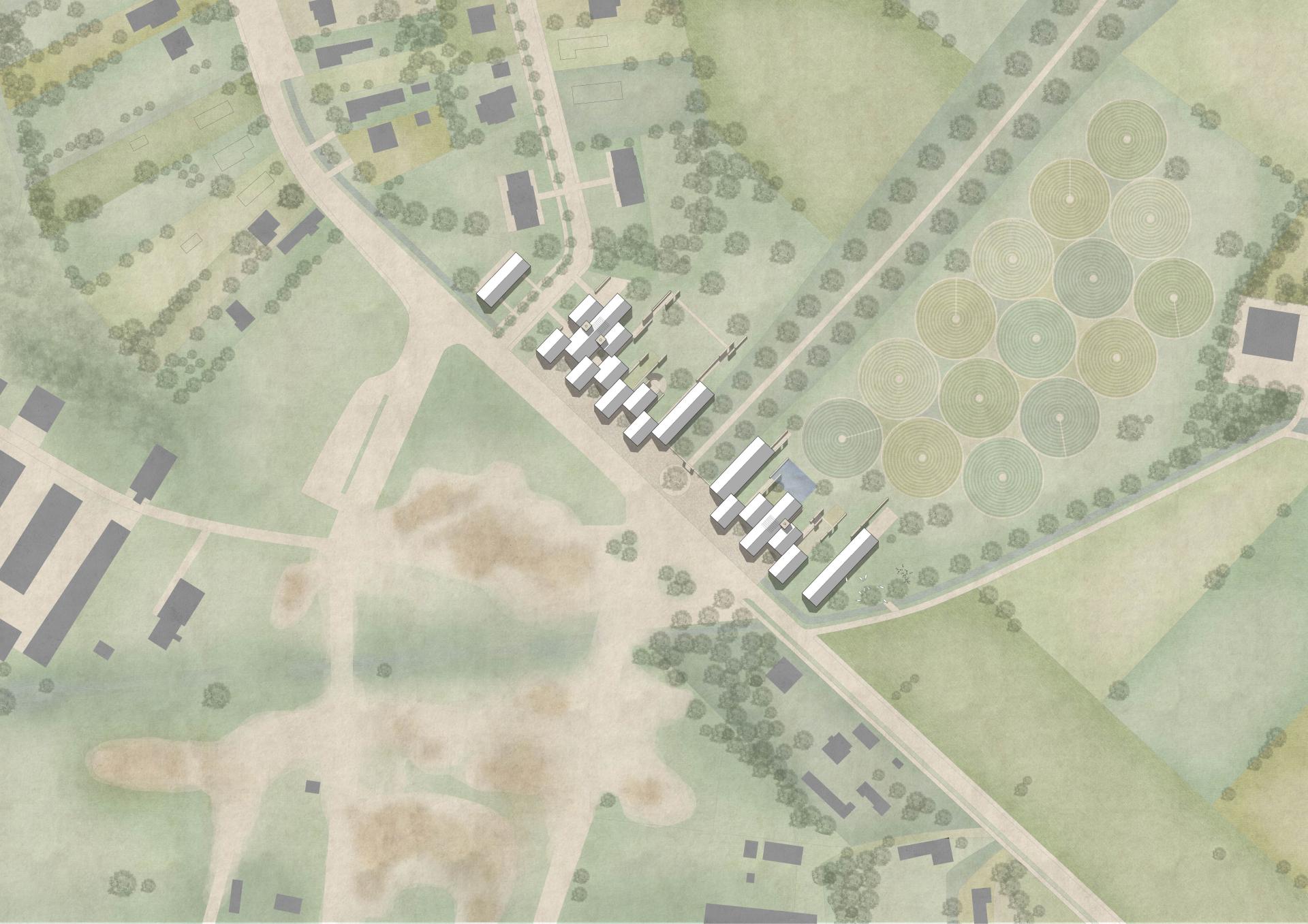
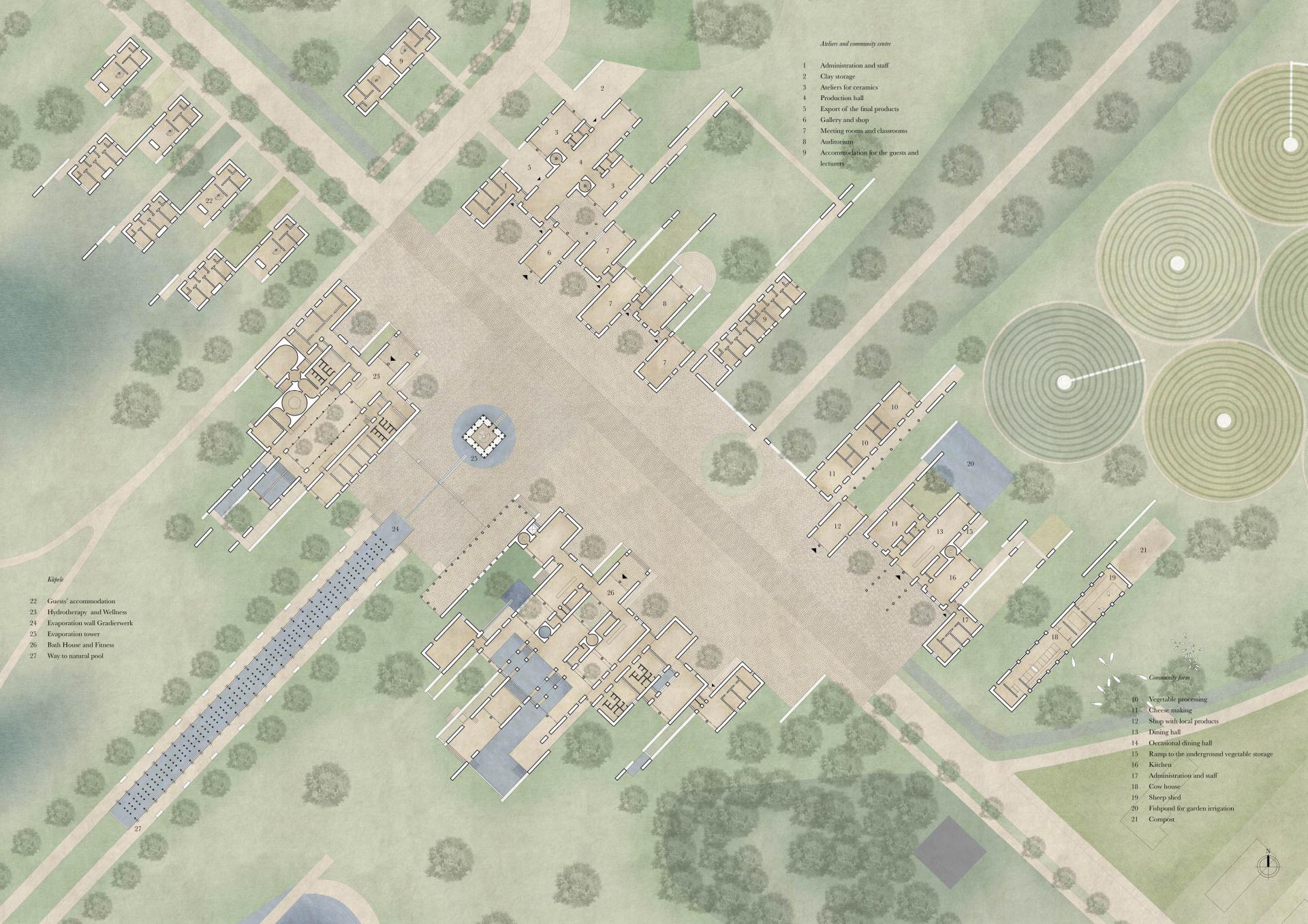
The principles of sustainability are manifested in four interlinked projects, run as the collective facilities of the local community: a farm, a spa, a community centre, and workshop spaces with ateliers. Complex development is planned to grow incrementally, together with improvements in the economic and social situation of the municipality.
1. Phase: Education and work
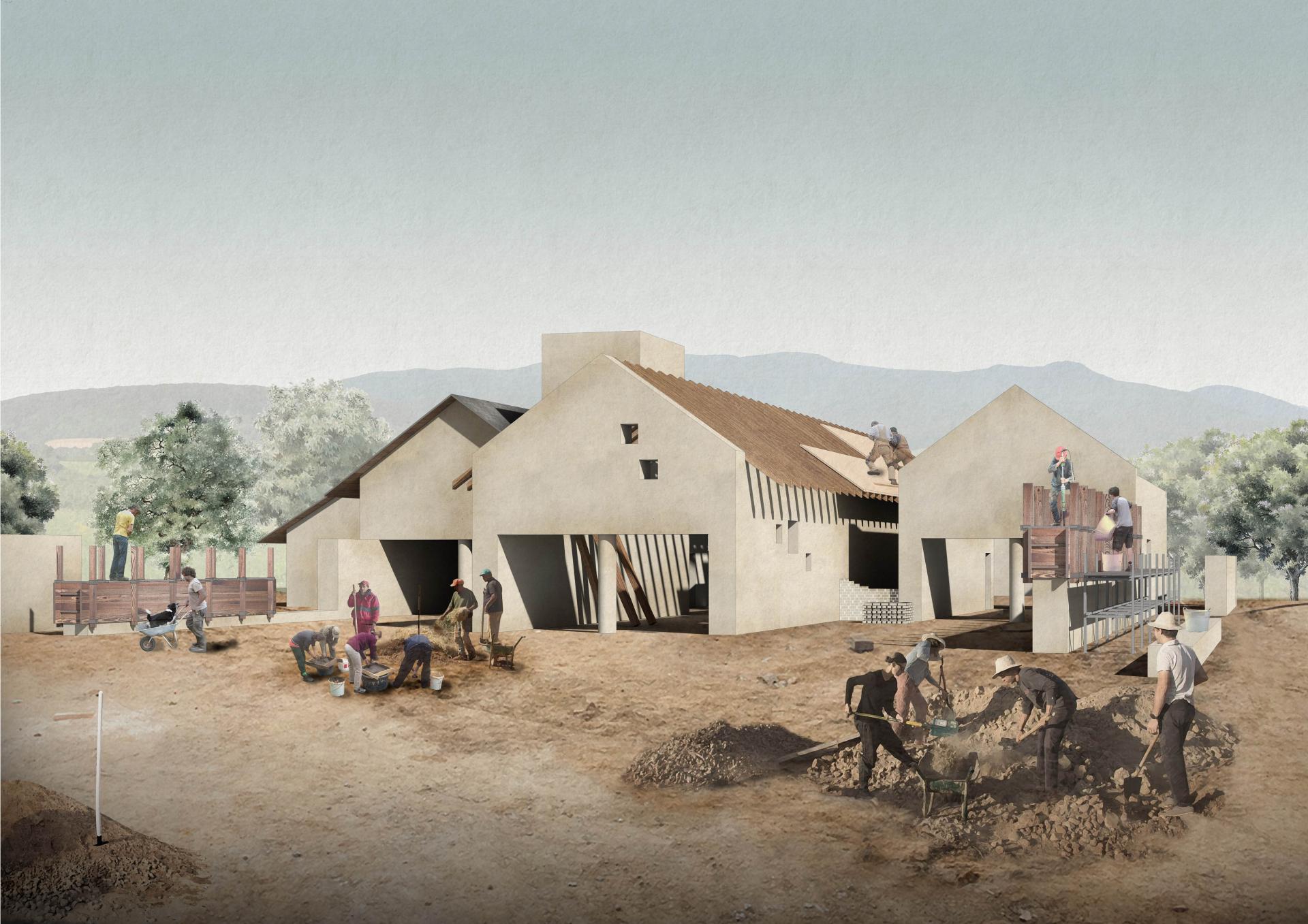
In order to restart the development, the municipality establishes a social enterprise that will give jobs to the unemployed. The enterprise will start the business with conducting simple construction works, and later, it will be responsible for erecting a new community centre with workshops and production spaces – primary for clay products such as earth-compressed blocks, plaster and ceramics.
2. Phase: Ecological agriculture
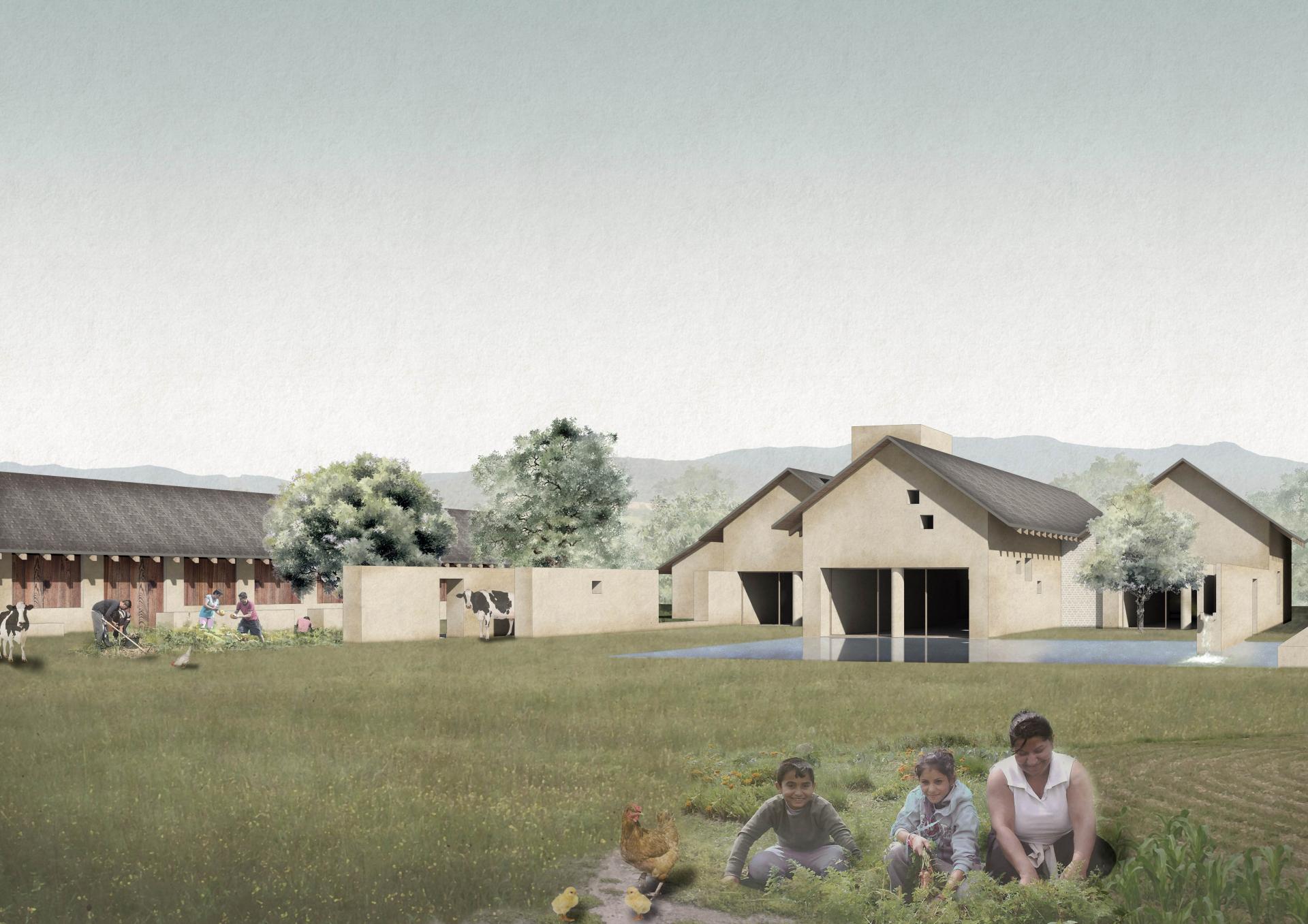
The village firm extends the scope of its portfolio by the products from a new ecological farm. Unsustainable agricultural production represented by the existent large-scale farm will be gradually replaced by multiple small –to medium-scale agro-ecosystems, supplying the local products. Waste building materials from the dismantled farm will be used for broad infrastructure works in the region.
3. Phase: Environment
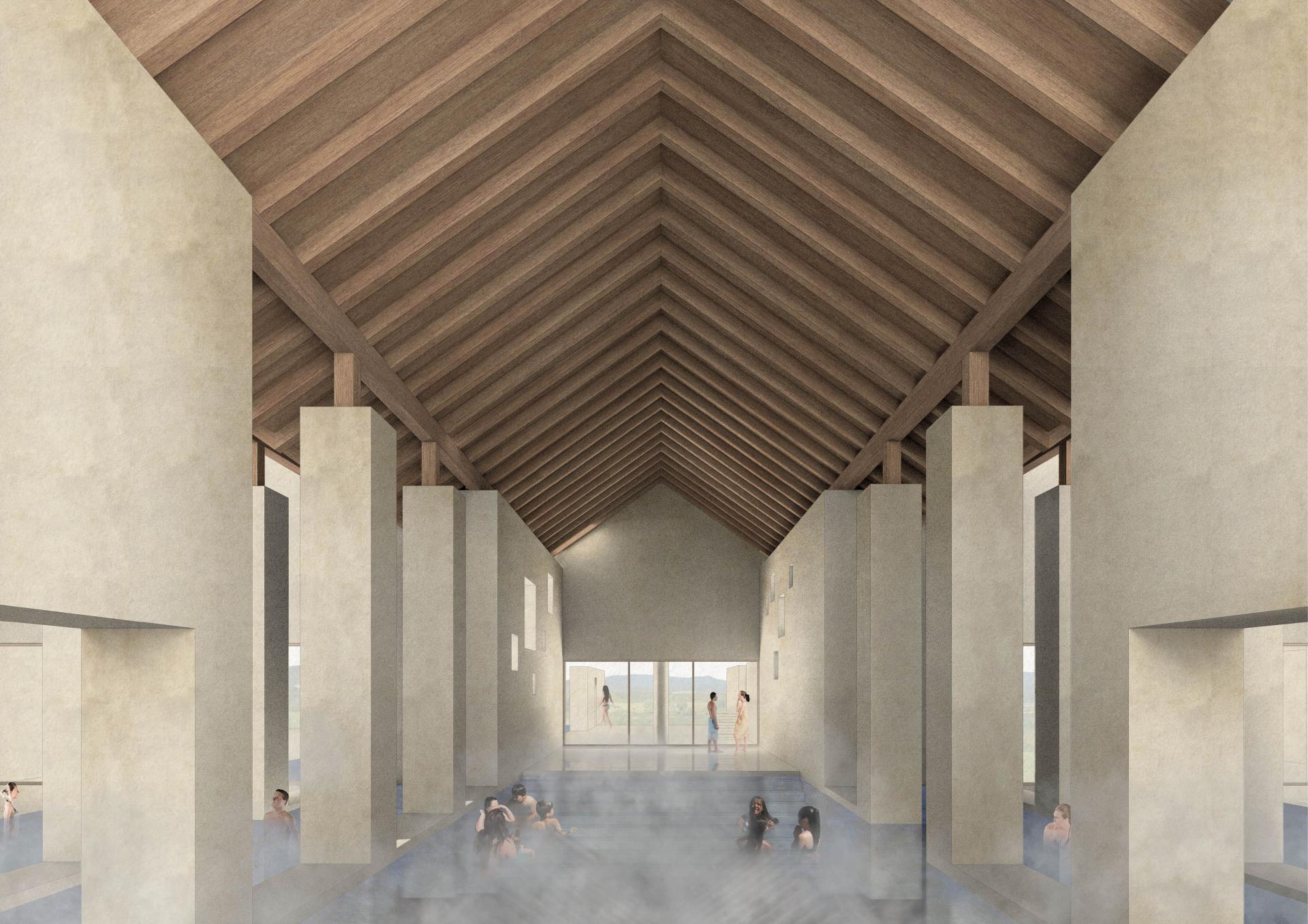
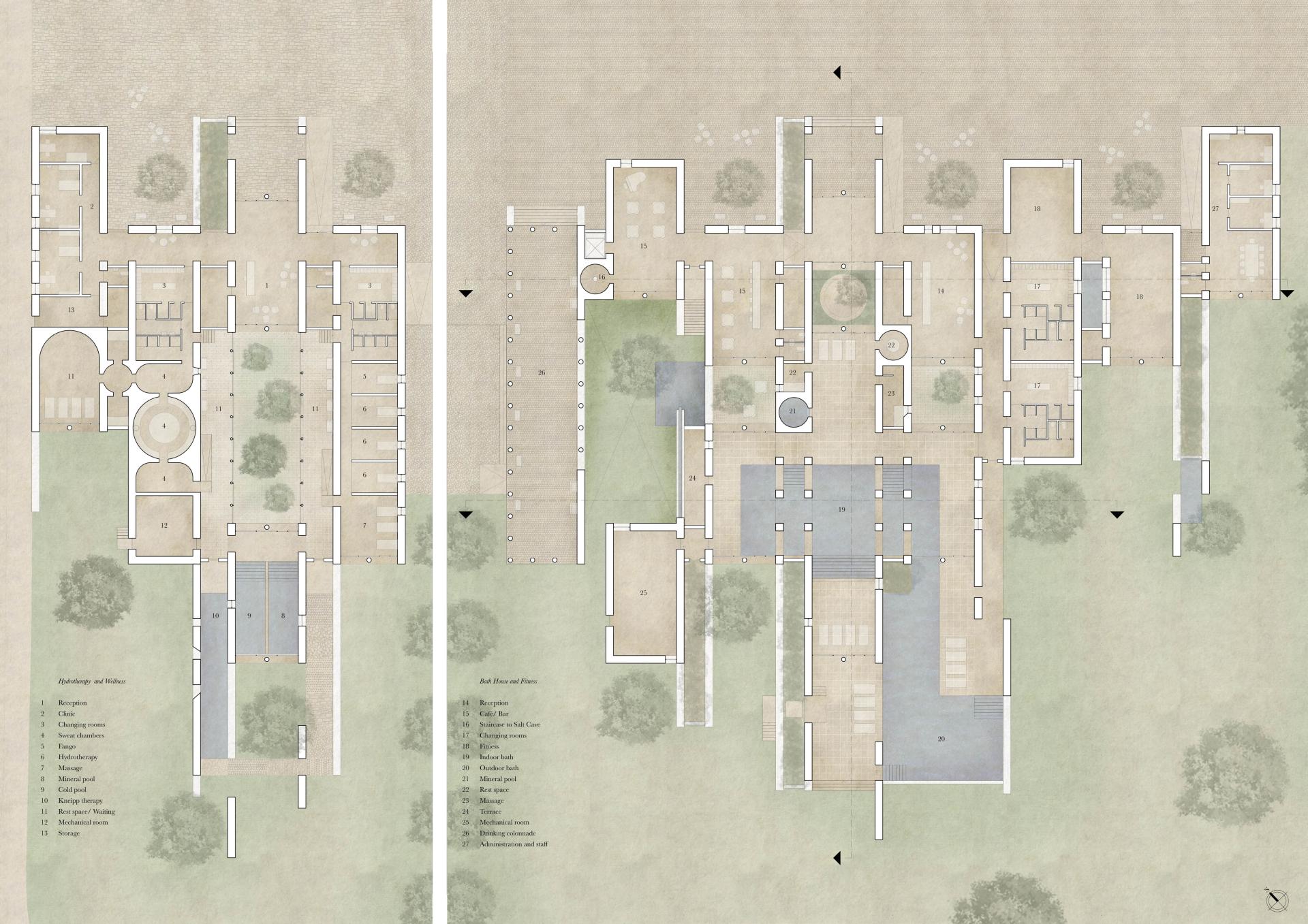
The last project – the small medicinal baths will utilise local salt water for the therapeutic purposes. The deteriorated site of a former farm will be transformed into a Wetland Park, which will catalyse the region-wide ecological infrastructure planned to provide multiple ecosystem services, including storm-water management, water cleansing and recovery of native habitats.
Key objectives for aesthetics and quality
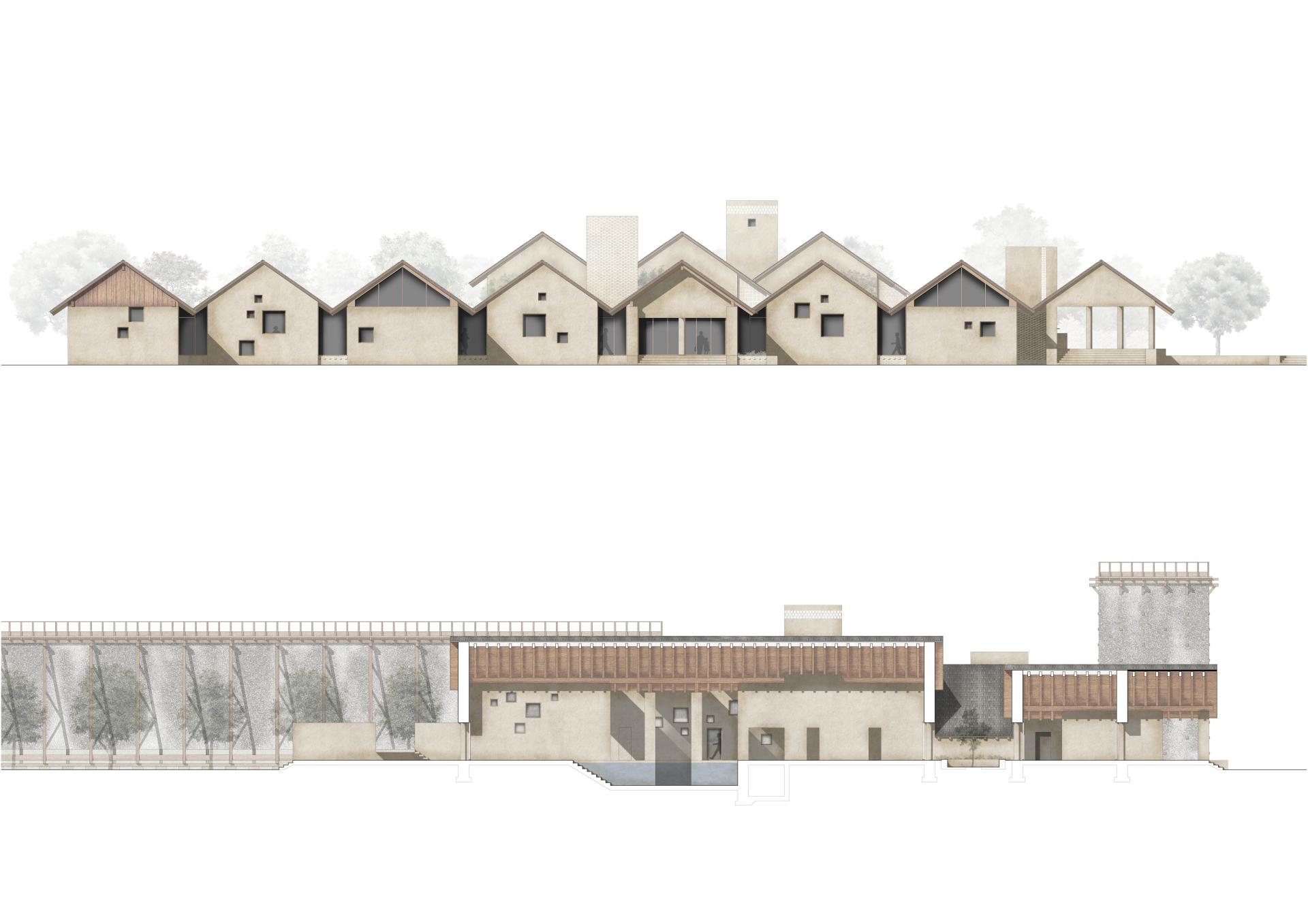
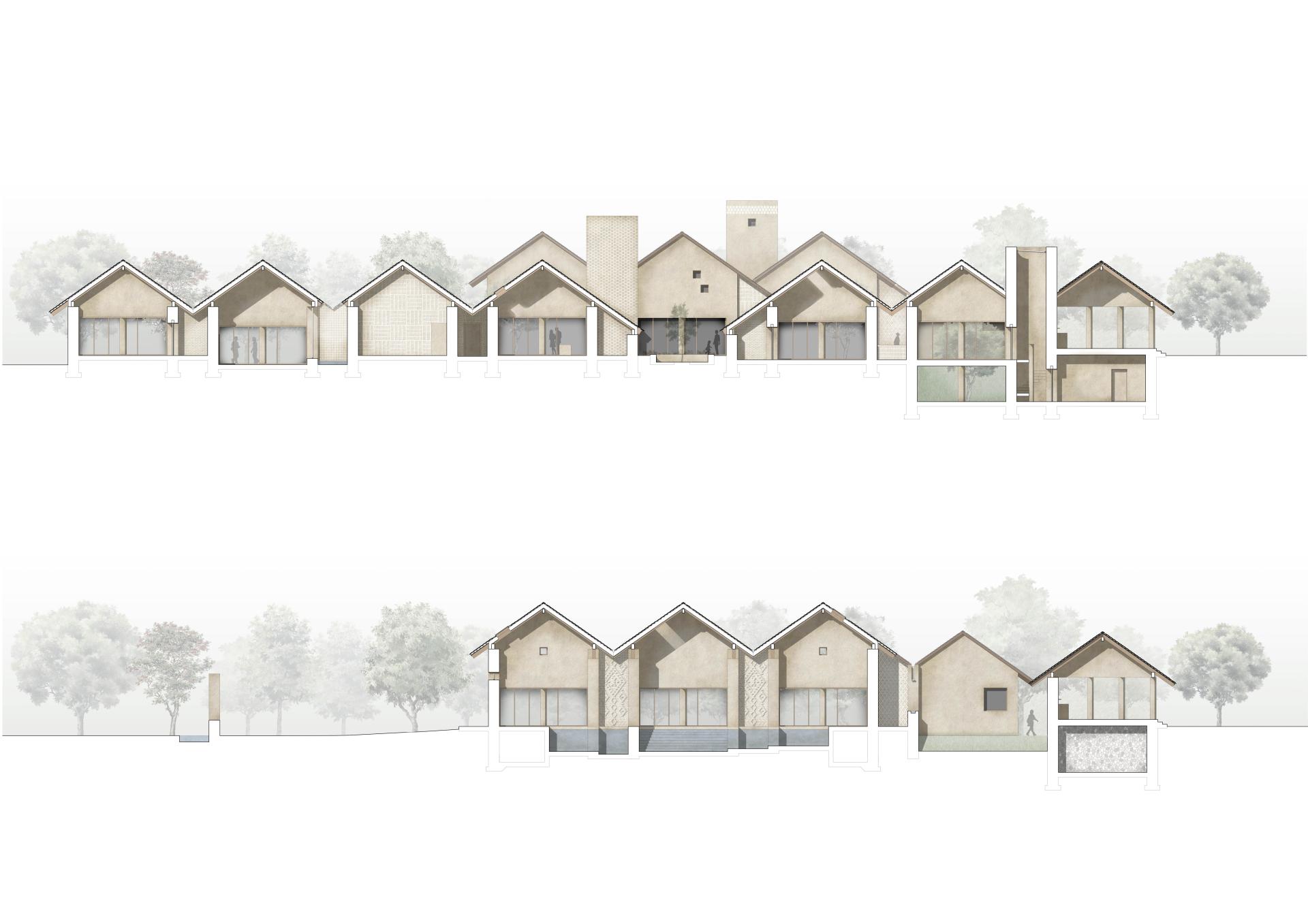
Architecture of all new proposals embraces knowledge of Slovak vernacular construction and translates it into contemporary building norms and aesthetics. Locally sourced earth is used as the main building material. The load-bearing rammed-earth walls are supplemented by a secondary layer of walls from the compressed earth blocks. The buildings are covered with an expressive wooden roof, which unifies different functions below. Apart from its positive ecological and health-promoting qualities, earth is material extremely suitable for the regions lagging behind, as it can be implemented almost anywhere, fully independent of lobbies, share prices and industrial price controls.
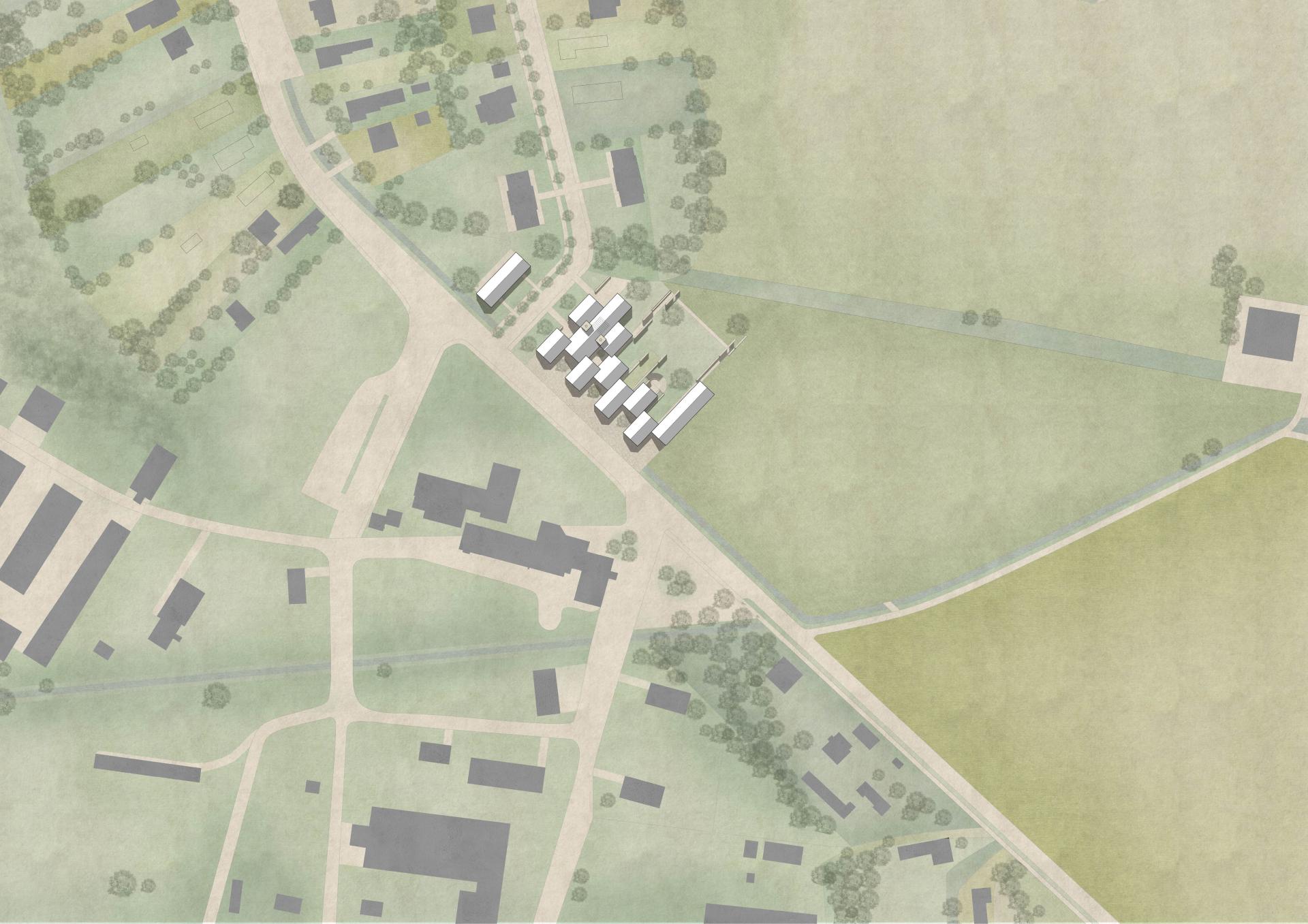
Linearity expressed in the layout refers to the urban principles of the Slovak settlements, which were predetermined by the former subdivision of land. Within this new proposed layout, the individual ‘houses’ are merged together to demonstrate the common values and cooperative ownership. The new community buildings are arranged around a public space, which can be used for informal meetings, cultural events, or local markets. Open public spaces and a street become again places of social gatherings, with the regulated traffic and surrounded by greenery.
Key objectives for inclusion
Slovakia is home to a population of more than 400 000 people with Roma origin, who, after the Hungarians, form the second largest Slovak minority. The Roma community has settled in 1070 out of 2890 municipalities, and while spread across the whole country, inhabits mainly the eastern and south-eastern regions. The better the spatial integration, the better the living standards of the Roma communities. Fourteen segregated settlements are, however, still without access to any infrastructure facilities, and some have only limited, or no access to drinking water, sewage, gas supply and a quality access road. In the village of Sol, Roma stand for almost half of the village population.
Jobs generated in the new proposal will be provided equally to everyone, regardless their age, gender or nationality. The community centre will be developed along with the school, so that it can deliver informal education and meaningful free-time activities for all generations all day. In order to avoid further spatial segregation of the Roma and non-Roma, the community centre will not be positioned in the Roma ghetto as has previously happened in the case of several municipalities. Rather it will become an inevitable part of village life, fostering the interaction of different social groups, who can learn together and share experiences. Like the community centre, all new housing should be located along the plan’s main axis and in the existing residential zone, filling the gaps and fostering reconstruction of empty properties.
Innovative character
The innovation of ‘Rural Renaissance’ does not stem from inventing new solutions, but rather from learning about time-proven sustainable local forms of production and consumption that are disappearing, in order to reapply them in a new, innovative manner. This involves mainly agricultural practices described below:
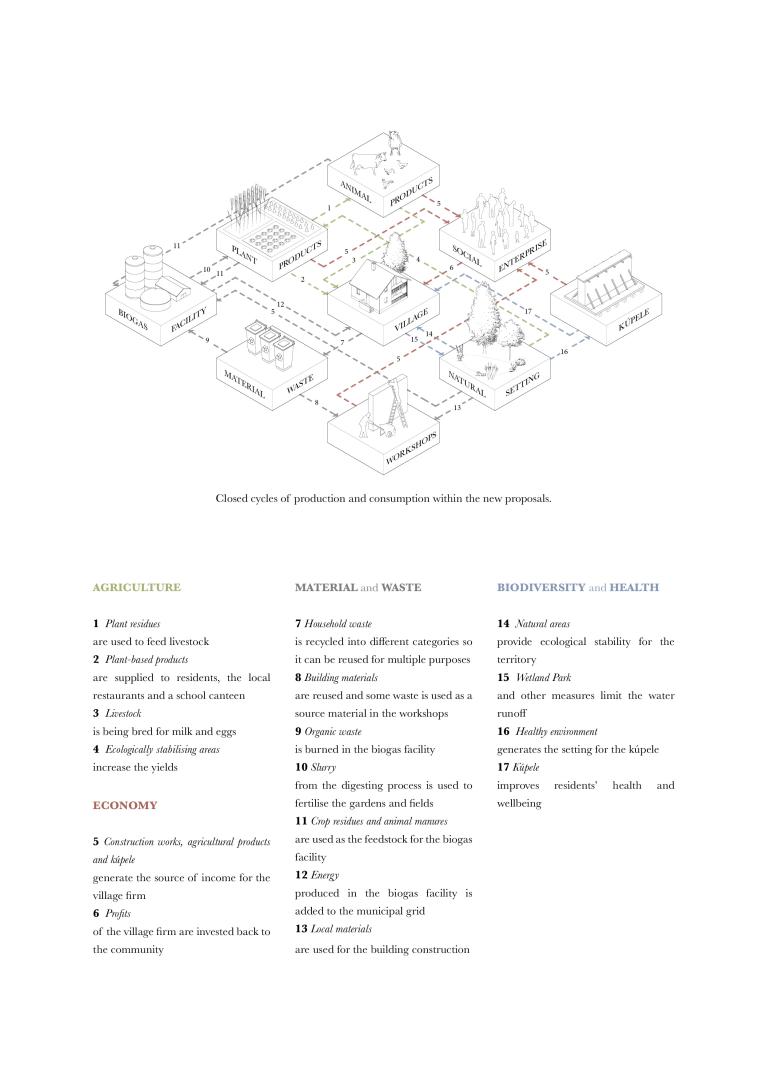
-The historic agricultural structures, that have been preserved in several localities (e.g. Hrinova) stood the test of time and still sustainably provide food and livelihood security for the local farmers. Richness in agrobiodiversity is the main characteristic of these areas. Livestock is integrated into farming to achieve synergies among system units and to increase the stability of the agro-ecosystem. Livestock is fed with crops and grass from the site, and animal manure rich in nutrients in turn improves crop production, and increases its quality.
-Between 35 and 60% of the population in Central and Eastern European countries like Slovakia still grow their own food (In contrast it is only 10% in Western Europe) . With a constantly increasing awareness of the impact of the global food chain and long-distance food transport, self-food production is becoming recognised rather as an already existing form of sustainability, that should be valued and protected.
Project also refers to a long tradition of medicinal bathing in Slovakia. Slovak healing spa resorts are defined as places where natural healing water, mud, gases and climate conditions are used for therapy. More than 1600 springs of mineral water make Slovakia one of the richest countries in this respect. In the second half of the 19th century and beginning of the 20th century, medicinal treatment with mineral water was provided in more than 120 localities, situated mainly in the rural areas. Almost 100 of them, however, gradually declined and nowadays there are only 25 localities in Slovakia where spas - as private enterprises - provide medicinal treatment in accordance with legal requirements.