Master in Design through New Materials
Basic information
Project Title
Full project title
Category
Project Description
The Master in Design through New Materials focuses on design and innovation, sustainability and creativity through new materials. An experimental and transdisciplinary course that values material design as a ground-breaking working field. Materials are at the core of innovation, generating impact in industry, on society and even on cultural values. Materials-driven innovation allows for new industries being developed, more sustainable solutions found and avantgarde creative aesthetics.
Project Region
EU Programme or fund
Description of the project
Summary
Everything around us are materials. Materials are now at the core of innovation, generating impact not only in industry, but on society and even cultural values. Materials are no longer defined at the end of the design process, but are part of the early design development. Moreover, consumers pay more attention to the materials they surround themselves with, they are far more literate and interested in materials innovation than before. Materials-driven innovation allows for new industries being developed, more sustainable solutions found, and more creative design processes put into place.
In this context, the Master's Degree in Design through New Materials aims to generate a new breed of ‘materials design specialists’ in transdisciplinary fields, providing a working knowledge and active mastery of new materials as agents in innovation. It joins rigorous and applied university knowledge in design through materials with industrial materials innovation, and it is held in Barcelona, home of social and technological innovation. With an international spirit, the programme includes one European Materials Exploration field trip at a selected city, up-to-date insights from relevant international materials-driven design experts, and a network of leading materials-related innovation hubs and industries.
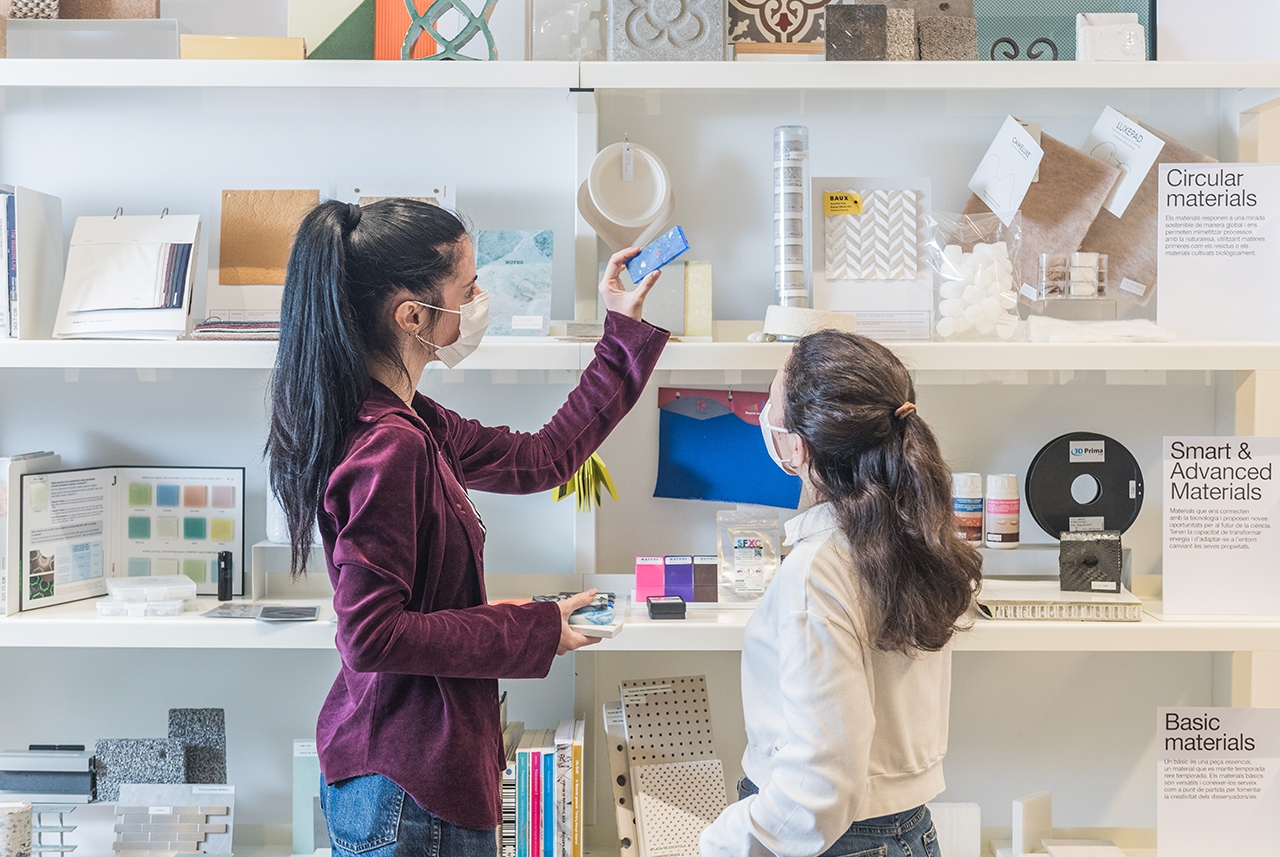
The contents and methodology of the Master's Degree in Design allow to experience both theory of materials and hands-on workshops; to envision innovation from research to industry, from speculative to applied projects, and to adopt a scientific, creative and multidisciplinary attitude on the field. The profesional orientation of the master allows artists, textile, interior and product designers, engineers or architects to produce a Master Project (on an entrepreneurial basis or for an industrial partner) that results in a new material, a new product collection, or a new architectural project with focus on materials, sustainability, innovation, and creative aesthetics.
Key objectives for sustainability
Studying this Master gives the student an interdisciplinary and conciliatory vision. The designer specialised in this field can develop a profession with a clear vision of present and future challenges. Three objectives of the Master are to generate a new breed of ‘materials design specialist’ professionals in transdisciplinary fields with innovation, sustainability and creative-aesthetics criteria and to train professionals in the development of projects with social, environmental and technological concerns. The structure of the Master in 8 Modules (see linked Course Brochure PDF) that cover different disciplines, and one final project, allows to specifically address sustainability in terms of critical perspective on environmental concerns, environmental footprint, life cycle analysis, new ways of manufacturing through digital, cultural and socioeconomic local environmental impact. The Master project consists on developing a materials-derived product and/or strategy with focus on both innovation and sustainability. It can be orientated and/or done in collaboration with an industrial partner. The sectors addressed: Automotive – Transportation | Circular economies - Cradle to cradle | City – Building | Health - Well-being | Home – Workspace | Accessories – Activewear | Packaging. Among the skill-set that students acquire, these are specific related to sustainability and more circular fabrication models: Be able to select and apply materials, technologies and manufacturing processes in design and the specific nature of the development processes | Be able to evaluate sustainability aspects and environmental impact of materials for industry application | Be able to experiment with new materials and related technologies in order to produce new material applications, new material developments or new material languages that fall within the circular economy | Be able to recognize the potential of new business models associated to the materials and technologies
Key objectives for aesthetics and quality
Two more objectives of the Master are to train professionals on new creative ways of making and communicating and to prepare professionals for the new opportunities arising from the consolidation of materials and related technologies as innovation boosters of new experiences and new built environments. A specific module is devoted to materials aesthetics, materials languages, new narratives for societal awareness on sustainability issues, including visual storytelling, as well as the sensory, emotional, tangible and intangible qualities of materials. Among the skill-set that students acquire, these are specific related to aesthetics and quality of experience: Acquire the skills for the ideation of applications of new materials, taking into consideration also the user experience and the aesthetics | Be able to generate families of colour and trim as well as materials languages applied to brand and market placement | Be able to generate a sound narrative and strategy in order to successfully position a material within the market or sector.
Key objectives for inclusion
One of the objectives of the Master is to train professionals in the development of projects not only with environmental concerns, but also social and cultural concerns. A specific module is devoted to understand materials in their context and the cultural and social aspects of materials, understanding that the new products and services derived from new materials have to be meaningful to a diversity of people. The Master also gathers all type of students from different and intersectional backgrounds and from different nationalities all over the world (Europe, Asia, America). Among the skill-set that students acquire, this is specific related to inclusion: Be able to analyse future socio-cultural scenarios and contextualise new materials in a global context.
Results in relation to category
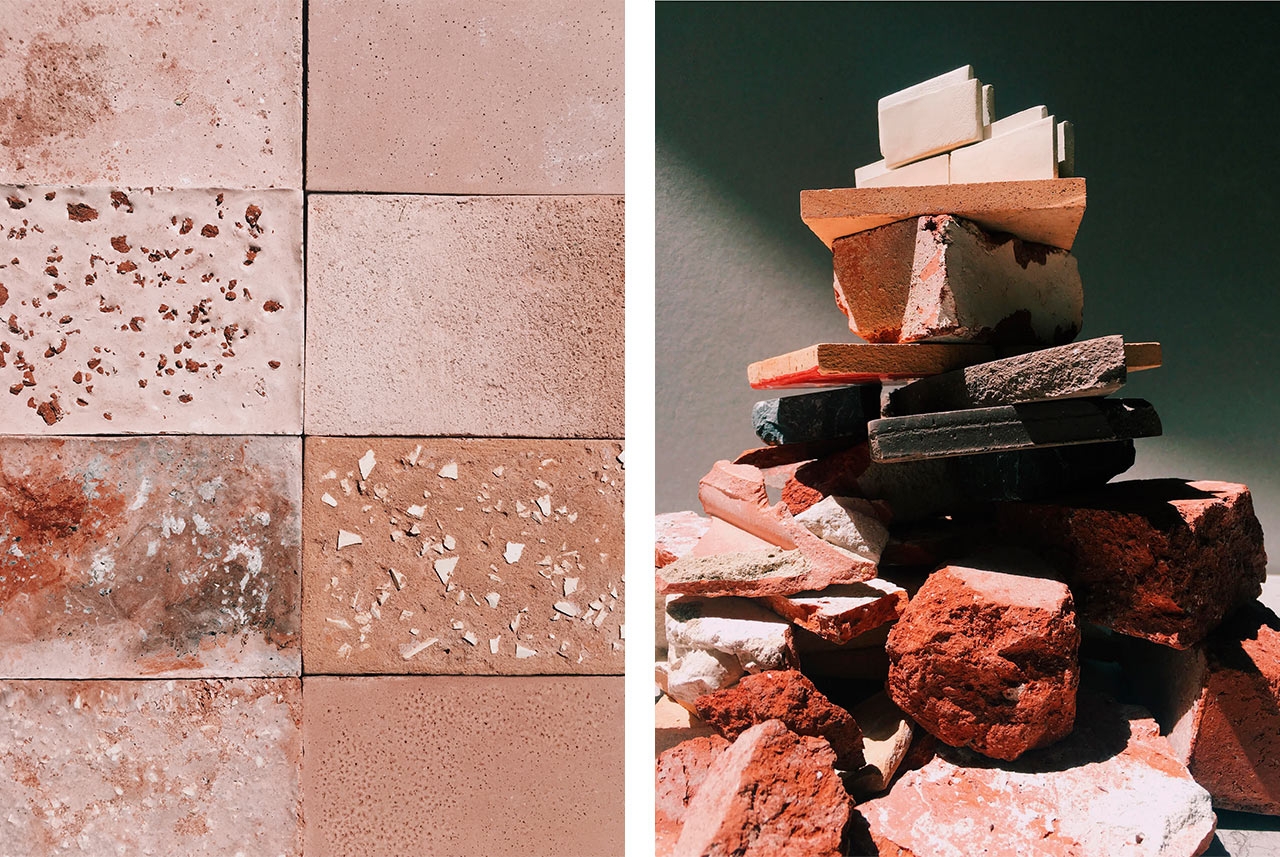
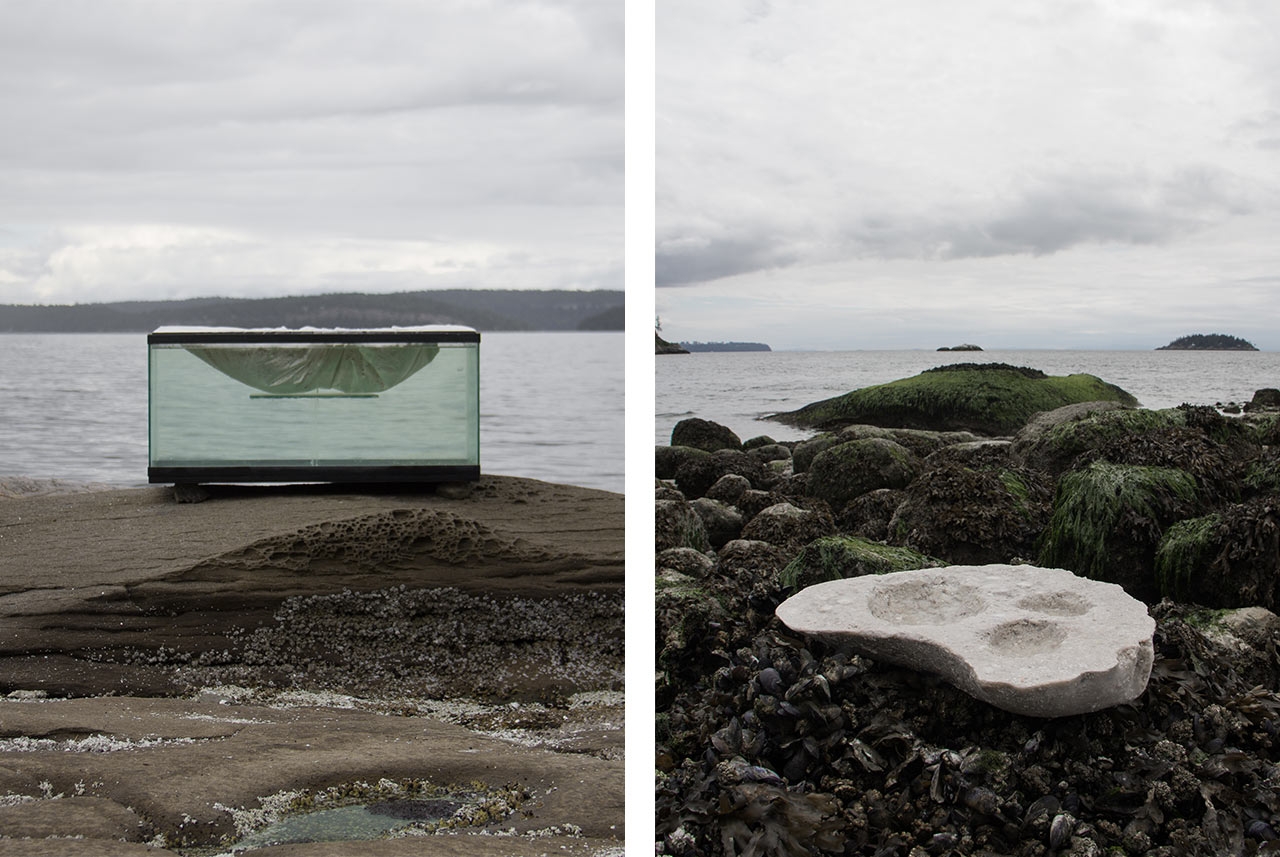
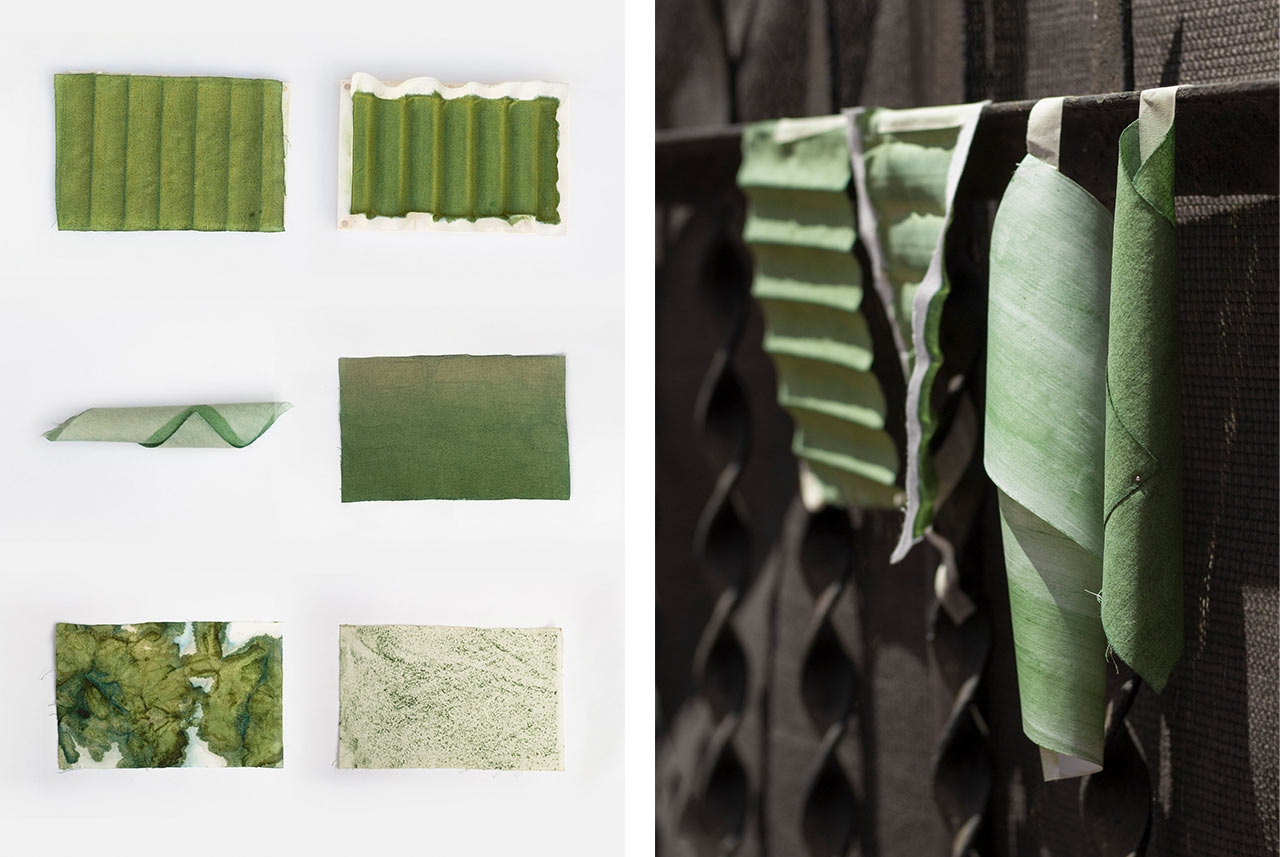
On one hand, the interdisciplinary background of the students. 43 students have been trained during the 3 editions of the Master, with backgrounds ranging from fine arts, architecture, product design, interior design, fashion design, design engineering, environmental sciences. This variety and diversity of backgrounds allows for the group to share peer to peer insights, ways of working and knowledge. On the other hand, their different cultural backgrounds, at international level, also brings in richness to this interdisciplinary education. In terms of career impact and new jobs, around 60% of them work as material designers, either having established a start up, pursuing an academic career, or as in house designers for various companies. In terms of Master project results, and categories, the Master has delivered 43 projects in different topics: From food waste to new materials and furniture; New slow manufacturing processes with local waste material, Bioplastics for the agricultural sector; New biodegradable cosmetic packagings, etc. Also, some of the projects have been shortlisted for the Green Product Award.
How Citizens benefit
For the Master project, students establish synergies at the early stage of their project with different local or international civic associations in order to make their project more meaningful and impactful: as examples, restaurants that generate food waste and the Barcelona platform for food waste reuse; construction sector and historical sites,… Also, the students establish collaborations with local craftsmen for the prototyping and development of their final project. The Master involves a final project exhibition, open to citizens. So, all in all, the Master generates an ecosystem of local civic and industrial associations, and craftsmen.
Innovative character
The world of materials has multidisciplinary character, involving transversal knowledge and practices, transcending geography and fusing the technological with the creative and the historical through interaction.
The Master has a future-forward and research-driven orientation. The local and international lecturers are from high level academic (some are PhD) and professional backgrounds (most of them are referents in the world of materials at international level), and come from different disciplines (design, biology, social sciences, etc). Also, the methodology is set so that there is always a hands-on workshop either in Elisava premises such as the scientific lab, or at other premises in Barcelona (Hangar wetlab, coudre studio, …) or at one or two European destinations.
The interdisciplinarity is also evident through its content structure (Scientific module, sustainability module – including biology, new digital processes, culture and context, languages and narratives, innovation,…). The Master has also benefited from the development of the Materials Designers Creative Europe programme, led by the Director of the Master.
In short, the Master is innovative for: its international interdisciplinary students; for its high-level international and interdisciplinary lecturers, for the variety and scope of the module knowledge contents; and for the final projects’ innovative quality and meaningful impact.