Llar Casa Bloc
Basic information
Project Title
Full project title
Category
Project Description
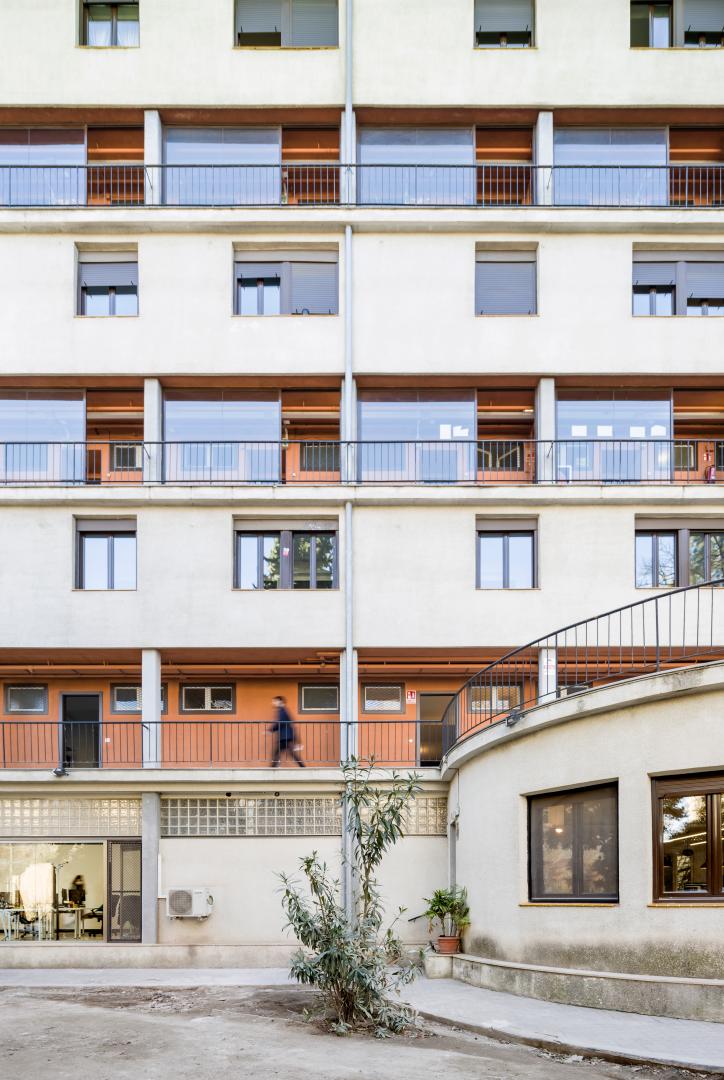
In 1934, a brilliant group of young Catalan architects known as GACTPAC devised, under the influence of the rationalist school of the Bauhaus, a social housing building that would end up being built in 1936 and receiving the name of Casa Bloc. The construction works got interrupted by the civil war, the dwellings never reached its original users and some parts were substantially altered. 80 years later, a social and architectural project was developed to give back to building its original spirit
Project Region
EU Programme or fund
Description of the project
Summary
During the Second Spanish Republic, the government of Catalonia promoted the project of Casa Bloc, a social housing for workers that would end up becoming a key building in the history of the city. With marked influences from constructivist residential architecture (a distant relative of Narkomfin), the constructive and compositional rigor of the Bauhaus and the perspective of Viennese social housing of that time, the group of architects from GACTPAC (Josep Lluís Sert, Josep Torres Clavé and Joan Baptista Subirana) managed to design a unique building in 1934, combining all the hygienist precepts of Rationalism with an innovative use of traditional materials and construction techniques. With the outbreak of the civil war, the construction works were paralyzed and part of the building was damaged, so that when the national side won the fight and took power of the block, they distributed the dwellings among their relatives and transformed floors one and two of the fifth block in a residence, undoing the original scheme. 80 years later, the Habitat3 foundation called a competition, with the collaboration of the Official Association of Architects of Catalonia (COAC), to give back the building its original spirit, installing livable and sustainable housing, seeking a balance between usability and respect for cultural heritage. Fàbric, a young studio from Barcelona was selected as the winner of the competition and was commissioned to develop the work. After a tough process of license issuing and construction works, the homes were completed in January 2021 and were handed over to their tenants, people assisted by social entities of the Third Sector Table and for people in a social emergency situation attended by social services of the Barcelona City Council.
Key objectives for sustainability
The main milestones of the project in terms of sustainability were the following:
1. Improve the building energy performance
2. Make tenants aware of the importance of having a responsible attitude in terms of energy consumption
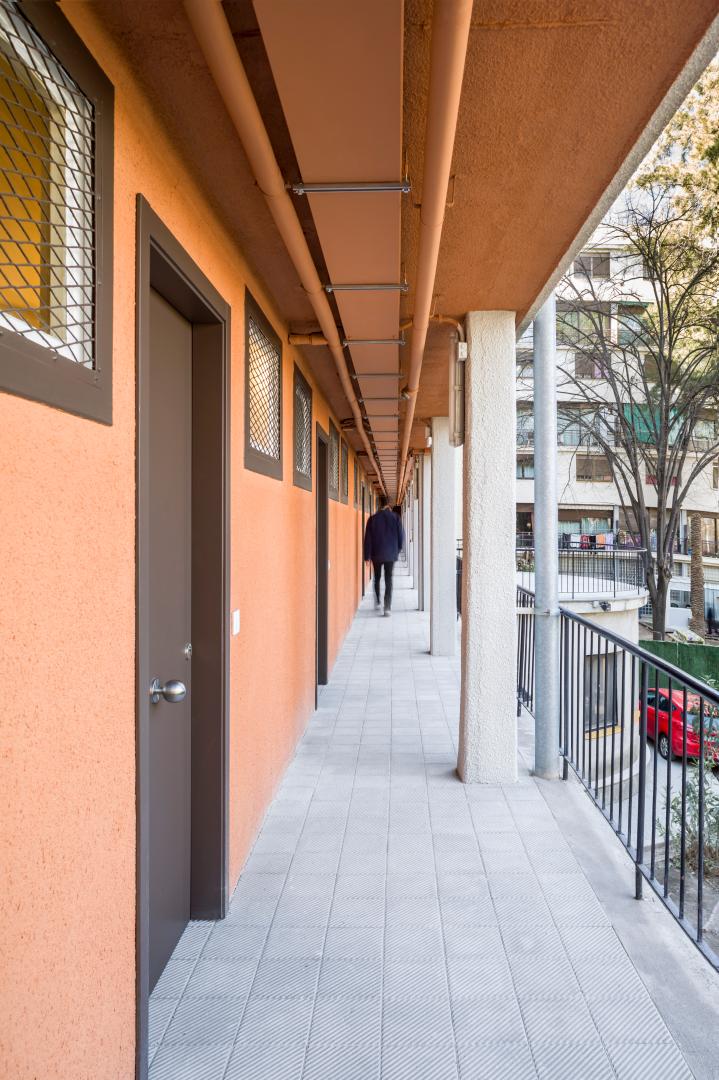
To achieve the first objective, we started from a thorough study of the energy behavior of the original building, taking with numerous samples on construction elements. A surprising discovery was found, where all the exterior walls (vertical and horizontal) already included an insulating layer of cork plate, a very innovative element for a 1936 construction, showing the degree of constructive knowledge that rationalist architects achieved. In second place, the post-construction modifications that had been carried out in the building were also assessed, and those that were considered as harming the original aesthetics but also the climatic behavior of the dwellings were eliminated. For example, the 1990's carpentries were removed from the walkway, in order to favor the original cross ventilation. And finally, the project drew from the premise that maintained the passing behavior on both floors, to guarantee ventilation and lighting on the two facades.
Regarding the awareness of a sustainable attitude, it must be said that the Habitat3 Foundation maintained it as a priority of the promotion at all times. For this reason, it was decided not only to use high energy efficiency technology (provided by Ariston and with the support of Fundación Naturgy), but also implement a monitoring system for all consumptions by Cellnex, which the user himself could control. To do this, measuring probes and easy-use tablets were installed in all homes, indicating consumptions, levels of CO2 inside, temperature or degree of humidity. This decision gave the ability to decide and control their consumption and comfort to users apparently unfamiliar with the subject.
Key objectives for aesthetics and quality
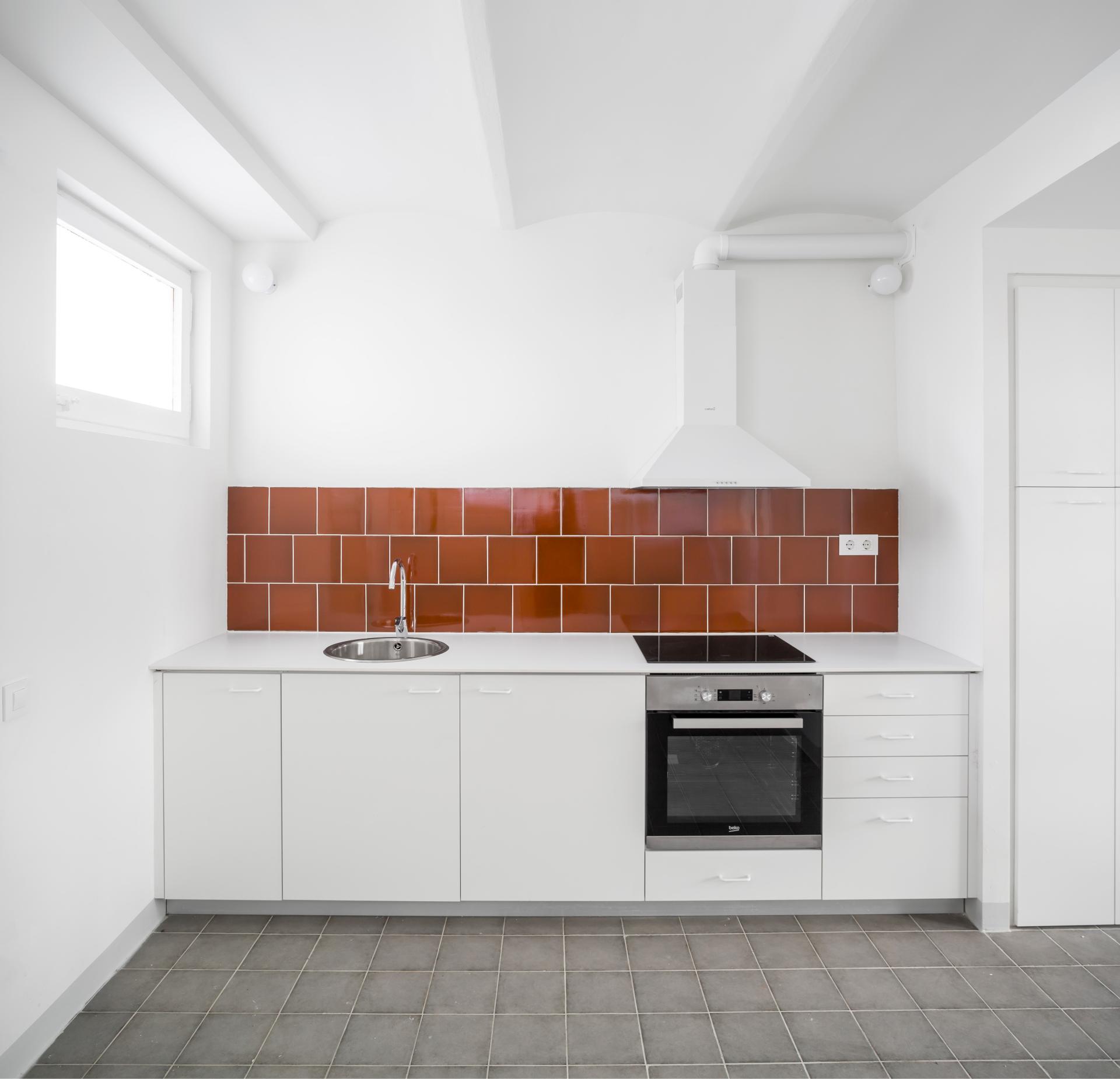
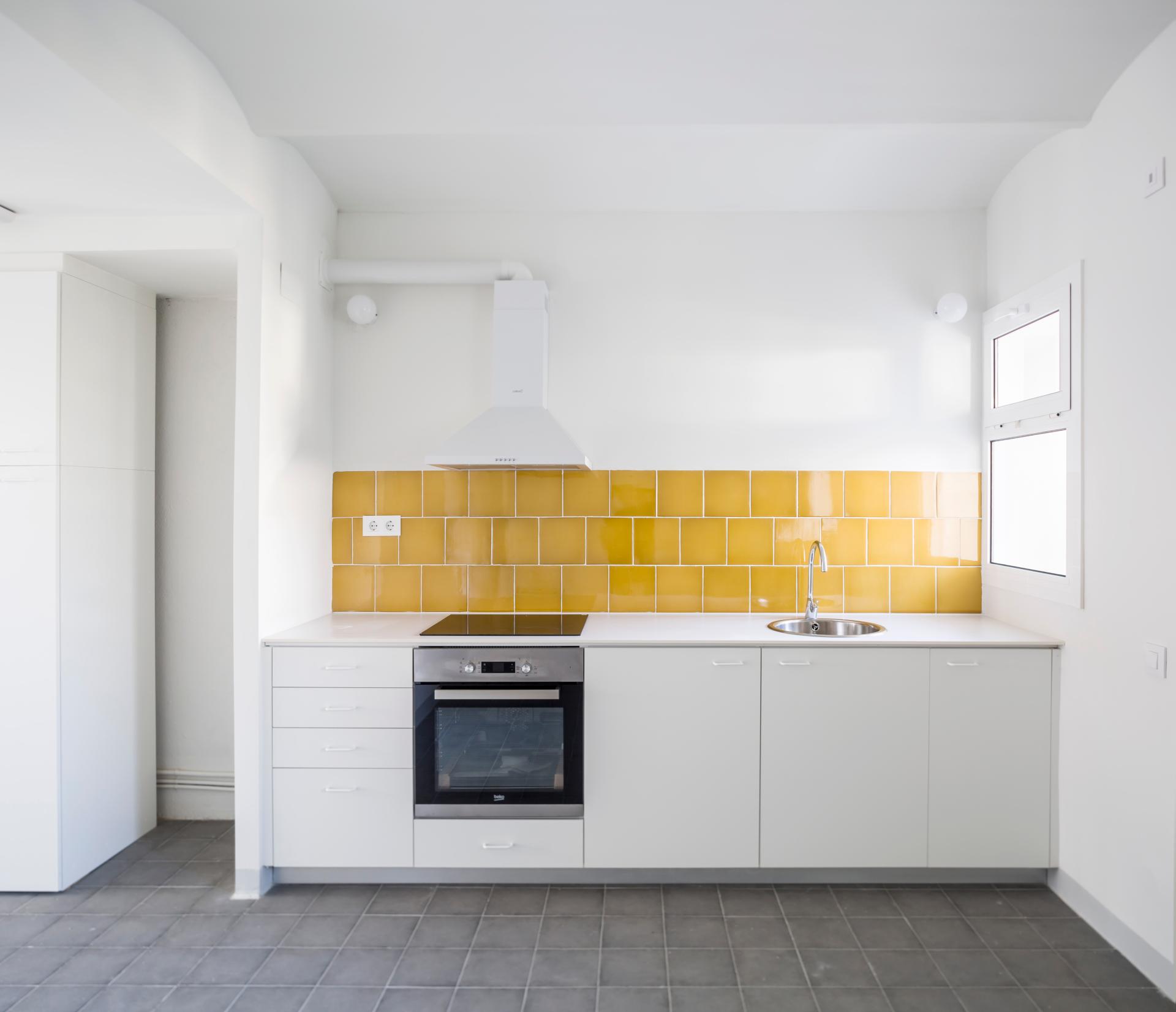
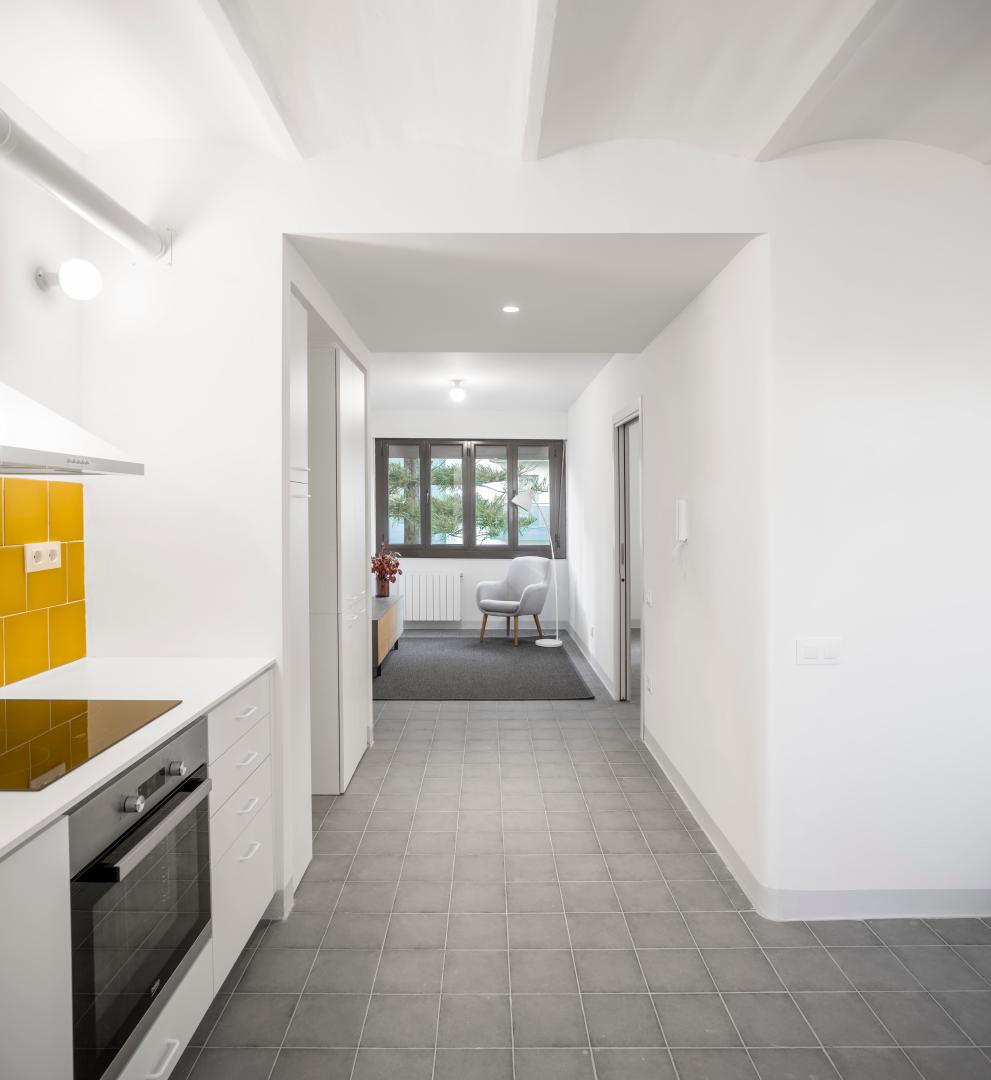
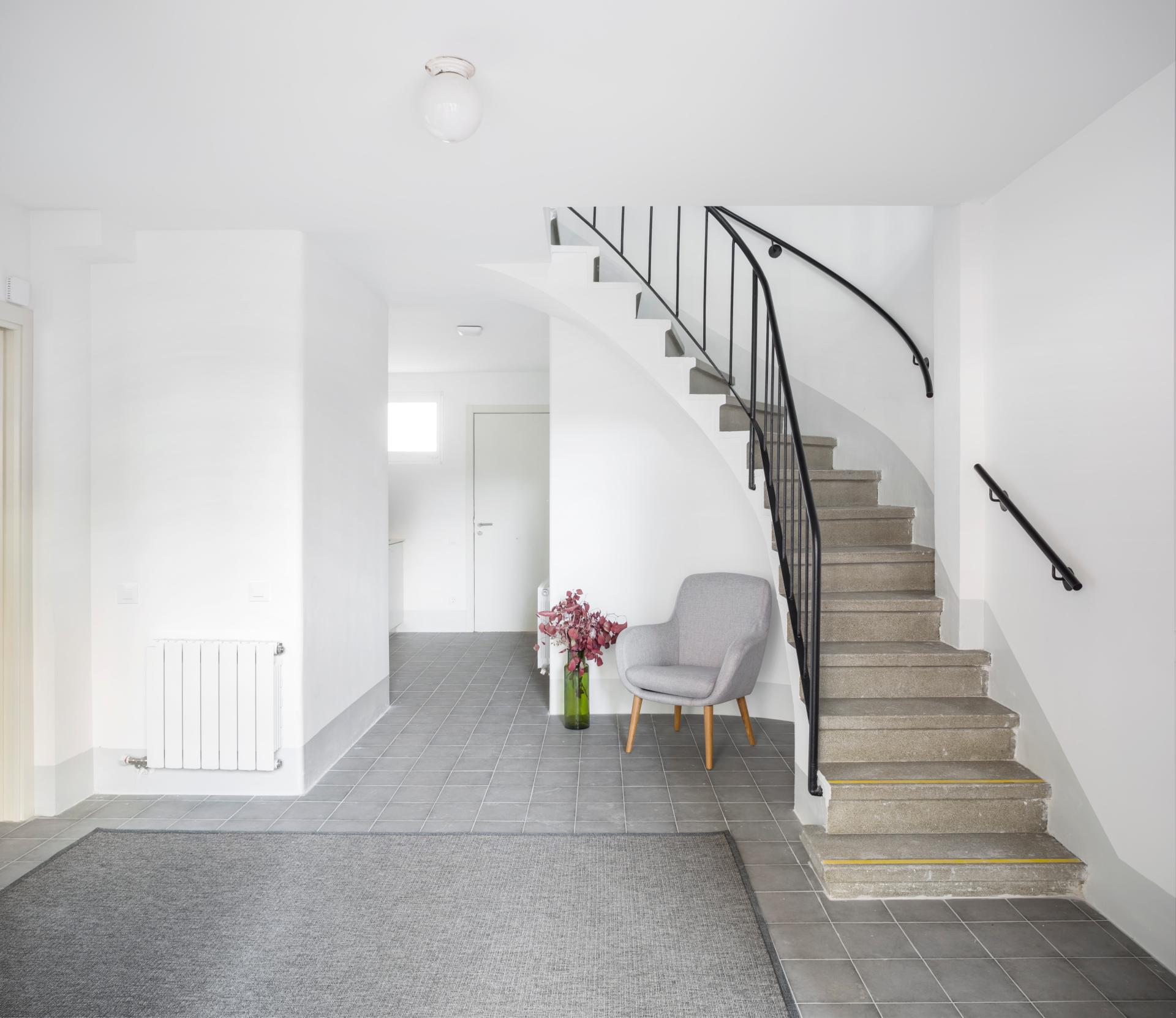
The Casa Bloc could be defined as a system formed by replicating a duplex housing unit, arranged in walkways in 5 blocks of 6 heights. It is an easily identifiable rational system, in which a series of elements stand out for their architectural value and originality. Given the richness of the system, the starting point of our proposal was clear: creating a simplex unit (as requested by the competition rules) using only elements already present in the original project: kitchens with a very similar operation to the original ones were used, same bathrooms (but moved to a place where they would not occupy a façade, now that technology allows it), a new semi-exterior walkway was created on the second floor to give access to the new homes... And with regard to the use of the materials, an intense work to recover the original elements was carried out, with the advice of the Barcelona Design Museum, given the recreation of a genuine floor they have refurbished (https://ajuntament.barcelona.cat/museudeldisseny/ca/exposicio/pis-museu-de-la-casa-bloc-habitatge-111). The source colors of the walls and baseboards were repainted (the same skirting system was used, a strip of plastic paint), a piece of flooring recreating the original was sought, existing lamps were reused ... It should be noted that the building had originally only two glazed ceramic materials, used for the kitchen top (burgundy) and for the window sills (yellow), which were recovered for the fronts of the kitchens on floors 1 and 2, respectively. This work of environmental recreation makes the project feel like a distant relative of the original, not mimicking it but trying to link to it as a show of respect.
Key objectives for inclusion
Llar Casa Bloc is a project promoted by the Habitat3 Foundation, who works to guarantee the right to housing for people in vulnerable situations, through the acquisition and rehabilitation of properties, real estate management and user monitoring.
People living in Casa Bloc dwellings are in a particularly vulnerable situation: they all come from emergency assistance or municipal social services, mainly because they lost their homes in eviction processes due to foreclosure or non-payment of rent. They can also be people cared for by social entities due to their special situation of fragility, requiring a home to ensure their autonomy and future.
All 17 families that have received their homes come from Barcelona City Council assistance services and various entities of the social sector. Among them, there we find Provivienda, Fundació Astres, Prohabitatge or Associació Esclat. This last one is specialized in helping and monitoring users with cerebral palsy, and not only has received a specially adapted flat (a modification of the standard typology with lightly oversized spaces), but also collaborated as technical assistance inits design process.
When the final delivery of the flats took place, there were many media that covered the event. An example is this news that alludes to the personal history of a couple of occupants:
https://www.lavanguardia.com/vida/20210204/6221618/con-mate-terraza-somos-felices.amp.html
Results in relation to category
How is this piece of cultural heritage really preserved and transformed by this intervention? Probably the best way to preserve a building is to make it useful, but in this case it is even more true than normal, precisely because the building is markedly functionalist. As studied in the previous analysis, the architects' pragmatic and hygienic vision guided all their project decisions, regardless of styles and mannerism. For this reason, the fact that the building conserves or rather updates its function is what keeps it alive. This has been achieved with a courageous but effective decision: to introduce a new typology, but not duplex like the original ones, but simplex, adapted to today's needs. This has been done without destroying the existing houses, since only the part of the building that has been intervened had already been demolished and modified by the military. There, 17 new homes without stairs, accessible and habitable for all types of user profiles have been introduced. The building can be destined in this way to what we know as a social housing park, being incorporated as if it were just another building (although his colleagues see him as everyone's great-grandfather).
On the other hand, it should be noted that the maintenance has not only consisted of an update of the use: structural interventions have been carried out to reinforce pillars and girders, replacement of carpentry, repair of points in poor condition, extraction of non-original added elements , improvement of its energy efficiency, installation of low-consumption equipment ... In short, the building has been equipped with envelope systems that will extend its life for a few more decades.
In addition, the intervention has not only affected the preservation of the building in its material condition, but its presence in the media has been reactivated, in an informative work in the neighborhood, including it in acts of the Architecture Week and filming a documentary by 15L-Films.
How Citizens benefit
The citizens who have directly benefited from the project have names and surnames: 17 families at risk of exclusion who have received a home. In a second term, the residents of the building, around 400 people, who have seen how the common elements of the block have improved its state of conservation. In a third term, the residents of the Sant Andreu neighborhood, who have seen a block in decline, are beginning now to witness how the building takes flight as new works are planned in the surrounding public space.
With regard to civil society, it has exercised constant collaboration throughout the project process: to begin with, the idea is promoted by the Hàbitat3 Foundation, which works with third sector entities; to organize an open and public competition with Architects Association and the public administration. Before the construction works started, agreements were reached with suppliers so that, framed in a corporate social responsibility campaign, they could provide materials or services free of charge. Among them, top-level brands such as Roca, Basf, Simon, Cellnex, Naturgy or Ariston stand out.
Finally, various acts have been held to present the building to the community and neighborhood associations, so that they understand the importance of the intervention at a social and architectural level, but above all the heritage value of the building.
All these steps in the process have been recorded in a 15Lfilms documentary, currently in the final recording phase (how users live in the new flats is being recorded):
https://www.15-l.com/es/casa-bloc-documental/
Innovative character
The project includes innovative elements at many levels:
- Civil society and public administration have worked cooperatively since the initial kick-off of the project. Casa Bloc is owned by INCASOL, the Catalan Institute for Land Administration (a regional government entity) which assigned to the Catalan Housing Agency its management, and this in turn to the Habitat3 Foundation. The difficulty of both the property system of the building and the final use to which it was intended made it very difficult for the administration to have a deep knowledge of how to intervene on it, how to keep an exhaustive control of the process or how to accept and monitor users. Thus, the format with which it has been worked has proven to be a magnificent way of collaboration, in which the equality of opportunities defended by the public sector has been guaranteed at all times, through open and transparent competitions, but also the defense of the right to housing, the search for design quality or the care and attention to users.
- There have been large brands that have helped with the development of the project, both as technical assistance and product suppliers, who have studied together with the architects the elements to be installed, and have facilitated the design task and lightened the economic pressure of the construction works.
- It is an intervention in a building with the highest patrimonial protection to introduce social housing, a milestone that cannot be reproduced ad infinitum due to the limitation of the number of buildings with such characteristics, but still reproducible in many other cases around Europe.
- The entire process has been compiled on video, so that the testimony can serve not only to provide visibility to a building of great importance (but not so well known in civil society); as to serve as an example for future interventions