Congress and Exhibition Center
Basic information
Project Title
Full project title
Category
Project Description
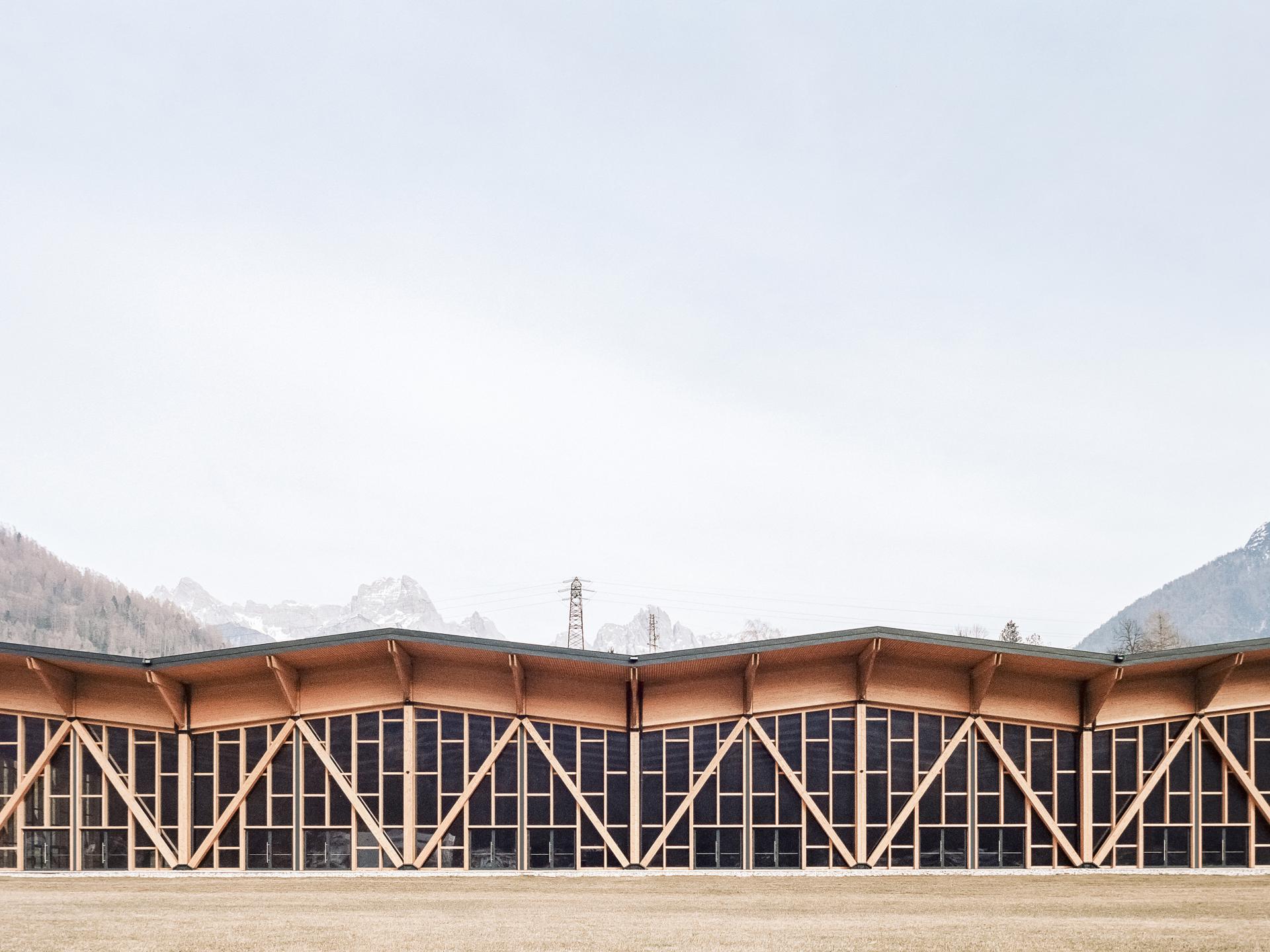
The project is situated in a green area outside the city center, in an alpine landscape featured by well recognizable natural and anthropic signs. The structure of building is exposed and highlighted by details that reveal the dimension and expressiveness of the wood and relate to the beauty of the Dolomite landscape. The supporting structure has been conceived in timber, both for environmental compatibility and consistency with the Alpine building tradition, from which it draws inspiration.
Project Region
EU Programme or fund
Description of the project
Summary
The project is situated in a green area outside Agordo's city centre, in an alpine landscape featured by well recognizable natural and anthropic signs. Although positioned outside the urban settlement, it has a strong strategic nature and it’s well connected to the public network (schools, leisure centres, infrastructures).
The building hosts several different functions, like get-together activities for the local community, shows and entertainment like concerts, theatrical performances, conventions, art exhibitions and expos.
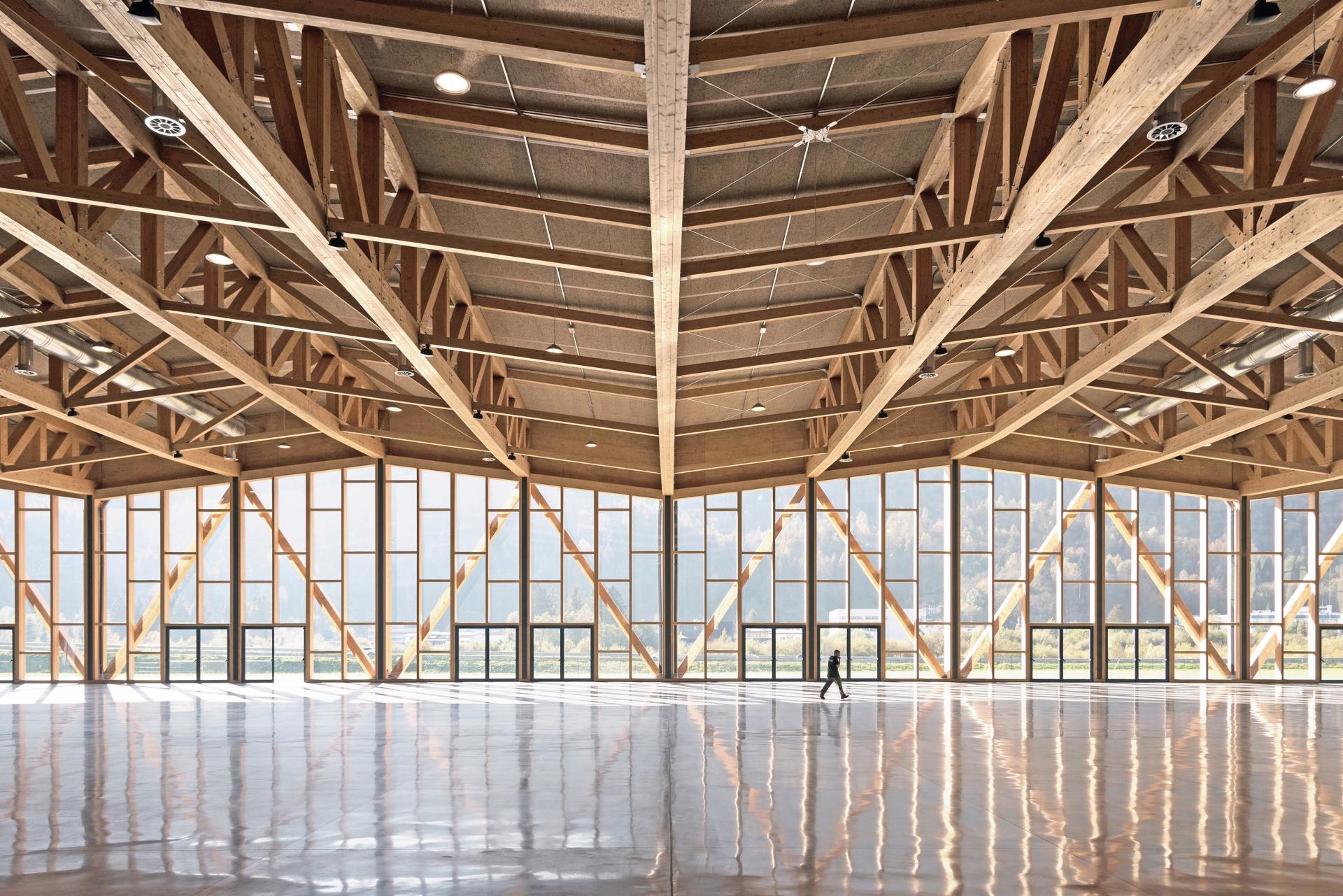
The structure of building is exposed and highlighted by details that reveal the dimension and expressiveness of the wood. The strength of the structural design of the building refers to the beauty of the Dolomite landscape and becomes the main theme; the wooden structures follow each other between the roof and the façade in a continuous and balanced way.
The project looks at Agordo’s typical landscape and urban morphology to create a new language. The structure is characterized by a repeated pitched roof which draws a recognizable sign through the landscape from South to North and has been conceived in timber, both for environmental compatibility and consistency with the Alpine building tradition, from which it draws inspiration.
The construction system is characterized by the use of low-carbon materials and dry-assembled prefabricated elements, which means limited construction site times and mechanical precision of the works. The sustainability of the building is further enhanced in the plant component that uses geothermal energy as a renewable source.
The structural grid is the project`s leading factor and defines the interiors: a light-weight construction, easily recognizable by the shape of the roof, the very distinctive feature of the building.
Key objectives for sustainability
In our project the supporting structure has been conceived in wood, both for reasons of environmental sustainability and for consistency with the alpine construction tradition from which it draws inspiration. Wood is an ecological, recyclable and sustainable material. It’s a material produced from a factory called a forest where it reproduces constantly thanks to water and sun. That’s why it’s a sustainable project; a response to the climate crisis.
Today’s construction systems allow the prefabrication of the elements that guarantee quick realization (economic sustainability) and quality of detail. Wood also ensures excellent acoustic behaviour, particularly important for the type of building and for the activities that are carried out inside.
The use of wood and traditional construction systems with a contemporary approach is the strength of this project. Eco-friendly materials find a new construction composition that, thanks to the generous size of the building, blocks in the wooden structure an important amount of CO2 and guarantees an almost total recycling of its components at the end of life. The wooden structure of the building contributes to the reduction of greenhouse gases in the atmosphere. The amount of CO2 seized is 1,285,250 kg, calculated according to UNI EN 16449-2014.
Once the life cycle of the building is over, the wooden structures can be disassembled, rehabilitated and reused in smaller building interventions. The various elements that make up the perimeter walls and the roof can be easily separated, reused or recycled in the wood supply chain in the production of pressed (MDF, OSB) or packaging systems (pallets).
The sustainability of the project is further enhanced in the plant component that uses geothermal energy as a renewable energy source.
Key objectives for aesthetics and quality
Inspired by suggestions related to the urban and landscape context, the project reinterprets the local constructive language adapting it to the typological needs of the new building. The built volume develops under a repeated pitched roof characterized by a broken line that rises to the south and develops to the north opening towards the valley.
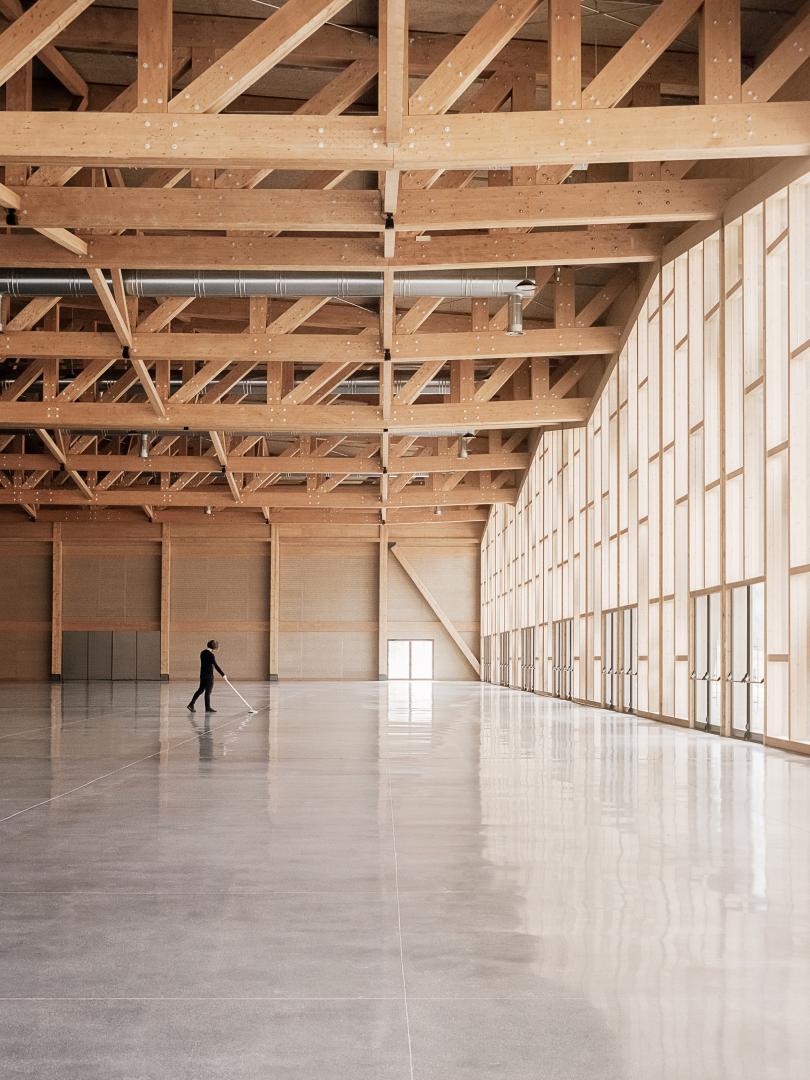
The structure is revealed, exposed and made expressive through the eloquence of detail, dimensional grandeur and expressiveness of wood. The strength of the structural conception of the building enters into relation with the beauty of the Dolomite landscape and becomes the main expressive theme; the wooden structures follow each other between the roof and the facade in a continuous and balanced way.
The structural scheme is therefore presented as a sequence of vertical elements alternating with oblique struts that draw the facade and stiffen the structure. The façade becomes a sort of large reticular beam that absorbs the longitudinal seismic thrusts.
The structural framework of the building has the capacity to become space. A light, wide structure, able to recognize itself in a line of cover, a real sign able to actively intervene in the landscape in which it is located.
The aesthetics of the building are defined only by structural elements; no decorative additions were required.
The structure has been designed to ensure maximum flexibility and adapt to the different types of users who use it. The large hall can be divided into sub-modules and partitioned freely, adapting to the future needs of the building and its users. Distribution spaces, toilets, warehouses and technical rooms are concentrated along a strip located to the east of the room, allowing, thanks to a comb scheme, a flexible management of space.
Until now the structure has been able to host events of very different nature: promotional events, corporate dinners, concerts, self-gatherings, dance and singing essays, awards.
Key objectives for inclusion
The project is designed to accommodate a multiplicity of functions, partly related to business activities of the owner and partly at the service of the local and provincial community. The structure, which in size is unique in the landscape of Belluno, can become a centre of aggregation for the community by hosting collective entertainment activities of various types such as events, concerts, theatre performances, conferences, art exhibitions, fairs and exhibitions.
The building was built to meet both the needs of the company and those of the local and provincial community. The building therefore makes a strong contribution to integration and social mixing.
The building is located in a strategic position with respect to the main services and the road and pedestrian system. As far as vehicular traffic is concerned, it is located in a clearly visible position from the main road artery (SR 203 Agordina). It has large parking areas both inside and in the immediate vicinity for a total of about 350 parking spaces and about 10 buses. The building is reachable on foot in 10 minutes from the city centre, 10 minutes from the bus station, 2 minutes from the school pole, 5 minutes from the football stadium. The area is also adjacent to the cycle path that runs along the entire valley. To ensure and encourage environmentally friendly forms of mobility, n.2 columns have been installed with n.4 charging points for electric vehicles.
Results in relation to category
The use of wood and traditional construction systems with a contemporary approach is the strength of this project.
The complex was designed inspired by the formal canons typical of local rural buildings (“Tabià”), characterized by wooden frame structures with oblique elements of stiffening. The structural scheme is therefore presented as a sequence of vertical elements alternating with oblique struts that draw the facade and stiffen the structure.
The essentiality of the construction made of logs, boards, arrows shows a perfect fusion of architecture and static where each element clearly highlights its function.
The structure of the Tabià had to be simple and economical, using rationally the available materials with few and simple workings. The need to aerate the hay contained added a special lightness to the artefact. The same philosophy has guided the design of the wooden structures of the building, characterized in the facade by pillars and slender struts and very light lattice beams in the roof.
The structure of the building, entirely made of wood, has been designed with large overhangs in the roof (north and west sides) such as to ensure adequate protection against atmospheric agents and maximum durability over time of wood elements which result in low running and maintenance costs.
How Citizens benefit
The main hall is available to the community both for small events organized by associations and local authorities (e.g. dance and singing essays, exhibitions, events sponsored by the City, etc.) and for large events up to more than 5000 people (e.g. concerts, car rallies, cultural events, etc.). The great flexibility of the room that can adapt to the different types of users who use it, events also very different from each other.
The building has already been used for various events with excellent feedback from the organizers.
Today building, not being able to host events of public spectacle cause COVID was temporarily reconverted for the production of masks, as a testimony to the great flexibility of the structure and strengthening the value of the intervention at a social level.
Innovative character
The construction system is characterized by the use of dry-assembled prefabricated elements, which means limited construction site times and mechanical precision of the works. Thanks to the prefabricated construction system and the mastery of the workers, the wooden structure was assembled in just two months.
The precision of the design, of the prefabrication and of the assembly have been indispensable for the respect of the times and the quality of the result.
The main beams, pre-assembled in the factory in smaller modules and easy to transport, were then completed on site. The vertical elements, having much more manageable dimensions, have instead been transported already completely assembled.
A further aspect of innovation is dated by the comb pattern of the distribution that allows extreme flexibility to the structure.