Sustainable Wine Communication
Basic information
Project Title
Full project title
Category
Project Description
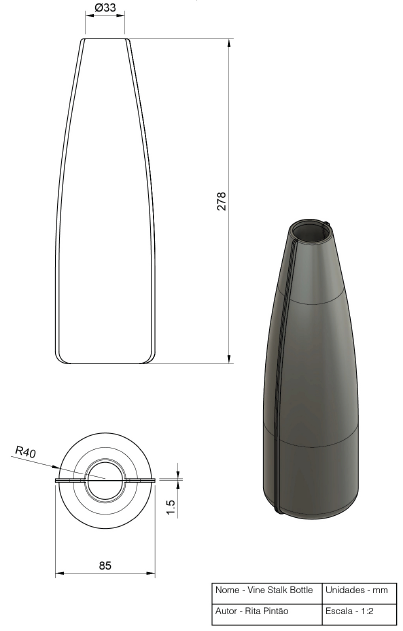
This proposal refers to a wine package-like bag in the box made in a circular economy logic by using a vine stalk to create a composite material. The production of wine bottles represents one of the factors with the most significant environmental impact on the wine's life cycle. Therefore, it is an alternative to glass bottles, a lighter material that would significantly reduce its environmental impact and promote by-products and residues in the wine production process.
Project Region
EU Programme or fund
Description of the project
Summary
Due to its domination in wine packaging, the production of glass bottles represents one of the factors with the greatest environmental impact in the wine's life cycle. Even so, this is a subject that has been little discussed in the sector, particularly among producing companies.
With regard to the material used, the use of alternatives to glass, such as lighter packaging, significantly reduces the environmental impact of the wine's life cycle. However, there is widespread scepticism about bottled wine in alternative packaging.
The carbon footprint of the production of glass bottles is also due to the import of the raw material. Thus, in a logic of circular economy, the intention is to explore innovative solutions for wine packaging that include the use of agro-food residues from the vine and wine industry. This makes it possible to contribute to the reduction of the environmental impact on wine packaging, as it presents an alternative to glass, and promotes the valorisation of by-products and residues from vine and wine.
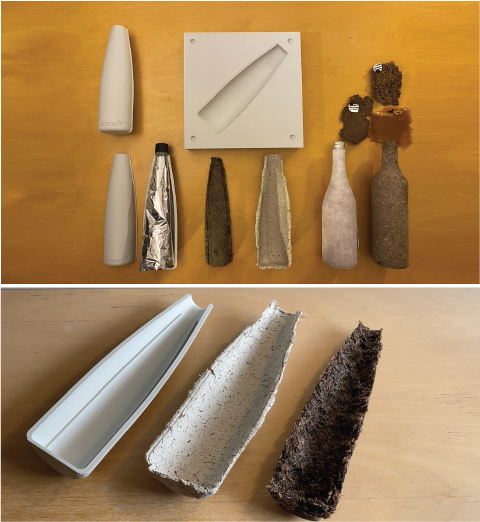
Our concept is a product / packaging proposal based on by-products of the wine production process, in a logic of circular economy and production management Hole in the Wall. Typologies of wine packaging, composite materials and consumer perceptions regarding the adoption of new packaging solutions for wine were investigated. A Design methodology was used following an exploration phase in which several interviews were carried out with specialists, generation of ideas, drawings, solution maps and tests in an iterative way.
Key objectives for sustainability
The bottle is the element of the wine industry that contributes the most to the product's carbon footprint. Even so, this is one of the least discussed subjects and where less measures have been applied by the producing companies. This project intends to be sustainable in that the material used for the production of a wine packaging will consist of natural materials, from the vine, materials that are waste in the production of wine. In Portugal there is a strong culture of port wine production, and in the Douro area is where the waste that could be used is found, waste that is not used, that contributes to the visual pollution of the place, and that would allow the packaging subsequently consists of a biodegradable material.
The glass bottle is responsible for 39% of the carbon footprint generated and, in Portugal, only 58% of the glass is recycled, being the third worst rate in the European Union. On the other hand, a bottle generates an average of 1.21 kg of carbon dioxide in its production and, in Portugal, 715 thousand bottles are consumed / year. With this packaging, we guarantee a reduction in the weight of the packaging in relation to glass bottles, which also reduces the carbon dioxide emission of the bottles transport journeys for the wine producing companies, reducing the transport journeys.
Key objectives for aesthetics and quality
With this product, the main idea would be strong communication at the point of sale with the end consumers, promoting the circular economy, and changing the consumers' perception regarding the adoption of new packaging solutions for wine.
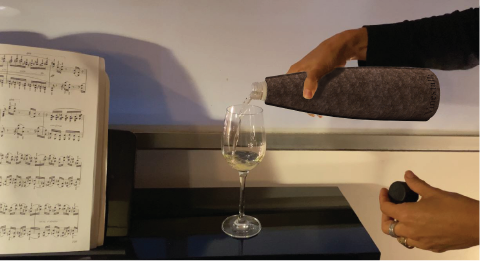
The idea would be for the product to be on the shelves next to glass wine bottles and not cause a feeling of lower product quality. It would be packaging for products from an elite market.
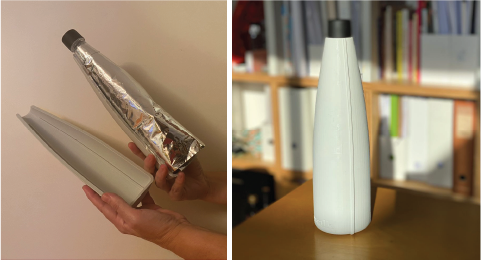
The product would be composed of 3 components, a neck, an inner bag of PET very light, and the rugged exterior made of a natural composite and stem of the vine. In aesthetic terms, its color refers to a product produced using natural materials to be biodegradable, provoking the consumer the desire to buy the product for its aesthetics and the intuition that its exterior refers to a sustainable product and environmentally friendly.
Key objectives for inclusion
This project would use residues from the vineyard, residues that result from the grape harvest for the production of wine. Those who still mainly harvest the grapes in the vineyard are primarily people with less education, so the production of this product would enhance their profession. It would help the inclusion of local people and even job creation by including the production of packaging with the residues of the vine at the place of wine production.
Innovative character
This concept is innovative in that it idealizes the production of a product that already exists on the market but with materials utterly different from the usual—being able to shock the consumer but guaranteeing the reduction of the environmental impact in such a large production area in Portugal. It is also innovative because the product was designed to be produced in a “Hole in the Wall” business model. This concept allows the creation of small packaging factories installed directly where the wine is produced. Moreover, it allows the reduction of displacements and consequently the reduction of carbon dioxide release and pollution.