OFF CAMPUS
Basic information
Project Title
Full project title
Category
Project Description
OFF CAMPUS consists in physical ‘hubs’ of the Polytechnic throughout the city of Milan. Its purpose is to make the university more inclusive, engaged and closer to citizens. OFF CAMPUS is the result of smart reuse of neglected spaces at the heart of deprived neighborhoods. Responsible research, engaged learning and co-designing with local communities is its threefold mission. Meeting social needs and challenges through shared and constructive paths will increase the social impact of knowledge.
Project Region
EU Programme or fund
Description of the project
Summary
OFF CAMPUS is an initiative launched between 2018 and 2020 by Politecnico di Milano through “Polisocial” (the university’s social responsibility program), with the aim of strengthening its presence inside the city of Milan and pursuing a tighter university-society-community relationship, towards more responsibility, openness and shared awareness of societal and environmental challenges. In practice, Off Campus (O.C.) consists of university living labs created through the reuse, re-design and enhancement of neglected spaces.
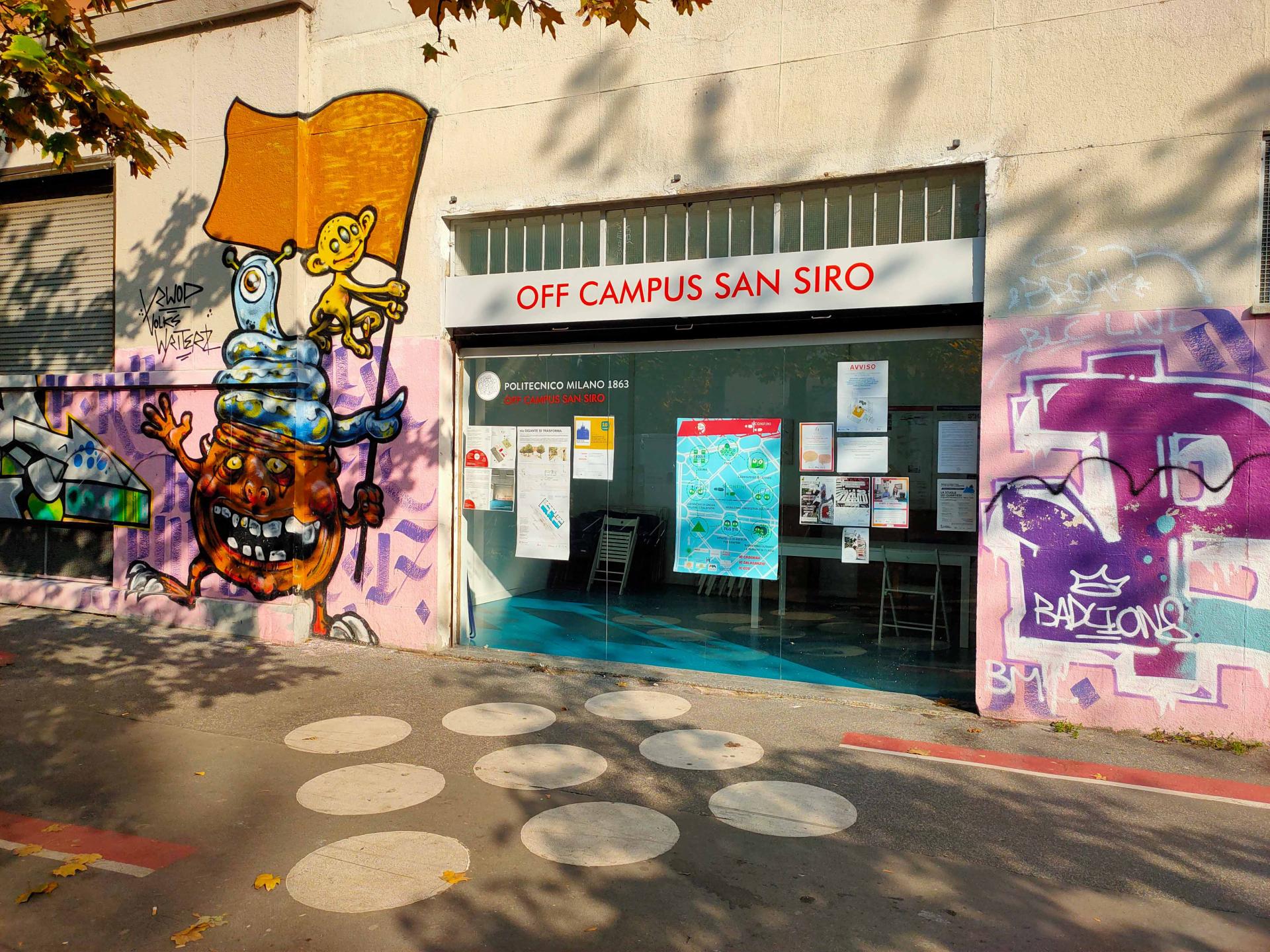
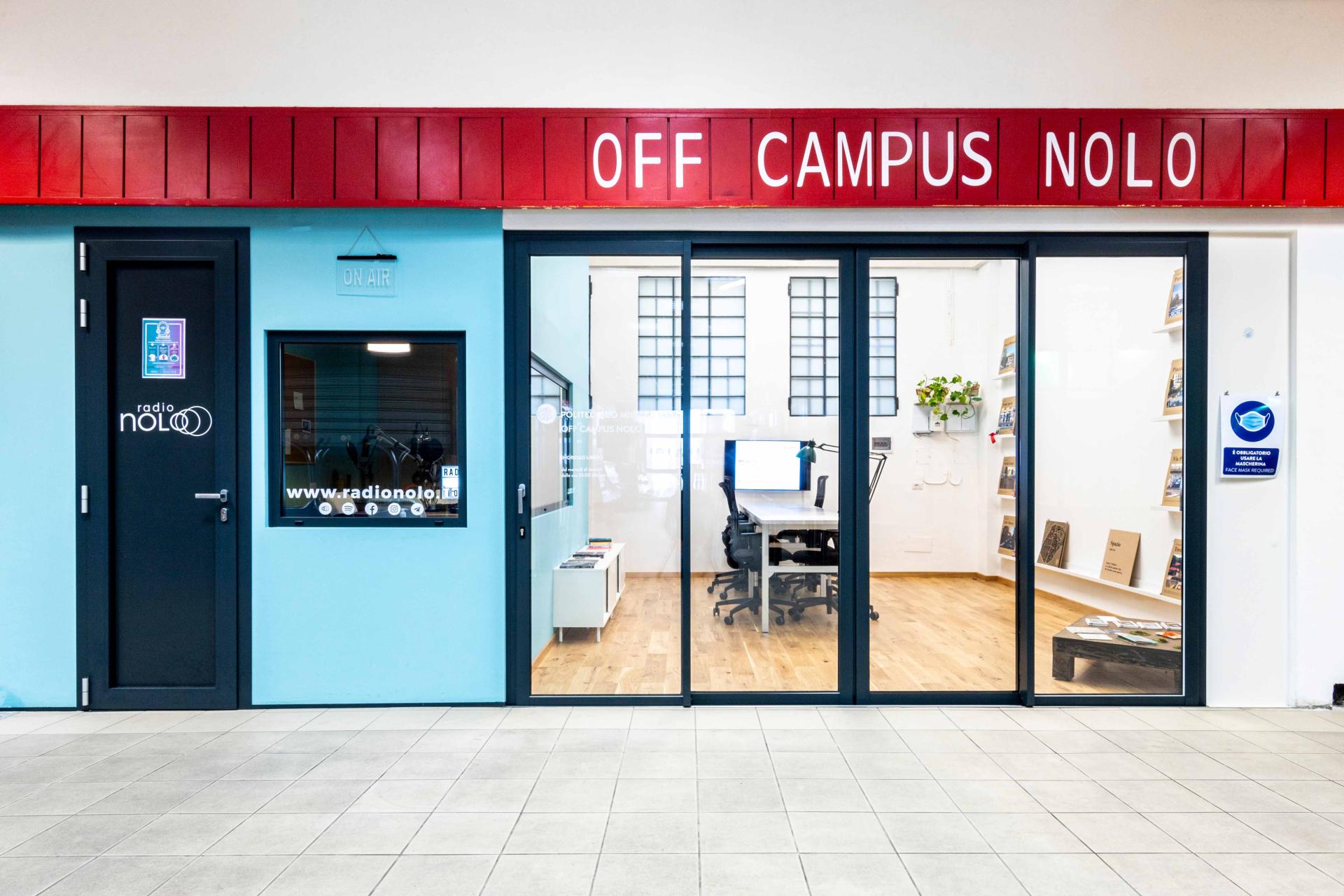
Currently two labs have been activated in the San Siro and Nolo neighborhoods, in an abandoned retail premise and in an historical indoor market, respectively (both public properties). The two districts have some common characters but also some differences: while San Siro is a deprived and multicultural area, Nolo faces gentrification but still bears an interesting social balance and mixed functions.
Off Campus involves teachers, researchers, students, surrounding communities and local actors within a diverse set of activities, organized around the following pillars:
- engaged and innovative teaching, focused on field experience, the development of soft skills and awareness about social questions;
- responsible, society-oriented research, based on inclusive knowledge production processes;
- co-designing with local stakeholders and citizens, in order to produce positive impacts on the community through concrete action;
- public service and support to the community, especially in its most vulnerable parts;
- cultural agendas open to a local public.
The set of issues includes public housing, cohabitation, urban regeneration, cultural poverty, social vulnerability, livability and sustainability of neighborhoods. Off Campus tackles them through a place-based approach and material actions aimed at a real transformation of these areas.
Key objectives for sustainability
Off Campus pursues sustainability hand in hand with community building. Two main levels are involved, one linked to the initiative itself, the other to the actions promoted within its agenda.
In the first sense, sustainability is basically meant as circularity in the use of built environment, starting from the strategic decision to resort to existing structures rather than building new ones. Both living labs, in fact, have been created by renovating and reactivating disused spaces with little prospects for recovery, given their format linked to traditional retail models, currently in crisis. In addition, publicly owned properties are involved in both cases, including nearby residual/underused spaces (courtyards, market aisles) that have been revitalized. Considering the public utility character of the Off Campus mission, the initiative is therefore to be considered a good practice when it comes to recycling a public good, that would otherwise be wasted, and giving it back to the community.
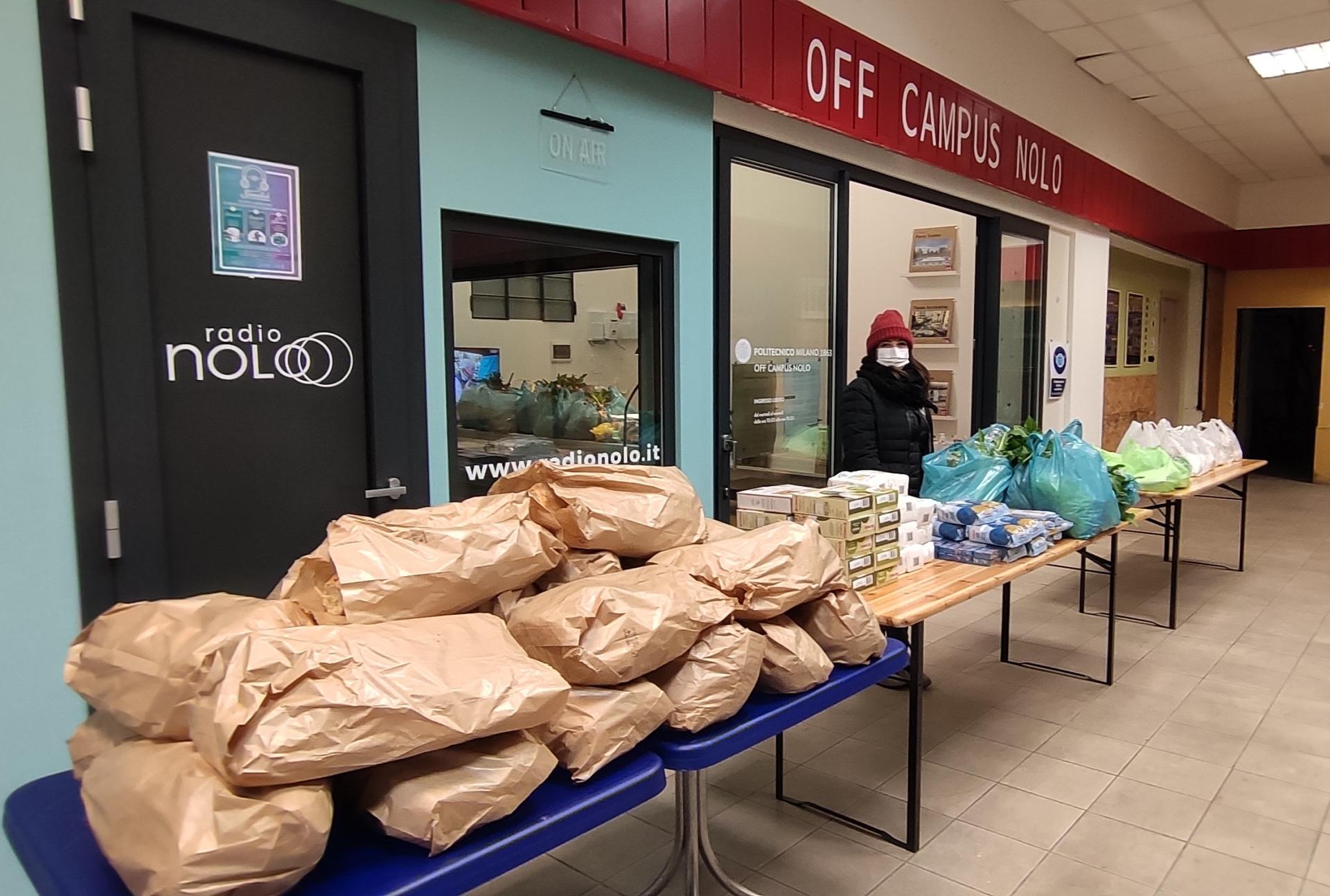
Secondly, Off Campus represents a basis for the implementation of local actions combining social responsibility and sustainability. Among them, it is worth mentioning: the “Nuove Luci a San Siro” pilot project to promote the reuse of 10 empty spaces in the S. Siro district, for cultural and social purposes; as regards Nolo, various actions pursuing sustainable life at a district level and the so-called ‘15-Minute City’, from soft mobility to collective care of public spaces, as well as those based on mutual aid, such as the “Spesa Sospesa” initiative for redistributing fresh and quality food to needy families (600 purchases made so far), which prioritizes local supply chains as less impacting than larger scale ones.
Key objectives for aesthetics and quality
Off Campus invests in aesthetics, since introducing beauty and care into urban areas suffering from deprivation and disrepair corresponds to an act of social justice. Attention is given both to the living labs themselves and to the neighborhoods, e.g. through actions on common spaces and the promotion of practices based on care.
Aesthetics in met in an intrinsic form and combines with functionality, primarily involving designing competences that are at the core of Politecnico as an architecture and design institution. More specifically, both living labs have been created inside buildings of historical significance, by joining the requirements of preservation and recovery with those of adaptation to new needs.
In the case of Nolo, restoration concerned a portion of a traditional, still functioning covered market of the early 20th century. The project prioritized the historical-architectural value of the building, by enhancing valuable elements, eliminating later additions and promoting a greater readability of the original forms. Other actions are underway to further enhance the building’s appearance. Moreover, the presence of a university living lab amid the daily liveliness of the market provides an appealing element of diversity and originality to the place.
As regards San Siro, the Off Campus space here was created by refurbishing a former bakery shop, at the ground floor of a 1950s public housing building. Although closed for years, the bakery once served the whole district, and the place somehow remains an identity landmark for the neighborhood. The project has completely changed its function while managing to enhance such a status and was thus welcomed by local inhabitants. Several innovations have been introduced and the outdoor surfaces have been rearranged as well. Collaborative projects allowed to introduce (and take care of) additional green elements and some facilities, allowing a greater usability by inhabitants and visitors.
Key objectives for inclusion
Inclusion is the hallmark of Off Campus, being a declared part of its mission. We can identify several meanings of 'inclusion' embraced by Off Campus.
First, the research projects and workshops that take place in the framework of Off Campus are meant to favor inclusiveness. They promote a more horizontal approach and openness to direct participation in research and design by non-academic stakeholders (CSOs, local networks/platforms, etc.), in order to better meet the values, needs and expectations of the community. Such approach also applies to co-designed projects.
Secondly, inclusion also means advocacy for, and giving voice to marginal groups living in the surrounding area, especially families with a migration background and inhabitants of social housing blocks. In this sense, Off Campus promotes community empowerment, the emergence of unexpressed demands, settlement of local controversies, as well as intermediation between these groups and the public administration.
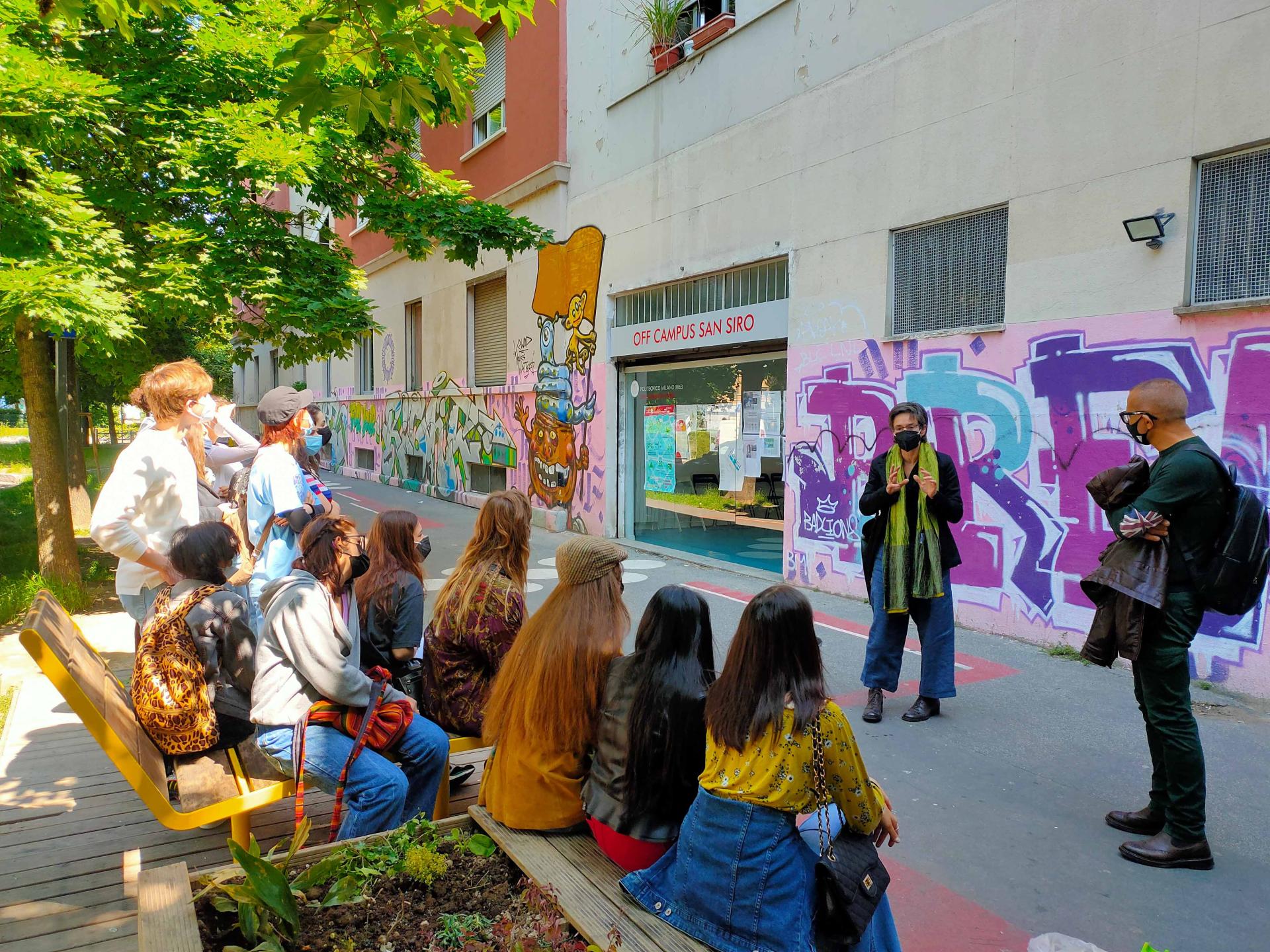
Furthermore, inclusion is intended as increased accessibility to culture, knowledge and research results by local communities and ordinary citizens, including the ones least familiar with higher education settings. This goal is reached by literally ‘bringing’ the university directly into the social fabric and, more specifically, through outreach and dissemination action, as well as cultural initiatives.
Finally, Off Campus spaces themselves are planned so to facilitate access and use by citizens and local population, thereby increasing their own value as a common good, and are particularly appreciated by the involved communities for this reason.
Results in relation to category
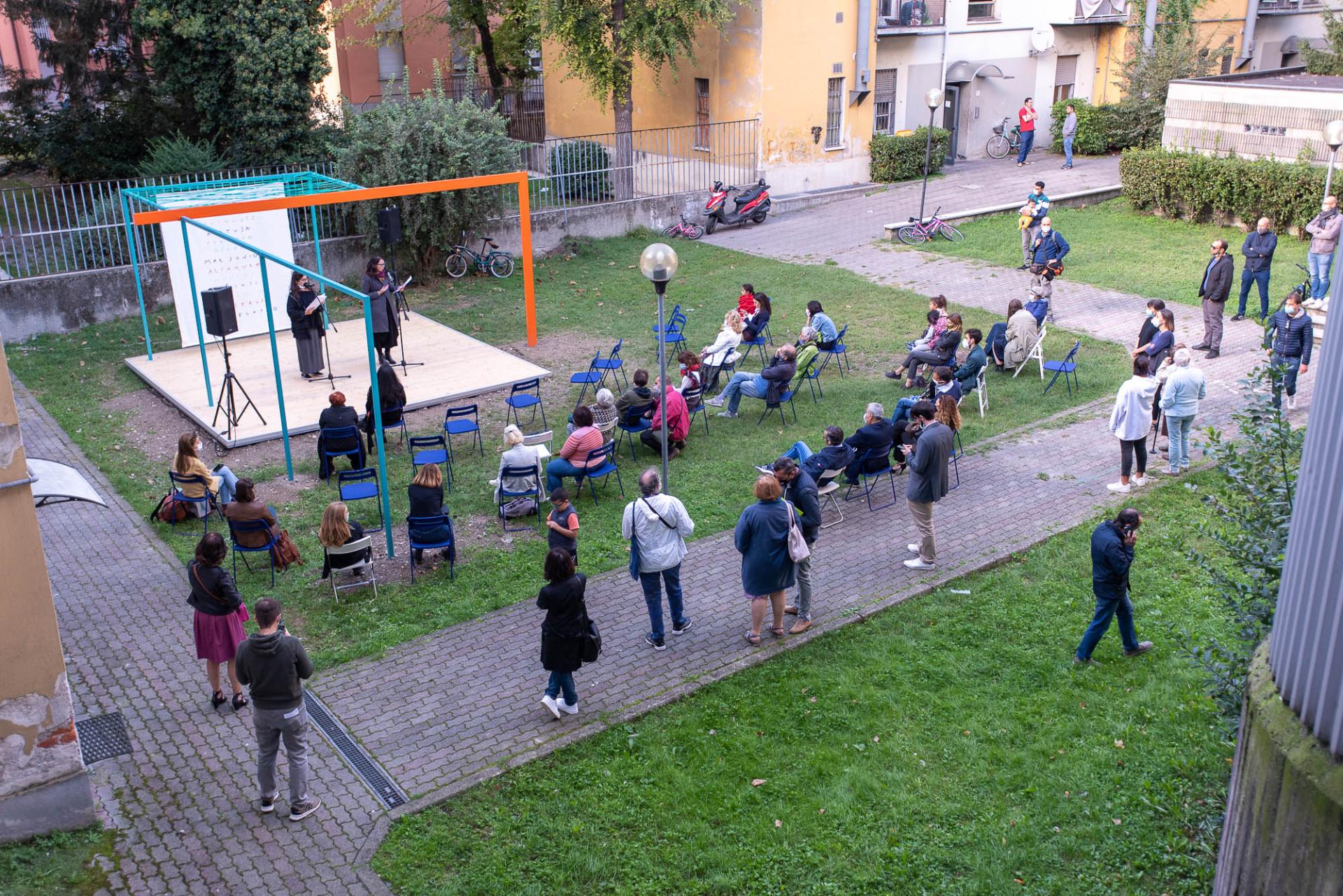
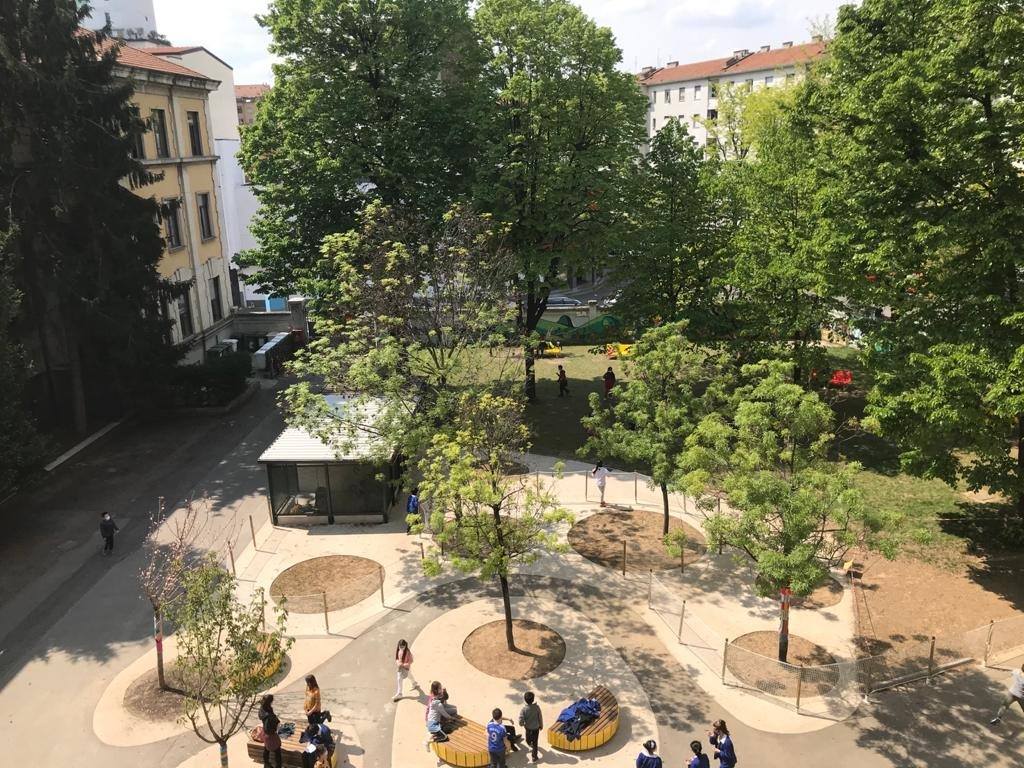
For instance, the public space projects were planned and implemented within two cooperation agreements with the City of Milan and together with a network of 25 stakeholders, private firms and sponsors. These actions allowed several improvements, among which the furnishment of the street fronts of the S. Siro living lab with bike racks, seats and a table, as well as the equipment of the internal court – a typical social housing yard – with a small stage for cultural events, thus enhancing it as a collective space and preserving it from misuse. Beyond the perimeter of the lab itself, other actions were made in the neighborhood, including the redesign of a primary school backyard.
At Nolo, the Off Campus team developed a support action with nearly 20 local retailers, in order to reorganize outdoor spaces by introducing parklets, and therefore providing more space for people using the street.
More generally, Off Campus is very attentive to community building and pursues it also through a lively cultural agenda, as well as initiatives with a strong social purpose, such as a legal clinic (a service desk providing legal support to needy inhabitants) managed by the Bocconi university, an upskilling program for foreign women, as well as the forementioned ‘Spesa Sospesa’ project.
How Citizens benefit
Off Campus is a strategy thought 'for' and 'with' society. Embedding research and design in challenging urban contexts is a tool to explore the research-action relationship and develop forms of knowledge that are shared between university and society, and that are useful to address local demands in connection with global issues.
In this perspective, listening, sharing and cooperating with external stakeholders is a core aspect and allows consolidating the role of university as a promoter of society-oriented actions. In fact, the positive reception of the two hubs in the local fabric was not taken for granted and is largely a result of the successful involvement of third parts.
More specifically, Off Campus has been including so far:
- Citizen committees, associations and local stakeholders (schools, retailers, etc.), within co-design activities and other forms of collaboration, often extending beyond the duration of single projects. Off Campus helped consolidating the local associative scene, as in the cases of the Sansheroes network (which includes 30 members) or the newly established P.I. NOLO and MEMO54 associations, both aimed at involving 20 local retailers in the Off Campus social mission.
- Single inhabitants (e.g., social housing dwellers, immigrant families, women and kids, elderly people, etc.), mostly as beneficiaries of targeted services and participants in cultural/educational events, but also as contributors to research. As in the previous case, a major benefit of such engagement has been the enhancement of local, non-academic and/or informal knowledge, which allowed to better focus inquiry, understand the characters and concerns of the context, and address action toward more effective results.
- Strategic partners such as public bodies, foundations, private entities and other universities, with the main benefit of attracting attention and resources towards critical contexts and issues, often neglected by policy agendas.
Innovative character
So far, Off Campus represents not only an original community center model for Milan, but also a one-of-a kind format in Italy and beyond, if one considers the way it combines public engagement, social innovation and publicly oriented urban regeneration by means of permanent hubs, literally bringing the university right into the heart of the city. This in fact reverses the ordinary logic, according to which campuses and university headquarters are at the center of all academic activity. Identifying physical, direct proximity to outside communities and their specificities as a key factor for successful civic engagement is the main challenge and in fact, the most innovative aspect of Off Campus. Such a place-based approach makes this initiative a pioneering case for the Italian and Mediterranean context and an original experience also on a European scale.
Another interesting aspect is given by the fact that Off Campus provides an original opportunity not only for testing research results, but also for the development of students' hard and soft skills, thanks to direct contact within the real world, which stimulates the innovation of teaching methods and tools, with special regard to the fields of architecture, urban planning and design.