Citizen-driven innovation
Basic information
Project Title
Full project title
Category
Project Description
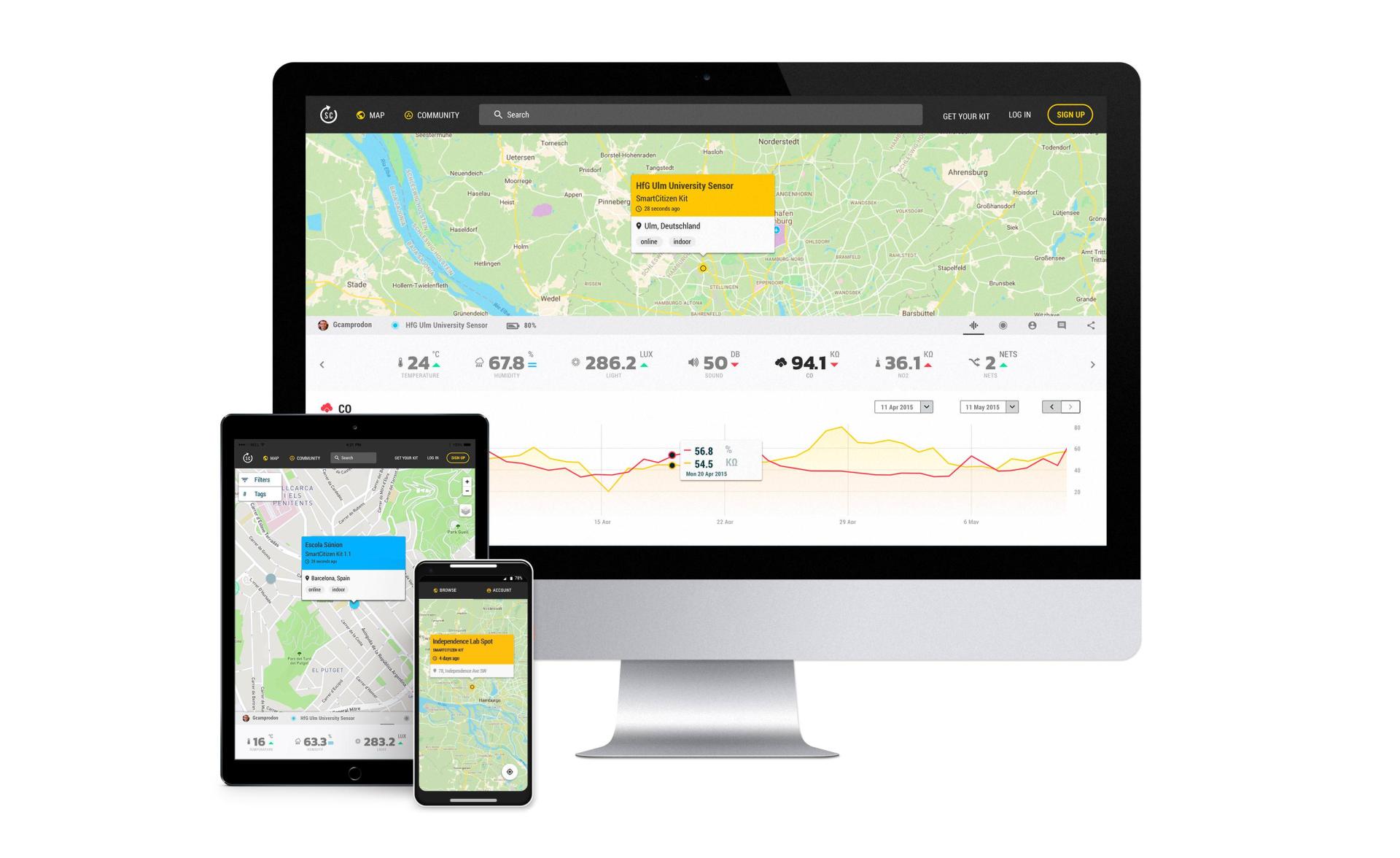
Smart Citizen offers an alternative to the centralised data production and management systems used by the large corporations that constitute the driving force behind the smart city concept. The project empowers ordinary citizens to gather information on their environment and make it available to the public.
Project Region
EU Programme or fund
Which funds
Other Funds
- Making Sense: advances and experiments in participatory sensing. (Grant agreement Nº: 688620). Making Sense explored how open source software, open source hardware, digital maker practices and open design can be effectively used by local communities to fabricate their own sensing tools, make sense of their environments and address pressing environmental problems in air, water, soil and sound pollution.
- iScape: Improving the Smart Control of Air Pollution in Europe (Grant agreement Nº: 689954). iScape works on integrating and advancing the control of air quality and carbon emissions in European cities in the context of climate change through the development of sustainable and passive air pollution remediation strategies, policy interventions and behavioural change initiatives.
- GROW Observatory: (Grant agreement Nº: 690199). A citizens' observatory for growers, researchers and decision makers, aiming to build better soil through Citizen Science.
- The Organicity project has received funding from the European Union’s Horizon 2020 under grant agreement No 645198.
Description of the project
Summary
We believe data is critical to inform political participation at all levels. The Smart Citizen project, comprised by open source software, open source hardware, digital maker practices and design was developed in 2012 in Fab Lab Barcelona at IAAC. The project develops tools for citizen action in environmental monitoring and accompanying methodologies for community engagement and co-creation. The project involves customised sensing hardware – the Smart Citizen Kit, and a custom online platform with more than 9000 registered users and more than 1900 unique sensors. In 2019 it launched the latest hardware generation, the Smart Citizen Kit 2.1. The new Kit includes sensors such as particulate matter, noise, temperature, humidity. Smart Citizen’s software and hardware is free and released under open source licenses. Over the past years, Smart Citizen has been part of multiple EU funded research projects such as Making Sense, iSCAPE, Organicity and GROW Observatory.
Key objectives for sustainability
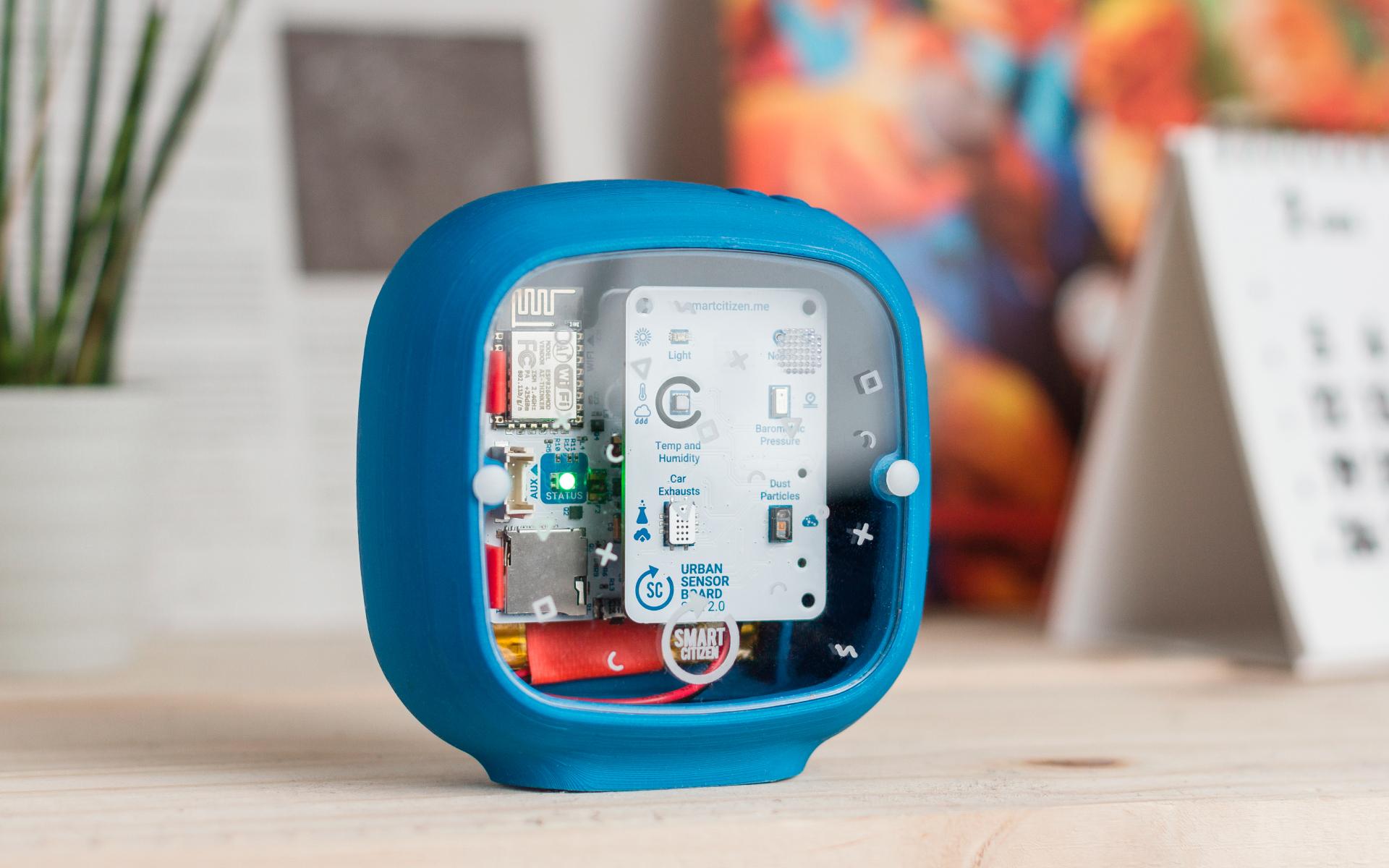
The rapidly increasing global urban population will necessitate new methods of participatory mediation in which urban citizens should be entitled to collect and gather their own data on their environment. Already, cities release huge levels of carbon emissions which have detrimental effects on air pollution and citizen health. The approach to Smart Citizen and its facilitation tools was to show how open-source hardware and software, digital maker practices and open-source design principles could be used effectively by local communities to appropriate their own technological sensing tools to make sense of their environment to address environmental issues concerning air, water, soil and sound pollution.The Smart Citizen Kit aims to be a simple tool to help citizens collect data and with with tools made available by the team, also make sense of the data in order to influence their urban environment. The kits contain the following sensors to enable this:
- Metal Oxyde Sensors (all versions)
- Noise Level Sensor (V2.0 onwards)
- Relative Humidity and Air Temperature Sensor (V2.0 onwards)
- Ambient Light Sensor (V1.5 onwards)
- Barometric Pressure (V2.0 onwards)
- External PM Sensor (V2.0 onwards)
- CO2 NDIR Sensor
- Source files
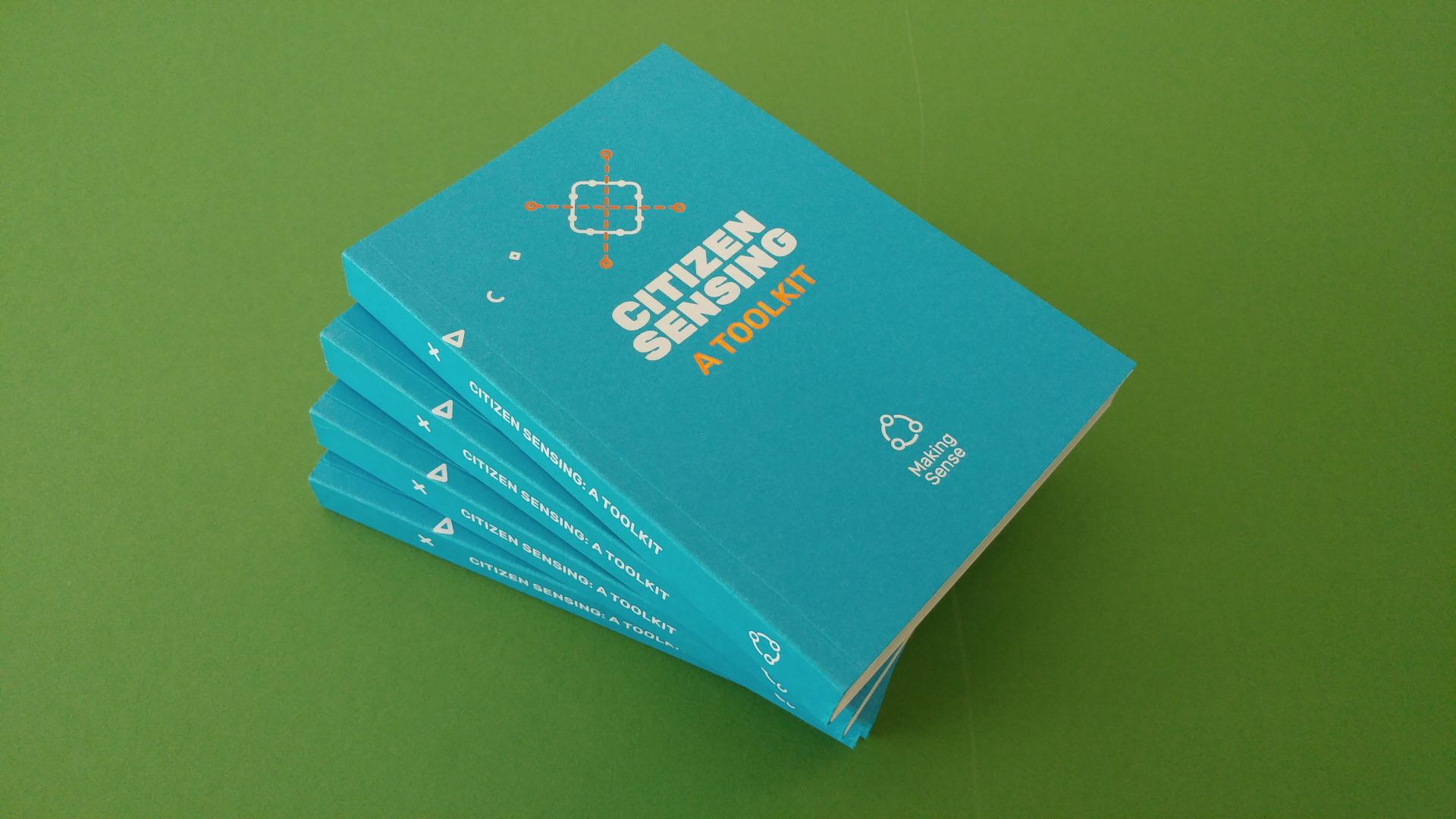
The Citizen Sensing tool kit is a guide to help citizens make sense and use of environmental data they may collect with the sensor. It is available online in PDF. The project documentation also helps citizens to make reports from their data.
Citizens have been involved in the sensing and mapping of data in using +1900 unique sensors deployed in +40 countries. Use cases include:
"Measuring our environment" developed by Fab lab Barcelona for the Do-It H2020, 25 middle school children used the Kit to learn skills to help to transition to a 4.0 education in the framework of the UN Sustainable Development Goals.
Key objectives for aesthetics and quality
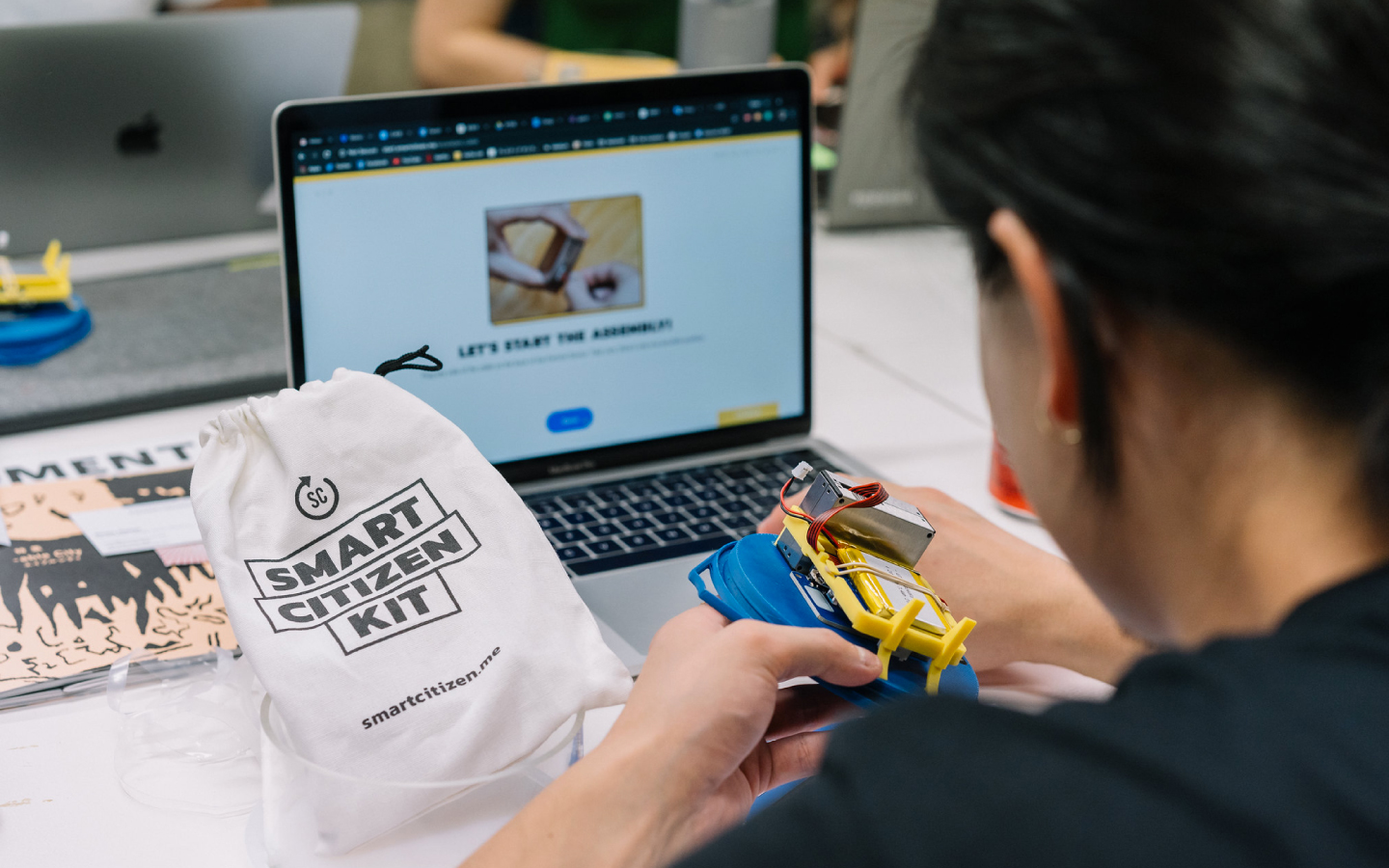
The Smart Citizen Kit aims to be a citizen-centric device that is easy-to-use and attractive to implement into the urban context. The design is modular and able to be fabricated in a Fab Lab, meaning it can be customised to the local context and take on situated design nuances to fit its environment. As such, throughout the project, the design team have developed multiple iterations of the housing including using up-cycled materials such as plastic bottles or plant pots.
The design of the platform and hardware kit is done with the user in mind. The branding, developed by the experienced team at Fab Lab Barcelona, uses bright colours, friendly typography and easy-to-understand wording.
Key objectives for inclusion
The rapidly increasing global urban population will necessitate new methods of participatory mediation in which urban citizens should be entitled to collect and gather their own data on their environment. Smart Citizen is a platform which connects people, data and knowledge through sensory data which empowers communities to know about and own their urban spaces and environments to ensure the collective development and ownership of cities.
Since it started, Smart Citizen has aimed at being a global tool. Over the years, +10K users have registered and more than 2000 unique sensors have been used not only by citizens but by prestigious institutions like the Fraunhofer Institute, UN-Habitat or IS Global.
The Citizen Sensing Toolkit, developed in 2018 documents and shares a methodology to engage local communities in the use of the Smart Citizen Kit, outlining case studies in three European cities.
The entire project is released under open source licenses.
Results in relation to category
The Smart Citizen platform comprising the Smart Citizen Kit 2.1. +9000 registered users. +1900 unique sensors deployed in +40 countries.
In one specific case study, the implementation of the Kit within the Making Sense project. Fab Lab Barcelona facilitated a pilot to reduce sound pollution in Plaça del Sol in Barcelona. 55. residents of the Plaza Del Sol were involved in the installation of 25 Smart Citizen Kit sensors in their houses and terraces.Participants co-created measuring strategies which involved collecting environmental data 24 hours a day over a period of six weeks so they could identify which days and times were the loudest each week. Community members use tools developed by the project to demonstrate noise levels in the area were above those recommended by the World Health Organisation and we are incompatible with local legislation. Since the pilot the city council launched an awareness campaign to make people using the square conscious of the impact of high levels of noise on local residents. Following recommendations made by the participants, the city council initiated refurbishment works such as the installation of large flower planters to deter revellers from congregating in some areas of the square which was contributing greatly to the above average noise levels importantly. Importantly the council and local residents were actively engaged in dialogue to achieve more permanent solutions. In the same project, Making Sense, the Smart Citizen project also achieved new air pollution legislation in Kosovo and the implementation of city trees in order to improve air quality in Amsterdam.
How Citizens benefit
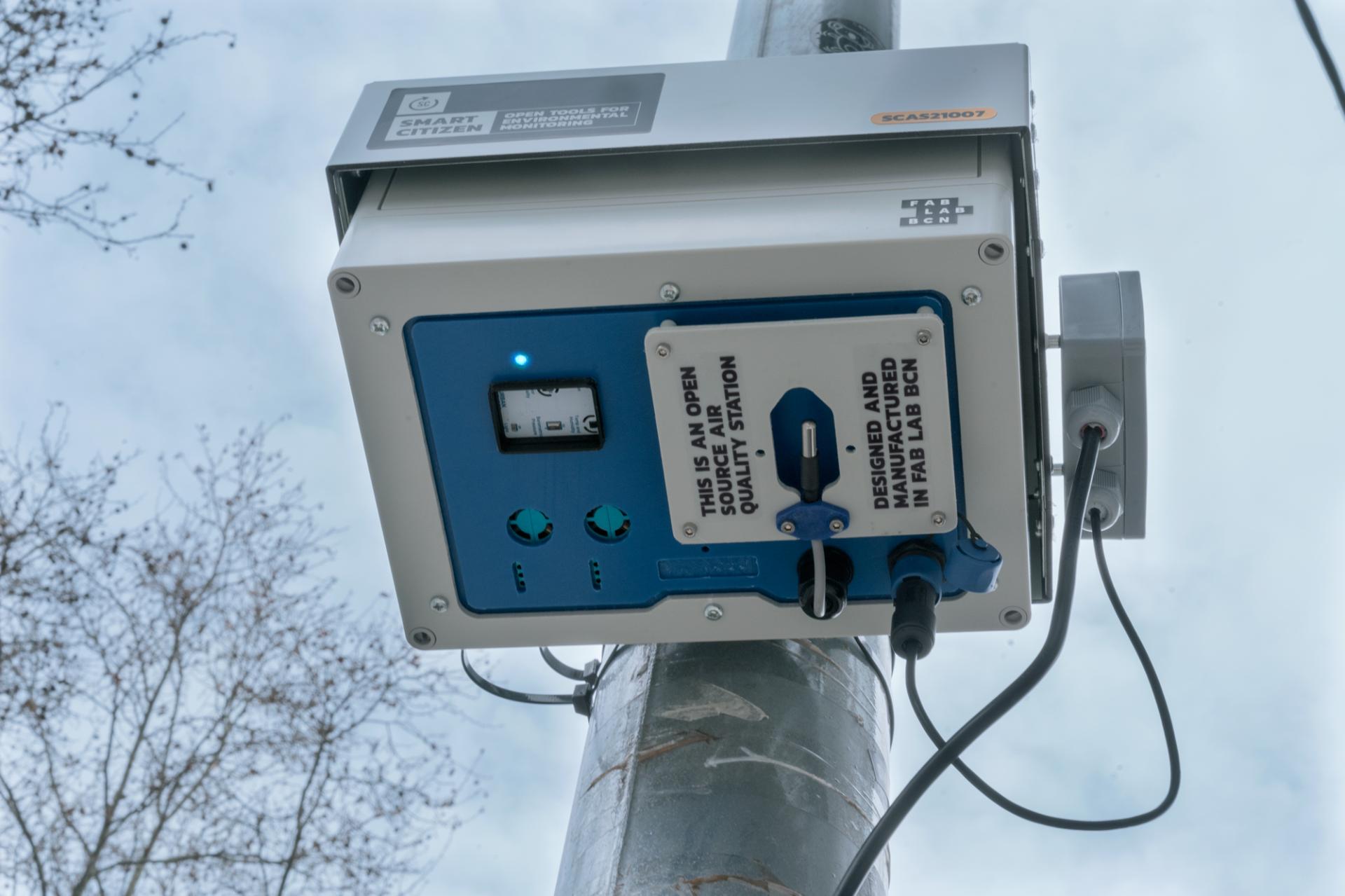
The Smart Citizen project has had the chance to be part of fantastic projects throughout it's brief history. Ranging from public interventions in urban areas to the development of DIY sensors for agriculture, the team has carried out an enormous efforts to develop a technical platform that supports a wide range of communities on the creation of participatory sensing initiatives. Throughout these projects, the Kit and its applications have been co-designed with and for communities and circumstances in which it has been deployed. From September 2016 to December 2019, iSCAPE worked on the principles of integrating and advancing the control of air quality and carbon emissions in European cities in the context of climate change, through the development of sustainable and passive air pollution remediation strategies, policy interventions and behavioural change initiatives. The project followed a living labs approach, in which the city becomes a lab through open-innovation practice, to deploying a network of air quality and meteorological sensors (stationary and mobile). The benefits of these interventions were evaluated from a neighbourhood and city-wide scale – ranging from quantification of pollutant concentration to exposure. Through the project, the team developed the now commercially available Smart Citizen Kit 2.1 and the Smart Citizen Station, alongside a new set of specific software tools that dramatically improve the quality of the collected air pollution data through machine learning.
Innovative character
Open Data: all the documentation on data, from collection, storage to analysis and calibration is available open online.
All the documentation on the online platform where data is collected, stored and visualised.
The documentation of our RESTFUL API and how to interact with it
All the documentation on the data post-processing framework to analyse the sensors data
The complete documentation of use cases examples on how to use Smart Citizen tools with your local community.
Open Hardware: the Smart Citizen Kit and Smart Citizen Station hardware documentation to help you get started to build your own kit in a Fab Lab or Makerspace. Including the Hardware architecture page to understand a bit better how you can better use all the SCK possibilities
Community Centred Guides: Step-by-step guides for different features of the kit, how to get started, use the shell, or make some more advanced analysis of the sensor readings! Including Citizen Sensing Toolkit available in PDF or book format