Nonturismo
Basic information
Project Title
Full project title
Category
Project Description
Nonturismo is a storytelling journey that aims to redefine the identity of a marginal territory and its community.
It is from the meeting of the inhabitants that the contents of the story are born.
It is from the meeting between the inhabitants and the artists that the form of the story is born: an artistic guide dedicated to non-tourists, those who travel to discover the authentic spirit of a territory.
“The people of a place don't orient themselves with maps, but with stories” (Wu Ming 2)
Project Region
EU Programme or fund
Description of the project
Summary
Nonturismo (Nontourism) is a storytelling journey dedicated to the requalification of so-called marginal areas, that implements a new way of understanding tourism. Marginal areas because physically placed on the edge of urban centres, because far from tourist flows or because they are deprived of their historical identity due to depopulation or traumatic events. The goal of Nonturismo is to help these areas redefine their identity by involving the inhabitants in a process of recovery of memories of the past, raising of awareness on opportunities and problems of the present, foreseeing of possible future scenarios.
The process is divided into three phases:
1. Community editorial workgroups
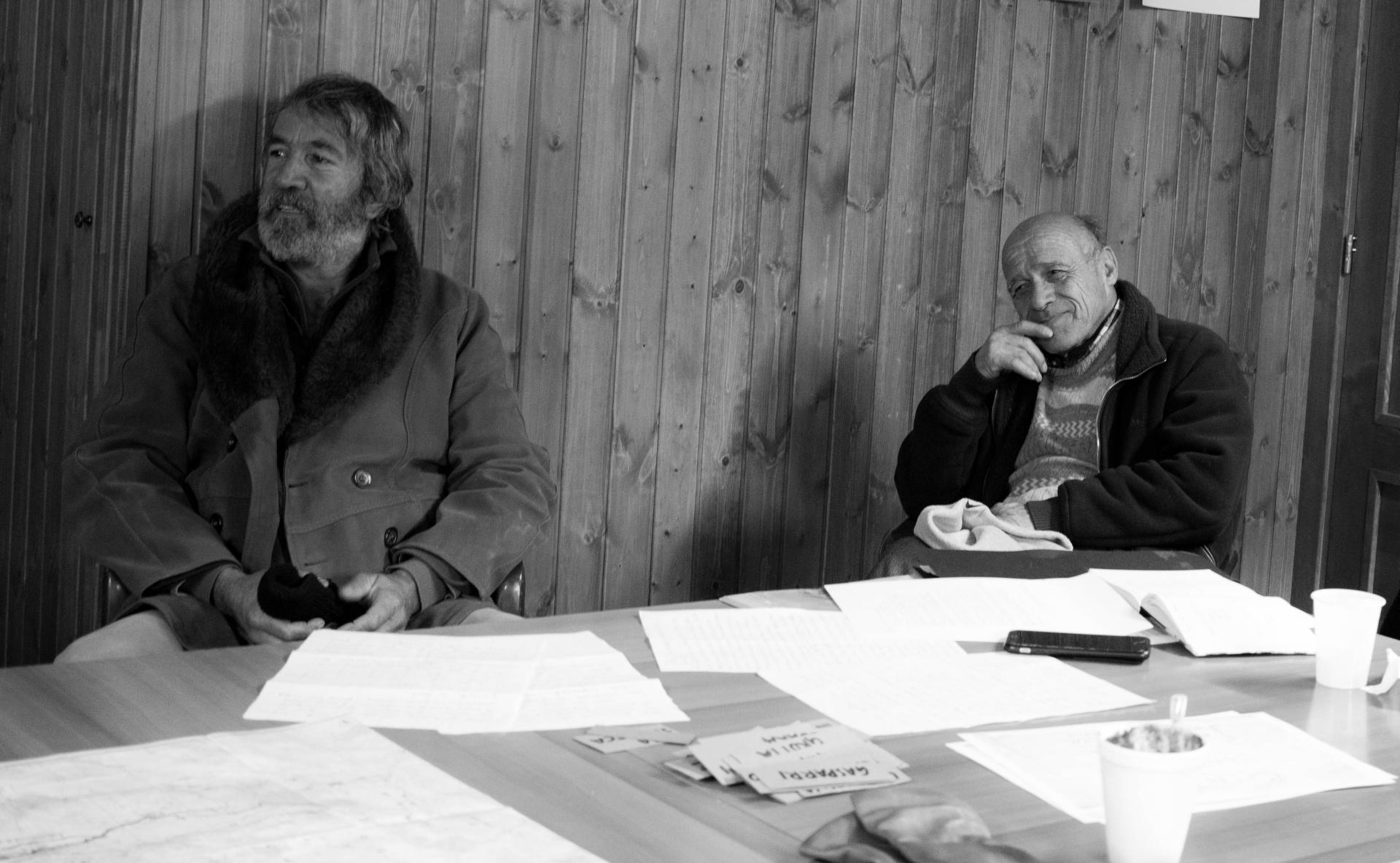
The identity of the place is reconstructed through a collective editorial experience. The editorial workgroups host several "incursions": artists, historians, botanists, architects meeting the inhabitants and offering their point of view, thus helping the community to build a new identity.
2. Artist's Residences
Artists with heterogeneous languages are housed in residence in the territories taking part in the requalification: by collecting the testimonies of the editorial workgroups and the suggestions derived from their own explorations they produce an artistic outcome.
3. Nonturismo Guide
The final output of the process is a guide dedicated to non-tourists, those who do not travel to collect postcards but to discover the authentic spirit of a territory.
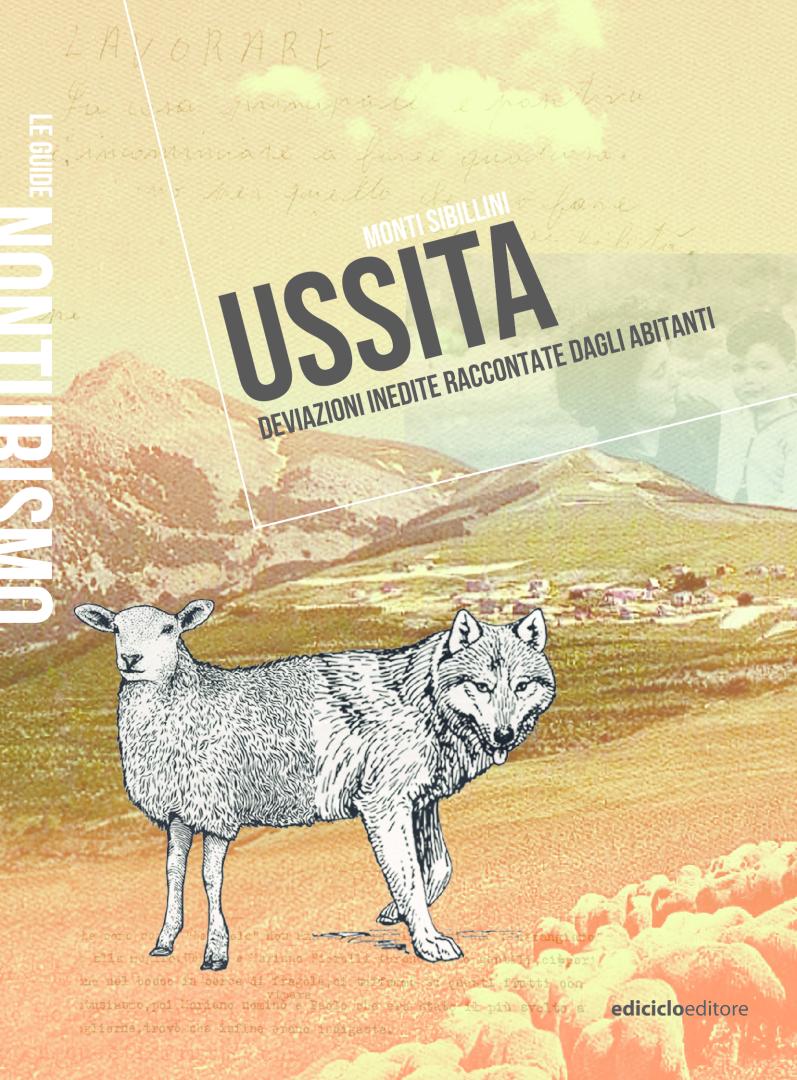
The Nonturismo editorial series is published by Ediciclo, the Italian publishing house specialized on sustainable mobility.
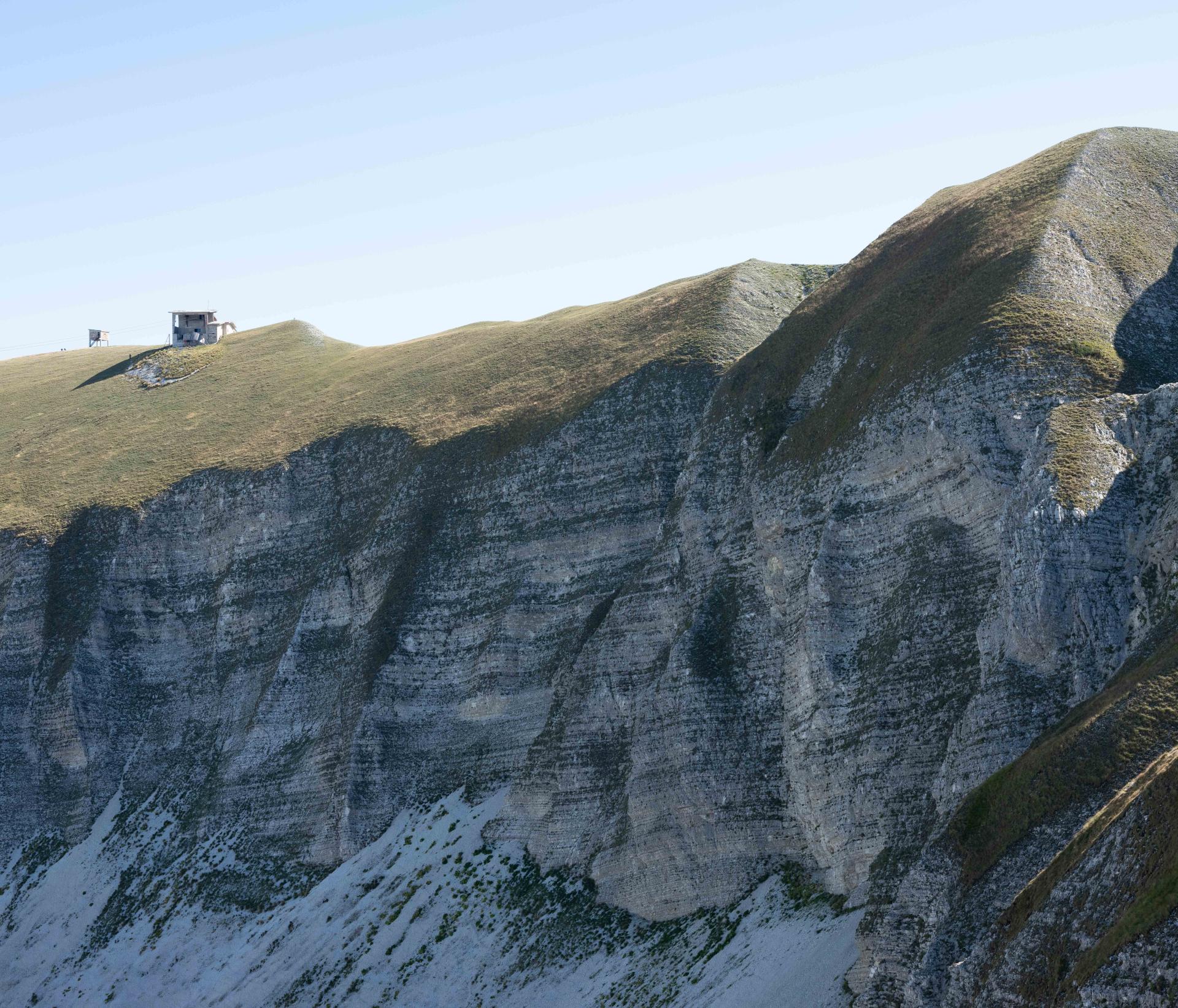
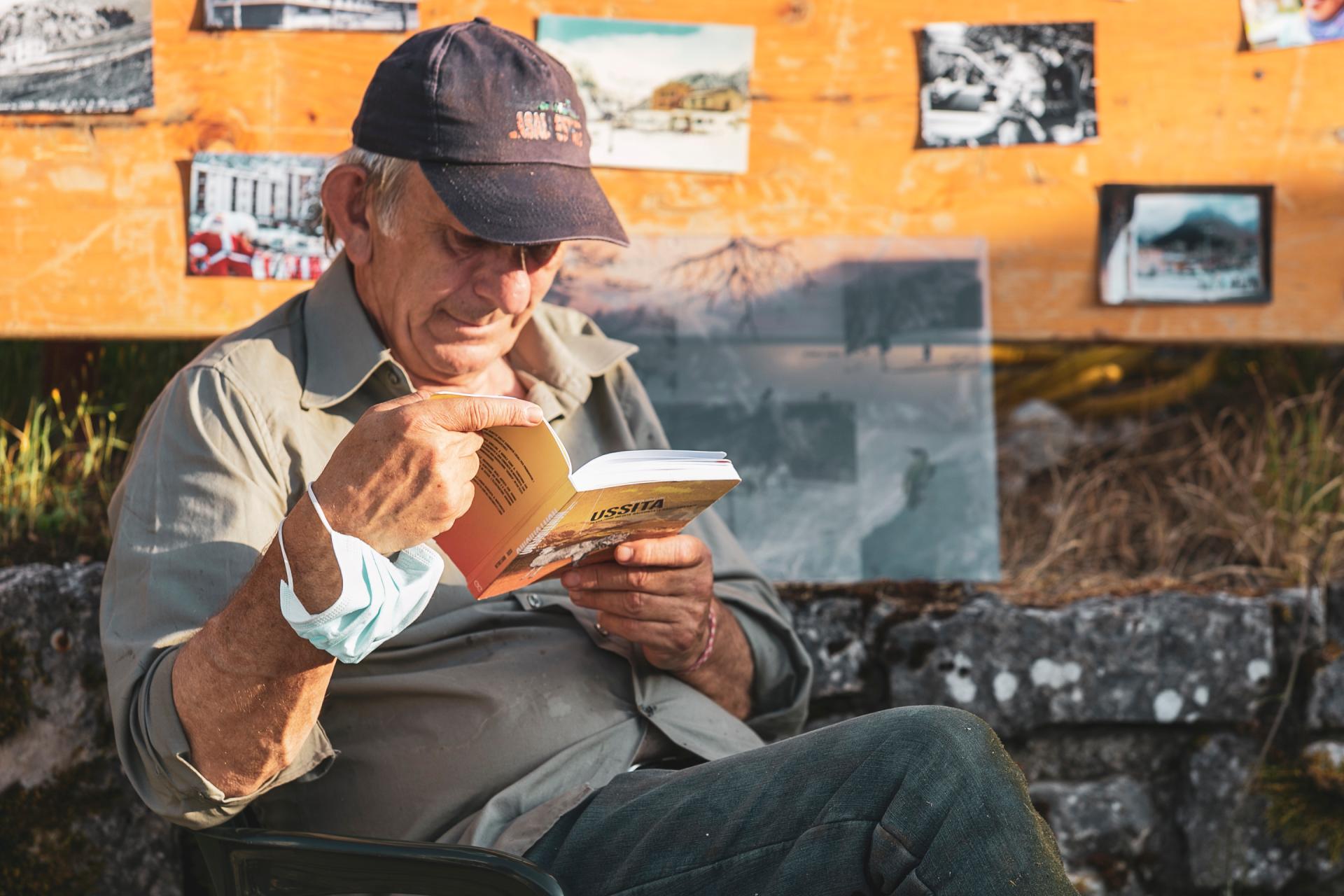
One of the first places protagonists of Nonturismo has been Ussita, a town from the Region Marche located in the mountains of the Sibillini National Park, a place characterized by a geographical marginality, since it is difficult to reach, and an identity one, since it had been severely hit by the earthquakes of 2016/17.
The guide dedicated to Ussita won the Italian Best Mountain Guide 2021 prize.
Key objectives for sustainability
The key word of Nonturismo’s philosophy is ecosystem. The ground floor for the achievement of the process is an ecosystem made up of different players bringing different skills, in a cross-fertilization way; above all, a local ecosystem exists that is placed at the centre of participatory thinking and storytelling.
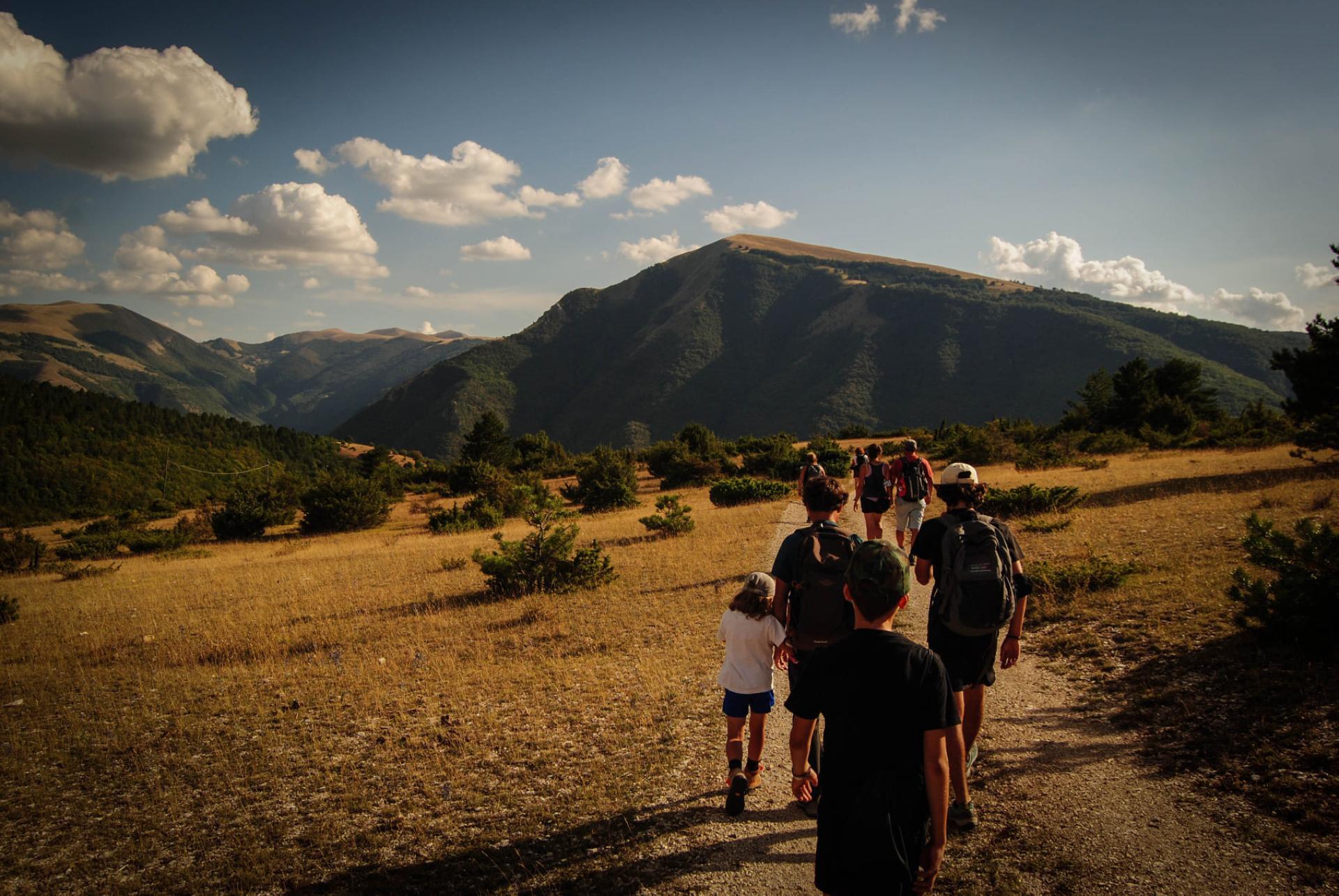
According to a principle of deviation, the guide offers non-tourists many routes across the territory leading them where they would not have probably arrived otherwise, in an invitation to stop and explore. Non-tourist routes must be followed on foot, stopping at points of interest that are narrated through words, images and podcasts created by artists in reference to the testimonies of the inhabitants.
With environmental sustainability in mind, the purpose of the project is to offer the local community a promotion tool that stimulates seasonally adjusted and conscious tourism, contrasting a “hit and run” type of tourism – based on the Anthropocene's consumerist way – therefore favouring an approach that values the resources of the territory instead of consuming them.
The environmental sustainability of the project moves alongside economic sustainability: for the guide to really be a tool available to a community, it needs to produce concrete results from the point of view of economic impact. For this reason, the project was conceived and conducted with the intention of producing a concrete output – the guide – and a series of actions corollary to the publication of the guide.
To date, Ussita's guide has reached the second reprint and the Nonturismo series has been enriched with two new volumes on two suburbs of the city of Cagliari in Sardinia.
Beyond the result related to the series, the publication of the guide has stimulated new projects and opportunities for the territory of Ussita, which will be discussed more in depth in the section dedicated to the impacts on citizenship.
Key objectives for aesthetics and quality
The Nonturismo guides are real guides, offering hiking routes, maps and useful information, but they are also real art books, which give travellers and communities a storytelling frame in which the voices of the inhabitants are interpreted through the gaze of a photographer, the words of a writer, the objects of a designer.
To attract a quality audience, we need to speak a quality language: it is from this premise that the project was conceived in cross-fertilization between art, tourism and social innovation, with the purpose of using artistic languages both to speak to a certain type of tourists – non-tourists – and to promote the citizens’ process of redefinition and rediscovery of one's social and cultural identity. After all, as Wu Ming 2, one of the artists involved in Ussita's guide, put it: "People in a place don't orient themselves with maps, but with stories."
During the creation process of Ussita's guide, the town hosted several artists in residence:
the aforementioned writer Wu Ming 2 – of the internationally renowned collective Wu Ming – who met the community through a workshop with children and elaborated an ad hoc short story about Ussita's possible and impossible futures;
the writer and reporter Alessandro Chiappanuvoli and the photographer Antonio Di Cecco, authors of the itinerary "From the valley to the peaks", an ascent of the mountain in words and images;
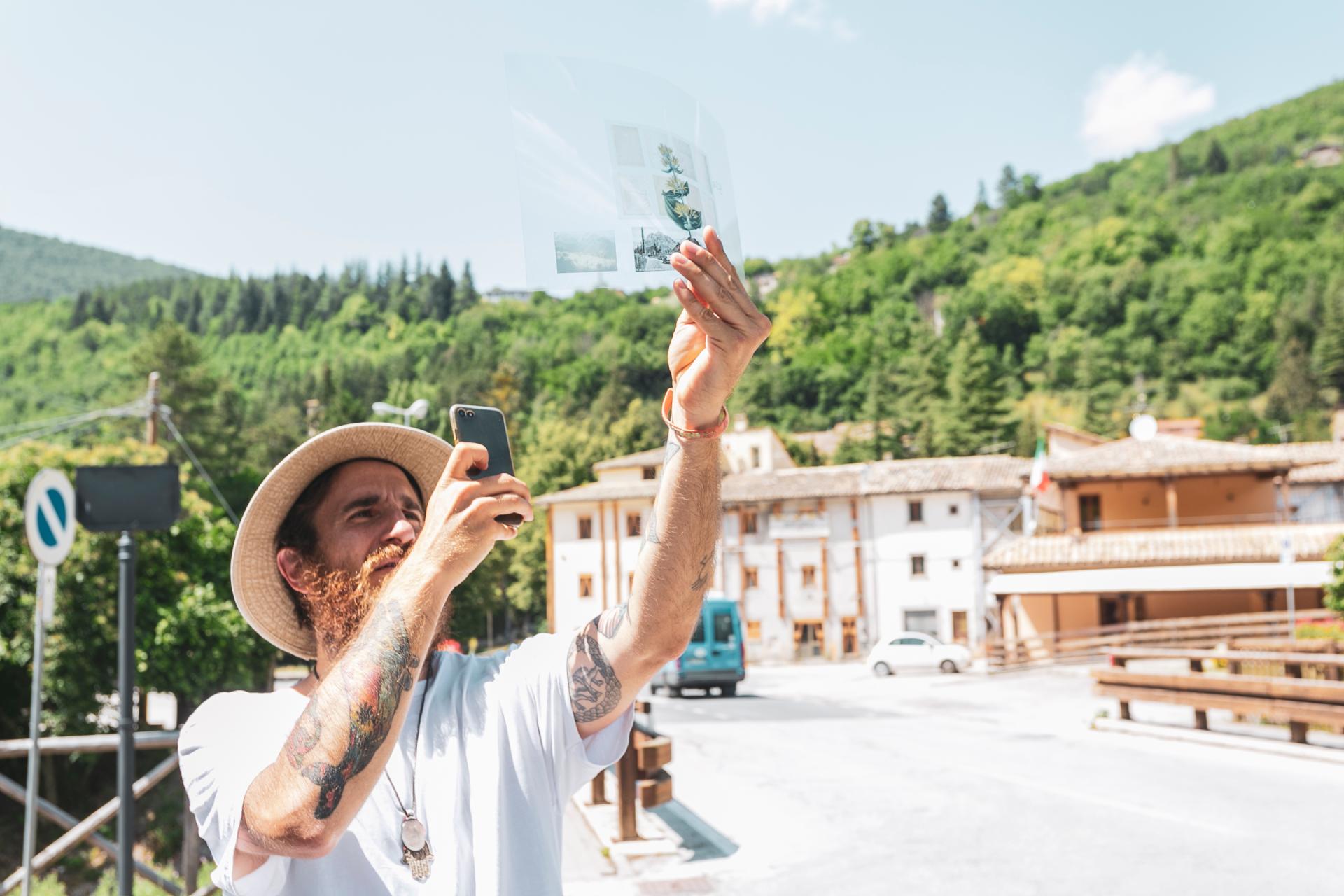
the illustrator Giacomo Giovannetti, who created collages composed of the overlap between archive images shared by citizens and visionary elements;
the podcaster and radio journalist Sara Sartori, who collected the voice of the inhabitants in audio contents that can be used interactively while exploring the itineraries;
the set-designer Paola Villani, who has created totem-games scattered along the driving routes, artworks that can be freely manipulated by travellers.
Key objectives for inclusion
If the guide is for the community a tool to stimulate responsible tourism, community editorial workgroups are a tool of encounter, a hearth around which inhabitants gather to exchange memories, fears, reasons of pride and hopes for the future.
To achieve the goal of such social inclusion, it is necessary that the process of rediscovery and identity redefinition of a place must not come from top down but has to be integrated into the cultural and social fabric of the community, making the inhabitants themselves protagonists. To this end, the collaboration with C.A.S.A. – the "mountain port" of Ussita, a social promotion association born following the earthquakes of 2016/2017 with the purposes of continuing to inhabit an injured and changing territory, promoting meetings, enhancement projects and artistic residences – was fundamental. The managers of C.A.S.A. facilitated the community editorial workgroups by involving even the most sceptical or disillusioned citizens – for instance by the distribution of the invitations house by house, in order to include those who are not used to digital channels – and contributed to the drafting of the guide, both in structuring the routes and in the selection of testimonies.
Inclusiveness is not only about the involvement of the inhabitants, but it is also on how they are involved. The editorial workgroups decided to be inclusive also in regard to the issues on which the community has been confronted, without omitting the problems of a territory that cannot deny the fracture (real and metaphorical) of the earthquake or the contradictions of its history – for example the divergent points of view on the mountain tourism boom, which has boosted the economic performance but also a lot of speculation – but which precisely wants to start fresh learning from mistakes.
Results in relation to category
Nonturismo is a storytelling project that places a territory and a community at the centre of the story. In the experience of the inhabitants of Ussita, the community editorial workgroups have been a hearth around which to gather and exchange stories, the ones of experiences lived in first person or told by grandparents, imagined stories on how something would have turned out if this or that event had not occurred, or how the future might change if this or that event finally occurs.
The stories of the Ussita’s citizens were partly returned as heard and recorded, partly filtered by the artists in residence. The meeting of the community with the artists produced two important results: the quality of the contents of the guide - a polyphony of languages and voices rather than a flat tourist postcard narrative - and the quality of the involvement of the local community that tells its own story rather than having it told.
Speaking of the guide, the sensitivity of the artistic language has made it possible to speak of a territory as a whole. Above all, the language of art has the ability to transform the instances of a territory into powerful works, capable of involving audiences: thus, the artworks of Paola Villani, totems that can be freely manipulated, stimulating travellers to re-imagine the landscape and reflect on its constant change, taking responsibility for its transformation.
In regard to the community, the process of creating the guide has stimulated the Ussita’s citizens in re-finding their collective identity after a traumatic event such as the earthquake, uniting around an object, the guide, which has become their guide and which has represented the starting point for the undertaking of new initiatives of promotion and development of the territory, as will be better described in the next section.
How Citizens benefit
One of the most interesting results of the Nonturismo process in Ussita was the participation of the inhabitants following the official conclusion of the project, which coincided with the publication and promotion of the guide. In addition to the canonical distribution carried out by the publishing house at national level, the guide was disseminated through a bottom-up distribution initiative, spontaneously born from the inhabitants of the town. This initiative has affected the economic impact of the project, helping to achieve the reprint goal; over and above the economic aspect, the spontaneous mobilisation of the inhabitants has shown that the project has had a significant impact from a social point of view.
The success of one of Nonturismo's most challenging objectives – the social impact on the community – was assessed mainly on the basis of the relapse actions carried out in the months following the publication of the guide. The actions born as a result of Nonturismo are, in fact, all characterized by the active involvement of local inhabitants and stakeholders.
Thanks to the initiative of C.A.S.A. the Ussita’s citizens undertook systemic maintenance of the routes contained in the guide, some of which had previously been left to carelessness.
Local tour guides organized guided walks along the Nonturismo itineraries, in which some of the artists and inhabitants protagonists of the guide participated and are benefiting from a direct economic fallout.
The same subjects involved in Nonturismo have also given life to a new project – Artwalks – a process of rethinking the way of living inlands, that is going to involve personalities of international importance in the field of architecture, geology, design, and artists who work on environmental sustainability, with the ultimate intent of creating an eco-sustainable park-museum in the mountain area of Ussita with works of land art.
Innovative character
Nonturismo's most innovative point is the conception and implementation of a methodology based on cross-fertilization that combines environmental sustainability, economic sustainability, art and social innovation.
As mentioned above, in a project intended to re-qualify marginal territories, economic sustainability and environmental sustainability must be developed harmoniously alongside each other: the reactivation of rural and inland areas cannot be pursued merely for economic results, since the Anthropocene era has demonstrated that the long-term impact of consumerist and speculative strategies is the impoverishment – if not annihilation – of local resources, first of all natural ones; at the same time, preserving genius loci cannot result in a defensive closure towards the outside world, since in the long term it results in the progressive depopulation of rural and inland areas.
Is from these premises that the innovative philosophy of Nonturismo was born, a word that through a linguistic negation wants to promote a value-driven tourism model that encourages temporary citizenship, avoiding the typical “extractive” tourism models of art cities.
It is in the approach with the inhabitants that lies the other element of innovative methodology, a bottom-up, inclusive and participative approach, articulated in the creation of a community editorial workgroup that is left free to choose the time and theme framework necessary for the elaboration of its collective identity. Ussita's guide leads non-tourists along the trails that allow for the contemplation of the beautiful mountain landscapes but also in the SAE areas, the emergency housing solutions for the inhabitants following the seismic events, inviting visitors to share a stretch of their redefining path.
The third characteristic element of Nonturismo is precisely the final output, an editorial series that speaks at the same time the language of the tour guide and art, itself an expression of cross-fertilization.